


No dog is hypoallergenic, and Can f 1 was detectable in 94% of 173 homes studied. A Siberian Husky is a high-shedding breed that can distribute substantial amounts of allergen-carrying dander throughout your home.
That answer may feel less comforting than the popular advice about “hypoallergenic” breeds, but it's more useful. Allergy risk doesn't follow a simple scale from furry to less furry. It depends on the proteins a specific dog produces, how much of those proteins enter your environment, and how your immune system responds.
A better question than “Is a Siberian Husky hypoallergenic?” is “Can I safely live with this specific Husky in my specific home?” The Exposure Map framework helps answer that question without relying on a breed label that biology can't guarantee.
Table of Contents
- The Myth of the Hypoallergenic Breed
- Understanding Canine Allergens Beyond Fur
- The Siberian Husky Coat Challenge
- Practical Strategies for Allergen Management
- Supporting Skin Health and Coat Nutrition
- Evaluating Compatibility Before Adoption
The Myth of the Hypoallergenic Breed

A “hypoallergenic” label is not a medical guarantee. It describes a marketing category, not a dog whose allergens have been removed. Coat type and shedding may change how particles move around a home, but they cannot predict whether a person's immune system will react to one individual dog.
The American College of Allergy, Asthma & Immunology reports that Can f 1, the most commonly measured dog allergen, was detectable in 94% of 173 homes studied. The investigation also found no statistically significant difference in Can f 1 levels between homes with dogs marketed as “hypoallergenic” and homes with other breeds (American College of Allergy, Asthma & Immunology guidance on pet allergies).
Why the label causes confusion
A low-shedding dog can leave less visible hair on a sofa while still releasing allergen proteins through saliva, skin secretions, and dander. A particular dog from a high-shedding breed may also produce a different allergen profile from another dog of the same breed. Visible fur is a poor measuring device for invisible exposure. Hair on the floor is easy to see, while the proteins that provoke symptoms are not.
The Exposure Map offers a more useful way to assess risk. Start with the dog's allergen load, then trace where those particles travel in the owner's environment. A Husky that spends time on beds, sofas, clothing, or in small shared rooms creates a different exposure pattern from one kept away from those areas. The same dog may therefore be manageable in one home and difficult in another.
A breed comparison cannot settle the question. Even information about whether Great Danes are hypoallergenic returns to the same biological limit: a breed name cannot predict one person's reaction with certainty.
Practical rule: Treat “hypoallergenic” as a prompt to investigate, not as a promise that your immune system will tolerate the dog.
For a family considering a Siberian Husky, the label can be especially misleading because the breed's dense coat may carry allergen-bearing particles through rooms, fabrics, and shared spaces. That does not mean every Husky triggers the same response. Meet the actual dog, observe your symptoms, and assess the home's exposure pattern before making a permanent commitment.
Understanding Canine Allergens Beyond Fur
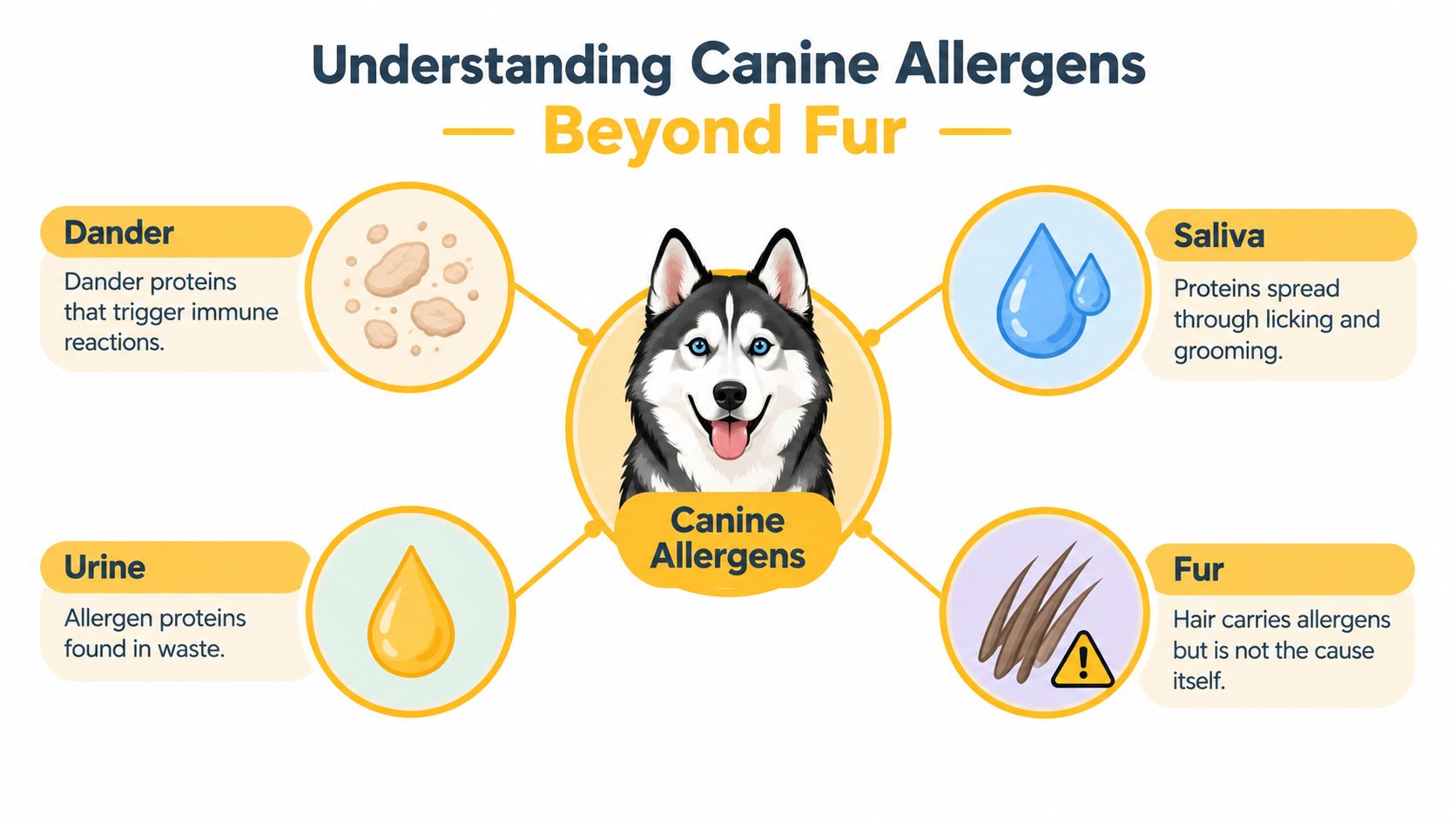
The fur on a dog is rarely the immune system's true target. It works more like a delivery vehicle, carrying proteins from saliva, skin secretions, urine, and dander onto bedding, furniture, clothing, and dust. Those particles may become airborne or remain on surfaces, where a sensitized person can inhale them or transfer them to the eyes, nose, or skin.
Can f 1 is the best-known canine allergen, although it is only one part of the picture. Can f 2 through Can f 6 may also contribute to symptoms. In a study of 288 healthy dogs, Can f 1 levels on fur varied widely between breeds and also differed substantially among individual dogs of the same breed (research on Can f 1 levels in dogs). Breed can influence exposure, yet the individual dog still matters.
How the exposure chain works
The Exposure Map connects three points: the dog's allergen load, the routes those proteins take, and the person's sensitivity. It explains why the same Husky can cause different reactions in different homes. A dog's saliva, skin flakes, and urine introduce allergens, while fur and household dust help distribute them.
- Saliva: Licking coats the hair with saliva. Once the moisture dries, allergen proteins can remain on the fur and nearby surfaces.
- Dander: Small flakes of skin enter household dust and may circulate through the air before settling into fabric.
- Urine: Canine allergens can also be present in urine, so exposure may occur beyond sleeping or shedding areas.
- Fur: Hair transports allergens around the home. The hair itself is not the biological trigger.
The immune system resembles a security system with an incorrect alert setting. It identifies a harmless canine protein as a threat, then releases inflammatory chemicals when that protein reaches a sensitized person's airways or mucous membranes. Sneezing, congestion, itchy eyes, coughing, wheezing, and skin irritation can follow. Symptoms depend on both individual sensitivity and the amount and type of exposure.
A review found that among sensitized adults, 64% tested positive for Can f 1-specific IgE, while only 32% of those Can f 1-positive adults were monosensitized to Can f 1. In practical terms, many people who react to dogs may respond to several canine proteins. Removing visible hair alone, shortening the coat, or shaving the dog therefore cannot reliably prevent symptoms.
For household steps that reduce contact with allergens, see this guide to preventing dog allergies. The practical lesson is clear: map and manage the entire exposure chain, not only the hair that catches your eye.
The Siberian Husky Coat Challenge
The Siberian Husky's coat evolved for work in severe cold. The breed was developed by the Chukchi people of northeastern Asia as an endurance sled dog, and its thick double coat provides insulation through a protective outer layer and a dense undercoat. That design serves the dog well outdoors, but it creates a demanding indoor environment for allergy-sensitive people.
A Husky doesn't just lose a few strands during ordinary movement. During seasonal coat changes, the undercoat can come out in large amounts. As the dog moves from room to room, loose hair can carry dander and dried saliva proteins onto rugs, upholstery, clothing, and bedding. The result is a distribution problem. The coat helps transport material away from the skin and into the places where people spend time.
The coat as an allergen transport system
This is why advice designed for a low-shedding dog doesn't transfer neatly to a Husky. Brushing may remove loose undercoat before it enters the home, but it won't stop the dog's skin or saliva from producing allergen proteins. It also won't make the breed hypoallergenic.
Brush outdoors whenever possible, particularly during seasonal coat release. Afterward, clean the brush and change or shake out clothing so the grooming session does not move loose material back inside. If hair has already settled into a sofa, a practical guide on how to lift pet hair from upholstery can help you choose a more effective cleaning method.
Bathing may temporarily reduce surface allergen load. In one controlled report, mean Can f 1 concentration fell from 21.8 ± 11.2 ng/mL before washing to 5.8 ± 3.7 ng/mL afterward (report on washing and Can f 1 concentration). That finding doesn't establish permanent control, and bathing should follow veterinary guidance for the dog's skin and coat.
Don't shave a Husky to manage human allergies. Removing the insulating coat doesn't stop allergen production and can interfere with the coat's protective function. A better approach is to capture loose undercoat outside, keep it out of sleeping areas, and combine grooming with environmental controls described in this guide to reducing dog shedding.
Practical Strategies for Allergen Management
If you already live with a Husky, focus on lowering the household allergen load rather than trying to eliminate it. The aim is to create areas where exposure is consistently lower, especially where you sleep and recover overnight.
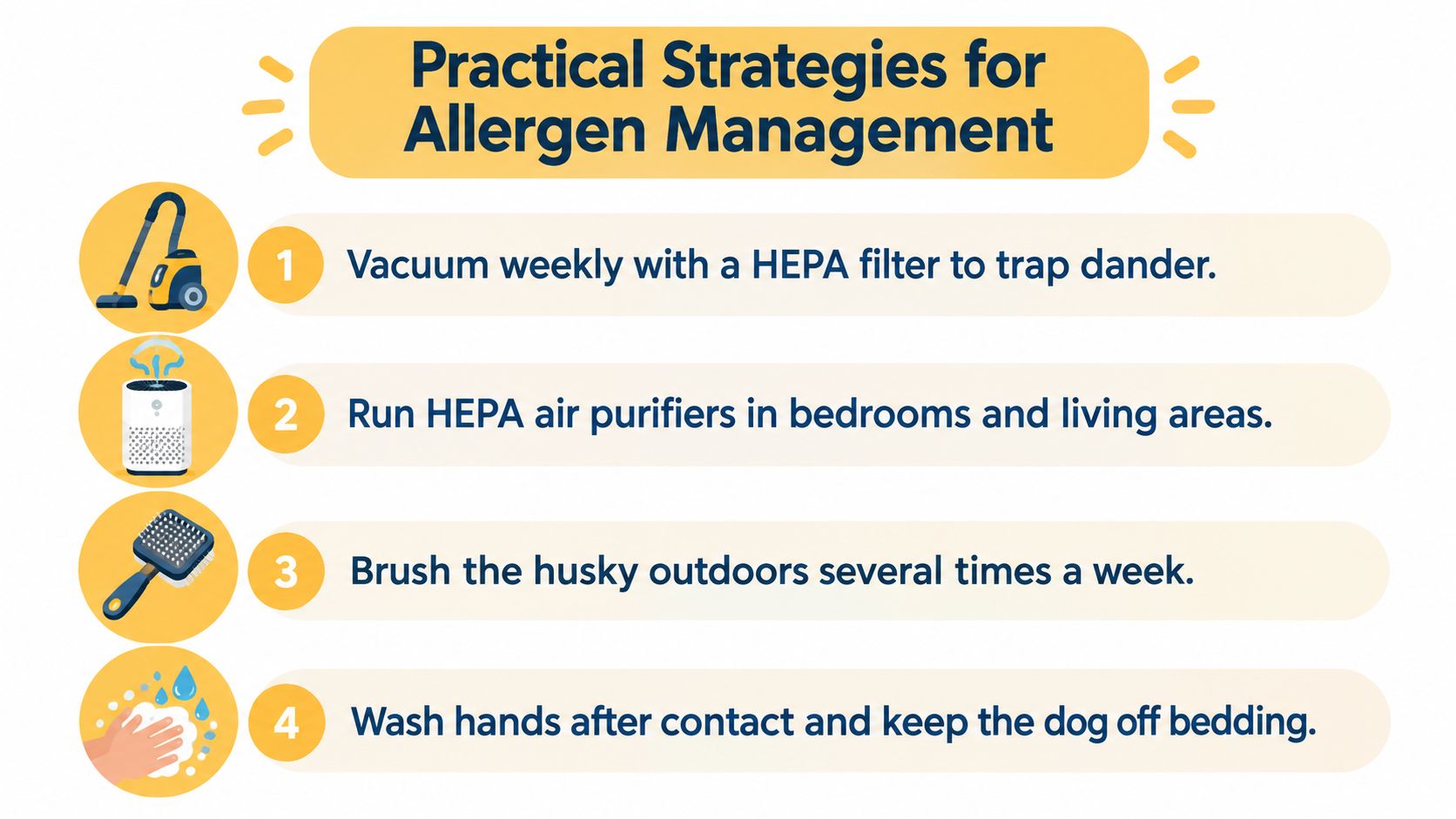
Start with the bedroom. Keep the dog out, close the door, and wash bedding frequently. A bedroom becomes a useful low-exposure zone only when the dog, loose fur, contaminated clothing, and dusty bedding stay out of it.
Build an Exposure Map
Walk through the home and identify where contact happens.
- Sleeping areas: Make the bedroom dog-free and keep the Husky off pillows, mattresses, and bedding.
- Shared furniture: Use washable covers where the dog rests. If you're replacing upholstery or throws, look for guidance on finding pet hair resistant fabrics.
- Air pathways: Run high-efficiency filtration in bedrooms and main living areas. Filtration can capture airborne particles, but it works best alongside surface cleaning.
- Grooming locations: Brush outdoors, especially during heavy undercoat release. Clean the tools and wash your hands afterward.
- High-touch surfaces: Wipe hard surfaces, clean floors, and wash fabrics that collect hair and dander. Pay attention to the sofa, entryway, car, and the clothing worn during close contact.
Vacuuming with a high-efficiency filter can help capture dander rather than redistributing it. Don't rely on a single cleaning session. Consistency matters because the dog continues to produce and shed allergen-carrying material.
Wash your hands after petting, grooming, or handling bedding. Avoid touching your eyes and face until you've done so. If symptoms include breathing difficulty, persistent wheezing, or significant swelling, seek medical care rather than adding more household remedies. For broader pet-care context, guidance on dog supplements for allergies should never replace an allergist's evaluation or a veterinarian's diagnosis.
Supporting Skin Health and Coat Nutrition
A Husky's skin condition and a person's allergy symptoms may share the same household, but they arise through different biological pathways. A person can react to proteins produced by a healthy dog. The dog, meanwhile, may itch because of parasites, food-related disease, environmental allergens, infection, or a weakened skin barrier. Improving the dog's skin will not make the breed hypoallergenic, just as reducing household exposure cannot diagnose the dog's itching.
The immune system works like an alarm system with separate sensors. Human symptoms reflect the person's response to allergen proteins, while canine itching reflects inflammation in the dog's own skin. Persistent scratching, repeated ear irritation, redness, odor, scabs, hair loss, or intense paw licking should therefore receive veterinary assessment.
A supplement may support general skin and coat nutrition. It cannot identify the cause of pruritus or eliminate Can f allergens.
Where nutrition fits
A balanced diet and suitable skin-and-coat support can form part of routine care when a veterinarian agrees. The aim is to help maintain the dog's normal skin barrier and coat condition, not to promise an allergy-free home. Excessive flaking or itching may require diagnostic testing and a specific treatment plan.

One option is DA-1™ Daily All-in-One, a powdered, multi-system supplement with 18 human-grade ingredients intended to support cells, gut, and joints. Its product information describes a filler-free formulation and a 60-day money-back guarantee. These details concern the product's formulation and policy, not treatment for human dog allergy.
Pure Paw Labs describes the supplement as vet-formulated, human-grade, made with 99.8% active ingredients and no fillers, manufactured in the USA, and third-party lab tested for quality (Pure Paw Labs product information). Discuss those claims with your veterinarian alongside the dog's complete diet and any diagnosed condition.
Place nutrition on the dog side of the Exposure Map. A well-maintained coat may support skin comfort, but the dog can still produce allergen proteins. For practical principles, read this guide to dog skin and coat health.
Evaluating Compatibility Before Adoption
A Siberian Husky is not a reliable allergy test by breed label. The useful test is the relationship between one dog, one household, and one immune system. This Exposure Map shifts the question from “Is the breed hypoallergenic?” to “Where will this dog's allergen load meet my daily environment?”
Arrange time with the actual dog before adoption. If possible, visit the home where the dog currently lives, not only an outdoor space. A short meeting outside can hide what happens after allergen-containing particles, dander, and saliva-coated hair settle indoors. Spend meaningful time in the living areas, touch the dog, and observe symptoms during the visit and afterward. Record when a reaction begins, what contact occurred, and whether symptoms continue after you leave.
Use the Exposure Map before deciding
Ask questions about the whole interaction:
- The dog: Does this specific Husky cause symptoms during direct contact, grooming, or indoor rest?
- The home: Can the bedroom remain dog-free, with regular cleaning and air filtration?
- The person: Have you discussed the reaction with an allergist, especially if it affects the chest or breathing?
- The plan: Can another household member brush the dog, wash bedding, and clean surfaces if your exposure becomes difficult?
- The backup: Is there a realistic alternative arrangement if symptoms stay severe despite careful management?
An allergist can assess your sensitivity profile and discuss suitable testing or treatment. Different people may react to different canine proteins, so coat length cannot predict your response. The American College of Allergy, Asthma & Immunology's pet allergy guidance also emphasizes reducing exposure and seeking professional care.
Keep two problems separate. Human allergy concerns your immune response to proteins from the dog and its environment. A Husky's itching, hair loss, or skin inflammation concerns the dog's health and may have another cause. A recent veterinary report on canine eosinophilic bronchopneumopathy found that no specific allergen could be identified as the trigger in that condition and concluded that serum IgE and intradermal testing have limited value for identifying causative allergens (veterinary research on canine allergic disease). That finding does not diagnose every itchy dog, but persistent symptoms warrant veterinary evaluation.
Pure Paw Labs offers dog supplements intended to support areas such as skin, coat, joints, digestion, and daily wellness. Any product should fit the dog's complete diet and veterinarian-guided care, rather than serve as a substitute for managing human exposure.
One Husky may fit an allergy-sensitive household, while another may not. Decide after testing the specific dog, mapping the indoor environment, and discussing your symptoms with a qualified medical professional.