


Your dog vomits on the rug before breakfast, then has loose stool outside. They still look mostly like themselves, but you're left wondering whether this is a minor dietary mistake, a reaction to stress, or the beginning of something serious. That uncertainty is what makes digestive upset in dogs so stressful.
The safest response starts with observation, not panic and not an automatic scoop of probiotics. Digestive signs can come from a brief, self-limiting problem, an ongoing intestinal disorder, or an emergency that needs fluids and diagnostic care. The difference depends on the pattern, severity, hydration, energy level, and what happened before the symptoms began.
Table of Contents
- Understanding How Canine Stomach Issues Differ
- Recognizing the Symptoms and Red Flags
- Common Causes of Canine Digestive Distress
- Safe Home Care and Dietary Adjustments
- The Nuanced Role of Probiotics and Daily Supplements
- When to Skip Home Care and Visit the Vet
- Long-Term Gut Health and Recovery Monitoring
Understanding How Canine Stomach Issues Differ
Why one upset episode matters, but does not always signal disease
A dog may raid the bin, eat a rich table scrap, or switch foods suddenly, then develop vomiting or diarrhea before returning to normal. That pattern differs from recurring loose stool, poor appetite, weight concerns, or repeated vomiting. The visible symptom may look similar, while the cause and appropriate response differ.
A brief stomach bug can settle like a passing storm. Chronic enteropathy behaves more like a fault that keeps resurfacing, often requiring veterinary investigation and a longer-term plan. An emergency, such as a serious obstruction or severe dehydration, needs prompt medical care. A daily supplement may support routine gut function, but it cannot identify the cause, replace fluids, or treat every intestinal disorder.
You are not alone in facing these concerns. A review of canine gastrointestinal disease reported annual estimates from 9.4% to 17.8% in general-practice studies, depending on the population and definition used. The same review identified gastrointestinal disease as the third most frequent category of insurance claim, with an annual prevalence of 15.7% and a 95% confidence interval of 15.5% to 15.9%. These figures appear in the review of canine chronic enteropathy and gastrointestinal disease.
A separate 2024 Dog Aging Project survey of 43,517 dogs found that 12,840 dogs had experienced at least one owner-reported gastrointestinal disease event. That represents an approximate 30% lifetime prevalence, while 70% had no reported history in the survey. Annual clinical records and lifetime owner reports measure different outcomes, so their figures are not interchangeable.
A calm pattern-recognition approach
Start with the pattern rather than the label:
- What changed? Review food, treats, scavenging, travel, boarding, medication, and routine.
- How severe are the signs? One soft stool differs from profuse diarrhea with weakness.
- Is your dog acting normally? Energy, drinking, appetite, posture, and comfort add important context.
- Is this recurring? Repeated episodes deserve more attention than an isolated event that resolves.
Understanding dog digestive health helps separate routine nutritional support from problems requiring veterinary assessment. Your job at home is not to diagnose the cause. Watch whether your dog returns steadily to baseline or continues to decline.
Practical rule: Monitor a mild episode only when your dog remains comfortable, hydrated, and reasonably bright. A worsening pattern changes the decision.
Recognizing the Symptoms and Red Flags
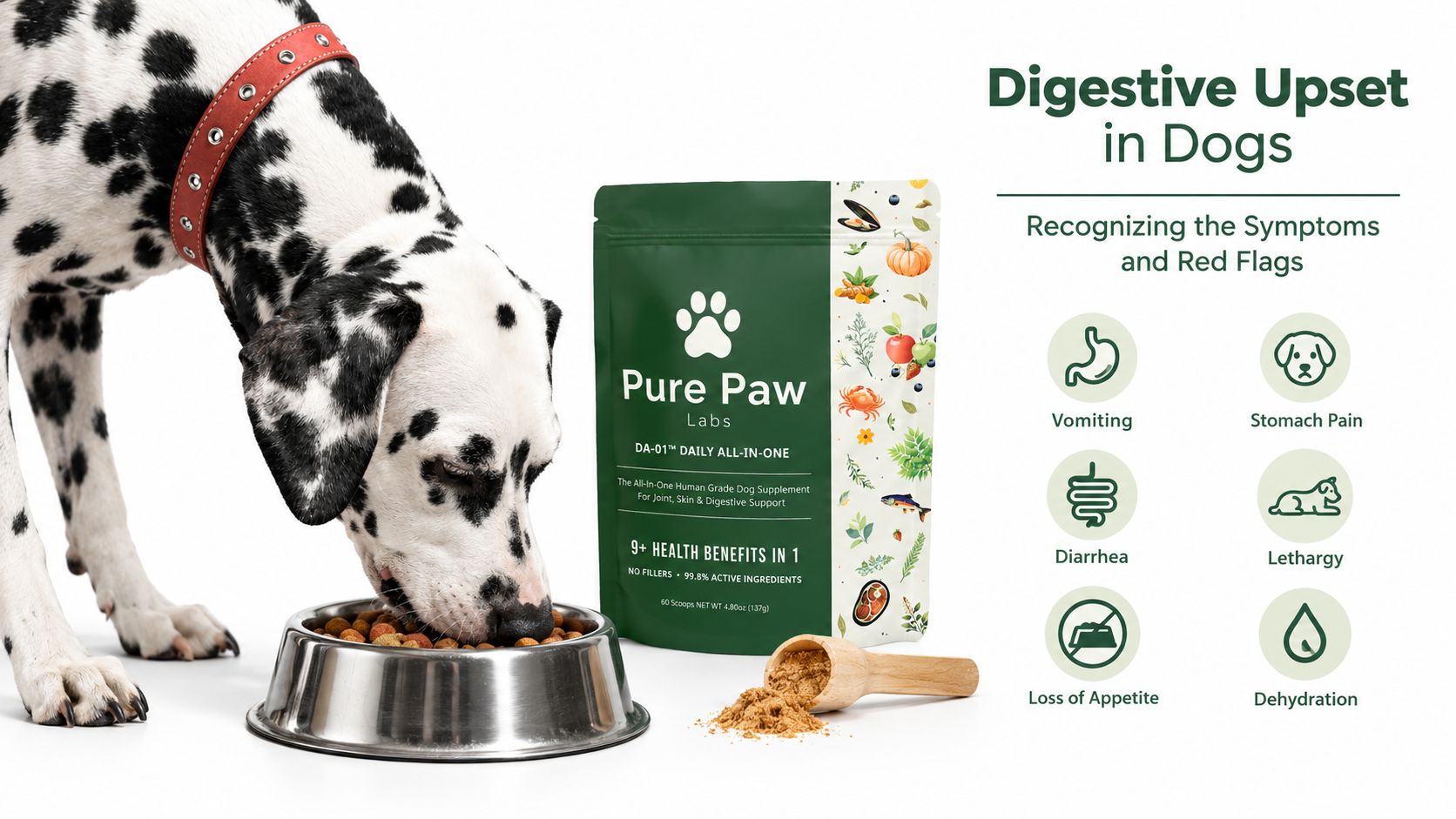
A dog that vomits once after eating something unusual may recover quickly. The same outward sign can also accompany infection, toxin exposure, obstruction, pancreatic disease, or illness outside the digestive tract. Digestive upset describes what you see, not the cause. Diarrhea has the same limitation. Food changes, parasites, inflammation, and infection can produce similar stools.
What the common signs can tell you
A clinical study of dogs classified with gastrointestinal disease reported diarrhea in 19.1% of cases, vomiting in 13.6%, concurrent vomiting and diarrhea in 10.1%, and anorexia in 13.1%. These figures provide context, not a safety test. A single less common sign can still indicate serious disease.
| Symptom | Occurrence rate |
|---|---|
| Diarrhea | 19.1% |
| Vomiting | 13.6% |
| Anorexia or reduced appetite | 13.1% |
| Concurrent vomiting and diarrhea | 10.1% |
The rates come from the study of clinical signs in dogs with gastrointestinal disease. Constipation can occur too, although it was less frequent in that population than diarrhea or vomiting.
Describe the event clearly when you call a veterinarian, rather than reporting only “stomach upset.” Note whether the stool is soft, watery, black, or visibly bloody. Record how often your dog vomited, when it happened, whether water stays down, and whether appetite, energy, or comfort has changed. Mucus, abdominal pain, straining, drooling, repeated swallowing, or a possible swallowed object also matter. The guide to upset stomach dog symptoms can help you organize these observations.
Seek advice sooner for a very young, older, or pregnant dog, or one with a medical condition or medication. A mild, short-lived episode may settle, while persistent or worsening signs can signal chronic enteropathy or an emergency. Probiotics or daily supplements may support routine nutrition, but they cannot identify the cause, treat an obstruction or toxin exposure, or replace an examination.
Common Causes of Canine Digestive Distress
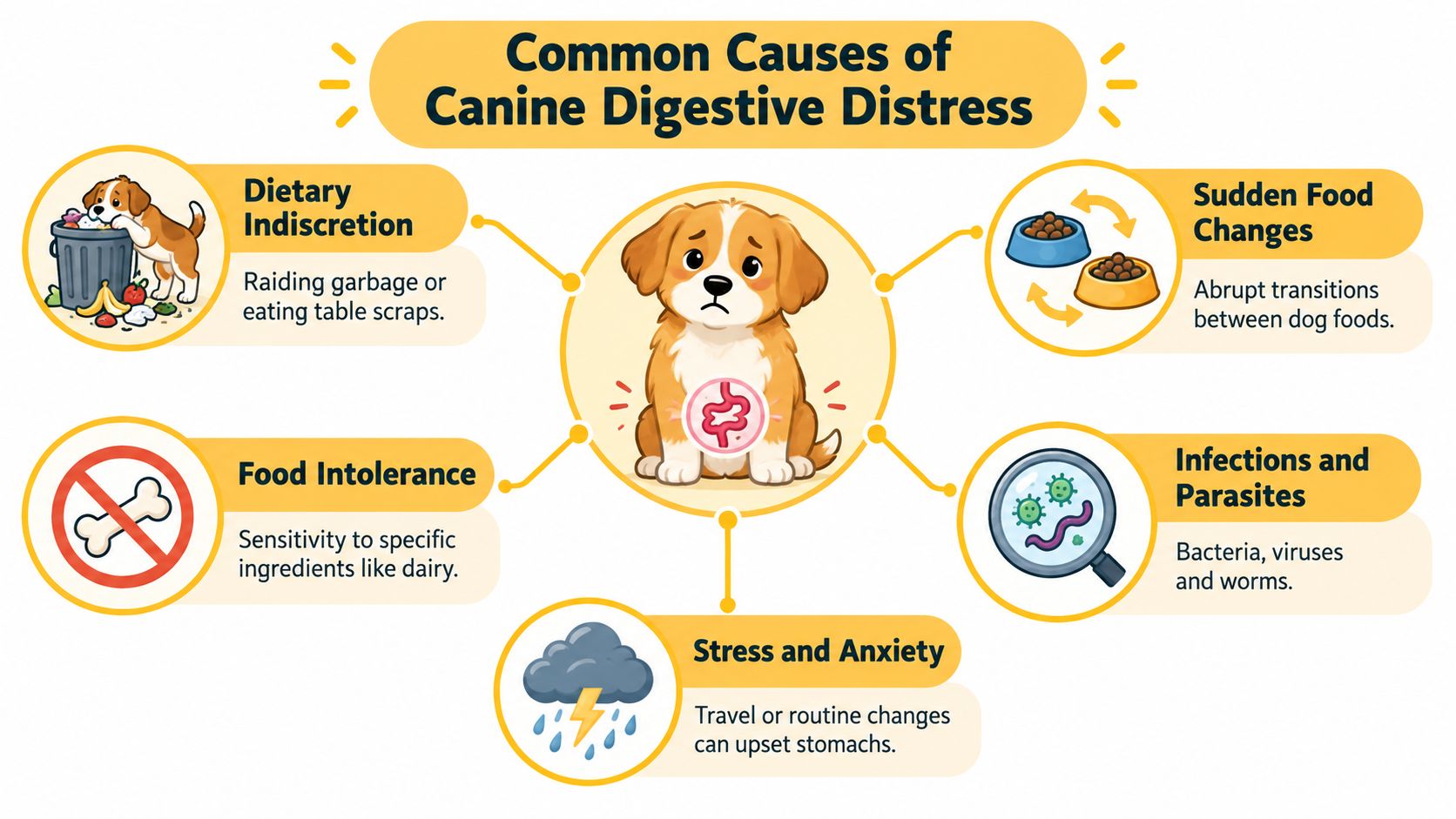
A useful way to investigate a sudden episode is to review the previous day or two without assuming you've found the answer. Look for changes in what your dog ate, where they went, who they encountered, and whether they could have swallowed something unsafe.
Start with the recent trigger
Dietary indiscretion is the familiar “garbage gut” scenario. A dog eats scraps, spoiled food, a fatty treat, or something from the ground, and the digestive tract reacts to an unfamiliar or irritating meal. A swallowed toy, chew, bone, or other object is a different concern because irritation can progress to an obstruction.
Sudden food changes can also disturb digestion. Replacing the usual diet abruptly gives the intestinal microbial community and digestive process little time to adapt. A gradual transition is generally more sensible than changing foods overnight, especially for a dog with a history of sensitive stools.
Food intolerance means an ingredient or food type may not agree with that individual dog. Dairy is one possible example, but the important clue is a consistent pattern after exposure, not a single loose stool. Long-term elimination or restriction should be planned with veterinary nutrition guidance so the diet remains complete.
Look beyond the bowl
Parasites and infections can produce vomiting, diarrhea, appetite changes, or poor condition. Stress can also affect digestion through the close relationship between the nervous system and the gastrointestinal tract. Travel, boarding, unusual noise, altered routines, and car journeys may be relevant context, but stress shouldn't be used to explain away blood, collapse, persistent vomiting, or marked lethargy.
If travel is a known trigger, practical preparation may include working on desensitization, improving ventilation, and discussing motion-sickness options with your veterinarian. A general resource on how to calm your dog on car rides may help you think through the travel component, but it isn't a substitute for veterinary advice.
The same symptom can therefore point to very different paths. A mild dietary mistake may settle with supportive care, while parasites need targeted treatment and a foreign body may require urgent intervention. Treat the suspected cause, not just the stool.
Safe Home Care and Dietary Adjustments
Home care is appropriate only for a mild, short-lived episode in a dog that remains alert, comfortable, hydrated, and able to keep water down. Puppies, older dogs, and dogs with underlying illness can deteriorate more quickly, so ask your veterinarian before applying a general home protocol to them.
A cautious first response
Start by removing treats, scraps, fatty foods, chews, and anything unusual from the menu. Keep fresh water available and offer it frequently. Don't force a nauseated dog to eat, and don't give human anti-diarrheal or pain medication unless a veterinarian has specifically instructed you to do so.
Some adult dogs may benefit from a short rest from food, but the appropriate approach depends on age, size, health status, and the presence of vomiting. A fasting period isn't suitable for every dog, particularly a very young, frail, diabetic, or medically compromised patient. If vomiting continues or your dog can't retain water, home feeding advice no longer applies.
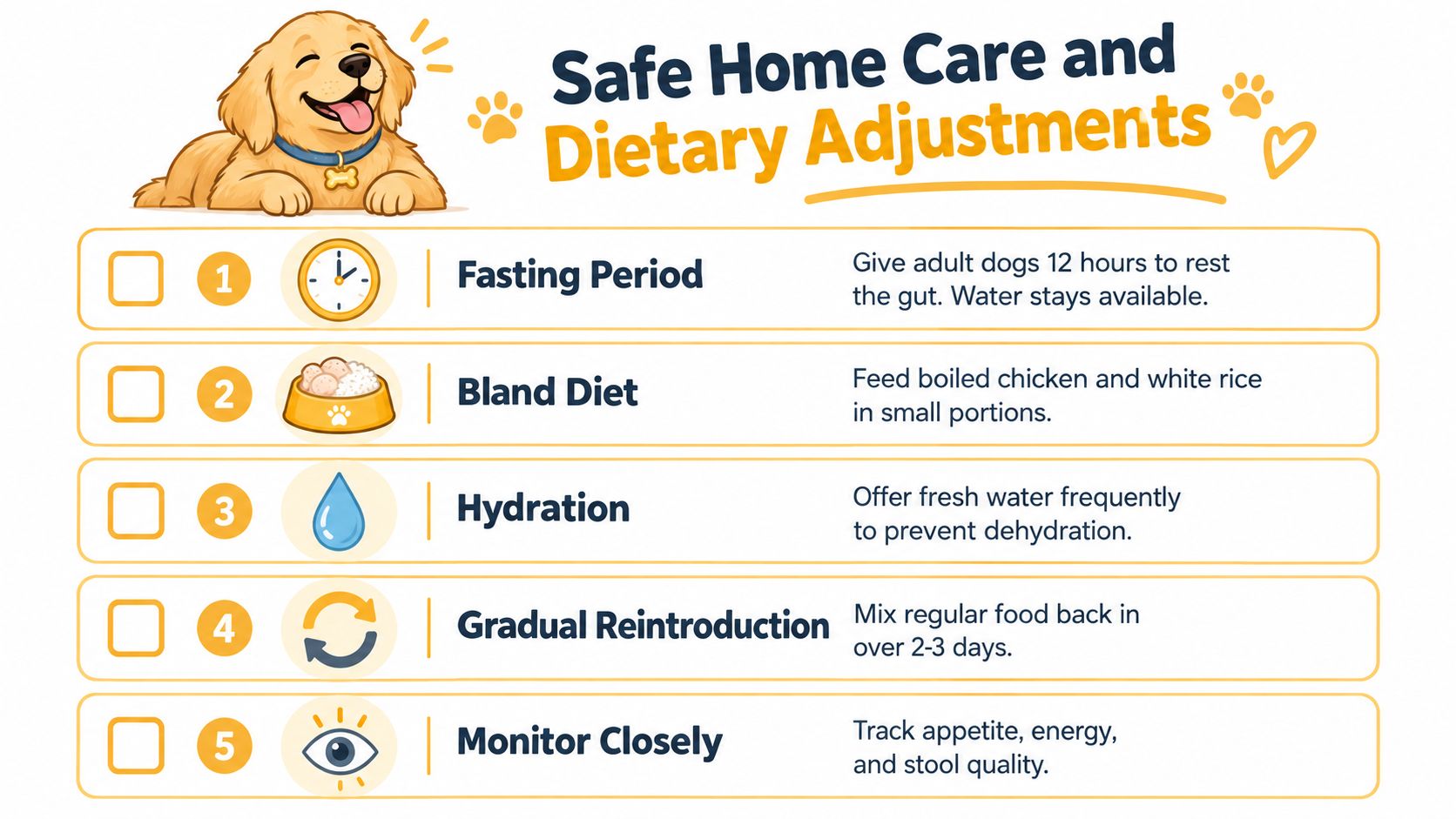
Once vomiting has stopped and your veterinarian agrees that home care is reasonable, offer small portions of a bland, easily digested diet. Plain boiled chicken and white rice are common short-term examples, prepared without seasoning, onion, garlic, butter, or excess fat. These foods aren't designed to replace a complete diet for an extended period, so use them as temporary support rather than a permanent feeding plan. More guidance on rice and chicken for dogs with diarrhea can help you avoid turning a simple diet into an unbalanced long-term routine.
Watch the trend, not just one meal
Check appetite, drinking, energy, comfort, and stool quality at regular intervals. If the dog improves, mix the regular food back in gradually rather than switching immediately from bland food to the full usual meal. A rebound of diarrhea after reintroduction may mean the transition was too fast, or it may indicate that the original problem hasn't resolved.
This video provides additional visual context for basic digestive care:
Stop home management and contact a veterinarian if your dog becomes weak, painful, dehydrated, repeatedly vomits, refuses water, develops blood in vomit or stool, or fails to improve. Bland food can support a recovering gut, but it can't remove a foreign body, correct severe fluid loss, or diagnose an infection.
The Nuanced Role of Probiotics and Daily Supplements
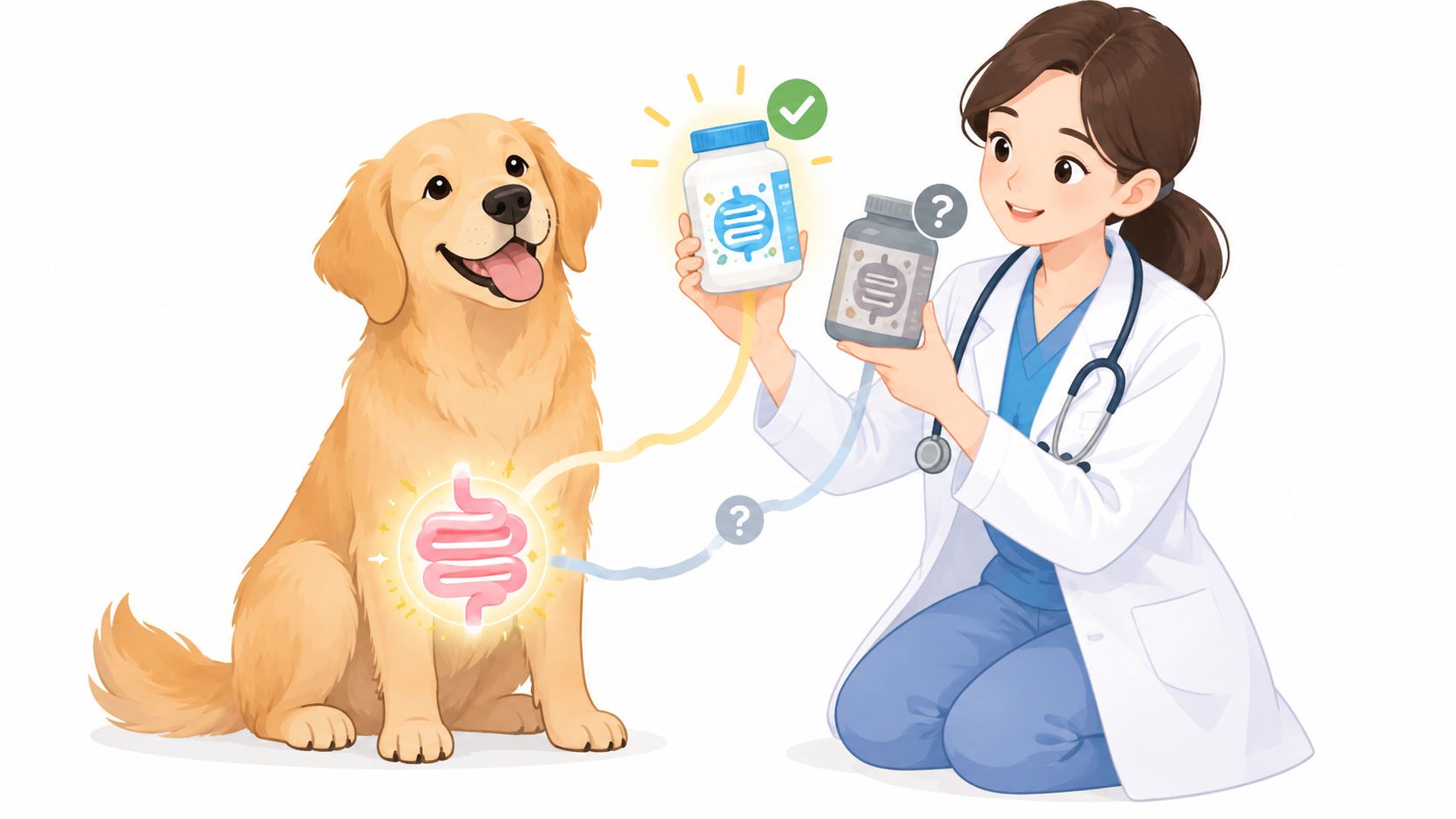
“Just add probiotics” sounds reassuring because it offers a simple action during a worrying episode. The problem is that probiotic effects depend on the specific strain, dose, formulation, and clinical situation. A product that may help one context can't automatically be expected to stop every case of vomiting or diarrhea.
An AVMA review found that evidence for probiotics as the sole treatment of naturally occurring acute diarrhea remains weak. Benefits appeared more plausible for stress-associated diarrhea linked to situations such as kenneling or antimicrobial exposure, rather than as a universal cure for all acute digestive disease. You can review the AVMA discussion of probiotics in canine gastrointestinal care for the evidence-based distinction.
Microbiome support isn't the same as disease treatment
A supplement may alter the intestinal microbial environment without producing a meaningful change in symptoms. That distinction matters. A dog with acute bloody diarrhea, suspected obstruction, dehydration, or repeated vomiting needs triage and appropriate medical care, regardless of whether a supplement is part of their routine.
For a stable dog, daily nutritional support can be considered as one component of broader wellness management. Look for transparent labeling, a clearly identified microbial strain when probiotics are used, an appropriate dose, storage guidance, and claims that stay within nutritional support rather than disease treatment. Introduce any new product when your dog is stable, so you can tell whether it agrees with them.
Pure Paw Labs' DA-1™ Daily All-in-One is described as a powdered, once-daily formula with 18 human-grade ingredients intended to support cells, gut, and joints. It should be understood as routine nutritional support, not an emergency treatment for an acute gastrointestinal episode. The broader guide to dog supplements for digestive health can help frame supplements as part of a daily plan rather than a replacement for diagnosis.
The most useful trial has a defined purpose. Decide what normal looks like for your dog, introduce one change at a time, and stop if symptoms worsen. A supplement can't compensate for a diet that doesn't suit the dog, ongoing exposure to a trigger, or an unrecognized medical condition.
When to Skip Home Care and Visit the Vet
The line between home monitoring and veterinary care is determined by severity and trajectory, not by whether the episode began after a suspicious snack. A dog with one mild loose stool who is drinking, eating, and behaving normally is in a different category from a dog with repeated vomiting, abdominal pain, or bloody diarrhea.
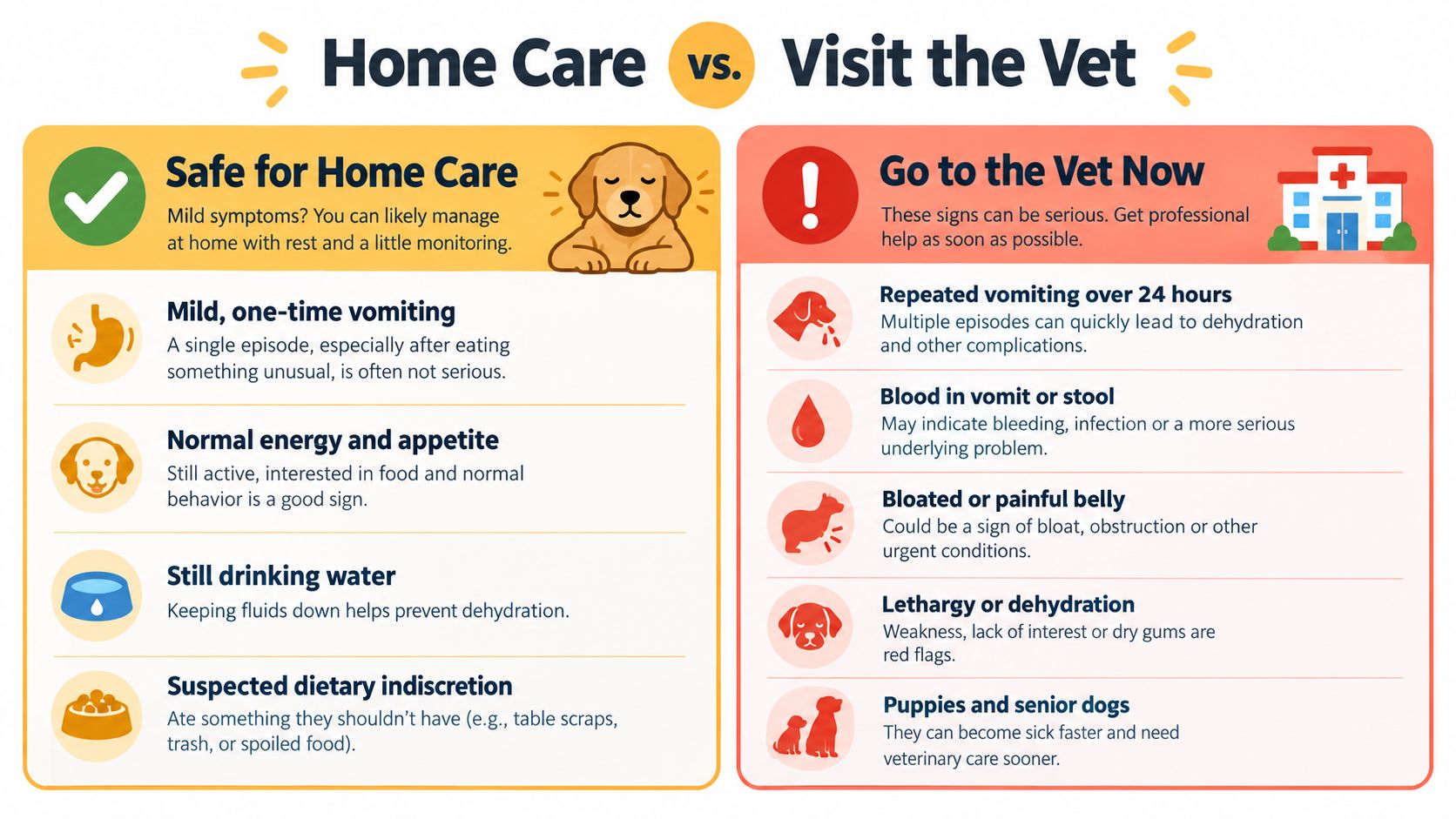
Compare the two situations
| Home monitoring may be reasonable | Contact a veterinarian promptly |
|---|---|
| Mild, isolated digestive signs | Repeated vomiting or worsening diarrhea |
| Normal energy and comfortable behavior | Marked lethargy, weakness, collapse, or dehydration |
| Drinking and retaining water | Unable to keep water down |
| A plausible dietary mistake | Blood in vomit or stool, abdominal pain, or a swollen abdomen |
| Steady improvement | Persistent, recurrent, or severe symptoms |
These aren't rigid rules. Your veterinarian should guide decisions for puppies, senior dogs, and animals with other health conditions, even when the signs initially appear mild.
Recognize acute hemorrhagic diarrhea syndrome
Acute hemorrhagic diarrhea syndrome, or AHDS, involves sudden-onset, profuse, often bloody diarrhea and vomiting. A characteristic laboratory pattern is a packed cell volume often above 60% with total plasma protein normal or only mildly decreased, indicating substantial intravascular fluid loss. The Merck Veterinary Manual explanation of AHDS describes why this pattern requires urgent veterinary assessment and fluid-resuscitation planning.
Don't wait for a daily supplement or bland meal to work in this situation. Severe lethargy, collapse, repeated vomiting, significant abdominal pain, profuse bloody diarrhea, or suspected toxin or foreign-body ingestion should prompt immediate veterinary contact. Bring details about what your dog ate, when signs began, and any medication or supplement given.
Long-Term Gut Health and Recovery Monitoring
Recovery doesn't end with the first normal stool. After digestive symptoms stop, watch whether your dog returns to their usual appetite, energy, body condition, and stool consistency. A brief daily note can reveal a pattern that memory misses, especially if loose stool or vomiting returns intermittently.
Puppies deserve particular attention after gastrointestinal infection. A 2025 long-term follow-up study of juvenile dogs with acute giardiasis found that 29% of owners reported chronic gastrointestinal signs after at least 12 months, compared with 10% in the control group. The finding doesn't prove that Giardia caused every later sign, but it supports follow-up when a young dog doesn't fully return to baseline. Read the long-term follow-up study after juvenile canine giardiasis for the study context.
Track the return to normal
Monitor appetite first, then stool quality, energy, weight maintenance, and recurrence. Persistent gas, intermittent diarrhea, vomiting, poor growth, appetite changes, or discomfort deserves a veterinary workup rather than an endless sequence of new supplements. Testing may be needed to distinguish parasites, chronic enteropathy, dietary intolerance, pancreatic disease, or another systemic problem.
Advanced approaches such as fecal microbiota transplantation are being studied for selected persistent cases, but emerging clinical research isn't the same as routine at-home care. Daily nutritional support can fit into a stable, individualized plan, while lingering or recurrent signs call for a deeper assessment. A practical overview of dog gut health can support your questions, but your veterinarian should guide diagnosis and treatment.
Pure Paw Labs offers daily powdered nutritional support designed to combine gut, joint, skin and coat, immune, and stress-related support in one routine. If your dog is stable and you're looking for a consistent supplement plan rather than an emergency remedy, visit Pure Paw Labs to review the available options.