


Great Danes are not hypoallergenic, because dog allergies are driven by proteins in dander, saliva, and urine, not fur alone, and no breed is allergen-free. If you've fallen for a gentle giant and now you're wondering whether sneezing, itchy eyes, or a stuffy nose will come with the leash, you're asking the right question.
That question matters because Great Danes are easy to love and hard to ignore. They're calm, affectionate dogs with a giant frame, and that size changes how allergens move through a home in ways many people don't expect. A short coat can look low-risk, but allergy decisions are never about looks alone.
The safest way to think about this breed is not “hypoallergenic or not,” but how much allergen load a Great Dane can create indoors, and whether your household can manage it. That shift in perspective makes the science clearer and the decision easier.
Table of Contents
- Introduction Why This Question Matters for Great Dane Lovers
- How Dog Allergies Actually Work Beyond Fur
- Great Dane Shedding and Dander and Why Size Matters
- Common Misconceptions About Hypoallergenic Dogs
- How Great Danes Compare to Lower Allergen Breeds
- Living With Allergies and a Great Dane Practical Management Tips
- Final Takeaways and How to Decide What Is Right for You
Introduction Why This Question Matters for Great Dane Lovers
A family can meet a Great Dane at a park, watch that big dog lean in for attention, and walk away thinking, “We could make this work.” Then someone starts rubbing their eyes after the visit, or the person with allergies remembers what happened the last time they stayed with a dog indoors. That's usually when the search begins for a simple answer about whether Great Danes are hypoallergenic.
The plain answer is no. Great Danes are not considered hypoallergenic, and the reason has less to do with coat style than with the way pet allergens work, since proteins in dander, saliva, and urine are what trigger reactions, not hair by itself. The American Kennel Club notes that dander carries allergen proteins and that no breed is guaranteed to be allergy-safe, while The Atlantic reports that even so-called hypoallergenic breeds did not show lower Can f 1 levels in homes, which reinforces why a Great Dane is not a low-risk choice for allergy sufferers. American Kennel Club guidance on dogs and allergies
Why the question gets misunderstood
People often assume that a short coat means fewer problems. That's understandable, because fur is the part you can see, but the immune system doesn't react to fur as a fabric, it reacts to proteins that hitch a ride on skin flakes and dried body fluids.
That's why a breed can look “clean” and still cause symptoms. It's also why two dogs with similar coats can affect people very differently depending on dander, saliva, and where the dog spends time in the home. A huge, affectionate dog that likes being near people can spread allergens farther than a smaller dog that sheds in less noticeable ways.
Practical rule: If you're comparing dogs for allergy reasons, think about allergen exposure, not just coat length or how much hair lands on the floor.
You'll see how that plays out with Great Danes specifically, why size matters, and when management might help enough to make living together realistic.
How Dog Allergies Actually Work Beyond Fur
Dog allergy symptoms usually start with a misunderstanding: people blame the fur, but the immune system is reacting to proteins. Those proteins are found in dander, which is tiny skin flakes, and also in saliva and urine. Dogs move through a home, lick themselves, shed skin, and leave those proteins behind on surfaces, in the air, and on fabrics.
A helpful way to think about it is dust carrying pollen. The dust isn't the problem, it's the tiny particles riding inside it. In the same way, hair can carry allergen proteins, but the hair itself isn't the main trigger. That's why a dog with a short coat can still be a major issue for someone with allergies.
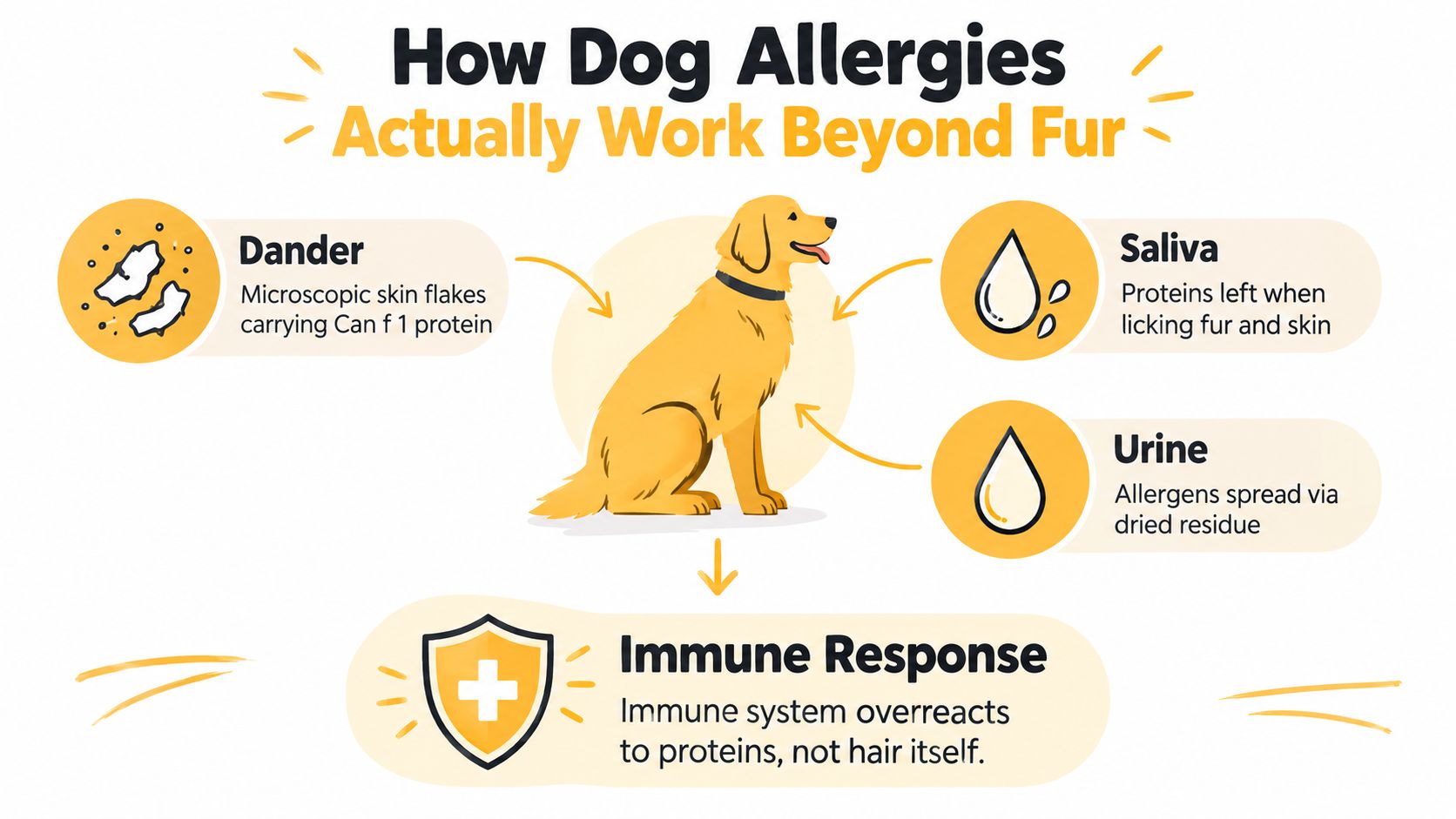
The allergy chain in plain language
Here's the sequence many overlook. First, the dog produces skin flakes and body fluids. Then those proteins spread onto furniture, bedding, carpets, and clothes. Finally, a sensitive immune system treats those proteins like a threat and overreacts.
That overreaction is why some people sneeze, itch, or get watery eyes after sitting on a couch the dog uses every day. It's not a sign that the home is dirty, and it doesn't mean the dog is “bad” for people. It means the person's immune system is sensitive to proteins that are hard to avoid completely.
No breed is guaranteed to be allergy-safe, and that matters more than any label on a breed description. Even breeds often marketed as better for allergies can still carry enough allergen exposure to cause symptoms in a real home. The Atlantic's reporting is useful here because it points out that homes with so-called hypoallergenic breeds didn't show lower Can f 1 levels, which is one reason the label can mislead families making an adoption decision.
What this means for everyday life
If a dog sleeps on the bed, rubs against the sofa, and follows family members from room to room, the allergen proteins go with it. Even a quick cuddle can transfer saliva and dander to sleeves, pillows, and upholstery.
A dog doesn't have to shed heavily to create a problem. It only has to live close enough to people for proteins to keep circulating.
That's why allergy management starts with exposure, not with fur length. If you understand that point, the Great Dane question becomes much easier to evaluate.
If you want a broader walkthrough of supporting dogs with sensitivities, the practical overview at how to help dogs with allergies is a useful companion read.
For dogs with skin and coat concerns that affect overall comfort, a product like DA-1™ Daily All-in-One - Senior Dog Support, Joints, Skin/Coat & More is presented as a once-daily powder with 18 human-grade ingredients and no fillers, but it's a general wellness option, not an allergy solution.
Great Dane Shedding and Dander and Why Size Matters
Great Danes are not famous for massive coats, but they still shed. Breed references describe them as year-round or moderate shedders, and that matters because every shed hair can carry skin flakes and dried residue into the home. Their coat is short, smooth, and easy to brush, but easy grooming doesn't mean low allergen exposure.
What separates a Great Dane from a smaller dog is scale. A giant dog has more body surface, produces more dander overall, drools more, and takes up more indoor space because of its size. The Atlantic notes that size matters because a larger dog generally sheds more dander, and even a smaller amount of shedding from a giant breed can disperse allergen widely.
Why a giant dog changes the indoor picture
A Great Dane doesn't just produce allergens, it moves them around. When a dog that large shakes, leans against furniture, or settles on a rug, the spread is broader than with a small dog. That's one reason an allergist quoted by The Atlantic suggested that, on size alone, a Chihuahua is likely less problematic than a Great Dane.
The point isn't that a short coat is useless. It's that body size can outweigh coat length when you're thinking about allergy exposure inside a house. A short-haired giant can still create a lot more contact with furniture, floors, and human clothing than a much smaller, less physically imposing dog.
What daily life looks like with a Dane
Think about the places a Great Dane naturally claims. The dog lies across the living room rug, nudges your leg in the kitchen, and leans into guests at the door. Each of those moments increases contact with skin flakes and saliva, which means more allergen transfer to the places people use every day.
Helpful way to judge risk: If a dog is likely to touch every room you use, its size can matter more than the texture of its coat.
The good news is that brushing and bathing can help reduce loose hair and some surface buildup, but they can't change the fact that a giant dog is still a giant dog. Great Danes also tend to be described as low maintenance in grooming terms, yet low grooming time isn't the same as low allergen impact.
If you want a closer look at coat care and how brushing affects loose hair and skin debris, this guide on dog skin and coat gives a practical foundation without making unsupported promises.
Common Misconceptions About Hypoallergenic Dogs
The word hypoallergenic causes a lot of confusion because people hear it as “safe for allergies.” That isn't what it means. It usually means lower allergen potential than some other dogs, not zero allergens, and it definitely doesn't guarantee a symptom-free home.
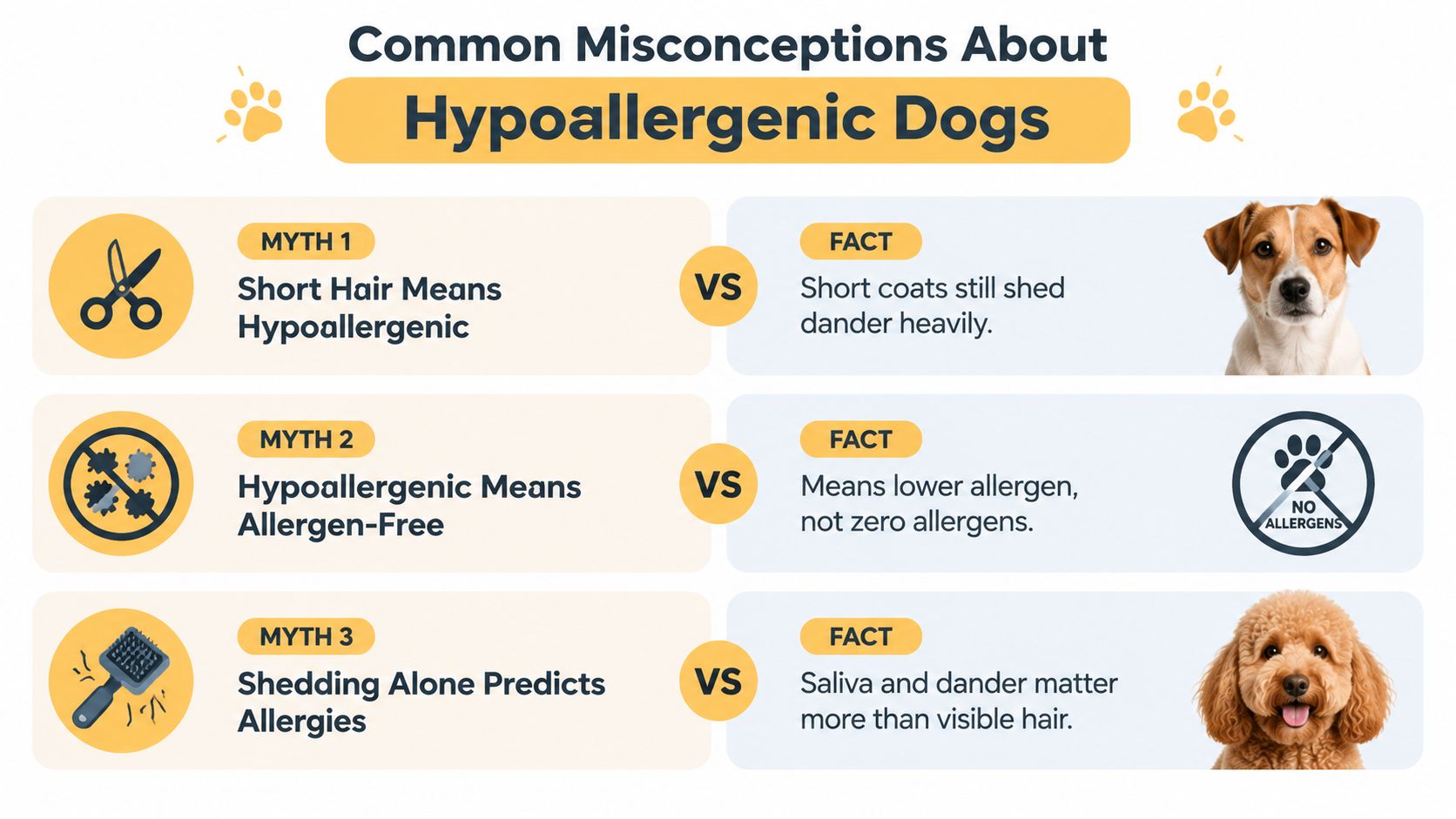
Myth versus reality
Myth: Short hair means fewer allergies.
Reality: Short coats can still shed dander heavily, and dander is where the allergen proteins live.
Myth: Hypoallergenic means allergen-free.
Reality: It means lower allergen risk, not no allergen risk at all.
Myth: Shedding alone predicts symptoms.
Reality: Saliva and dander matter more than visible hair, which is why a dog can look tidy and still trigger reactions.
Many families make avoidable mistakes. They choose a breed based on appearance, then learn too late that a “clean-looking” dog still fills a home with allergen proteins. The Atlantic's reporting is especially useful because it pushes back on the idea that lower-shedding breeds automatically create lower allergen homes.
A related confusion is thinking that flooring alone solves the problem. A home can be easier to clean, but a dog still brings proteins onto surfaces people touch constantly. For readers thinking about the broader home environment, a hypoallergenic carpet buyer's guide can help explain how flooring choices fit into an allergy-aware house, though it still won't change the biology of dog allergens.
What Great Danes change in that equation
A Great Dane isn't just another short-haired dog. Because of the breed's giant frame, the allergen load can spread more widely through the home, especially in rooms where the dog spends the most time. That makes the hypoallergenic label even less useful as a decision tool.
If you remember only one thing from this section, make it this. Allergen-free is not a real breed category. Once you stop expecting a magic label, the question becomes whether the specific dog and the specific household can coexist comfortably.
How Great Danes Compare to Lower Allergen Breeds
If you're still deciding on a breed, it helps to compare the traits that matter for allergies rather than relying on reputation. Great Danes sit in a very different risk category from breeds often considered lower-allergen because they combine a giant frame with steady shedding and frequent close contact with people. The comparison isn't about ranking dogs as “good” or “bad,” it's about matching exposure to household tolerance.
| Factor | Great Dane | Lower-Allergen Breed Types |
|---|---|---|
| Coat type | Short, smooth coat | Often curly, wiry, or low-shedding coat types |
| Shedding pattern | Year-round or moderate shedding | Usually lighter visible shedding |
| Dander spread | Higher potential because of giant-breed scale | Often lower spread because of smaller body size or coat structure |
| Saliva contact | More likely to reach furniture and people because of size and leaning behavior | Often less contact simply because the dog is smaller |
| Grooming burden | Low-maintenance coat care, but still regular brushing needed | Often more coat upkeep, but potentially less allergen spread |
| Allergy decision value | Poor fit for many allergy households | Sometimes a better starting point, though never guaranteed |
What the table really tells you
A lower-allergen breed type can still cause symptoms, so this isn't a promise of safety. It's just a reminder that size, shedding pattern, and contact behavior all affect exposure differently. A giant dog that sheds moderately may still spread more allergen than a small dog that sheds in less obvious ways.
Great Danes are also more likely to dominate shared spaces. That changes where allergen proteins settle, because the dog's body is more often near couches, beds, doorways, and kitchen floors. In other words, the comparison isn't just about coat mechanics, it's about how the dog lives inside the home.
A better way to choose
Instead of asking which breed is “hypoallergenic enough,” ask which dog gives you the lowest realistic exposure. Then layer in your own allergy history, how often you clean, whether the dog can stay out of bedrooms, and whether other family members are sensitive too.
If a breed already pushes the edge of your tolerance in a short visit, daily life is likely to be harder than the label suggests.
That's why Great Danes can be wonderful companions in some homes and the wrong choice in others. The breed comparison only works when you think in terms of exposure, not wishful thinking.
Living With Allergies and a Great Dane Practical Management Tips
Some families can reduce symptoms enough to live with a Great Dane, but the key word is reduce, not eliminate. That distinction matters, because environmental control can help a lot in mild cases and not nearly enough in moderate or severe ones. Recent coverage notes that allergy-related pet claims increased 35% in New York, Massachusetts, and Texas over five years, which underscores why practical guidance matters in busy indoor households where exposure adds up quickly. Great Dane allergy management discussion
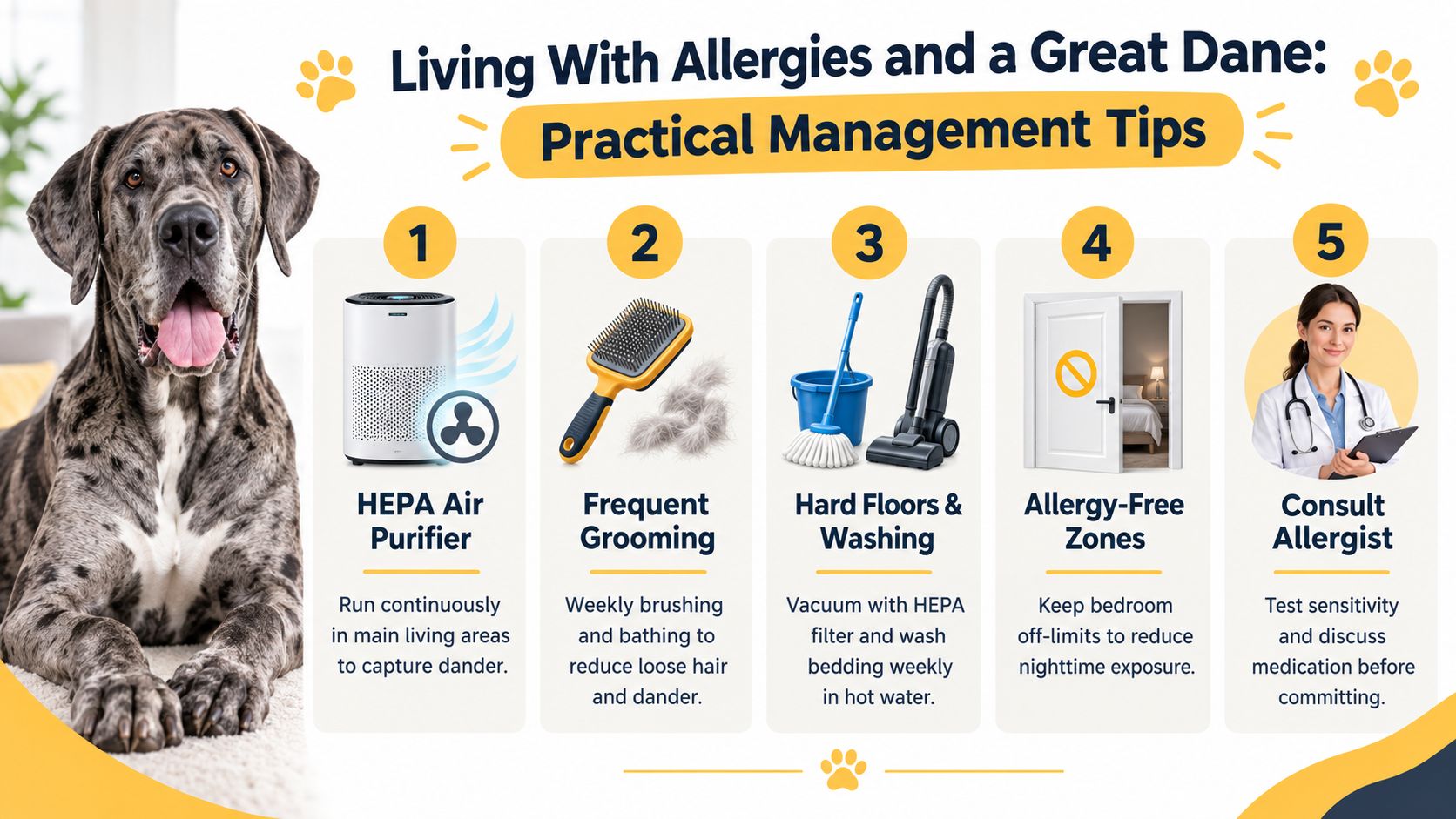
The daily habits that matter most
Start with the surfaces people touch the most. Frequent vacuuming with a HEPA filter, plus hard-floor cleaning where possible, helps remove settled dander before it gets kicked back into the air. Wash the dog's bedding often, and if the dog sleeps on fabric furniture, that fabric will need attention too.
Air quality matters next. A HEPA air purifier can help capture airborne particles in main living areas, especially rooms where the dog spends a lot of time. If you're comparing purifier options for allergy-focused households, shop EcoQuest Purifiers for allergies is one place readers sometimes look, but the larger point is simple, cleaner air support helps most when it's used consistently.
Grooming and room rules
Regular brushing can remove loose hair and some surface debris before it lands everywhere else. Bathing helps too, as long as it's done in a way that fits the dog's skin and coat needs. Keeping the bedroom off-limits is one of the most practical choices you can make, because nighttime exposure tends to be the hardest to ignore.
Hand washing after contact sounds small, but it breaks the chain between the dog and your face, pillows, or shared items. That matters in homes where the person with allergies still wants close contact but needs to reduce repeated exposure throughout the day.
Here's a simple order to follow:
- Protect the bedroom first: Keep one allergy-reduced space where you can sleep without constant exposure.
- Clean the air second: Use a HEPA purifier in the rooms that get the most dog traffic.
- Control the surfaces third: Vacuum, mop, and wash bedding on a steady schedule.
- Manage contact fourth: Brush the dog, wash hands, and limit face-to-fur contact.
When management isn't enough
If symptoms are strong even after careful cleaning, the dog is probably a poor fit. An allergist can help with testing, and that matters before you commit, not after you've already rearranged the house. The internal resource on the best dog supplements for allergies may also help you think about overall comfort support, though supplements do not replace environmental control or medical advice.
The cleanest answer is often the hardest one. If a Great Dane still leaves you symptomatic after practical steps, the right decision may be to choose a different breed rather than trying to force a living situation your body keeps rejecting.
Final Takeaways and How to Decide What Is Right for You
Great Danes are not hypoallergenic, and that won't change with a short coat or better grooming alone. Dog allergy symptoms come from proteins in dander, saliva, and urine, and a giant breed can spread those proteins widely because of its size and indoor presence. The decision isn't whether the breed carries a magic label, it's whether your home can tolerate the exposure that comes with a Great Dane.
If your allergies are mild and you're disciplined about cleaning, filtration, and room boundaries, living with a Great Dane may be possible. If your symptoms are moderate or severe, or if other family members react easily, the breed may be too much to manage comfortably. A short visit with the dog, followed by honest symptoms tracking and a conversation with an allergist, gives you far more useful information than any online label.
Quick decision frame
- Choose with caution if you react quickly to dog dander or saliva.
- Plan for management if you want one shared living space, not a dog everywhere.
- Consider another breed if your symptoms stay strong even with cleaning and filtration.
Great Danes can be loving, steady companions, but they're not a low-risk choice for allergy households. If you're still evaluating, keep the focus on allergen load, home setup, and your own symptom threshold, not on the hope that a giant dog will somehow behave like an allergy-free one.
If you're building a better daily care routine for your dog, visit Pure Paw Labs to explore science-backed, human-grade support designed for everyday canine wellness. Their all-in-one approach can be a practical fit for owners who want simple, consistent support alongside good home management and informed breed choices.