


You notice it when the light hits the coat sideways. The fur looks dusty even after a brush-out. Your dog pauses to scratch the same shoulder, then starts nibbling at a flank or rubbing along the couch. Maybe there are white flakes on the bed, or the belly feels a little rough instead of soft.
That's the point where a lot of owners reach for “something moisturizing,” which makes sense. But dry skin care works best when you think in terms of skin barrier repair, not just making the coat feel less dry for a day. A shiny topcoat can hide an irritated surface underneath.
A good dog moisturizer for dry skin can help. The trick is matching the product to the problem, applying it in a way that reaches the skin, and checking whether it's improving more than the surface look.
Table of Contents
- Why Your Dog Has Dry Flaky Skin Right Now
- How to Tell If Dry Skin Needs a Vet Visit First
- Choosing a Safe and Effective Dog Moisturizer for Dry Skin
- How to Apply Dog Moisturizer Correctly at Home
- Daily Habits That Keep Your Dog Skin Hydrated Longer
- Your Simple Plan for Lasting Relief and Healthy Skin
Why Your Dog Has Dry Flaky Skin Right Now
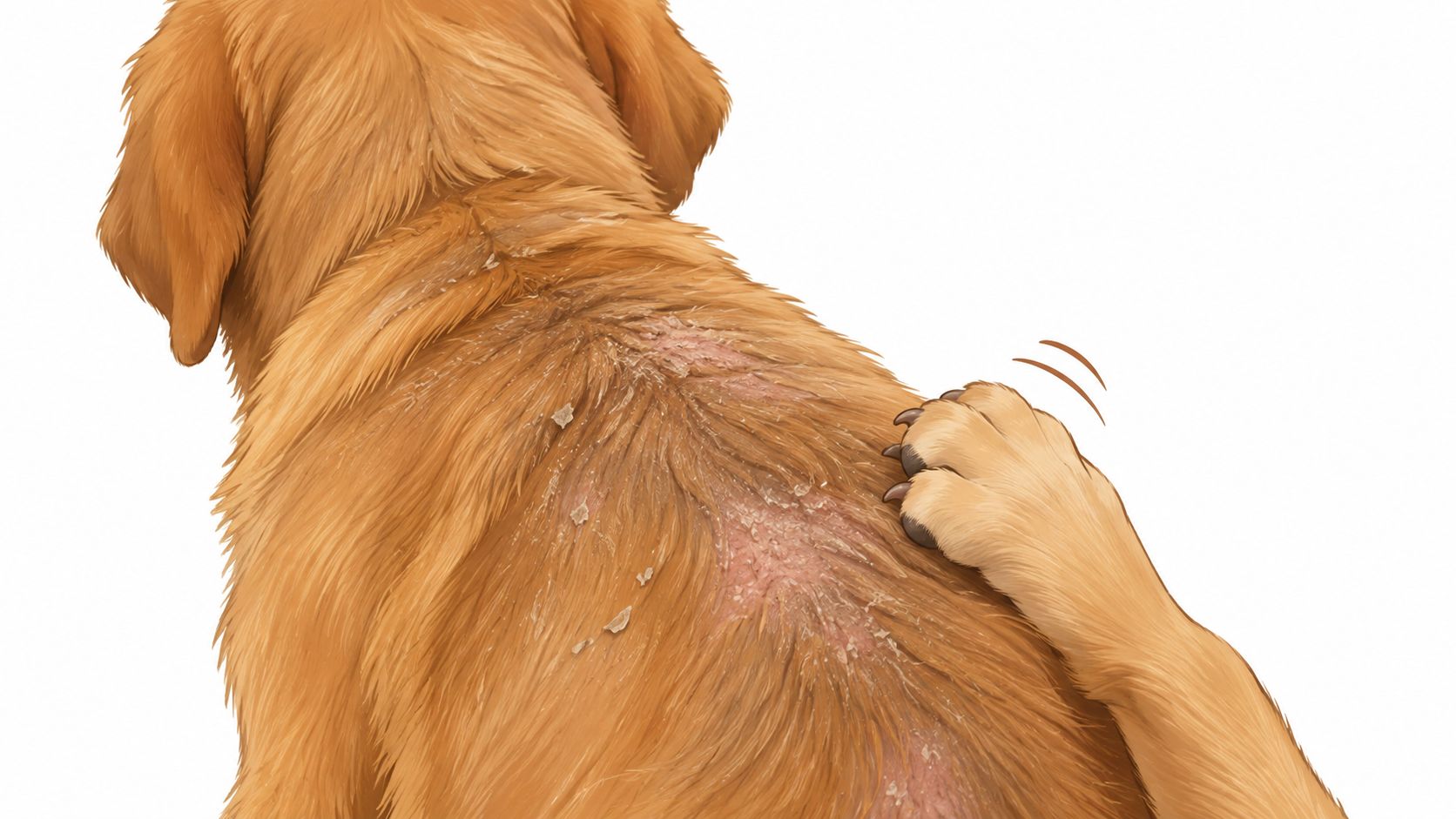
Dry skin rarely shows up as flakes alone. A dog with a compromised skin barrier often has a dull coat, mild itch, rough patches, static-y fur, and skin that feels tight or papery when you part the hair. On lighter coats, flakes stand out. On darker coats, you may notice scratching first.
The usual triggers
In everyday practice, the common causes are pretty predictable.
- Dry indoor air: Heat running all day can leave skin and coat brittle.
- Too many baths: Clean skin isn't the same as healthy skin. Over-bathing strips oils fast.
- Harsh shampoo: Strong fragrance, heavy detergents, or human wash products can leave dogs itchier than before the bath.
- Allergy-driven inflammation: Some dogs don't just have “dry skin.” They have itchy, reactive skin that dries out because the barrier is already struggling.
- Diet gaps or inconsistency: Skin turns over constantly. If the overall routine is patchy, the coat usually shows it.
- Age-related change: Older dogs often need more support to keep skin comfortable.
A lot of owners are dealing with more than one trigger at once. The classic example is an older dog getting frequent baths during allergy season while the furnace is running. In that situation, moisturizer helps, but it won't carry the whole load by itself.
A quick home check before you buy anything
Part the hair in three places. Check the back, belly, and near the tail base.
If you mostly see fine flakes with no smell, no moist spots, and only mild scratching, simple dryness is more likely. If you see redness, greasy buildup, crusts, odor, raw skin, or patchy hair loss, stop guessing and look deeper. That pattern leans away from plain seasonal dryness.
Practical rule: Moisturizer works best when the main problem is barrier dryness. It does much less when infection, fleas, or allergy flare are driving the itch.
If your dog also has thinning hair, this guide on dog flaky skin and hair loss is worth reading before you choose a topical.
How to Tell If Dry Skin Needs a Vet Visit First
Some dogs just need gentler skin care. Others need an exam before you put anything new on the coat. The difference matters because itch with inflammation is not the same problem as dryness without disease.
When dry skin is probably not just dryness
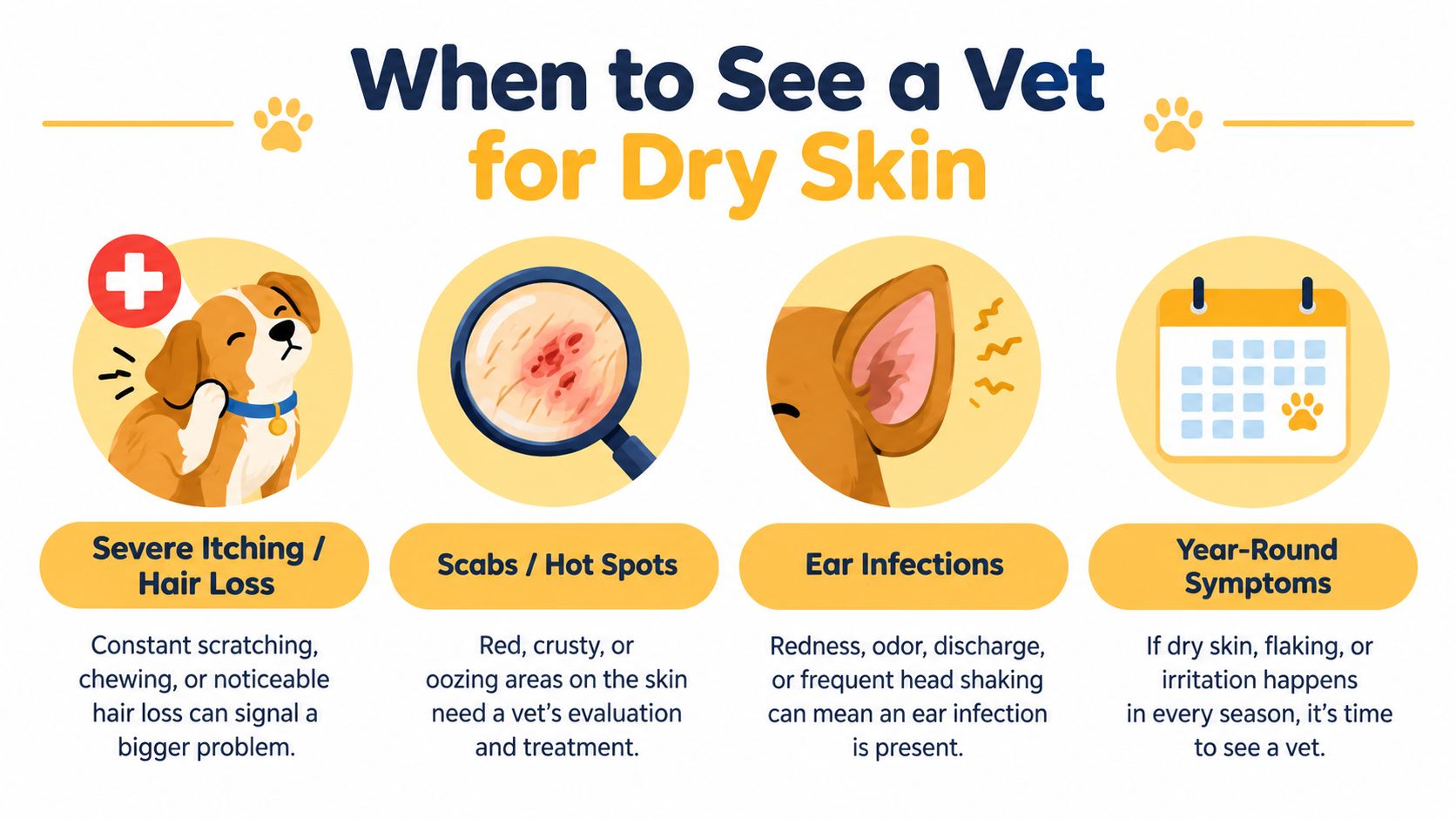
If your dog scratches hard enough to wake up, licks the feet, gets repeat ear trouble, develops scabs, or has symptoms through multiple seasons, think beyond moisturizer. Skin disease tied to allergy is common enough that it deserves a place high on the list. A review of canine atopic dermatitis describes it as a multifactorial, itchy skin disease with barrier dysfunction and reports published prevalence estimates of 3% to 15% of the general dog population, while also noting the true population prevalence remains uncertain. In a large U.S. study of 31,484 dogs seen at 52 veterinary practices, atopic or allergic dermatitis was recorded in 4.7% of dogs, which gives a practical sense of how often allergy-linked skin disease shows up in general practice (canine atopic dermatitis review and prevalence context).
That doesn't mean every flaky dog has atopic dermatitis. It does mean persistent itch deserves respect, especially in dogs with a history that fits.
Red flags that should move you toward an appointment
- Hair loss: Especially around the face, feet, armpits, belly, or tail base.
- Skin damage: Scabs, hot spots, oozing areas, or thickened dark skin.
- Ear involvement: Recurrent ear debris, head shaking, or inflamed ears.
- No clear trigger: The skin stays bad even when weather, baths, and routine improve.
- Breed pattern: Some breeds show up more often in atopy data, including Shih Tzu, Cocker Spaniel, and French Bulldog dogs in one registry study from the same review above.
If your dog's skin signs fit that picture, a moisturizer can still be part of care, but it shouldn't be the first and only move.
This short video gives a helpful owner-level overview of itchy skin patterns and when home care stops being enough.
What to write down before the visit
Bring specifics. Vets and vet techs can do more with a tight history than with “he's been itchy for a while.”
- When it started: Sudden or gradual.
- What changed first: Bath product, food, season, bedding, cleaning supplies, travel.
- Where it shows up: Paws, ears, belly, back, elbows, tail base.
- How often you bathe: And exactly what you use.
- Flea control status: Current, inconsistent, or unknown.
- Any home treatment already tried: Including sprays, balms, wipes, and supplements.
If you want a home-care overview before the appointment, dog itchy skin remedies lays out the basics clearly. For older dogs with multiple age-related needs, DA-1™ Daily All-in-One - Senior Dog Support, Joints, Skin/Coat & More is a multi-system formula described as delivering 18 human-grade ingredients in one scoop, targeting cells, gut, and joints, with no pills and no fillers. That kind of product can fit into a broader care plan, but it doesn't replace diagnosis when the skin looks inflamed or infected.
Choosing a Safe and Effective Dog Moisturizer for Dry Skin
The label “moisturizing” doesn't tell you much. Some products mainly leave an oily film. Others support the actual barrier, which is what matters if your dog's skin is flaky, reactive, or rough after bathing.
What ingredients are doing useful work
For a dog moisturizer for dry skin, I look first for humectants and barrier-support lipids.
Humectants draw water into the upper skin layers. Barrier lipids help the outer layer hold that moisture instead of losing it right away. In a canine model of chronic barrier disruption, a moisturizer with glycerol and propylene glycol applied twice daily for one week to damaged skin showed lower transepidermal water loss, less epidermal thickening, and less inflammatory infiltrate than untreated skin. The important takeaway is not just the ingredient list. It's that barrier products are strongest when they prove benefit with objective measures like transepidermal water loss rather than owner impression alone (paired-site canine barrier study using TEWL and histology).
Ceramides also deserve attention. In a clinical study of 20 dogs with mild-to-moderate canine atopic dermatitis, a ceramide-containing moisturizer used for 4 weeks was associated with significant reductions in transepidermal water loss, itch, and lesion scores, while hydration increased. A separate 18-dog dimethicone 2% pilot found no significant improvement in clinical signs or TEWL after 4 weeks, which is a useful reminder that not all moisturizers perform the same way (ceramide moisturizer findings and dimethicone comparison).
Don't buy by texture alone. A product that feels rich on your fingers can still do very little for the skin barrier.
Ingredients and formats to avoid
A lot of irritation starts with “nice-smelling” products.
- Fragrance-heavy formulas: These can sting already dry skin.
- Essential oils: Dogs groom themselves. Strong oils add unnecessary risk and irritation.
- Alcohol-heavy sprays: Fast-drying can mean extra drying.
- Human lotions: Some contain ingredients that aren't dog-safe, and some are made for different skin needs.
- Steroid-containing products unless your vet directs it: These are treatment drugs, not casual moisturizers.
If you're comparing labels and want a human skincare primer on why fragrance-free matters, this guide can help you find a fragrance-free body lotion. The principle carries over well to dog products even though the skin use case is different.
Moisturizer types compared for dry skin needs
| Format | Best For | Barrier Support | Watch Out For |
|---|---|---|---|
| Balm | Paws, nose, elbows, small rough spots | Good surface protection, especially on exposed areas | Too greasy for dense coats, can trap debris if overused |
| Lotion | Belly, armpits, thin-coated areas | Can be useful if it contains humectants and lipids | May sit on fur instead of skin if applied heavily |
| Spray | Large areas, light maintenance | Variable, depends heavily on formula | Easy to under-dose, common with alcohol-heavy bases |
| Ceramide cream | Dogs with mild barrier dysfunction and itch | Stronger barrier-focused option | More effort to work through thick coats |
| Conditioning rinse or leave-in | Post-bath support | Helpful as part of routine | Can be mistaken for a stand-alone solution |
Match the format to the body area
Paw pad cracks need a different product than belly flakes. Thick double coats often do better with a lighter product applied carefully to the skin, not a waxy layer over the fur. Thin-coated dogs can tolerate creams or lotions more easily on the trunk.
Patch test first. Use a tiny amount on one small area and watch for extra redness, licking, or rubbing over the next day. If you're also evaluating whether diet support might be part of the answer, this piece on vitamin support for dog skin is a useful next read.
How to Apply Dog Moisturizer Correctly at Home
Most application problems aren't about the product. They're about not getting it onto the skin, using too much, or quitting before the barrier has time to settle down.
Start with skin access, not product
Brush first if the coat is thick or flaky. You're not trying to create a showroom finish. You're clearing loose debris so the moisturizer can touch skin instead of sitting on a mat of fur. If the area is dirty, wipe or rinse it gently and let it dry first.
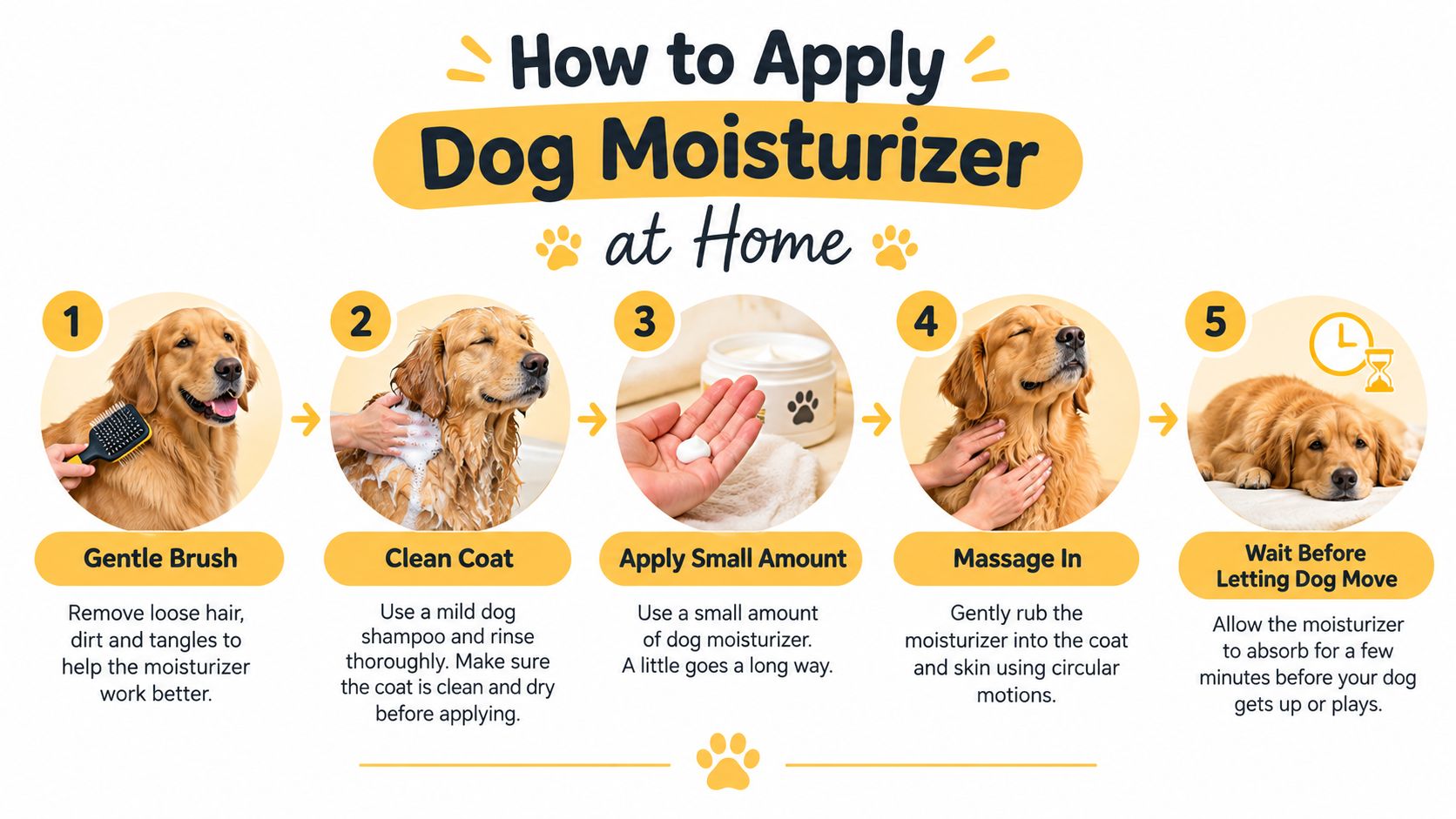
For small spots like elbows, nose edges, or paw pads, a thin film is enough. For belly or side-of-body dryness, work in sections. Part the hair, dab a small amount onto the skin line, then massage with your fingertips. If the fur looks soaked and greasy, you probably used too much.
Frequency matters more than owners expect
Consistency beats the occasional heavy coating. In the barrier-disruption study noted earlier, measurable improvement depended on a twice-daily schedule in a damaged-skin model. That doesn't mean every dog needs the same routine forever, but it does tell you something important. Under-dosing is common.
A practical home rhythm looks like this:
- Early phase: Apply as directed on the label, often once or twice daily for dry active areas.
- Maintenance phase: Reduce only after the skin feels less rough and the scratching settles.
- Post-bath support: Reapply after bathing if the product is intended for that use.
Home check: Take a clear photo before starting, then another from the same angle each week. Track flakes, redness, and scratching in a note on your phone.
Keep the session calm and clean
Short sessions work better than wrestling matches. Put a mat down, use a lick mat or a few treats, and finish one zone at a time. Dogs that hate handling often tolerate shoulder, chest, or side work better than feet at first.
A few troubleshooting notes help:
- If your dog licks the product right away: Distract with a chew, use an e-collar if your vet has advised it, or apply at rest time.
- If the coat mats after application: You're likely over-applying or using the wrong format for that coat type.
- If the skin gets redder: Stop and reassess. The product may be irritating, or the skin may need medical treatment first.
- If there's greasy residue on bedding: Cut back the amount and focus on thinner, more targeted application.
The most useful timeline is about four weeks when you're evaluating a barrier-support plan, because that matches the ceramide moisturizer window from the clinical study above. You're looking for less flaking, less scratching, softer texture, and calmer-looking skin. If only the fur feels softer and the dog is still itchy, that's not the result you want.
Daily Habits That Keep Your Dog Skin Hydrated Longer
Topicals help most when the rest of the routine stops undoing them. Dogs with dry skin usually improve faster when owners tighten up the whole care loop instead of hunting for a miracle product.
The routine that protects your progress
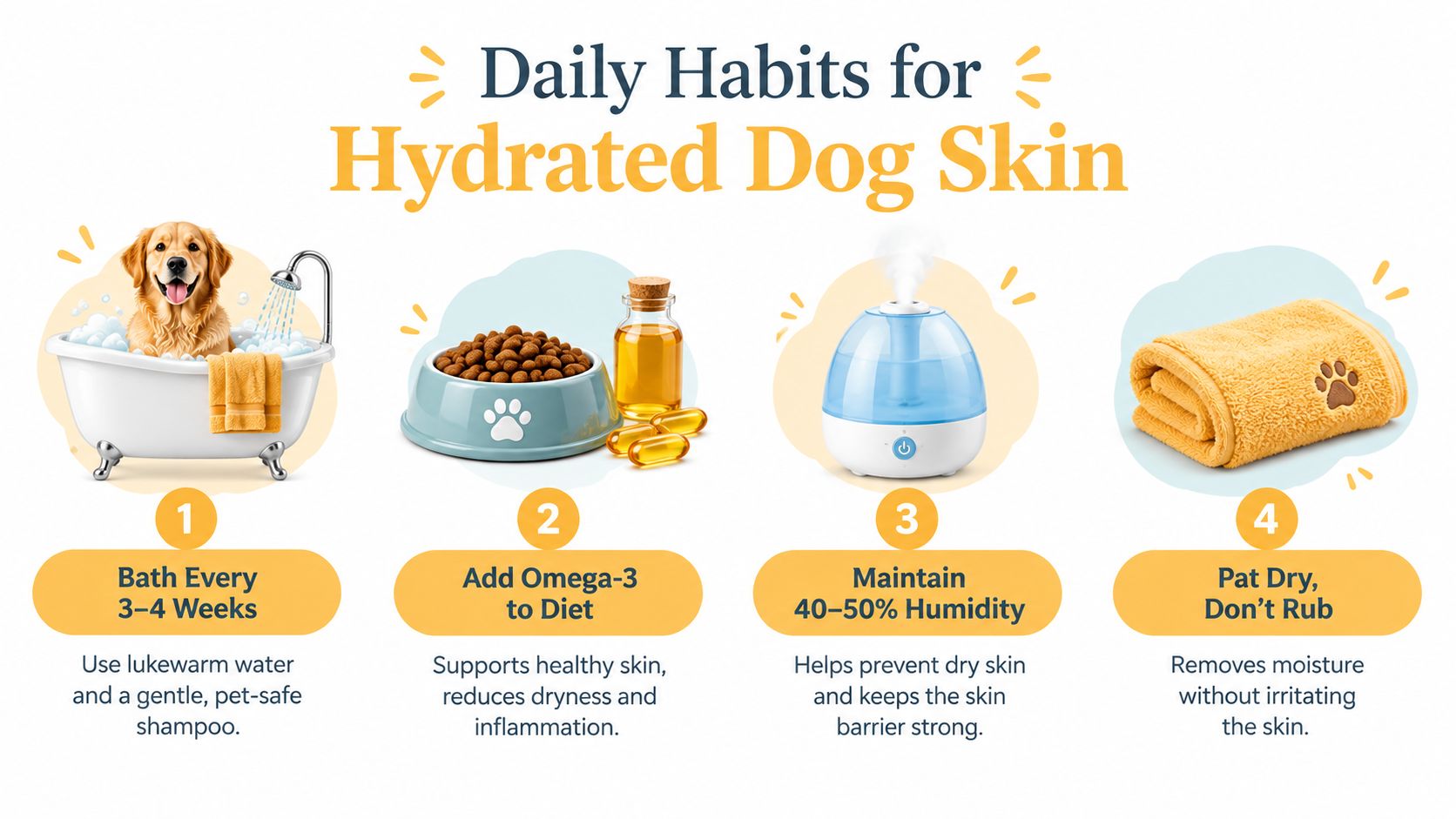
Bathing is the first place I look. Use lukewarm water, rinse thoroughly, and avoid the “extra clean” mindset. A gentle shampoo with oatmeal or barrier-support ingredients is usually easier on dry skin than strong deodorizing formulas. Pat dry instead of rubbing hard with a towel.
Indoor air matters too. If the house feels dry to you, it's dry for your dog's skin as well. Wash bedding regularly with a mild detergent, keep up with flea prevention, and wipe paws after outdoor exposure if weather or surfaces are irritating.
Skin care fails quietly when the environment keeps stripping the barrier faster than you rebuild it.
Support from the inside
Nutrition won't replace topical care, but it often makes the routine more stable. Dogs do better when meals are consistent, water is always available, and any supplement plan is simple enough to stick with. Many owners do best with a single daily product rather than rotating powders, oils, and chews without a clear system.
That's where an all-in-one can make sense as an optional support layer alongside diet and topicals. A once-daily, human-grade, vet-formulated supplement can help simplify skin and coat support within a broader wellness routine, especially if your dog already needs joint or digestive support too.
A realistic weekly rhythm
You don't need a spa calendar. You need repeatable habits.
- Most days: Quick brush, brief skin check, fresh water, consistent meals.
- After walks if needed: Wipe irritants from paws and dry skin folds well.
- After baths: Use your leave-in or spot moisturizer while the skin is clean.
- At set intervals: Wash bedding and inspect elbows, paw pads, belly, and ear area.
The dogs that stay comfortable longest are usually the ones on boring, steady routines. That's good news, because steady is easier than constantly changing products.
Your Simple Plan for Lasting Relief and Healthy Skin
If your dog's skin is flaky and itchy, start with the obvious question. Is this plain dryness, or does it look inflamed, infected, or allergy-driven? That one decision saves a lot of wasted effort.
Once the skin looks appropriate for home care, choose a dog moisturizer for dry skin that supports the barrier instead of just coating the coat. Humectants and ceramide-style barrier support make more sense than heavy fragrance or greasy shine. Then apply it where the skin needs it, not just where the fur is easiest to reach.
Give the routine enough time to work. Use photos, touch, and itch notes to judge progress over the next month. If the flakes ease up, the skin feels softer, and your dog stops scratching as much, stay consistent and taper carefully. If nothing changes, or if the skin worsens, circles back to the vet.
The owners who get the best results usually do three things well. They correct the trigger, use the right format for the right body area, and stay consistent long enough to see whether the barrier is recovering. That's a much better plan than buying a random bottle and hoping for the best.
Pure Paw Labs focuses on science-backed, human-grade dog supplements that can fit into a broader skin and coat routine when you want internal support alongside topical care. If you're trying to simplify daily wellness without juggling multiple products, visit Pure Paw Labs and look at the options that support skin, coat, and overall day-to-day comfort.