


You notice white flakes on your dog's bedding, then part the coat and find thinning fur along the back or small bare patches near the tail. It's easy to blame dry air, seasonal shedding, or a new food, but flaky skin and hair loss together deserve a more careful look.
The important point is that this isn't one disease with one universal remedy. It's a syndrome, meaning a visible combination of signs that can result from parasites, infection, allergies, hormonal disease, nutrition problems, or repeated scratching. Your first job isn't to choose a supplement. It's to recognize the pattern, protect the skin from further irritation, and arrange the right evaluation.
Table of Contents
- Why Dog Flaky Skin and Hair Loss Often Appear Together
- The Six Main Causes Every Owner Should Know
- How Vets Diagnose the Real Problem
- Safe Home Care Steps You Can Start Today
- Evidence-Based Treatment Options That Work
- Nutrition and Supplements for Long-Term Skin Health
- When to Stop Guessing and See a Vet
- Common Myths and Questions Owners Still Ask
Why Dog Flaky Skin and Hair Loss Often Appear Together
Flakes are visible scale, made of skin cells that are being shed too quickly or unevenly. Hair loss, also called alopecia, happens when hair follicles stop producing normally, become inflamed, or lose hair through scratching, licking, chewing, and rubbing. When both signs appear, they often share the same underlying disruption of the skin barrier.
Healthy skin helps retain moisture, defend against microbes, and support normal hair growth. If that barrier becomes irritated, the skin may produce excess scale or oil. Inflammation can interrupt the hair growth cycle, while itching or discomfort causes your dog to damage the coat mechanically. That's why a dog may develop flakes first, then show broken hairs, thinning areas, or bald patches.
Clinical data support treating this as a regular veterinary concern rather than a cosmetic nuisance. In one survey of 1,299 dogs, dermatological disorders were documented in 17.0%, while scaling or crusting appeared in 13.02% and alopecia in 8.84% of examined dogs, as reported in this clinical study of canine skin disorders. A separate hospital-based population also found dermatological disease was common, reinforcing that coat changes frequently bring dogs into veterinary care.
Practical rule: Flakes alone may be mild. Flakes plus patchy or progressive hair loss are a pattern worth investigating.
Look at the skin, not just the fur. Is it dry and white, greasy and yellow, red, crusted, moist, or smelly? Does the hair loss form matching areas on both sides, irregular patches, a thinning strip, or a ring? Those details help your veterinarian separate simple surface irritation from a deeper dermatologic or internal problem.
For a useful visual overview of possible triggers, this guide to dog dandruff causes explained can help you recognize what you're seeing. It shouldn't replace an examination, especially if the coat is changing quickly or your dog is uncomfortable.
The Six Main Causes Every Owner Should Know
The most useful early clues are location, symmetry, and scale texture. They won't provide a diagnosis, but they can help you describe the problem accurately.
Parasites
Fleas often cause irritation over the lower back, rump, and tail base. Flea dirt may look like dark, dry specks rather than white flakes. Mites can produce more dramatic scaling, crusts, intense itching, or patchy hair loss. Demodex, Sarcoptes, and Cheyletiella are among the parasites a veterinarian may need to investigate.
If you're considering household flea control, review safety carefully and use veterinary guidance for products applied to your dog. General information about natural flea solutions may help with environmental thinking, but it doesn't confirm the cause or replace dog-specific parasite treatment.
Allergies
Flea allergy dermatitis can cause severe itching after limited exposure. Food and environmental allergies more often involve the feet, face, ears, armpits, groin, or belly, although patterns vary. Repeated licking and scratching may create broken hairs, redness, scabs, and secondary infection.
Infection
Bacterial pyoderma may produce pustules, crusts, redness, and areas of broken coat. Malassezia yeast overgrowth often causes greasy or yellowish scale, darkened skin, thickening, itching, and a musty odor. Infection may be the primary issue, or it may develop after allergies or parasites damage the barrier.
Endocrine disease
Hormonal disorders often cause gradual, relatively symmetrical thinning, especially over the trunk, flanks, or abdomen. Hypothyroidism and Cushing's disease can affect coat quality and skin resilience. Increased thirst, increased urination, weight change, low energy, or a pot-bellied appearance make internal testing more important.
Nutrition and metabolism
A poorly balanced diet, malabsorption, or a problem affecting nutrient use can lead to dull coat quality and poor regrowth. Nutritional problems usually cause diffuse changes rather than one sharply defined irritated patch, but appearance alone can't rule out other categories.
Behavioral or mechanical damage
Over-grooming, licking from stress, rubbing against surfaces, or pressure over bony areas can remove hair. The skin may look fairly normal at first, with broken hairs concentrated where the dog can reach or where friction occurs. Medical causes must be ruled out before labeling the behavior as anxiety.
| Cause Category | Flake Type | Hair Loss Pattern | Typical Locations | Key Owner Clue |
|---|---|---|---|---|
| Parasites | Dry scale, crusts, or dark flea debris | Patchy, broken, or moth-eaten | Tail base, back, ears, face, legs | Itching, flea evidence, or contact with other animals |
| Allergies | Dry scale with redness or crusting | Self-trauma, thinning, broken hairs | Feet, ears, face, belly, groin | Recurring itch or ear problems |
| Infection | Greasy, yellow, crusted, or moist | Patchy or widespread | Folds, trunk, paws, ears | Odor, pustules, redness, or discharge |
| Endocrine disease | Dry, persistent scale | Gradual, symmetrical thinning | Trunk, flanks, abdomen | Low energy, weight or drinking changes |
| Nutrition or metabolism | Dry, dull scale | Diffuse thinning or poor regrowth | General coat | Diet concern or digestive signs |
| Behavioral or mechanical | Variable, often light scale | Reachable or pressure-related patches | Limbs, flanks, elbows | Licking, rubbing, or a stress trigger |
How Vets Diagnose the Real Problem
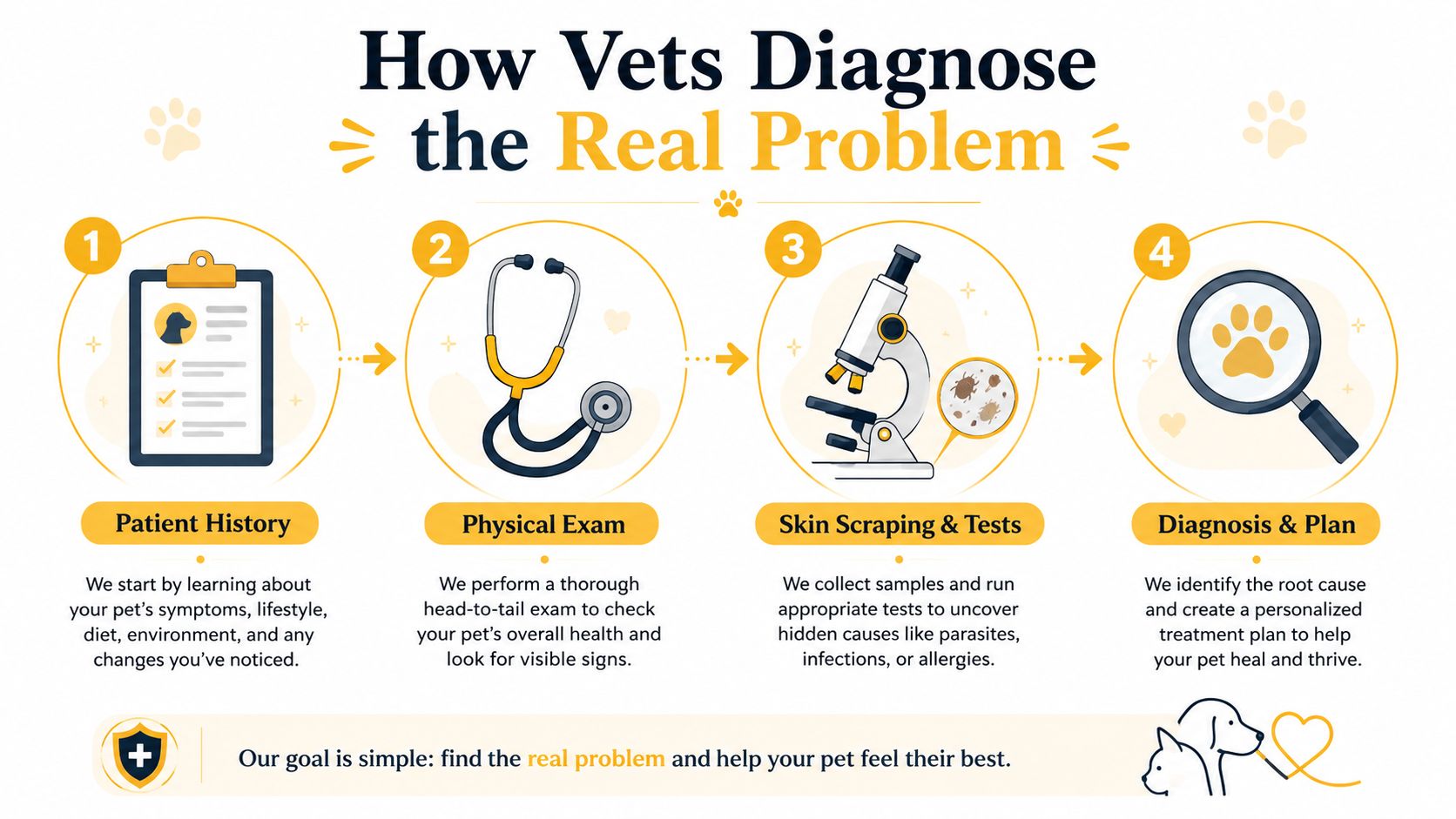
A good dermatology appointment starts before the microscope. Your veterinarian will ask when the flakes and hair loss began, whether they're spreading, how often your dog scratches, what food and treats your dog receives, and which flea or mite preventives have been used. Bring the names of shampoos, supplements, medications, and home remedies, even if you used them only briefly.
The physical examination then maps the pattern. Your vet may inspect the ears, paws, skin folds, abdomen, tail base, and coat density, while also checking the dog's general condition. Enlarged lymph nodes, weight changes, abnormal skin thickness, or evidence of pain can redirect the workup toward a broader medical problem.
What the first tests can show
A fine-tooth flea comb can reveal fleas or flea debris. Skin scrapings may detect mites, while tape impressions or surface cytology can show yeast, bacteria, inflammatory cells, or other clues. A trichogram, which examines hairs under magnification, helps determine whether hairs are breaking, being pulled out, or failing to grow normally.
Depending on the pattern, the veterinarian may recommend fungal culture, bacterial culture, allergy investigation, thyroid testing, adrenal testing, or a biopsy. The broader diagnostic approach for canine alopecia includes these targeted tools because hair loss can arise from parasitic, infectious, allergic, hormonal, autoimmune, or neoplastic disease, as outlined in this veterinary overview of dog hair loss.
Empirical treatment can sometimes provide temporary relief, but guessing may waste time and blur the signs needed for diagnosis. A referral to a veterinary dermatologist makes sense when initial tests are unrevealing, the disease keeps recurring, or treatment requires advanced allergy or biopsy planning.
Safe Home Care Steps You Can Start Today
Home care should keep the skin calm and preserve useful information for the appointment. It shouldn't attempt to cure unexplained hair loss.
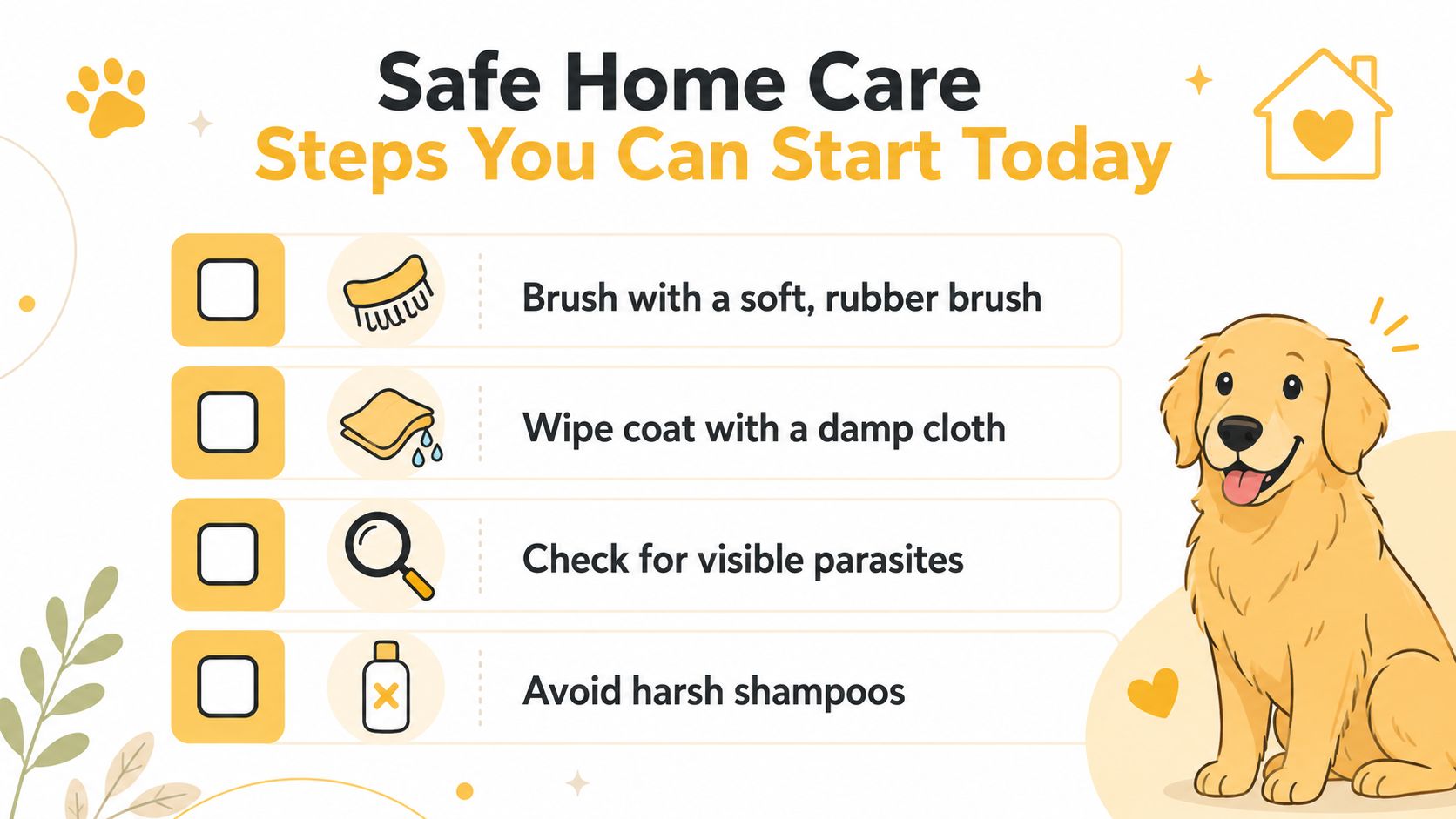
Start with gentle brushing if your dog's skin isn't painful, raw, or heavily crusted. Use a soft brush, work in the direction of hair growth, and stop if your dog flinches or tries to escape. Brushing can remove loose scale and hair, but aggressive grooming can worsen inflammation and create more breakage.
A lukewarm bath with a gentle, fragrance-free shampoo made for dogs may be reasonable while you wait, provided the skin isn't open, infected-looking, or painful. Keep bathing limited unless your veterinarian has prescribed a medicated schedule. Rinse extremely well and pat the coat dry rather than scrubbing.
Useful observations to record
- Check for parasites: Comb over a white paper towel and look for moving insects or dark debris. Don't assume a negative check rules out parasites.
- Photograph the pattern: Take dated photos from the same angles, including a close view of flakes, redness, or bare skin.
- Protect irritated areas: Prevent licking or chewing when possible, but don't apply unapproved creams or oils.
- Avoid barrier damage: Skip human dandruff shampoo, essential oils, hydrogen peroxide, dish soap, and repeated bathing.
You can also review this practical guide to dog itchy skin remedies, then discuss any proposed remedy with your veterinarian. A new diet or supplement can change the picture, trigger digestive upset, or distract from the cause, so it's usually better to wait until the examination.
If your dog has open sores, strong odor, persistent scratching, or rapidly spreading hair loss, home care should be limited to preventing further trauma while you arrange veterinary help.
Evidence-Based Treatment Options That Work
Treatment works best when it targets the cause rather than the flakes. Your veterinarian may combine topical care, prescription medication, and supportive nutrition, but the correct mix depends on what testing reveals.
Topical treatment
Medicated shampoos can reduce surface scale and target specific organisms or abnormal oil production. Products containing ingredients such as chlorhexidine, miconazole, or salicylic acid may be used for bacterial, yeast, or seborrheic presentations. Some dogs also benefit from leave-in conditioners or barrier-support products.
Follow contact-time instructions carefully. A product may need to remain on the coat before rinsing, and incomplete rinsing can worsen dryness. Monitor for increased redness, discomfort, or irritation after application.
Systemic treatment
Confirmed mites require an appropriate antiparasitic plan. Bacterial infections may need antibiotics, while yeast disease may require antifungal treatment. Dogs with allergic itch may receive veterinarian-selected anti-inflammatory therapy, including options such as Apoquel or Cytopoint, when appropriate for the individual patient.
Steroids and other itch-control medicines can make a dog feel better, but they may also mask infection or complicate diagnosis if used without a clear plan. Don't stop or extend prescription treatment without asking the prescribing veterinarian.
Supportive treatment
Marine oil supplementation has evidence in dogs with pruritic skin disease. In a double-blinded crossover study, supplementation at roughly 39 mg/kg EPA plus 26 mg/kg DHA significantly improved pruritus, alopecia, self-trauma, and coat character compared with corn oil, according to this clinical study of marine oil supplementation. That supports omega-3s as an adjunct, not as a substitute for parasite control, infection treatment, or endocrine testing.
| Underlying Cause | First-Line Treatment | Time to See Improvement | Key Precaution |
|---|---|---|---|
| Parasites | Targeted veterinary antiparasitic treatment | Depends on the parasite and skin damage | Treat only with products suitable for the dog |
| Bacterial infection | Topical care, with systemic treatment when indicated | Improvement follows control of infection | Complete the prescribed course |
| Yeast overgrowth | Antifungal topical or systemic treatment | Odor and irritation may improve before coat regrowth | Watch for recurrence if the trigger remains |
| Allergic disease | Itch control, trigger management, and skin care | Relief and hair regrowth may occur on different schedules | Recurrent disease often needs long-term management |
| Endocrine disease | Treatment of the hormonal disorder | Coat recovery may lag behind internal improvement | Follow-up bloodwork may be needed |
| Seborrhea | Medicated cleansing and barrier support | Ongoing management may be required | Rule out secondary causes first |
For broader nutrition guidance, review whether dogs can have fish oil with your veterinarian before choosing a product or dose. Rechecks matter because a coat can look better while infection, allergy, or hormonal disease remains active underneath.
Nutrition and Supplements for Long-Term Skin Health
Nutrition supports skin repair, but it can't correct every cause of alopecia. Once parasites, infection, allergy, and endocrine disease have been assessed, your veterinarian can decide whether the daily diet needs adjustment or whether a targeted supplement makes sense.
Skin cells normally take about three weeks to move through their renewal process, according to veterinary background guidance on canine dandruff. That means visible coat changes usually need patience. A nutritional plan may require several weeks before you can judge the result, and coat regrowth may take longer than the initial reduction in flakes.
What nutrition contributes
A complete, balanced diet supplies protein and nutrients needed for keratin, the structural material in skin and hair. Zinc and vitamin A also contribute to normal skin function, but adding isolated vitamins without a demonstrated need can be dangerous. Megadosing vitamins A or D can cause toxicity, so avoid stacking multiple products casually.
Marine sources provide EPA and DHA directly. Plant-based oils may provide a different omega-3 fatty acid that dogs convert less efficiently, so source and formulation matter. In dogs with pruritic disease, the marine oil evidence described earlier supports EPA and DHA as supportive anti-inflammatory nutrients, not standalone treatment.
A commercial skin-support diet may be useful when your veterinarian wants controlled ingredients or a therapeutic nutrient profile. A home-cooked diet needs careful formulation so it remains complete and balanced, especially when it's fed long term.
For general supplement considerations, this guide to the best supplement for dog coat can help you prepare questions for your veterinarian. If a broader daily formula fits your dog's needs after medical causes are addressed, DA-1™ Daily All-in-One - Senior Dog Support, Joints, Skin/Coat & More provides one scoop with 18 human-grade ingredients aimed at cells, gut, and joints, according to the product information. It should be viewed as nutritional support, not a diagnostic or disease treatment.
A sensible plan is simple: weigh your dog, choose one trusted product, record the diet and dose, and take monthly photos in consistent lighting. Reassess the coat and the overall plan with your veterinarian rather than adding several products at once.
When to Stop Guessing and See a Vet
Some skin changes can wait for a routine appointment. Others shouldn't.
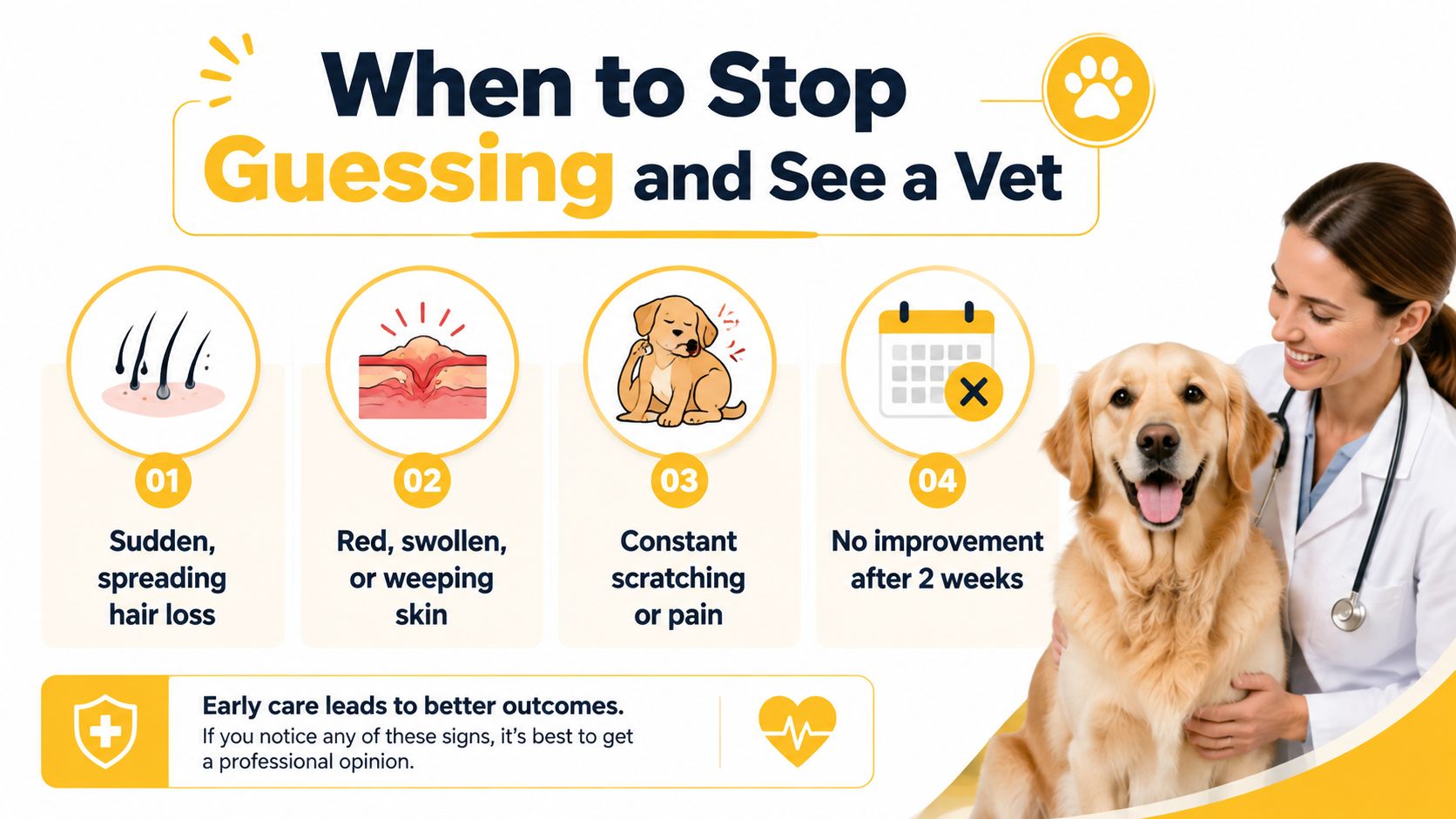
Arrange veterinary care promptly if hair loss is spreading over a short period, the skin becomes red or swollen, or your dog develops weeping areas, pain, rapidly enlarging hot spots, or persistent scratching that interrupts sleep. A foul coat odor can signal infection, particularly when it appears with greasy scale, crusts, or redness.
Choose the right level of urgency
- Same-day assessment: Seek prompt care for painful skin, rapidly spreading lesions, open or weeping sores, severe scratching, or a dog who can't settle.
- Urgent medical advice: Contact the clinic quickly if flaking and hair loss occur with lethargy, fever, appetite loss, unusual thirst, or increased urination.
- Routine appointment: A few days may be reasonable for mild, stable flakes without irritation, provided the coat isn't thinning progressively.
- Lower threshold for puppies and seniors: Young and older dogs, along with dogs who have known allergies or immune conditions, deserve earlier assessment when the pattern changes.
Bring dated photos, the onset timeline, current food and treats, parasite-prevention details, and a list of every shampoo, supplement, or medication you've tried. That information can prevent repeated experiments and help the veterinarian choose the most useful first tests.
Early attention often makes the plan more focused. It can also reduce the chance that scratching or barrier damage allows a secondary infection to become part of the problem.
Common Myths and Questions Owners Still Ask
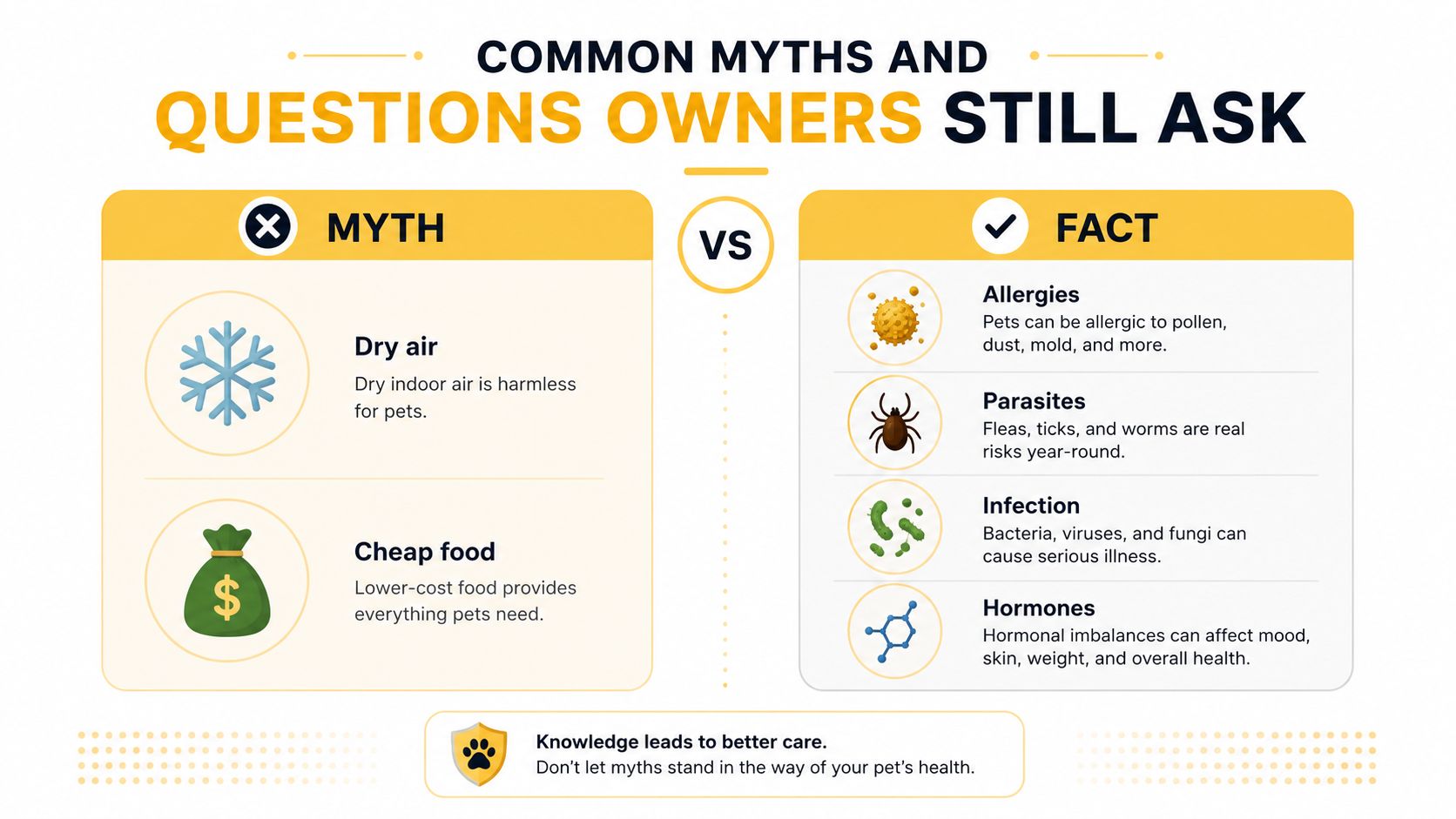
Myth: Flakes always mean dry air or inexpensive food. Dry indoor air and diet can contribute, but they're only two possibilities. Parasites, infections, allergies, seborrhea, and hormonal disease need consideration when hair loss appears at the same time.
Does bathing more often fix dandruff? Not necessarily. Over-bathing or using harsh products can remove protective oils and worsen irritation. A veterinarian may prescribe frequent medicated baths for a specific condition, but that's different from repeatedly washing an undiagnosed dog.
Are oatmeal shampoos a cure? They may soothe some mild irritation, but they won't eliminate mites, clear a bacterial infection, or correct endocrine disease. The same caution applies to coconut oil, essential oils, and over-the-counter coat products. Natural doesn't automatically mean safe, and oily products can worsen a greasy or yeast-associated coat.
Can omega-3 supplements reverse hair loss? They may support the inflammatory response and skin barrier in selected dogs, as discussed earlier, but they won't remove a parasite or treat an untreated hormonal disorder. Product quality, dose, and interactions also matter.
Can my dog's condition spread? Some infectious and parasitic causes can affect other animals, and certain mites or fungi may pose a concern for people. Don't share bedding or grooming tools between pets until your veterinarian identifies the cause and advises you on cleaning.
Will the hair grow back? Often, regrowth is possible once the underlying problem is controlled, but the outcome depends on follicle damage, disease duration, and the diagnosis. Skin comfort may improve before the coat looks normal.
What if my dog doesn't seem itchy? Lack of obvious scratching doesn't rule out disease. Some dogs develop gradual or symmetrical coat loss with little visible discomfort, so persistent flakes or thinning still deserve evaluation.
The safest expectation is practical: a supplement may support recovery after the cause is managed, but symptom relief without diagnosis can delay the treatment your dog needs.
Pure Paw Labs offers human-grade daily nutrition products designed to support areas such as skin and coat, gut health, joints, immunity, and stress support. If your veterinarian has ruled out an active skin disease and you're considering routine nutritional support, visit Pure Paw Labs to review the available options and choose a plan that fits your dog.