


Nine trials reviewed in 2022 found no meaningful improvement that grew with a higher glucosamine dose or a longer course, and a 2023 randomized study of 75 dogs found no benefit over placebo on peak vertical force, a force-plate measure of weight-bearing. Glucosamine for dogs is an uncertain joint-support adjunct, not a proven treatment for canine osteoarthritis.
The popular advice runs the other way. It treats glucosamine as a near-standard joint ingredient, tells you to load a high dose for several weeks, and asks you to wait two or three months before you judge it. That advice mixes three different questions into one purchase: whether the bottle is accurately labeled, whether your dog tolerates it, and whether joint function changes at all. A positive story on a bag doesn't answer any of them. Controlled trials disagree with each other, several of the better-designed ones find no functional gain, and no validated canine dose sits behind the milligrams printed on most labels.
What you can do is narrower and more useful. Confirm the diagnosis and the rest of the plan with a veterinarian, pick one product you can audit, and run a time-limited trial against signs you can see: rising from rest, stairs, walk length, and play. If those don't move, stop waiting.
Table of Contents
- What Glucosamine Is and How It Works in Dog Joints
- Does Glucosamine Work? What the Clinical Trials Show
- How to Choose a Glucosamine Product You Can Trust
- How Much Glucosamine to Give a Dog
- Side Effects, Interactions and Who Should Avoid It
- Run a Fair Trial and Decide When to Stop
- Talk to Your Vet Before You Start Glucosamine
What Glucosamine Is and How It Works in Dog Joints
Glucosamine is an amino sugar the body uses to build glycosaminoglycans, the molecules that help cartilage hold water and resist compression. A dog makes some of it. A supplement supplies more, usually as glucosamine hydrochloride or glucosamine sulfate. Hydrochloride packs more glucosamine per gram. Sulfate pairs the sugar with sulfur. Neither form, on its own, tells you the capsule will change how your dog walks.
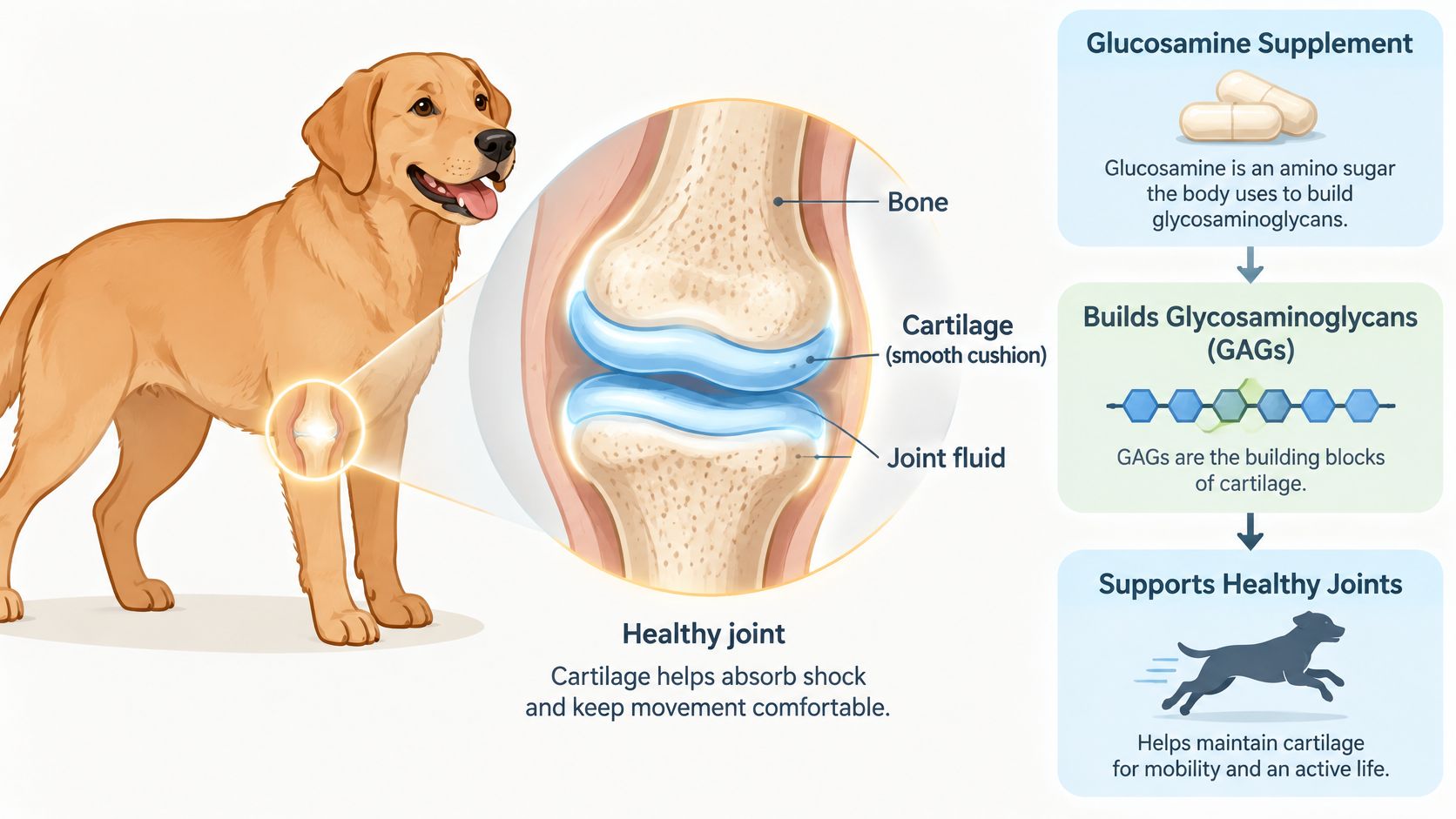
Cartilage works like the rubber pad on a chair leg. It cushions repeated load, and it wears. The supplement is meant to support the material the joint uses to maintain that pad, and to support the fluid that lets the surfaces slide. That is a materials story. It isn't proof that worn cartilage grows back.
What owners are told it does
Slows cartilage breakdown. The building-block idea makes this the least stretched claim, and even here the support is for joint structure, not a measured halt in wear for your dog.
Eases stiffness. Comfort can improve if the joint is better supported, but glucosamine isn't a pain drug. Stiffness after a nap can come from pain, weak muscle, extra weight, or a slick floor.
Rebuilds damaged joints. That claim reflects marketing overreach. Supplying a raw material doesn't reverse established cartilage loss, and nothing in the way the ingredient is used justifies a cure claim.
People reach for it in aging dogs, large breeds, dogs coming back from injury, and dogs with diagnosed osteoarthritis. Many bottles also contain chondroitin, omega-3 fatty acids, or turmeric. Those extras change what the label means. A good week might belong to the fish oil, the lower calorie food, or the shorter walks you started the same month.
A joint supplement can be a reasonable adjunct and still be the wrong thing to credit for a better walk.
The practical split is simple. Does this product work in dogs like yours, how much should you give, and how do you choose and watch one bottle without confusing a label with a result?
Does Glucosamine Work? What the Clinical Trials Show
The fair verdict is mixed, and the mix leans against strong claims. Treat glucosamine as joint-support with uncertain clinical efficacy, not as a proven treatment or cure for canine osteoarthritis. A single upbeat trial doesn't predict your dog.
| Study or review | Dogs or scope | Design | Reported result |
|---|---|---|---|
| 2003 randomized study | 23 dogs with confirmed osteoarthritis | Glucosamine/chondroitin vs placebo | No improvement over placebo |
| 2007 randomized trial | 35 dogs completed treatment | Randomized, method later criticized | Better pain scores, weight-bearing and severity by day 70 |
| 2017 review | 16 canine studies (7 RCTs, 9 non-randomized) | Pooled review | Positive in 4 of 7 RCTs (57%) and 9 of 9 non-RCTs (100%) |
| 2022 systematic review and meta-analysis | 9 trials of glucosamine hydrochloride, usually with chondroitin | Meta-analysis | No meaningful dose- or duration-dependent improvement |
| 2023 randomized study | 75 dogs in five groups (16 on glucosamine/chondroitin) | Randomized, placebo-controlled | No benefit over placebo on peak vertical force |
Why the rosier studies look better
A 2017 veterinary review counted 16 canine studies of glucosamine, chondroitin sulfate, or related combinations: 7 randomized controlled trials and 9 non-randomized studies. Positive effects showed up in 4 of 7 RCTs (57%) and in 9 of 9 non-RCTs (100%). That 100% figure shouldn't be trusted as proof. Many of those studies used small samples, subjective pain scores, incomplete masking, and products with more than one active ingredient. If the owner knows the dog is "on the joint powder," the diary tends to improve.
The two trials people cite most often don't agree. In 2003, a randomized study of 23 dogs with confirmed osteoarthritis found glucosamine/chondroitin didn't beat placebo. In 2007, 35 dogs that finished a randomized trial had better pain scores, weight-bearing, and osteoarthritis severity by day 70, and the randomization method was later criticized. Same ingredient family, opposite headlines.
What the tighter analyses add
A 2022 systematic review and meta-analysis of nine trials of glucosamine hydrochloride, usually with chondroitin, found a marked lack of efficacy and no meaningful dose- or duration-dependent improvement. Giving more, or giving it longer, shouldn't be assumed to buy proportional gains in pain, gait, or function.
A 2023 randomized study split 75 dogs into five groups: 14 on a PCSO-524 product, 16 on glucosamine/chondroitin, 15 on EAB-277, 15 on carprofen, and 15 on placebo. On peak vertical force, the glucosamine/chondroitin group wasn't associated with a positive treatment effect versus a sunflower-oil placebo. The same body of work notes thin statistical power: across 8 randomized studies, the mean sample was only 32 dogs, with studies ranging from 14 to 71 animals.
A positive trial is a possibility, not a promise. The result that matters is a change you can measure in pain and mobility, not a better week that coincides with the new tub.
If you're weighing whether any joint supplement earns a place beside weight control and pain care, the broader record is laid out in do joint supplements work for dogs. Glucosamine stays optional. It doesn't replace the rest of the plan.
How to Choose a Glucosamine Product You Can Trust
The word glucosamine on a label doesn't show that the bottle is accurate, that your dog will tolerate it, or that movement will improve. Those are three separate questions, and a bag can pass one while failing the other two.
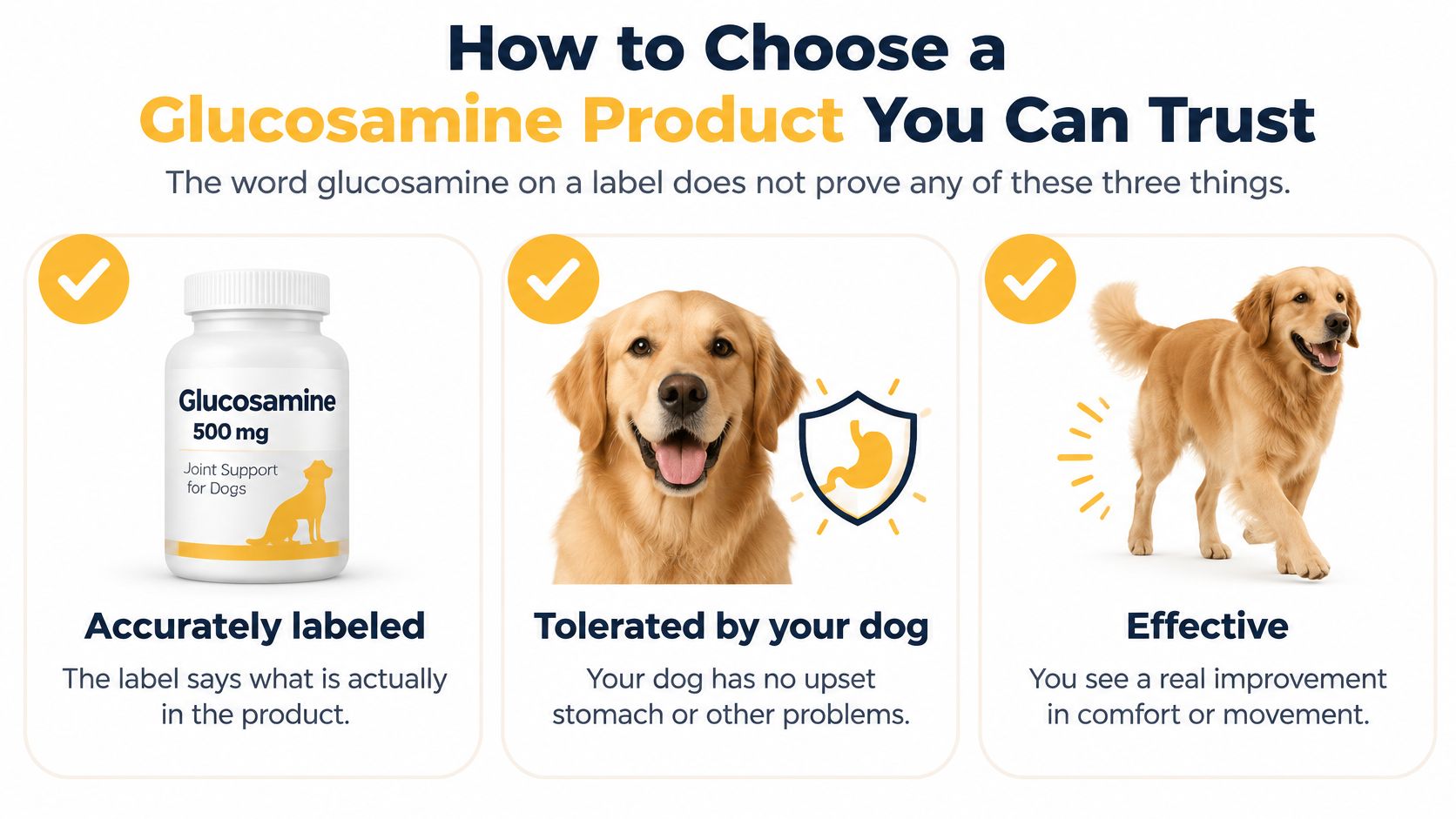
Is it labeled accurately? You need the chemical form, the milligrams per serving, and a way to check that this lot matches the label.
Is it tolerated by this dog? A product can be accurately made and still cause thirst, stomach upset, or a reaction in a dog with a shellfish sensitivity or several other supplements already on board.
Does function improve? Only a recorded change in comfort or movement answers that, and a clean lab report doesn't.
A label audit you can run on any bottle
Veterinary reference material notes that evidence for glucosamine/chondroitin is poor and encourages third-party laboratory testing for safety and consistency, as described in this veterinary nutrition chapter. The same discussion is blunt about real-world use. Reported adverse effects at excessive doses include increased thirst, increased urination, and digestive upset, and many products contain several active ingredients, which makes the cause of a change harder to name. That matters if your dog already takes more than one joint product, has a chronic illness, or is on a therapeutic diet.
- Confirm the form and the milligrams. Hydrochloride or sulfate, and the amount per serving, not a vague "joint blend."
- Check whether the serving is by body weight. A scoop or a tablet with no weight band isn't a dose.
- Look for lot-specific independent testing. A general "quality" sentence isn't a certificate for the jar in your hand.
- Scan for shellfish-derived ingredients if your dog has an allergy or you want to avoid them.
- List the other joint products already in use so you don't double glucosamine or chondroitin.
- Write down every other active, including chondroitin, manganese, omega-3s, or turmeric. One change at a time is the only way to trace a reaction.
- Ask a veterinarian whether it fits with current medications or a therapeutic diet.
"Human-grade," "natural," and "premium" don't establish clinical effect or an adequate dose. A guide to reading supplement labels is worth using before you compare prices. If you're trying to stop stacking separate tubs, DA-1™ Daily All-in-One - Skin/Coat, Joints, Gut Health 2026 is a human-grade powder given as one scoop on food, combining joint, skin and coat, digestion, immunity, and stress support instead of several products. A well-tested label still only answers accuracy and safety. Whether movement changes is a separate test.
How Much Glucosamine to Give a Dog
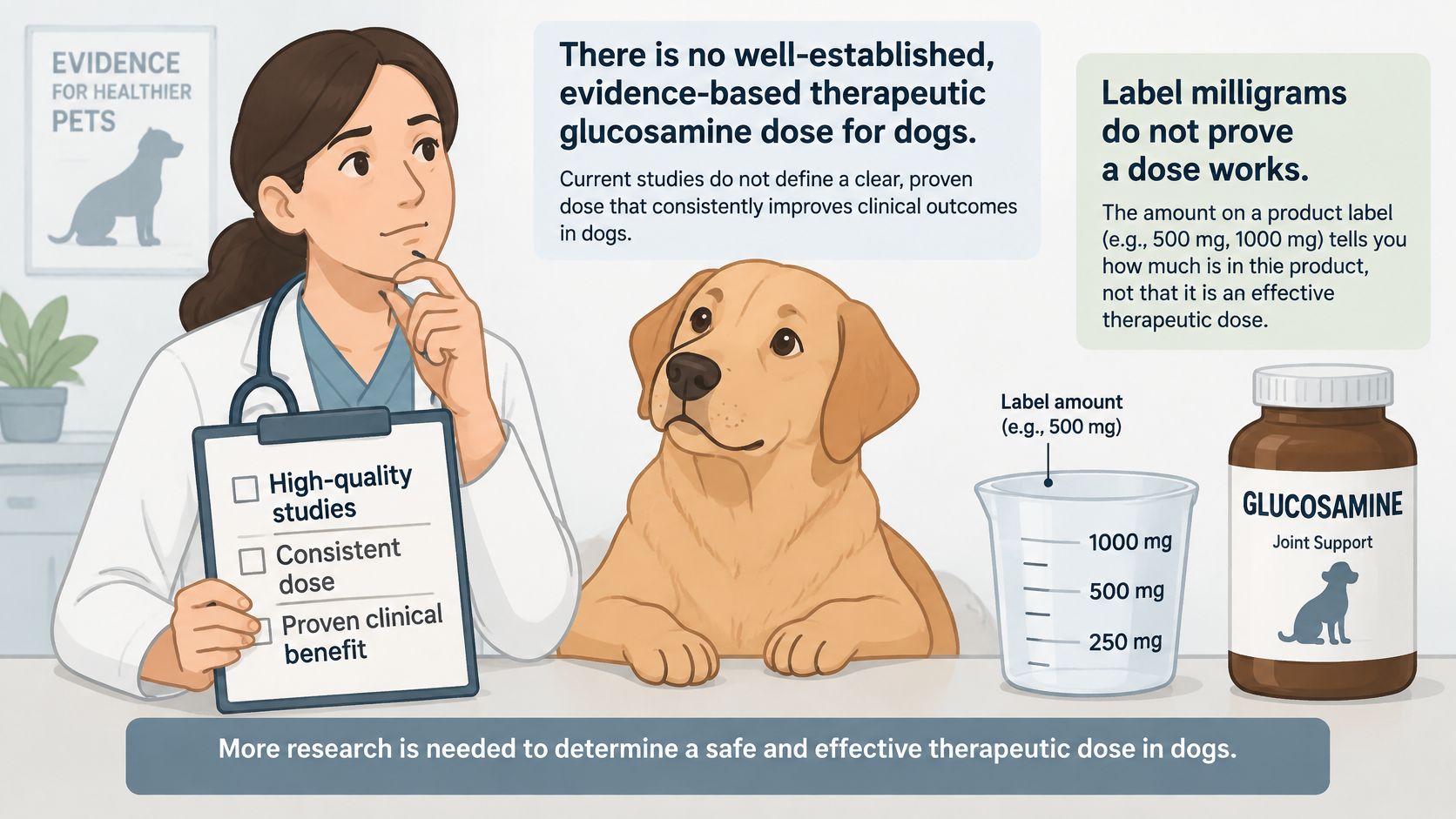
There is no well-established, evidence-based therapeutic glucosamine dose for dogs. Copying the biggest number on a forum, or doubling the label for a "loading" month, isn't a clinical plan.
Why the milligrams mislead
A veterinary review of canine dosing found insufficient evidence to confirm a specific glucosamine dose. By contrast, an adjunctive chondroitin dose of about 15 to 30 mg/kg has been suggested. That range is not a glucosamine standard, and it shows why a printed label dose isn't the same thing as validated clinical dosing. Published reviews also point to limited pharmacokinetic data and potentially low oral bioavailability. The milligrams you tip into the bowl don't reliably predict how much reaches circulation, or whether that amount changes the joint.
One controlled safety study used a commercial capsule with 500 mg glucosamine hydrochloride, 400 mg sodium chondroitin sulfate, and 5 mg manganese, given by body-weight bands. That regimen is not proof the combination works, and it isn't a universal dose to copy onto a different powder.
A sequence instead of a number to copy
Ask your veterinarian for a weight-based target for this dog, this diagnosis, and this bottle. A 20-pound dog and a 90-pound dog shouldn't share a scoop.
Match the product to the label audit. Form, milligrams per serving, other actives, and whether the serving is already split by weight.
Start at the vet-approved amount, with food. Giving it on an empty stomach is a common reason the first week looks like a stomach problem rather than a joint trial.
Reassess on a date you set in advance. Don't slide the review back because "joint supplements take time." If the agreed window passes with no change in the signs you're logging, the next step is a new plan, not a higher scoop.
Dogs with diabetes, bleeding risk, gastrointestinal disease, pregnancy, or current medication need that veterinary check before any amount, especially when the product carries extra actives.
Side Effects, Interactions and Who Should Avoid It
Most dogs tolerate a sensible glucosamine product without drama. That still isn't a reason to ignore a new sign, or to keep a dog on something that clearly disagrees with them.
What usually settles, and what should not
Loose stools, gas, or a quieter appetite are the reactions owners notice first. They often show up in the first few days and ease when the powder goes on a meal instead of into an empty stomach. If they're still there after a few days, pause and call the clinic. Pushing through teaches you nothing about the joint.
Itching, a skin change, or a dog that seems oddly flat can show up over days to weeks. Stop the product and talk to the vet rather than adding a second supplement to "balance" it.
| Sign | Usually appears | What to do |
|---|---|---|
| Loose stools, gas, or reduced appetite | First few days | Give with food; if it persists beyond a few days, pause and call the vet |
| Increased thirst or urination | With excessive doses | Reduce or stop the product and contact a veterinarian |
| Hives, facial swelling, vomiting, or breathing trouble | Soon after a new product | Seek emergency veterinary care immediately |
| Any reaction in a dog with diabetes or on medication | Any time | Consult the veterinarian before continuing |
| Itching, skin reaction, or unexplained lethargy | Within days to weeks | Stop the product and consult the vet |
Hives, facial swelling, vomiting, or trouble breathing after a new product are an emergency, not a watch-and-wait. A dog with a shellfish allergy can react to shellfish-derived glucosamine even when the front of the tub never mentions joints and seafood in the same sentence.
Who needs a check before the first scoop
Dogs with diabetes, a bleeding risk, gastrointestinal disease, dogs that are pregnant, and dogs already on medication should be assessed first. Combination products make the cause of a reaction harder to identify, so change only one product at a time and note the day each sign started. A running log is better than a reconstructed memory at the appointment. More on what owners see is in dog joint supplement side effects.
Change one product at a time. If three new powders start on Monday, Tuesday's upset stomach has three suspects and no answer.
Run a Fair Trial and Decide When to Stop
"It's safe, so keep going" is how a weak adjunct turns into an open-ended delay. A systematic review of canine osteoarthritis treatments found inconsistent effects of these products on pain, joint function, and disease progression, and described the overall therapeutic evidence as weak. One 60-day trial of glucosamine hydrochloride with chondroitin and manganese found no significant improvement in clinical signs. A separate review of canine trials reported no significant effect of glucosamine/chondroitin products on osteoarthritis-related clinical signs. Safe isn't the same word as effective.
The trial, step by step
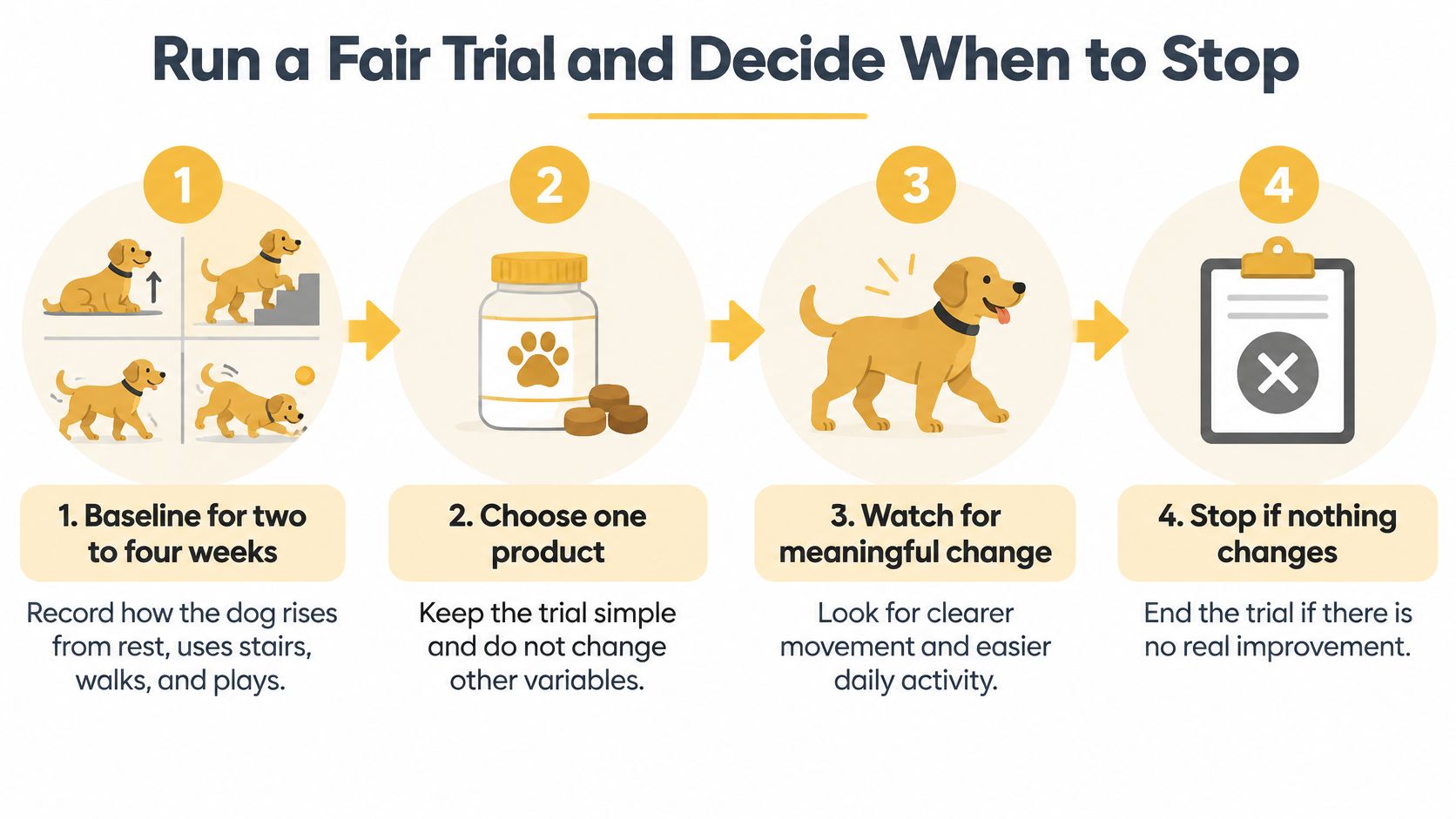
1. Record a baseline for two to four weeks before you start. Note how the dog rises from rest, whether stairs are hesitated or refused, how long the walk lasts, and whether play is offered or avoided. Without a baseline, a slightly better Tuesday has nothing to beat.
2. Choose one product and hold the dose and the food routine steady. A new bed, a diet change, and a joint powder in the same week make the winner impossible to name.
3. Log the same four signs every week. Rising, stairs, walking duration, willingness to play. A validated canine pain score, if your vet uses one, is sturdier than a general impression that "he seems brighter."
4. Agree a review date with your veterinarian before the tub is open. Feel is a poor judge. Owners remember the good walk and forget the three stiff mornings.
5. Compare the log with the baseline and look for a consistent change, not one easy day after a warm afternoon.
6. Decide on that date. No clear change means you stop waiting and reassess. You don't add a second joint product and extend the experiment by another month.
If the log doesn't move
Persistent pain is a reason to reassess, not a reason to supplement indefinitely. Glucosamine shouldn't replace weight management, controlled exercise, pain assessment, rehabilitation, or prescription therapy when those are indicated. A time limit is what keeps signs from going unmanaged while everyone waits for a gradual effect that may never show up. Practical options for day-to-day movement sit in dog mobility support.
If the review date arrives and the log matches the baseline, the trial answered the question. More of the same powder isn't a new answer.
Talk to Your Vet Before You Start Glucosamine
Book the appointment before the first dose. The visit is where you confirm that glucosamine fits this dog's diagnosis, age, weight, and medications, and where you leave with a dose and a review date rather than a guess. Bring the label, or a clear photo of the ingredient panel, so the form, the milligrams per serving, and the other actives can be checked against the audit instead of from memory.
Ask which owner-measured signs to track. Rising, stairs, walk length, and play are a solid start, and your vet may want a pain score added so the review date has a shared yardstick. If a dog already on a product develops adverse effects, stop giving it and consult a veterinarian. Hives, facial swelling, vomiting, or breathing trouble are an emergency the same day, not a note for the next wellness visit.
A supplement is an adjunct to veterinarian-guided pain management. It isn't a stand-in for it. If the log shows no clear change by the date you agreed, that visit is where weight, exercise, rehabilitation, or a prescription option gets reconsidered. Stiffness that limits daily life is a mobility problem with a plan, not a supplement gap, and dog mobility issues is a useful briefing before you walk in.
The next action is concrete. Book the appointment and take the label with you.
Pure Paw Labs makes science-backed, human-grade daily supplements for dogs, including joint support you can audit by form and amount rather than by a slogan on the tub. If you're sorting a simpler once-a-day routine alongside a veterinary plan, visit Pure Paw Labs and bring whatever you choose to your vet before you start.