


Is your Bulldog's new bump really an allergy, or does it need a sample before anyone can tell? A red spot on the chin, a sore inside a wrinkle and a lump beneath the skin can look similar at first, but they call for different decisions.
The safest way to approach Bulldog skin bumps is to sort them by appearance, location and urgency before choosing a treatment. Photos help document changes, but neither a photo nor the way a lump feels can confirm what it is.
Table of Contents
- Sort Your Bulldog's Bump by Look, Location and Urgency
- Why Bulldog Bumps Keep Coming Back
- Acne and Folliculitis on the Chin and Muzzle
- Skin-Fold Dermatitis in Wrinkles, Lips and Tails
- Allergies, Infection and Parasites That Keep Bumps Coming Back
- How Vets Work Up a Bump, Step by Step
- Treatment, Home Care and Supportive Nutrition
- Preventing Bulldog Skin Bumps Day to Day
Sort Your Bulldog's Bump by Look, Location and Urgency
Start by checking whether the bump sits on the skin's surface or feels like a distinct lump underneath it. Then look at the surrounding skin and your dog's behavior. Scratching, licking, discharge and discomfort often tell you more about urgency than color alone.
Bulldog bump triage by type
| Bump type | Typical look and place | Red flags | Action |
|---|---|---|---|
| Acne or folliculitis | Small red bumps or pustules on the chin and lower lip | Pain, pus, crusting, hair loss | Arrange a prompt exam; cytology may identify infection |
| Skin-fold dermatitis | Raw, moist, smelly bumps in wrinkles, lip folds and tail folds | Odor, ulcers, persistent licking | Book an exam within the next few days; call sooner for pain or ulcers |
| Allergic papules | Itchy bumps on the belly, paws or around the ears | Constant scratching, recurring pattern | Arrange an exam to investigate the trigger and secondary infection |
| Lipoma | Often a soft, movable lump beneath the skin | Rapid growth, fixed position or firm feel | Book a vet check; measure and track after diagnosis |
| Cyst | Rounded lump, sometimes bluish or with a central opening | Leaking, inflammation, pain | Arrange an exam; drainage or removal may be appropriate |
| Mast cell tumor | Can be a firm, raised or red nodule, but appearance is highly variable | Fast change, ulceration, sudden swelling | Contact the vet promptly for examination and a needle sample |
| Insect bite or trauma | Local swelling after an apparent bite or injury | Spreading swelling, illness, failure to settle | Seek advice if it isn't clearly improving; escalate immediately for breathing trouble |
These are patterns, not diagnoses. A soft lump isn't automatically a lipoma, and a small pink nodule isn't automatically a harmless pimple.
The breed's dermatology burden is substantial. For the reporting period described as the 12 months ending in 2026, the Royal Veterinary College dermatology service reports that markedly brachycephalic breeds represented 20% of patients, with English and French Bulldogs accounting for 83% of those cases. Those are specialist-service figures, not the probability that an individual bump is dangerous.
When to call rather than watch
Contact your vet today for a bleeding, ulcerated, rapidly enlarging, firm-and-fixed or markedly painful lump, or a bump accompanied by lethargy or suspected fever. Trouble breathing, collapse or rapidly developing facial swelling requires emergency care.
For a moist, irritated fold, arrange a visit within the next few days rather than continuing to experiment with wipes. Painful, draining or recurring chin lesions also need a prompt appointment, even if your dog is otherwise cheerful.
Practical rule: Monitoring is a temporary decision about timing, not confirmation that a bump is harmless.
Brief home observation is reasonable only for a small, stable, comfortable surface irritation without red flags. For an unexplained lump, book a check rather than waiting for it to become troublesome. Photograph it beside a ruler, record the date and location, and avoid repeatedly pressing it.
Why Bulldog Bumps Keep Coming Back
Bulldogs have a documented burden of skin disease, so recurring bumps aren't just bad luck. A UK VetCompass study published in 2019 examined 1,621 Bulldogs and found that cutaneous disorders were the most prevalent grouped disease category, affecting 28.6%; pyoderma, a bacterial skin infection, was recorded in 8.8%.
Fold disease is especially relevant. A 2022 Royal Veterinary College VetCompass study examining records from 905,553 dogs found a one-year skin-fold dermatitis prevalence of 6.05% in English Bulldogs, compared with 0.37% across dogs overall.
Recurrence isn't proof of poor hygiene
A fold can remain vulnerable even when an owner cleans carefully. Its shape, persistent inflammation and overlapping allergy or infection can keep creating the conditions for another flare.
The practical distinction is between removing surface debris and identifying the recurring cause. Wiping may make a fold look better without establishing whether bacteria, yeast, rubbing or another condition needs treatment.
A useful recurrence record includes:
- Location: Does the same lip fold or tail pocket flare every time?
- Pattern: Does itching start before the bumps, or only afterward?
- Response: Did prescribed treatment clear the lesions completely, or merely reduce the smell?
- Testing: Were organisms identified, or was treatment based on appearance alone?
Our guide to dog skin and coat health can help organize the broader care routine. For recurring lesions, however, ask your vet for a documented working diagnosis and an explanation of what would trigger further testing.
Acne and Folliculitis on the Chin and Muzzle
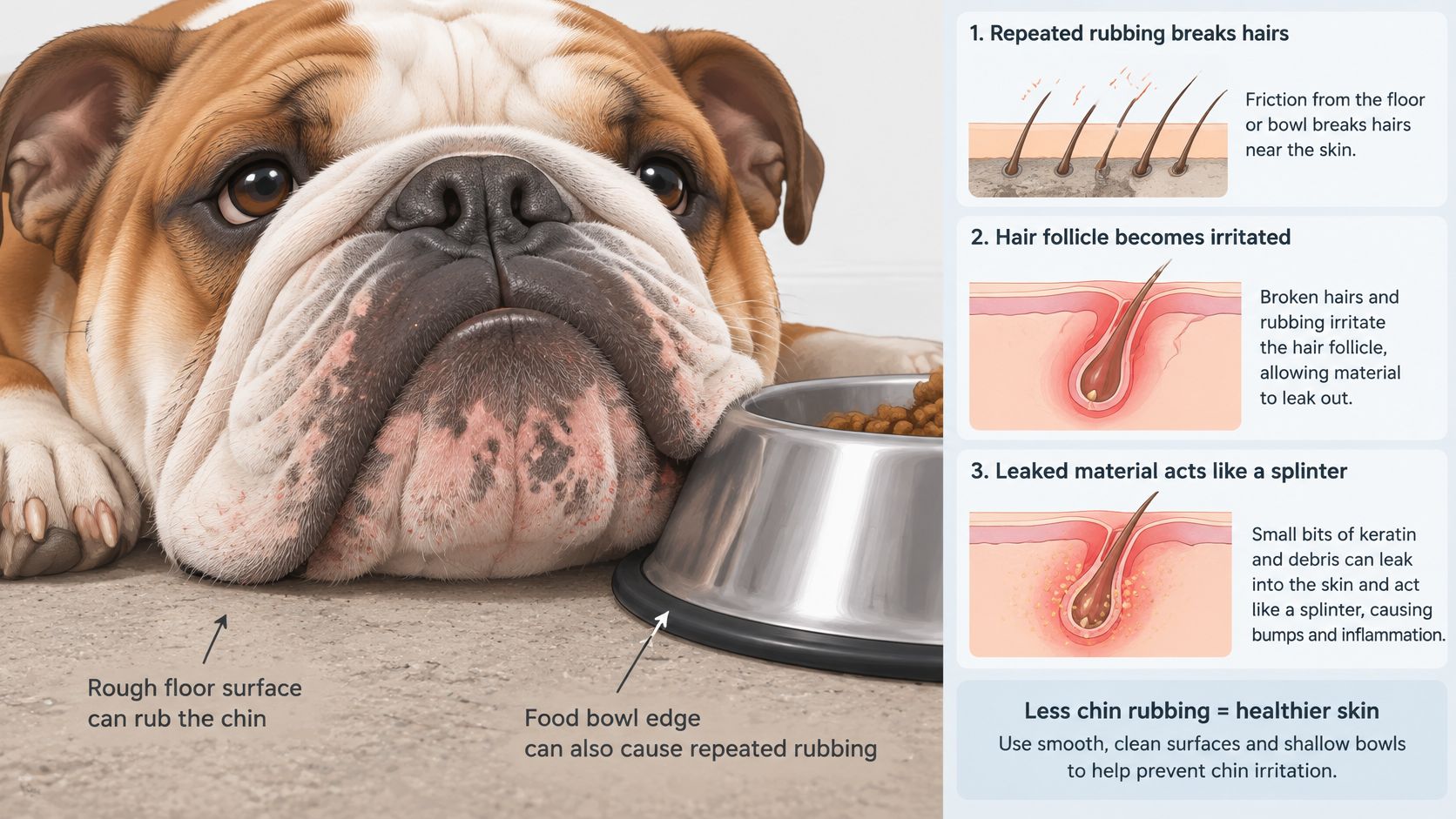
A chin rubbed raw at breakfast can look like a crop of pimples by dinner. On a Bulldog's short muzzle, repeated scraping against a bowl rim or rough toy can bend and break hairs; follicular material then escapes into nearby skin and irritates it much like a tiny splinter.
Bacteria may move into that damaged surface afterward. The VCA guide to canine acne describes this sequence from muzzle trauma and follicular rupture to inflammation and possible infection, with English and French Bulldogs among the predisposed breeds.
Reduce friction without irritating the skin
| What you see | What to do at home | When it changes the plan |
|---|---|---|
| Smooth red bumps after rubbing, dog comfortable | Use a smooth stainless steel or ceramic bowl, keep it clean and remove rough toys or surfaces that scrape the muzzle. Ask your vet before changing feeding height. | Comfort returns and no new bumps appear |
| Mild surface crusting without pain | Clean once with lukewarm water or a vet-approved mild cleanser, then pat dry. Scrubbing adds friction. | Crust thickens, spreads or smells bad |
| Pus, pain, hair loss or spread beyond the muzzle | Leave pustules alone and skip human acne creams, which can irritate skin or be unsafe if licked. | Book a veterinary exam |
Cytology shows whether bacteria are present on the chin, which decides whether antibiotics are needed. A flare that keeps returning can also lead your vet to check food or environmental allergy when the history points beyond the muzzle.
Improvement means fewer new bumps, less redness and comfortable eating and play; a dry crust alone is not the goal. If lesions persist, worsen or return after clearing, ask for reassessment instead of repeating the same cleanser indefinitely.
Skin-Fold Dermatitis in Wrinkles, Lips and Tails
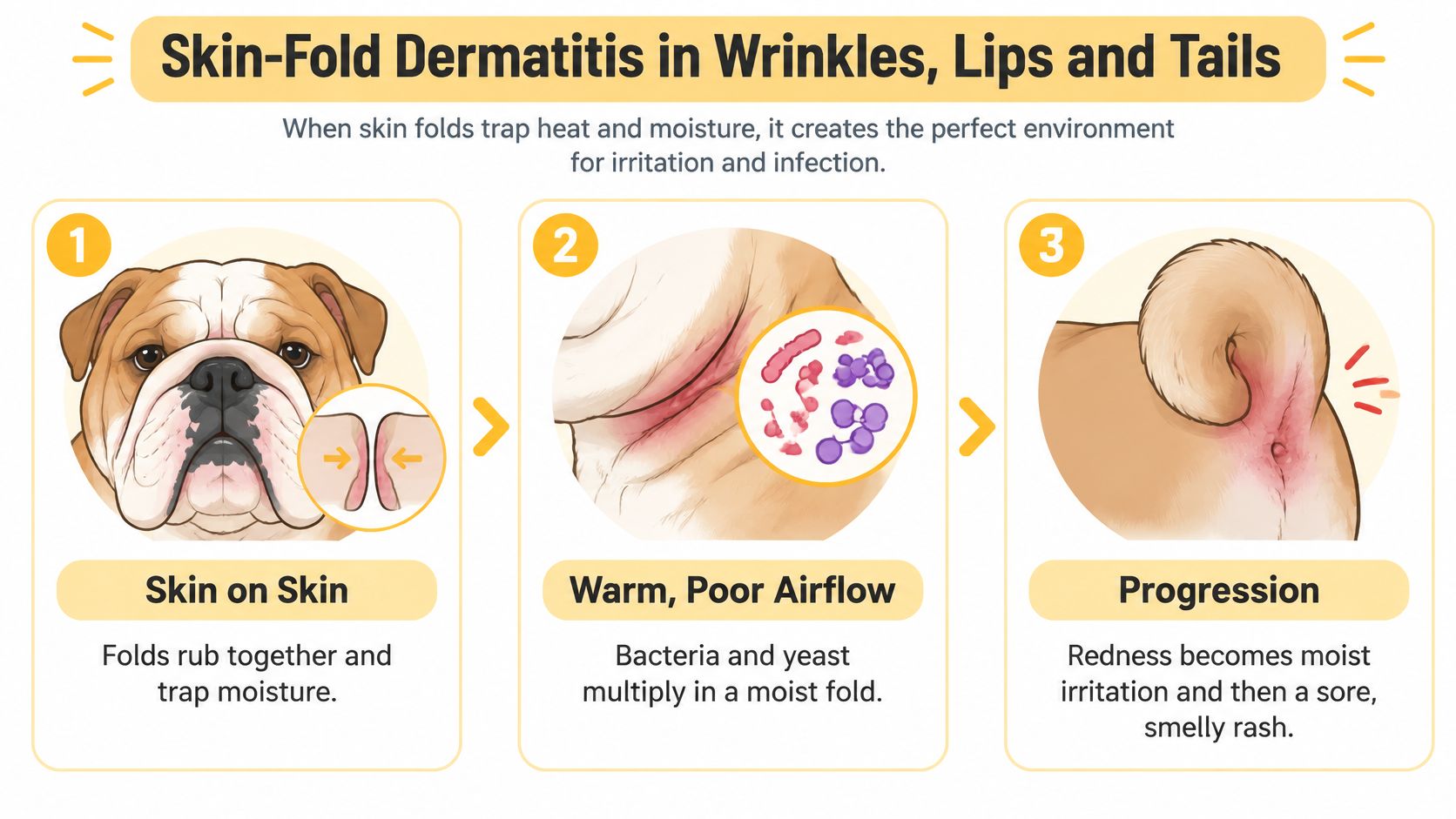
Your bulldog's tail pocket smells by the end of every walk, even though you wiped it that morning. That odor is usually the first clue, arriving before you can see anything wrong. Inside a fold, skin presses against skin, moisture has nowhere to go and almost no air reaches the deepest crease. Bacteria or yeast multiply on the irritated surface, and quiet redness becomes moist inflammation, crusting, odor and sometimes painful ulceration.
Where the fold sits matters. A veterinary dermatology study discussing breed-associated lesion patterns highlights lip folds, tail folds and paws as important sites in affected French Bulldogs, alongside the value of cytology and appropriate parasite testing.
Reading a fold, step by step
Take that smelly tail pocket and work it like a decision, moving one stage at a time.
- Smell and inspect first. Odor is often the earliest sign of trouble inside a fold. Gently open accessible creases and look for redness, discharge, cracks or tenderness. If the tail pocket hurts when touched, stop there and skip to step 4.
- Clear the debris. Wipe the crease with a soft cloth or unscented wipe, using a vet-approved cleanser only when your vet has recommended one. Keep every product away from the eyes.
- Leave it dry. Pat the fold with a soft towel, or use cool airflow from a dryer at a comfortable distance if your dog tolerates it. Heat against the skin makes irritation worse, and a crease left damp resets the whole problem.
- Know the escalation line. Foul odor that returns quickly after cleaning, bleeding, ulcers, pain on touch or a fold that stays wet all point to infection, not dirt. Scrubbing harder only adds friction to skin that is already damaged, so persistent smell means a vet call within a few days, and bleeding or ulceration means sooner.
- Ask before sealing anything in. Your vet may suggest a specific barrier product for problem folds. Loose cotton pads left inside a crease hold moisture against the skin and can become lodged, so they stay out.
- Track the pattern. Note which fold flares, how often and whether care causes discomfort. A fold that needs attention after every single walk is telling you the routine alone is not controlling it.
For ongoing day-to-day care between flares, our guide to caring for a dog with wrinkly skin covers routine maintenance in more detail.
When a fold crosses the escalation line, a vet may carefully clip obstructing hair, collect a cytology sample and prescribe topical or systemic treatment. Severe folds that keep breaking down despite good care may need a conversation about surgical correction.
A healing fold becomes less tender and less moist, with reduced redness and no new discharge. A crease that looks cleaner but still hurts when touched is not under control yet.
Allergies, Infection and Parasites That Keep Bumps Coming Back
A common history sounds like this: the itch wakes up each spring, the paws and belly get pink after walks, and a few bumps settle exactly where your bulldog licks most. That pattern can look allergic, but the label only becomes useful after the vet has sorted the trigger from the infection or parasite it invited in. A 2025 PubMed-indexed study of French Bulldogs in Germany reported diagnosed or presumed hypersensitivities or allergies in 52% of dogs; a breed-level finding still cannot name the cause of one bump.
For canine atopic disease, the Merck Veterinary Manual guidance on canine atopic dermatitis explains that no single laboratory result makes the diagnosis on its own. The logic is elimination: match the itch pattern and lesion map, rule out mites, fleas and infection, then decide whether food or environment fits.
| Cause | Clues at home | Diagnostic logic |
|---|---|---|
| Environmental allergy | Itchy paws, belly, ears or face; seasonal or exposure-related flares | History, distribution and flare timing fit after other causes are excluded; later allergy testing may guide immunotherapy |
| Food allergy | Persistent itching, sometimes with ear or digestive problems | Vet-directed elimination diet, then return of signs on a controlled challenge |
| Bacterial folliculitis | Pustules, crusts and expanding circular lesions | Lesion pattern suggests infected follicles; clearing lesions helps while the itch driver is still sought |
| Yeast overgrowth | Greasy, smelly, itchy skin, sometimes with brown debris | Odor, grease and affected sites fit; organism control improves the surface problem |
| Demodicosis | Patchy hair loss and bumps, including on the face or legs | Distribution raises mite suspicion; confirmation and depth decisions sit with the vet |
| Flea or tick reaction | Bumps associated with bites or parasites; distribution can vary | Exposure, exam findings and response to appropriate control point the same way |
Separate the trigger from the complication
An allergic dog can also have bacterial folliculitis or yeast overgrowth. Treating the organisms may improve the bumps without resolving the underlying itch, while treating allergy alone may leave an active infection untreated.
Treat expanding circles, widespread pustules, patchy facial hair loss or a suspected parasite as a reason to book rather than wait for a seasonal pattern to settle. A single stable bump in an otherwise comfortable dog can be watched briefly while you prevent chewing and record changes.
Food investigation requires more discipline than choosing a different bag. Your vet should specify the diet, permitted treats, medication flavorings and how to interpret a later food challenge. Our dog skin allergies guide provides context for that discussion.
For practical household context when fleas are suspected, FullScope Pest Control's dog flea prevention and treatment advice can complement your vet's parasite-control plan.
Ask which finding supports the diagnosis, which alternatives have been excluded and what would change the plan.
Avoid changing food, shampoo and supplements together. Otherwise, neither you nor your vet can confidently identify which change helped or caused irritation.
How Vets Work Up a Bump, Step by Step
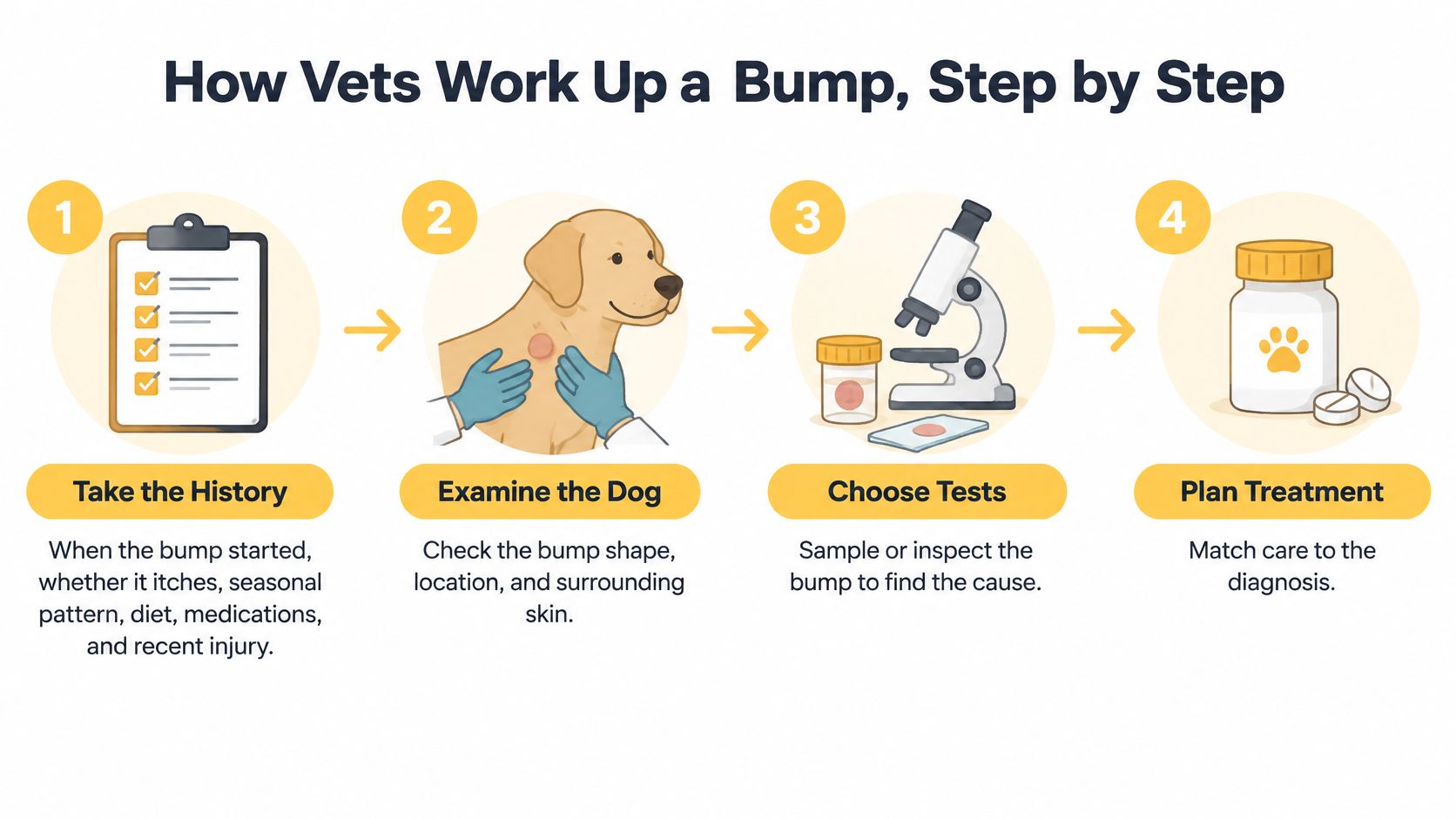
Two bulldogs can walk into the same clinic with bumps that look nearly identical and leave with completely different testing plans. A rash spread across the belly, a cluster of deep draining lesions and a single firm nodule each call for different samples, so the vet builds the workup around what your dog's skin is showing.
What the appointment may involve
- Take the history. Bring dated photos and a list of foods, medications, supplements and anything applied to the skin. A steroid course that ended two days before the visit can still change how lesions look and what a sample shows, so include treatments that have already stopped.
- Examine and map the skin. Your vet records the number, location, depth and size of each lesion and feels the relevant lymph nodes. Point out every affected area, not only the bump that looks worst.
- Collect skin cytology. A slide, tape strip or swab of discharge is checked for bacteria, yeast and inflammatory cells. A clear slide rules out an active surface infection, not a deeper problem or an allergic trigger behind it.
- Consider fine-needle aspiration. A thin needle draws cells from a discrete nodule for examination. It can suggest the kind of mass present, and an inconclusive draw is a reason for the next step rather than proof the lump is harmless.
- Check for mites when indicated. A deep skin scraping or another sampling method looks for Demodex. Routine flea prevention does not cover every skin parasite.
- Request bacterial culture when useful. Culture suits recurrent, deep or poorly responsive infections and guides antibiotic choice. Leftover antibiotics started beforehand can interfere with the results, so wait for the vet's direction.
- Biopsy an unclear or concerning lesion. Histopathology reads tissue structure, catching what a surface swab or needle sample can miss. Pain is a late sign, so a painless mass still deserves an answer.
- Agree on treatment and reassessment. Ask what improvement should look like, when results will arrive and which changes mean calling sooner. Give medication exactly as prescribed, and check with the clinic before shortening, extending or changing the course.
Turn results into a usable plan
Each result answers a narrower question than it first appears. Ask whether a finding identifies the primary disease, a secondary complication or only one piece of the problem. An aspirate that comes back as inflammation narrows the possibilities without settling which disease sits underneath.
Before leaving, confirm three things: the working diagnosis, what each medication is meant to do and the recheck plan. If a sample came back inconclusive, ask what the next diagnostic step will be. One unclear result is a reason for a follow-up plan, not a reason to assume everything is fine.
Treatment, Home Care and Supportive Nutrition
Two bumps can look identical from across the room and call for opposite responses. A comfortable surface irritation may need gentle care at home, while a deep infection or a suspicious mass needs veterinary treatment, so the diagnosis decides the plan.
Antiseptic washing works best when it matches what the examination found. A French Bulldog skin-fold microbiome study found that topical interventions changed microbial communities as well as pathogen abundance, which supports measured use over automatic repeated washing.
Treatment options by bump situation
| Situation | Home care | Vet treatment | Escalate when |
|---|---|---|---|
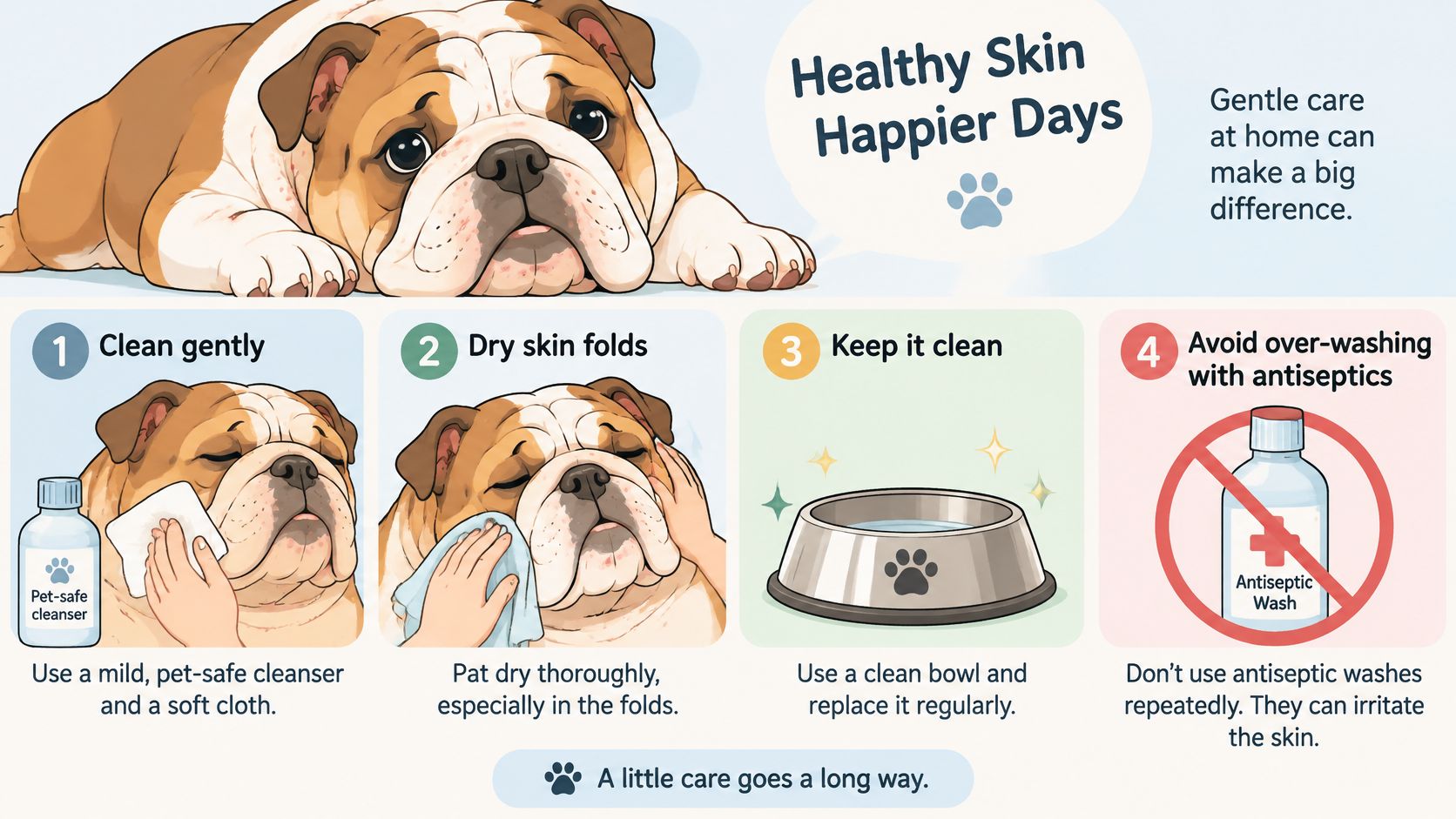
| Mild localized acne | Gentle cleansing, comfortable warm compress, remove bowl friction | Prescribed topical antiseptic or canine benzoyl peroxide preparation when appropriate | Lesions persist, become painful or spread |
| Mild fold redness | Careful drying and gentle cleansing | Topical treatment selected for the examination findings | Odor, ulcers or spreading inflammation develops |
| Yeast in folds | Keep the area dry; use approved products | Topical or oral antifungal guided by examination and cytology | Symptoms return soon after treatment |
| Spreading bacterial infection | Home care is insufficient on its own | Systemic antibiotic chosen for the infection identified | Lethargy, suspected fever or spreading redness |
| Persistent deep fold damage | Maintain the prescribed cleaning and drying routine | Long-term management or fold-correction surgery | Disease recurs despite an appropriate plan |
| Suspicious mass or mast cell tumor | Photograph and measure while awaiting prompt assessment | Needle sampling, then surgery and staging when indicated | Any new growth, ulceration or change in size |
Where nutrition belongs
A complete, balanced diet gives skin the raw materials it needs to repair itself. Diet works like the foundation under a repair job: it supports the work, and the work itself still has to be done. Discuss omega-3 fatty acids for dogs with your vet as one supportive option that can sit alongside the treatment your bulldog's specific bump requires.
Our DA-1™ Daily All-in-One - Senior Dog Support, Joints, Skin/Coat & More is a one-scoop-a-day supplement for dogs over the age of 12 weeks that supports joint, skin, digestive and immune health. We ask customers to give it at least 6–8 weeks before judging results, since improvement can take longer depending on severity. That waiting window is for evaluating a supplement; a changing or unidentified mass still needs examination on the schedule the table above sets.
DA-1 is generally usable alongside veterinary medications, though dogs taking medication should have a quick chat with a vet first. If your dog develops adverse effects after using it, stop giving it and consult your veterinarian.
Preventing Bulldog Skin Bumps Day to Day
Most Bulldog skin trouble builds slowly: a fold that stays damp too long, a flea bite that goes unnoticed, a new treat that coincides with a flare. Prevention is a habit of noticing, not a growing shelf of products.
Habits that do the daily work
Run your fingers over the chin, lip folds, paws and tail base during ordinary handling, and ask your vet whether the hair around a problem fold needs trimming. You will catch moisture, odor or redness while it is still easy to manage. Bathe on a schedule your vet agrees with rather than after every muddy walk; our guide to the best shampoo for English Bulldogs can help you frame product-selection questions for that conversation.
Diet and body weight work best as constants. Feed a complete diet, aim for the body condition your vet recommends, and change foods only under a defined plan. A flare that clears after a food swap tells you little if three other things changed that week.
The home sets the background level of irritation. Wash bedding and dry it thoroughly, replace abrasive toys, and choose household supplies with pets in mind; Gmaids' guide to cleaning products safer for cats and dogs offers useful context, though household cleaners should never be applied to your dog's skin. Parasite protection does quiet work too: use the flea and tick control your vet recommends for your dog and local risks, check the coat after outdoor activity, and ask how to remove an attached tick safely before you need to.
When prevention meets a pattern
The bowl hygiene that keeps chin acne in check and the photo-and-date record you already keep for new lesions are prevention tools, so let them keep running. A dated entry like “tail fold red and damp two days after a bath” tells your vet far more than “he gets bumps sometimes,” and it can redirect the workup from chasing an allergy toward simple moisture control. Bring that record to the appointment when a lesion persists or changes.
Pure Paw Labs offers dog nutrition supplements and practical skin-and-coat care resources to support an informed routine. Visit Pure Paw Labs to explore supportive nutrition options, and bring your Bulldog's bump photos and symptom log to your vet before choosing a supplement for an unresolved skin problem.