


A dog scratching through the night can leave the whole household exhausted. You may hear claws against the floor, find damp fur between the paws, or notice your dog rubbing their face on the carpet until the skin turns pink. The hardest part is often the uncertainty: is it fleas, food, pollen, dry skin, or an infection?
Dog skin allergies rarely respond to one quick fix because itching is a symptom, not a diagnosis. The most reliable path combines careful observation, veterinary investigation, short-term relief, skin-barrier support, and steady daily habits. Once you understand how these pieces fit together, the process becomes less like guessing and more like solving a pattern.
Table of Contents
- Understanding the Itch Cycle in Dogs
- The Three Main Types of Canine Allergies
- Recognizing Symptoms and Warning Signs
- How Veterinarians Diagnose Skin Conditions
- Medical and Topical Treatment Options
- Nutritional Support and Daily Management
- Building a Long-Term Allergy Action Plan
Understanding the Itch Cycle in Dogs
Consider a dog who starts licking one front paw after spending time outdoors. At first, the trigger may cause only mild inflammation. The dog licks because the skin feels uncomfortable, the licking removes protective oils, and the dampness softens the surface. Soon, the skin barrier becomes easier to damage, and the dog begins chewing instead of occasionally licking.
That creates the itch cycle. An allergen or irritant activates inflammation. Inflammation produces itching. Scratching, licking, and chewing injure the outer skin. Damaged skin loses some of its protective function and becomes more vulnerable to bacteria, yeast, allergens, and additional irritation. Those changes create more inflammation, which sends the dog back to scratching.
Practical rule: Stopping the scratching matters, but it doesn't explain why the scratching started.
This is why a dog may seem better after a treatment yet flare again when the treatment ends. A medication or soothing topical product can reduce discomfort long enough for the skin to recover, but it may not remove the trigger or address the immune response behind recurring inflammation. Long-term care has to interrupt more than one point in the cycle.
The pattern can be subtle. A dog may scratch less during the day but chew their paws at night. Another may develop recurring ear irritation, rub their muzzle, or lose hair around the body rather than scratch visibly. Keeping a simple record of when the itching occurs, which areas are affected, and what changed recently can give your veterinarian useful clues. A plain-language guide to why your dog may be scratching so much can also help you notice patterns before the next appointment.
The central shift is important: itch relief is the first step, not the entire plan. A comfortable dog can sleep, stop damaging the skin, and tolerate the careful diagnostic and maintenance work needed to prevent the next flare.
The Three Main Types of Canine Allergies
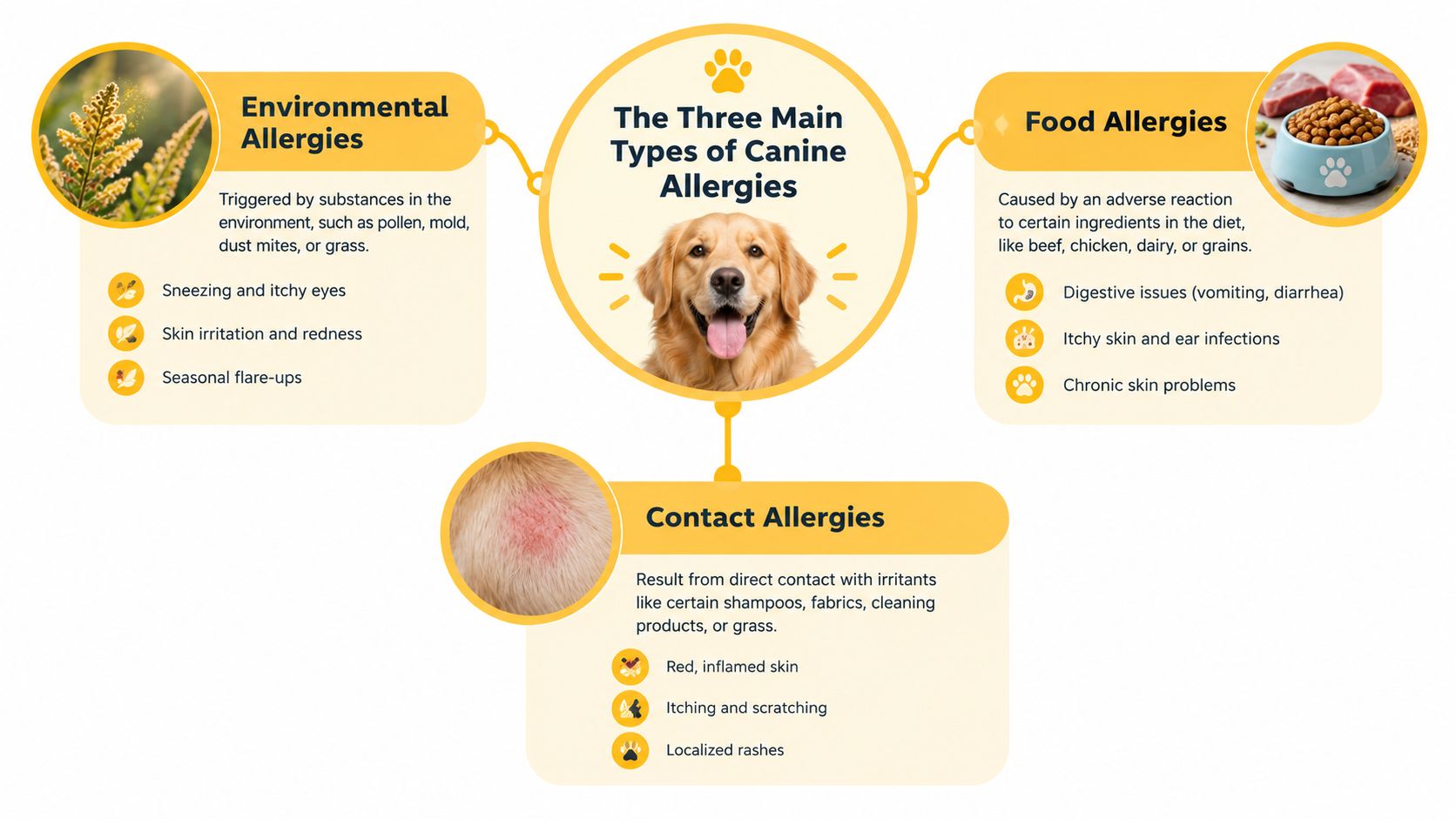
A dog that seems fine after one walk may begin licking its paws, rubbing its face, or shaking its head after several days of exposure. That changing pattern can make allergies difficult to identify. Veterinarians usually group allergic skin problems into environmental allergies, food allergies, and contact allergies. Flea reactions also cause intense itching and should be considered during an examination, even when no flea is visible.
Overlapping triggers behave like a leaky bucket filling drop by drop. One exposure may cause no obvious reaction, while pollen, a weakened skin barrier, a flea bite, and an irritating cleaning product together may overflow into redness and itching. This model explains why symptoms can change from week to week, but it cannot identify the cause on its own.
Environmental allergies
Environmental, or atopic, allergies involve substances in a dog's surroundings. Possible triggers include pollens, grasses, molds, and indoor particles. Signs may worsen during certain seasons, although some dogs remain itchy year-round as indoor and outdoor exposures continue. The paws, face, ears, belly, and skin folds are common problem areas.
Canine atopic dermatitis is widespread, though published estimates vary. A Cornell veterinary resource places it at roughly 10% to 15% of dogs, while a 2023 review reports approximately 20% to 30%. The 2023 veterinary review on canine atopic dermatitis explains that older estimates were not based on consistently strong epidemiological data. Rates can therefore differ among populations and regions.
Food allergies
Food-related reactions often continue regardless of season. A dog may have persistent itching, recurring ear problems, or digestive signs along with skin inflammation. These clues do not prove that food is responsible, because environmental allergies can also cause year-round discomfort and several conditions may look alike.
A controlled veterinary elimination diet provides clearer evidence than casually changing foods. The dog receives a carefully selected diet, with no unapproved treats, chews, table scraps, or flavored products, while the veterinary team tracks changes. If signs improve, controlled reintroduction may help test whether the suspected food is connected to the reaction.
Contact allergies
Contact reactions usually affect skin that touches a particular substance or surface. Redness or irritation may appear on the paws, underside, belly, or areas resting against bedding. A new detergent, floor product, fabric, grooming product, or treated outdoor surface may be relevant.
Contact irritation is not always a true allergy. Removing the suspected exposure and observing the skin can provide a useful clue, but persistent or spreading symptoms require professional assessment. The location of a rash provides a clue, not a final answer.
Recognizing Symptoms and Warning Signs
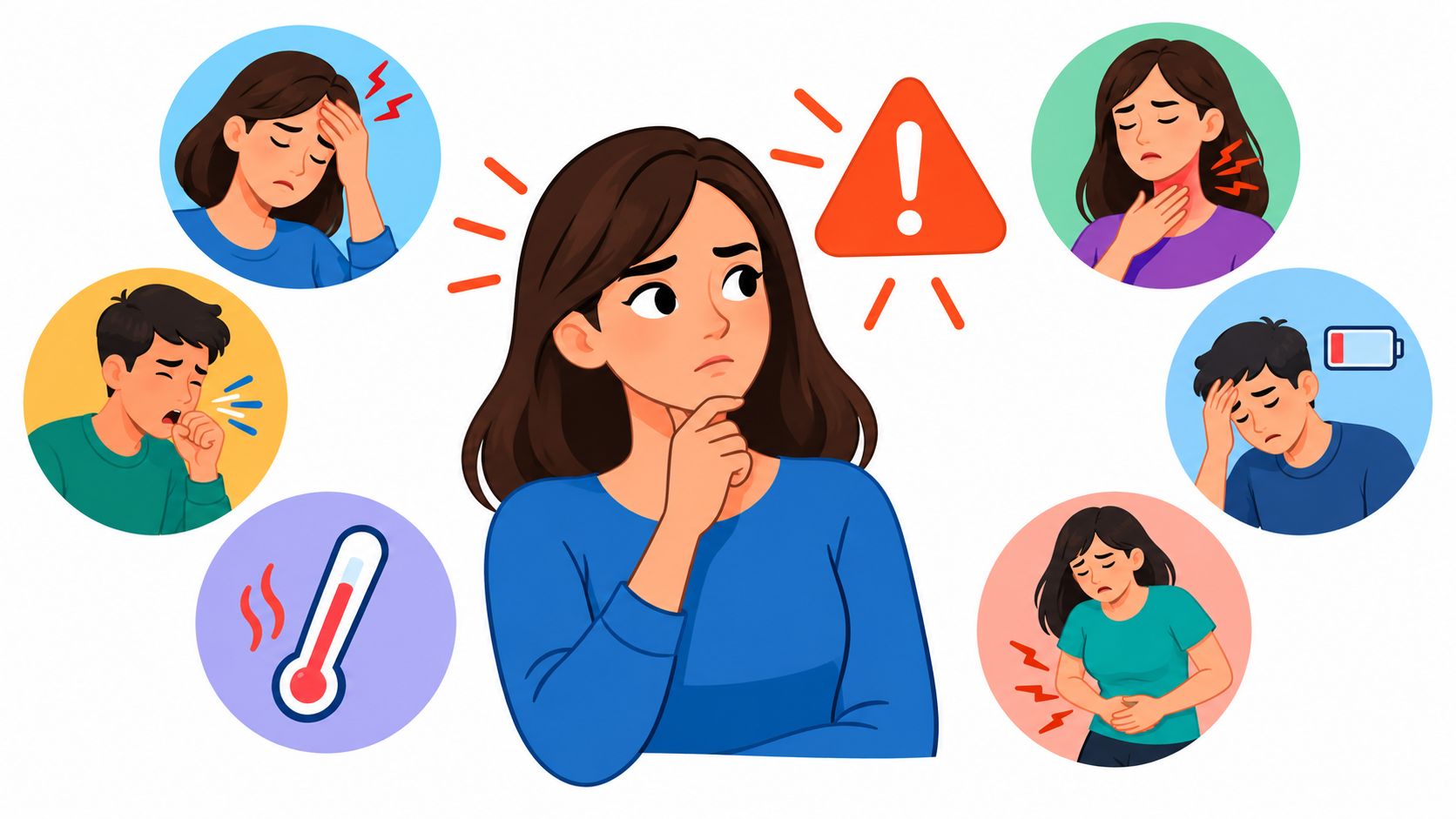
Start with behavior, then inspect the skin under good light. A dog may not scratch dramatically, yet repeated paw licking, face rubbing, chewing at the legs, or frequent head shaking can signal discomfort. Compare the affected areas on both sides of the body and note whether the problem is limited to one spot or spreading.
Read the pattern, not one symptom
Environmental irritation often appears around the paws, face, ears, belly, armpits, and spaces between the toes. You might see a dog lick after walks, rub their muzzle, or develop repeated ear discomfort. Food-related disease can look similar on the skin, so ongoing digestive upset or a pattern that doesn't follow outdoor exposure is worth recording rather than interpreting alone.
Flea-related irritation often deserves special attention around the lower back, tail base, and rear thighs. A dog can react intensely without obvious live fleas on the coat. Keeping parasite prevention current is therefore part of responsible investigation, not just a response to seeing insects.
Look for changes that signal complications
Allergic inflammation can damage the surface enough to invite secondary bacterial or yeast overgrowth. Watch for:
- Odor: A new greasy, sour, or unpleasant smell can indicate a complication that needs examination.
- Texture: Thickened, darkened, crusted, or unusually greasy skin suggests that the problem has persisted or progressed.
- Surface damage: Open sores, moist hot spots, discharge, bleeding, or expanding hair loss aren't mild irritation.
- Ear involvement: Repeated head shaking, ear redness, pain, or recurring ear problems should prompt veterinary guidance rather than repeated home cleaning.
Seek urgent care: Facial swelling, breathing difficulty, collapse, widespread hives, or rapidly worsening signs require immediate veterinary attention.
A short video can help your veterinarian understand what happens at home, especially if the dog is calm during the appointment. You can also use this guide to flaky skin and hair loss in dogs to organize observations, but don't use online symptom matching as a substitute for an examination.
If your dog is otherwise comfortable and the skin is intact, gentle paw wiping, clean bedding, and avoidance of a suspected irritant may be reasonable temporary measures. Persistent itching, odor, sores, hair loss, or recurring ear trouble means the home experiment has reached its limit.
How Veterinarians Diagnose Skin Conditions
Your dog may be scratching until the skin turns red, yet the same sign can come from fleas, mites, infection, irritation, or an allergy. That overlap explains why a veterinary diagnosis may take more than one visit. The diagnosis of exclusion is not guesswork. It is a careful process of removing causes that can be identified and treated directly, then examining what pattern remains.
There is no single test that answers every itchy-dog question. As this veterinary overview of canine atopic dermatitis explains, older estimates of this condition were not built on consistently solid epidemiological data. Canine atopic dermatitis is diagnosed through clinical reasoning, using the history, examination, test results, and response to appropriate treatment together.
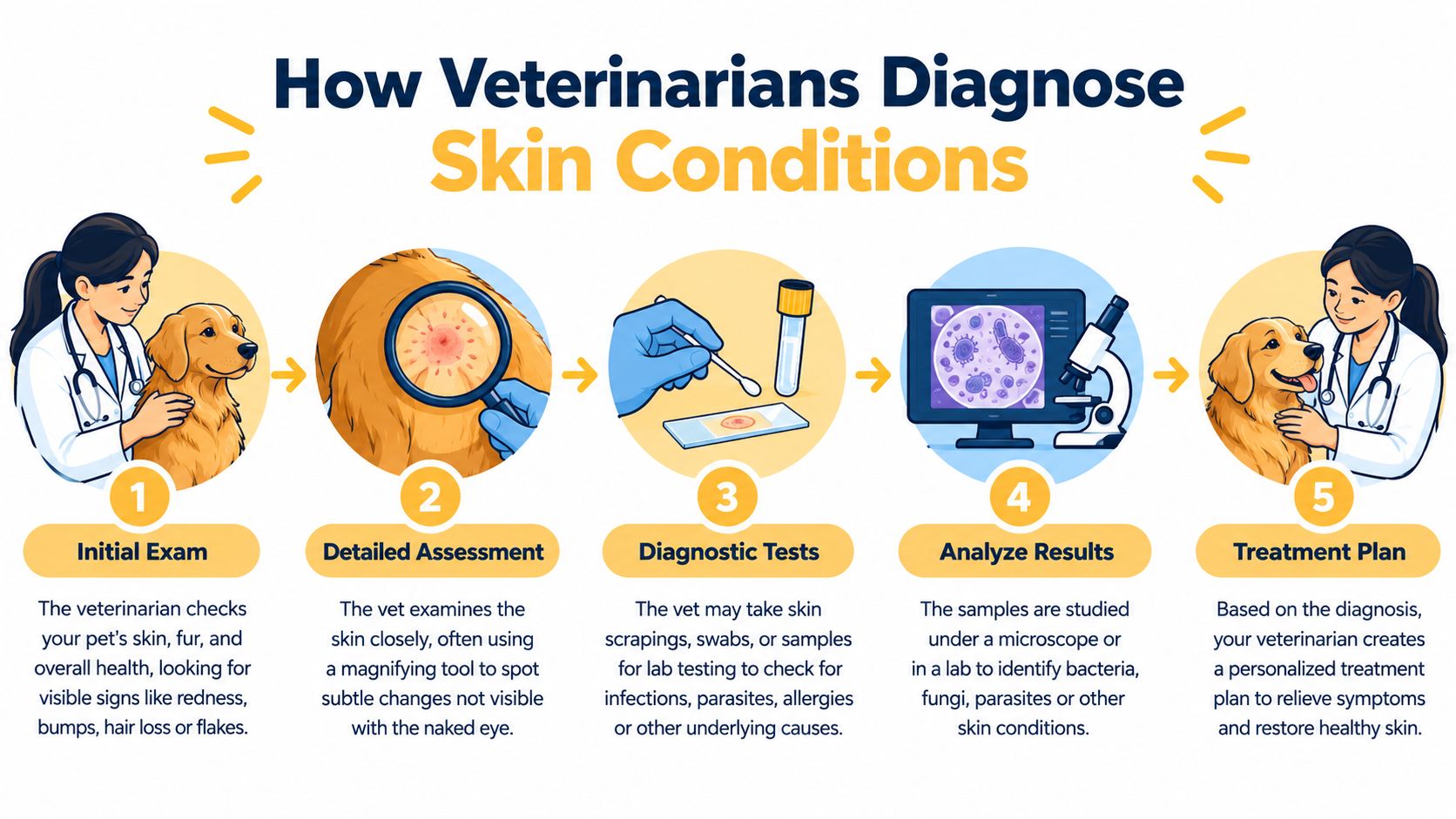
What the rule-out process may involve
The visit usually starts with questions about timing and exposure. Seasonality, diet, treats, medications, parasite prevention, household products, earlier infections, and the order in which signs appeared can all change the next step. A clear timeline helps the veterinarian separate a recurring trigger from a problem that developed afterward.
The examination may then include:
- Parasite investigation: Fleas, mites, and other external causes are considered, even when you have not seen them at home.
- Skin and ear sampling: Cytology can show bacterial or yeast overgrowth. Skin scrapings or other samples may help investigate parasites.
- Treatment of identified problems: Infections and parasites need appropriate treatment before environmental allergy can be judged fairly.
- A structured food trial: If food is suspected, a strict veterinary elimination diet removes possible dietary triggers for a defined period. Unapproved treats, flavored medications, and chews can compromise the trial.
- Assessment of the remaining pattern: If other causes have been addressed and the signs still fit, the veterinarian may consider environmental atopy and discuss long-term management.
Why allergy testing isn't a shortcut
Blood or skin testing can help identify environmental allergens when planning treatment. A positive result alone does not prove that the allergen caused every flare. Results must be interpreted alongside the history, examination, and rule-out work. Testing does not replace checks for parasites, infection, diet-related triggers, or other skin conditions.
A slow food trial or follow-up can feel discouraging, especially when your dog is uncomfortable. The process reduces unnecessary restrictions and helps prevent treatment aimed at the wrong cause. Long-term improvement often depends on repairing the skin barrier and controlling several contributing factors, rather than masking each flare in isolation.
If you notice a new lump or bumps on your dog's skin, photograph it and ask whether it fits the allergy pattern or needs a separate evaluation. That distinction keeps the investigation focused and gives your veterinarian better information.
Medical and Topical Treatment Options
Treatment works best when each tool has a defined job. Prescription medication can reduce intense itch and inflammation quickly enough to interrupt self-trauma. Topical care can clean the surface, support the barrier, and reduce the burden of allergens or microbes on the coat and skin.
A veterinarian may discuss targeted prescription options such as oclacitinib or lokivetmab, depending on the dog's age, health, diagnosis, and medical history. These treatments act on itch or inflammatory pathways, but they aren't interchangeable for every patient. Your veterinarian should explain expected benefits, possible risks, monitoring, and whether the plan is for a flare or ongoing control.
Medicated shampoos, rinses, wipes, or sprays serve a different purpose. They may help remove surface allergens, manage microbial overgrowth, or soothe irritated areas when selected for the dog's condition. A product intended for intact, dry skin may be inappropriate for open or infected tissue, and over-bathing can worsen dryness if the frequency or formula isn't suitable. Practical guidance on dog moisturizer for dry skin can help you think about topical support without treating every dry patch as an allergy.
Match the intervention to the moment
During an acute flare, fast itch control can prevent another night of chewing and give damaged skin time to settle. Once the dog is more comfortable, the veterinary team can investigate triggers and build maintenance habits. This sequence isn't a choice between medicine and natural care. It uses each approach where it has the greatest value.
- Prescription control: Reduces significant discomfort when a veterinarian decides medication is appropriate.
- Topical support: Addresses the skin surface and may reduce irritant load.
- Trigger reduction: Limits exposure to fleas, outdoor allergens, or contact irritants.
- Maintenance care: Supports the barrier between flares and helps identify recurrence early.
Be cautious with scented household products and essential oils around an itchy dog. If you're considering using diffusers around pets, review pet-safety guidance first and keep any product away from the dog's skin, mouth, and resting area unless your veterinarian approves it. “Natural” doesn't automatically mean non-irritating or safe to lick.
Nutritional Support and Daily Management
Skin health starts beneath the coat. A complete diet supplies nutrients for normal tissue maintenance, while a carefully selected supplement may support a veterinary allergy plan. Nutrition cannot identify the trigger or treat infection, parasites, or severe inflammation. It can, however, support the skin barrier while your veterinarian works through the diagnosis of exclusion process, ruling out other causes before labeling a problem as an allergy.
Polyunsaturated fatty acids, especially EPA and DHA, may help as an adjunctive strategy for dogs with itchy atopic dermatitis. In a randomized double-blind trial, dogs received either flax oil or an EPA and DHA combination for 10 weeks. Both active groups showed better clinical scores than the placebo group. The veterinary trial and updated guideline discussion also notes that essential-fatty-acid supplementation may reduce the maintenance dose required for some medicines, although no specific formulation, ratio, or dosage has been shown to be superior. For broader dietary guidance, see our guide to dog food good for skin and coat.
Build a low-stress daily routine
Small, repeatable habits reduce the amount of irritation the skin must handle:
- Clean after outdoor time. Wipe the paws, lower legs, and belly with a clean damp cloth or dog-safe wipe. Dry carefully between the toes.
- Keep resting areas simple. Wash bedding with mild, fragrance-free detergent, rinse thoroughly, and vacuum around sleeping spaces.
- Maintain flea protection. Use a veterinarian-selected product on schedule. Do not combine parasite products or use products made for another species without professional guidance.
- Inspect before applying anything new. Look for redness, cracks, odor, moisture, or sores.
- Track meaningful changes. Note scratching, paw licking, ear signs, stool changes, diet changes, and outdoor exposure on a simple calendar.
Choose a supplement whose ingredient list you can compare with your dog's current diet and medications. Add only one new product at a time, so you can tell what is helping or causing a reaction. Pure Paw Labs offers DA-1 Daily All-in-One, a once-daily powdered supplement intended to support skin and coat along with other wellness areas. Treat it as nutritional support, not a diagnosis or replacement for veterinary care, and ask whether its ingredients fit your dog's medical conditions and current plan.
A strict food trial follows different rules from general supplementation. If your veterinarian prescribes an elimination diet, ask before adding any flavored powder, chew, oil, or treat. One extra ingredient can make the results impossible to interpret.
Building a Long-Term Allergy Action Plan
The most useful allergy plan is one you can follow on an ordinary day. It should identify what requires veterinary care, what you can manage at home, and what information you'll bring to the next appointment. A flare doesn't mean you've failed. It usually means the dog encountered a trigger, the barrier needs support, or the current plan needs adjustment.
A global 2026 industry fact sheet reported that about one-fourth of canine patients seen by veterinarians worldwide have itchy skin or allergic skin disease, with 81% of global cases occurring in dogs aged 1 to 6 years and 20% in dogs under 11 months. The same source reported that roughly two in five are newly diagnosed. These figures reinforce why early, organized observation matters, especially when itching begins in a young dog. See the 2026 global canine itch fact sheet for the reported age patterns and regional context.
Use three levels of response
Monitor: Mild, recent irritation with intact skin may justify gentle paw cleaning, bedding care, and a short observation period. Write down what changed instead of adding several remedies at once.
Book an appointment: Arrange veterinary care for persistent scratching, recurring ear problems, hair loss, thickened or darkened skin, odor, discharge, sores, or symptoms that repeatedly return. Bring diet details, parasite-prevention information, photos, and a symptom timeline.
Seek emergency help: Treat facial swelling, breathing difficulty, collapse, or rapidly worsening allergic signs as urgent. Don't wait to see whether a home remedy works.
Long-term management also means reviewing the plan as seasons, routines, foods, and household products change. Keep the dog's diet consistent when your veterinarian is evaluating food sensitivity, maintain parasite protection, and continue barrier-supportive grooming even when the skin looks normal. With a patient veterinary partnership and repeatable daily habits, many dogs can move from constant discomfort to a calmer, more comfortable routine.
Pure Paw Labs offers science-backed, human-grade daily nutritional support for dogs, including a single-scoop formula that includes skin and coat support as part of broader wellness care. Visit Pure Paw Labs to explore the formula and decide with your veterinarian whether it fits your dog's long-term allergy management routine.