


You're rubbing your English Bulldog's belly when your fingers find a small raised spot. It might look like a pimple, feel like a pea under the skin, or hide inside a wrinkle where you didn't notice it before. Your first question is usually, “Is this just another bulldog skin issue, or does my dog need a vet?”
That uncertainty is understandable. Bumps on English Bulldogs' skin can come from moisture and friction, allergies, parasites, infection, or a separate mass. The safest way to sort them isn't to guess from appearance alone. Ask five questions about each lesion, then match the answers to a sensible next step.
Table of Contents
- Why English Bulldogs Are So Prone to Skin Bumps
- The Most Common Causes Behind Those Bumps
- How to Tell a Harmless Bump From a Worrying One
- What Your Vet Will Actually Do to Diagnose the Cause
- Treatment Options Bulldog Owners Should Expect
- Daily Care Habits That Help Prevent Future Bumps
- Mistakes Owners Make and When to Head to the Vet Fast
Why English Bulldogs Are So Prone to Skin Bumps
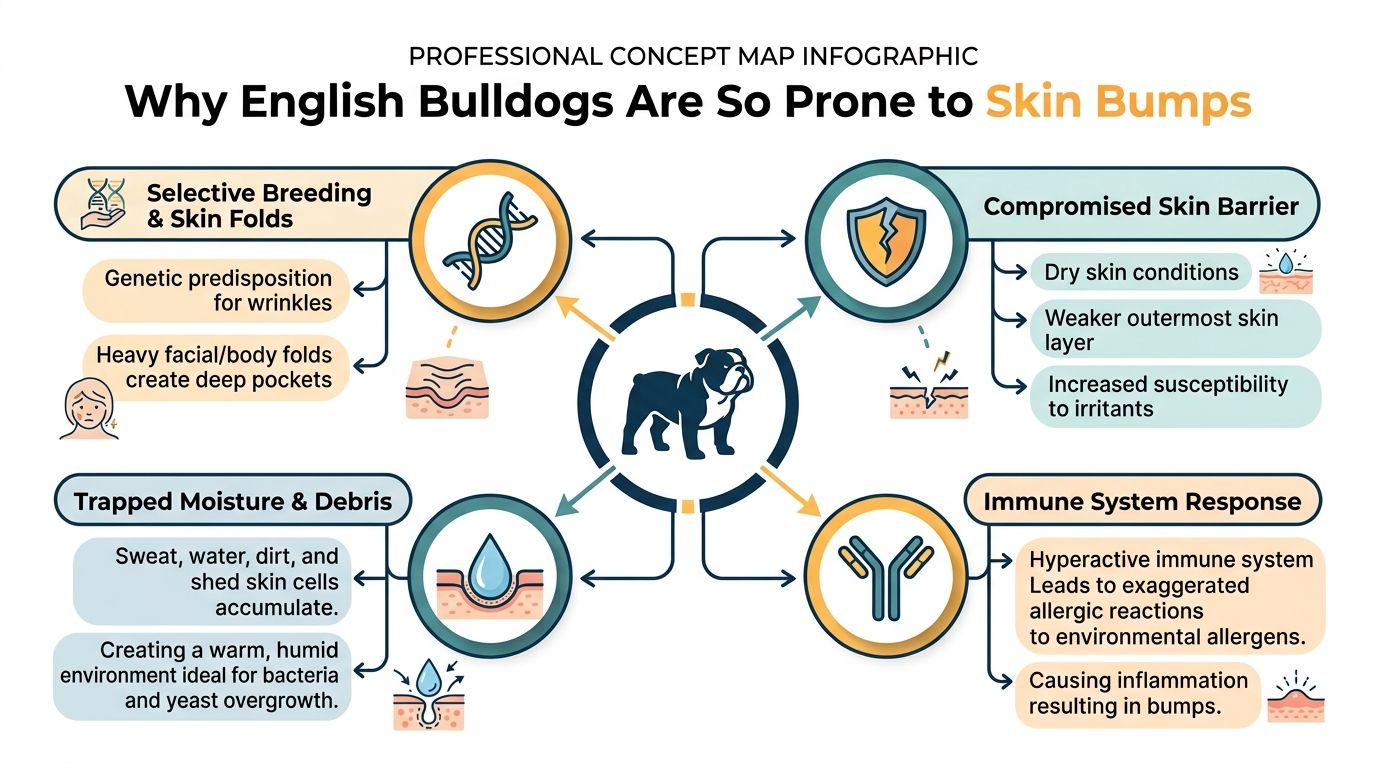
English Bulldogs have a skin setup that can turn a minor irritation into a persistent lesion. Their deep facial, body, and tail folds press skin against skin, trapping warmth, moisture, debris, yeast, and bacteria. Friction can damage the surface, while slow drying after bathing or swimming leaves the fold damp for longer.
Conformation and skin barrier problems
Selective breeding has produced the familiar loose, folded appearance, but those folds also create a vulnerable microenvironment. A small scrape or area of macerated skin can become red and inflamed, then develop papules, pustules, crusts, or a moist swollen patch. In practical terms, the bump you see may be the visible result of a fold problem rather than an isolated growth.
A major UK primary-care veterinary study published in 2019 found that skin disorders affected English Bulldogs at a 28.6% prevalence, based on 463 cases, and were the most common disease group recorded for the breed. The same study found that English Bulldogs had 3.28 times higher odds of skin disease than the general canine population, after accounting for confounders. Read the full veterinary study on English Bulldog disease prevalence
The shortened muzzle also matters because brachycephalic anatomy affects more than breathing and facial shape. Skin barrier function, local inflammation, and inherited immune responses can combine with environmental triggers. Many bulldogs have an allergic tendency, including atopic dermatitis, which can cause itching, redness, and repeated damage from scratching or licking.
Why small irritation can keep returning
Demodex mites, yeast, and bacteria may contribute to lesions, while other health factors can make the skin less resilient. Hypothyroidism and excess body weight can worsen inflammation, reduce comfortable ventilation around folds, and make routine cleaning more difficult. Bulldogs may also develop thickened scar tissue or cyst-like changes after repeated irritation.
The numbers from the 2019 study help explain why a recurring bump deserves attention rather than dismissal. Specific recorded diagnoses included pyoderma at 8.8%, skin fold dermatitis at 7.8%, pododermatitis at 5.4%, alopecia at 5.3%, pyotraumatic dermatitis at 4.3%, and atopic dermatitis at 3.5%. These categories don't all look identical, and more than one can occur in the same dog.
Practical rule: A bulldog's anatomy makes common skin inflammation more likely, but it doesn't make every new lump harmless.
The Most Common Causes Behind Those Bumps
Start by describing what you can see and feel. A red, itchy, flat swelling suggests a different category from a firm, solitary nodule under normal-looking skin. Appearance can narrow the possibilities, but it can't confirm the diagnosis.
Allergic dermatitis often produces red, raised, itchy wheals or small inflamed areas. Dogs may lick their paws, rub their face, scratch their belly, or develop several lesions at once. Flea bites, food reactions, and environmental allergens can look similar, so note recent diet changes, exposure, and parasite prevention. If fleas may be involved, you can find flea control advice for SE Texas while arranging appropriate veterinary guidance.
Bacterial folliculitis and superficial pyoderma can look like tiny pimples, pustules, or crusted bumps around hair follicles. Moisture, friction, allergies, and self-trauma often help create the conditions for secondary infection. Yeast overgrowth is more likely to cause greasy skin, a strong odor, darkening, thickening, and irritation inside folds, although individual inflamed bumps can appear too. For allergy-focused home-care context, see this guide to helping dogs with allergies.
Other patterns deserve their own clues:
- Demodex mites: Localized hair loss with small bumps or scaling, often needing a skin scrape for confirmation.
- Ringworm: Crusty, circular lesions that may spread and can affect people or other animals.
- Interdigital cysts: Firm, swollen areas between the toes, sometimes painful and associated with licking.
- Histiocytomas: Small, pink, button-like growths, especially in younger dogs. Many are benign, but a vet still needs to identify the lesion.
- Sebaceous cysts: Often doughy or firm, sometimes with a pale material inside. Don't squeeze them, because rupture can trigger inflammation.
- Lipomas: Soft, movable fatty lumps beneath the skin.
- Mast cell tumors: Highly variable. They can resemble an allergy bump, cyst, insect reaction, or another mass, so appearance alone isn't reliable.
| Condition | Look and feel | Common location | Usually itchy? |
|---|---|---|---|
| Allergic dermatitis | Red, raised, inflamed wheals or papules | Belly, paws, face, ears | Often |
| Bacterial folliculitis | Pimple-like pustules or crusts | Hair-bearing skin, folds | Often |
| Yeast overgrowth | Greasy, darkened, thickened, odorous skin | Wrinkles, ears, paws | Often |
| Demodex | Bald patches with small bumps or scaling | Face, limbs, trunk | Variable |
| Ringworm | Circular crusty or scaly lesions | Face, limbs, trunk | Variable |
| Interdigital cyst | Firm swelling between toes | Feet | Often painful |
| Histiocytoma | Pink, button-like growth | Various sites | Usually not |
| Sebaceous cyst | Firm or doughy nodule | Trunk or back | Usually not |
| Lipoma | Soft, movable lump under skin | Trunk or limbs | Usually not |
| Mast cell tumor | Variable in texture and appearance | Any location | Variable |
A bulldog can have a fold infection and a separate cyst at the same time. That's why the next step is to triage each bump individually rather than labeling every lesion “allergies.”
How to Tell a Harmless Bump From a Worrying One
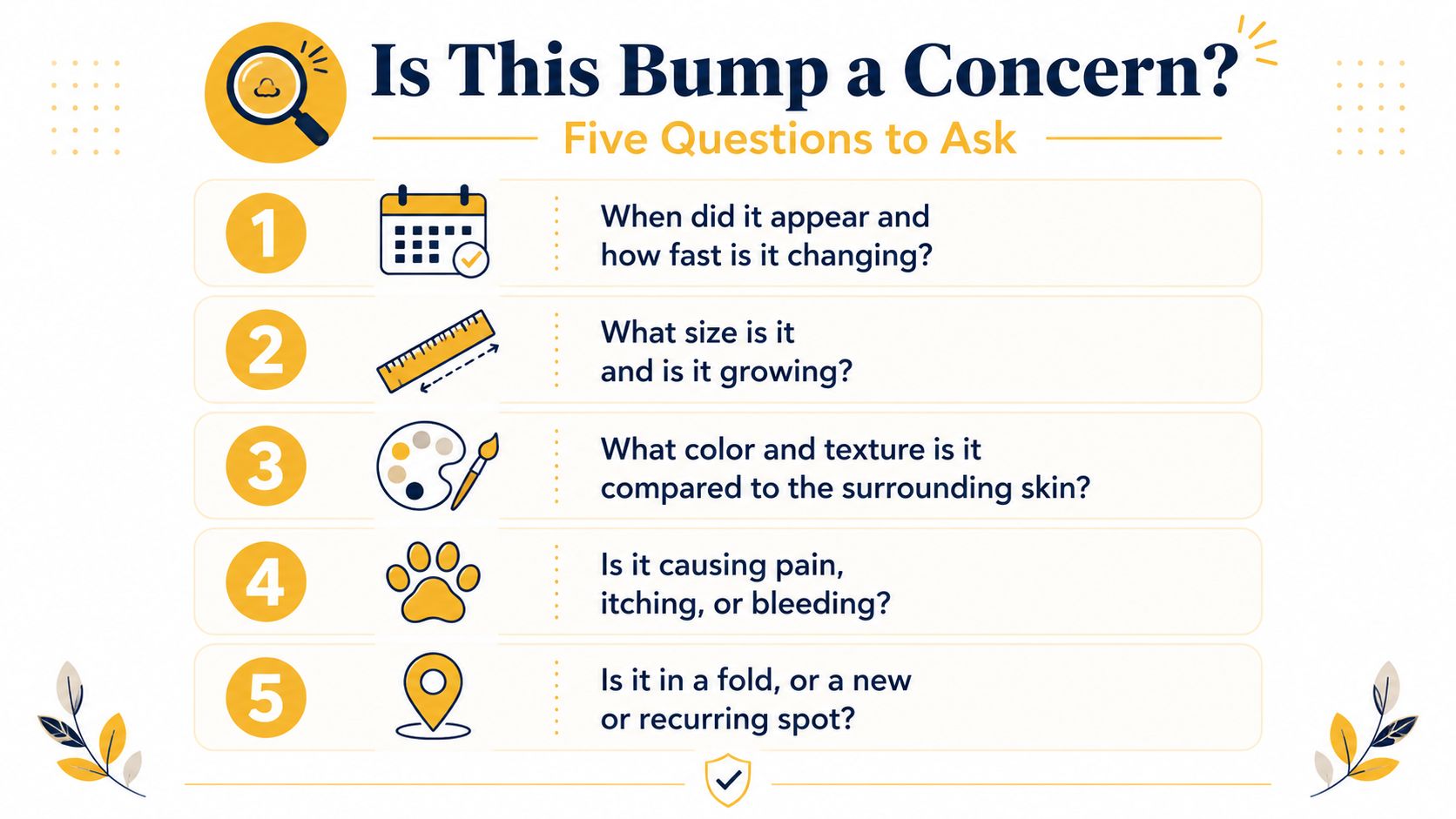
Finding a new bump while rubbing your bulldog's neck or checking a skin fold can be unsettling. Use five questions to sort the observation into a sensible next step. Take a clear photograph beside a familiar object for scale, record the location, and avoid squeezing or picking at the lesion.
The five-question check
- When did it appear, and how fast is it changing? A bump that appeared after scratching may behave differently from one that has steadily enlarged. Rapid change warrants a veterinary call.
- Is it soft, firm, or fluid-filled? Use gentle pressure only. A soft, movable lump can fit a benign fatty mass, while a firm or fixed nodule needs assessment. A painful, tense swelling may be an abscess or another inflamed process.
- Is the surface intact? Check for normal skin, hair loss, crusting, ulceration, bleeding, moisture, or discharge. An open or oozing lesion is not a simple cosmetic spot.
- Is your dog bothered by it? Licking, scratching, rubbing, flinching, guarding, or limping provides useful clues. A bump that does not itch can still require evaluation.
- Is it one bump or several, and is your dog otherwise well? Several itchy bumps can reflect a broader skin reaction, while one persistent nodule may need a different workup. Appetite, energy, breathing, and bathroom habits also belong in the picture.
Three practical action tiers
Monitor at home for one to two weeks only if the bump is small, stable, closed, painless, and your dog is acting normally. Photograph it, check it regularly, and stop monitoring if it changes.
Book a routine appointment this week for a persistent solitary lump, firm or fixed lesion, repeated bumps, hair loss, odor, crusting, ongoing itch, or any nodule that does not settle. Bulldogs commonly develop inflammatory skin disease, yet a separate mass can occur at the same time. Review veterinary guidance on canine lumps and masses recommends veterinary assessment, including cytology or biopsy, for persistent, rapidly changing, ulcerated, or non-itchy single nodules.
Seek same-day care for rapid enlargement, significant pain, active bleeding, an open ulcer, sudden facial swelling, widespread hives with vomiting, or a lesion that interferes with eating, breathing, walking, or urination.
The checklist organizes what you see. It cannot replace cytology or biopsy. Use it to avoid panicking over every pimple while still acting promptly when a lump behaves differently.
What Your Vet Will Actually Do to Diagnose the Cause
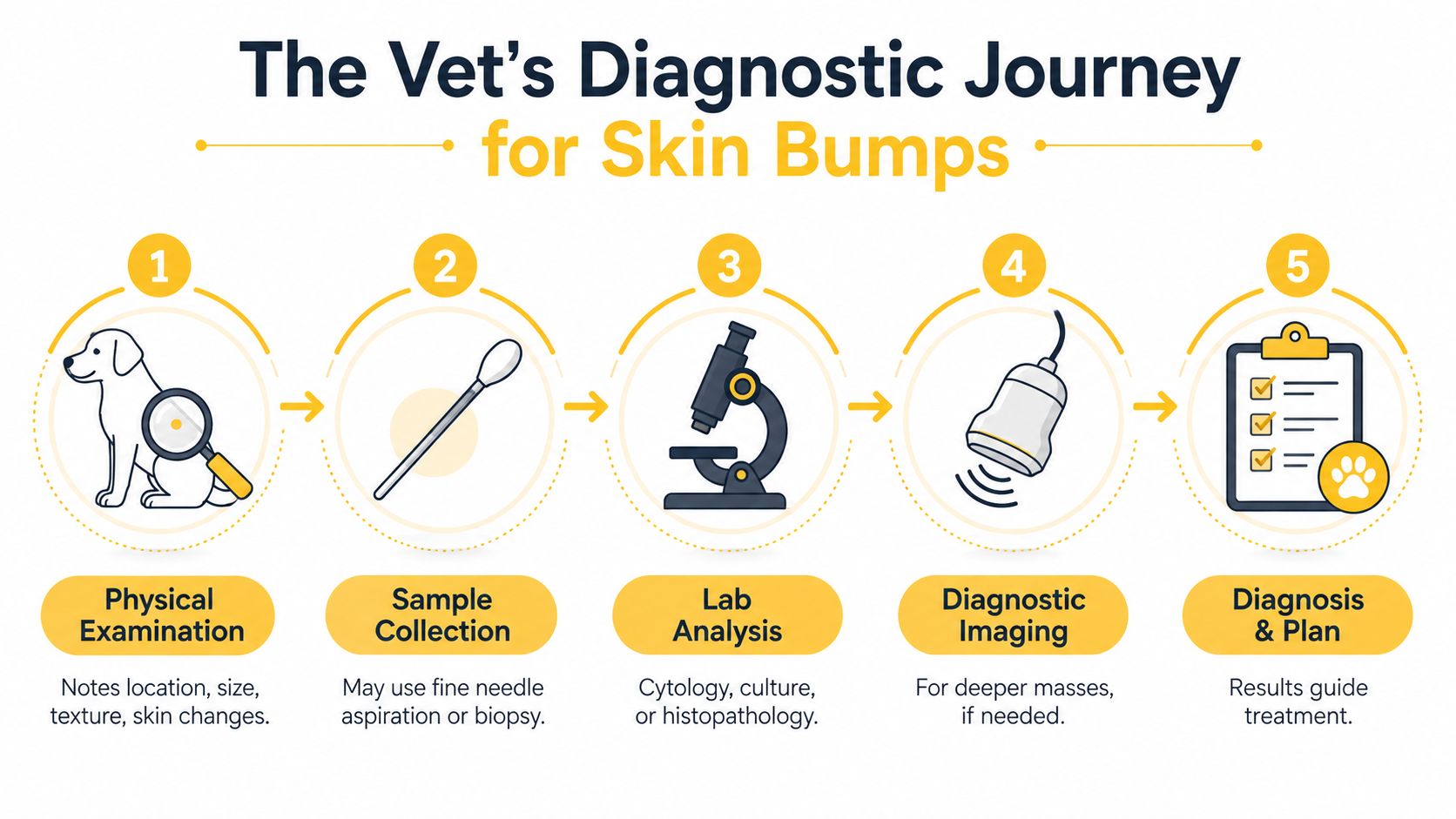
A veterinary visit usually begins with a close physical examination. The clinician will note the bump's location, size, mobility, firmness, surface, and relationship to nearby folds, hair, paws, or lymph nodes. They'll also examine the surrounding skin for odor, redness, thickening, scaling, hair loss, and additional lesions.
Tests chosen for the question at hand
A skin scrape can help look for Demodex mites. The vet collects material from the skin surface or deeper around a hair follicle, then examines it under a microscope. It's a targeted test when hair loss, small papules, or recurring lesions suggest mites.
Tape impressions, swabs, and superficial cytology help identify yeast, bacteria, inflammatory cells, and cellular debris. These tests are often quick and involve little discomfort. They're particularly useful when a fold is moist, smelly, crusted, or covered with pustules.
For a discrete lump, a fine-needle aspiration collects cells with a small needle. A laboratory or the clinic may examine the sample to help distinguish inflammation, cyst contents, benign cells, or a tumor. The procedure doesn't automatically commit you to surgery. It gives the veterinarian information before treatment decisions are made.
A stubborn circular lesion may call for fungal testing or culture. A lesion that persists, changes, ulcerates, or produces an inconclusive aspiration may need a full-thickness biopsy and histopathology. Deeper masses sometimes require imaging to understand their extent.
Most surface samples are brief. Needle sampling can cause a moment of discomfort, while biopsy may require local or general anesthesia and aftercare. Time and cost depend on the clinic, laboratory, sedation needs, and number of tests, so ask for an estimate before proceeding.
Treatment Options Bulldog Owners Should Expect
Treatment follows the cause, not just the bump's appearance. A fold lesion caused by yeast needs a different plan from a bacterial infection, allergy, cyst, or tumor. Your veterinarian may combine treatments when a damaged skin barrier has allowed more than one problem to develop.
For bacterial folliculitis, treatment may include prescription oral antibiotics when appropriate, along with medicated cleansing products such as chlorhexidine or benzoyl peroxide formulations. Yeast overgrowth may require antifungal shampoos, wipes, or oral antifungal medication. Follow the schedule carefully, even when the skin starts looking better.
Allergic disease usually needs a layered plan. That can include identifying avoidable triggers, controlling itch, treating secondary infection, and supporting the skin barrier over time. A single bath may reduce surface debris, but it won't resolve an ongoing allergic tendency by itself.
| Cause | First-line treatment | Typical duration | Home support |
|---|---|---|---|
| Bacterial folliculitis | Veterinary-directed antimicrobial treatment and medicated cleansing | Depends on severity and response | Keep folds dry, prevent licking |
| Yeast overgrowth | Antifungal wipes, shampoo, or oral medication | Often requires continued treatment and reassessment | Gentle cleaning and thorough drying |
| Allergic dermatitis | Trigger control, prescribed itch management, skin care | Ongoing management may be needed | Consistent routine, bedding hygiene |
| Histiocytoma | Observation when the diagnosis is secure | May resolve with time | Prevent rubbing or chewing |
| Benign cyst or lipoma | Monitoring or removal if irritated or uncertain | Individual | Don't squeeze or puncture |
| Confirmed tumor | Surgical planning or oncology referral | Depends on diagnosis and stage | Follow wound-care instructions |
Small benign masses may be monitored when a veterinarian is confident about their identity. Tumors may need surgery, staging, or referral. Home measures such as gentle cleansing, an e-collar, clean bedding, and skin-supporting supplements can complement care, but they don't replace prescription treatment or diagnostic sampling.
For practical ideas to discuss with your veterinarian, see these dog itchy skin remedies. Use any product only as directed, and don't apply human creams or essential oils to an open lesion unless your veterinarian specifically approves them.
Daily Care Habits That Help Prevent Future Bumps
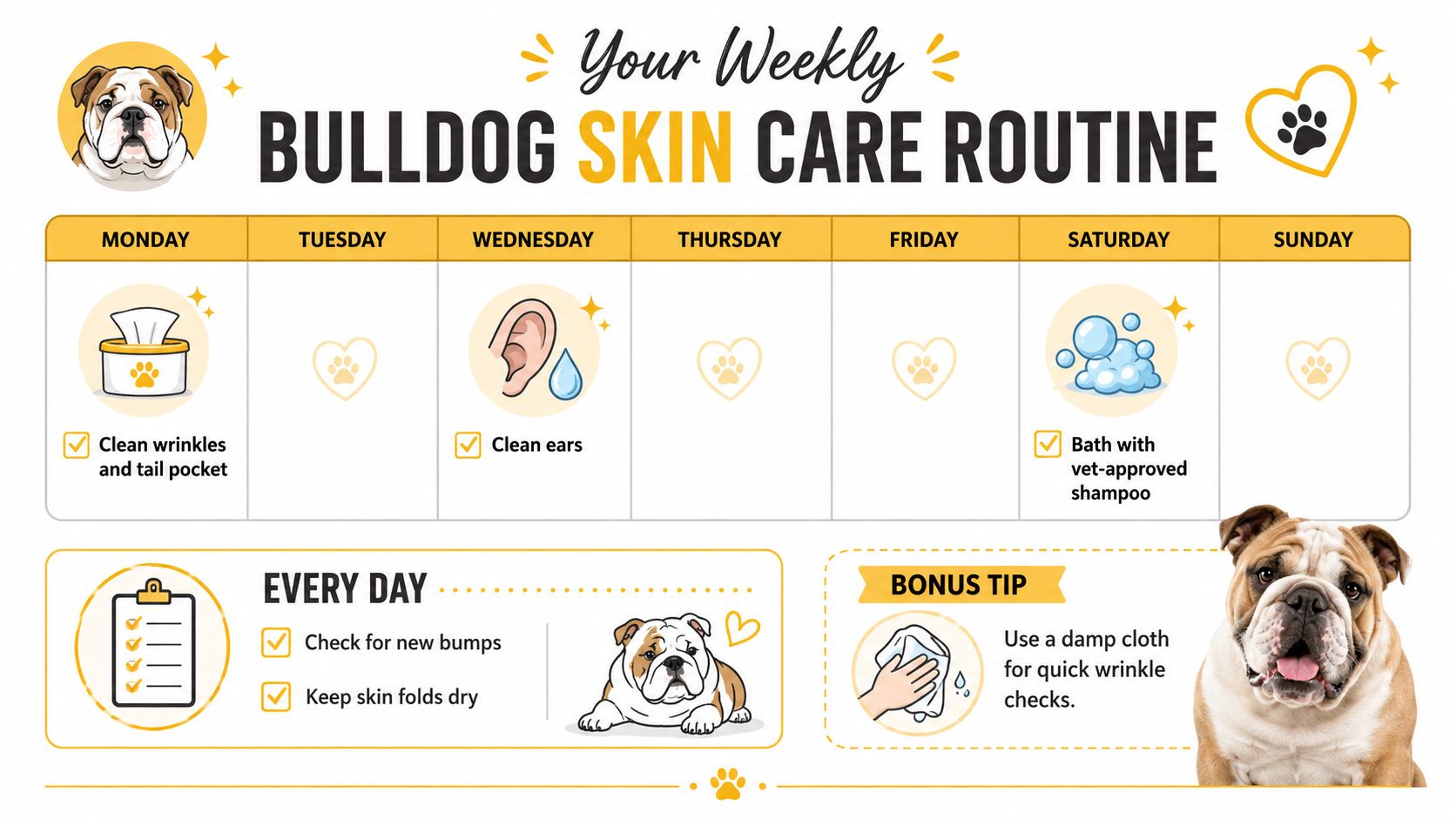
Prevention works best as a small routine rather than an occasional deep clean. Check facial wrinkles, body folds, and the tail pocket every day for dampness, odor, redness, crusting, or a new bump. Use veterinarian-approved wipes or cleansing products, then dry the area completely with a soft cloth.
Bathing frequency depends on your bulldog's skin, activity, and existing disease. Some dogs need regular baths, while others become drier or more irritated with over-washing. A gentle, pH-balanced shampoo chosen with veterinary guidance is a safer starting point than a heavily fragranced product.
Make the environment part of the routine
Moisture can come from more than bathing. Dry folds after drinking, rain, swimming, or outdoor play, and wash bedding regularly. Choose breathable harnesses that don't rub inflamed areas, and clean household surfaces with vet-approved floor products when you're reviewing possible contact irritants.
Diet consistency also helps you notice patterns. Avoid making several food, treat, and supplement changes at once, because you won't know which change affected the skin. Essential fatty acids and other skin-supporting nutrients may complement a complete diet, but a supplement can't clear an active infection or identify a tumor.
For broader skin and coat routine ideas, review this guide to dog skin and coat care. If you're considering a daily supplement for an aging dog, DA-1™ Daily All-in-One - Senior Dog Support, Joints, Skin/Coat & More is described by its manufacturer as a one-scoop formula with 18 human-grade ingredients targeting cells, gut, and joints, with no fillers and a 60-day money-back guarantee.
Save this checklist where you'll use it:
- Every day: Check for new bumps, inspect folds, and dry any damp skin.
- During the week: Clean wrinkles and the tail pocket with an approved product, and check paws and ears.
- Bath day: Use the recommended shampoo, rinse thoroughly, and dry every fold.
- Every month: Photograph recurring areas, review changes in diet or products, and schedule a vet visit for anything persistent or changing.
Mistakes Owners Make and When to Head to the Vet Fast
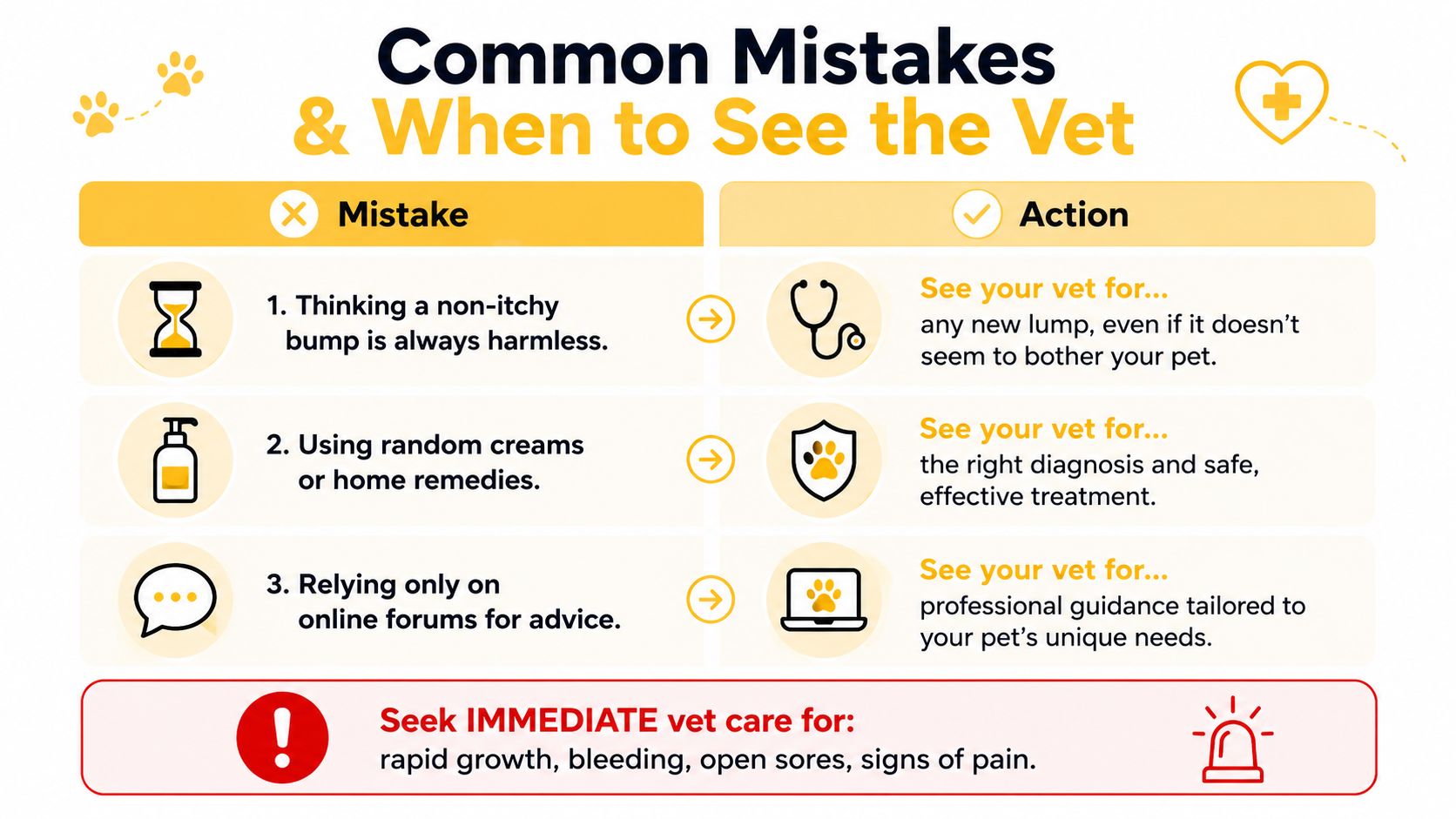
A non-itchy bump isn't automatically harmless. Some inflammatory lesions itch intensely, but a discrete mass can be quiet while it changes. That's why the five-question check includes growth, surface condition, texture, and overall health, not just scratching.
Random creams can create another problem by irritating the skin, trapping moisture, masking infection, or delaying a useful sample. Home remedies also won't distinguish a cyst from a mast cell tumor, and online breed forums can't perform cytology or biopsy.
Why age and appearance can mislead
A large study of skin masses submitted from dogs under one year old found that 94.3% of submissions were neoplastic, and 98.5% of those neoplasms were benign, with histiocytoma accounting for 86.6% of masses. Read the study on canine skin masses in young dogs These findings show why a young dog's bump may be benign, but they don't provide a safe visual diagnosis for an individual bulldog.
Supplements and diet changes may support skin resilience, but they can't shrink a tumor or cure demodicosis. If a bump is open, rapidly changing, painful, bleeding, or interfering with normal function, medical assessment matters more than experimenting at home.
Seek urgent care for rapid growth, bleeding or ulceration, sudden facial swelling, hives accompanied by vomiting, breathing difficulty, or a lesion that interferes with eating, walking, urination, or comfort. A same-day visit is also sensible when your dog seems generally unwell.
A vet visit is an information-gathering step, not a promise of surgery.
The clinician may recommend observation, topical care, a scrape, cytology, or another targeted test. Getting that information early can prevent an inflamed fold from worsening and can clarify whether a solitary lump needs further attention.
Pure Paw Labs offers daily nutritional supplements intended to support areas such as skin and coat, gut health, joints, and general wellness. If you're building a consistent routine alongside proper veterinary care, visit Pure Paw Labs to review the available options.