


Joint supplements do work for dogs, but only certain ingredients have strong clinical support. Omega-3 fatty acids are the best-evidenced option, while glucosamine and chondroitin show little to no pain-relief benefit in controlled studies, so the label matters far more than the marketing.
A lot of dog owners first notice the change in small ways. A dog hesitates at the stairs, rises more slowly after naps, or stops wanting to walk as far, and that's usually when the supplement aisle starts looking tempting. The hard part is that the word “joint supplement” covers products with very different ingredients, and those ingredients do not all behave the same way in the body.
Table of Contents
- Do Joint Supplements Actually Work for Dogs
- How Common Joint Supplement Ingredients Work
- The Honest Truth About Glucosamine and Chondroitin
- Realistic Timelines and Signs of Improvement
- Safety Considerations and When to Consult a Veterinarian
- How to Choose a Quality Joint Supplement for Your Dog
- Beyond Supplements A Multimodal Approach to Canine Joint Health
- Key Takeaways for Dog Owners
Do Joint Supplements Actually Work for Dogs
Yes, some joint supplements can help dogs, but the answer depends heavily on the ingredient. A bag, chew, or powder that says “joint support” is not automatically backed by the same level of evidence as the next one.
A dog with osteoarthritis may look stiff when it gets up, then move more freely after a short walk. That is often when owners try a supplement and hope the label matches the promise. The research gives a clearer picture than the marketing does. A 2022 systematic review found the strongest pain-relief signal for omega-3-enriched diets and omega-3 supplements, while chondroitin-glucosamine nutraceuticals did not show a pain-relief effect.
Practical rule: ask which active ingredient is supposed to help, then check whether that ingredient has dog-specific clinical evidence.
Cornell's Canine Health Center makes the same point in simple terms. Arthritis has no cure, and only a few ingredients, especially fish oil, have been shown to help slow degeneration, while glucosamine and chondroitin are still less certain (Cornell Canine Health Center). For a dog owner, that means two products can both be called “joint supplements” and still have very different chances of helping.
A useful starting point is to separate ingredients by the strength of the evidence, not by the promises on the front of the bottle. Omega-3s sit near the top of that evidence ladder, especially for comfort and inflammation control, while older formulas built around glucosamine and chondroitin have a much weaker record for relieving pain. For owners who want a plain-language overview of fish oil use in dogs, this guide to whether dogs can have fish oil is a helpful next read.
That is why one dog may improve on a fish-oil-based formula and see little change from another supplement, even when both are sold for the same problem. The label tells you what is inside. The evidence tells you whether that ingredient is likely to matter.
How Common Joint Supplement Ingredients Work
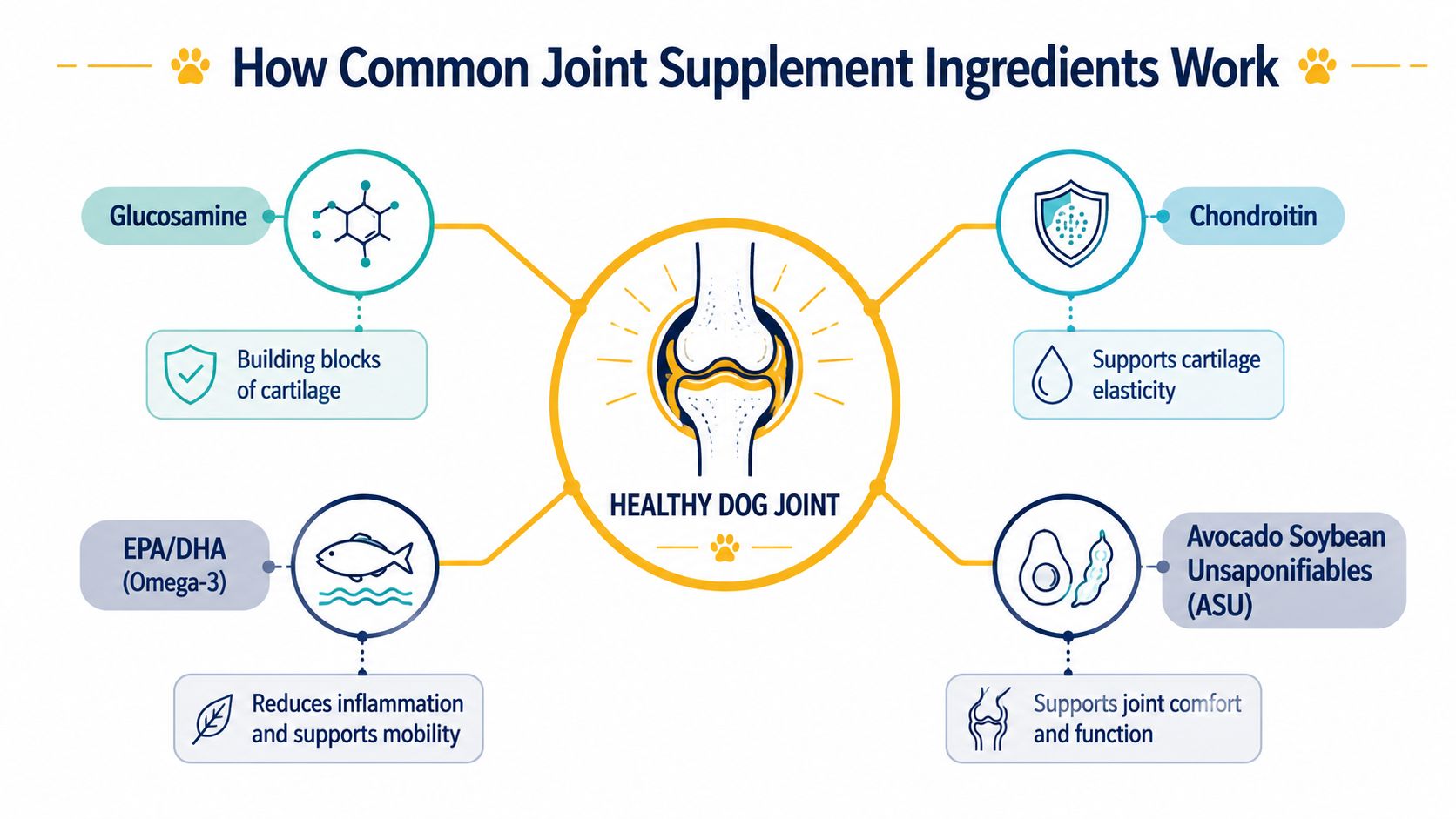
Omega-3 fatty acids
Omega-3s, especially EPA and DHA from fish oil, are the clearest example of a supplement ingredient with a sensible mechanism and dog-specific support. They help shift the body's inflammatory signaling away from pathways that tend to feed joint pain, so their main role is comfort and inflammation control, not cartilage “rebuilding.” If you want a plain-language explanation of fish oil use in dogs, this guide to can dogs have fish oil is a useful place to start.
For a dog with arthritis, that difference matters. Omega-3s work more like turning down a loud radio than fixing the radio itself. They do not cure joint disease, but they can make the day-to-day discomfort easier to manage, especially when they are part of a broader care plan.
Newer multimodal formulas
Some newer joint formulas mix several ingredients so they can address more than one part of the problem at once. A randomized, double-blind, placebo-controlled crossover study of a supplement containing undenatured type II collagen (UC-II) and Boswellia serrata reported better mobility after 4 weeks, with benefits maintained over 8 weeks (PubMed). Another placebo-controlled multicenter study of a supplement combining eggshell membrane, krill meal, astaxanthin, hyaluronic acid, and Boswellia serrata improved all five main outcome measures, while placebo improved only 2 of 5 measures (PubMed).
That matters because some products try to do more than one job at once. An ingredient that helps calm inflammation may be paired with one that supports comfort or joint structure, and that combination can make sense for a dog that needs broader support. A broad, human-grade formula such as DA-1™ Daily All-in-One - Senior Dog Support, Joints, Skin/Coat & More is presented as a single-scoop, multi-system option, but the same evidence rule still applies, the ingredients and doses are what matter.
Dogs do not need every trendy ingredient. They need the right ingredient for the right goal.
Why glucosamine and chondroitin are different
Glucosamine and chondroitin are often treated as the default answer for joint health, but the theory behind them has always outpaced the results. In theory, they sound appealing because cartilage is part of joint structure. In practice, the clinical picture is much less impressive than the marketing suggests.
Their role is best thought of as uncertain support, not proven pain control. That is why many veterinarians place them below omega-3s and some newer multimodal blends when they talk with owners about what is most likely to help a painful dog feel better.
The Honest Truth About Glucosamine and Chondroitin
Glucosamine and chondroitin are widely used, but clinical results are inconsistent. Many dog owners expect a supplement in this category to work quickly and clearly, the way a pain medicine can, yet the research does not support that kind of promise. A product may be common on shelves and still do very little for a painful joint.
The clearest summary comes from the 2022 systematic review and meta-analysis in canine osteoarthritis. It found 88.9% non-effect and 0% effect for the chondroitin-glucosamine category, and described a very marked non-effect in joint pain management (systematic review). Cornell's Canine Health Center says glucosamine and chondroitin may help, but they are less certain than fish oil, which is a careful way of saying the evidence does not rise to the level many owners assume (Cornell).
Controlled trials point in the same direction. One study found that glucosamine hydrochloride plus chondroitin sulfate did not show a clear benefit until about day 70, which is much slower than carprofen, and other controlled studies found no positive effect versus placebo on objective gait measures. That does not mean these ingredients are useless in every dog. It means the most honest expectation is a delayed and modest response, if any.
If you try glucosamine and chondroitin, judge them by function, not by hope.
The practical mistake is expecting a quick turnaround from a supplement that has weak support for pain relief. Watch the same daily tasks for several weeks. A dog that climbs stairs more easily, stands up with less hesitation, or walks farther before slowing down gives you a clearer answer than a vague feeling that things might be improving. If those changes do not show up after a fair trial, the product probably is not the right fit.
Realistic Timelines and Signs of Improvement
Timing matters because too many owners stop too soon or keep going too long. A supplement should not be judged after a few days, but it also should not stay in the routine forever just because the label sounded convincing. Some formulas need 4 to 8 weeks before you can tell whether they are helping, and even then the result depends on the ingredient mix and whether the dose matches the problem.
What improvement can look like
The earliest changes are usually about function, not drama. A dog may get up from rest with less hesitation, pause less before stairs, or look less stiff during the first part of a walk. Many owners expect a big burst of energy, but joint support more often looks like easier movement and less stiffness, not a completely different dog.
Some newer formulas have shown measurable changes in controlled studies. As noted earlier, the crossover study of UC-II and Boswellia serrata reported better mobility impairment after 4 weeks, with the benefit still present over 8 weeks. A multicenter study using eggshell membrane, krill meal, astaxanthin, hyaluronic acid, and Boswellia serrata found improvement in all five main outcome measures, while placebo improved in only 2 of 5. Those findings do not mean every product will work, but they do show that certain modern combinations can produce real change within a practical trial period.
What to track at home
- Stairs: Notice whether your dog starts using stairs with less hesitation or fewer pauses.
- Rising from rest: Watch how often your dog needs a second try to stand up.
- Walking distance: Keep the route the same and see whether your dog finishes more comfortably.
- Lameness pattern: Look for steady changes, not just a good day after extra rest.
If nothing changes after a fair trial period, that is useful information too. A supplement that does not change movement, comfort, or willingness to be active probably is not earning its place in the routine.
Safety Considerations and When to Consult a Veterinarian
Most joint supplements are tolerated well, but “generally safe” is not the same as “risk-free.” Dogs can still get stomach upset, and the risk goes up if a dog is on other medications or already has medical issues. A vet should know what's being given before any new supplement becomes part of the routine.
Dogs who are pregnant, nursing, or dealing with chronic illness need extra caution. So do dogs already taking prescription pain medications, because the goal is to avoid mixing products without a plan. If your dog has vomiting, diarrhea, appetite changes, or a sudden shift in mobility after starting a supplement, stop guessing and call your veterinarian.
Quality matters just as much as ingredient choice. Look for products that show transparent labeling, clear doses, and third-party testing when available, because supplements are not regulated like prescription drugs. The label should tell you exactly what's inside, not hide behind a proprietary blend.
A good rule is simple. If you can't tell what the product contains, you can't tell whether it's appropriate for your dog.
How to Choose a Quality Joint Supplement for Your Dog
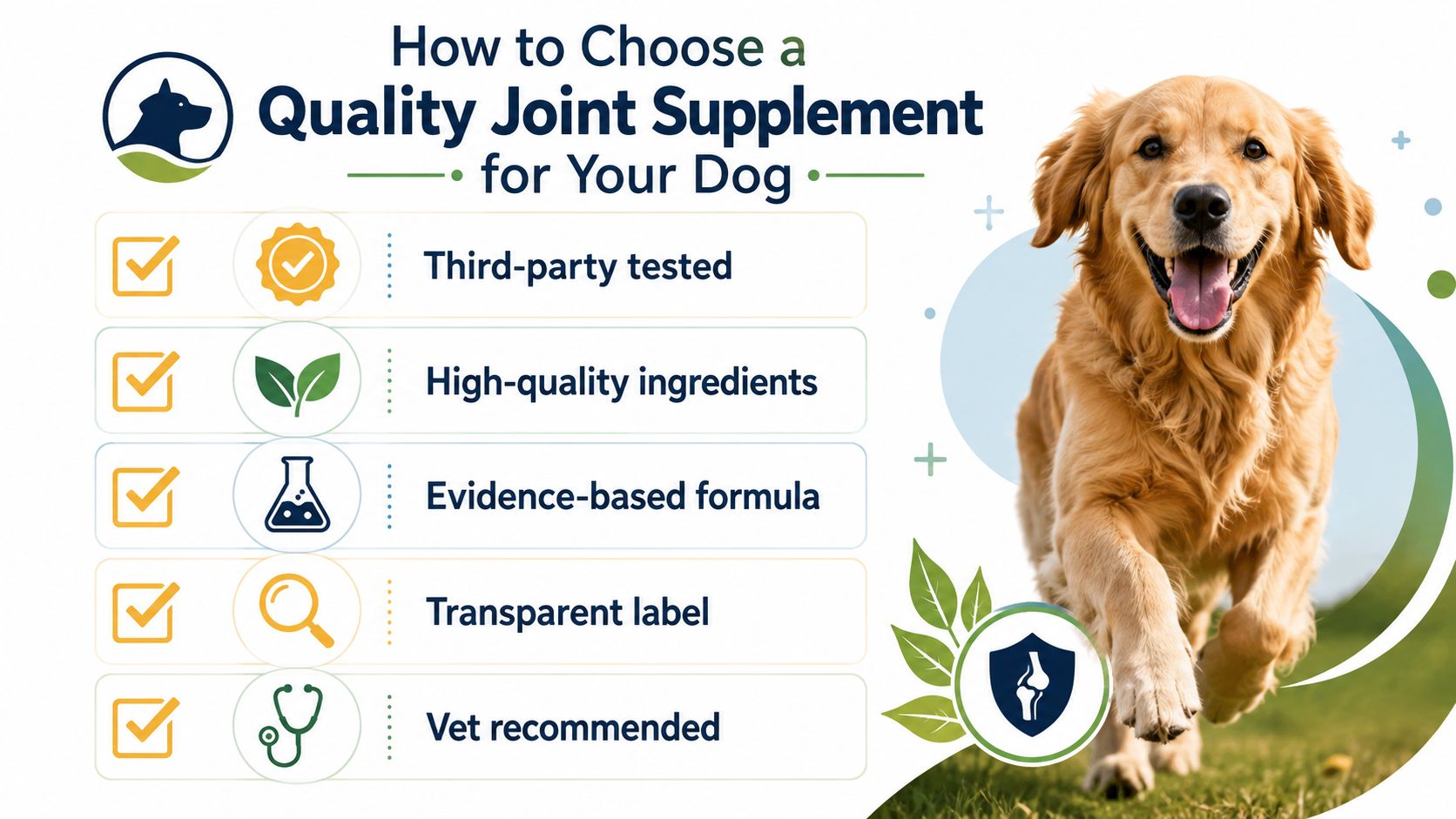
Use the label as your first filter
Start with the ingredient panel, not the front-of-package claims. A quality product should list exact amounts, because without dosage transparency, you can't judge whether the formula matches what the research used. That's especially important for omega-3s, where the active ingredients matter more than the generic term “fish oil.”
The next check is quality control. Third-party testing, manufacturing standards, and clear sourcing all matter because supplements can vary in potency and cleanliness. If a company won't say how it verifies its product, that's a warning sign, not a small detail.
Favor evidence-backed ingredients
A smart shortlist starts with omega-3 fatty acids, then considers newer formulas with actual clinical data such as UC-II, Boswellia serrata, and the eggshell membrane combination discussed earlier. By contrast, products built mainly around glucosamine and chondroitin should be treated as lower-confidence options for pain relief.
Pure Paw Labs' dog mobility supplement is one example of the kind of educational product page owners may look at when comparing formulas, but the same checklist still applies. Ask the same questions every time, what are the ingredients, what are the doses, and what evidence supports them?
Keep the decision practical
- Third-party tested: You want reassurance that the label matches the contents.
- Transparent label: Exact amounts beat vague blends.
- Evidence-based formula: Clinical support should come before hype.
- High-quality ingredients: Human-grade or clearly sourced ingredients are easier to evaluate.
- Vet recommended: Your dog's medical history should shape the choice.
A good supplement should make decision-making simpler, not more confusing. If it adds uncertainty, that's usually a sign to keep looking.
Beyond Supplements A Multimodal Approach to Canine Joint Health
Supplements can support joint care, but they rarely solve the whole problem by themselves. Joint health improves more when the dog's daily routine supports the joints too, including weight control, movement choices, and pain management. As noted earlier, arthritis does not have a cure, so care usually focuses on reducing stress on the joints and helping the dog move more comfortably.
Extra body weight acts like carrying a heavier backpack every day. Each step asks more from sore hips, knees, and elbows. A dog that goes from hard weekend exercise to very little movement during the week can also feel stiffer and more uncomfortable than a dog with steady, appropriate activity. That is why some dogs do better when a supplement is paired with short walks, predictable exercise, and veterinary guidance on pain control.
Nutrition can play a supporting role outside of joint formulas too. If you are looking at broader supplement choices, the same practical mindset applies to topics like dog bone broth benefits. The primary question is whether the product fits the dog's needs, not whether the label sounds wholesome.
Key Takeaways for Dog Owners
Do joint supplements work for dogs? Some do, but the evidence is not equal across ingredients. Omega-3 fatty acids have the clearest clinical support, while glucosamine and chondroitin have little to no proven pain-relief benefit in controlled studies.
Modern formulas can still matter if the ingredients match the research. Some products with UC-II, Boswellia serrata, and other multi-ingredient blends have shown measurable mobility improvements in clinical trials, and the response may appear within a few weeks. Some multi-ingredient products show measurable improvement in clinical trials, but results vary by formula.
Watch your dog's daily function, not the label claims. Stairs, getting up from rest, walking distance, and limp severity give you practical clues over time, and those signs are usually more useful than marketing language. If you are unsure where to start, ask your veterinarian, choose products with transparent labels and solid quality control, and look for ingredients that fit the evidence rather than the packaging.
Pure Paw Labs focuses on human-grade, science-minded dog supplements, including a single-scoop option designed for joint support alongside other daily wellness needs. If you want to compare formulas with a clearer evidence lens, visit Pure Paw Labs and use the same questions from this guide, what's in it, how much is in it, and what does the research support?