


No. Boston Terriers are not hypoallergenic dogs, and even though one breed guide cited an American Kennel Club shedding score of 2 out of 5, low shedding doesn't stop allergy exposure because dog allergies are driven mainly by proteins in dander, saliva, and urine. If you're staring at photos of a Boston Terrier and wondering whether that short, tidy coat might mean fewer sneezes, the hard part is that the coat can look “clean” while allergens are still moving around your home.
You're probably here because you like almost everything about this breed. They're compact, expressive, and easy to picture on the couch beside you. But if someone in your home gets itchy eyes, congestion, or skin irritation around dogs, the question isn't just “Do Boston Terriers shed?” It's “What exactly triggers dog allergies, and does this breed spread enough of it to matter?”
That's where people get tripped up. A lot of dog advice stops at a simple yes or no. That's not enough if you're deciding whether to bring one home.
Table of Contents
- Introduction Are Boston Terriers Right for Allergy Sufferers
- What Hypoallergenic Really Means for Dog Allergies
- Boston Terrier Coat Shedding and Allergen Load Explained
- How Boston Terriers Compare to Truly Low Allergy Breeds
- Why a Boston Terriers Own Allergies Can Affect Your Allergies
- Living With a Boston Terrier When You Have Allergies
- Final Takeaways and Choosing What Is Best for Your Home
Introduction Are Boston Terriers Right for Allergy Sufferers
A family falls in love with a Boston Terrier puppy. One parent starts thinking about crate placement and chew toys. Another is thinking about tissues, inhalers, and whether the bedroom will turn into a sneeze zone. That tension is common because Boston Terriers look like they should be easier on allergies than many other breeds.
In some ways, they can be easier to manage. Their coat is short. They don't leave dramatic tumbleweeds of fur behind. Some allergic people also seem to tolerate them better than expected, especially compared with larger, heavier-drooling dogs. But that doesn't make them safe for everyone.
Why the answer gets confusing
People often use hair and allergens as if they mean the same thing. They don't. Hair is more like the delivery truck. The cargo is the protein your immune system reacts to.
That's why a dog can look low-mess but still trigger symptoms. A short-coated dog may leave less visible fur on your black pants, while still spreading dander onto bedding, upholstery, and clothing through daily life.
Boston Terriers can be a better fit for some mildly allergic homes than big, heavy-coated breeds. They still aren't a hypoallergenic breed.
What matters in a real home
If you're asking whether Boston Terriers are hypoallergenic dogs, your decision usually comes down to four practical issues:
- Allergen source: Dander, saliva, and urine proteins matter more than coat length.
- Dog habits: Licking, cuddling, sleeping on soft furniture, and rubbing on blankets all increase exposure.
- Your reaction level: Mild sniffles and severe asthma are very different situations.
- Household routine: Cleaning, bedroom rules, bathing, and air filtration can reduce exposure, but they can't erase it.
There's another wrinkle that many buyers miss. Boston Terriers can be prone to their own skin and environmental allergies. If the dog becomes itchy and inflamed, that can mean more scratching, more skin flakes, and more saliva spread around the home. For some families, that changes the picture over time.
What Hypoallergenic Really Means for Dog Allergies
The word hypoallergenic sounds more comforting than it really is. It doesn't mean allergen-free. And for dogs, neutral medical guidance is very clear that no dog is hypoallergenic because allergens don't come only from fur. They also come from dander, saliva, and urine according to Cleveland Clinic's overview of hypoallergenic dogs.
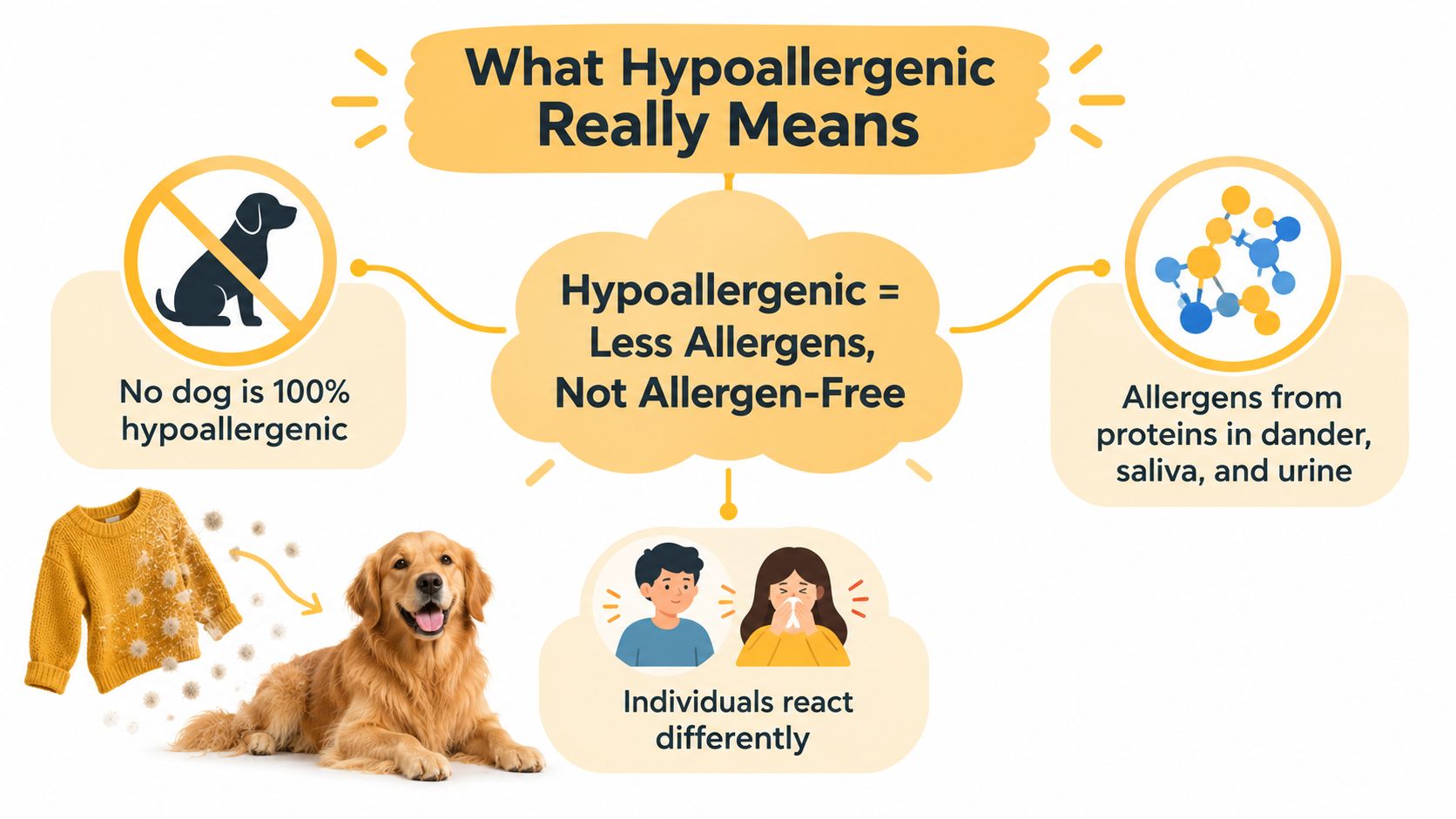
Think of it like dust on a sweater
A sweater isn't the dust itself. It just picks it up, carries it, and drops it around the room. Dog hair works in a similar way.
The hair you see on the couch isn't usually the main trigger. It carries tiny proteins from skin flakes and body secretions. Once those proteins settle into soft surfaces or get stirred back into the air, a sensitive person may react.
Why labels can mislead
A “hypoallergenic” label can make people assume a breed is medically safer. Real-life allergy response is messier than that. One dog may seem manageable for one person and miserable for another.
This is also why short-haired breeds create confusion. If a dog doesn't look fluffy, people assume there's less to react to. But the important question isn't how dramatic the shedding looks. It's how much allergen ends up on hands, sleeves, blankets, rugs, and in the air.
Practical rule: Don't translate “less fur cleanup” into “low allergy risk.” Those are related, but they're not the same thing.
A key allergy term people run into
You may see the name Can f 1 when reading about dog allergies. That's one of the main dog allergens researchers measure. The useful takeaway isn't to memorize the name. It's to understand that allergy load is about proteins, not just visible fur.
That makes dog shopping harder, but it also helps you ask better questions. Instead of only asking whether a breed sheds, ask how much close contact the dog tends to have, how much it licks, how much dander it produces, and how easy it is to keep skin healthy.
Boston Terrier Coat Shedding and Allergen Load Explained
You brush your black shirt and don't see much fur. Then an hour later your nose is stuffy after the dog has been on the couch, licked your hand, and raced across the rug. That pattern is common with Boston Terriers because visible hair and actual allergen exposure are not the same thing.
Boston Terriers have a short, smooth coat, so they often look tidier than fluffier breeds. That appearance can fool people. Their coat still sheds through the year, and the allergy problem usually comes from proteins in dander and saliva that hitch a ride on skin flakes, fur, and household dust.
Research summarized in a peer-reviewed review describes Boston Terriers as not hypoallergenic and notes that breed claims around dog allergies often get overstated in this review of allergy claims around dog breeds.
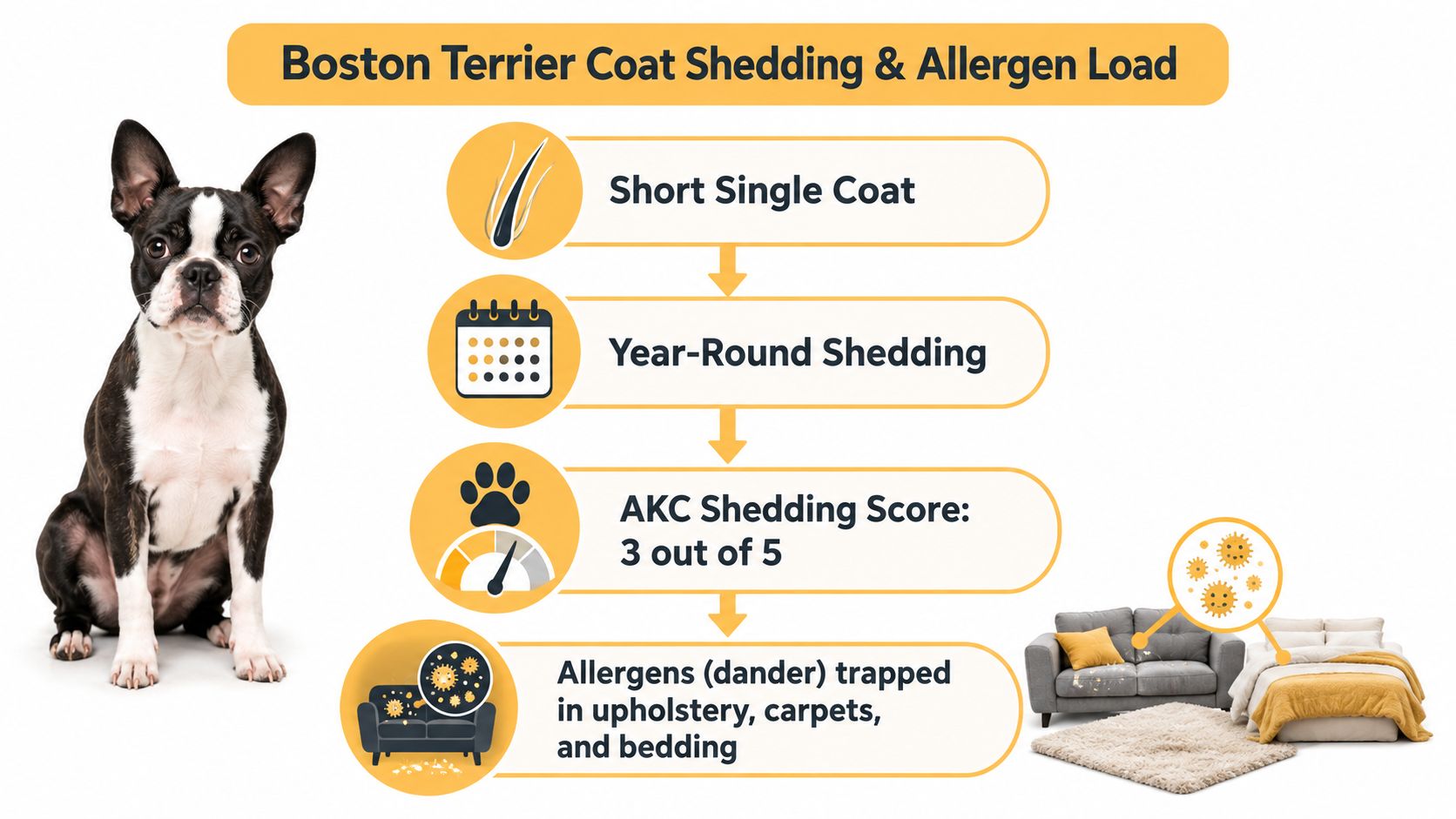
Why a short coat can still create a steady allergen load
A Boston Terrier sheds in a quieter way than a heavy-coated dog. You may not get tumbleweeds of fur in the hallway. Instead, you get a steady trickle of tiny hairs, skin flakes, and dried saliva residue spreading onto sleeves, bedding, and upholstery.
Hair works like a delivery vehicle. The hair itself is often not the part your immune system cares about. The proteins stuck to it are the issue, and short hair can still carry plenty of those proteins around the house.
That is why some allergic owners say a Boston Terrier seems manageable at first, then harder over time. The coat looks low maintenance, but the household still collects allergen particles little by little.
Why some people tolerate Boston Terriers better than expected
Breed averages and real life can part ways.
Some people do better with Boston Terriers than with larger or sloppier dogs because there is less dog spreading material from room to room. Their smaller size can mean less surface area on the sofa, less fur caught in thick fabrics, and often less drool than breeds that leave saliva on toys, blankets, and clothing.
That does not make them allergy-safe. It helps explain why one person may react less to a Boston Terrier than to a bigger dog with heavier shedding or more slobber.
How allergens build up during normal routines
Allergen load usually rises through ordinary contact, not dramatic shedding events:
- Petting and cuddling: Skin flakes and saliva residue transfer to hands, shirts, and blankets.
- Sleeping spots: Dog beds, couches, and favorite corners collect material day after day.
- Licking: Saliva dries on fur and fabrics, leaving allergen proteins behind.
- Running and playing indoors: Movement kicks settled particles back into the air.
Cleaning and grooming help because they reduce how much material stays in the home long enough to keep circulating. The Aquastar Cleaning dander guide gives practical ideas for floors, soft furniture, and pet zones. For coat maintenance, this guide on how to reduce dog shedding explains day-to-day ways to cut down loose hair before it spreads.
If your dog's skin and coat need support as part of a broader wellness routine, DA-1™ Daily All-in-One - Skin/Coat, Joints, Gut Health & More is described as an all-in-one human grade powder designed for once-daily use on top of food, combining skin and coat, digestion, immunity, joint, and stress-related support into one topper.
How Boston Terriers Compare to Truly Low Allergy Breeds
When people ask whether Boston Terriers are hypoallergenic dogs, they're often trying to compare them with breeds that are more commonly recommended for allergy-prone homes. That comparison helps, because Boston Terriers sit in the middle. They may be easier than many heavy shedders, but they aren't usually grouped with the classic low-allergy picks.
Boston Terrier vs low allergy breeds at a glance
| Breed | Coat Type | Shedding Level | Drool Level | Allergy Consideration |
|---|---|---|---|---|
| Boston Terrier | Short, smooth coat | Light compared with many breeds, but still year-round | Often lower than heavy-drooling breeds | Can be manageable for some people, but still not hypoallergenic |
| Poodle | Curly, continuously growing coat | Often lower visible shedding | Typically low | Often chosen when owners want less loose hair and more controlled coat maintenance |
| Bichon Frise | Soft, curly coat | Often lower visible shedding | Typically low | Commonly considered easier for some allergy sufferers if grooming is maintained |
| Portuguese Water Dog | Dense, curly or wavy coat | Often lower visible shedding | Varies | Often recommended in allergy discussions, but coat care is still a major commitment |
The breed label only tells part of the story
One of the biggest mistakes people make is treating breed labels like guarantees. Research on dog allergens shows wide within-breed variability in Can f 1 levels, and dogs marketed as hypoallergenic can overlap with non-hypoallergenic dogs in allergen concentration according to this Murray State review on dog allergen variability.
That means two dogs from the same breed can feel very different to the same allergic person. It also means a Boston Terrier that looks “easy” on paper may still trigger symptoms in your actual home.
How to use the comparison wisely
A Boston Terrier may still be the right breed for someone who wants:
- A shorter grooming routine than some curly-coated breeds require
- A smaller dog with a manageable coat
- A possible middle-ground option when severe shedding is the main concern
A classic low-allergy breed may be worth stronger consideration if you need:
- Less visible shedding
- Less loose coat debris on furniture
- A breed more commonly chosen for allergy-sensitive households
If you're comparing several breeds and trying to understand where Boston Terriers sit on the spectrum, this related guide on whether Great Danes are hypoallergenic dogs can be helpful as a contrast point from the opposite end of the size and drool scale.
Meeting the specific dog matters more than trusting the breed label. Your own symptoms are the final test.
Why a Boston Terriers Own Allergies Can Affect Your Allergies
This is the part many families don't think about until they're already dealing with it. A Boston Terrier's own skin health can change how tolerable that dog feels in your home.
Coverage on the breed notes that Boston Terriers can be prone to environmental and food allergies, including triggers such as pollen, dust mites, mold, smoke, wheat gluten, soy, and additives in Dogster's discussion of Boston Terrier allergy tendencies.

The feedback loop nobody mentions
Here's how it often plays out. The dog gets itchy. The dog scratches more, rubs on furniture, licks paws, or develops irritated skin. That can leave behind more flakes and more saliva on surfaces.
For a sensitive owner, that can mean the house starts feeling worse over time, even if the coat type hasn't changed at all.
Signs that the dog's skin may be affecting the home
Watch for patterns like these:
- More scratching than usual: Extra rubbing can spread skin flakes through bedding and upholstery.
- Frequent paw licking: Saliva gets transferred to blankets, rugs, and your hands.
- Red or irritated skin: Inflamed skin may flake more and need more hands-on care.
- Seasonal flare-ups: Outdoor allergens can hitch a ride back into the house on coat and paws.
If the dog's skin is inflamed, your home may feel more allergenic even without any change in shedding.
Why cleaning matters more when the dog is itchy
An itchy dog usually needs more surface management, not less. Bedding, washable covers, and favorite lounge spots collect what the skin and saliva leave behind. In that situation, deeper home resets can help, especially in rooms where allergens settle into soft materials. For a home-focused overview, deep cleaning and allergen reduction for Dublin offers practical ideas that apply well to pet households too.
This is also why regular vet attention matters if your Boston Terrier starts licking, scratching, or flaring seasonally. You're not just managing the dog's comfort. You're managing the allergy environment of the whole home.
Living With a Boston Terrier When You Have Allergies
Some people with dog allergies can live with a Boston Terrier, but they usually need a routine that stays consistent. The goal isn't perfection. It's reducing the amount of allergen that accumulates and gets stirred back into your air.
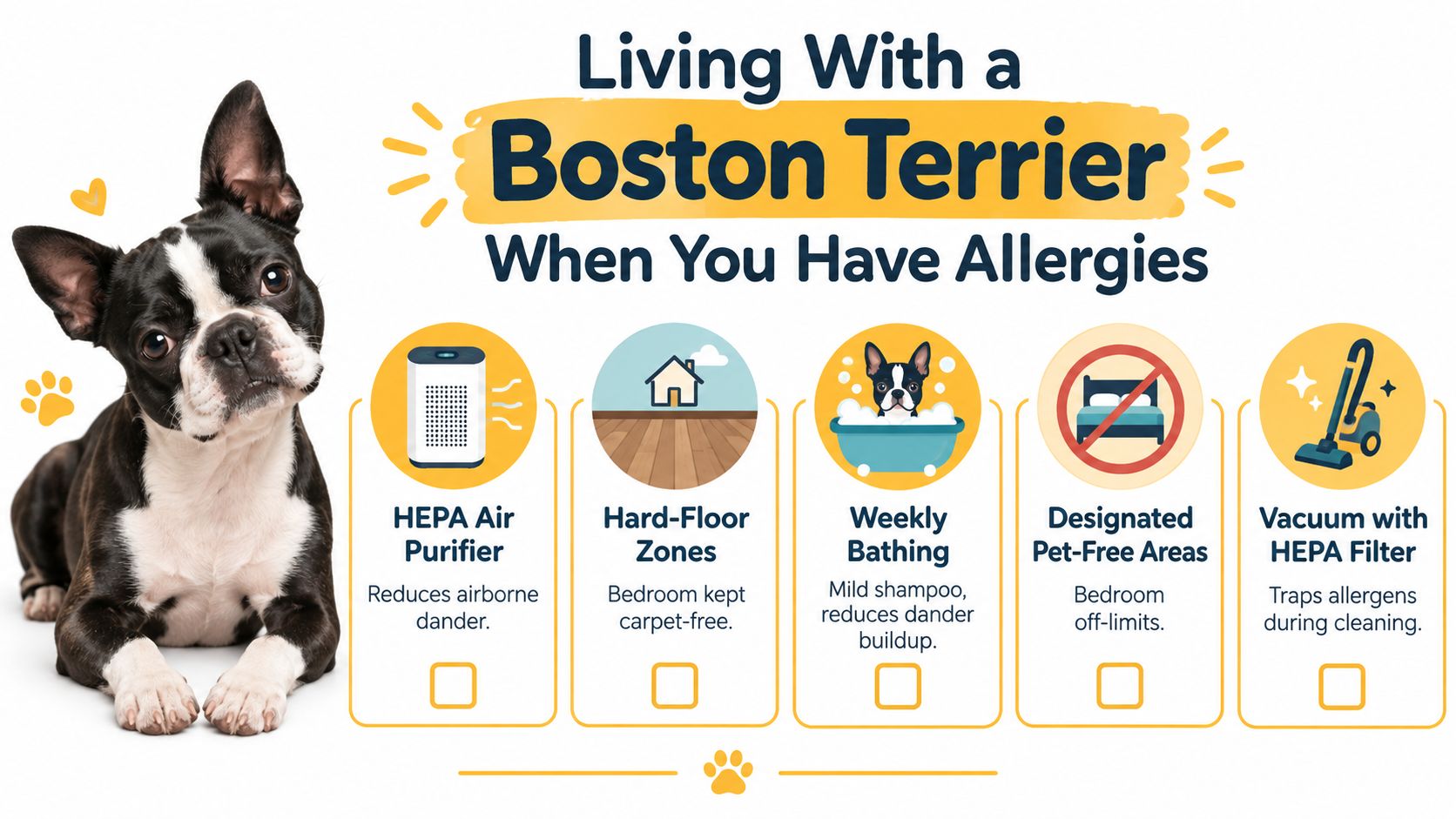
The home routine that helps most
- Create a bedroom reset zone: Keep the dog out of the bedroom if possible. You spend hours breathing there, so that room should give your body a break.
- Use HEPA filtration: An air purifier can help capture airborne particles before they settle again.
- Wash fabrics often: Blankets, dog beds, and couch covers collect what hard floors don't.
- Clean hands after petting: This matters more than people expect, especially before touching your eyes or face.
- Limit licking: Saliva is part of the allergy picture, so redirect face licking early.
Floors, vents, and airflow matter too
Many families focus only on the dog and forget the house systems around the dog. Air movement changes where allergens travel and settle. HVAC maintenance, filter changes, and room airflow can make the home feel very different from week to week. If you want practical house-system ideas, HVAC tips for fewer allergens can help you think beyond vacuuming alone.
You can also learn more about everyday skin-support habits in this guide to dog skin and coat care.
A short visual walkthrough can help you think through daily habits and setup:
What to do before bringing one home
If your symptoms are mild, test your tolerance with real-life exposure. Spend time in a home with an adult Boston Terrier. Sit on the furniture. Pet the dog. Then pay attention not only in the moment, but later that day and the next morning.
If your reactions involve wheezing, chest tightness, or asthma, talk with an allergist before you commit. Cleaning and grooming can lower exposure, but they can't turn a non-hypoallergenic dog into a risk-free one.
Final Takeaways and Choosing What Is Best for Your Home
Boston Terriers are appealing to allergy-conscious buyers for understandable reasons. They're short-haired, relatively tidy-looking, and often less visibly messy than many larger breeds. But the direct answer stays the same. Boston Terriers are not hypoallergenic dogs.
The useful nuance is this. Some people still tolerate them better than expected because the breed may create less visible fur mess and often less saliva transfer than larger, heavier-drooling dogs. That can make day-to-day management easier. It does not remove the underlying allergen exposure.
A simple decision framework
A Boston Terrier may be worth considering if:
- Your dog allergy is mild
- You can maintain cleaning routines
- You're willing to keep some areas pet-free
- You've spent meaningful time with the specific dog first
A Boston Terrier may be a poor fit if:
- You have severe symptoms or dog-triggered asthma
- You react strongly to saliva contact
- You need a very low-allergen household
- You can't manage regular cleaning of soft surfaces
The hidden factor to remember
The dog's own skin health matters. If a Boston Terrier develops itchy skin, seasonal irritation, or food-related flare-ups, your household allergen load can become harder to manage. That's one reason some homes feel fine at first and rougher later.
The best approach is simple. Test your reaction to the actual dog. Be realistic about your home setup. Plan for cleaning and skin care before symptoms become a household battle.
If you love the breed, you don't have to give up at the first sniffle. You do need to go in with clear eyes.
Pure Paw Labs focuses on science-backed, human-grade dog supplements that support everyday wellness, including skin and coat care, which matters when you're trying to keep a dog's skin healthy and comfortable at home. If you want to explore simple daily support options for your dog's routine, visit Pure Paw Labs.