


You found a puddle on the floor, your dog looks fine otherwise, and now you're staring at a can of pumpkin wondering if it's helpful or just internet folklore. That's the right question.
My take is simple. Canned pumpkin can help some dogs with mild diarrhea, but it's not treatment for actual illness. Used correctly, it can firm loose stool and buy the gut a little breathing room. Used blindly, it can waste time while a sick dog gets sicker.
If you want the short version, use plain pumpkin only for a dog with a mild, brief stomach upset who is still acting normal, drinking, and not vomiting. If your dog has blood in the stool, repeated vomiting, dehydration, obvious pain, lethargy, or diarrhea that keeps going, skip the pantry remedy and call your vet.
Table of Contents
- Why Canned Pumpkin Works for Mild Upset Stomachs
- Exact Pumpkin Dosages by Dog Size and Weight
- How to Prepare and Serve the Pumpkin Mixture
- When to Skip Home Remedies and Call the Vet
- Long-Term Gut Health and Daily Digestive Support
- Quick Reference Checklist for Future Upset Stomachs
Why Canned Pumpkin Works for Mild Upset Stomachs
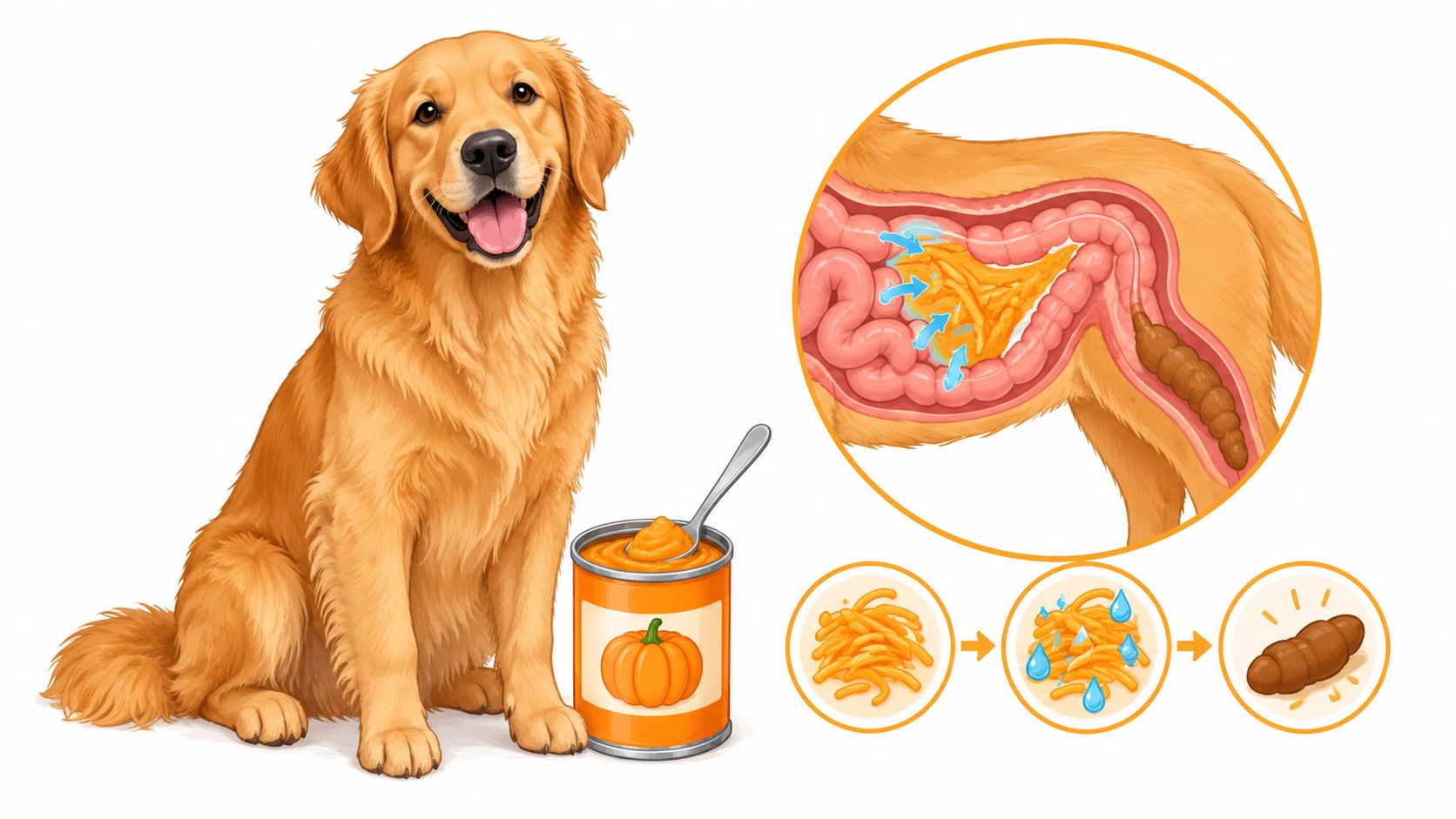
The reason pumpkin gets recommended so often is straightforward. Its soluble fiber can absorb excess water in the gut and help stool hold together better. That's why it can be useful when your dog got into something greasy, switched foods too fast, or had a minor stress-related digestive wobble.
That said, let's keep this honest. Pumpkin has a reputation that outruns the evidence.
What pumpkin does well
For mild, uncomplicated diarrhea, plain canned pumpkin works as supportive fiber therapy. It doesn't kill parasites. It doesn't fix infections. It doesn't treat inflammatory bowel disease. What it can do is make stool less sloppy while the gut settles down.
If you're comparing fiber options more broadly, this guide to fiber sources for dogs gives useful context on where pumpkin fits.
What the evidence actually says
One independent veterinary summary notes that there are no published, peer-reviewed studies specifically testing pumpkin for diarrhea or constipation in dogs, so most advice is based on anecdotal use and clinical experience rather than controlled trials (independent veterinary summary on pumpkin use).
Another review makes the same point more bluntly. There is no controlled clinical trial isolating canned pumpkin as a treatment for canine diarrhea, and even plain pumpkin isn't considered a concentrated fiber source in the small amounts many dogs will accept (veterinary discussion of canned pumpkin versus pumpkin powder).
Bottom line: Pumpkin is a reasonable tool for a small problem. It is not a proven cure, and it is not a substitute for diagnosis.
Set the right expectation
If you're using canned pumpkin for dog diarrhea, the goal isn't to "treat the disease." The goal is to support stool quality during a mild dietary upset. That's a much narrower job, and pumpkin can do that job fairly well when the case is simple.
If your dog seems systemically unwell, pumpkin stops being a smart first step. At that point, it's a delay.
Exact Pumpkin Dosages by Dog Size and Weight
Let's make this practical. The commonly cited dosing guidance is 1 to 4 tablespoons of pumpkin or pumpkin powder added to a dog's meal (dosage guidance for pumpkin in dogs). That's a broad range, and broad ranges get people into trouble.
Start low. Watch the stool. Don't keep adding more because "natural" doesn't mean harmless. Too much fiber can backfire.
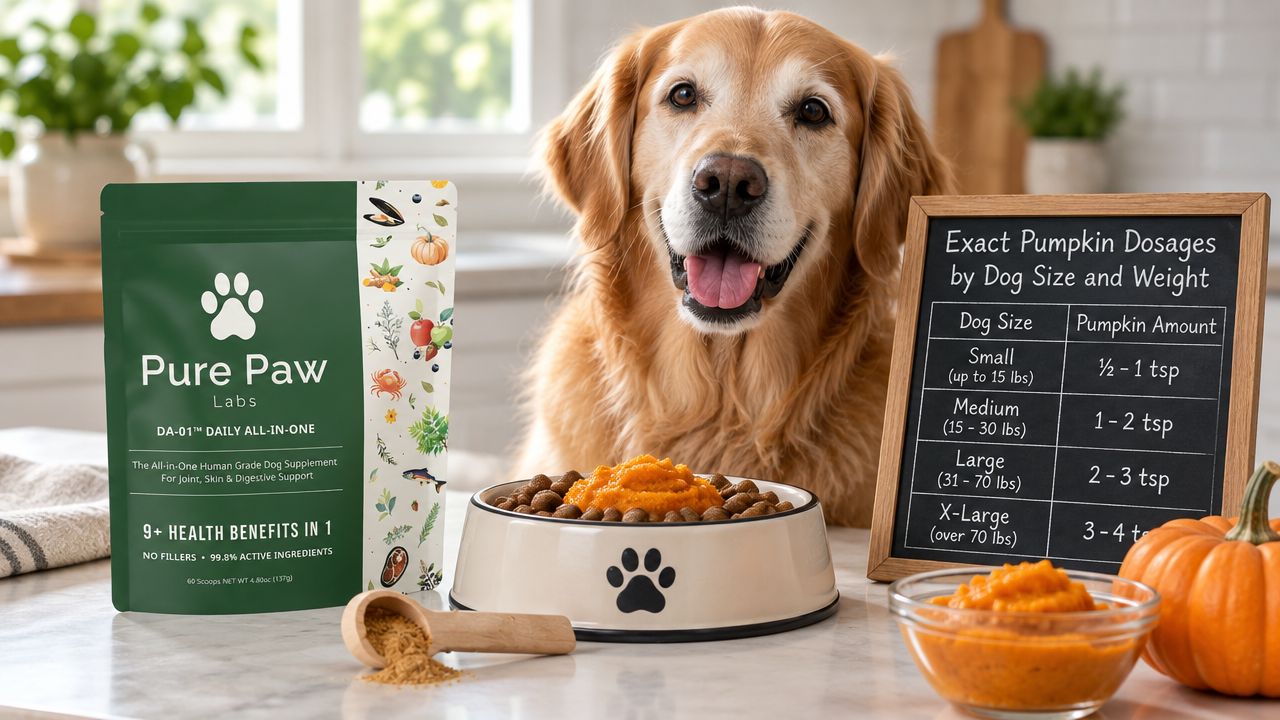
Safe Canned Pumpkin Dosage Chart
| Dog Weight Class | Starting Dosage | Maximum Daily Limit |
|---|---|---|
| Toy and small dogs | 1 teaspoon with food | 1 tablespoon |
| Medium dogs | 2 teaspoons with food | 2 tablespoons |
| Large dogs | 1 tablespoon with food | 4 tablespoons |
| Giant dogs | 2 tablespoons with food | 4 tablespoons |
This chart stays within the published 1 to 4 tablespoon range and gives you a conservative starting point.
My dosing rule
Use this approach instead of guessing:
- Small dogs: Start with the smallest amount. They don't need much.
- Medium dogs: Give a modest portion mixed into a meal, not on an empty stomach.
- Large and giant dogs: Stay conservative on day one. More is not better.
If the stool gets firmer, hold steady. If the stool worsens, stop experimenting and reassess.
Use the right can
This part is required. Use plain pumpkin only. Not pie filling. Not sweetened pumpkin. Not pumpkin with spices. Added sugar and spices can worsen gastrointestinal problems, and pie filling is specifically called out as inappropriate for dogs with diarrhea (plain pumpkin only guidance).
For dogs who have recurring digestive sensitivity and need broader day-to-day support, DA-1™ Daily All-in-One - Senior Dog Support, Joints, Skin/Coat & More is a complete multi-system formula designed to help aging dogs move easier, feel brighter, and act like themselves again. One scoop delivers 18 human-grade ingredients targeting cells, gut, and joints, with no fillers, no pills, and no juggling multiple supplements.
How to Prepare and Serve the Pumpkin Mixture
Dogs don't always appreciate a cold orange blob dropped on top of dinner. You need to make it easy to eat and easy on the gut.
The simplest move is to mix the measured pumpkin into a small meal your dog already tolerates. If your dog has a touchy stomach, pair it with a bland, temporary meal instead of rich kibble toppers, treats, or leftovers.
A practical way to serve it
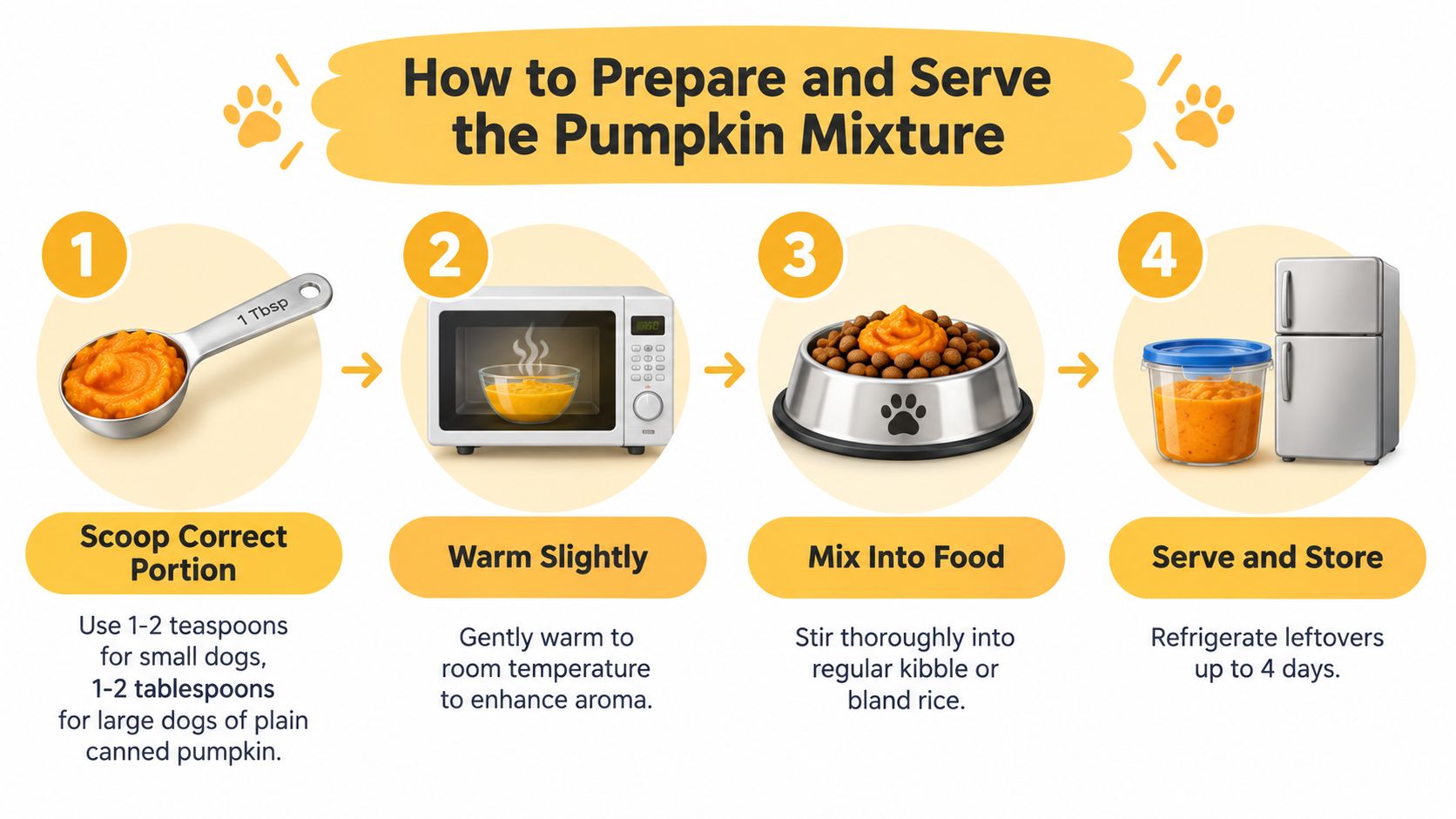
Use this sequence:
- Measure the dose first. Eyeballing is how dogs get overfed fiber.
- Let it warm slightly. Room-temperature pumpkin smells better and is often accepted more easily.
- Mix it thoroughly into food. Don't leave a lump on top.
- Offer fresh water right away. Fiber without enough water can create a new problem.
If you need a simple meal base, this guide to a rice and chicken diet for dogs with diarrhea covers the basics.
What to mix it with
A short-term bland diet works well for many mild cases. Think plain, easy-to-digest food, not gourmet recovery bowls.
- Boiled lean protein: Keep it plain. No oil, seasoning, or skin.
- Plain white rice: Useful as a temporary gentle starch.
- Regular food in a smaller amount: Fine if your dog does well on it and the upset is minor.
Here's a visual walkthrough of the process:
Hydration matters more than people realize
Loose stool means fluid loss. If you're adding fiber and ignoring water intake, you're doing half the job.
Practical rule: If your dog won't drink, acts weak, or seems dry and tacky in the gums, home care has stopped being enough.
Once the stool firms up, transition back to the regular diet gradually. Don't celebrate by handing out treats. That's how you end up right back where you started.
When to Skip Home Remedies and Call the Vet
This is the line most owners need spelled out clearly. Pumpkin is for a dog with mild diarrhea who otherwise looks normal. It is not for a dog who looks sick.
The safest way to think about canned pumpkin dog diarrhea cases is as a fork in the road. One path is brief digestive upset. The other is clinical illness. Your job is to tell those apart fast.
Home care is reasonable when
A short home trial makes sense if your dog has loose stool but is still bright, alert, drinking, and not showing other warning signs. Veterinary guidance commonly frames pumpkin as a short-term aid for mild, uncomplicated diarrhea, often alongside a bland diet and hydration, with reassessment in 24 to 48 hours (short-term pumpkin use and reassessment window).
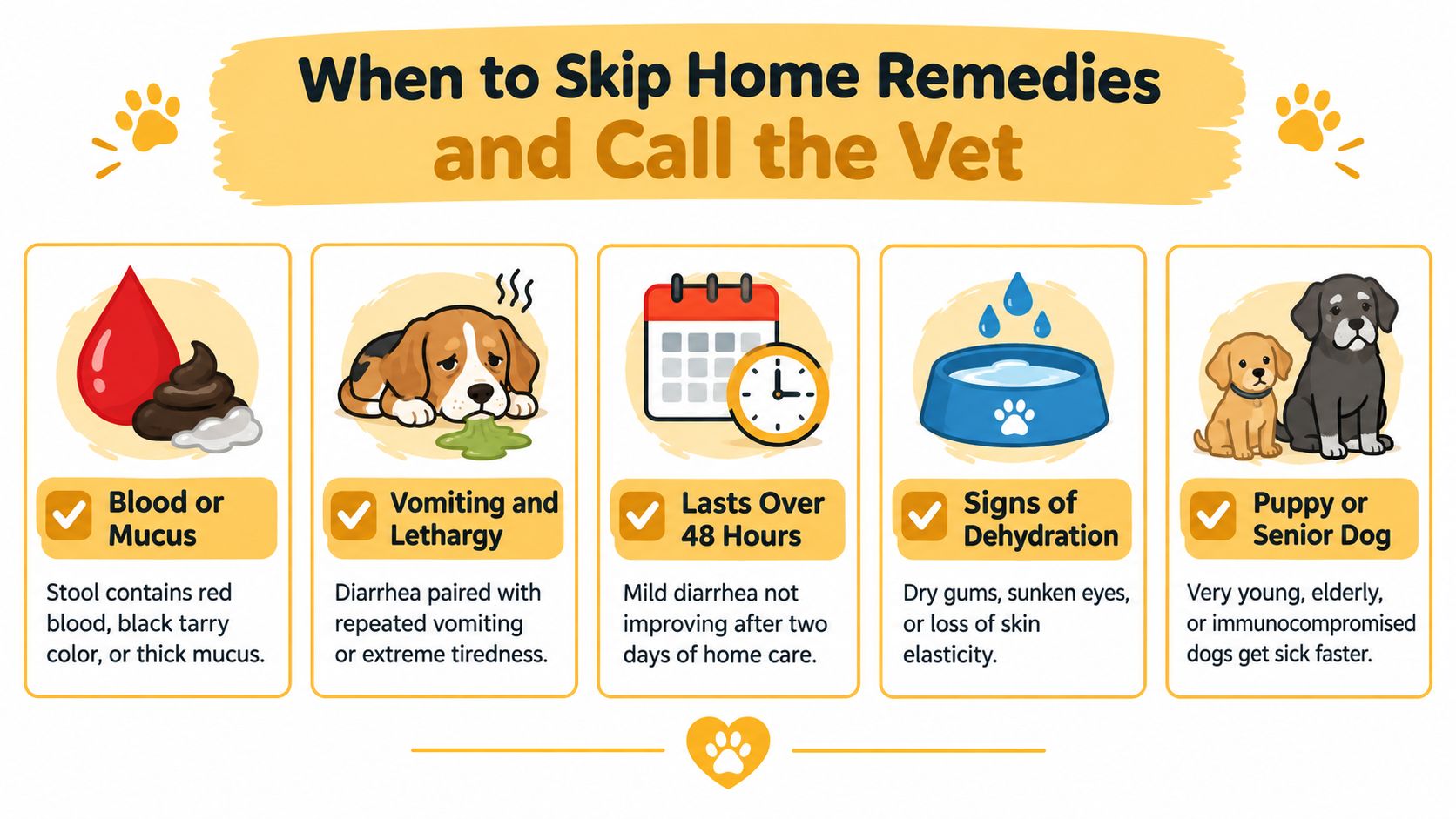
Call the vet when
Use this decision matrix:
| Situation | Best move |
|---|---|
| Mild loose stool, normal energy, normal appetite | Home care can be reasonable |
| Blood in stool or black, tarry stool | Call the vet |
| Repeated vomiting with diarrhea | Call the vet |
| Lethargy, weakness, abdominal pain, or dehydration | Call the vet |
| Diarrhea that persists beyond 24 to 48 hours | Call the vet |
| Very young, very old, or medically fragile dog | Call the vet sooner |
Don't misuse the fiber evidence
There's one more detail that gets misunderstood. A review of 37 dogs with large-bowel diarrhea reported 85% resolution with soluble fiber, but that result was tied mainly to psyllium, not pumpkin, so it should not be sold as pumpkin's success rate (fiber evidence and its limits).
That matters because diarrhea isn't one single disease. Fiber may help some stool patterns, especially colonic diarrhea. It won't fix parasites, toxins, infection, pancreatitis, or other causes that need targeted treatment.
A dog with blood, vomiting, lethargy, or ongoing diarrhea doesn't need more pumpkin. That dog needs an exam.
Long-Term Gut Health and Daily Digestive Support
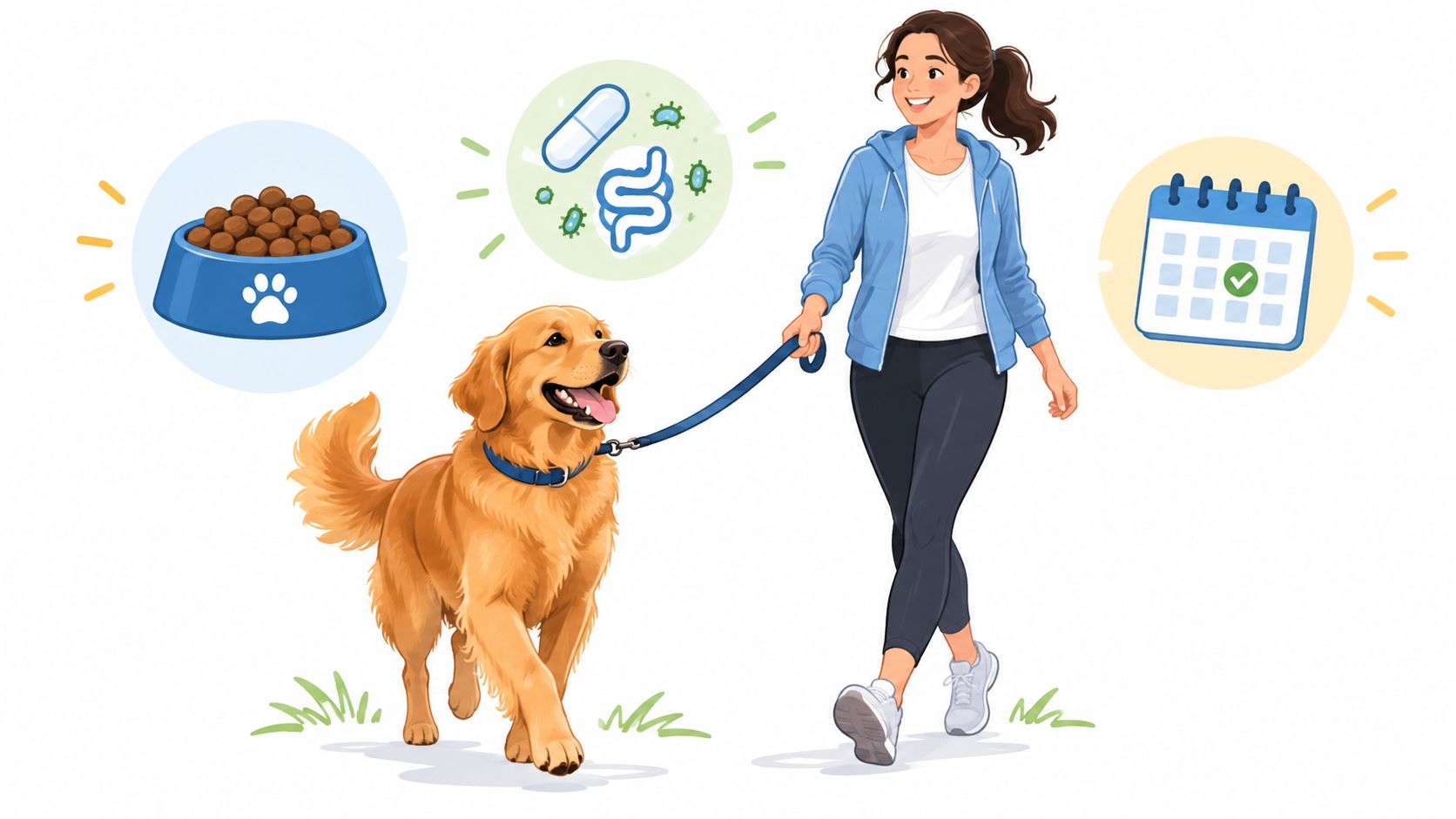
If your dog gets one random stomach upset every once in a while, pumpkin is fine as a pantry backup. If your dog has repeat digestive trouble, you need a long-term plan, not repeated spoonfuls of canned squash.
Recurring loose stool usually points to something bigger than a one-off food indiscretion. Sometimes it's a diet issue. Sometimes it's stress. Sometimes it's poor tolerance for rich treats or frequent food changes. Whatever the trigger, your goal is consistency.
Build a routine that protects the gut
Most dogs with touchy digestion do better when owners tighten up the basics:
- Keep meals consistent: Stop rotating foods casually.
- Limit extras: Table scraps, fatty chews, and surprise treats are common troublemakers.
- Change diets slowly: Sudden switches often create the very mess you're trying to avoid.
- Track patterns: Write down what your dog ate before flare-ups.
Where daily support fits
A daily digestive support routine makes more sense than waiting for the next accident. For some dogs, that means a stable diet and fewer dietary surprises. For others, it also means adding gut-focused supplementation.
If you're sorting through options, this article on the best probiotic for dog diarrhea can help you think through what daily digestive support should do.
Pumpkin is for episodes, not management
Here's my opinion after seeing this pattern over and over. Owners get into trouble when they treat recurring diarrhea like a series of unrelated events. It usually isn't.
Mild diarrhea that happens once can be a blip. Mild diarrhea that keeps happening is a message.
Use pumpkin as an occasional support tool. Don't let it become a ritual that hides an unresolved issue.
Quick Reference Checklist for Future Upset Stomachs
Your dog raids the trash, wakes you up at dawn, and has loose stool on the morning walk. That's the moment you need a checklist, not a lecture.
Run through this fast:
- Check the can label: It should be plain pumpkin only. No pie filling, no sweeteners, no spice blend.
- Keep the case in the mild category: Your dog should still be acting fairly normal, drinking, and not vomiting repeatedly.
- Start with a small amount: Mix a measured portion into food instead of serving a large blob.
- Use a simple meal: Keep food bland and easy to handle for a short stretch.
- Put water down immediately: Diarrhea plus fiber without hydration is sloppy decision-making.
- Watch the whole dog, not just the stool: Energy, appetite, comfort, and hydration matter more than the mess itself.
- Use the 24 to 48 hour rule: If the stool isn't improving in that window, stop home treatment and call your vet.
- Escalate early for red flags: Blood, repeated vomiting, lethargy, pain, dehydration, or fragile age status changes the plan.
That's the whole framework. Pumpkin for mild. Vet for sick. If you remember only that, you'll make better decisions than in a panic.
Pure Paw Labs makes science-backed, human-grade dog supplements for owners who want more than patchwork fixes. If your dog deals with digestive sensitivity, aging-related changes, or you just want a simpler daily routine that supports gut health alongside other core systems, take a look at Pure Paw Labs.