


You've vacuumed the living room, changed into a clean black sweater, and sat down for five minutes. Then you notice the tumbleweeds of fur under the couch, the grey film across your clothes, and the dog hair stuck to every guest's lap. With a heavy-shedding dog, that scene can repeat so often that it feels like cleaning never ends.
The practical answer to how to reduce dog shedding isn't finding a product that switches shedding off. Healthy dogs need to release old hair. The useful target is to remove loose fur on a predictable schedule, support the skin and coat, and catch medical problems before they turn into widespread hair loss.
The routine below pairs each major lever with the time it realistically needs. Grooming changes where loose hair goes. Diet supports the biological process behind coat quality. Home controls catch whatever remains. None of them should be judged after three days.
Table of Contents
- The Real Goal With Dog Shedding
- Why Dogs Shed and What Is Normal
- A Grooming Routine That Actually Reduces Loose Hair
- Diet Fats and Supplements That Support the Coat
- Home and Environment Changes That Catch the Rest
- Medical Causes of Shedding You Should Not Ignore
- Your Weekly Plan and Quick Answers
The Real Goal With Dog Shedding
A Labrador can leave a pale layer of hair on a dark sofa even after a morning brush. A long-coated dog may look tidy at breakfast and shed enough loose fur by evening to cover the same blanket again. That doesn't necessarily mean the routine failed. It means hair is continuously moving through its growth and release cycle.
The goal is not zero shedding. That promise belongs to marketing, not biology. The goal is to shorten the time loose hair stays trapped in the coat before it lands on your floor, clothing, or upholstery. Brushing captures detached hair while you can control where it goes. Bathing can loosen more of it, and vacuuming removes the remainder from the environment.
Practical rule: Judge success by the amount of hair reaching your surfaces, not by whether your dog still releases fur when you pet them.
A sensible household routine usually becomes easier to see within two to four weeks, particularly when brushing is consistent. That's a practical observation about coat management, not a guarantee that every dog will respond on the same schedule. Dogs with dense undercoats, seasonal coat changes, or genetic predispositions may still shed heavily even when their coat is healthy.
The difference is control. Instead of finding fur randomly, you collect much of it during planned sessions. Instead of deep-cleaning only after guests arrive, you use washable covers and regular vacuuming to keep the buildup manageable.
Breed expectations matter too. A home with a double-coated dog will need a different tolerance and routine from a home with a low-shedding, single-coated dog. UC Davis explains that multiple genes influence shedding, and its information on the MC5R variant connects one genetic variant with decreased shedding, which is why breed and inherited coat traits belong in the conversation about genetic shedding expectations.
Why Dogs Shed and What Is Normal
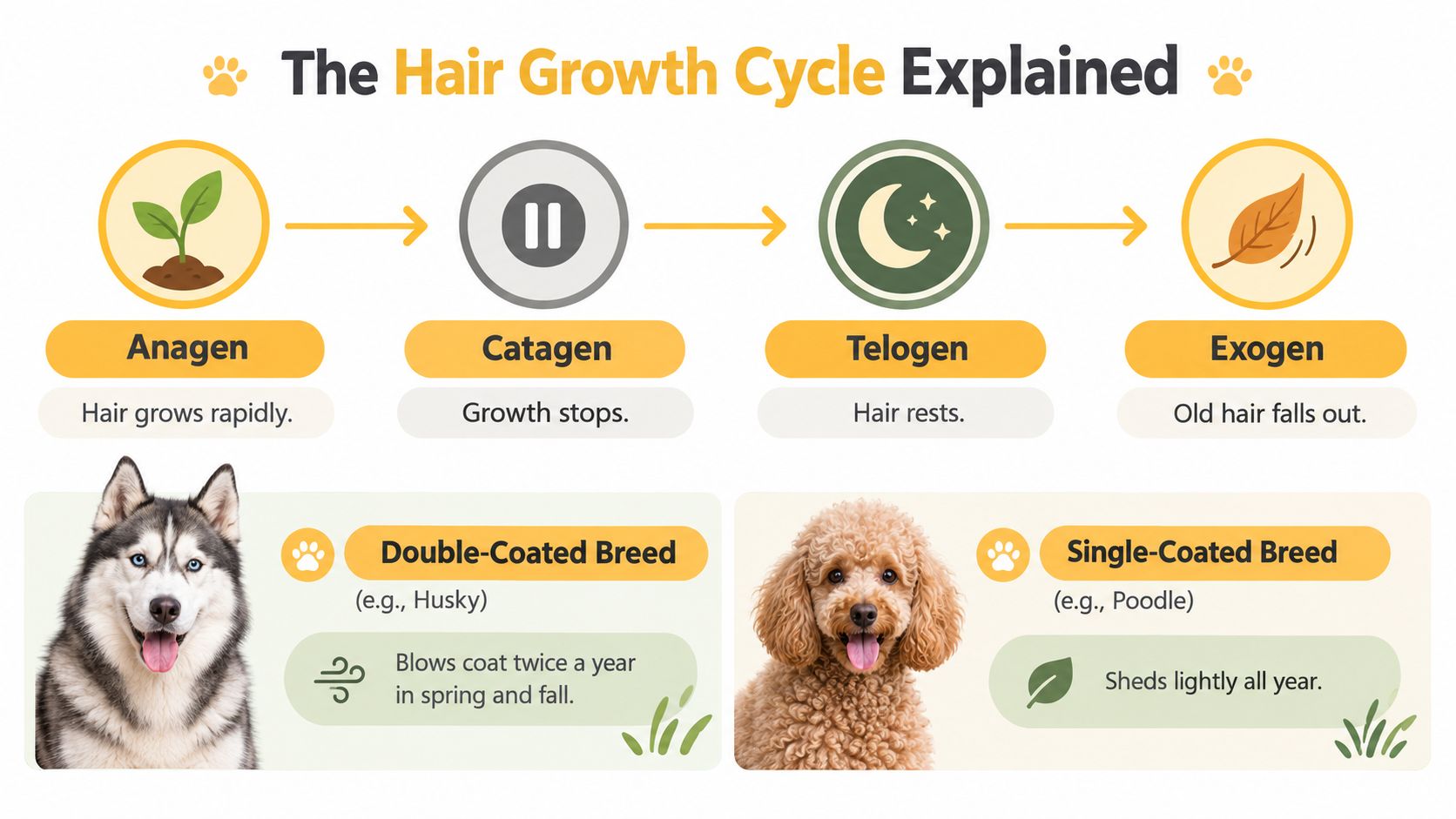
Dog hair doesn't grow indefinitely. It moves through a repeating cycle. During anagen, the hair actively grows. Catagen is a transition period in which growth stops. During telogen, the hair rests, and during exogen, the old hair releases from the follicle and sheds.
That sequence explains why brushing can reduce loose hair on your furniture without changing the amount of hair your dog ultimately needs to replace. Grooming removes hair during the release stage. It doesn't permanently reset the follicles or eliminate the biological cycle.
Coat type sets the baseline
A double-coated dog has a protective outer coat and a softer, denser undercoat. When the undercoat releases, the dog can shed in obvious clumps. Seasonal changes are often more noticeable in these dogs, particularly when the coat changes between warmer and cooler conditions.
A single-coated dog generally has less dramatic coat turnover, although it can still shed steadily throughout the year. A Poodle and a Labrador shouldn't be judged by the same household standard. One may hold more hair in a continuously growing, curly coat, while the other can release a large amount of straight undercoat across floors and furniture.
Indoor life can blur seasonal patterns. Artificial lighting, heating, and cooling create a more stable environment than the outdoors, so some dogs shed steadily rather than following a clean seasonal rhythm. That doesn't automatically indicate a problem.
Normal versus concerning change
Normal shedding tends to be reasonably even across the body, with skin that looks comfortable and a coat that remains functional. The amount varies with breed, coat type, age, environment, and individual genetics.
A sudden change is different. Patchy loss, irritation, persistent scratching, scabs, odor, or a dull coat points beyond ordinary coat turnover. In those cases, a brush may remove visible hair while leaving the cause untouched.
Think of shedding as a thermostat, not a malfunction. Genetics and coat structure set much of the baseline. Grooming, nutrition, and environmental controls help manage the output.
A Grooming Routine That Actually Reduces Loose Hair
The brush does the most direct work because it physically removes hair before it reaches your home. Texas A&M notes that brushing three to four times per week for five to ten minutes can soften the coat and reduce the amount of hair shed, while an independent veterinary resource recommends daily brushing for managing excess shedding. You can use those recommendations as a range, then adjust for coat density and seasonal changes through the dog skin and coat care guide.
Match the tool to the coat
| Coat Type | Best Tool | Brushing Frequency |
|---|---|---|
| Medium double coat | Slicker brush, followed by a comb where needed | Several short sessions each week |
| Dense double coat | Undercoat rake used carefully | More frequent attention during heavy coat release |
| Long single coat | Pin brush, followed by a comb | Regular sessions to prevent tangles |
| Feathering on ears, legs, or tail | Fine-tooth comb | Check often and work in small sections |
Start at skin level, not just across the visible surface. Work in short strokes in the direction of hair growth, lifting the coat in sections so you can see what you've already covered. A slicker brush can work well on a medium double coat, while a dense Labrador or Shepherd may need an undercoat rake to reach the packed undercoat.
A de-shedding blade or aggressive rake isn't automatically better. On a coarse coat, a thin coat, or a coat that has been trimmed, excessive pressure can irritate skin or remove healthy outer hair. Stop if the skin becomes pink, your dog pulls away, or the tool catches rather than glides.
Use bathing as a release step
A bath works best as part of a sequence:
- Pre-rinse thoroughly. Saturate the coat so shampoo can reach the skin.
- Use a dog-safe shampoo. Massage gently rather than scrubbing knots tighter.
- Condition the ends when appropriate. Keep product away from irritated skin unless your veterinarian advises otherwise.
- Rinse completely. Residue can irritate the skin.
- Dry while brushing. Air movement and brushing help lift loosened hair from the coat.
Regular bathing can remove loose hair, dirt, and surface debris, but over-bathing can strip natural oils and leave the skin dry. For many homes, a full bath and blowout every four to six weeks is a reasonable starting point, with adjustments for coat type, lifestyle, and veterinary needs. During heavier shedding, shorter intervals may help, but the right interval is the one your dog's skin tolerates.
Clean brushes and combs after each session. Remove trapped hair, wash tools when the material allows it, and let them dry fully. A clean tool moves through the coat more predictably and is less likely to drag old oil and debris back onto the skin.
Frequency beats novelty. A basic tool used correctly and consistently will usually outperform a drawer full of specialty products used only when the sofa becomes covered.
Diet Fats and Supplements That Support the Coat
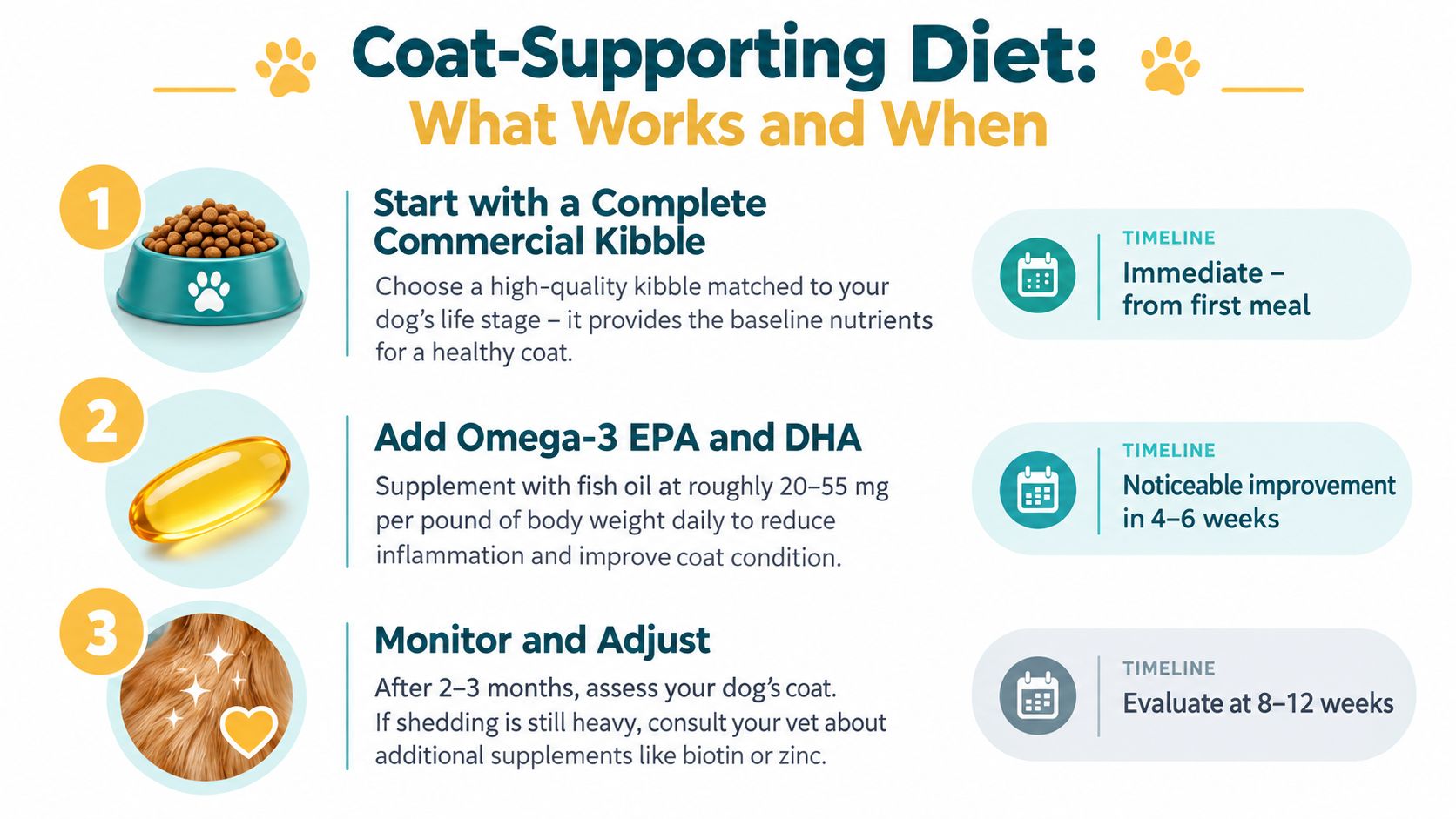
Nutrition can support skin and coat quality, but it isn't a substitute for brushing or diagnosis. Start with a complete diet matched to your dog's life stage. If the baseline diet is inadequate, adding a single supplement may produce little visible change because coat health depends on the whole nutritional pattern.
A 2023 peer-reviewed feeding trial compared camelina, flaxseed, and canola oils in healthy adult dogs. Shedding was significantly greater at weeks 0 and 2 than at weeks 10 and 16, and the pooled difference reached P = 0.004. The study found the tested fats comparable for skin barrier function, coat quality, and inflammatory or oxidative markers over 16 weeks, providing a useful reason to evaluate an oil routine over months rather than days. Read the veterinary discussion of fish oil for dogs before adding a product.
Build the foundation before adding extras
Look for a food with clearly named animal proteins and a transparent fat source. Hydration also matters, so keep fresh water available and pay attention to whether your dog's intake changes.
Marine fish oil supplies EPA and DHA directly. Plant oils such as flaxseed provide ALA, which dogs don't convert into the longer-chain fatty acids as efficiently. That doesn't make every plant oil useless, but it does mean the source and intended benefit matter.
The supplement plan should remain specific. Zinc, biotin, and vitamin E can be relevant in particular nutritional situations, but dosing depends on the dog, the current food, age, health status, and other supplements. Too much of a nutrient can create a new problem, so don't stack separate products casually or borrow a dose intended for another dog.
Give biology enough time
Skin moisture may improve before you see a meaningful change in coat density. Visible coat changes often require eight to twelve weeks, while the controlled oil trial above supports judging shedding over a broader two- to four-month window rather than reacting to daily cleanup. These windows vary, but they reflect the slow pace of hair growth and turnover.
A 2025 controlled study in senior dogs found that specific trace-mineral sources increased hair growth, improved hair quality, and decreased shedding compared with inorganic mineral controls. Dogs receiving the trace-mineral-complexed diets also showed more active hours per day, suggesting that coat outcomes may connect with broader wellbeing rather than appearance alone. The findings are detailed in the peer-reviewed trace-mineral study in senior dogs.
For owners who want one powder rather than several separate products, DA-1™ Daily All-in-One - Senior Dog Support, Joints, Skin/Coat & More is described as a complete multi-system formula with 18 human-grade ingredients supporting cells, gut, and joints. It shouldn't replace a complete diet or veterinary assessment when shedding is abnormal.
Many coat supplements become noise. Brewer's yeast and garlic-based coat pills shouldn't be treated as proven shedding solutions. If allergies, parasites, endocrine disease, or infection are driving hair loss, a supplement may support general nutrition while the problem continues.
Home and Environment Changes That Catch the Rest
Once grooming captures the loose coat, the home becomes the second line of defense. Environmental controls won't reduce the number of hairs your dog releases, but they can stop those hairs from embedding in every fabric surface.
Use a strong upright or canister vacuum with a rubber-bristle pet attachment on upholstery. Focus on sleeping areas, hallway edges, the space beneath furniture, and the routes your dog uses most. During heavy shedding, several short cleaning sessions each week are easier to maintain than waiting for one exhausting deep clean.
Washable barriers change the job completely. Put throws over favorite sofa sections, use removable covers on dog beds, and place washable runners where your dog naps. Hair caught in a fabric you can lift and wash is much easier to manage than hair worked into cushion seams.
Fine hair becomes a household problem when it stays loose long enough to travel. Catch it at the dog's resting spots first.
Air handling helps with airborne dander and fine particles, while humidity can reduce static that makes hair cling to fabric. A purifier with HEPA filtration in the main living area can support air quality. In dry winter conditions, a humidifier may help, but keep it clean and monitor the room rather than assuming more humidity is always better.
Place a mat at the door and keep a lint roller near the entry. A quick brush after walks can remove loose undercoat, burrs, and outdoor debris before they spread through the house. For a broader room-by-room process, this guide for pet owners cleaning offers useful practical guidance for managing pet-related mess.
The simplest setup is often the one people maintain: washable covers, a vacuum stored within reach, and a short cleanup habit attached to an existing routine.
Medical Causes of Shedding You Should Not Ignore
Heavy shedding is often treated as a cosmetic nuisance, but a change in the coat can be the first visible sign of illness. Endocrine disorders such as hypothyroidism and Cushing's disease may cause thinning that appears relatively even on both sides of the body. A dull or brittle coat, darker or thinner skin along the flanks, weight change, and reduced energy deserve more attention than a new grooming product.
Allergies can also accelerate hair loss. Flea allergy dermatitis can cause intense irritation even when you don't see fleas. Food sensitivities and environmental atopy may lead to scratching, licking, hot spots, and secondary bacterial or yeast infections. Parasites and infections need diagnosis and treatment, not stronger brushing.
Nutrition matters here too. A low-protein home-prepared diet, zinc-responsive dermatoses in susceptible Nordic breeds, or inadequate essential fatty acids can affect the skin and coat. Don't add several nutrients at once, because that makes it harder to identify what helped and easier to exceed a safe intake.
| Sign | Likely Normal | See a Vet |
|---|---|---|
| Loose hair | Even release across the coat | Sudden increase or patchy loss |
| Skin | Comfortable and intact | Redness, scabs, odor, darkening, or thinning |
| Behavior | Normal energy and appetite | Lethargy, discomfort, persistent licking, or scratching |
| Coat | Reasonably smooth for the breed | Brittle, dull, greasy, or rapidly thinning |
| Timing | Follows the dog's usual pattern | Continues after the expected seasonal peak |
Arrange a veterinary visit for sudden bald spots, persistent scratching, scabs, odor, weight change, lethargy, or shedding that doesn't slow after the usual seasonal period. The guide to flaky skin and hair loss in dogs can help you recognize patterns, but it can't replace an examination.
When the skin looks abnormal, diagnostics solve the problem. A more aggressive rake may only make an inflamed surface hurt more.
Your Weekly Plan and Quick Answers
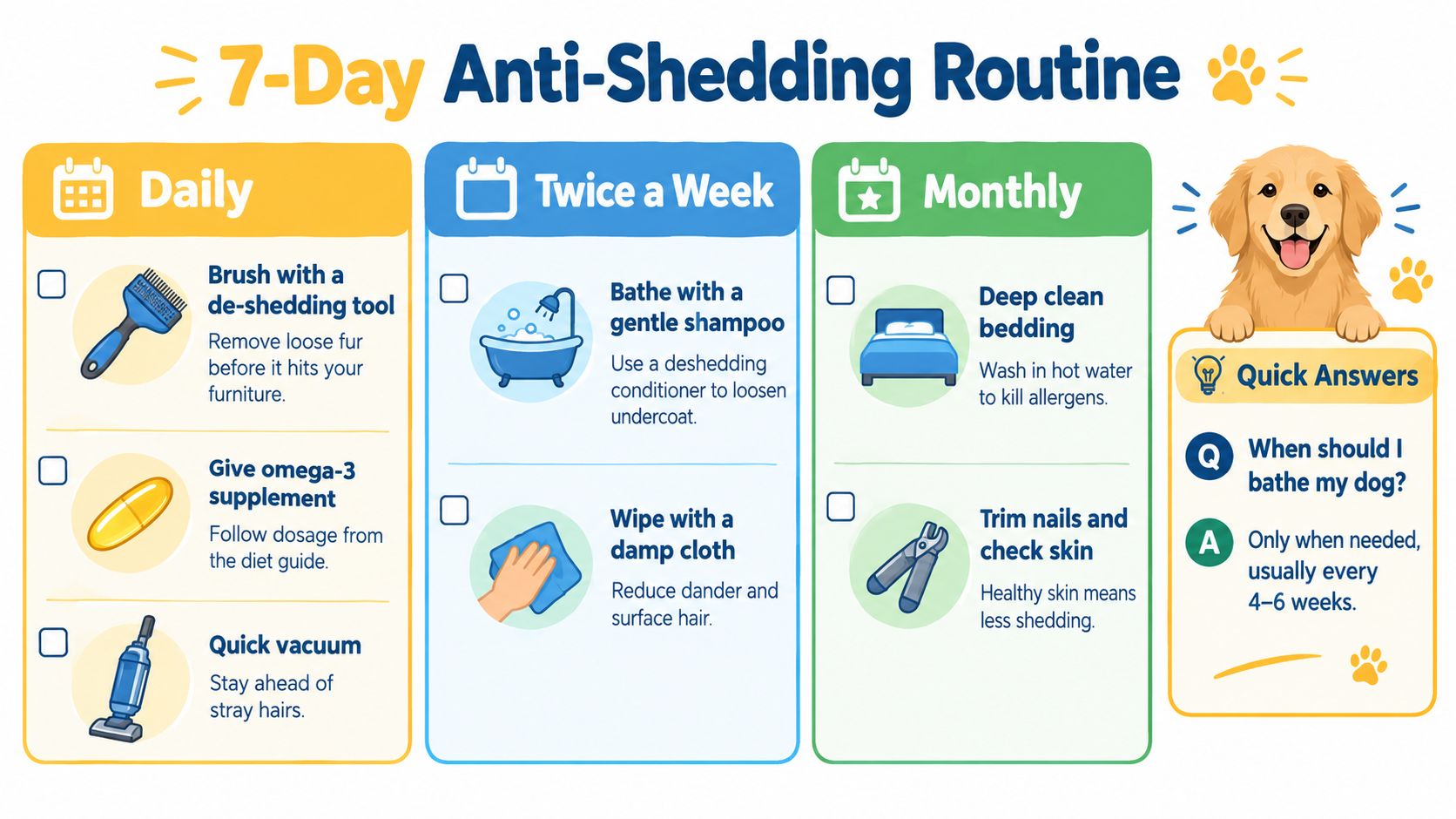
A workable routine doesn't require a full grooming session every day. It assigns small jobs to predictable points in the week, then gives diet and coat biology enough time to respond.
A routine you can repeat
Daily
- Quick coat check: Run your hands over the coat and look for tangles, irritation, burrs, or unusual thinning.
- Water and diet routine: Keep fresh water available and give any veterinarian-approved supplement consistently.
- Surface reset: Use a lint roller or quick vacuum pass in the dog's favorite resting area.
Twice each week
- Line brushing: Work from skin level outward in short sections, using the tool suited to the coat.
- Home control: Vacuum upholstery and floors where loose hair gathers.
- Skin observation: Note changes in odor, flaking, redness, or scratching before they become easy to dismiss.
Monthly
- Bath and dry-brush: Use a gentle dog-safe shampoo, rinse thoroughly, and brush during drying.
- Bedding wash: Clean blankets and bed covers so hair and dander don't accumulate.
- Tool check: Clean brushes, inspect teeth and pins, and replace anything bent or sharp.
Quick answers for common situations
What should I do during a seasonal blowout?
Increase brushing gradually and focus on short, frequent sessions. Add a professional bath and dry if your dog tolerates it, but don't rake aggressively until the skin is sore.
Do de-shedding shampoos solve the problem?
They can help loosen surface hair when paired with thorough rinsing, drying, and brushing. They won't change genetics or replace mechanical removal.
How long before a new routine shows results?
Surface hair can become easier to manage within a few weeks. Diet-based coat changes need a longer evaluation, often several weeks to a few months, as the feeding trials described earlier demonstrate.
Should puppies and senior dogs follow the same cadence?
No. Puppies need gentle handling and positive grooming practice, while senior dogs may need shorter sessions, more support on slippery surfaces, and veterinary input if coat changes appear suddenly.
Save the checklist, keep the tools where you use them, and track the coat rather than chasing every stray hair. Consistent small actions beat occasional deep cleans.
Pure Paw Labs offers daily dietary supplements for dogs, including formulas that support skin and coat alongside broader systems such as joints and gut health. If your dog's diet is complete and you're looking for a consistent supplement routine to pair with grooming, visit Pure Paw Labs and review the options with your veterinarian.