


Dachshunds are generally moderate, year-round shedders, rated around 2 out of 5, with shedding intensity varying by coat type. They aren't a heavy-shedding breed, but you should expect some loose hair in your home throughout the year.
You may have discovered this the same way many first-time owners do. You lift a cushion, brush a hand across the sofa, or pull on a dark shirt, and there it is: a fine layer of dachshund hair that seemed to appear overnight. Your dog may look perfectly tidy while still leaving evidence behind wherever they nap.
That doesn't mean something is wrong. All Dachshunds shed, but their smooth, longhaired, and wirehaired coats release hair differently. The practical question isn't whether your Dachshund sheds. It's what normal shedding looks like for your dog's coat, and how grooming, nutrition, and skin care can keep it manageable.
Table of Contents
- Understanding Dachshund Shedding Basics
- How Coat Type Affects Shedding Levels
- Effective Grooming Routines by Coat Type
- Nutrition and Skin Health Influence Shedding
- Managing Dachshund Hair in Your Home
- When Shedding Signals a Health Problem
- Your Dachshund Shedding Management Checklist
Understanding Dachshund Shedding Basics
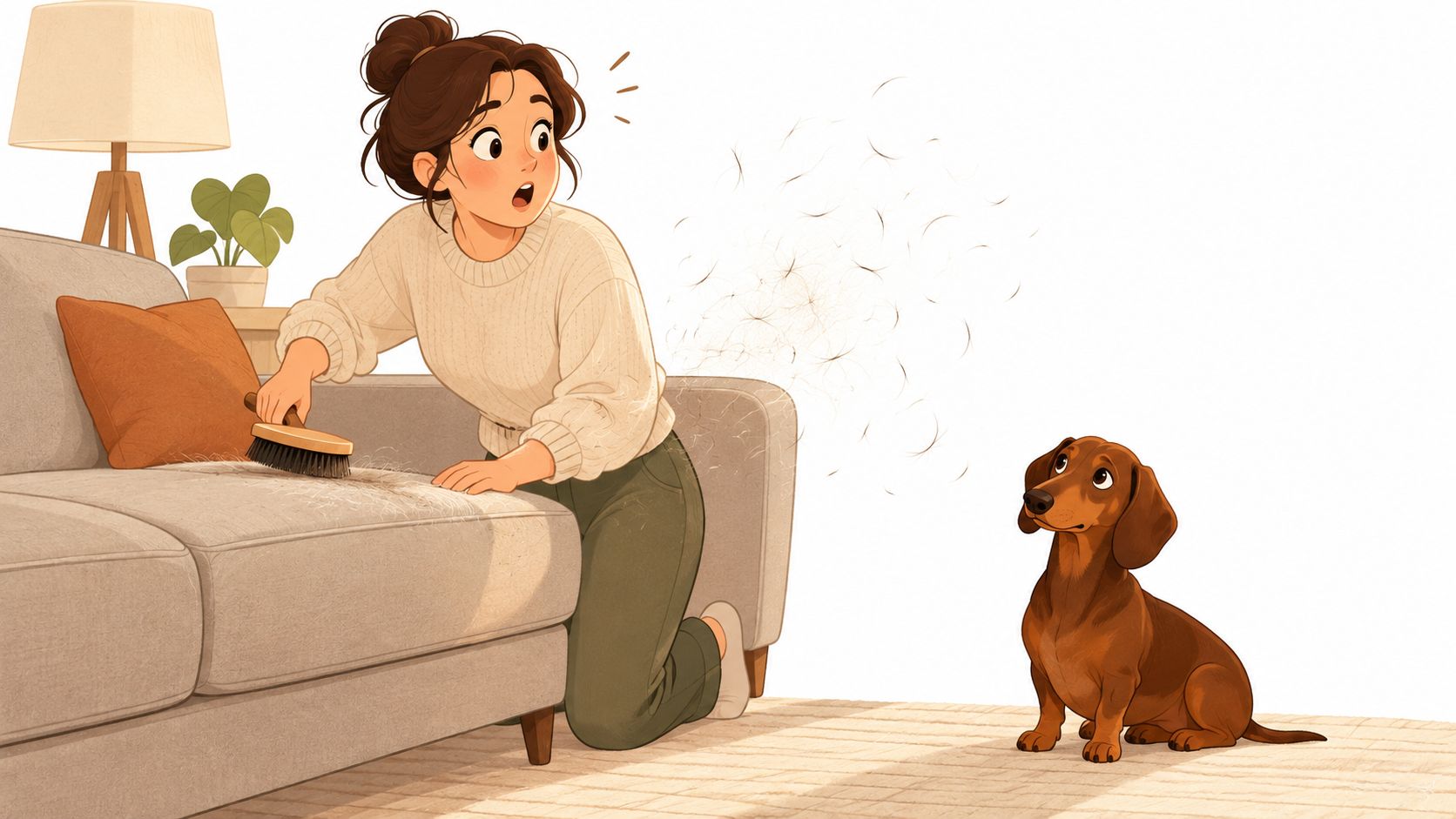
New Dachshund owners should start with one simple expectation: a little hair is part of living with the breed. Dachshunds are usually described as moderate or minimal-to-moderate shedders, and one neutral breed profile places all three coat varieties at about 2 out of 5 for shedding (Canine Journal's Dachshund coat overview).
That rating is a general guide, not a promise for every dog. A smooth coat may drop tiny hairs onto clothes each day, while a longhaired or wirehaired Dachshund may make the shedding more visible during seasonal coat changes. The amount of loose hair can stay similar while the mess looks bigger because longer hairs are easier to spot and collect.
What normal shedding looks like
Normal shedding is steady and gradual. You may find loose hairs on bedding, near a favorite nap spot, or in the brush after grooming. The coat should still look full enough, and the skin should look calm, not flaky or irritated.
Dachshunds shed through the year, and some coats show a more obvious seasonal release. That is the body replacing older hairs, much like a house swapping out worn carpet threads over time. Brushing does not stop shedding, but it moves loose hair into the brush before it lands on the sofa.
Practical rule: Judge shedding by your dog's usual pattern, not by one hairy afternoon. A sudden change matters more than loose hair itself.
If the coat seems drier than usual, or the skin looks less healthy, grooming and nutrition should work together. A consistent routine, plus everyday steps to reduce dog shedding, can lower the amount that ends up on furniture while also helping you spot dryness, redness, tangles, or thinning areas early.
How Coat Type Affects Shedding Levels
A Dachshund can leave hair on your clothes every day and still have a healthy, normal coat. The three recognized varieties are smooth, longhaired, and wirehaired, and each handles loose hair differently. Coat type helps explain both the amount released and how noticeable it becomes.
Coat type affects two separate things: how much hair your dog releases and how easy that hair is to see. A short hair can disappear into a pale rug, while a longer strand may curl around a cushion and appear to represent far more shedding. The coat can change the visibility of the mess without changing the dog's basic shedding pattern.
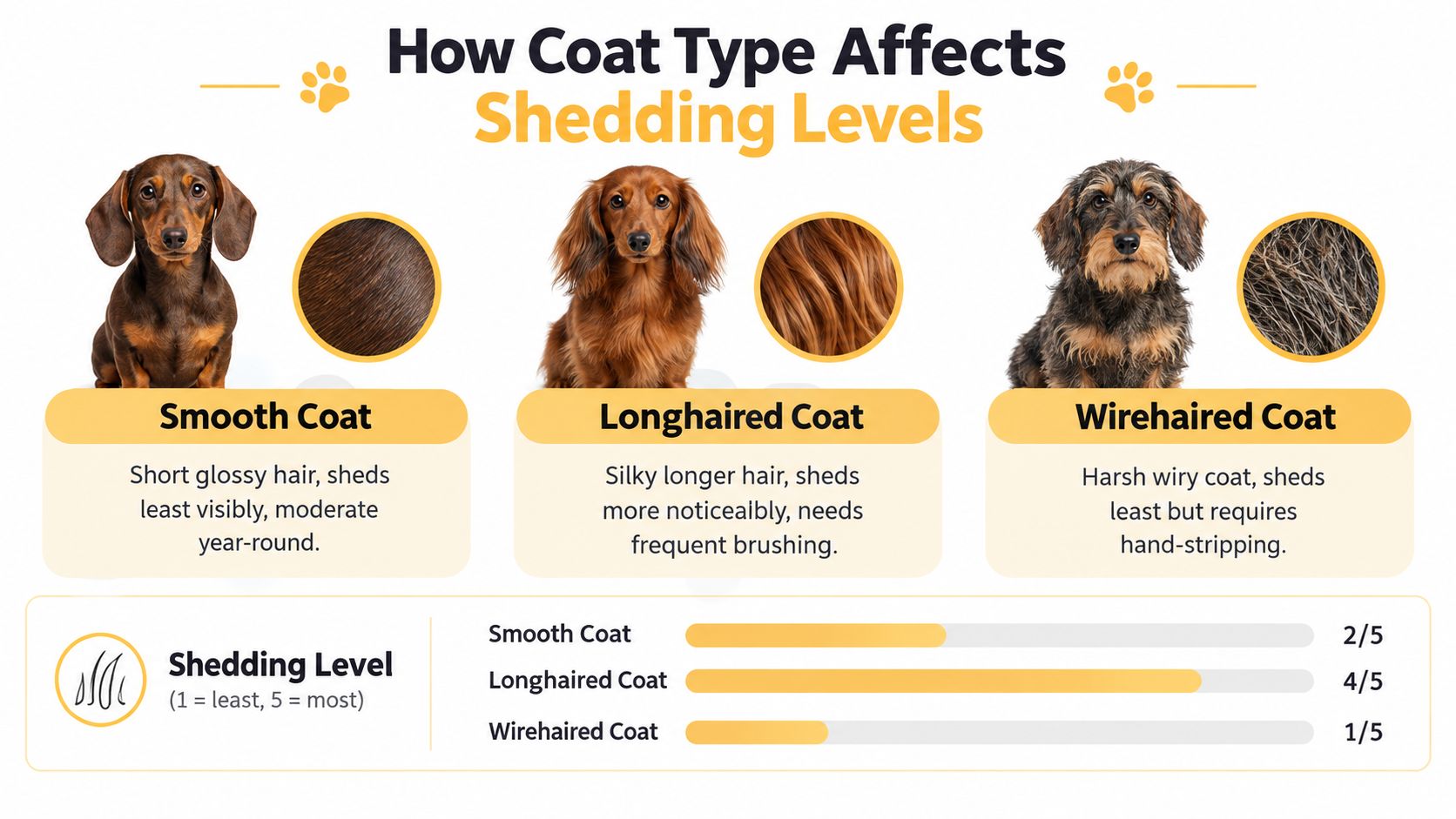
For a visual coat comparison, see this chart of Dachshund coat types and shedding levels.
A practical coat comparison
| Coat Type | Shedding Intensity | Seasonal Blowing | Hair Visibility |
|---|---|---|---|
| Smooth | Moderate, with small hairs released steadily | Usually less dramatic | Often low because hairs are short |
| Longhaired | Moderate, with loose hair more noticeable | May become more apparent in spring and autumn | High because longer hairs stand out |
| Wirehaired | Minimal-to-moderate overall, with some seasonal release | Can be noticeable because of the double coat | Often lower because the coat can hold loose hairs |
Smooth-coated Dachshunds usually release short hairs steadily. Their sleek coat can make shedding seem mild because the hairs rarely form large tufts. Look for them on clothing, blankets, bedding, and upholstery.
Longhaired Dachshunds make loose hair easier to spot. Longer strands can collect in the feathering, and seasonal changes may bring a more visible release in spring and autumn. Brushing removes dead hair and catches tangles before they tighten. For more detail, read about whether longhaired Dachshunds shed a lot.
Wirehaired Dachshunds often shed less visibly, although their double coat can release more hair during seasonal changes. Loose undercoat may stay caught among the wiry outer hairs, so a dog can look tidy while still carrying dead hair that needs removal.
Skin condition also affects what you see. Healthy skin acts like a well-sealed surface that keeps moisture in and supports a stable coat. Dryness or irritation can disturb that balance, so nutrition, grooming, and skin care work together. Grooming collects loose hair, while a complete diet supports the skin barrier that grows the next coat.
For an older Dachshund needing skin and coat support alongside other age-related needs, DA-1™ Daily All-in-One - Senior Dog Support, Joints, Skin/Coat & More is described as a multi-system formula delivered in one daily scoop. A supplement does not replace a complete diet or veterinary advice, but it may fit into a broader care plan.
Effective Grooming Routines by Coat Type
Grooming works best when it matches the coat in front of you. The wrong tool can slide over loose hair, pull at tangles, or irritate the skin, while the right tool makes a short session much more productive.
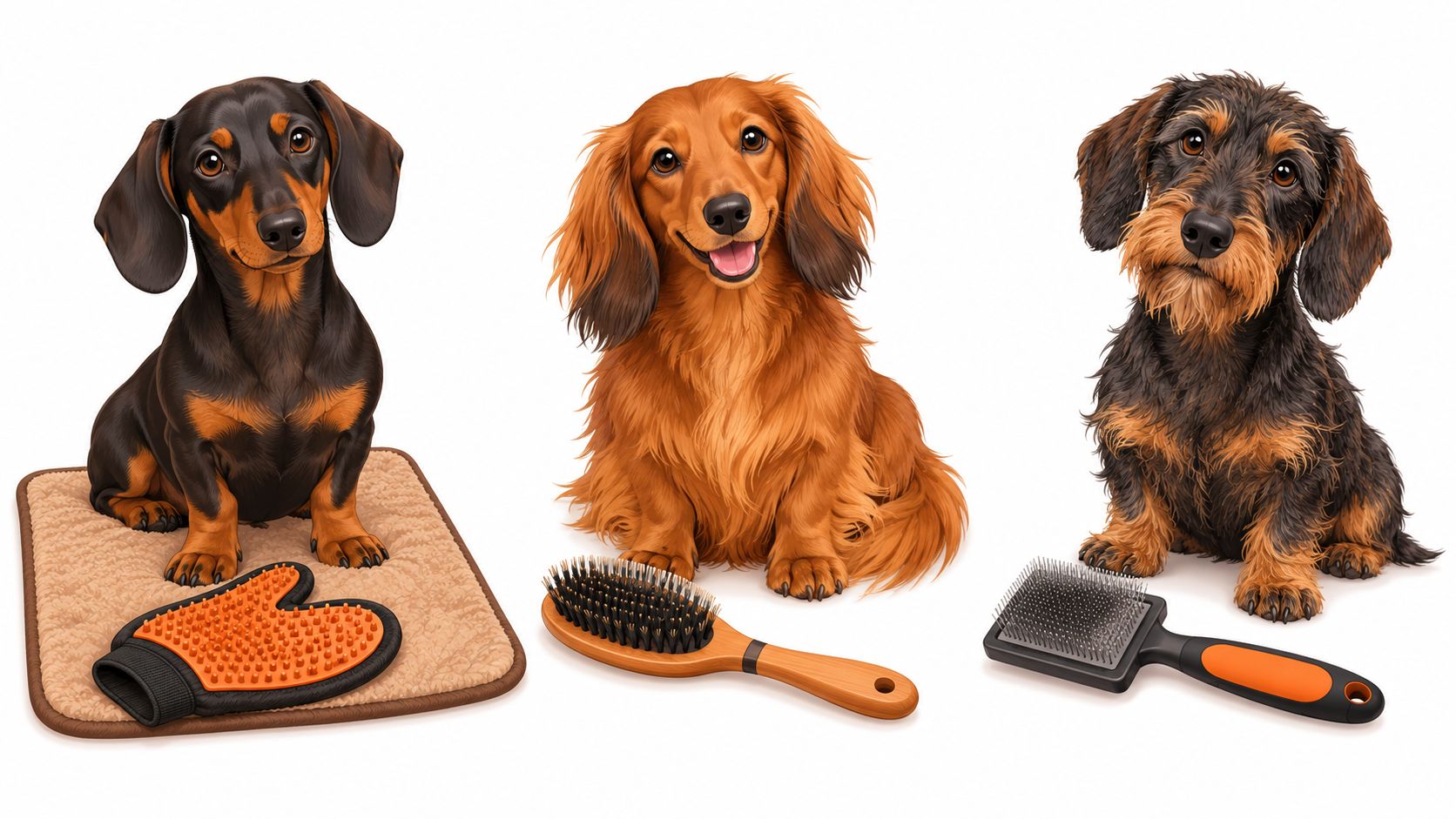
Match the routine to the coat
For a smooth coat, use a rubber grooming mitt or soft bristle brush. Work over the back, sides, chest, and legs with gentle strokes, then wipe the coat with a slightly damp cloth to collect remaining short hairs. A regular weekly session is a useful starting point, with extra attention when you notice more loose hair.
For a longhaired coat, use a slicker brush followed by a comb. Brush in small sections, checking behind the ears, under the chest, around the feathering on the legs, and near the tail. These areas tangle easily, so don't drag a brush through a knot. Loosen it gently with your fingers or ask a groomer for help if it has tightened against the skin.
For a wirehaired coat, brushing removes surface debris and some loose hair, but coat maintenance may also involve hand-stripping or careful clipping. Hand-stripping removes mature dead hairs while preserving the characteristic texture. If you haven't been shown how to do it, learn from an experienced groomer rather than pulling randomly.
A simple weekly checklist
- Prepare the space: Choose a washable surface and keep treats nearby so the routine stays calm.
- Inspect first: Look for mats, sore areas, flakes, or parasites before you start brushing.
- Brush in sections: Move methodically rather than repeatedly working over the same spot.
- Finish with your hands: Run your fingers through the coat to find missed tangles or loose clumps.
- Clean the tools: Remove collected hair so the brush works properly at the next session.
Consistency matters more than making one grooming session unusually long. If your Dachshund becomes restless, stop before the experience turns into a struggle and continue later. Owners managing other breeds can apply the same principle, as described in this overview of how Pomeranian dogs shed, but always choose tools for the coat you have.
Nutrition and Skin Health Influence Shedding
Grooming removes hair that's already loose. Nutrition and skin care influence the condition of the hair before it reaches the brush. When the skin barrier is dry or irritated, the coat may feel brittle, look dull, or release more hair than your dog's normal pattern.
A balanced diet supplies the building materials your Dachshund needs for skin and coat maintenance. Protein quality matters because hair is made from protein-based structures. Essential fatty acids, including omega-3 fats, may support skin comfort and coat condition, while adequate hydration helps the skin remain less prone to dryness.
That doesn't mean a supplement can switch shedding off. A healthy Dachshund will still shed, because shedding is a normal renewal process. The sensible aim is to support a resilient skin barrier and strong hair growth so you aren't mistaking preventable dryness or irritation for ordinary breed shedding.
Look at the whole routine
Start with the food your dog already eats. Check that it's complete for your dog's life stage, introduce changes gradually, and watch for a connection between diet changes and skin symptoms. Don't add several new supplements at once, because you won't know which change helped or caused a problem.
You can also review which dog foods support skin and coat health when assessing your routine. If your Dachshund has allergies, digestive symptoms, persistent itching, or a diagnosed condition, ask your veterinarian before changing food or adding concentrated nutrients.
The useful distinction: Grooming manages loose hair on the outside. Nutrition supports the skin and coat from the inside. Neither one replaces the other.
Bathing deserves the same careful approach. Use products made for dogs, rinse thoroughly, and avoid frequent washing that leaves the skin dry. A healthy coat can still shed, but it should feel reasonably supple and sit comfortably against healthy-looking skin.
Managing Dachshund Hair in Your Home
You don't need to make your home hair-free. You need a repeatable system that catches hair before it gathers in corners and clings to every fabric surface.
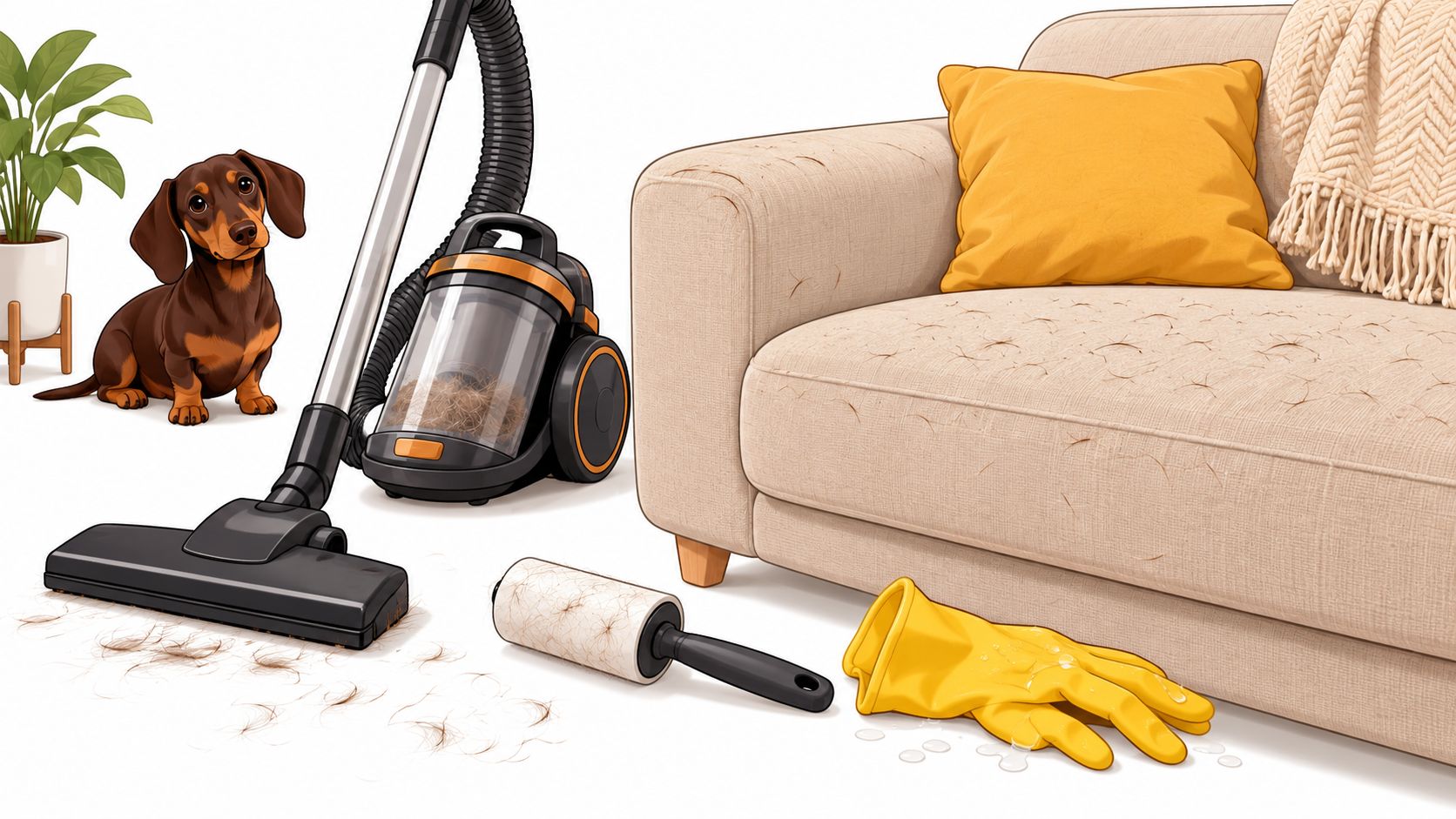
Start with the places your Dachshund uses most. Vacuum the sleeping area, sofa edges, floor borders, and the route between the dog bed and food station. Short Dachshund hairs can work into upholstery, so slow passes usually collect more than quick sweeping.
Make cleanup easier
Washable throws can protect favorite chairs and give loose hair a removable surface to collect on. Choose fabrics that tolerate regular washing, and keep a lint roller or damp rubber glove available for quick touch-ups between cleaning sessions. A slightly damp glove can gather hair from upholstery without sending it back into the air.
For households choosing new seating, material and construction matter. Guidance on durable furniture from Lott's Furniture can help you think about cleanability, wear, and how a piece will handle daily contact with a dog.
A useful rhythm is to groom before cleaning rather than after. Brush your Dachshund outdoors or on a washable mat, give the coat a few minutes to settle, and then vacuum the surrounding area. This prevents you from cleaning the same hair twice.
The following video offers another visual look at practical pet-hair cleanup:
Keep the routine modest enough to maintain. A small cleanup repeated regularly is easier than waiting until hair has collected under furniture and woven into blankets. Your Dachshund's hair will still appear, but it won't have as much time to spread.
When Shedding Signals a Health Problem
Normal shedding is usually even across the coat. It shouldn't leave sharply defined bald areas, and it shouldn't come with ongoing discomfort. Treat a sudden change as information, especially if your Dachshund's usual coat pattern has been stable.
Watch for these signs:
- Patchy hair loss: Bald spots or visibly thinning areas deserve attention rather than a stronger brush.
- Skin irritation: Redness, flaking, sores, or a persistent change in skin color can signal a skin problem.
- Persistent scratching: Frequent scratching, licking, or chewing may point to irritation, allergies, or parasites.
- A sudden increase: A rapid rise in loose hair is more concerning when it appears alongside behavior or skin changes.
- Coat texture changes: A dull, brittle, greasy, or unusually fragile coat can indicate that something has changed internally or externally.
These signs can have different causes, including allergies, parasites, hormonal problems, nutritional issues, or unsuitable grooming products. You can't identify the cause reliably by looking at shed hair alone, and adding a supplement without finding the underlying problem may delay useful treatment.
A veterinarian can examine the skin, discuss food and environmental history, and decide whether testing or treatment is appropriate. Bring a clear description of when the change began, where the hair loss appears, and whether your dog is itchy. Photos taken over several days can also help show whether the pattern is spreading.
For additional guidance on the connection between flaky skin and hair loss, see this resource on dog flaky skin and hair loss. Grooming, a balanced diet, and skin-supportive care are valuable, but they aren't substitutes for professional diagnosis when the coat changes suddenly.
Your Dachshund Shedding Management Checklist
Use this checklist to turn coat care into a routine instead of a reaction:
- Identify the coat: Note whether your Dachshund is smooth, longhaired, or wirehaired.
- Choose suitable tools: Use a rubber mitt or soft brush for smooth coats, a slicker and comb for long coats, and appropriate professional care for wire coats.
- Set a rhythm: Groom consistently and increase attention when your dog's normal seasonal pattern becomes more noticeable.
- Inspect the skin: Check for redness, flakes, sores, tangles, parasites, or uneven hair loss.
- Support the basics: Provide complete nutrition, fresh water, gentle handling, and dog-safe bathing products.
- Track changes: Compare current shedding with your dog's usual pattern rather than judging one grooming session.
- Call your veterinarian: Seek advice for bald patches, persistent itching, irritated skin, or sudden unexplained hair loss.
Your Dachshund will shed, but the amount can usually be managed with the right expectations and steady care. Coat type tells you what to expect, grooming catches loose hair, and skin-focused nutrition helps support the coat beneath the surface.
Pure Paw Labs offers human-grade dietary supplements for dogs, including daily support for skin and coat as part of broader wellness care. Visit Pure Paw Labs to review the available options and decide whether one fits your Dachshund's nutrition routine.