


Long-haired dachshunds are moderate, not heavy, shedders, but their shedding is far more visible than smooth-coated dachshunds because longer strands catch on fabric and feathering. You'll notice hair around the house, but you're usually dealing with a manageable coat rather than the volume produced by a heavy-shedding breed.
The popular advice is often too blunt. “Long-haired dogs shed a lot” treats visible hair as proof of high hair loss, yet those are different things. A long strand on your black jeans is easier to spot than several short hairs scattered across a floor, and loose hair can remain caught in the coat before it finally lands on your sofa.
The useful question isn't only how much hair your dachshund loses. It's where that hair goes, when it comes loose, and whether your routine removes it before it becomes furniture fuzz or a mat.
Table of Contents
- What Shedding Actually Looks Like in Long Haired Dachshunds
- Understanding the Long Haired Dachshund Coat Structure
- Year Round Shedding and the Seasonal Coat Blow Cycle
- Brushing Bathing and Grooming Routine That Reduces Loose Hair
- How Diet Coat Health and Stress Influence Shedding
- Long Haired vs Smooth vs Wirehaired Dachshund Shedding
- When Shedding Signals a Health Issue Instead of Normal Coat Change
- Putting It Together A Practical Shedding Management Checklist
What Shedding Actually Looks Like in Long Haired Dachshunds
Long-haired dachshunds can leave plenty of hair in plain sight without being heavy shedders. Their moderate shedding feels heavier because each strand is longer, easier to spot, and more likely to cling to household surfaces. Actual hair volume and perceived mess are separate things. A single strand across dark fabric can attract attention while several short hairs disappear into floor dust.
That difference explains why owners report the same coat so differently. Hair may stay caught in feathering for a while, then come loose when the dog moves, rests on the sofa, or gets brushed. During seasonal undercoat changes, the home environment also affects what you see. Heated rooms, fabric furniture, rugs, and dark clothing all make loose hair easier to find.
Where owners usually notice the coat
Your home provides useful clues about the shedding pattern:
- On clothing: A few wispy hairs can appear on dark jeans, sweaters, or coats after your dachshund climbs into your lap.
- On furniture: Longer strands catch in sofa fabric, blankets, and cushion seams, where they remain until vacuuming or brushing removes them.
- Under furniture: Hair that eventually drops free can collect in small tumbleweeds beneath a couch or bed.
- In the car: Seat covers and upholstery hold feathering from the chest, legs, and tail.
- On the dog: Hair can gather behind the ears, beneath the chest, and along the tail, where friction encourages tangles.
Breed coat guides describe long-haired dachshunds as moderate shedders whose longer coat makes loose hair easier to see. Regular brushing removes some of that hair before it reaches furniture and helps keep collected strands from forming mats. The brush may produce a surprisingly large pile, but that pile represents hair removed at once, not necessarily a sudden change in hair loss.
Practical rule: Judge shedding by its pattern, not by one dramatic brush-out. A visible pile after grooming may simply be hair that would otherwise have landed around your home.
A healthy long-haired dachshund can leave a visible trail on fabrics while retaining an even coat. Loose hair should not come with bald patches, inflamed skin, or intense itching. Those signs shift the concern from normal coat change to a health question.
Understanding the Long Haired Dachshund Coat Structure
Long-haired dachshunds do not automatically shed more hair than every other dachshund. Their coat just makes loose hair easier to see and easier to carry around the house. Breed guidance describes three coat varieties, smooth, long-haired, and wirehaired, with standard and miniature sizes covered in the official breed standard. Coat type often affects perceived mess more than body size does.
The long-haired coat combines a soft outer layer with an undercoat close to the body. It also grows longer feathering around the ears, backs of the legs, and underside of the tail. These areas behave like small brushes. They catch loose strands, hold them for a while, and then release them onto blankets, clothing, or upholstery.
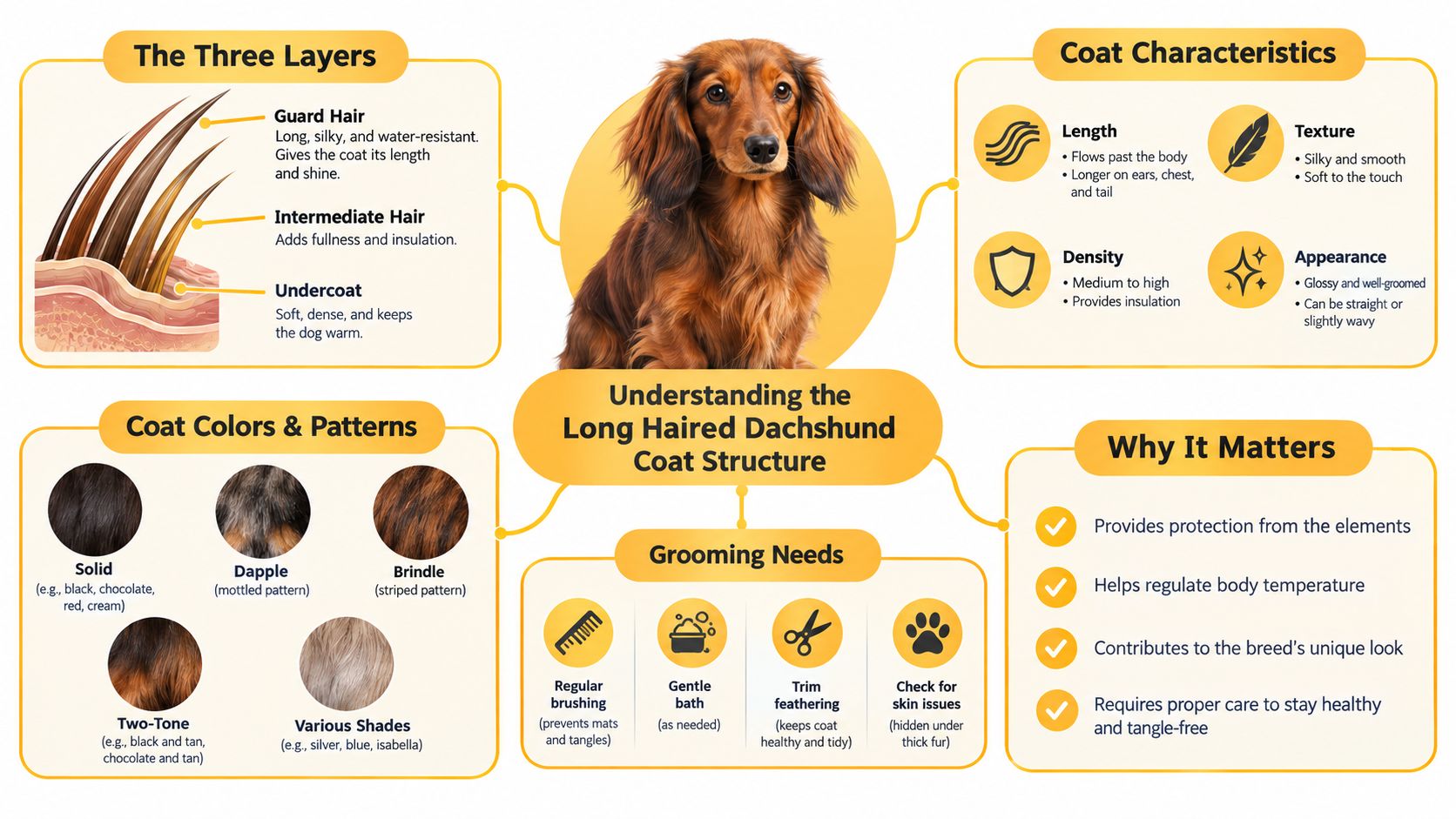
Why moderate shedding can look heavy
The coat works in three practical zones:
- The body coat lies close to the skin. Loose strands can stay hidden among surrounding hair until brushing lifts them out.
- The undercoat releases in cycles. As older undercoat loosens, more hair becomes available to shed during seasonal changes.
- The feathering displays loose hair. Ear, leg, and tail hair can trap strands, form small knots, and transfer them to fabric.
That structure changes visibility, not necessarily total hair loss. A long strand caught in tail feathering may later land on a blanket. A strand from the body can cling to clothing because its length gives it more contact with the fabric.
International breed standards also describe the long-haired coat's undercoat and feathering. Together, these features explain the difference between actual shedding volume and perceived household mess. A dachshund may shed moderately while still needing regular brushing and inspection, especially in a home with textured furniture, blankets, or rugs.
Year Round Shedding and the Seasonal Coat Blow Cycle
Long-haired dachshunds do not wait for spring to shed. A small amount of loose hair is normal throughout the year, while the undercoat often releases more noticeably during spring and fall. Guidance from NAHF on dachshund shedding and coat structure connects this seasonal release with the undercoat and supports focused brushing rather than repeated bathing.
A coat blow is a temporary increase in loose hair, not a sudden medical loss of coverage. Older undercoat comes free, so the brush fills faster and hair appears in familiar places around the home.
What changes during a heavier shedding period
During a seasonal surge, you might notice:
- Hair collecting beneath furniture and along floor edges.
- Loose strands caught in ear, leg, and tail feathering.
- A coat that feels uneven or less smooth until the undercoat is removed.
- Mats forming sooner when brushing is missed.
- A need for a regular schedule instead of occasional grooming.
Daylight helps signal seasonal coat changes, but indoor conditions can soften the pattern. Heating, cooling, artificial light, and a steady household temperature may spread lighter shedding across the year. One dachshund may therefore have a clear coat blow, while another releases extra hair gradually.
The home environment also affects how disruptive the cycle feels. Smooth floors make loose hair easy to spot and collect, while rugs, blankets, and upholstery hold it until cleaning or movement brings it back into view. During spring and fall, check behind the ears and around the tail twice weekly. These areas can hold loosening undercoat before it forms a mat.
A manageable rhythm rather than a crisis
Expect some daily hair, then respond when the amount rises. Brush before tangles tighten, feel through the feathering for hidden knots, and use washable covers on your dog's preferred resting places.
Seasonal perspective: More hair on the brush during spring or fall does not automatically signal a problem. Check skin condition, coat coverage, and your dog's comfort alongside the amount collected.
The Canine Journal guide to dachshund shedding also distinguishes ordinary seasonal release from concerning hair loss. A normal coat blow should leave the skin comfortable and the coat evenly covered. Bare patches, marked irritation, or persistent changes require a veterinary assessment rather than a stronger grooming routine.
Brushing Bathing and Grooming Routine That Reduces Loose Hair
The most effective shedding routine removes loose hair before it reaches your couch, while also stopping feathering from turning into mats. Start with brushing about once a week at minimum. During heavier spring and fall shedding, or whenever tangles develop quickly, increase that to two or three sessions a week, with more frequent attention where the coat knots.
Build the routine around the coat
Use the tool that matches the area instead of dragging one brush through the entire dog:
- Body first: A slicker brush can lift loose hair from the longer body coat. Work gently in the direction of growth, beginning around the chest and moving toward the back.
- Feathering next: A pin brush or metal comb is useful around the ears, legs, and tail. Separate small sections rather than pulling through a whole knot.
- Seasonal undercoat: When shedding increases, an undercoat rake or deshedding tool can help remove dead undercoat. Use a light touch, because aggressive scraping can irritate skin or break healthy hair.
- Final check: Run a comb through the feathering after brushing. If it catches, slow down and work on that small area instead of forcing the knot.
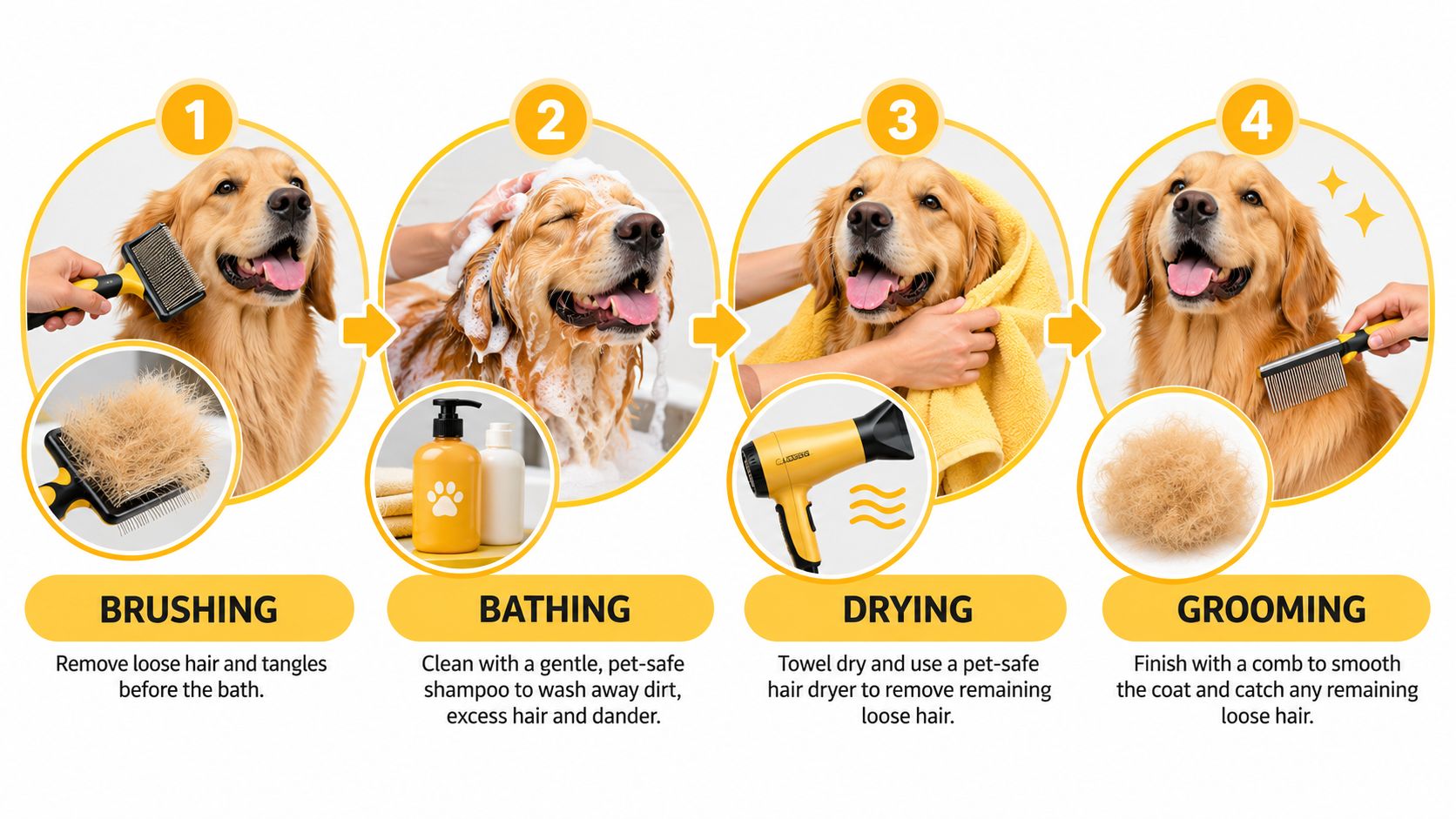
Bathing supports cleanliness, but it isn't the main way to control shedding. Over-bathing can dry the skin and worsen breakage, so use a gentle, dog-formulated shampoo and rinse thoroughly. If your dog needs a regular bathing rhythm, many grooming guides use bathing about every four to six weeks, adjusted for lifestyle and veterinary advice.
Dry the coat fully and brush it afterward once it's comfortable to handle. A damp, loosely brushed feathered coat can hide tangles, particularly behind the ears and around the tail.
For the home side of the routine, it helps to find pet-friendly cleaning products that are appropriate for the surfaces your dog contacts. You can also use the guide to reducing dog shedding as a broader reminder that brushing, skin care, and household cleaning work together.
Keep ear care, nail care, and sanitary grooming separate from the shedding question. Don't pluck ear hair routinely without guidance from a veterinarian or experienced groomer, because unnecessary irritation can create a new problem. Check nails regularly and arrange professional help when mats sit close to the skin or the coat needs a tidy sanitary trim. For an aging dog whose overall wellness routine also includes skin and coat support, DA-1™ Daily All-in-One - Senior Dog Support, Joints, Skin/Coat & More is described as a single-scoop formula with 18 human-grade ingredients supporting cells, gut, and joints.
How Diet Coat Health and Stress Influence Shedding
Brushing manages what reaches the floor, but coat condition affects how easily hair breaks, tangles, and looks dull. A balanced diet, adequate water, and a stable routine support the skin and coat from the inside. If the coat becomes brittle or dry, broken strands can look like increased shedding even when the underlying hair cycle hasn't changed.
Protein supplies the building blocks used to produce hair, while fatty acids contribute to skin condition and coat appearance. Fish oil and flaxseed are common dietary sources, but the right choice depends on the dog's existing diet, health, and veterinary guidance. Adding several products without checking the complete diet can create imbalance rather than solve the problem.
Hydration and stress deserve attention
A dog that drinks poorly may develop a duller-looking coat, and dry skin can make loose flakes and breakage more obvious. Keep fresh water available and take changes in drinking seriously, especially when they occur alongside changes in appetite, energy, or urination.
Stress can also alter a coat routine. Moving house, introducing another pet, or dealing with separation anxiety may change grooming behavior, sleep, appetite, and scratching. If hair loss appears after a major disruption, don't assume the event is the only cause. A veterinarian can help separate a stress response from allergies, parasites, hormonal disease, or another medical issue.
For a broader look at dog skin and coat support, treat supplements as an optional layer, not a replacement for a complete diet, grooming, or veterinary evaluation. The most useful plan is usually the simplest one you can follow consistently.
Long Haired vs Smooth vs Wirehaired Dachshund Shedding
Long-haired dachshunds can look like heavy shedders without producing the most loose hair. Their actual shedding is usually moderate, while their longer feathering makes each strand easier to see. Hair catches on clothing, gathers along sofa seams, and stays noticeable on bedding. The mess feels larger because the coat displays it clearly.
Smooth-coated dachshunds release short hairs steadily. These strands often settle on floors and upholstery, where they can be easy to miss on the dog but annoying to remove. Wirehaired coats may hold shed hairs within their rough outer coat, so less hair reaches the floor. That lower visibility does not remove the need for appropriate coat care.
| Coat Variety | Actual Shedding Volume | Where Hair Lands | Grooming Commitment |
|---|---|---|---|
| Smooth | Low to moderate | Floors, rugs, and broad textile surfaces | Lower, with routine brushing |
| Long-haired | Moderate | Clothing, sofa seams, bedding, and feathered areas | Moderate, with regular brushing and mat checks |
| Wirehaired | Often less visible because loose hair can remain in the outer coat | Within the outer coat until removed | Specialized maintenance to remove dead coat |
Breed standards confirm these are the recognized coat varieties, but they do not divide them into simple “clean” and “messy” categories. Your home's surfaces and your clothing can change which coat seems hardest to manage. A long-haired dog may leave fewer hairs than expected, yet make them more visible. A wirehaired dog may leave little on the floor while retaining loose coat that still needs removal.
A low-visibility coat is not automatically low-maintenance. Hair that stays trapped still needs appropriate removal.
Season and indoor conditions matter too. Heating, dry air, and time spent indoors can make loose hair more noticeable, while outdoor coat changes can create a temporary increase. For comparison, this guide to whether Pomeranian dogs shed is useful only when you separate hair volume from how strongly a coat displays it. Breed labels cannot predict exactly where hair will collect on your sofa.
When Shedding Signals a Health Issue Instead of Normal Coat Change
Routine shedding should leave the coat broadly even. Your dachshund's hair may look fuller in some areas because of feathering, but you shouldn't see sharply defined bald spots, persistent sores, or widespread thinning. The skin should remain comfortable enough that your dog isn't constantly scratching, licking, or chewing.
The difficult part is recognizing when a familiar seasonal increase has crossed into abnormal hair loss. Amount alone can mislead you, especially during a coat change. The pattern, skin condition, and your dog's behavior matter more than the size of the hair pile.
Signs that deserve a closer look
Contact your veterinarian if you notice:
- Bald patches: Hair disappears in distinct areas instead of thinning evenly.
- Flank or body thinning: The coat becomes visibly sparse in a pattern that doesn't match normal feathering.
- Persistent dandruff: Flaking continues rather than clearing with sensible grooming.
- Greasy or altered texture: The coat feels oily, sticky, unusually brittle, or markedly different.
- Inflamed skin: Redness, swelling, sores, or a strong odor accompanies the shedding.
- Intense itching: Scratching, licking, or chewing continues and damages the skin.
- A sudden timing change: Hair loss increases outside the dog's usual seasonal pattern.
Possible causes include allergies, parasites, thyroid imbalance, Cushing's disease, nutritional problems, and stress-related changes. These conditions can look similar at home, so trying a succession of shampoos or shedding tools may delay the right answer.
A vet may ask about recent moves, food changes, parasite prevention, medications, thirst, appetite, energy, and the timing of the coat change. Bring photographs of the affected areas and note when you first saw the difference.
Veterinary boundary: Grooming removes loose hair. It doesn't diagnose inflamed skin, hormonal disease, parasites, or unexplained hair loss.
Arrange an appointment when home care no longer explains the pattern, when your dog seems uncomfortable, or when the skin changes along with the shedding. Don't wait for the next seasonal cycle if your dachshund has sores, bald areas, or persistent distress.
Putting It Together A Practical Shedding Management Checklist
The answer to “do long-haired dachshunds shed a lot” becomes practical once you separate moderate hair loss from highly visible hair. You're not trying to make the coat shed zero. You're removing loose hair at the dog, protecting the areas where hair accumulates, and watching for changes that grooming can't explain.
Your weekly home plan
- Brush with purpose: Use a slicker brush on the body, then a pin brush or comb through the ears, legs, and tail. Keep the baseline at about once weekly, increasing to two or three sessions during heavier seasonal shedding.
- Check before bathing: Remove tangles first. Bathe with a gentle dog-formulated shampoo, rinse thoroughly, and dry the coat completely.
- Control the landing zones: Put washable throws on favorite furniture, keep a lint roller near the door, and vacuum the edges where tumbleweeds collect.
- Clean with the household in mind: A practical house reset checklist for homeowners can help you include pet bedding, upholstery, floors, and high-traffic areas instead of cleaning only when hair becomes obvious.
- Support the basics: Provide fresh water, feed a balanced diet, and keep stressful changes as predictable as possible.
- Inspect the skin: Look for bald patches, redness, sores, heavy flaking, or persistent itching. Those signs need veterinary attention rather than stronger brushing.
Long-haired dachshunds are a realistic choice for homes that can accept visible hair and maintain regular coat care. Once you brush before the loose strands spread, the difference between floor tumbleweeds and manageable cleanup becomes much easier to live with.
Pure Paw Labs offers human-grade, daily dietary supplements for dogs, including support aimed at skin and coat alongside other wellness needs. If you're reviewing your dachshund's nutrition as part of a shedding routine, visit Pure Paw Labs to explore the available options and choose a plan that fits your dog's needs.