


Rice-like dots sitting on stool, caught in fur, or scattered on bedding are often flea tapeworm segments, while flecks mixed through the whole pile after a grain-heavy meal are often food, and a clear photo plus a vet visit is what separates the two. That split challenges the most popular advice, which tells you to buy a dewormer the moment you spot something white.
Don't treat first and sort it out later. A moving grain and a bit of leftover rice can look identical in a blurry photo, yet they need opposite responses. One calls for a parasite check and flea control. The other calls for a note about dinner and a look at the next stool. Your job in the first minutes isn't to name a species. It's to record size, movement, and location while the evidence is still fresh.
Table of Contents
- What White Dots in Dog Poop Usually Mean
- White Dots Compared by Look and Likely Cause
- Look-Alikes and the First-Hour Checklist
- How Flea Tapeworm Segments Reach the Stool
- How Vets Confirm Tapeworm Infection
- Deworming and Flea Control After Diagnosis
- Red Flags That Mean Call the Vet Today
What White Dots in Dog Poop Usually Mean
You're on the walk home, bag in hand, and you notice pale specks on an otherwise normal stool. Your dog is trotting ahead, bright and hungry, which makes the specks harder to judge. That combination is common with dog poop with white dots, and it is exactly why a good mood doesn't clear the dog.
Start with the working verdict, not the biology. Discrete, flattened pieces the size of rice or a cucumber seed, sitting on top of feces, stuck in hair around the anus, or left behind on bedding, fit the pattern linked to tapeworm segments. Flecks stirred through the whole pile after rice, oats, seeds, or a chewy treat fit undigested food more often.
What You Are Not Seeing
The dots you can see are not eggs. Tapeworm eggs are microscopic, so anything rice-sized is either a shed segment, a piece of food, mucus, or residue from a chew. That one fact stops a lot of confusion, because owners often search for eggs they could never spot with the naked eye.
A dog passing segments may still eat, play, and look completely well. Don't let normal energy talk you out of saving a sample, and don't let white specks alone talk you into a drug. Keep basic records of stool changes, flea prevention, and vet visits together, much like the organized approach in pet health and travel documentation basics, so a clinic can read the timeline quickly.
Color can add context when you describe the stool, especially if there's also a coating, which is why owners who notice a green mucus coating on dog stool should note that separately from discrete dots. Use the comparison chart while the sample is fresh, match one row, and then decide whether to bag it.
White Dots Compared by Look and Likely Cause
A white speck's shape and position can be more useful than its color. A flattened piece on the stool's surface suggests something different from soft flecks scattered throughout it. Check whether the material moves when fresh, too.
The CDC guide to Dipylidium infection describes white, rice-like particles as a visible sign of tapeworm segments, especially from the flea tapeworm Dipylidium caninum. Fresh segments may move and look pumpkin-seed-shaped. As they dry, they can become hard, yellowish grains about 2 millimeters long. Adult worms can measure 4 to 28 inches and remain in the intestine. Many infections cause few or no obvious signs, though diarrhea, poor nutrient absorption, variable appetite, irritability, or a rough coat can occur. A single negative fecal examination does not reliably rule out parasitism.
Fresh segments are often about 10 to 12 millimeters long, flattened, and shaped like a rice grain or cucumber seed. They contain egg packets, so the visible dot is a shed piece of a longer worm, not the whole parasite or a single egg. For a comparison with food residue, see these examples of rice-like material in dog poop. A visual match can guide what to observe, but it cannot confirm the cause.
| What you see | Likely source | Moves when fresh | Where it shows | Next step |
|---|---|---|---|---|
| Flattened rice- or cucumber-seed piece, about 10 to 12 mm | Flea tapeworm segment (Dipylidium caninum) | Often yes | On stool, anal hair, or bedding | Photograph beside a coin, save a sample, and contact a vet about confirmation and flea control |
| Hard yellowish grain about 2 mm | Dried tapeworm segment | No | Bedding, fur, or dried stool surface | Save it and show it to the vet as a possible segment |
| Soft white flecks mixed through the whole stool after grains or treats | Undigested rice, seeds, kibble, or chew bits | No | Inside the feces only | Note recent meals and check the next stools |
| Shiny white or clear jelly coat | Intestinal mucus | No | Smeared on the surface | Contact the vet if it recurs or comes with diarrhea |
| Long spaghetti-like white worms | Roundworms or another worm, not a rice-grain segment | Sometimes | In stool or vomit | Contact a vet promptly, especially for puppies |
| Gritty white crumbs after bones or mineral chews | Bone meal, calcium, or chew residue | No | Mixed into formed stool | Compare with the chew; seek care if straining or blood appears |
How to Use the Row You Picked
If a rice-like piece appears again, photograph it beside a coin, save a sample, and contact the vet, even if your dog seems well. If the flecks appeared once after a matching meal, note what your dog ate and check the next two stools.
Practical rule: A moving, distinct piece on the surface is a reason to save a sample. Still flecks mixed throughout the stool after a matching meal are a reason to record the food and observe what follows.
Daily nutrition and parasite treatment are separate matters. For context, DA-1™ Daily All-in-One - Senior Dog Support, Joints, Skin/Coat & More is a once-daily human-grade supplement for general support, including gut health, with a 60-day money-back guarantee. It is not a dewormer and does not change which row you picked or whether a segment needs veterinary confirmation.
Look-Alikes and the First-Hour Checklist
Three household scenes cause most of the mix-ups. In the first, your dog eats leftover rice or oatmeal and the next stool is speckled through with soft white grains that sit still. In the second, a dental chew or seeded treat leaves pale hulls that look wormy until you match them to the package. In the third, you find a hard yellow grain on the dog bed, far from any rice meal, which fits a dried segment better than dinner.
The visual below pairs those everyday scenes with the checks that help you tell them apart.
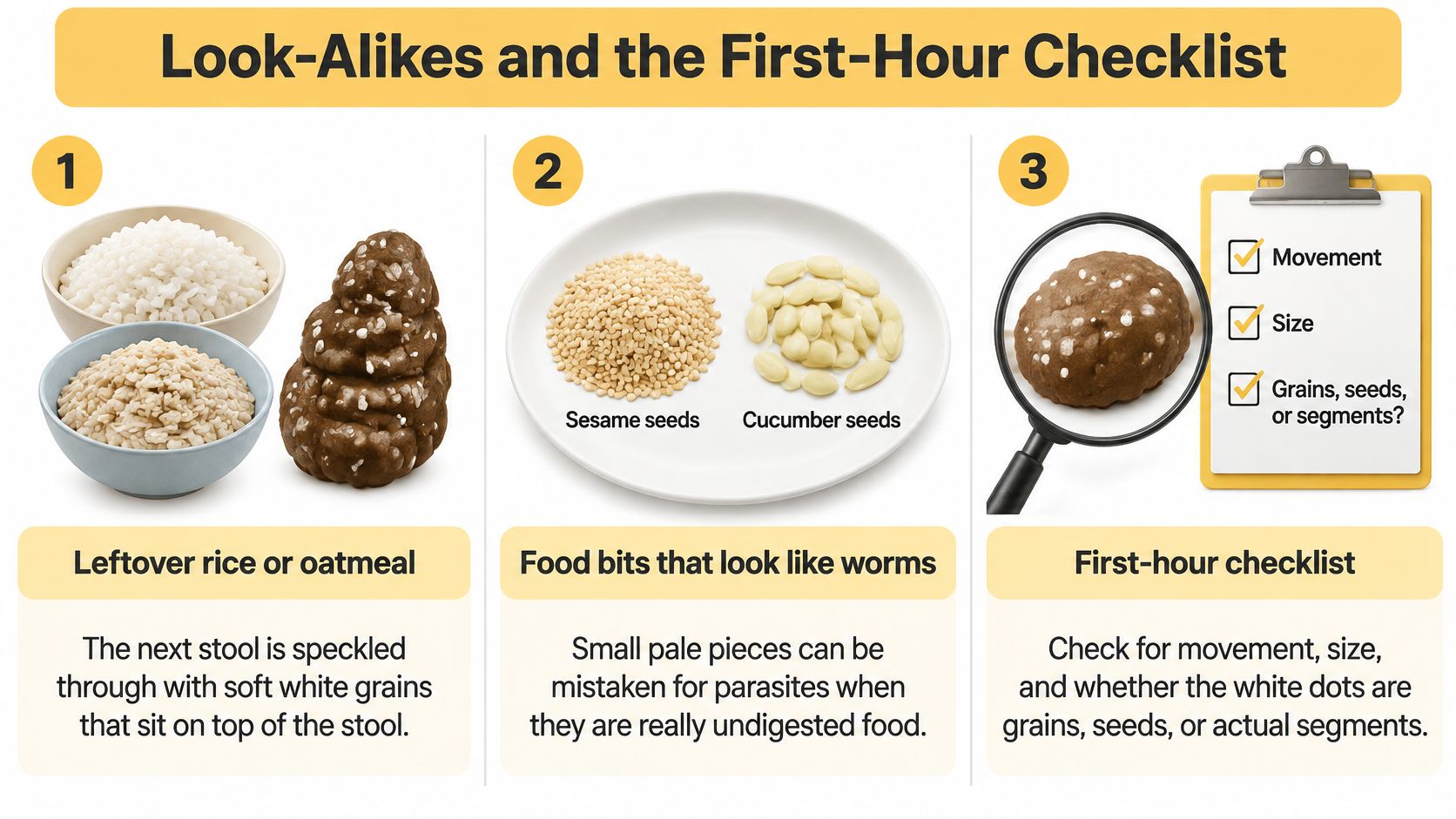
Mucus adds a fourth picture. It looks like a clear or white film smeared on soft stool, often with straining, rather than a discrete seed you could pick out. Owners tracking softer stools alongside odd specks can note patterns described for digestive upset in dogs, but mucus and segments should still be described separately to the clinic.
The Cornell Riney Canine Health Center guide to tapeworms supports the core caution here, that white dots are not automatically tapeworms and appearance alone is unreliable. Segments may be white and moving when fresh, then yellowish when dried, and they can appear in feces, around the anus, or on bedding, while individual eggs remain microscopic. A normal looking stool with white particles doesn't rule out infection, and white particles don't prove it.
The First Hour in Order
- Bag it fresh: Put on a glove and collect a speck or small stool sample the same day, before it dries or the yard is cleaned.
- Photograph for scale: Place a coin beside it, use natural light, and write down whether it moved.
- Check fur and bedding: Look under the tail and where the dog sleeps for more grains.
- List the last 48 hours: Note foods, treats, chews, prey, raw meat, fleas, and any missed preventives for every pet.
- Call with the full picture: Send the photo and history so the vet reads them together with the sample.
- Skip home drugs: Don't give leftover dewormer, livestock paste, or human medicine while you wait.
Watching a short demonstration can make the movement check easier to picture before you handle a sample.
One clean stool doesn't prove the specks were food, because segments can pass intermittently. White specks also don't prove a worm species. A clear photo and fresh sample improve the veterinary conversation without turning you into the diagnostician, and they prevent both unnecessary self-treatment and the opposite mistake of dismissing a real segment as dinner.
How Flea Tapeworm Segments Reach the Stool
Think of the flea tapeworm as a chain with four links. Break any link and the cycle stops, but leave one in place and segments can return. The route also corrects a common fear, because a dog doesn't catch this tapeworm by merely sniffing another dog's stool.
The diagram below follows that chain from eggs in the environment to segments in feces.
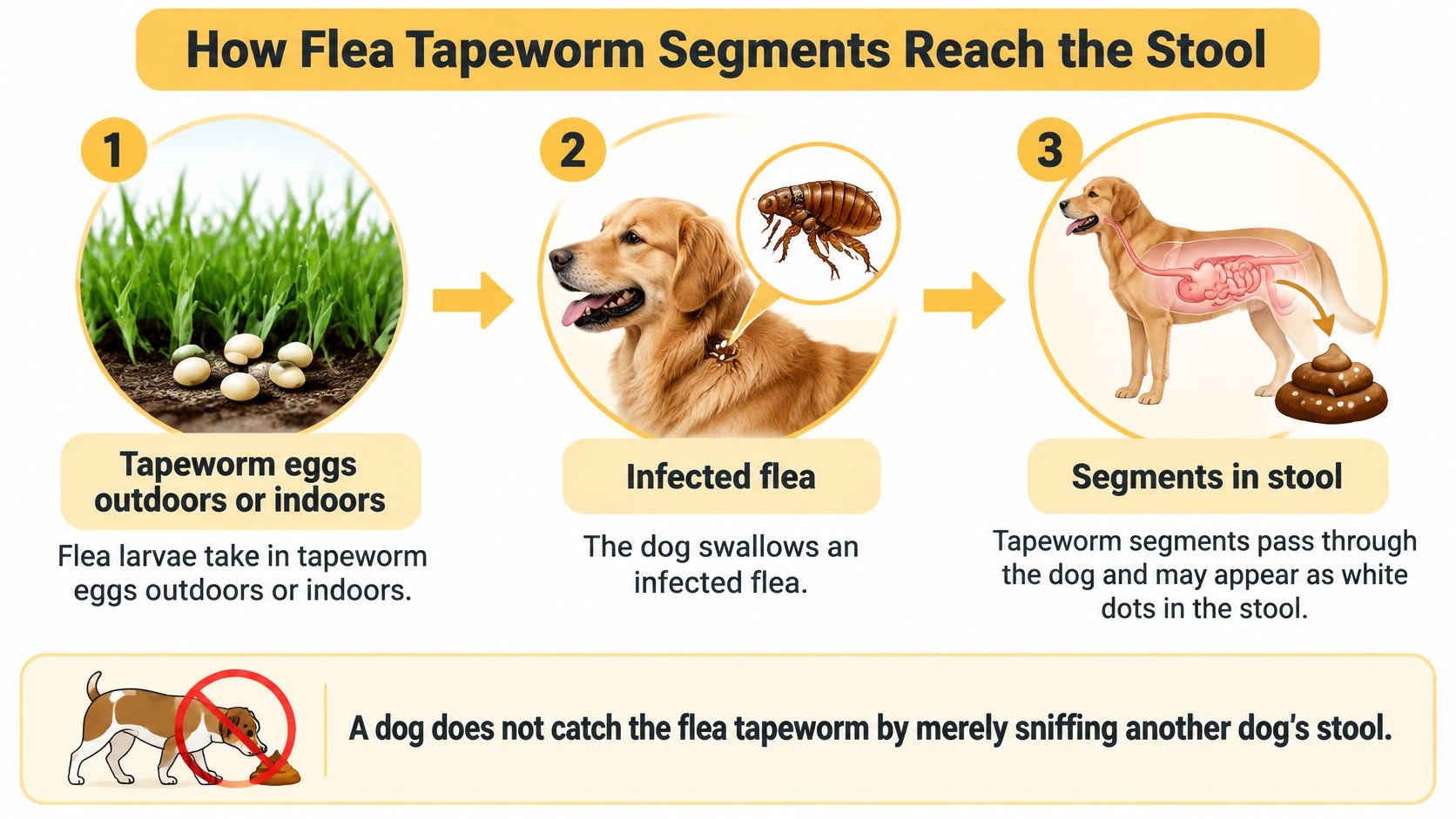
Flea larvae take in tapeworm eggs indoors or outdoors. Later, your dog swallows an infected flea while licking or chewing at its coat during grooming, often without you ever seeing a flea problem. Inside the small intestine, the larval tapeworm develops into an adult that anchors there and grows by adding segments.
From Adult Worm to Visible Dot
The adult sheds end segments called proglottids. Those pieces pass in feces or catch on hair around the anus, and each one contains egg packets rather than being a lone free egg. That's why you see a rice-sized object while the actual eggs stay invisible.
The CAPC guideline for Dipylidium caninum notes that these shed proglottids are typically about 10 to 12 mm long and may move when freshly passed. It also reports published prevalence estimates varying widely, from 4.0% to 60.0% in dogs, partly because routine fecal flotation underestimates infection compared with direct intestinal examination. Segments and egg packets are shed intermittently, so a negative routine stool test doesn't reliably exclude infection.
That wide range isn't sloppy counting. It reflects different populations and a test that can miss pieces that only pass now and then. For an owner, the lesson is simple. A clear segment in a photo carries real weight even when one stool test comes back clean.
A swallowed flea is the bridge. The segment in the stool is the evidence that the bridge was crossed.
Most infected pets show little illness. Diarrhea, a changing appetite, irritability, a dull coat, or weaker nutrient uptake can still occur, especially when the burden builds over time. Don't wait for obvious sickness before you act on repeated grains.
One different exposure belongs in the same history. Other tapeworms can follow infected prey, raw meat, or offal, so tell the clinic about hunting, scavenging, and raw feeding alongside flea risk. The chain then has two clear break points, removing the intestinal worm and stopping another infected flea, or risky food, from restarting it.
How Vets Confirm Tapeworm Infection
A vet works in a set order, starting with eyes before lab work. First comes direct observation of the stool and the area around the anus for flattened rice- or cucumber-seed segments, matched against your photo. For canine tapeworms, spotting a segment that way is often the route that settles the question.
Next comes fecal flotation, a routine test that mixes stool with a solution so eggs and other parasite material rise for microscopic examination. It's valuable for many intestinal parasites, including worms that never make visible dots. Its limit with tapeworms is timing, since egg packets travel inside segments and may not be in the small portion tested.
What Each Result Actually Means
- Segment seen, flotation negative: The visual match can still support treatment, because the test may have missed intermittently shed material.
- No segment, flotation negative: Concern drops, but the dog isn't fully cleared, so you watch the next stools and return if grains reappear.
- Flotation positive for other parasites: The plan widens, since more than one parasite can be present at the same time.
- Tests and history disagree: The vet may repeat sampling or use a stronger direct check rather than guessing.
Bring four things to make that judgment easier. Bring the photo beside a coin, the fresh sample in a clean sealed container, a list of recent meals and chews, and notes on fleas and preventive dates for all pets. Tell the clinic whether the pieces moved, whether you found them on bedding, and whether hunting or raw meat is part of the picture.
Bring the evidence, not a verdict: A photo, a fresh sample, and an honest flea history help more than telling the clinic which worm you think it is.
The vet, not the owner, chooses any drug after weighing segment shape, test results, age, weight, and other health issues. That protects puppies and dogs on other medications from the wrong product or dose. It also avoids treating food residue as if it were a parasite.
Deworming and Flea Control After Diagnosis
Treatment has two separate jobs, and doing only one is the usual reason segments come back. The first job clears the worm already in the gut. The second closes the route that put it there.
The intestinal infection needs a cestocide, a drug active against tapeworms, chosen by the veterinarian after confirmation. Many store dewormers aimed at roundworms don't clear tapeworms, so a product that says dewormer on the front may still miss the target. Use the clinic's product, give it exactly as directed for your dog's weight, and finish the course rather than swapping in a leftover tube from another pet.
A 2024 veterinary report summarizing CAPC data stated that flea-tapeworm prevalence in U.S. dogs was 2.17% during the first three months of mapping, approximately 1 in 50 dogs. That figure makes the finding uncommon, not ignorable. When your dog is the one passing segments, population rarity doesn't change the plan.
Close the Flea Route at Home
- Treat every pet: Apply veterinary flea control to all dogs and cats in the home on the schedule the clinic sets, since an untreated pet can keep fleas circulating.
- Wash and vacuum: Launder bedding in hot water where the fabric allows, and vacuum carpets, cracks, and resting spots to remove flea eggs and larvae.
- Keep prevention going: Continue after stools look normal, because one more swallowed infected flea can restart the worm.
- Note recheck timing: Ask the clinic when to recheck stool and what to do if grains appear again.
Owners building a longer routine can align flea dates, stool checks, and vaccines with a structured dog preventive care schedule, which makes missed doses easier to spot. Consistency matters more than a single deep clean. Fleas breed in the environment, not just on the dog you're looking at.
If the history includes hunting, prey, raw meat, or offal, tell the vet again at the treatment visit. A different tapeworm may be under consideration, and the matching prevention step could be stopping that food source, not only buying a flea product. The drug choice and follow-up may differ, so don't assume every rice-like segment follows the flea route.
Ask whether your dog needs supportive care first if there's diarrhea, poor appetite, or weight loss. A dehydrated or underweight dog may need fluids, diet guidance, or other treatment alongside the parasite plan. Clearing the worm while ignoring how the dog feels leaves half the problem untouched.
Red Flags That Mean Call the Vet Today
Use a three-way decision rather than a single wait and see rule. Some findings need a call today, some need a prompt appointment this week, and a narrow few can be watched across two stools. The checklist below shows the same-day group at a glance.
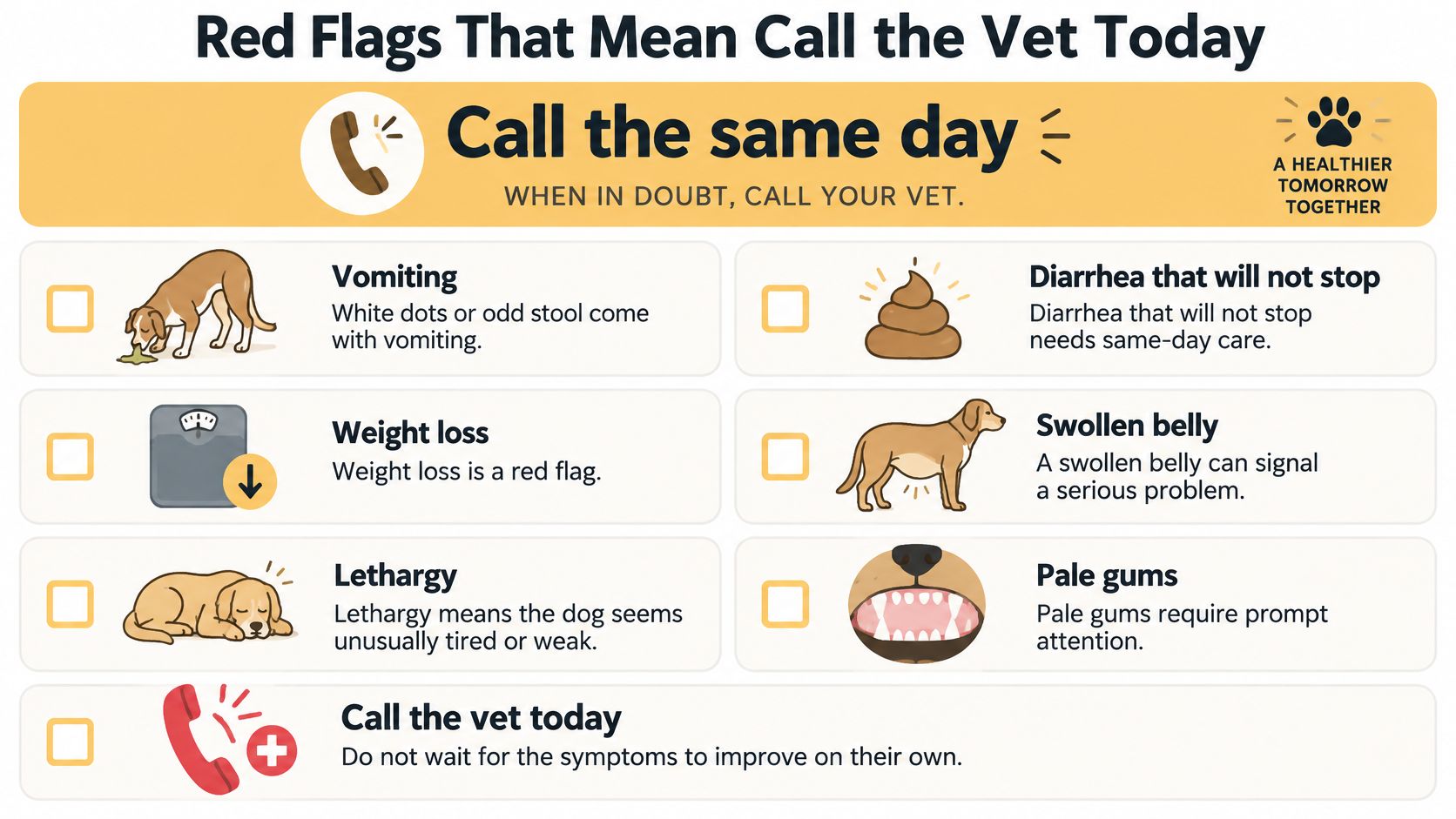
The Merck Veterinary Manual table on gastrointestinal parasites of dogs identifies observation of segments in feces or the perianal region as the usual diagnostic route, while clinical signs are often minimal. It also supports escalating promptly when visible segments accompany vomiting, persistent diarrhea, weight loss, abdominal distension, lethargy, pale gums, or a puppy's poor growth. Those signs can point to a heavy burden, another gut problem, or dehydration, and they shouldn't wait for a routine slot.
Same Day, This Week, or Watch Two Stools
- Call today: Any red flag above, blood in stool, repeated vomiting, straining without passing stool, or a young puppy that's fading or not growing.
- Book this week: Rice-like pieces keep appearing while the dog stays bright, with no vomiting or weight loss. Bring the photo and sample.
- Watch two stools: One stool full of still grains right after a matching rice or seed meal, followed by clean stools and a normal dog. Keep the photo and skip home drugs.
Color changes deserve the same urgency check, since owners sometimes focus on dots and miss a more serious shift such as black, runny stool in a dog. Describe color, consistency, and dots as separate facts when you call. That gives the clinic a cleaner picture than a single label like worms.
Better food and supplements do not clear tapeworms.
No daily product substitutes for parasite diagnosis, veterinary-directed deworming, or flea management in the home. Save the evidence, stop the flea route, and let the clinic choose the dewormer. That's the sequence that resolves dog poop with white dots instead of chasing it from one stool to the next.
Pure Paw Labs makes daily, human-grade supplements designed to support digestion, joints, skin and coat, and overall wellness as part of a steady care routine, not as a replacement for parasite testing or deworming. If your dog's stool is clear and your vet has addressed fleas and any worm concern, visit Pure Paw Labs to review daily support options that fit alongside the preventive plan your clinic sets.