


You're standing in the yard or on a morning walk, and your dog's stool is suddenly black, loose, and ugly enough to make your stomach drop. Don't talk yourself into calm too fast, but don't panic blindly either. Black runny poop in a dog can be harmless darkening, or it can be melena, which usually means digested blood from the upper gastrointestinal tract and can come with pale gums, weakness, vomiting, collapse, or labored breathing (Petfolk).
Table of Contents
- Why Your Dog's Poop Suddenly Turned Black and Runny
- What Melena Is and Why It Happens
- Telling True Melena From Harmless Stool Darkening
- Your First Hour After Seeing Black Runny Stool
- Red Flags That Mean Go to the Vet Now
- Supporting Your Dog's Gut During and After Recovery
Why Your Dog's Poop Suddenly Turned Black and Runny
The first question is simple. No, black runny stool is not always an emergency, but you should treat it as suspicious until you sort out whether it's true melena or just dark stool from something your dog ate. Melena is the medical term for black, tarry stool in dogs, and it usually means blood has been digested before it reaches the stool (Petfolk).
That's why the texture matters. A dog can pass dark stool after diet changes or certain supplements, but black, sticky, foul-smelling stool is the pattern that makes veterinarians think bleeding. In plain English, this is not just “dark poop.” It's a sign that blood sat in the digestive tract long enough to change on the way out, which is why the situation deserves respect.
What the color is telling you
Black stool points upstream. Blood from the esophagus, stomach, or small intestine can be digested and later appear as black feces, while bright red blood usually suggests a different part of the tract. Veterinary references also treat melena as more concerning than a few streaks of blood because it often reflects substantial blood loss over time (Vetster).
The practical job here is not to guess. It's to separate a true bleeding pattern from harmless darkening and move fast only when the pattern fits. If your dog is acting weak, throwing up, or seems off, stop debating and call a vet.
What Melena Is and Why It Happens
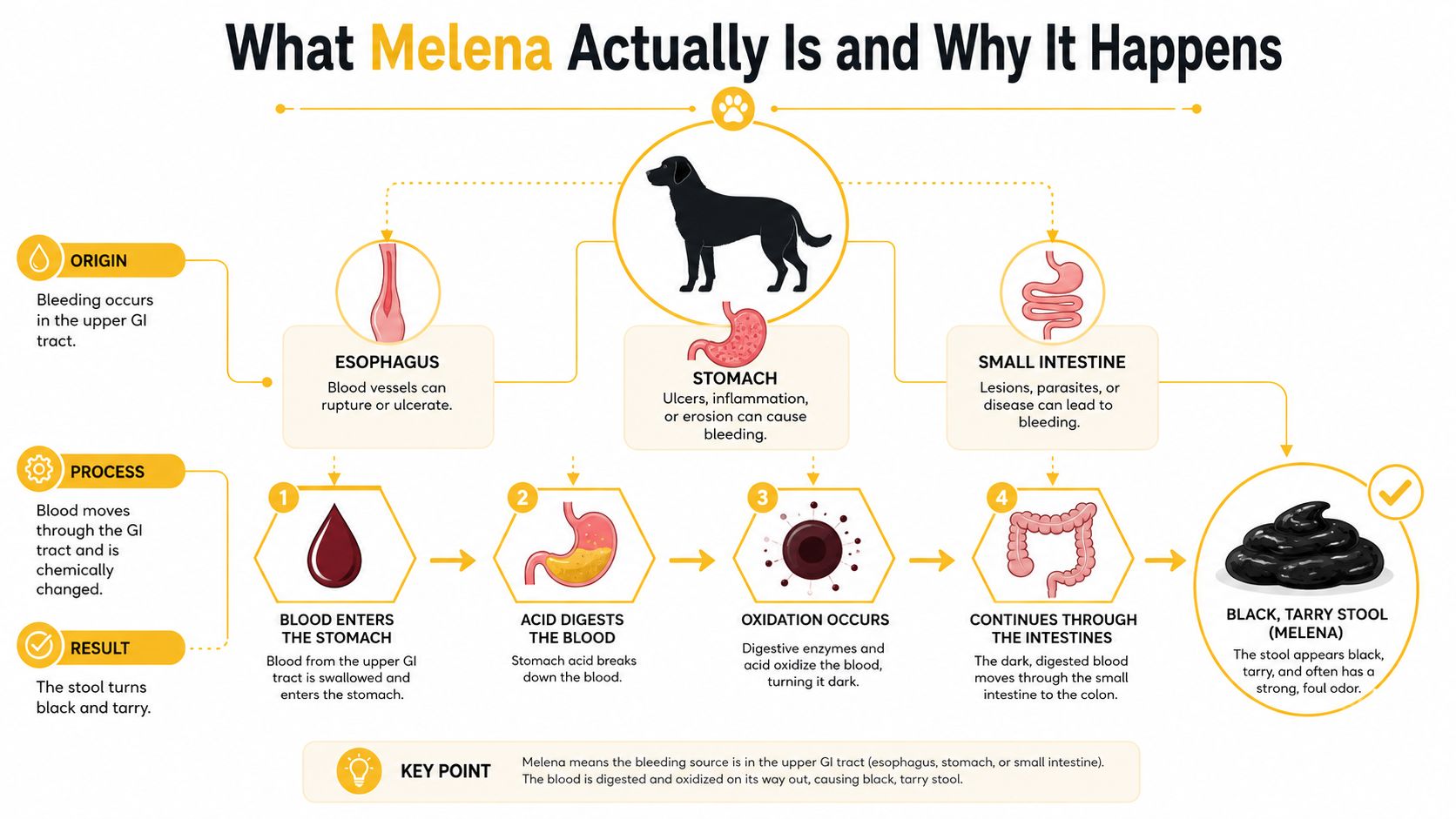
Melena is a clinical clue that blood entered the digestive tract, was exposed to stomach acid, and oxidized before leaving the body. That change turns stool black and tar-like instead of bright red, which is why veterinarians treat it as a bleeding pattern worth acting on.
The common causes veterinarians worry about
The cause can be ugly and broad. Ulcers, NSAID exposure, rodenticide or toxin ingestion, foreign bodies, severe infections, clotting disorders, and organ disease all belong on the list of likely or important possibilities (Petfolk, GQ Vet). Do not write it off as “just food” until you check for the rest of the picture.
Melena usually means more than a tiny bleed. When enough blood has moved through the system to be digested first, the stool can turn black and tarry, which points to substantial blood loss and deserves prompt attention. Vetster
If your dog has a sensitive stomach, is on medication, or has a history of GI upset, the situation can change fast. A dog that seemed fine yesterday can look off today, and gut support during recovery matters too. A once-daily supplement like DA-1™ Daily All-in-One is positioned as multi-system support, not a treatment for melena.
Practical rule: if the stool looks like black tar and the dog looks wrong, treat it as bleeding until a vet says otherwise.
Why the diagnosis starts with location
Location changes the vet's search. Blood from the nose, mouth, esophagus, stomach, or small intestine can all show up as melena, so the black color is a location clue, not a final answer (Vetster). A blood test alone will not tell you where it started.
Telling True Melena From Harmless Stool Darkening
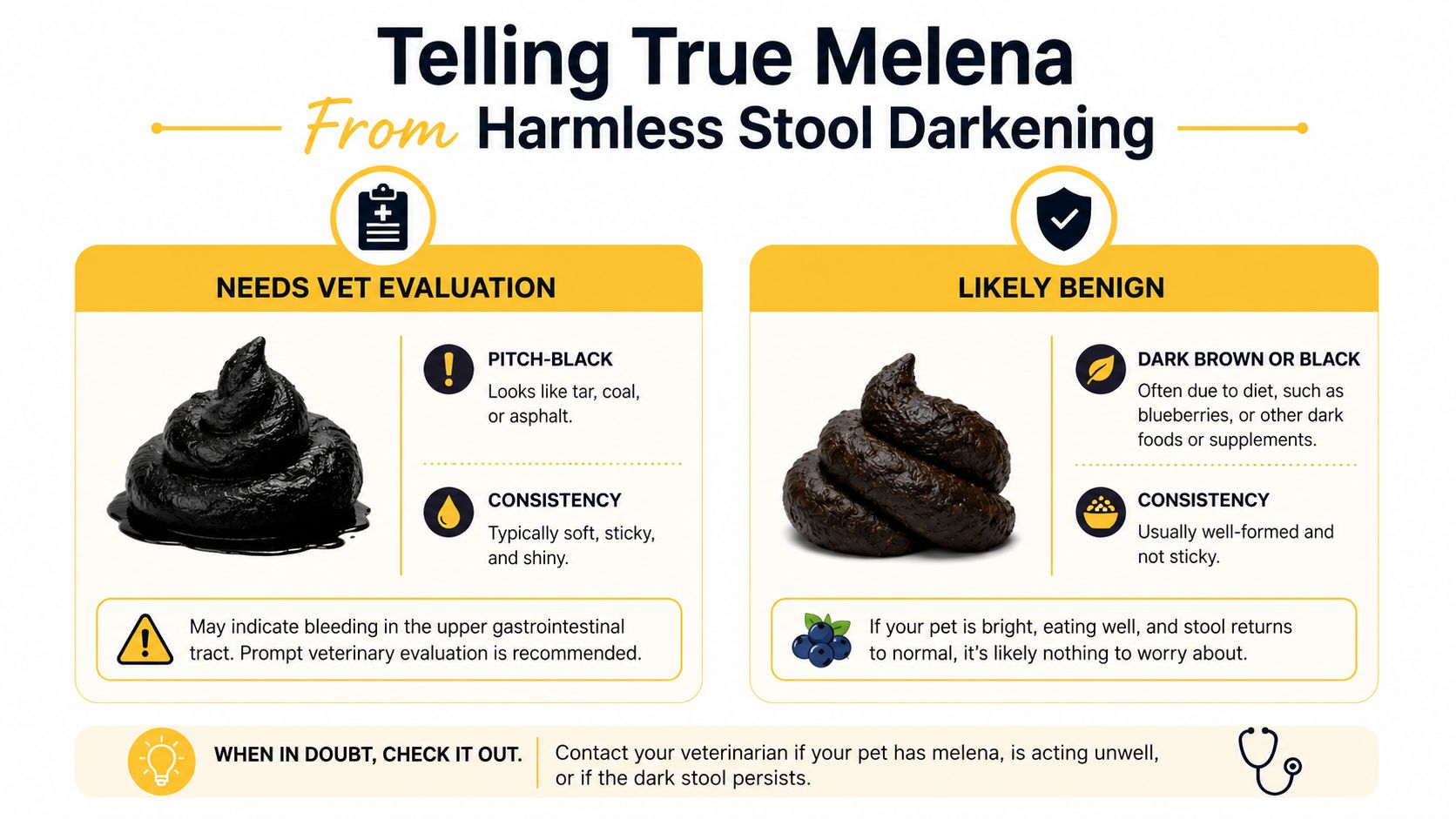
Start with the texture, smell, and smear test. A stool that reaches pitch-black, tar-like, sticky territory deserves concern. If you need a quick at-home check, press a small amount onto white paper and look for blood spreading through the smear. That is a practical triage step, not a diagnosis (VIN).
What true melena looks like
True melena is usually black, sticky, and foul-smelling. It does not just look darker than normal stool, it looks coated and tarred. On white paper, a reddish-brown diffusion supports digested blood rather than a harmless color change (VIN).
What harmless darkening can look like
Dark stool can follow bismuth products, iron, activated charcoal, or very dark foods. It may look dark brown or nearly black, but it often keeps a more ordinary stool shape and does not feel sticky. Recent diet or supplement exposure usually explains it. A simple check of any visible white dots in dog poop can also help separate a food issue from a different stool problem, especially when color is not the only change.
Use this rule: dark stool that still behaves like stool gets a closer look. Black stool that feels sticky and coal-like gets treated as possible bleeding.
The smear check keeps you from missing a real bleed and from panicking over a harmless pigment shift. If the stool meets that black, tarry threshold, act like it matters and get veterinary advice fast.
Your First Hour After Seeing Black Runny Stool
Your first hour should be calm and practical. Start with a clear photo or a small sample, then check your dog's gums and energy before you guess what the stool means. If your dog is bright, and you can tie the color change to food, supplements, or a recent medication, you have a little more room to observe. If your dog looks weak or dull, move fast.
Do these four things right away
- Get a photo or sample. Use natural light if you can, and keep a small stool sample for the clinic. A vet cannot judge a stool you cannot show.
- Check the gums. Lift the lip and look at the color. Pale or white gums make this urgent.
- Watch the dog, not just the poop. A wobbly, tired, or weak dog needs care sooner than a dog that is acting normal.
- Pause food in adult dogs. Keep water available. Stop feeding while you sort out whether this is diet darkening, yellowish diarrhea in dogs, or something more serious.
Now think back over the last 48 hours. Write down any medications, trash access, rodenticide exposure, toys, chews, or odd snacks. That list helps the vet separate harmless dark stool from a bleed or toxin problem.
Do not give human anti-diarrheal medication. Do not wait around if the dog has vomiting, pale gums, weakness, collapse, or labored breathing. Those signs move this out of home monitoring.
Keep a simple log, time of first stool, number of episodes, and whether the stool got blacker, looser, or more tar-like. That record makes the clinic visit faster and cleaner.
If your dog has a history of soft stool with unusual color changes, this may be part of a broader gut issue rather than a one-off. A related gut pattern overview, dog has yellowish diarrhea, can help you compare what you are seeing with other stool changes.
Red Flags That Mean Go to the Vet Now
A dog with black runny stool needs faster action when the stool turns pitch-tar-coal black, the white-paper smear check stays dark, and the dog looks unwell. That combination points to true melena, not simple diet darkening, and it deserves same-day care.
The triggers that change the risk fast
Recent NSAID use, possible rodenticide exposure, or a known clotting disorder raises the stakes right away. Those clues tell the vet to look hard for an active bleed, and GQ Vet notes that black stool with those risk factors should not be brushed off.
What the clinic will check first
At triage, the vet is looking for the source and the severity of blood loss. Expect a hands-on exam, gum color check, abdominal palpation, stool assessment, and bloodwork to see whether the dog is becoming anemic or has a clotting problem. Imaging may follow if the exam suggests a foreign body, ulcer, or other internal cause.
That matters because melena is not a stool problem alone. It can be the first visible sign of bleeding higher up in the digestive tract, so the clinic needs a fast read on whether the dog is stable enough to investigate or needs treatment right away. A dog that is still eating or acting fairly normal can still have a serious bleed.
The strongest warning is the whole picture, not one symptom by itself. Black tarry stool plus a known toxin exposure, recent pain medication, or a history of clotting trouble should move straight to the vet, not the watch-and-wait pile.
If you already have a sample and a note of when the stool changed, bring both. That makes the triage work faster and helps the vet separate true melena from a dark stool that only looks alarming.
Supporting Your Dog's Gut During and After Recovery
Once the vet has handled the acute problem or ruled out melena, keep recovery simple. Start with a bland diet of plain boiled chicken and white rice in small, frequent portions, then move back to regular food slowly over several days. Rushing that switch usually sets the gut back.
Check the stool every 6 hours for 48 hours. You want to see color, texture, and frequency settle, not swing around. If the poop stays loose, gets darker, or the dog starts acting worse, call the clinic and update them.
What helps during recovery
Water stays out all day. If your dog will not drink well, offer smaller amounts more often and watch for dry gums, low energy, or a dropped appetite.
After the stomach is calm, a probiotic can help support normal digestion. If you want a practical next step, best probiotic for dog diarrhea is a useful read for choosing gut support after a diarrhea episode.
Keep the food list boring for now:
- Safe, short-term options: boiled chicken, white rice, plain canned pumpkin in small amounts, and the dog's regular food once stools are steady.
- Avoid for now: rich treats, fatty scraps, sudden diet changes, dairy, and anything spicy.
Pure Paw Labs' DA-1 Daily All-in-One is one option for everyday gut support once the crisis is over. Use it after the cause has been addressed, not as a stand-in for treatment.
When the stool has stayed normal and your dog is acting like itself, keep the return to regular food gradual. That gives the gut the best chance to stay settled.