


You're picking up after a walk in the park when you notice something unusual: bright green stool with a slippery, jelly-like coating. Your dog seems pleased with the outing, but you're wondering whether they ate grass, picked up a parasite, or need a vet.
Green mucus in dog poop isn't a diagnosis. The useful clues are how much mucus you see, whether the stool holds its shape, whether the change continues, and how your dog feels.
Table of Contents
- How to Tell Harmless Green Mucus From a Warning Sign
- What Causes Green Mucus in Dog Stool
- First 24 Hours at Home and When to Call the Vet
- Diagnostic Tests Vets Use and Why One Result Isn't Final
- Treatment Options Matched to the Underlying Cause
- Prevention, Diet and the Role of Supplements
How to Tell Harmless Green Mucus From a Warning Sign
A thin, clear film on otherwise formed stool can be normal. The bowel produces mucus to help stool pass comfortably. A thick jelly coating, repeated globs of slime, or mucus passed with very little stool deserves more attention.
Colour is a separate observation. Grass, green foods, and food colouring can change stool appearance without making a dog ill. The Zoetis Petcare guide to dog poop distinguishes ordinary lubrication from substantial mucus that may indicate intestinal irritation.
Check the whole pattern
Start with the mucus amount, then examine consistency and duration. Finally, look for accompanying signs such as vomiting, appetite loss, unusual tiredness, or pain. These checks are more useful than trying to match a shade of green to a disease.
Say your dog passes a formed, grass-flecked stool and then eats, drinks, and behaves normally. That's different from a dog repeatedly squatting to pass green liquid and mucus, even if the colours look identical.
Stool features and the response they call for
| Stool feature | Low concern | Watch closely | Call the vet |
|---|---|---|---|
| Mucus amount | Thin clear film on otherwise formed stool | Visible jelly coating on most of the stool | Heavy mucus with fresh blood or straining |
| Stool consistency | Formed or slightly soft | Soft, mushy or loose on most passes | Repeated watery stool, black tarry stool, or straining with little output |
| Duration | Isolated episode followed by normal stool | Continues across bowel movements or keeps returning | Persists without improvement or gets worse |
| Green colour | Clear link to grass or green food; dog otherwise normal | Green with mucus and foul smell, without a clear explanation | Green stool with vomiting, lethargy or pain |
| Overall response | Monitor and keep a log | Contact the clinic to arrange a visit | Call the vet the same day |
These are practical categories, not validated diagnostic cutoffs. A dog's age, existing illness, and severity of symptoms can justify earlier care.
Practical rule: Use the most concerning feature to choose your response. Reassuring colour or a normal appetite doesn't cancel out pain, bleeding, or repeated vomiting.
Keep other observations separate, too. If you also notice pale specks, this guide to dog poop with white dots explains why appearance alone can be misleading. A normal-looking bowel movement between abnormal episodes doesn't necessarily mean the problem has ended.
What Causes Green Mucus in Dog Stool
Mucus usually points to irritation somewhere in the gastrointestinal tract, particularly the colon. Green colour may reflect what your dog ate or how bile pigments changed during digestion. Those processes can occur together without sharing the same cause.
The simplest explanations include grass, dyed treats, or a sudden food change. When intestinal contents move quickly, bile may remain less processed, leaving stool greener than usual.
The diagram separates these broad possibilities.
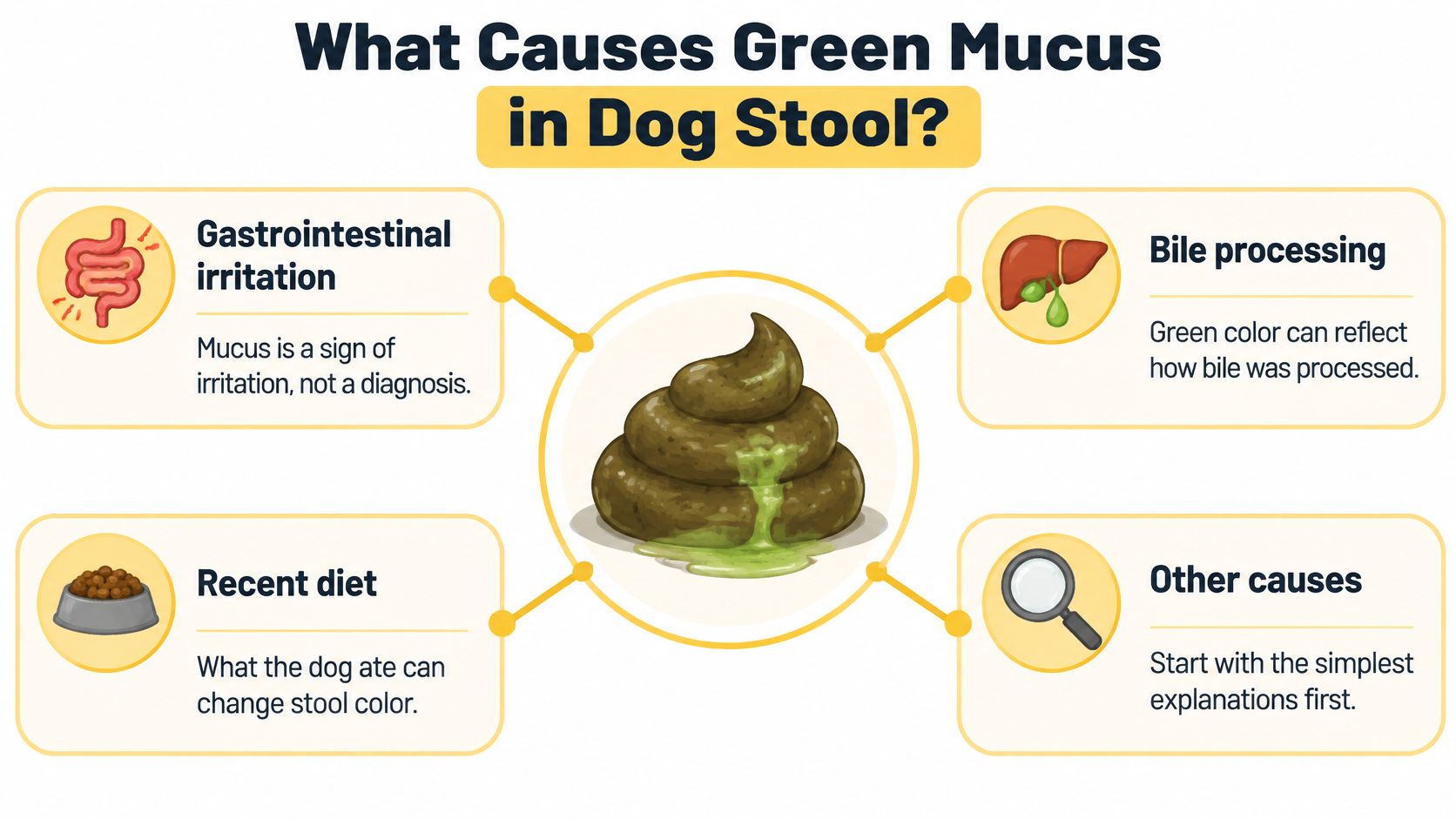
When irritation needs investigation
Colitis means inflammation of the colon, not a specific infection. Stress, food intolerance, parasites, and other intestinal disorders can all produce it.
Giardia belongs on the list of possibilities, but it isn't identifiable by colour. A global systematic review reported a pooled Giardia prevalence of 15.2% in dogs, with substantial variation by geography and diagnostic method, as described in the Merck Veterinary Manual's giardiasis reference. That pooled estimate isn't your dog's personal probability of infection, and apparently healthy dogs can carry Giardia.
Common causes of green mucus and what usually accompanies them
| Likely cause | Typical signs | Next step |
|---|---|---|
| Grass, green treats or food dye | Green colour, normal consistency, dog bright and eating | Remove the suspected trigger and monitor |
| Rapid transit with less processed bile | Green, soft stool passed more often | Monitor only while the dog is well; seek care if it continues |
| Giardia | Soft, sometimes pale, pungent stool with mucus; sometimes no visible change | Fecal testing, potentially using repeat samples |
| Other intestinal parasites, including whipworms | Mucus, straining, sometimes weight loss or poor coat | Fecal examination and a vet-directed deworming plan |
| Bacterial or viral infection | Diarrhoea, vomiting, lethargy, reduced appetite | Prompt assessment; bloodwork if unwell |
| Colitis from stress or food intolerance | Small, frequent loose stools, urgency, mucus, sometimes blood | Veterinary assessment and diet review |
| Inflammatory bowel disease | Recurring mucus and loose stool, sometimes weight loss | Diagnostic workup; specialist input when appropriate |
| Foreign material, toxins or medication effects | Possible vomiting, pain or appetite loss | Urgent advice for suspected ingestion; medication review with the prescriber |
Undigested material can complicate the picture. If you see grain-like pieces, note whether your dog ate rice rather than assuming they're parasites; the guide to rice in dogs' poop addresses that distinction.
An isolated episode in a comfortable, active dog isn't usually a reason to assume serious disease. Continuing symptoms deserve an explanation rather than repeated food experiments.
First 24 Hours at Home and When to Call the Vet
Your immediate job is to preserve useful information and avoid making the problem harder to interpret. Home monitoring is appropriate only when your dog is comfortable, alert, drinking, and free of concerning accompanying symptoms.
Keep your phone, a clean sample container, and your clinic's contact details handy.
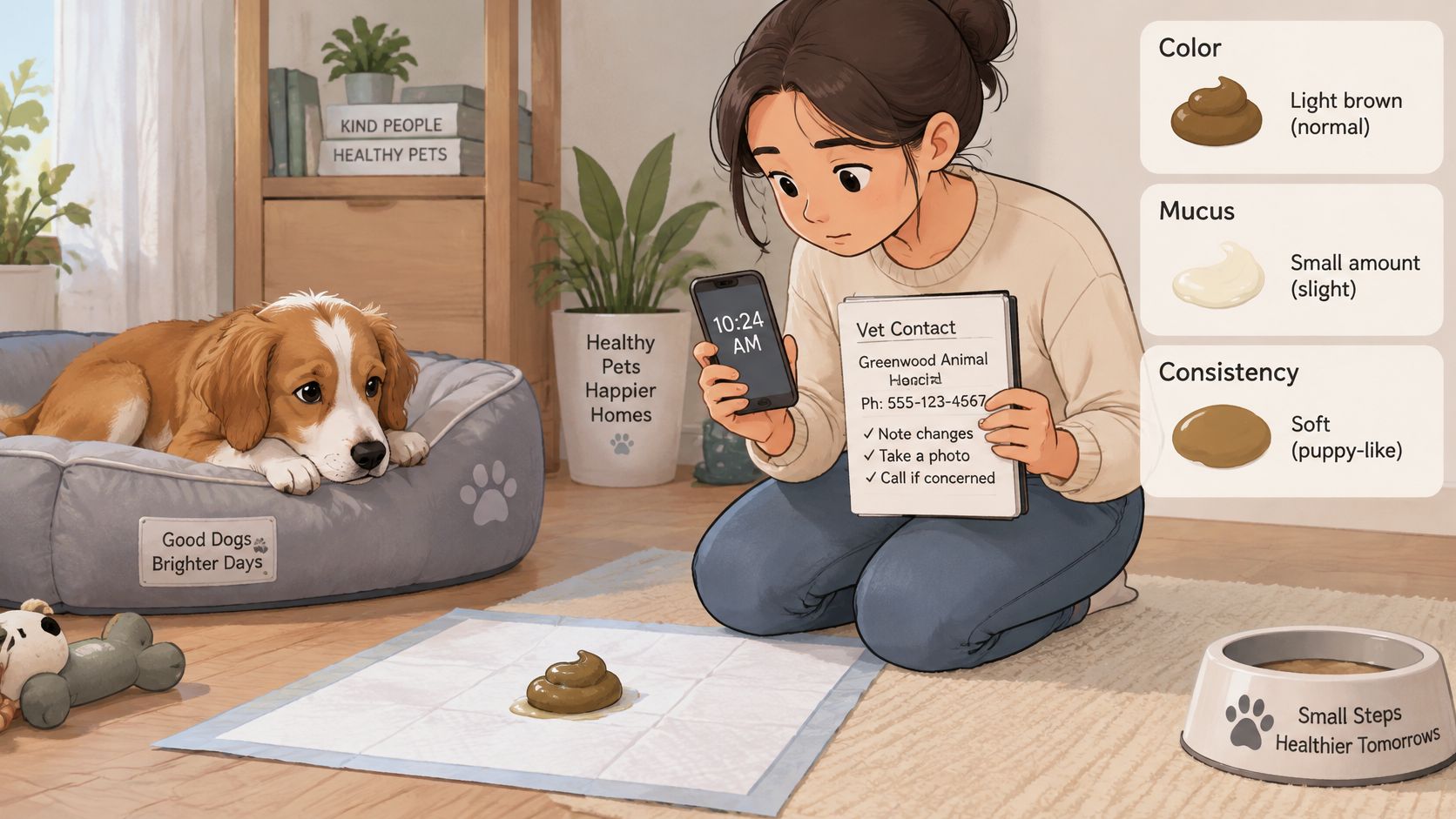
Record before changing anything
- Photograph the stool. Capture the overall shape and the mucus coating in natural light. Note whether blood is mixed through the stool or appears as a surface streak.
- Write down recent exposures. Include food changes, treats, chews, supplements, medications, scavenging, grass eating, boarding, travel, and contact with other dogs.
- Collect a fresh sample. Use a clean, leakproof container and avoid soil, litter, or puddle water. Label it with the collection time, refrigerate it rather than freezing it, and ask the clinic how promptly they want it delivered.
- Simplify feeding. Pause nonessential treats and unfamiliar foods. Keep fresh water available, and ask the vet whether to continue the usual meals or use a temporary diet.
- Avoid unapproved medicines. Don't give loperamide, bismuth products, leftover antibiotics, or another pet's medication unless your vet specifically approves them.
Don't fast a puppy, a very small dog, or a dog with a metabolic condition without veterinary advice. If your dog won't eat voluntarily, that's information the clinic needs, not a reason to keep extending home care.
Update your log after bowel movements and whenever behaviour changes. Record appetite, drinking, urination, vomiting, energy, stool frequency, and whether your dog seems uncomfortable.
Call promptly for these warning signs
- Bleeding or black stool. Fresh blood warrants advice, particularly when repeated or substantial. Black, sticky, tarry stool can represent digested blood and needs urgent assessment.
- Repeated vomiting or inability to retain water. Fluid loss can become more important than the stool's appearance.
- Weakness or marked lethargy. A dog that's difficult to rouse, collapses, or seems severely weak needs emergency care.
- Pain or persistent straining. A hunched posture, tense abdomen, crying, or repeated unsuccessful attempts to pass stool shouldn't be watched indefinitely.
- Possible dehydration. Tacky gums, reduced urination, or skin that returns slowly after gentle lifting are reasons to contact the clinic. Home checks can miss dehydration.
- Higher-risk circumstances. Puppies, frail seniors, and dogs with immune, kidney, endocrine, or other significant conditions need a lower threshold for assessment.
Suspected poison or foreign-object ingestion calls for immediate veterinary advice, even before symptoms develop. Don't induce vomiting unless a veterinary professional instructs you to.
Don't wait for every warning sign to appear. A concerning change in how your dog feels matters more than a reassuring explanation for the green colour.
For a visual companion to stool monitoring, the following video may be useful.
Bring the sample, photos, log, and medication list to the appointment. If stool shifts toward yellow, describe that change rather than treating it as a separate diagnosis; yellowish diarrhoea in dogs can also have overlapping causes.
If your dog stays well and subsequent stools return to normal, continue observing. If mucus returns, persists, or worsens, arrange an examination rather than repeatedly restarting the monitoring period.
Diagnostic Tests Vets Use and Why One Result Isn't Final
A stool test examines a sample, not every bowel movement your dog has produced. Parasites may shed intermittently, and different methods detect different parts of an organism. That's why a negative result may lead to another sample or a complementary test.
The vet also considers age, exposure, examination findings, and the pattern of illness. In a study of Giardia infection in dogs, infection was detected in 18.2% of dogs aged 1–12 months, compared with 3.8% of dogs older than 12 months. Those are observed rates in the study population, not a prediction for every puppy or adult dog.
Some infected dogs had no visible stool changes. A photograph can help describe symptoms, but it can't establish whether Giardia is present.
From stool examination to targeted testing
Vets often begin with fecal testing and then add investigations that answer specific unresolved questions. A dog with weight loss and recurring symptoms needs a different approach from a bright dog whose abnormal stool has already cleared.
The diagnostic sequence isn't a requirement that every dog undergo every test.
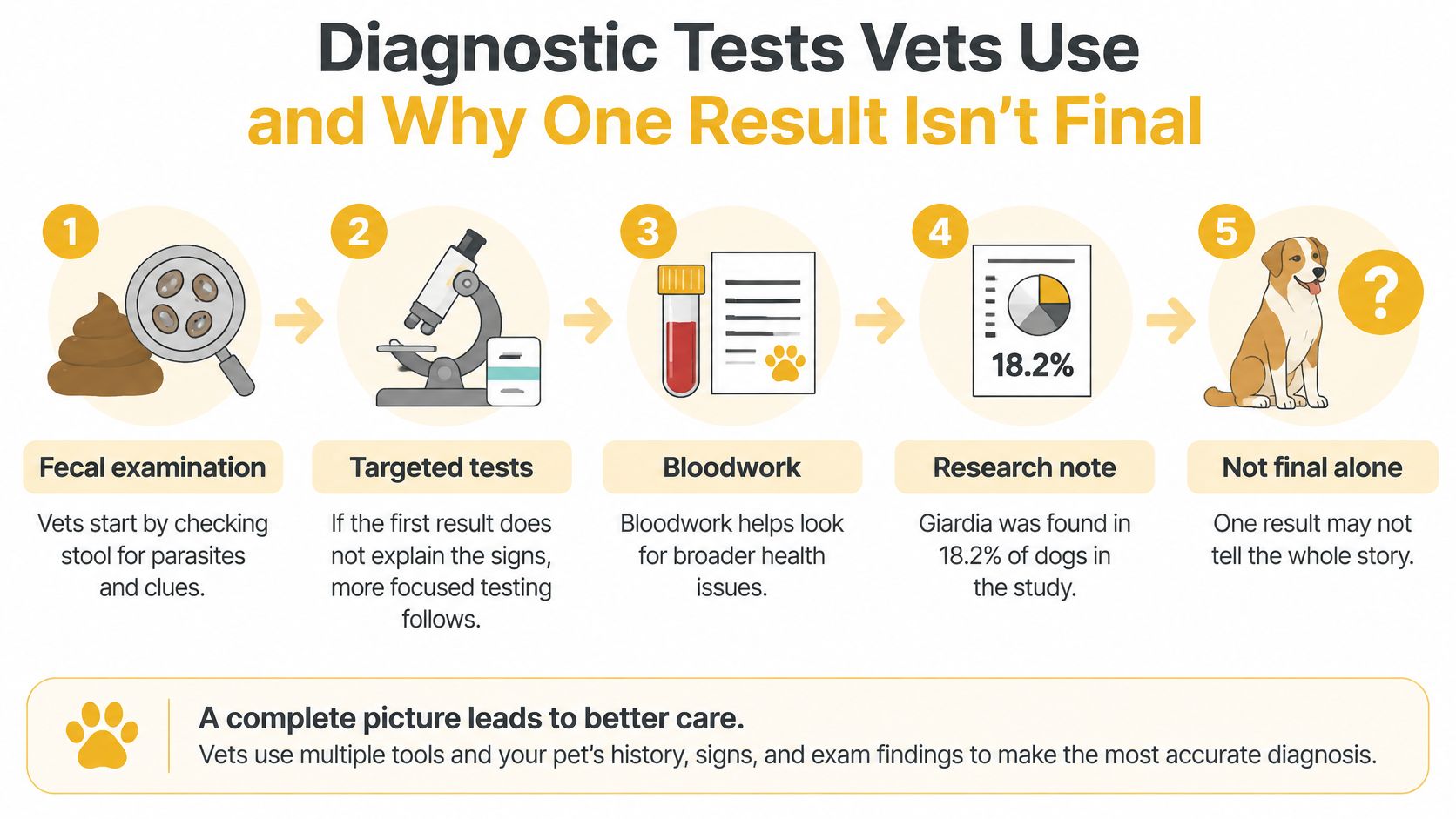
Diagnostic tests and when vets use them
| Test | What it detects | When vets order it |
|---|---|---|
| Fecal flotation | Parasite eggs and some cysts | Common first-line investigation for mucus and loose stool |
| Zinc-sulphate centrifugation | Concentrates Giardia cysts and other parasite stages | When Giardia is suspected or initial testing is unrevealing |
| Direct fecal smear | Motile organisms and cells in fresh stool | Selected acute cases; a negative smear doesn't exclude infection |
| Giardia antigen test | Giardia proteins in stool | Suspected giardiasis, often alongside microscopy |
| PCR panel | Genetic material from selected infectious organisms | Recurrent, severe, outbreak-associated or unexplained cases |
| Complete blood count and chemistry | Anaemia, inflammatory changes, electrolyte and organ abnormalities | Dehydration, systemic illness, weight loss or persistent symptoms |
| Fecal calprotectin | A marker of intestinal inflammation | Selected suspected inflammatory intestinal disorders |
| C-reactive protein | A nonspecific marker of inflammation | Selected chronic or severe cases |
| Imaging and endoscopic biopsy | Structural abnormalities and tissue changes | Suspected obstruction or chronic, severe, treatment-resistant disease |
Zinc-sulphate centrifugation is itself a flotation technique, not an entirely separate category. Its usefulness depends on sample quality and laboratory technique. Likewise, direct smears need suitably fresh material and can miss organisms.
What results can and can't establish
A positive PCR result doesn't automatically prove that the detected organism caused the symptoms. Blood inflammatory markers also don't identify a particular bowel disease by themselves.
Specialised markers such as calprotectin and C-reactive protein may help in selected cases, as discussed in The Vet Desk's guide to mucus in dog stool. They aren't routine substitutes for history, examination, or appropriate parasite testing.
Watchful waiting may be reasonable when signs have resolved and the examination is reassuring. Repeat sampling makes sense when suspicion remains despite a negative result. Persistent illness, weight loss, pain, or abnormal bloodwork can justify imaging, biopsy, or referral rather than another supplement trial.
Treatment Options Matched to the Underlying Cause
Treatment should address why the bowel is irritated, not just make the mucus less visible. The Merck Veterinary Manual's colitis reference describes inflammation with several possible triggers, which is why similar-looking stools can require different care.
A diet-related episode may improve with a stable feeding plan. Parasites require an appropriate antiparasitic, while a swallowed object may need removal. Treating all of these with the same remedy risks delaying useful care.
Match the plan to the diagnosis
Treatment direction by underlying cause
| Underlying cause | Usual treatment direction | Key point for owners |
|---|---|---|
| Dietary indiscretion or food change | Controlled feeding plan, gradual transition, or a structured elimination trial | A true elimination trial needs veterinary planning, not casual ingredient swapping |
| Giardia | Prescribed antiparasitic; follow-up testing when indicated | Remove stool promptly and follow cleaning instructions to reduce reinfection |
| Other intestinal parasites | Parasite-specific dewormer | The vet selects the drug and dose for the dog and organism |
| Confirmed bacterial infection | Antibiotics only when clinically indicated | A positive result doesn't always mean antibiotics are necessary |
| Stress-associated colitis | Temporary digestible diet, sometimes with added fibre | Ongoing or recurring symptoms need reassessment |
| Inflammatory bowel disease | Diet trials and, when indicated, immunosuppressive treatment | Long-term management may require specialist supervision |
| Foreign material or toxin | Removal or toxin-specific care, supportive treatment, sometimes surgery | Don't wait to see whether a dangerous exposure resolves |
For diet trials, consistency matters. Flavoured chews, table scraps, and treats can interfere with interpretation, so ask what's permitted. A homemade bland meal may be useful temporarily in selected dogs, but it isn't automatically nutritionally complete.
Medication choices depend on body weight, age, health conditions, and drug interactions. Never copy another dog's dose or assume a human medicine is suitable.
During treatment: Report what changed, including stool frequency, urgency, appetite, vomiting, and comfort. Better colour alone isn't enough to judge recovery.
Probiotics may be an adjunct in an appropriate plan, but products and evidence differ. The guide to choosing a probiotic for dog diarrhoea can help you prepare questions for your vet, not replace the prescribed treatment.
Contact the clinic if improvement stalls, symptoms return, or medication seems to cause a new problem. Don't stop or extend prescribed treatment without discussing it.
Prevention, Diet and the Role of Supplements
A predictable feeding routine makes stool changes easier to interpret. Introduce new food gradually, keep meal times consistent, and avoid changing treats, chews, and supplements all at once.
Keep packaging or photograph ingredient lists when you introduce something new. Owners preparing homemade meals should ask a veterinary nutrition professional to check nutritional balance rather than assuming a general supplement completes the diet.
Keep the routine simple
- Reduce scavenging. Supervise access to rubbish, animal waste, unfamiliar plants, and treated lawns.
- Plan parasite screening. Ask your vet about testing based on age, adoption history, boarding, and shared dog spaces.
- Keep a feeding record. Note ingredients and stool responses, especially during a diet trial.
- Practise stool hygiene. Pick up promptly and wash hands thoroughly. Some Giardia types can infect people, although transmission from dogs isn't straightforward.
These everyday habits are more useful than trying to correct each unusual stool with another product.
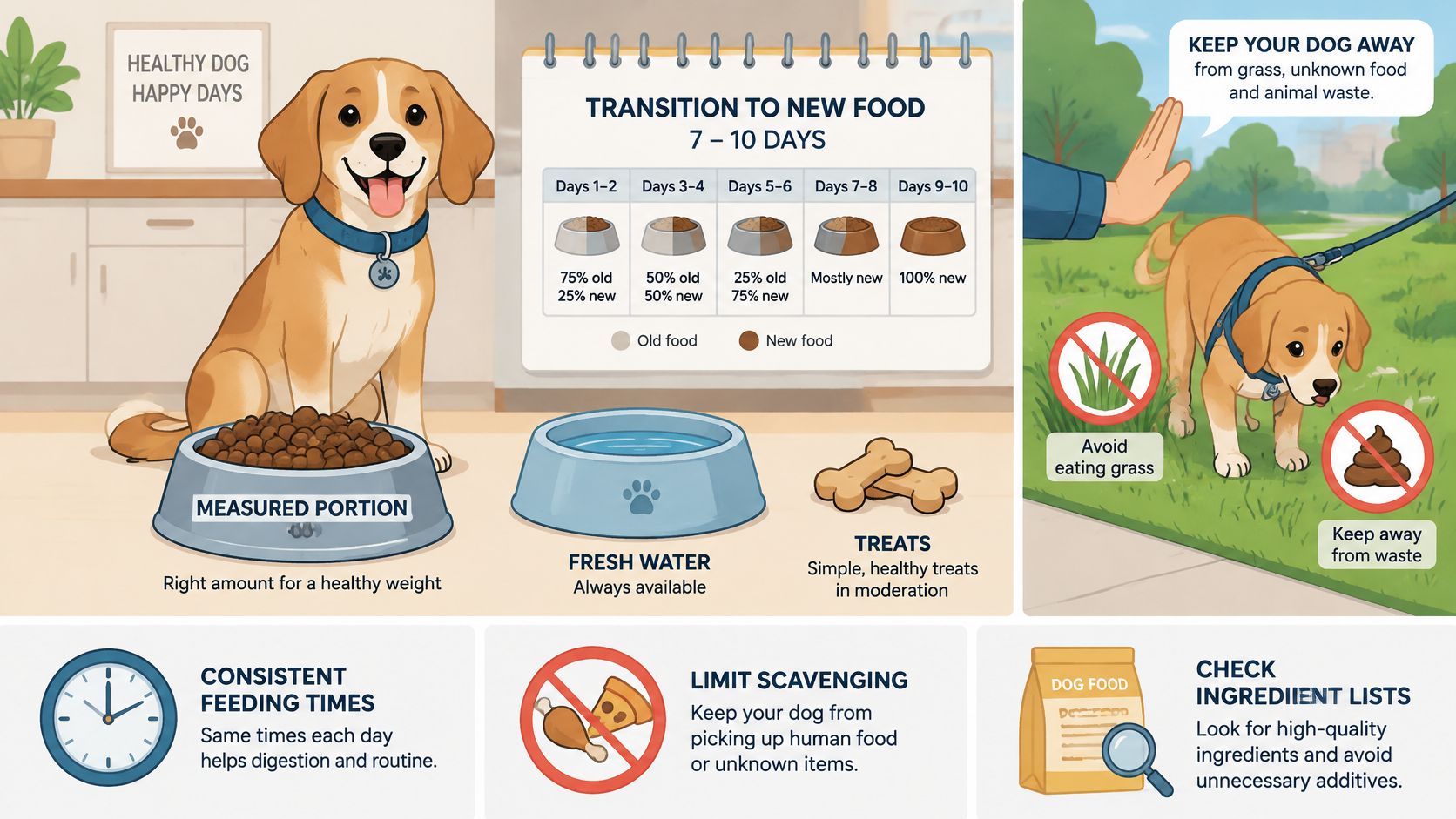
Fibre and probiotics can support selected dogs, but responses vary. Adding fibre abruptly can worsen gas or loose stool, and digestive-support products can complicate a food trial. This guide to food for dogs with sensitive stomachs offers context for discussing a consistent diet.
Among broader wellness options, DA-1™ Daily All-in-One - Senior Dog Support, Joints, Skin/Coat & More is a multi-system supplement formulated for aging dogs, with ingredients targeting cells, gut, and joints. It isn't a diagnostic test or a treatment for unexplained mucus.
Check with your vet before adding a supplement during an active stool problem. A stable routine and a clear diagnosis are more useful than a growing collection of products.
Pure Paw Labs offers dog nutrition guides and daily wellness supplements, including options with gut-support ingredients. Visit Pure Paw Labs to explore feeding guidance and supplement information you can discuss with your vet, while keeping persistent green mucus on the veterinary assessment list.