


You've seen two dogs both called a Corgi and Maltese mix, and they barely look related. One is sturdy and long with upright ears, the other is tiny with a silky fringe, and both owners swear their dog is typical. That confusion is normal, and it's the most useful starting point for care, because the individual dog in front of you matters more than the label.
Table of Contents
- What a Corgi and Maltese Mix Is
- Parent Traits and Expected Characteristics
- Size, Appearance, Temperament, and Exercise
- Health Risks and Veterinary Priorities
- Grooming, Exercise, and Training
- Nutrition and Supplement Decisions
- Adoption, Breeding, and Cost Expectations
- Final Care Checklist and Common Questions
What a Corgi and Maltese Mix Is
You're picturing daily life with a short-legged, long-coated dog who follows you to the kitchen, watches the door like a sentry, and then demands a lap. That picture might be accurate for one Corgi and Maltese mix and completely wrong for another, and neither outcome means someone misled you.
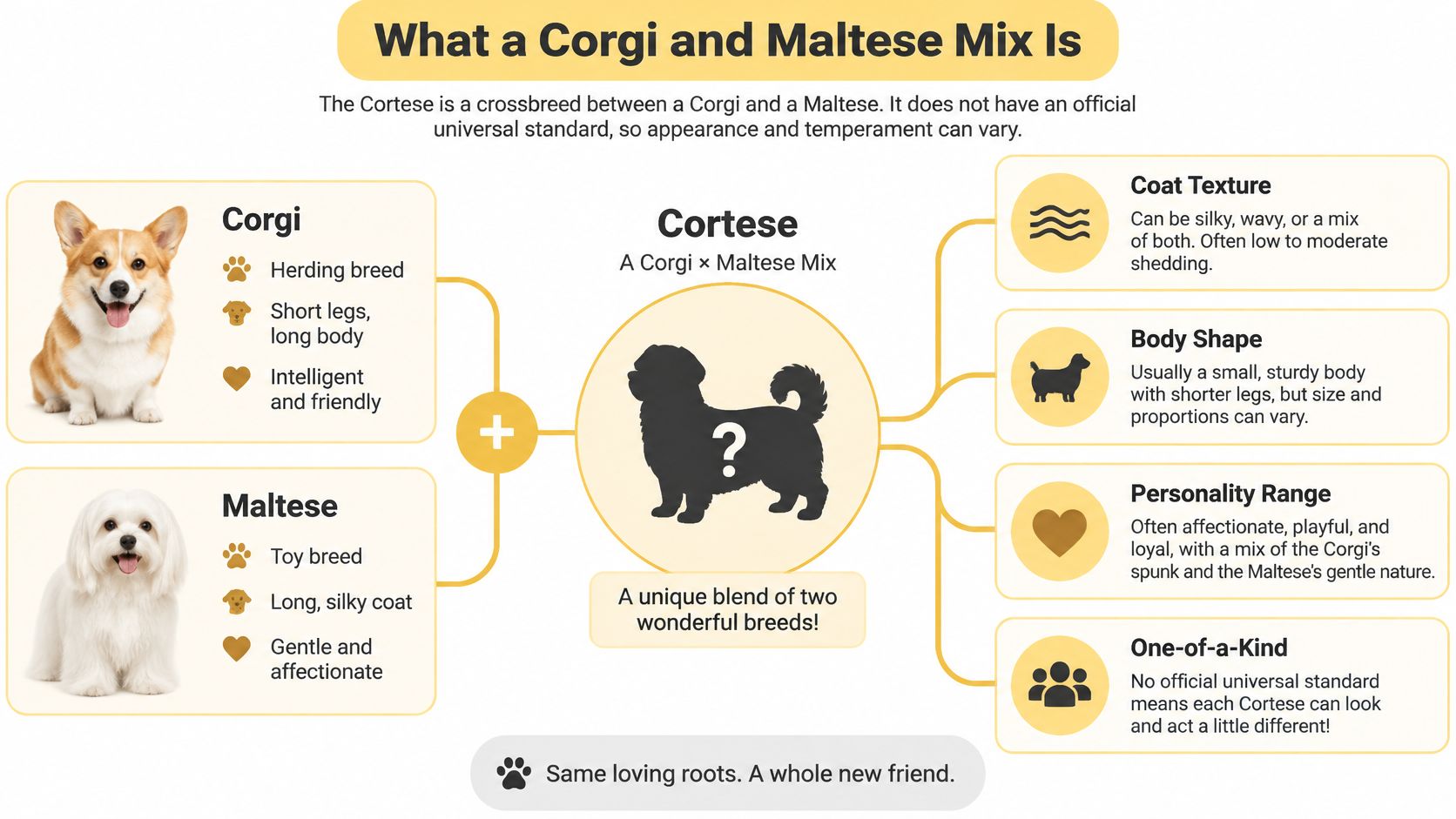
The mix, sometimes called a Cortese, is a crossbreed rather than a breed with a universally standardized registry or official breed standard, so adult size, proportions, coat, temperament, and health characteristics can vary substantially depending on which parent traits dominate, as explained in Britannica's history of the Maltese dog. There's no single blueprint a breeder can guarantee.
Two Dogs With the Same Label
Consider two puppies from different litters. One inherits a longer body, short legs, and a strong interest in chasing moving feet. The other stays small, grows a long single-feeling coat, and wants constant close contact.
Both are correctly described as the same mix. What differs is which combination of genes each puppy received, plus early socialization, diet, and household routine. That's why you'll get further by describing what you observe, such as body length, appetite, and reaction to strangers, than by asking what a Cortese is supposed to be like.
Practical rule: Treat the name as a family history, not a prediction. Measure, watch, and record the dog you actually have.
Why Origin Stories Need Caution
Claims that the mix was definitively created in a particular decade should be treated cautiously unless supported by documented breeding records. Crosses between popular companion and herding dogs can arise independently in many places, and a catchy name can appear long after the first litter.
That uncertainty doesn't make the dog less worthwhile. It means you shouldn't pay extra for a story about rarity or designer origins, and you shouldn't expect a standardized adult outcome. Ask instead about the specific parents, their sizes, their coats, and how the puppies are being raised.
A useful mental shift helps here. You're not choosing between a miniature Corgi and a larger Maltese. You're choosing an individual who may combine traits from both sides in proportions you can only confirm as the dog matures.
Parent Traits and Expected Characteristics
The parent breeds were shaped for opposite jobs. The Pembroke Welsh Corgi is a compact Welsh herding dog, while the Maltese is an ancient toy companion dog associated with Malta. One was expected to control livestock despite its low height, the other to live closely with people as a companion.
That history still shows up in living rooms. A mix puppy might circle children during play, bark at movement outside a window, and then settle against your side for the evening. Herding alertness and companion attachment aren't contradictory in this cross. They're both plausible inheritances.

What History Suggests Without Guaranteeing
The Maltese may have originated more than 2,500 years ago, and historical references include Aristotle's description of a small dog called Canis Melitae. The Pembroke Welsh Corgi was formally recognized as a separate breed by the UK Kennel Club in 1934, after Pembroke and Cardigan varieties had previously been shown together and were interbred for roughly a decade.
Those milestones explain depth of type on each side, not predictability in the middle. Long-established parent traits can still combine unevenly in one puppy. Coat is a good example. You might get longer, silkier hair that mats behind the ears, a denser coat that sheds more noticeably, or something between the two.
If you're comparing crosses while researching, reading about a Corgi Papillon mix and its parent trait combinations can help you practice the same skill, separating what comes from each parent from what you see in an individual puppy.
Traits to Observe Instead of Assume
- Body shape: Look at leg length compared with back length, chest depth, and bone thickness, not just overall weight.
- Food motivation: Notice whether the puppy finishes meals calmly or hunts constantly for scraps, because that affects training and weight control.
- Reaction to movement: Watch for chasing, circling, or nipping at heels during play, which can reflect herding tendencies.
- Handling tolerance: See how the puppy responds to gentle paw, ear, and mouth handling, since grooming and dental care will be frequent.
- Sociability: Note whether the puppy approaches strangers readily or hangs back, then ask how socialization has been structured.
Genetics sets tendencies, not finished behavior. Early experiences, consistent training, sleep, exercise, and household predictability shape how those tendencies appear at home. A watchful puppy raised with calm exposure to visitors usually learns a different routine than a watchful puppy who practices barking at every sound without guidance.
Size, Appearance, Temperament, and Exercise
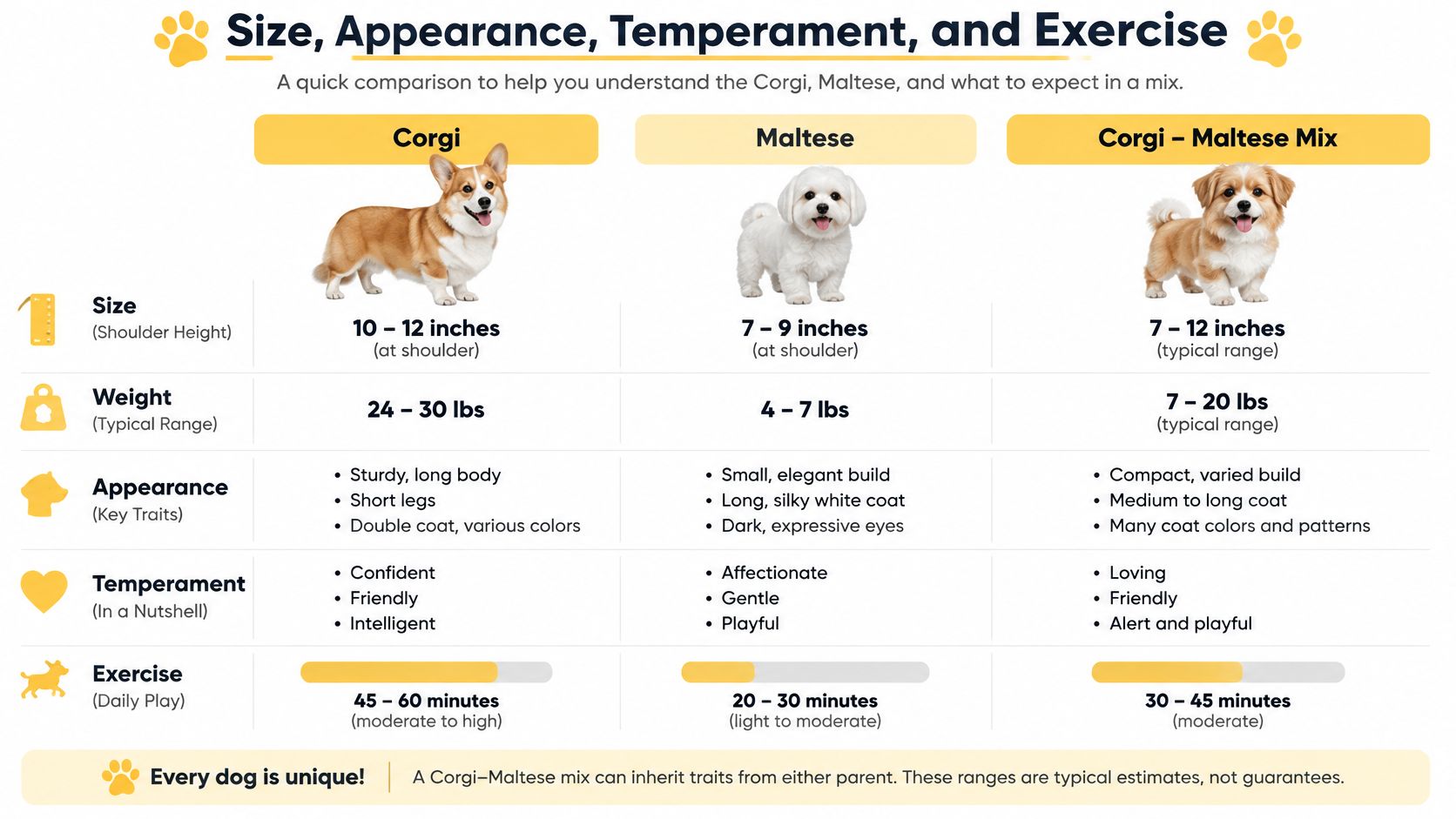
Parent measurements give you a defensible range, not a promised adult size. The Pembroke Welsh Corgi typically measures about 10 to 12 inches (25 to 30 cm) at the shoulder, with preferred adult weights of approximately 27 pounds for males and 25 pounds for females, according to Canadian Kennel Club guidance on the Welsh Corgi Pembroke.
By comparison, the Maltese generally stands about 7 to 9 inches (18 to 23 cm) tall, weighs under 7 pounds (3 kg), and has a reported lifespan of 12 to 15 years. Another veterinary reference lists the Maltese at 9 to 10 inches and 4 to 6 pounds, with a lifespan of 12 to 14 years. Those parent figures come from the same source context cited above, and the gap between them is the point.
Reading an Individual Puppy's Growth
A mix could land closer to either parent, and siblings may differ. Parent size and the individual dog's growth pattern matter more than a simple breed-name average, so ask to see both parents when possible and track weight and body condition as your puppy grows.
Lifespan estimates for the mix should also be presented as an informed range rather than a fixed statistic, because reliable population-level longevity data specifically for this cross aren't established. Don't let a seller present a precise lifespan as a fact. Weight control, dental care, and veterinary screening will influence quality of life more than a slogan about hybrid vigor.
Temperament in Daily Terms
Expect a possible blend of watchful, herding-oriented behavior and sociable, companion-focused attachment. One dog might patrol the hallway and alert bark, then insist on sleeping pressed against you. Another might be quieter indoors but persistent about food and games.
Movement That Fits the Build
Build exercise around controlled, repeatable activity rather than repeated impact:
- Leash walks on even ground: Increase distance gradually as age and fitness allow, and stop before your dog is exhausted.
- Sniffing and problem solving: Scatter part of a measured meal in grass or use a food puzzle to work the brain without jumping.
- Ramps and non-slip surfaces: Use them for sofas, beds, and cars if your dog has a long back and short legs.
- Controlled play: Favor gentle tug and short retrieves on soft ground over repeated leaps for a high toy.
You're not trying to wrap the dog in cotton wool. You're choosing activity that builds muscle and confidence while limiting uncontrolled stair sprints and furniture launches.
Health Risks and Veterinary Priorities
A Corgi and Maltese mix can inherit a long-backed, short-legged structure, a small mouth, and a strong appetite at the same time. That combination, not any single condition, should organize your veterinary plan. Think in terms of predispositions to monitor, not diagnoses your dog automatically has.
The Spine Comes First When the Back Is Long
In canine genetics, the CFA12 FGF4 retrogene is associated with disproportionate limb shortening and altered intervertebral discs, and Type I intervertebral disc disease occurs in chondrodystrophic breeds including Pembroke Welsh Corgis, as described in OMIA's entry on chondrodystrophy and disc disease risk. A large conformation study found relatively longer backs, smaller skeletal size, and overweight status were associated with higher risk of thoracolumbar intervertebral disc extrusion. In one modeled example from that same source context, risk probability increased from 0.30 to 0.68 as the body-length-to-height ratio rose from 1.1 to 1.5.
That doesn't mean a long-backed puppy will develop disc disease. It means leanness and environment are medical decisions, not cosmetic ones. Keep your dog lean using regular body-condition scoring, minimize repeated jumping, use ramps where feasible, and favor controlled walks plus low-impact conditioning.
Sudden back pain, reluctance to move, a hunched posture, wobbling, limb weakness, or urinary changes require urgent veterinary assessment because neurological deterioration can progress quickly.
Teeth and Weight Work Together
Small-dog ancestry may increase crowding and plaque retention, while a heavier, food-motivated build makes excess weight easier to gain. Breed-specific summaries identify dental disease, allergies, patellar luxation, hip dysplasia, and eye disorders among conditions reported in Corgi-Maltese crosses, as listed in Dogbible's overview of the Corgi-Maltese mix. Those are predispositions rather than diagnoses.
Don't use breath odor as your screening tool, because visible tartar can underestimate disease below the gumline. Daily tooth brushing with veterinary dental products is preferable, and you should track weight and body condition at least monthly. If mobility changes appear, guidance on recognizing dog mobility issues can help you describe what you're seeing before an appointment.
Health Risks and Care Priorities
| Area of Concern | Routine Prevention | Discuss or Assess Promptly |
|---|---|---|
| Spine and mobility | Keep lean, use ramps, controlled walks | Back pain, wobbling, weakness, urinary changes |
| Teeth and gums | Daily brushing, veterinary oral exams | Bleeding gums, loose teeth, chewing reluctance, facial swelling |
| Weight | Monthly weighing, measured meals and treats | Steady gain, loss of waist, reduced stamina |
| Knees, hips, and eyes | Routine veterinary screening, watch gait and vision | Limping, skipping steps, bumping into objects, eye discharge |
| Skin and digestion | Note itching, stool, and food changes in a simple log | Persistent scratching, vomiting, diarrhea, or appetite loss |
A supplement isn't a substitute for weight control, environmental changes, a neurological examination, or imaging when signs appear. If you're unsure whether a sign is urgent, call your veterinary clinic and describe timing, severity, and what changed from normal.
Grooming, Exercise, and Training
Start with the coat your dog grows, not the coat in a listing photo. Run your fingers behind the ears, under the collar, in the armpits, and along the belly. Those friction points tell you where mats will form first and how often you'll need to brush.
A Grooming Routine You Can Keep
Short, frequent sessions beat occasional wrestling matches. Pair handling with tiny measured rewards, stop before your dog struggles, and build duration gradually. Check ears for odor or debris, trim nails before they click loudly on hard floors, and inspect paws after walks for trapped grit or matted hair between pads.
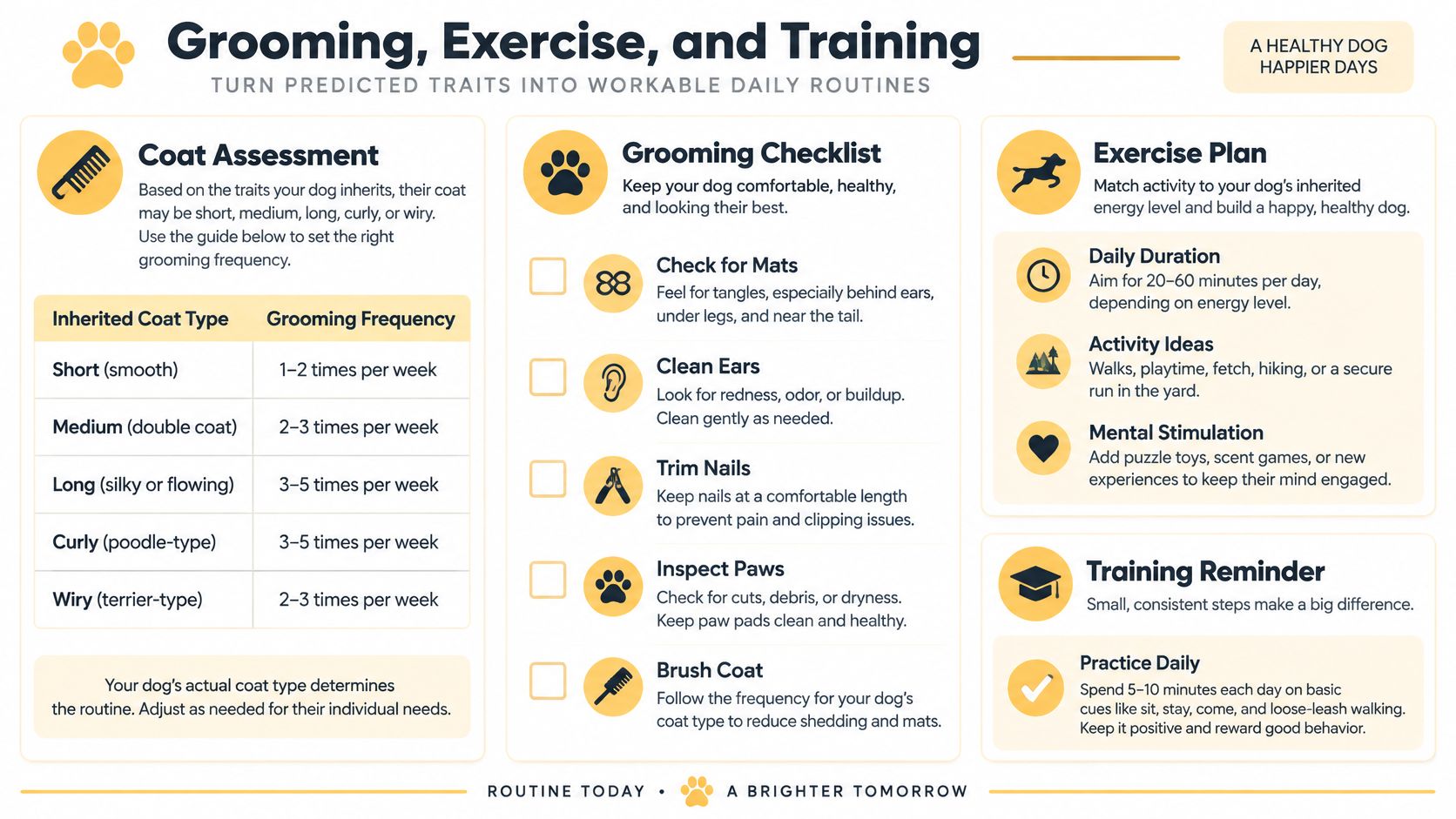
If hair grows long and silky, daily detangling may prevent painful mats. If the coat is denser, you may brush less often but remove more loose hair. Either way, skin changes matter. Persistent itching, flaking, or odor deserves veterinary input, and background on dog skin and coat care can help you separate routine grooming from signs that need examination.
Support the chest and rear together when lifting a long-backed dog. Don't lift by the front legs or let the rear dangle. Teach children the same two-hand support before they handle the dog on a sofa or bed.
Training With Food Without Overfeeding
Food motivation is useful, but every reward counts. Set aside part of the measured daily ration for training, or use pea-sized treats and reduce the next meal slightly after a heavy session. That simple accounting prevents a common pattern where a well-trained dog slowly gains weight.
- Alert barking: Reward a look toward you after a sound, then give a known cue such as settling on a mat.
- Heel nipping during play: Stop movement, redirect to a toy, and resume only when teeth stay on the toy.
- House training: Use frequent outdoor trips after sleep, meals, and play, especially for a small puppy with a small bladder.
- Cooperative care: Practice chin rests and paw handling at home so grooming and veterinary visits feel familiar.
If you use a professional walker on workdays, ask how they manage group size, ramp or stair use, and what happens after an incident. Understanding coverage for dog walking businesses helps you ask informed questions about responsibility, rather than assuming every service operates the same way.
Keep sessions brief and end with success. A small but sturdy dog can still become overtired, frustrated, or sore, and behavior that looks stubborn often means the task, environment, or timing needs adjustment.
Nutrition and Supplement Decisions
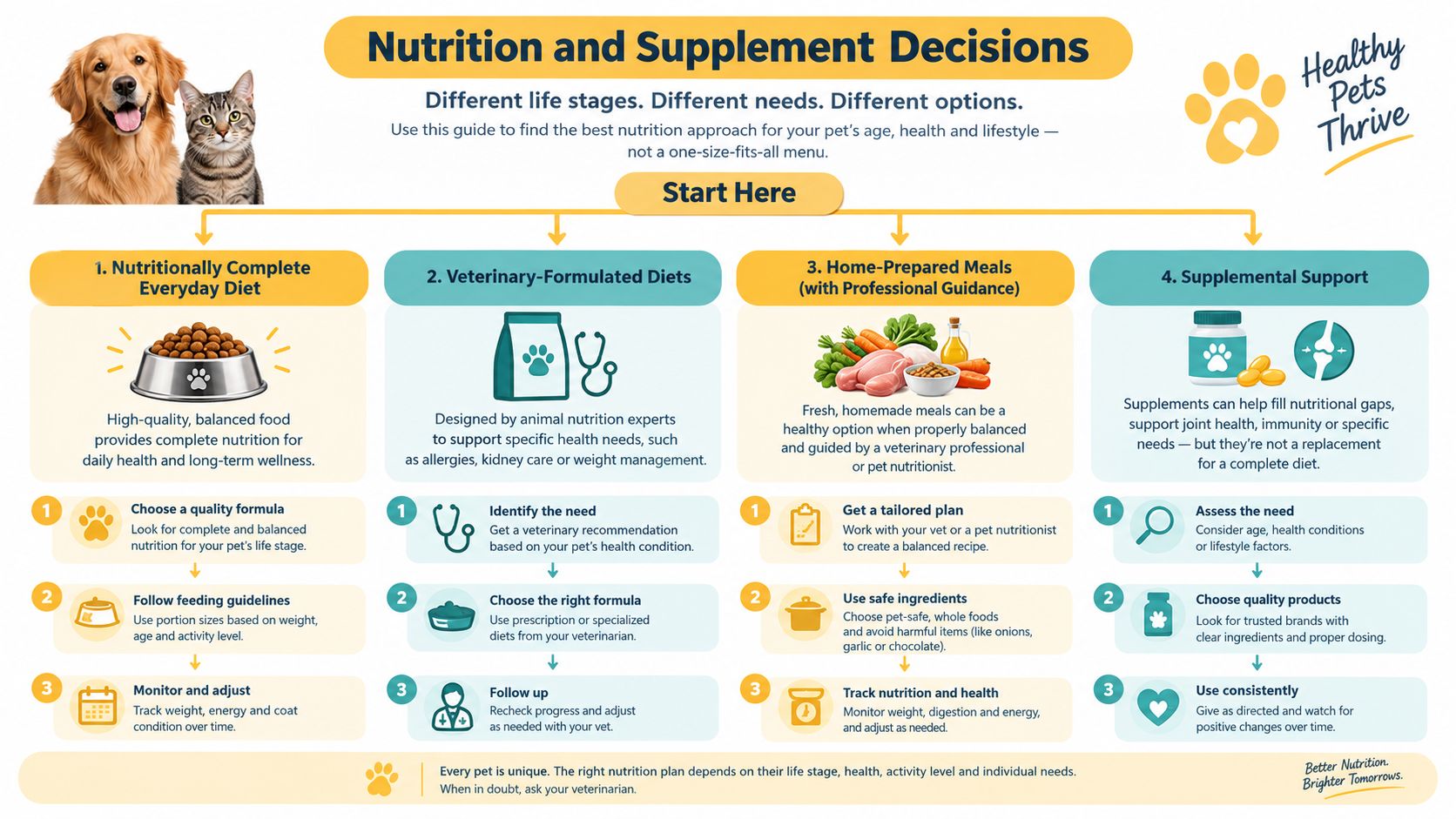
Feeding a small, food-motivated, long-backed dog is mainly a measurement problem. Seemingly tiny additions can add meaningful calories to a compact body, and excess weight compounds stress on the spine, knees, and hips. Your first job is a complete diet in the right amount. Supplements come second.
Existing coverage generally says only to provide a balanced diet matched to age, size, and activity level, without addressing calorie density, treat accounting, homemade-food safety, or when supplementation is inappropriate, a gap noted in Canine Journal's review of the Corgi-Maltese mix. Recent U.S. industry reporting cited there says dog owners are increasingly blending basic food with selective toppers as veterinary costs rise, while dog supplement sales were reported to have increased 9.2% in 2025. Popularity alone doesn't tell you whether a product fits your dog.
Decide by Situation, Not by Trend
Nutrition and Supplement Decision Guide
| Situation | Primary Consideration | Where Supplements Fit |
|---|---|---|
| Puppy growth | Complete growth diet, steady body condition, veterinary growth checks | Only with veterinary advice, avoid stacking products |
| Healthy adult maintenance | Measured calories, treat accounting, dental routine | Optional routine wellness support for a defined goal |
| Home-prepared meals | Recipe must be complete and balanced by a veterinary nutrition professional | A general product can't reliably correct unmeasured nutrient gaps |
| Senior mobility changes | Veterinary examination, pain assessment, weight and muscle checks | May support a broader plan, never replaces diagnosis |
| Dental, skin, gut, or allergy signs | Diagnostic workup and targeted treatment first | Add only if your veterinarian sees a clear role |
For home-prepared diets, nutritional completeness should be verified professionally, since a general wellness supplement can't reliably correct unmeasured calcium, trace-mineral, essential-fatty-acid, or vitamin imbalances. If you're researching specific nutrients, an overview of omega-3 for dogs is a useful starting point for questions to bring to your veterinarian about purpose, dose, and interactions.
Human snack trends can create confusion at home, too. A family member reading a guide to Japanese seaweed snacks might wonder whether shared snacks make suitable dog treats. Keep human foods out of the training pouch unless your veterinarian confirms safety and you count the calories.
Where a Daily All-in-One Fits
An example of a once-daily, multi-category powdered option is DA-1™ Daily All-in-One - Senior Dog Support, Joints, Skin/Coat & More. It's described as delivering 18 human-grade ingredients targeting cells, gut, and joints, with no fillers and a 60-day money-back guarantee. That describes the product format, not a promise for your individual dog.
Before you add anything: Write down the goal, the start date, and how you'll measure change, such as weight, stool quality, itching, or willingness to walk. If nothing measurable changes, reassess with your veterinarian.
Avoid overlapping several products with similar ingredients, and disclose everything you give at veterinary visits. A clinical diet, calorie reduction, dental treatment, or diagnostic workup is sometimes the higher-value intervention, even if a supplement is easier to buy.
Adoption, Breeding, and Cost Expectations
No source guarantees a healthy dog. Adoption, shelter placement, and breeder sourcing differ in what you can know beforehand, how much choice you have, and what support you receive afterward. Your task is to reduce uncertainty with records and direct observation.
Questions That Reveal More Than a Listing
Ask any breeder or rescue contact the same core questions:
- Parents and history: What are the parents' sizes, temperaments, and known dental, eye, knee, hip, and back histories?
- Health records: Which vaccinations, parasite treatments, examinations, and health tests are documented, and what are the limits of those tests?
- Rearing conditions: Where do puppies spend their days, what people and sounds do they meet, and how are they weaned and socialized?
- Placement terms: Is there a return policy if the placement fails, and what support is offered after you take the dog home?
- Individual assessment: Can you meet the dog, handle the dog gently, and watch movement on a non-slip surface?
Genetic testing can be useful, but it doesn't examine teeth, knees, behavior, or current body condition. A test panel also can't promise a coat type or adult temperament. Treat it as one record among several.
Marketing Claims to Slow Down For
Be cautious with rare, teacup, guaranteed-pattern, or unverified ancestry claims. Those words often raise price without improving predictability. A seller who guarantees a precise adult weight or a hypoallergenic coat for this cross is promising more certainty than the biology allows.
Budgeting Without Invented Prices
Costs vary by location, size, health, coat, and source, so build your budget by category rather than copying a single estimate. Plan for food, grooming, routine veterinary care, dental assessment, training support, ramps or gates, and a contingency fund for illness or injury.
A smaller dog may eat less, but grooming, dental work, and back-related care can still be significant. The honest question isn't whether this mix is cheap or expensive in general. It's whether your household can fund routine prevention and still respond quickly if a serious problem appears.
Final Care Checklist and Common Questions
Use this sequence when advice starts to feel scattered. Confirm the diet is complete, measure body condition, protect the back and joints, maintain dental care, groom for the actual coat, train consistently, and schedule veterinary reviews. That order keeps you focused on interventions with daily impact.
- Weekly: Brush and check mats, ears, nails, and paws, and practice brief cooperative handling.
- Daily: Brush teeth, measure food and training rewards, and provide controlled exercise and enrichment.
- Monthly: Weigh your dog, score body condition, and review appetite, stool, itching, gait, and energy notes.
- At veterinary visits: Bring your log, list every supplement, and ask about teeth, weight, spine, knees, hips, and eyes.
New owners often benefit from structured reassurance during the first year, and heartfelt dog books for new owners can complement the practical routines above. Pair that reading with a preventive care schedule for dogs so emotional preparation and medical planning move together.
Questions Owners Hesitate to Ask
Is a Cortese difficult to train? Not automatically. Food motivation can make rewards effective, while alertness and herding tendencies need early redirection. Short sessions, consistent cues, and enough sleep usually matter more than labels like stubborn.
Does a long coat mean heavy shedding? No. Length and shedding are different traits, and this mix may inherit either parent's coat behavior. Judge by what collects in the brush and whether loose hair or mats are your main problem.
Does a smaller body mean lower care needs? No. A small, long-backed dog can need daily dental care, frequent grooming, ramps, careful lifting, and strict portion control. Size reduces food volume, not responsibility.
Can I skip veterinary screening if my dog seems active? You shouldn't. Dental disease below the gumline, early weight gain, and subtle gait changes are easy to miss at home. Routine examinations give you a baseline while your dog still feels well.
If you're building a simpler daily routine for your Corgi and Maltese mix, Pure Paw Labs offers science-backed, human-grade supplements designed to support joints, skin and coat, digestion, immunity, and stress in one daily scoop. Visit Pure Paw Labs to review the formulation and discuss with your veterinarian whether it fits your dog's measured goals and current diet.