


Long-haired Chihuahuas do shed, but how much varies with the individual dog's coat, season, age, health, and environment. Routine loose hair is normal; sudden hair loss or irritated skin isn't.
If you've found long hairs on a sweater or couch, you may wonder whether your Chihuahua is shedding more than expected. A useful answer starts by separating how much hair a dog loses from how noticeable that hair is around the home. Coat length affects visibility and tangling, but it doesn't make a Chihuahua shed-free.
Table of Contents
- What Long-Haired Chihuahua Shedding Looks Like
- Why Long-Haired Chihuahuas Shed
- How Their Shedding Compares With Short-Haired Chihuahuas
- When Shedding May Signal a Health Problem
- Grooming Techniques for Loose Hair and Tangles
- Nutrition and Skin and Coat Support
- Build a Long-Term Shedding Management Plan
What Long-Haired Chihuahua Shedding Looks Like
A few strands on a favorite sweater, fur on the couch cushion, or hairs gathered near the dog's bed are familiar signs of life with a long-haired Chihuahua. You might also spot loose hairs on a car seat after a ride. These everyday traces don't automatically mean anything is wrong: long-haired Chihuahuas shed, and loose hair is part of normal coat renewal.
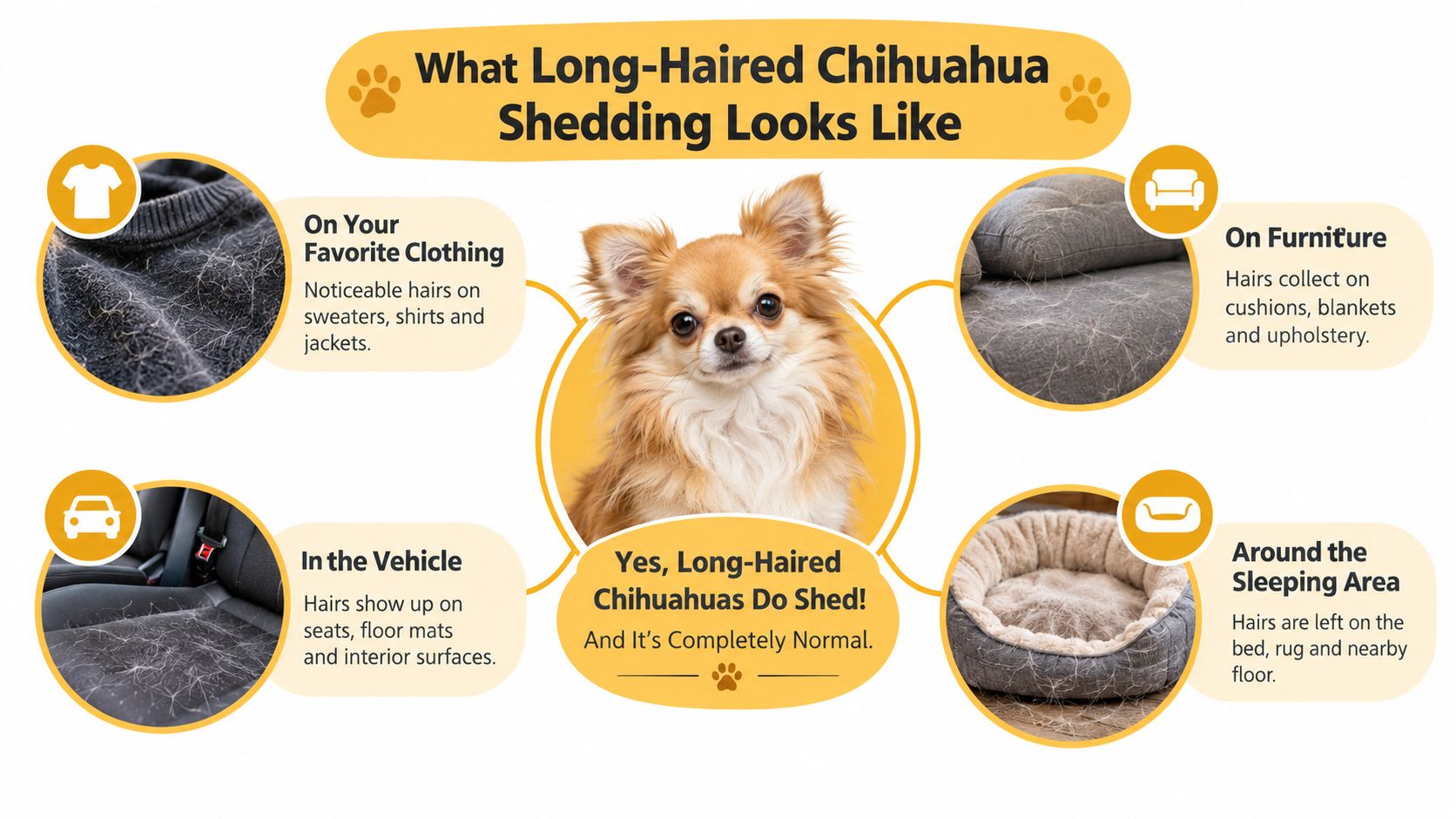
Long hair can make shed fibers easier to notice on fabric and upholstery. A short hair may be harder to see, while a longer strand can stand out against dark clothing or collect in a visible tuft. That difference in cleanup doesn't tell you by itself how much hair the dog has lost.
Shedding varies by coat type, season, age, health, and environment, and it doesn't happen only in one annual burst. A long-haired Chihuahua may leave some hair around the home throughout the year, with periods when shedding seems more noticeable. Individual coat density and hair-cycle behavior also matter, so comparing your dog with another Chihuahua can be misleading. Canine shedding varies between individuals and follows a normal hair-follicle cycle.
Look at the pattern, not a single loose hair
Gradual, fairly even hair release is different from sudden, localized loss. If your dog's coat looks broadly consistent and the skin appears comfortable, ordinary loose hair is more likely than an urgent grooming problem. By contrast, bald patches or inflamed, itchy skin call for veterinary advice.
A practical question isn't “Is my Chihuahua shed-free?” It's “Is this dog's shedding gradual and ordinary, or has something changed?” The answer guides what to do next, from brushing and home cleanup to a veterinary check.
Why Long-Haired Chihuahuas Shed
A Chihuahua's coat isn't a fixed covering. Each hair follicle moves through a repeating cycle: growth, transition, rest, and release. Veterinary terminology calls these stages anagen, catagen, telogen, and exogen. In plain language, follicles grow new hairs, pause, rest, and eventually release older hairs.
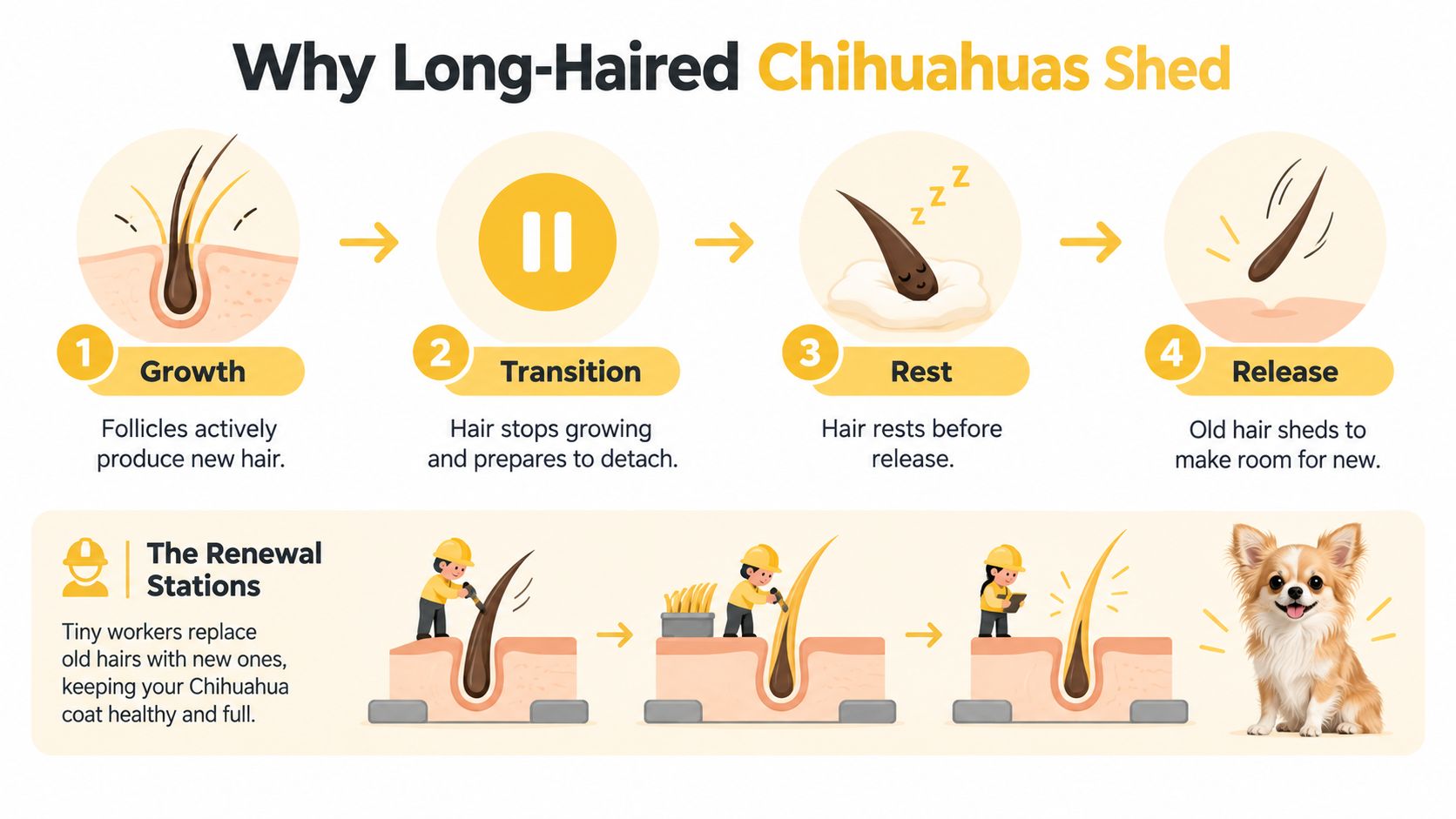
Think of the follicles as many small renewal stations working at once. Some are producing hair while neighboring follicles are resting or releasing it. Because the follicles aren't all on the same schedule, a dog can shed loose hair throughout the year rather than losing the whole coat in one obvious event. This overlapping activity is sometimes described as a mosaic pattern. The canine hair cycle and its overlapping phases help explain year-round shedding.
What influences the cycle
The timing and amount of shedding can respond to the dog's biology and surroundings. Season, daylight, temperature, indoor lighting, age, hormones, health, and nutrition may all influence coat renewal. Some dogs seem to shed more as the seasons change, while a dog that spends much of its time indoors may have a less distinct seasonal pattern.
Coat length alone doesn't predict the amount. Two long-haired Chihuahuas can look similar but differ in undercoat density and the way their hair cycles. One may leave relatively little loose hair, while another's coat needs more frequent attention. That variation is a reason to observe your own dog rather than rely on a single rule for the breed.
Brushing fits into this process, but it doesn't control the follicles. It collects loose hairs before they spread and helps prevent tangles in the longer coat. It manages the evidence of shedding, not the biological cycle itself.
How Their Shedding Compares With Short-Haired Chihuahuas
A long-haired Chihuahua doesn't necessarily shed more or less than a short-haired one because of coat length. Visible hair and total hair loss aren't the same thing. Longer strands can be easier to spot on a sweater, upholstery, or floor, while shorter hairs may be less conspicuous but still shed.
| Consideration | Long-haired Chihuahua | Short-haired Chihuahua |
|---|---|---|
| Shedding | Sheds; coat length alone doesn't determine how much. | Also sheds; the short coat doesn't mean shed-free. |
| Visible loose hair | Longer strands may stand out on fabric and furniture. | Shorter strands can be less obvious in some household settings. |
| Coat maintenance | Brushing helps remove loose hair and manage feathering and tangles. | Care focuses on the dog's short coat and skin, with a different brushing routine. |
| Allergy concerns | Long hair doesn't make the dog hypoallergenic. | Short hair doesn't make the dog hypoallergenic. |
The long coat's feathering and undercoat may need extra attention to prevent tangles, especially where hair rubs together. That's a grooming difference, not proof that the dog loses more hair overall. The long-haired Dachshund shedding guide offers another example of why coat care and shedding amount are useful to consider separately.
Allergies are another separate issue. Dog allergens can come from saliva, dander, urine, and other sources, and hair length doesn't determine whether a dog produces them. Less visible fur around the home may make cleanup easier, but it can't guarantee less allergen exposure. Neither Chihuahua coat type should be assumed to be hypoallergenic. Veterinary allergy guidance explains that dog allergens come from more than fur and are not determined by hair length.
When Shedding May Signal a Health Problem
Ordinary shedding tends to be gradual and spread across the coat. A sudden change deserves more attention, particularly if the skin looks or feels different. Bald patches, symmetrical thinning, redness, scaling, sores, odor, or persistent intense itching aren't routine grooming concerns. These signs warrant veterinary assessment.
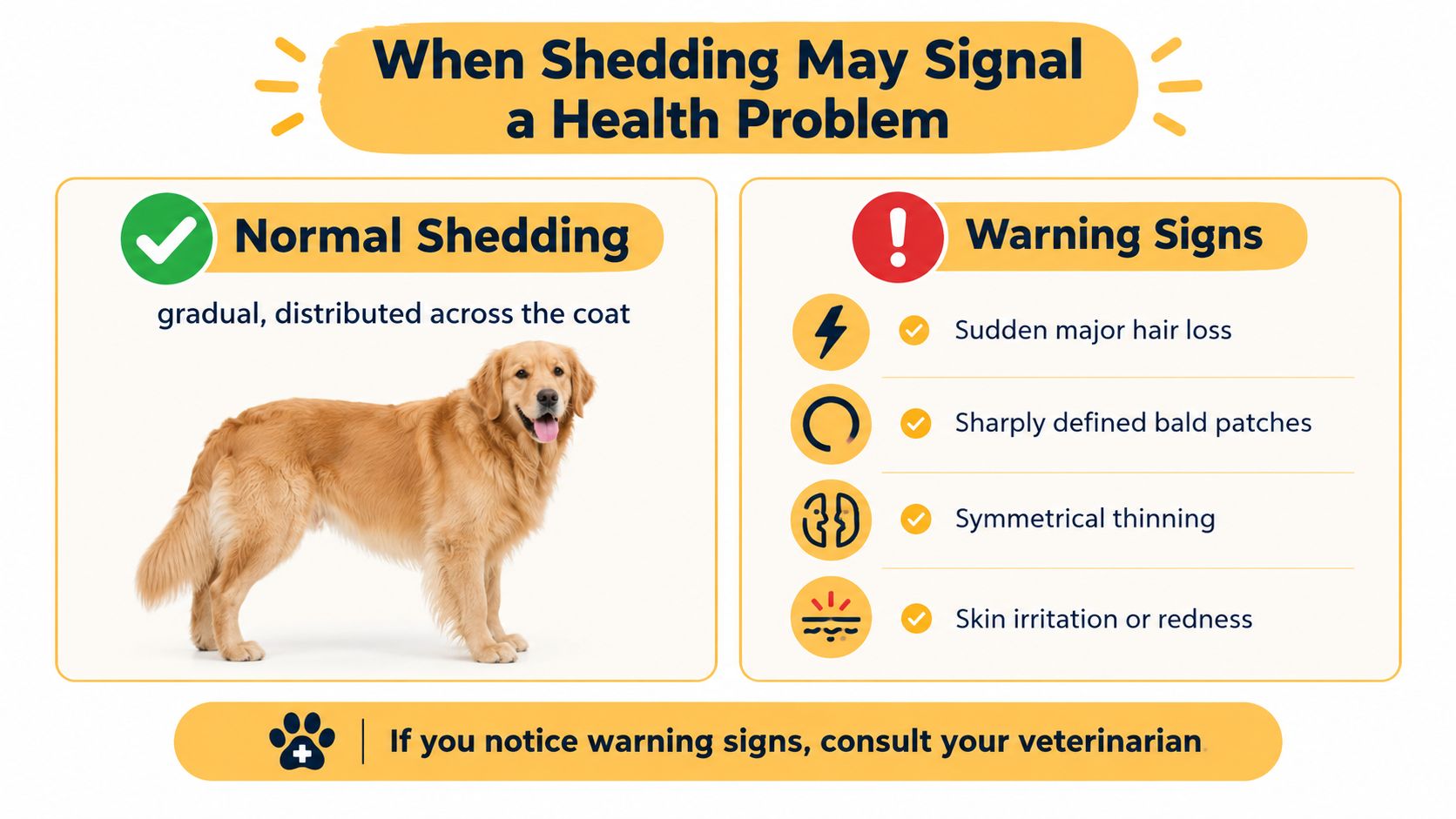
A dog that keeps scratching, licking, or chewing at its feet may be uncomfortable, not in need of brushing. Repeated head shaking can also be a clue to discomfort. Possible causes of abnormal hair loss include parasites, allergies, infection, hormonal disease, and disruption to the hair cycle. A veterinarian can assess the dog and decide what to investigate; coat appearance alone can't identify the cause. Veterinary information on skin and hair disorders describes warning signs that call for evaluation.
Keep useful notes for your veterinarian
You don't need to diagnose the problem at home. Instead, make it easier to describe what's changed:
- Photograph the coat: Use similar lighting and angles each month so changes are easier to compare.
- Note behavior and skin: Record scratching, licking, chewing, redness, scaling, sores, or new bald areas.
- Track routine changes: Jot down diet changes, parasite prevention, bathing, and when the shedding shift began.
- Inspect during grooming: Check the skin as you brush, without scraping or tugging at irritated areas.
If you're looking into vitamin solutions for thinning hair, treat that as general background, not a diagnosis or substitute for veterinary advice. A supplement won't explain why a dog has sudden hair loss or irritated skin. For related signs such as flaking alongside hair loss, see this guide to dog flaky skin and hair loss, and contact your veterinarian when warning signs appear.
Grooming Techniques for Loose Hair and Tangles
A gentle grooming routine can make loose hair easier to manage at home and reduce the chance of tangles. The right rhythm depends on your Chihuahua's coat density and how much loose hair you're seeing, so adjust it to the dog rather than forcing a rigid schedule.
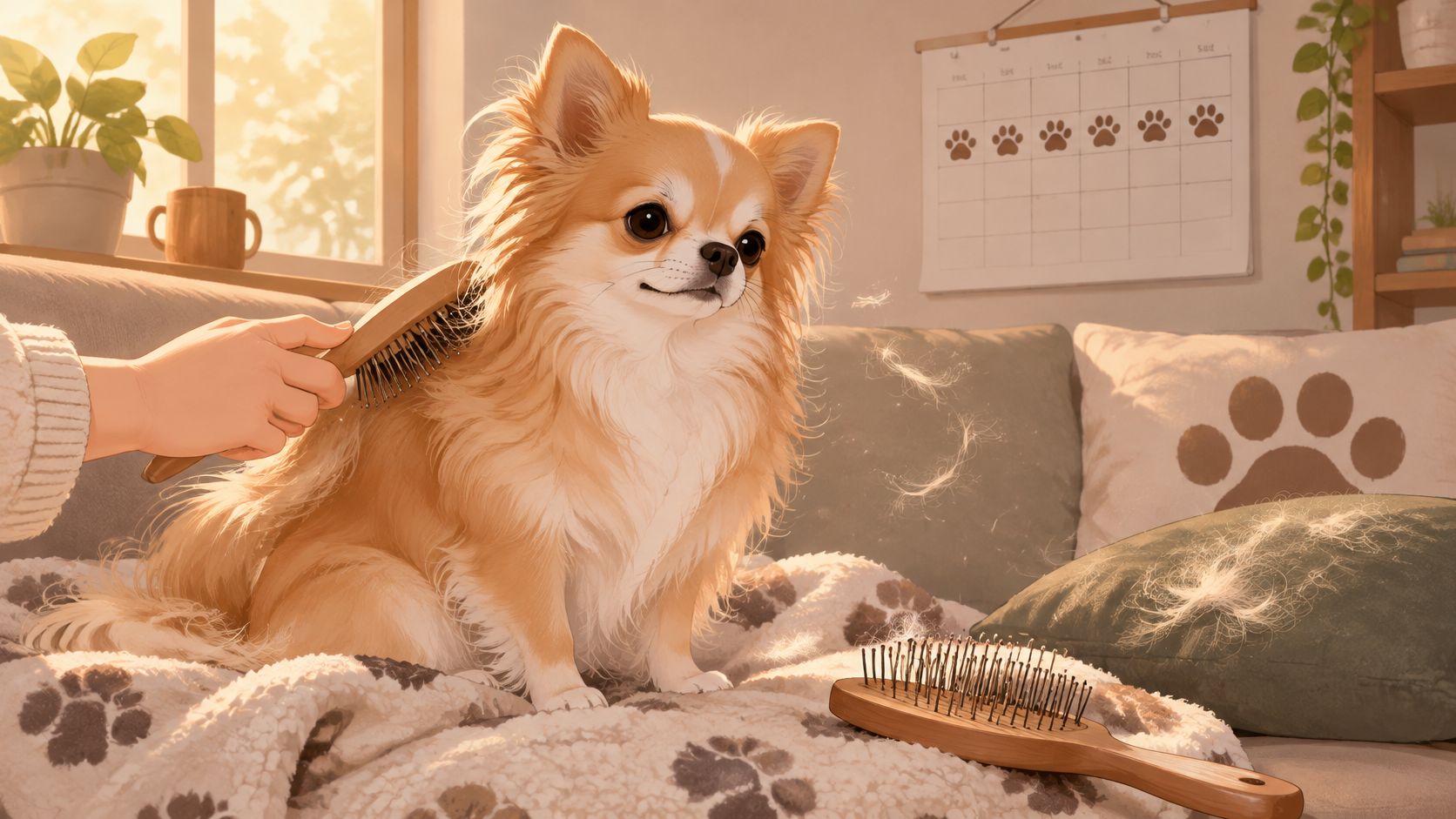
Start with a soft slicker or pin brush and work gently through the coat to lift loose hairs. Follow with a comb that reaches close to the skin without scraping it. If the comb catches, slow down and work carefully on the tangle rather than pulling through it.
Give tangling areas a closer check
Pay particular attention behind the ears, under the legs, around the neck, near the tail, and in the feathering. These areas can rub against the body or collect loose hair. Short, light strokes are more comfortable than forceful brushing, especially if your dog is sensitive or the coat is knotted.
Bathing can support coat care, but it doesn't replace brushing. Use gentle handling and make sure the coat is thoroughly rinsed; if brushing reveals pain, redness, or irritated skin, stop and seek veterinary advice rather than trying to groom through it. Avoid aggressive stripping or close clipping as a response to unexplained hair loss. Grooming may collect shed hair before it lands on the couch, but it won't stop normal shedding.
For household cleanup, wash the dog's bedding and vacuum the places where your Chihuahua likes to rest. These tips for cleaning with pets can help you think through ways to manage fur around shared spaces. The goal is a routine that keeps loose hair and tangles under control without making grooming stressful.
The following video offers another visual reference for brushing and handling a dog's coat.
For more general approaches to loose hair, see these tips on reducing dog shedding. Use any routine as coat maintenance, not as a way to treat sudden or unusual hair loss.
Nutrition and Skin and Coat Support
Nutrition can influence hair growth and coat quality, but extra shedding doesn't automatically mean a dog needs a supplement. A balanced diet supports normal growth; a coat that looks dull or thin, on its own, can't tell you whether your dog has a deficiency or a medical condition.
If the coat changes suddenly, or hair loss comes with itching, skin irritation, or sores, talk with a veterinarian before changing foods or adding supplements. A professional can help assess possible causes and determine whether a diet adjustment is appropriate. Guidance on dog allergies and their symptoms is a reminder that visible changes need context rather than assumptions about nutrition.
Skin-and-coat support belongs within a broader care routine: appropriate food, grooming, parasite prevention, and veterinary attention when signs are concerning. It shouldn't be treated as a promise to stop the normal hair cycle. For a broader overview of dog skin and coat care, focus on your dog's overall condition and bring persistent changes to a veterinarian.
Some owners also consider an all-in-one supplement as part of general wellness. DA-1™ Daily All-in-One - Senior Dog Support, Joints, Skin/Coat & More is described as a multi-system formula with human-grade ingredients for aging dogs. That description doesn't establish that it treats a skin condition or stops shedding, and it shouldn't replace veterinary assessment or a balanced diet.
Build a Long-Term Shedding Management Plan
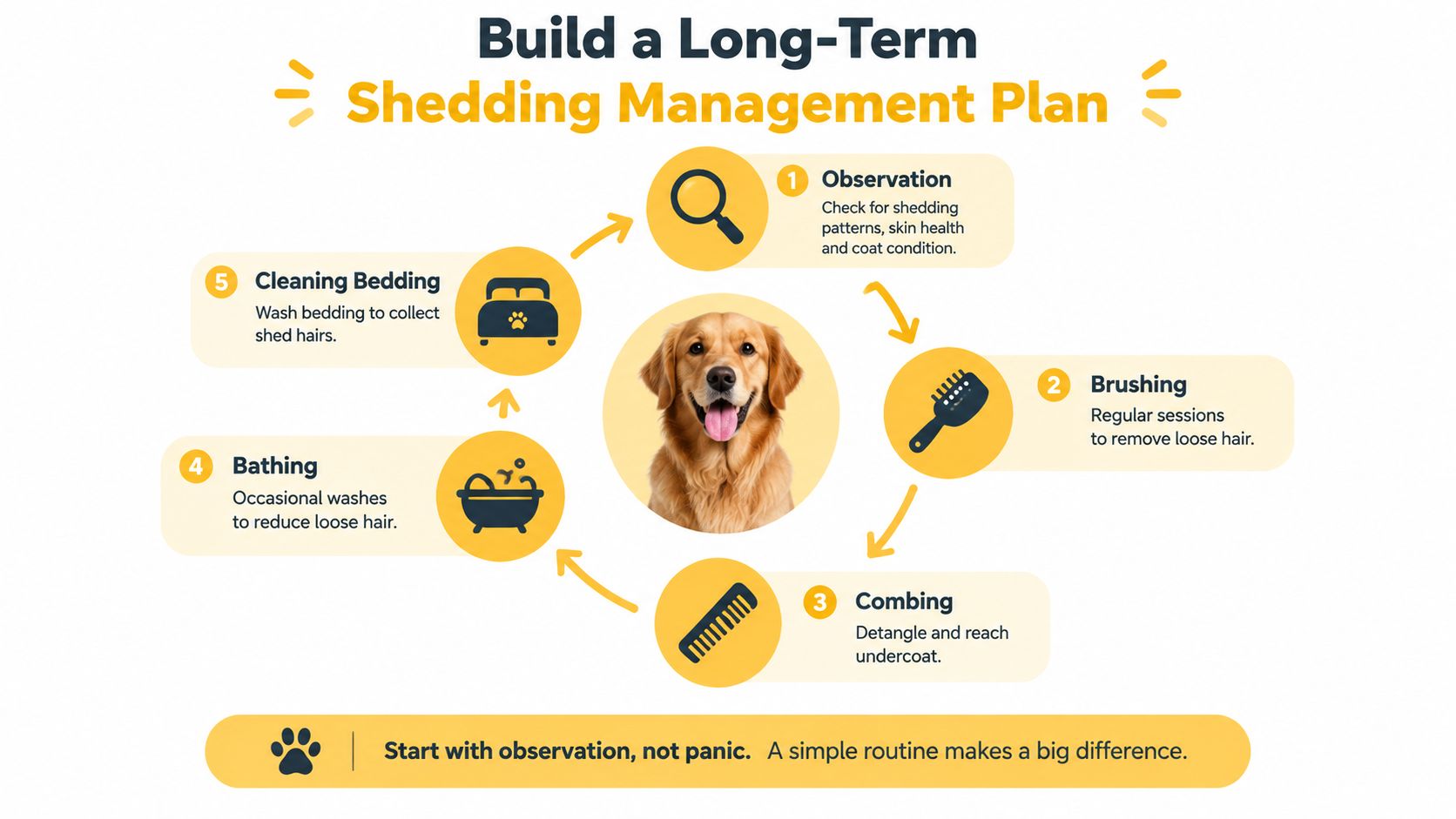
Start with observation, not panic. Notice whether loose hair is appearing gradually around the home or whether your dog's coat has changed quickly, developed bare areas, or become irritated. A simple routine helps you manage ordinary shedding while keeping signs of a possible health problem visible.
Adjust care to your dog
Use the coat in front of you as your guide. Brush and comb often enough to collect loose hairs and prevent tangles, increasing attention when you notice more hair or feathering that mats easily. Bathe when needed to support cleanliness, then wash bedding and vacuum the dog's usual resting places. These tasks help with household cleanup; they don't change the follicles' natural cycle.
Keep a brief record of coat appearance and skin changes. A note about when shedding became more noticeable, along with photographs in consistent lighting, can help you spot a pattern. Include changes to diet, parasite prevention, bathing, and your dog's scratching or licking. If you see sudden loss, bald patches, redness, scaling, sores, or persistent discomfort, contact your veterinarian and bring those observations along.
Practical rule: Manage gradual loose hair with grooming and cleaning. Ask your veterinarian about sudden hair loss or changes to the skin.
The distinction matters because more brushing isn't the right answer to every coat problem. If your dog has irritated skin or a patch of missing hair, pause any harsh grooming and seek advice instead of trying to solve it with a new product or supplement. For general coat support, owners may also find this overview of omega-3 for dogs useful, but supplements aren't a substitute for veterinary care when warning signs appear.
Long-haired Chihuahuas are regular shedders, and their coat can leave visible hair on clothing, furniture, vehicles, and bedding. A steady routine can make that hair easier to manage and help prevent tangles, while careful observation helps you recognize when a change deserves professional attention.
Pure Paw Labs offers dog supplements, including an all-in-one daily formula intended to support general wellness, skin and coat among other needs. If you're considering a supplement as one part of your Chihuahua's care routine, visit Pure Paw Labs and discuss unexplained or sudden coat changes with your veterinarian.