


You've got a small dog in mind, but not a simple one. A corgi papillon mix can look easy at first glance, then quickly turn into a real-life test of whether your home, schedule, and patience can handle short legs, smart eyes, and a coat that may shed more than you expected. If you're trying to decide whether this mix fits your apartment, your family, or your grooming routine, start with the practical parts, not the cute parts.
Table of Contents
- Meet the Corgi Papillon Mix
- Parent Breeds and Why This Mix Is So Variable
- What a Corillon Usually Looks Like
- Everyday Exercise and Feeding Routine
- Health Concerns Worth Screening For
- Coat, Grooming, and Skin Care Workload
- Is This Mix Right for Your Family and Home
Meet the Corgi Papillon Mix

A corgi papillon mix, often called a Corillon, is a designer cross between a Welsh Corgi and a Papillon. Because it's not an officially standardized breed, there's no single look, no fixed temperament profile, and no guarantee that two puppies from the same litter will mature the same way.
That uncertainty matters more than many people expect. One puppy may lean heavily into the corgi side with a sturdier frame and a lower body, while another may take after the papillon with a finer build and lighter movement. When a dog doesn't have a standard, you have to read the puppy in front of you, not the label on the litter announcement.
Practical rule: With a mix like this, treat the puppy's current structure as a clue, not a promise.
The name “Corillon” is mostly a convenience for people who want a shorthand. What matters is the trait blend. A corgi influence usually brings herding instincts, a lower center of gravity, and a bigger appetite for activity than the word “toy mix” might suggest. A papillon influence often brings alertness, quick learning, and a people-focused style that can feel very attached to the household.
If you're comparing puppies, focus on what you can already observe. Watch how each one moves, how each responds to handling, and whether the puppy seems comfortable with routine touch around ears, feet, and mouth. Those small observations often tell you more about daily life with the dog than any cute name ever will.
Parent Breeds and Why This Mix Is So Variable
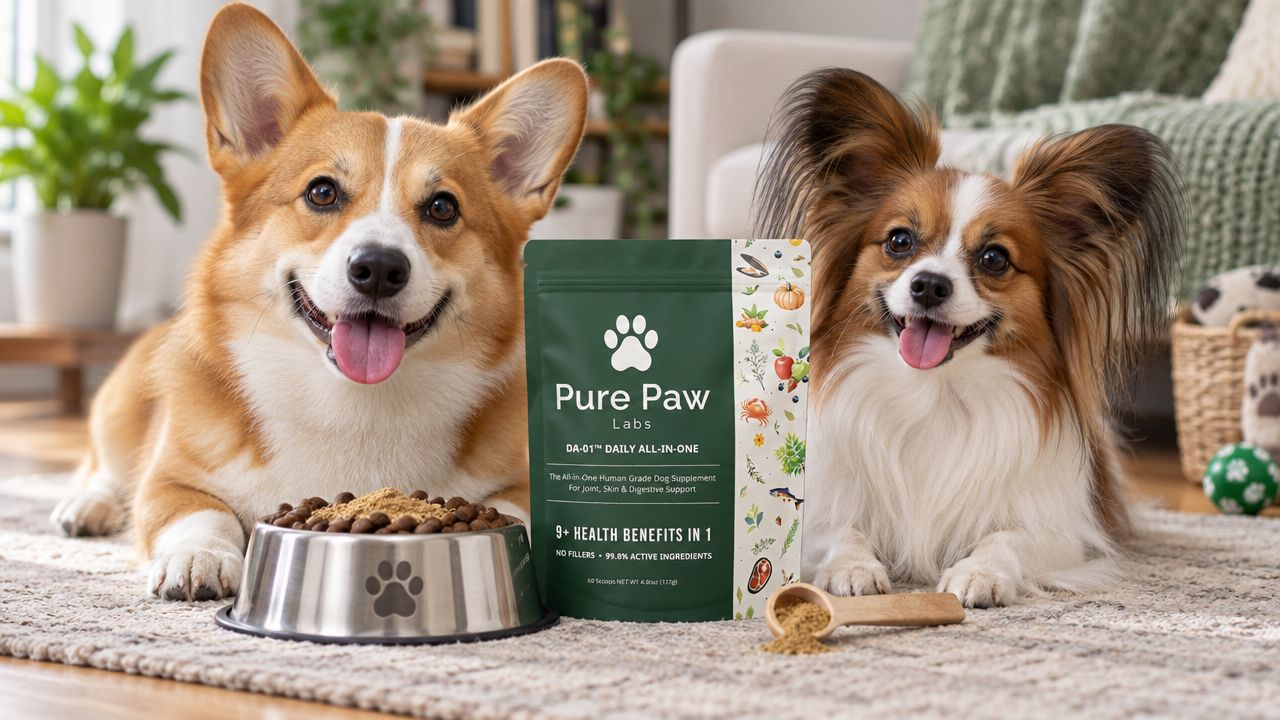
The corgi side and the papillon side contribute very different blueprints. The Corgi is a compact herding dog with a low body, a dense coat, strong awareness of movement, and a tendency to use bark and body position to manage what's happening around it. The Papillon is a small, alert companion with a lighter frame, elegant fringes on the ears, and a reputation for being lively and attentive to people.
That contrast is exactly why the cross can feel so unpredictable. A littermate that looks sturdy and low-slung may need a very different routine from its sibling that looks leggier and more delicate. The mix doesn't come in one fixed package, and that changes everything from leash pressure to grooming time.
Corgi vs. Papillon Parent Traits Compared
| Trait | Corgi Parent | Papillon Parent |
|---|---|---|
| Body type | Low, sturdy, long-backed | Small, fine-boned, lighter framed |
| Coat | Denser, often double-coated | Silky, lighter-coated, fringed areas |
| Temperament | Herding-minded, alert, can be vocal | Alert, people-focused, quick to engage |
| Movement style | Ground-hugging, stable, not built for repeated impact | Agile, springy, more delicate overall |
| Handling needs | Careful with stairs and jumping | Careful with fragile joints and overexertion |
That table is the core reason a corgi papillon mix can't be treated as a single predictable type. If the puppy leans corgi, you may notice more coat, more weight on the front end, and a stronger instinct to patrol the household. If it leans papillon, you may see a lighter frame, a more upright ear set, and more nimble movement with less bulk.
Some mixed-breed advice talks as if crossing two breeds automatically smooths everything out. It doesn't. The traits can combine, soften, or intensify in different ways, so the dog in front of you still needs a specific plan.
That's also why some owners build routines around flexibility. A supplement like DA-1™ Daily All-in-One - Senior Dog Support, Joints, Skin/Coat & More is described as a once-daily powder with 18 human-grade ingredients aimed at cells, gut, and joints, which is the kind of simple format some owners prefer when they're trying to keep a variable dog's care routine from becoming complicated. The point isn't the label, though. It's that a mix with shifting coat, mobility, and body-size traits often benefits from care choices that are just as adaptable.
You can see a similar “trait blend changes the plan” pattern in other crossbreed guides, including this corgi crossbreed overview. The lesson is the same each time. You don't buy the name, you manage the inherited traits.
What a Corillon Usually Looks Like
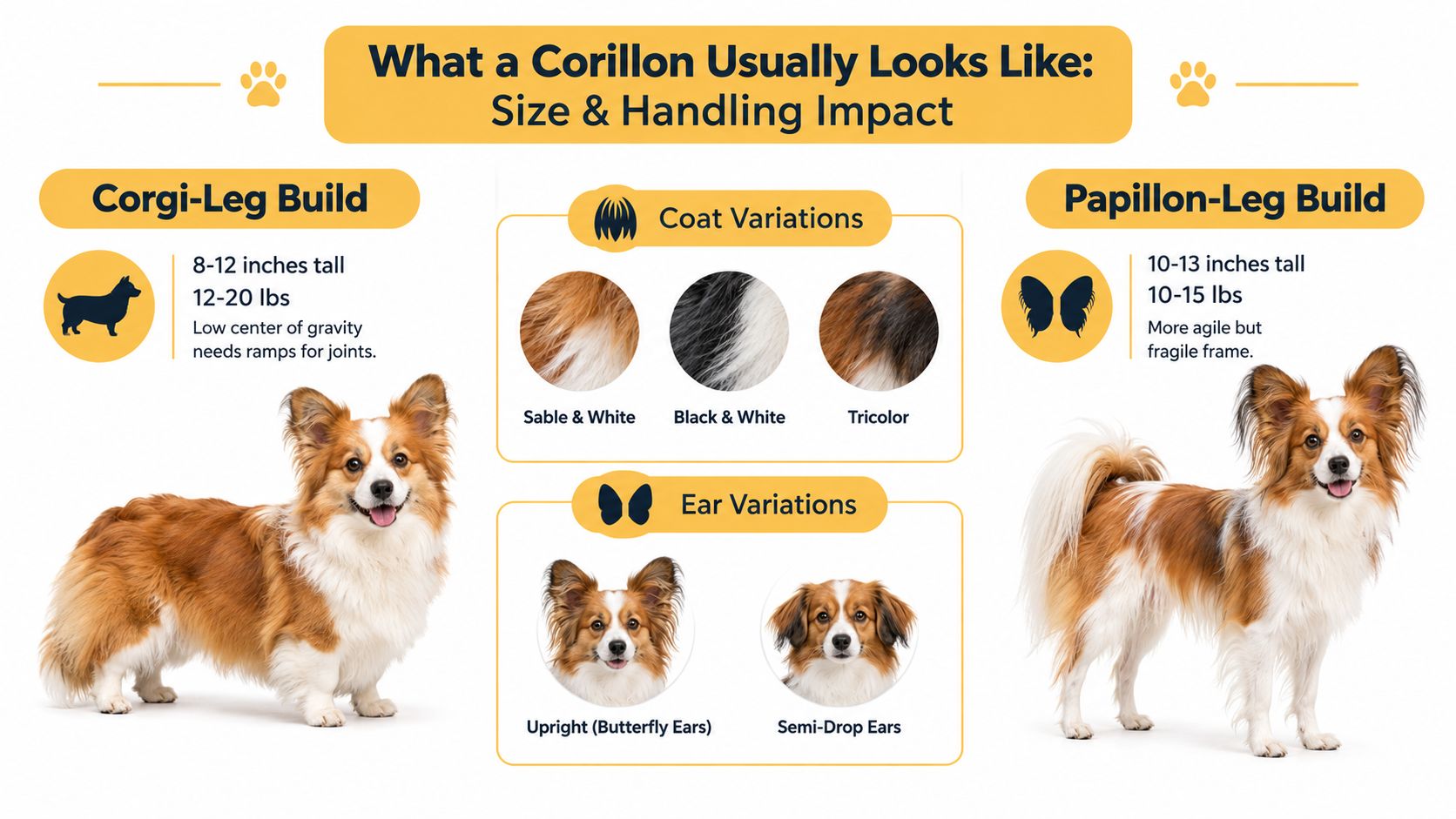
A corgi papillon mix is usually a small-to-medium dog, with reported adult size ranges around 8 to 12 inches in height and 15 to 25 pounds in weight, though another profile gives a broader range of 20 to 30 cm and 2 to 12 kg because first-generation crosses can vary a lot DogBible. That spread matters in daily life. A dog on the lower end may feel easy to lift, while one on the upper end can still be small but much more demanding on your back and your stairs.
Build Changes Handling Choices
A corgi-leaning puppy often has the low body and sturdy presence people expect from a herding dog. That shape can be stable, but it also means steps, couch edges, and repeated jumping become real management issues. A papillon-leaning puppy is often lighter and more agile, but the lighter frame can make rough handling or uncontrolled leaps more of a risk.
Ears can vary as well. Some Corillons have upright or semi-upright ears, some have a more fringed papillon look, and some land somewhere in between. That matters because ear shape affects how often you need to check for moisture, wax buildup, or irritation.
Coat And Color Affect Home Setup
Coat color and texture can range widely, from sable and white to tricolor, with some dogs showing papillon-like patches or a corgi-style fuller coat. A denser coat means more loose hair around the house. A silkier coat may feel easier at first, but it still needs regular attention to avoid tangles and skin trouble.
A few small home details become more important than people expect:
- Harness fit: A low-bodied dog often does better in a harness than a collar alone, because pressure is spread more evenly.
- Crate sizing: The dog may be short in height but still need room to turn, stretch, and settle comfortably.
- Lift points: If the puppy has a low back and short legs, avoid lifting by the front only.
- Furniture access: Ramps or lower jumps can reduce repeated strain.
The big takeaway is simple. A Corillon can look compact and manageable, but the exact outline of the body changes how the dog moves through your house. Treat the build as a daily-care issue, not just a visual one.
Everyday Exercise and Feeding Routine
A corgi papillon mix usually does best with moderate, structured activity rather than long, rough exercise sessions. Because body mass changes from one dog to the next, feeding should be measured carefully, especially if your puppy leans toward the corgi side and seems interested in every snack that appears in the kitchen.
Keep The Routine Predictable
Start with portion control. Small dogs can gain excess weight quickly if meals get larger than the dog's actual activity level, and that matters even more for a short-backed or low-slung body. Split food into regular meals instead of casual grazing, and keep treats tied to training or enrichment rather than offered out of habit.
Simple rule: Feed for the dog's size and body condition, not for how enthusiastic the dog acts at the bowl.
Exercise should protect the body while still giving the dog enough work to stay calm. Short leash walks, indoor fetch, and puzzle feeding usually fit better than repeated jumping or hard running. A low-bodied dog can strain more easily on stairs, furniture hops, and sudden stops, so the goal is movement with control.
Build A Day That Uses Both Breeds
The corgi side often wants a job. The papillon side often wants mental engagement. Combine those needs instead of trying to wear the dog out through speed alone.
- Walks: Keep them consistent and on leash so the dog learns to move beside you rather than race ahead.
- Play: Use brief bursts of tug, fetch, or chase games indoors.
- Brain work: Rotate food puzzles, scent games, or short training drills.
- Climate awareness: If your home runs hot, be careful with long outdoor sessions, especially if the coat is fuller or denser.
For owners who want to simplify the feeding side of that routine, healthy dog food toppers can be a practical place to start, as long as they don't replace measured meals. The point is consistency, not stacking random extras into the bowl.
A corgi papillon mix can do well in an active home, but not a chaotic one. If your lifestyle depends on long hikes, off-leash sprints, or a schedule that changes every day, this dog may be harder to fit in than you expect. If you like short routines, clear expectations, and hands-on interaction, the mix can slot in smoothly.
Health Concerns Worth Screening For
A mixed-breed dog can still inherit the same problems seen in either parent line. Hybrid status does not erase hereditary risk, and that's the main point many buyers miss. For a corgi papillon mix, the important concerns cluster around mobility, eyes, and oral health, with some additional issues worth discussing with a veterinarian before purchase.
Screen Across The Systems That Matter Most
The corgi side is associated with orthopedic strain, and the papillon side can bring its own joint and eye concerns. Small dogs also commonly need more intentional dental care than owners expect, because teeth crowding and buildup can become persistent problems if daily care slips.
The most useful pre-purchase questions are practical ones. Ask whether the parents have documented orthopedic and eye evaluations, then ask how often dental care has already been part of the family's routine. A puppy from healthy-looking parents still needs screening, because appearance alone won't tell you much about inherited risk.
| Condition | Parent Source | Recommended Test |
|---|---|---|
| Hip or elbow dysplasia | Corgi line | Orthopedic evaluation such as OFA or PennHIP |
| Patellar luxation | Papillon line and small-dog build | Veterinary joint exam |
| Eye disease | Papillon line | Eye clearance through a formal veterinary exam |
| Bleeding disorders | Either line can carry risk | Veterinary bloodwork and pedigree review |
| Dental disease | Small-dog structure | Dental chart and early oral exam |
The teeth and mouth deserve special attention. Shortened muzzles in some mixes can crowd teeth, trap debris, and make plaque control harder, which is why owners should not wait until problems show up in older age.
If a breeder can't explain the parents' joint, eye, and dental history clearly, that's a warning sign. The puppy may still be fine, but you'll be starting with less information than you should have.
A final note on purchase decisions. DNA testing can help clarify what the puppy carries, but it doesn't replace physical exams or family history. Use genetics as one piece of the picture, not the whole answer.
Coat, Grooming, and Skin Care Workload
A corgi papillon mix usually lands in one of two coat patterns. One dog may inherit a medium-length double coat with more shedding and a fuller undercoat. Another may lean toward a longer, silkier coat with less bulk but more tendency toward tangles in feathered areas.
Match The Grooming Plan To The Coat
If the coat is dense or double-coated, brushing several times a week helps pull out loose hair before it ends up on your couch and in your clothes. If the coat is silkier and longer, brushing can need to happen more often because small tangles become mats faster than people expect. The coat type also affects how the dog feels after a bath, since too much bathing can strip oils from a soft coat while too little lets odor and skin debris build up.
Dental care needs to be just as regular as coat care. Small mixes often do better with daily or near-daily brushing, especially if their teeth sit close together. Enzymatic chews can help support the routine, but they don't replace brushing or a professional cleaning when needed.
Keep The Calendar Simple
The easiest way to stay on track is to assign care to repeating intervals:
- Daily: Quick coat check, tooth brushing, and a fast look at the belly and paws.
- Weekly: Ear cleaning if the ears are fringed or semi-floppy, plus a check for redness or odor.
- Every few weeks: Nail trimming, because short legs don't always wear nails down naturally.
- Monthly or as needed: Bathing, especially if the coat traps outdoor debris.
The mix's body shape also creates skin-care friction points. Bellies, inner thighs, and paw fur touch grass, carpets, and flooring all the time, so irritation can show up in places owners don't notice right away. That's one reason a regular skin check matters even if the coat looks shiny on top.
For owners who want a broader skin-and-coat support routine, dog skin and coat care guidance is a useful way to think about the basics without overcomplicating the schedule. The main idea is steady maintenance, not occasional rescue work.
Is This Mix Right for Your Family and Home
A corgi papillon mix can fit beautifully in the right home, but it's not a universal yes. The match depends less on the dog's charm and more on what your household can handle every day.
Where It Fits Well And Where It Gets Tricky
Small apartments can work if you're committed to daily walks and training. The size is manageable, but the bark level can become an issue in shared walls if the dog inherits the papillon's alertness or the corgi's watchdog habits.
Families with young kids need caution. The mix can be playful and engaging, but herding instincts may show up as nipping at heels or trying to control movement. Older children usually handle that energy better than toddlers who move unpredictably.
First-time owners may do well if they like routine and can stay consistent. The dog is often smart and responsive, but intelligence also means the dog notices inconsistency fast.
Allergy-prone homes should be realistic. A corgi-leaning coat can shed heavily, and even a lighter coat still won't make the dog hypoallergenic.
If your household wants a wash-and-go dog, this probably isn't the right cross.
The honest verdict is conditional. If you want a small companion with personality, some stamina, and a care routine you're willing to maintain, the corgi papillon mix can be a good match. If you want a dog that needs little brushing, little barking management, and minimal supervision around movement, you'll likely be disappointed.
Pure Paw Labs focuses on science-backed, human-grade dog supplements that simplify daily care, which can be useful for owners managing a corgi papillon mix's joints, skin, coat, or gut support. If you want to look at a single daily format that fits into a routine instead of adding more clutter to it, visit Pure Paw Labs and review what their products are designed to do.