


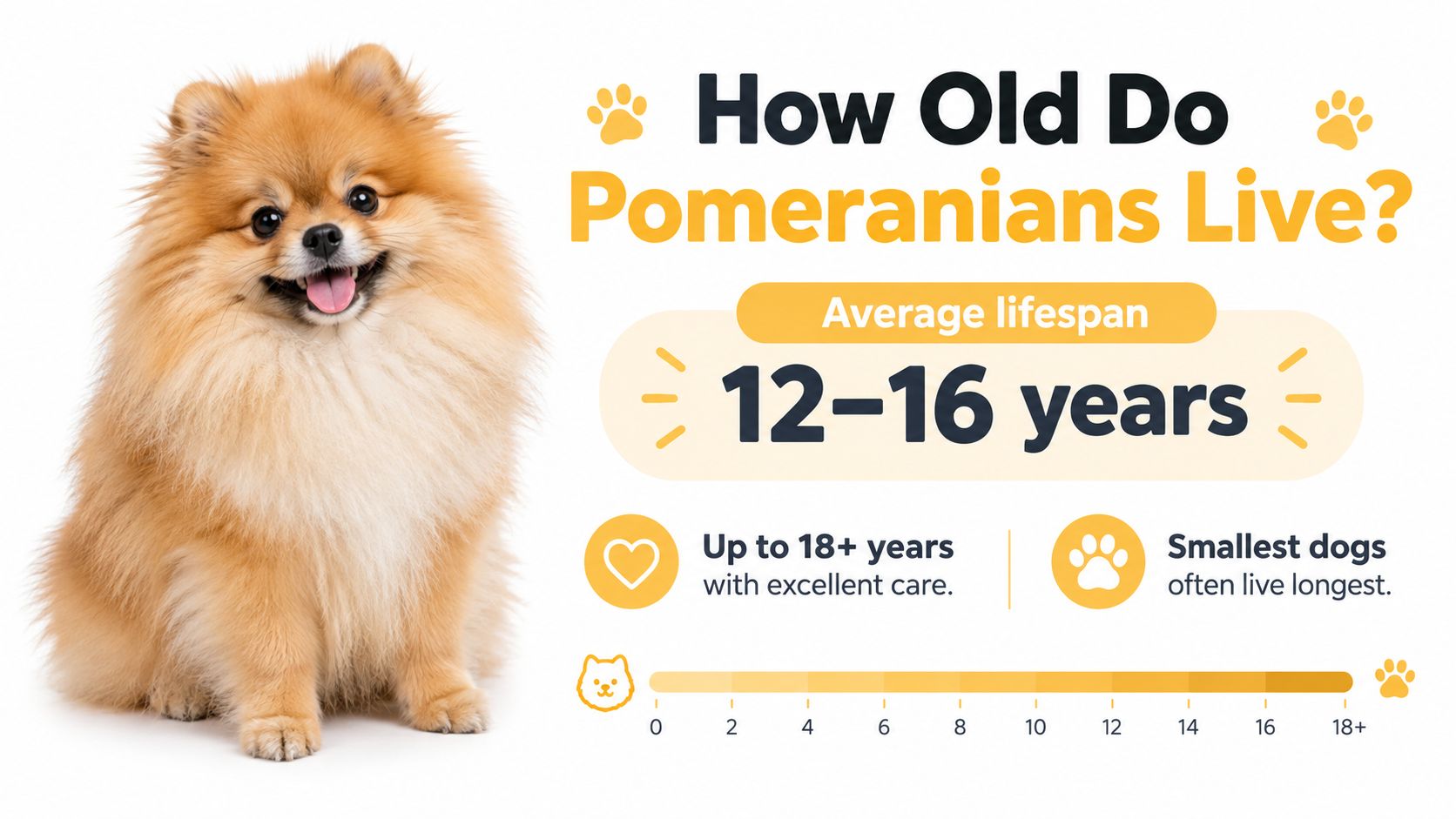
Pomeranians generally live about 12–16 years, with a large UK study reporting an average life expectancy of 12.2 years, while the upper end of typical survival approaches 14–16 years in well-managed dogs. Reaching the mid-teens is realistic, but living beyond 16 years represents exceptional longevity rather than the normal expectation.
That answer sounds straightforward until you compare the numbers used by different sources. A breed-care guide may present a practical range of 12 to 16 years, while a population study gives a more precise estimate based on thousands of dogs. Both can be useful, but they answer slightly different questions.
For an individual owner, the most helpful approach is to treat the research as a planning guide, not a promise. Genetics, dental health, body condition, nutrition, preventive veterinary care, accidents, and toy-breed diseases can all shift a Pomeranian's outcome.
Table of Contents
- How Old Do Pomeranians Live
- Typical Lifespan Range and What Research Actually Shows
- Why Small Size Alone Does Not Guarantee Longevity
- Key Health Risks That Shorten Pomeranian Life
- Preventive Care and Lifestyle Tips for Longer Life
- How a Daily Supplement Can Fit Into Longevity Planning
- Practical Steps Owners Should Take Now
How Old Do Pomeranians Live
Pomeranians are generally long-lived compared with many larger dog breeds. The commonly quoted lifespan is about 12 to 16 years, and the Royal Kennel Club describes the breed's life expectancy as “over 12 years” in its breed information (Royal Canin's Pomeranian breed overview).
A large UK longevity analysis provides a more precise population estimate. It reported a 12.2-year average life expectancy for Pomeranians, based on a substantial group of dogs (UK lifespan estimate summarized in breed data)). That figure is more useful for understanding what happened across a studied population, while the 12–16-year range helps owners picture the span of outcomes they may encounter.
What the range means for your dog
Think of the range as a road rather than a finish line. A Pomeranian reaching 12 years has reached an important senior milestone, but that doesn't mean the dog is near the end. Many healthy dogs continue into the early or middle teens, while some develop serious disease earlier.
The upper end requires the right combination of inherited health, safe surroundings, good weight control, dental management, and timely medical care. It also depends on avoiding hazards that are especially serious for very small dogs. If you're planning for years of veterinary treatment and routine care, a resource on pet insurance justification for Pomeranians can help you think through that responsibility.
Practical rule: Use 12 years as a planning benchmark, not a prediction of when your Pomeranian will die.
Your dog's quality of life matters as much as the number of birthdays. Comfortable breathing, reliable appetite, mobility, alertness, and a healthy mouth are better signs of successful aging than age alone.
Typical Lifespan Range and What Research Actually Shows
The difference between 12–16 years and 12.2 years isn't a contradiction. The first is a broad breed range. The second is a population estimate calculated from a defined dataset.
A large UK analysis examined 584,734 dogs across 155 breeds and estimated a median Pomeranian lifespan of 12.2 years, based on 2,941 Pomeranians. Its 95% confidence interval was 12.0–12.5 years (the longevity analysis summarized by Forbes Advisor). In plain language, the study places the middle of the observed Pomeranian population close to 12 years.
Median, average, and upper-end survival
A median is the midpoint of the recorded outcomes. It doesn't mean every dog lives exactly that long, and it doesn't say that a dog reaching 15 years is unusual in every household. It tells you where the center of that particular population fell.
The 14–16-year portion of the familiar range is better understood as the upper part of routine survival, not the standard expectation for every Pomeranian. Breed averages also can't account for a dog's inherited vulnerabilities, weight, dental condition, accident exposure, or access to care.

Senior care should focus on function, not a number on a calendar. Guidance on senior dog health can help owners organize questions about mobility, digestion, skin, and changing behavior. If an owner wants a single routine rather than several separate products, DA-1™ Daily All-in-One - Senior Dog Support, Joints, Skin/Coat & More is described as a powdered formula with 18 human-grade ingredients aimed at cells, gut, and joints.
The important distinction is simple: research describes populations, while veterinary care manages individuals. A healthy Pomeranian can exceed the population estimate, and another can fall short of the broad range because of disease or trauma.
Why Small Size Alone Does Not Guarantee Longevity
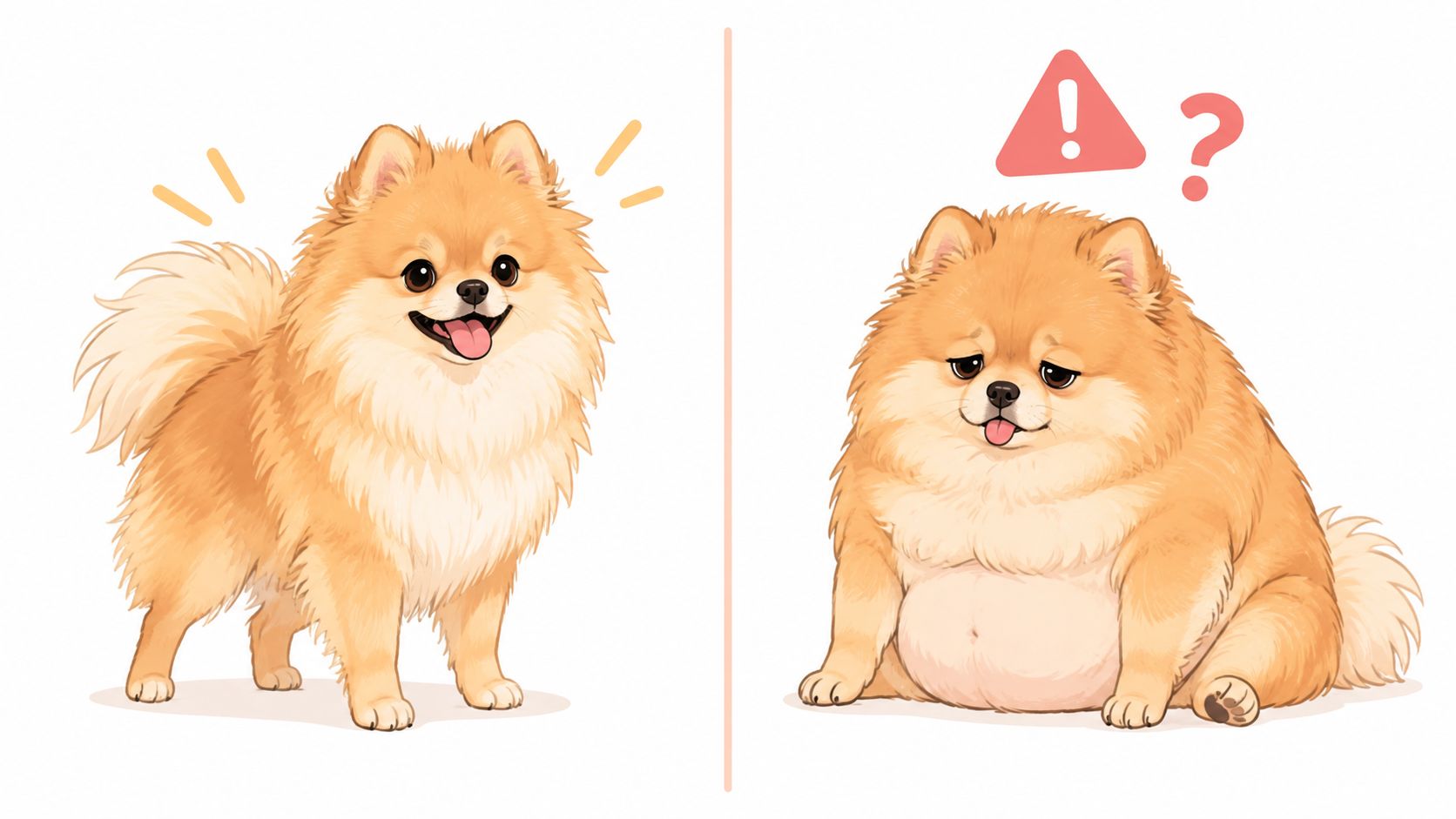
Small dogs often have a longevity advantage compared with large dogs, but small size isn't a guarantee of a long life. A Pomeranian's body weight may help explain why the breed can reach the teens, yet it doesn't erase inherited conditions, structural problems, or household hazards.
A Japanese analysis based on pet-cemetery records reported a 14-year figure for Pomeranians. The same analysis recorded 15.3 years for crossbred dogs weighing less than 10 kilograms, meaning the Pomeranian estimate was lower despite the breed's small size (Pomeranian longevity background and comparison)). That comparison doesn't prove that crossbred dogs always live longer. It shows why body size is only one part of the explanation.
The breed-specific part of the equation
Selective breeding shaped the modern Pomeranian from larger Spitz-type ancestors into a small companion breed. That history created the appearance and size owners recognize today, but it also means that breed-specific vulnerabilities can influence health independently of weight (breed history and lifespan context).
A Pomeranian with a healthy body condition may still develop a luxating kneecap, airway disease, heart disease, or a congenital defect. Conversely, early assessment and careful management can help a dog with an inherited risk remain comfortable and active for years.
The same principle applies when comparing breeds more broadly. A size-based expectation, such as how long German Shepherds usually live, can't be transferred directly to a Pomeranian because each breed has a different pattern of disease and physical risk.
Weight control is therefore valuable, but it isn't the whole longevity plan. The next question is which conditions owners can identify early and manage consistently.
Key Health Risks That Shorten Pomeranian Life
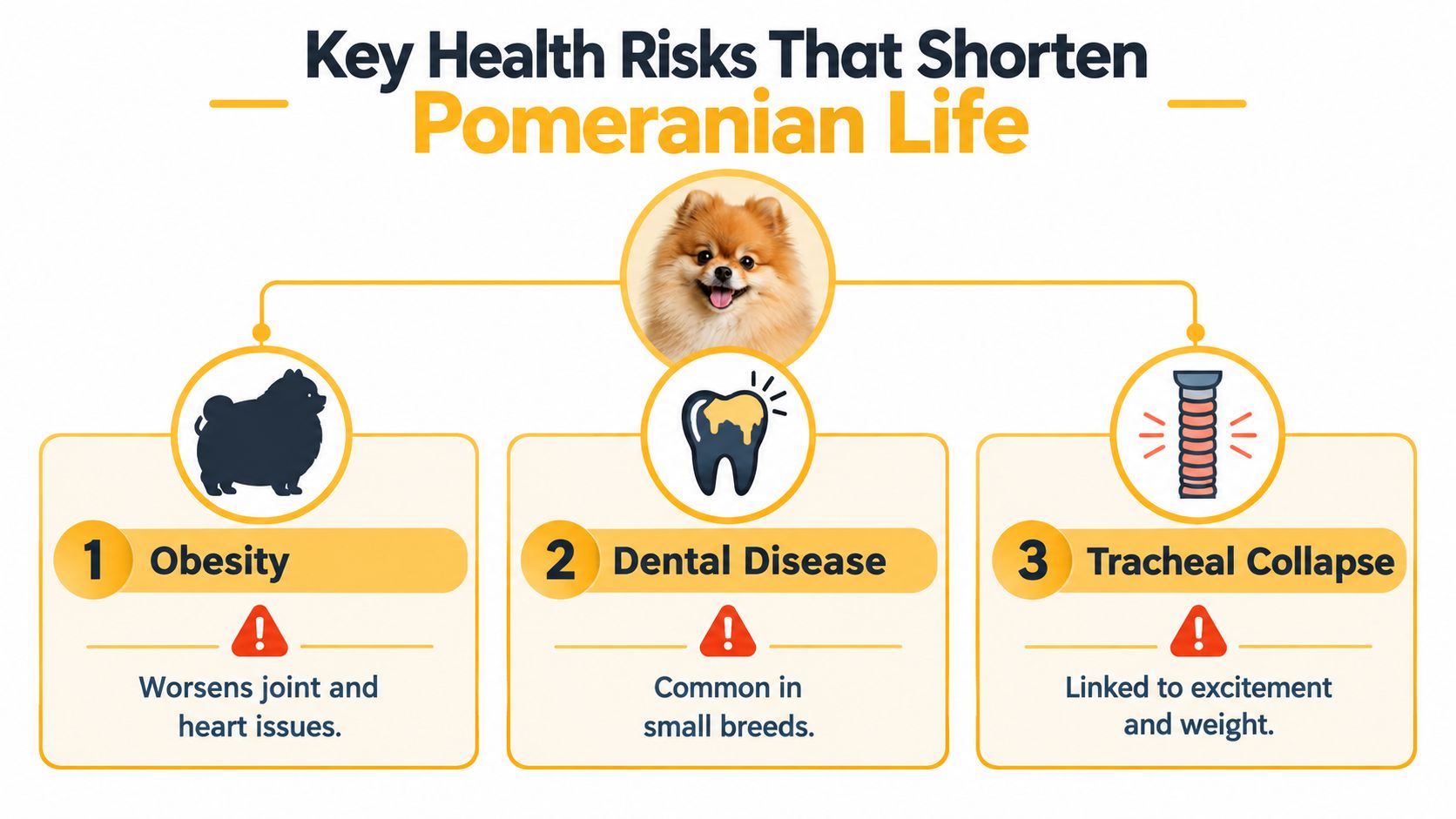
Pomeranian longevity is shaped by several manageable or detectable health burdens. The practical goal isn't to eliminate every inherited risk. It's to recognize warning signs early and reduce the avoidable strain placed on the dog's joints, heart, airway, and mouth.
Weight and mobility
Obesity can worsen joint disease, back pain, metabolic and digestive disorders, and heart disease. In a small dog, even a modest change in body condition can make movement harder and add stress to an already vulnerable kneecap or spine.
Patellar luxation, or a slipping kneecap, may appear as intermittent skipping, a brief lifted hind leg, or reluctance to jump. A veterinarian can assess gait and joints before a minor problem becomes a persistent mobility limitation.
Heart and airway warning signs
Heart disease becomes particularly important as Pomeranians age, and advanced disease can progress to heart failure. Persistent coughing, reduced stamina, fainting, or a noticeable change in breathing deserves veterinary attention rather than observation at home.
Tracheal collapse can cause progressive cough or breathing difficulty. A harness may reduce pressure on the neck when appropriate, but a harness isn't a substitute for examination if coughing continues.
Patent ductus arteriosus is a congenital defect in which a fetal blood vessel fails to close normally. A puppy with a murmur needs a proper veterinary assessment because early detection can clarify the condition and available management.
Dental disease deserves a routine
Small-jawed toy breeds are prone to oral disease. One veterinary source reports dental disease in roughly 80% of dogs by age two, although that figure applies to dogs broadly rather than specifically to Pomeranians (Pomeranian health risks and dental context).
Daily tooth care, professional assessment, and prompt attention to bad breath, chewing changes, or loose teeth can protect comfort and appetite. Owners can use dog dental health tips to build a routine, but pain, bleeding, or severe tartar calls for veterinary care.
Preventive Care and Lifestyle Tips for Longer Life
A long life is usually built from ordinary decisions repeated over time. The most useful routines protect a Pomeranian from the risks that are easiest to miss, especially when the dog still looks energetic.
Start with the body and airway
Feed measured portions and monitor body condition rather than relying only on the scale. Your veterinarian can show you what a lean, healthy shape feels like and adjust the diet if your dog gains weight, loses muscle, or develops a medical condition.
Use a harness when neck pressure could worsen coughing or airway irritation. Keep walks and play appropriate to the dog's condition, and investigate reduced stamina instead of assuming that an older Pomeranian is just slowing down.
A new cough, limp, appetite change, or loss of interest in normal activity is a reason to call the veterinary clinic, not a reason to wait for the next routine visit.
Match prevention to the life stage
Puppies face dangers that senior-focused longevity advice often overlooks. Falls, being stepped on, unsafe handling, and vehicle accidents can be devastating for a very small dog. Secure transport, controlled access to stairs and furniture, and careful supervision matter from the first day at home.
Adult dogs need consistent weight control, dental care, vaccination and parasite planning, and prompt evaluation of digestive or respiratory changes. Seniors need the same foundation, with closer attention to mobility, stamina, appetite, cognition, and oral comfort.
Practical household changes can support the environment around your dog. Owners concerned about indoor air quality may want to compare pet-friendly air purifier units, while keeping in mind that an appliance can't diagnose or treat an airway disorder.
Regular veterinary assessments help connect all these pieces. A dog preventive care routine is most useful when it includes a written record of weight, dental observations, cough frequency, mobility changes, and questions for the next appointment.
How a Daily Supplement Can Fit Into Longevity Planning
A supplement can support a routine, but it can't replace the actions that address the biggest risks. Weight management, dental treatment, airway assessment, cardiac checks, orthopedic examinations, vaccination, parasite control, and injury prevention all require decisions beyond a scoop added to food.
The strongest argument for an all-in-one product is routine simplicity. Some owners struggle to manage several separate powders, oils, and chews. A single daily formula may make it easier to follow one consistent habit, provided the ingredients are appropriate for the individual dog and the veterinarian knows what the dog is receiving.
Where it may fit
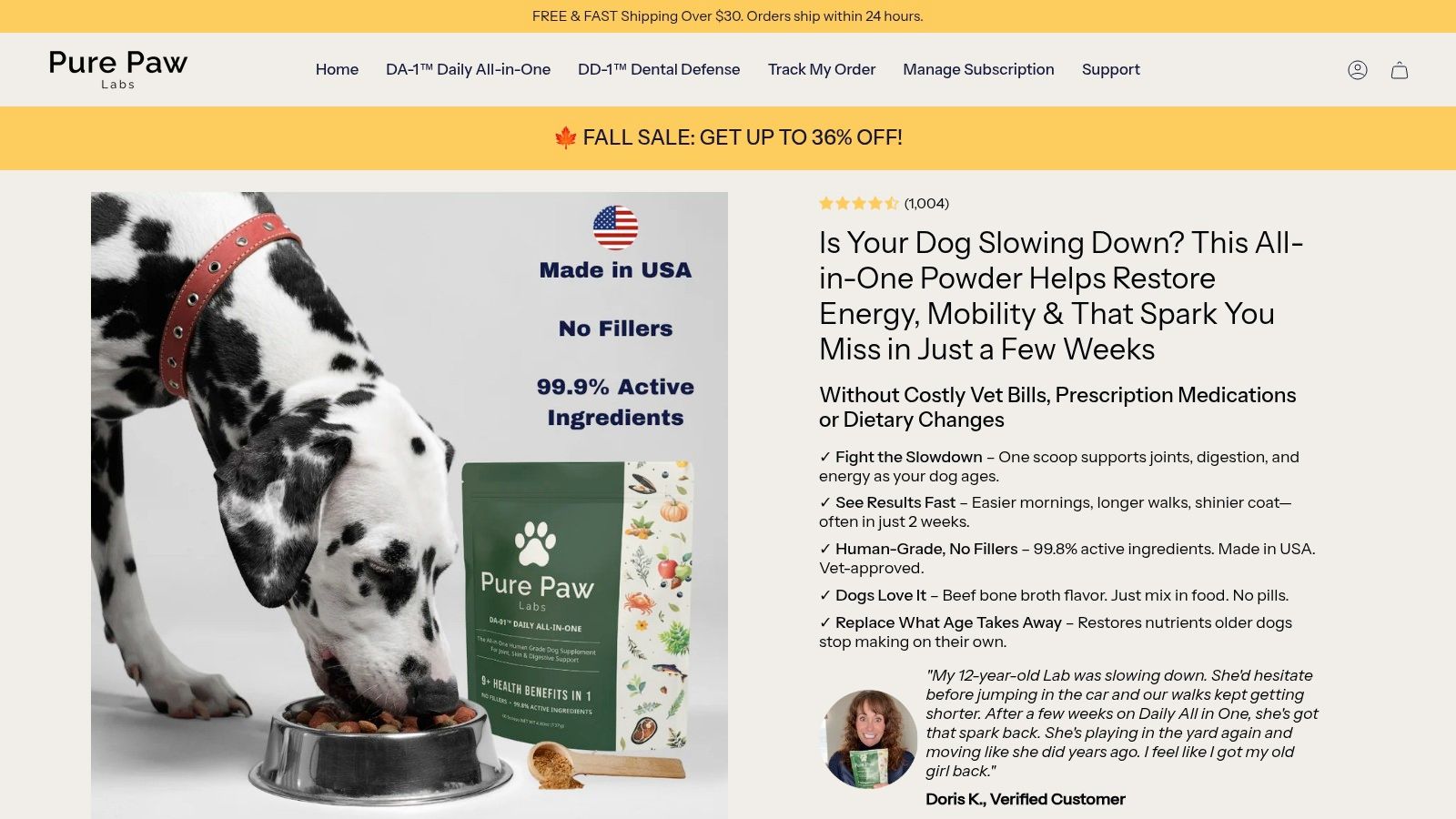
DA-1 Daily All-in-One is described as a once-daily powdered supplement made with human-grade ingredients in the USA and tested in an FDA-registered facility. The product information reports 4.7 out of 5 based on more than 1,000 reviews and includes a 60-day results-or-refund guarantee. Those are product-page details, not evidence that the formula determines lifespan.
Its stated focus includes joint, skin and coat, digestive, immune, and stress-related support. That may fit a senior-care conversation when an owner wants to reduce regimen complexity, but a veterinarian should review supplements for dogs with heart disease, digestive disease, medication use, allergies, or a specialized diet.
A useful all-in-one dog supplement guide can help owners think through ingredients and expectations. The right question isn't whether a supplement can guarantee more years. It's whether the product fits the dog's needs and helps the owner maintain a broader, evidence-informed care plan.
Practical Steps Owners Should Take Now
Start with the risks you can influence today. Population estimates explain what happens across groups of dogs, but your Pomeranian's experience will be shaped by the habits, observations, and veterinary decisions made throughout its life.
A prioritized checklist
- Keep the body condition lean. Ask your veterinarian to assess shape and muscle, then adjust portions as needed. Don't wait for obvious obesity, because extra weight can intensify joint, back, metabolic, digestive, and cardiac strain.
- Protect the airway and joints. Use a harness when neck pressure is a concern, reduce fall opportunities, and limit uncontrolled jumping from furniture. Report coughing, skipping steps, limping, reluctance to climb, or reduced stamina.
- Treat dental care as preventive medicine. Establish home care and arrange professional assessment when recommended. Bad breath, chewing difficulty, drooling, or a change in appetite can signal discomfort rather than normal aging.
- Make puppy safety deliberate. Carry small puppies securely, supervise interactions with people and larger animals, use safe transport, and block access to dangerous drops. Trauma prevention may be more urgent for a young toy-breed dog than a senior supplement routine.
- Track small changes. Note appetite, water intake, breathing, sleep, mobility, bowel habits, and behavior. A written pattern gives your veterinarian more useful information than a vague impression that your dog “seems older.”
- Schedule ongoing assessments. Regular cardiac, orthopedic, dental, and general examinations can identify problems before they cause major functional loss. At around 12 years, senior screening becomes especially relevant, while the exact schedule should reflect your dog's health and veterinary advice.
Quality-of-life test: Ask whether your Pomeranian can breathe comfortably, move willingly, eat normally, stay engaged, and rest without obvious pain. Those functions matter more than reaching an advertised maximum age.
No supplement can prevent every congenital disease, accident, or age-related illness. A simplified daily product may help some owners stay consistent, but it belongs beside veterinary care, not in place of it. The most realistic hope is a Pomeranian that reaches the senior years with comfort, mobility, appetite, and connection still intact.
Pure Paw Labs offers daily, human-grade dog supplements designed to combine support for areas such as joints, skin and coat, digestion, immunity, and stress into a simple routine. If you want to explore whether that approach fits your Pomeranian's broader preventive-care plan, visit Pure Paw Labs.