


More fiber isn't the answer to every dog that scoots. It can help create bulkier stool, which may support natural anal sac emptying, but it won't explain why a dog's symptoms keep returning, or treat inflammation, infection, or an abscess. Good dog anal gland support starts with figuring out which problem you're trying to solve.
A dog may scoot after a walk, then act completely normal. That's easy to dismiss, and it's also easy to mistake for a simple fiber problem. A short log of scooting, licking, stool quality, and any odor gives you a better starting point than adding several new foods at once.
Table of Contents
- Why Dog Anal Gland Support Is More Than Fiber
- Reading Scooting Licking and Odor Correctly
- Home Hygiene Without Unsafe Expression
- Stool Quality and Weight as Daily Support
- Choosing Nutrition Support Versus Vet Care
- Your Next Step for Anal Gland Support
Why Dog Anal Gland Support Is More Than Fiber
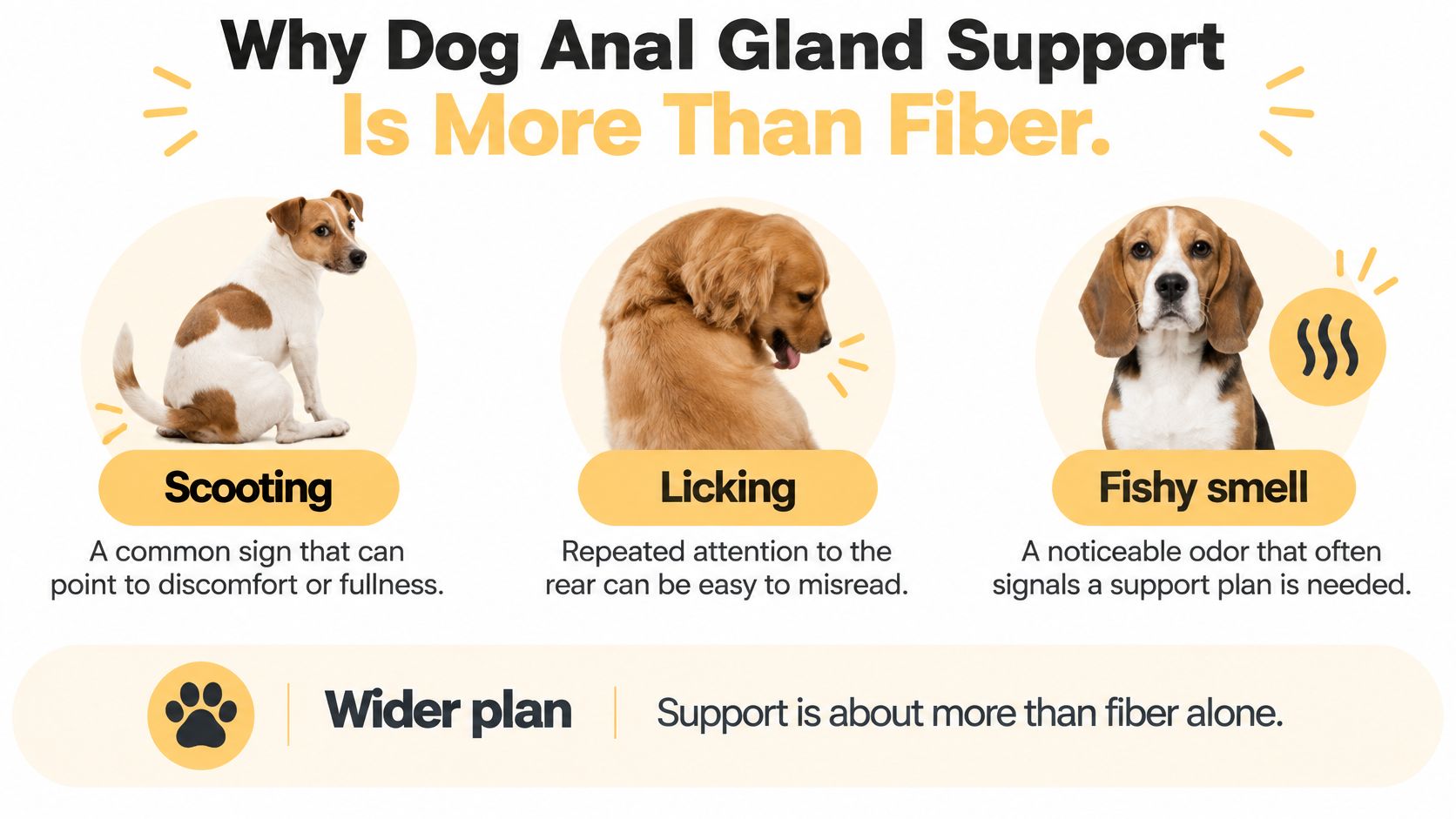
The idea that every scooting dog just needs more fiber is too simple. Fiber can help stool bulk, but breed, body condition, skin disease, and a dog's history of repeat episodes all matter when deciding what support makes sense.
Anal sac disorders are common enough to plan for, not something owners need to be embarrassed about. A UK VetCompass study reviewed veterinary records for 104,212 dogs seen during 2013 and identified 2,372 cases of non-neoplastic anal sac disorders, with an estimated one-year prevalence of 4.4%. Impaction was the largest group, with 1,864 cases, compared with 289 cases of sacculitis and 212 abscesses, according to the UK VetCompass research summary. The study also found higher reported rates in some small or toy-associated breeds, including Cavalier King Charles Spaniels and Cockapoos.
Routine support has a clear limit
Stool-quality support and everyday care can be part of a prevention plan. They're not a substitute for diagnosis when your dog has pain, swelling, discharge, or symptoms that keep returning. Those signs call for a veterinary assessment, not another scoop of fiber.
For a dog that seems fine after an occasional scoot, note what happened and watch for a pattern. Is the stool consistently soft? Is there repeated licking, a noticeable odor, or a history of painful episodes? That context can help you and your veterinarian decide whether a broader approach to dog gut health belongs in the plan.
Practical rule: Treat fiber as one possible support for stool quality, not a diagnosis for what's causing the scooting.
Reading Scooting Licking and Odor Correctly
Scooting, licking under the tail, and a fishy odor are clues, not a diagnosis. Anal sac problems range from retained material and impaction to inflammation and abscessation, and those conditions don't call for the same response. In a separate cross-sectional study, non-neoplastic anal sac disease was estimated in 15.7% of dogs; impaction was the most frequent specific diagnosis at 8.9%, followed by inflammation at 4.1% and abscessation at 2.8% (study of anal sac disease in dogs and cats).
Small-breed dogs are predisposed to impaction and sacculitis. Reduced natural emptying during defecation, poor muscle tone associated with obesity, and generalized seborrhea that increases glandular secretion can also contribute to retention, according to the Merck Veterinary Manual guidance on rectal and anal disorders. The point isn't to diagnose these causes at home. It's to notice when a mild-looking sign is becoming a pattern.
A dog that drags its rear once, then plays and eats normally, is different from a dog that repeatedly licks, strains to pass stool, or flinches when you touch near the tail. A smell can be noticeable when material releases, but odor alone can't tell you whether a sac is merely full or inflamed.
Three levels of action
| Level | What you notice | What to do next |
|---|---|---|
| Monitor | Occasional scooting, normal energy, no visible swelling, and no pain | Record the episode and stool quality. If it repeats, discuss preventive diet support with your veterinarian. |
| Book a visit | Repeated scooting or licking, known skin allergies, extra weight, or painful defecation | Schedule an examination and share the symptom and diet history. |
| Seek prompt care | Swelling, blood, pus, severe pain, lethargy, or a firm one-sided lump | Contact a veterinary clinic promptly. Don't try to squeeze or treat a lump at home. |
Scooting can also come from an itchy skin problem rather than a full sac. If the dog is scratching or licking elsewhere too, include those signs in the history and consider this guide to dog scratching and licking.
Home Hygiene Without Unsafe Expression
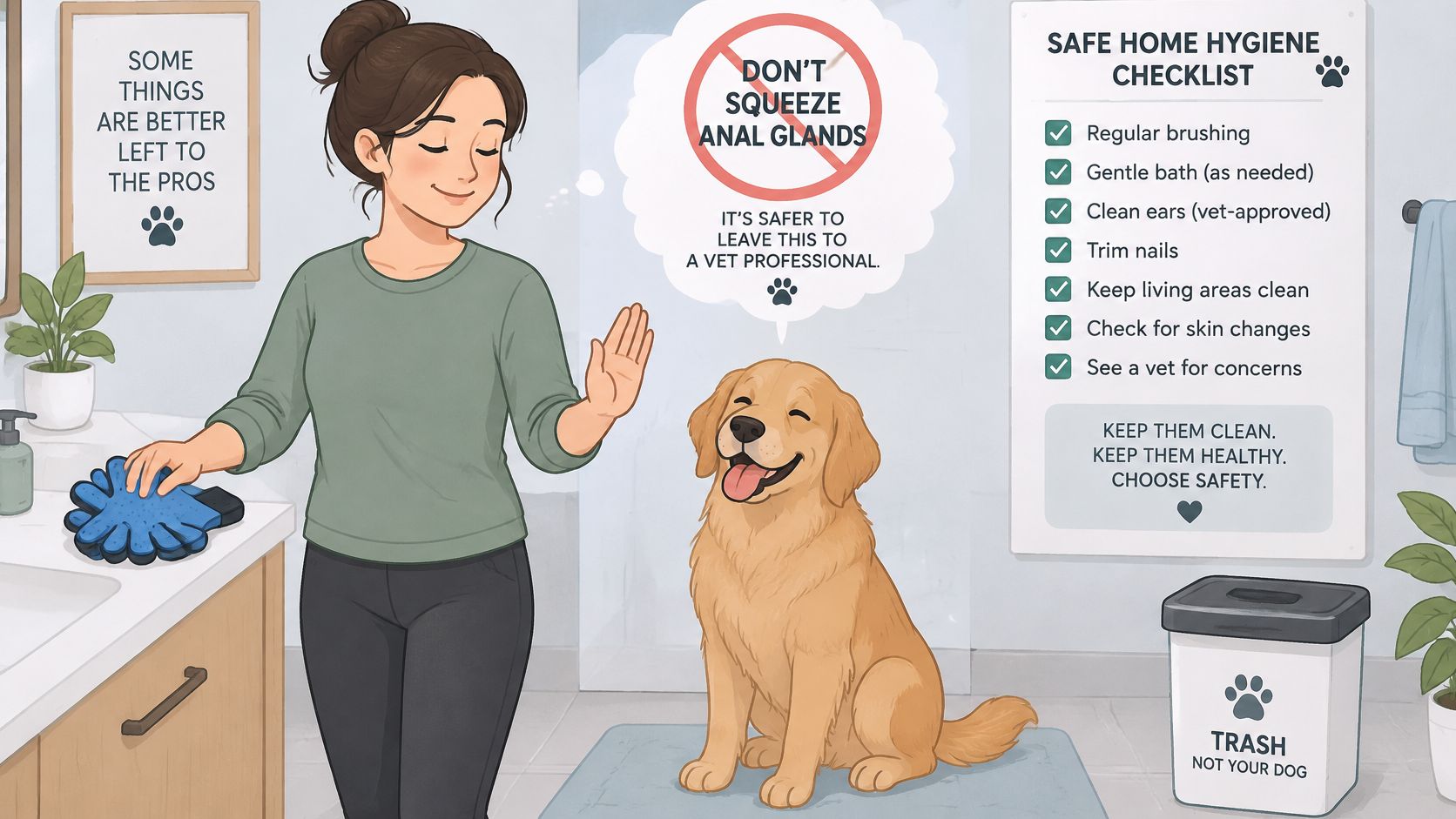
Don't start by squeezing. Improper expression can injure your dog, worsen irritation, or rupture an impacted gland. If you find pain, straining, swelling, blood, pus, or material that won't release, stop and contact a veterinarian. A painful or inflamed sac isn't a home technique problem.
Check the outside, not the inside
When your dog is comfortable, lift the tail gently and look for visible asymmetry, redness, a raw patch, swelling, or discharge. If the area just needs cleaning, wipe the outside with a pet-safe cloth. Don't probe the anus, press on a lump, or keep trying because the first attempt didn't work.
If your dog reacts with pain, pulls away, or seems distressed, stop the check. Repeated owner or groomer expression isn't a sensible response to a problem that keeps returning. Frequent recurrence needs a cause-oriented veterinary assessment, not more frequent squeezing at home.
Know when the job belongs to the clinic
A veterinarian can examine the sacs and check for retained material, inflammation, an abscess, or another concern. Depending on what they find, care may involve professional expression, flushing, medication, or, when medical treatment fails or disease repeatedly returns, discussion of surgery. Those are veterinary decisions, not reasons to repeat a painful home attempt.
If your dog is comfortable, has normal stool, and has only an occasional odor, focus on basic hygiene and a sensible diet plan. For the messes that come with pet care, this resource on keeping a pet-friendly home clean offers practical household guidance.
Do: look gently, clean only the outside, and stop if your dog shows discomfort. Don't: squeeze a painful area, press on a lump, or keep trying when material won't release.
Stool Quality and Weight as Daily Support
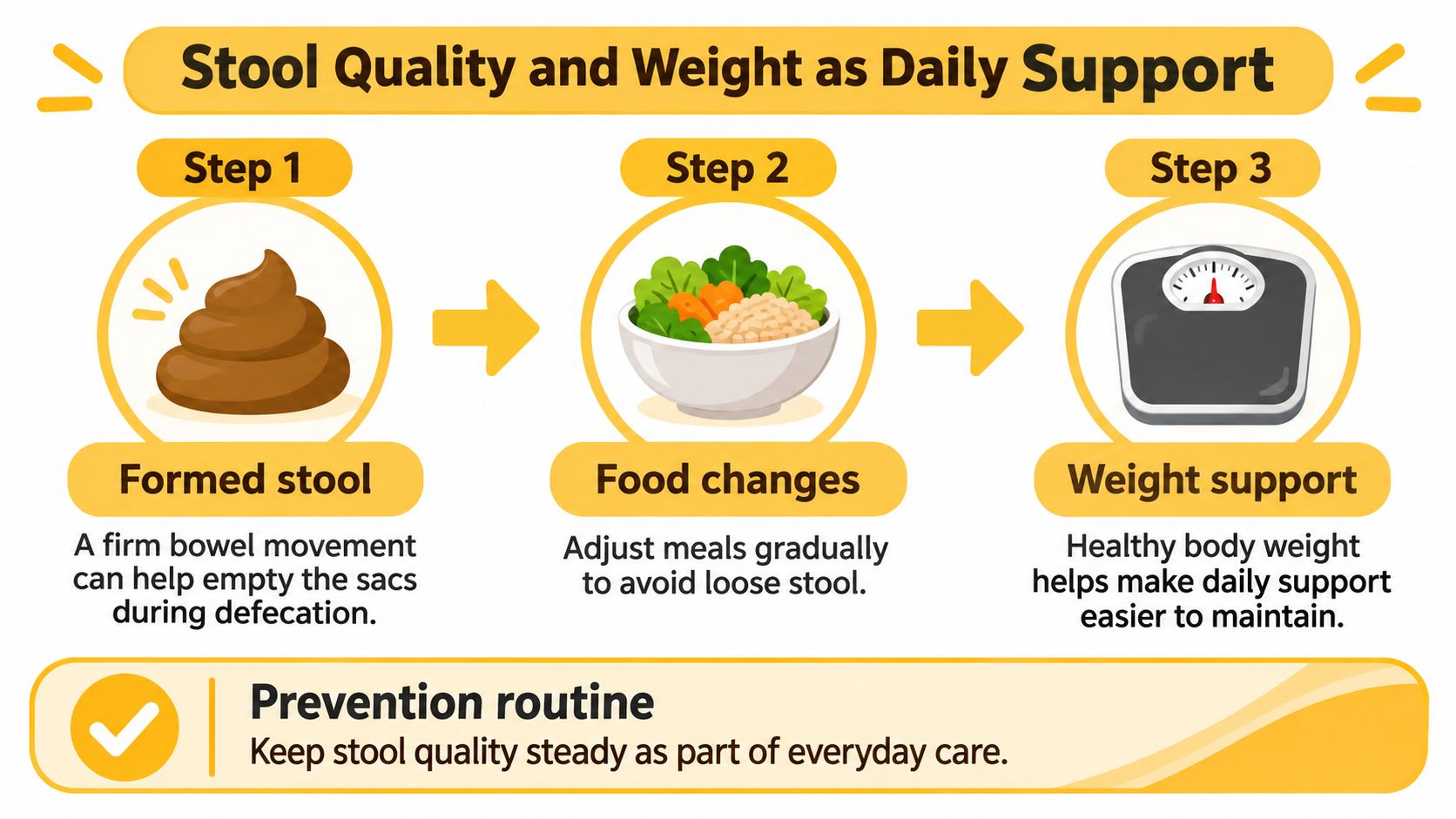
A formed bowel movement puts pressure on the anal sacs during defecation and helps them empty on their own. That makes stool quality a legitimate prevention tool. But fiber is one lever, not the whole plan. The goal is steady, comfortable stool, not the firmest stool you can produce. Push fiber too hard and you trade scooting for gas and loose stool.
Start with a simple record: stool consistency, how often your dog scoots or licks, and the interval between professional expressions if those have been needed. Change one food or fiber source at a time. If you adjust three things at once, you will never know what helped, or what caused the gas.
Follow a manageable routine
Use these checkpoints to make the plan observable rather than relying on a vague impression that your dog seems better:
- Log the baseline. Note stool form, scooting and licking frequency, and any recent professional expression.
- Make one gradual change. Adjust the diet or add a fiber source without stacking several new foods or supplements.
- Keep water available. Fiber changes should go along with adequate water intake.
- Recheck at 30, 60, 90, and 120 days. Record stool consistency, symptoms, and whether your dog needed another expression.
The follow-up matters because impaction can come back months after it seemed resolved. A log is how you catch that pattern early instead of reacting to it late. Recurrence is a reason to track outcomes and question the underlying cause, not a reason to assume every dog needs more fiber.
Include body condition in the plan
Extra weight and poor muscle tone work against natural emptying. If your dog is carrying extra weight, ask your veterinarian for a practical weight plan rather than trying to solve every recurrence with a food topper. For diet adjustments, a guide to fiber sources for dogs lays out the options. Which one fits depends on your dog's weight, current food, and stool quality, so introduce any new source slowly.
Watch for the trade-off. Too much or poorly tolerated fiber shows up as gas, soft stool, or a dog that starts skipping meals. If symptoms persist despite a sensible routine, take the log to your veterinarian and look at the pattern together. Raising the fiber dose on your own is not the answer when the problem keeps returning.
Choosing Nutrition Support Versus Vet Care
The right choice depends on the dog, not on a general rule that all recurrence means “add fiber.” Look at stool quality, body condition, and possible allergy signs together. Itching, ear problems, and paw licking belong in the conversation when scooting keeps coming back.
A veterinary review reports recurrence after anal-sacculitis treatment in 33.7% of dogs, rising to 46.6% in dogs with allergic skin disease (Cornell guidance on canine anal sac disease). Those figures don't prove that allergies explain every recurrence. They do make it unreasonable to ignore skin symptoms and keep adding fiber without asking whether another problem is driving the cycle.
Match the support to the problem
- Preventive nutrition: If your dog is comfortable and the concern is stool quality, consider one gradual diet adjustment and track the response.
- Allergy or weight workup: If repeat episodes arrive alongside itchy skin, ear trouble, paw licking, or extra weight, book a veterinary visit to assess those factors.
- Treatment for active disease: Pain, swelling, blood, pus, or suspected infection needs an examination. Established sacculitis may require treatment such as flushing and intraluminal medication, not a food topper.
- Daily wellness support: If your goal is broader routine support, a powder may be one option alongside the dog's regular care. DA-1™ Daily All-in-One - Senior Dog Support, Joints, Skin/Coat & More is described as a multi-system formula with 18 human-grade ingredients targeting cells, gut, and joints, with no fillers. That description doesn't make it a treatment for anal sac disease.
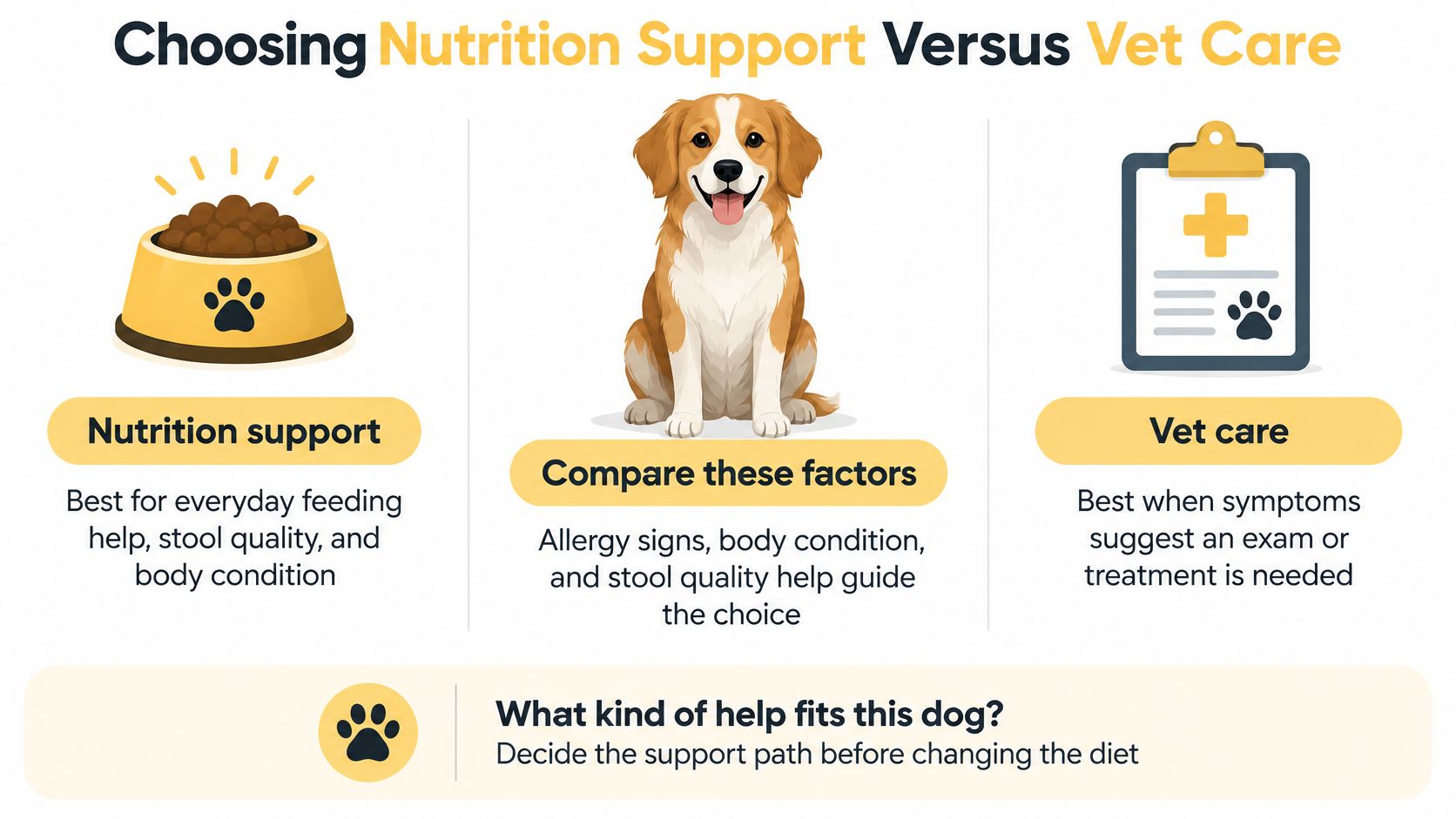
The boundary is straightforward: nutrition supports everyday wellness; veterinary care addresses disease. Product statements are not evaluated by the FDA, and the product isn't intended to diagnose, treat, cure, or prevent disease. If your dog strains as if trying to poop but can't, don't treat that as a supplement-selection question. Use this guide to a dog trying to poop without producing stool and contact your veterinarian when the symptom is painful, persistent, or accompanied by other warning signs.
Your Next Step for Anal Gland Support
This week, write down three things: your dog's stool form, how often they scoot or lick, and whether you've noticed itching, ear trouble, or a recent painful bowel movement. That quick record is more useful than changing the diet based on one episode. It also helps your veterinarian see whether the pattern points beyond stool quality.
If there's swelling, blood, pus, severe pain, lethargy, or a firm lump, book veterinary care rather than starting a supplement. If your dog is otherwise comfortable, choose one manageable change: a gradual diet or fiber adjustment with water, a weight plan if your dog is heavy, or one daily wellness product if your aim is broader routine support. Don't introduce several changes at once.
Decide what improvement looks like
Over the coming month, look for fewer scooting episodes, formed stools that remain consistent, and no new odor, swelling, or pain. If nothing changes, or symptoms return within a few months, take your notes to the clinic. Don't let a temporary quiet spell persuade you to ignore a recurring pattern.
If you're considering a daily powder, check the label against your dog's needs and ask your veterinarian whether it fits the current plan. This guide to reading supplement labels can help you assess ingredients and claims. For DA-1, the company describes once-daily use on food, order management that allows customers to pause or cancel, and dispatch within 24 hours; confirm the current details before ordering.
Make the next step a clear choice: book the veterinary appointment if a red flag or recurring problem is present, or choose one gradual nutrition change if your dog is comfortable and otherwise well.
Pure Paw Labs offers a once-daily powder for broader digestive, skin, joint, immune, and stress-related wellness support, not treatment for anal sac disease. If that fits your dog's routine after checking for red flags, visit Pure Paw Labs to review the product and its label.