


Your dog circles, squats, and strains, but the yard stays clean. Maybe you've watched him try again and again, with nothing coming out except a worried look and a tense belly. That moment is frustrating because it feels small at first, yet it can point to anything from simple constipation to tenesmus or a true obstruction.
The key is not to guess. The same outside behavior, a dog trying hard and failing, can mean stool is too dry to move, the colon or rectum is painful, or something is physically blocking the passage. Veterinary sources describe constipation as difficult or infrequent passage of stool, and they also note that repeated straining can be a sign of tenesmus or obstruction, not just a low-fiber day (st. Louis Animal Emergency Clinic, Vetlexicon).
Practical rule: if your dog is still bright, drinking, and acting mostly normal, mild constipation stays on the list. If the straining is repeated, painful, or paired with vomiting, a swollen belly, or sudden behavior changes, the problem has moved into vet territory.
Table of Contents
- What Your Dog Is Doing and Why It Matters
- Constipation, Tenesmus, and Obstruction Explained
- Common Causes Behind Unproductive Straining
- Constipation Versus Something More Serious
- Safe At-Home Steps Before the Vet Visit
- Diet, Fiber, and Long-Term Prevention
- When to Stop Waiting and Call the Clinic
What Your Dog Is Doing and Why It Matters
You're probably seeing a familiar pattern. Your dog sniffs, circles, lowers into a squat, braces through the back legs, and pushes. Nothing comes out, then the effort starts again a few minutes later, or every time you step outside. That repeated strain is a body signal.
The same outward effort can point to different problems inside the bowel. Constipation means stool has stayed in the colon too long, dried out, and become hard to pass. Tenesmus means the dog keeps straining because the rectum or colon is irritated, inflamed, or painful, even when there is little stool left to move. Obstruction means something is physically blocking the bowel, so pushing cannot clear the passage (Vetlexicon, PDSA).
Why the same squat can mean three different things
A blocked hallway makes the difference easy to see. A hallway that is just crowded lets a package move slowly. A painful floor still allows movement, but every step hurts. A couch turned sideways stops everything in place.
Veterinary guidance uses this same logic. Unproductive straining can come from constipation, obstipation, tenesmus, rectal inflammation, anal gland pain, prostate disease, or blockage, and each one needs a different response (PDSA).
A single mild episode that ends with normal stool still fits with constipation. Repeated straining with little or no output, or straining that looks painful, points to a more serious pattern and deserves a closer look.
Constipation, Tenesmus, and Obstruction Explained
The same outward effort can point to very different trouble inside the body. A dog may be dealing with stool that has become dry and hard, a bowel that feels irritated and keeps sending a false urge to go, or a true blockage that physically stops passage. The surface behavior looks similar, but the cause inside the dog is not.
How normal pooping works
A healthy colon moves stool along, pulls out the right amount of water, stores it in the rectum, then relaxes so it can pass. If stool dries out, it may still move, just slowly. If the lower bowel is inflamed or painful, the dog can keep straining even when little is left to pass. If something is lodged in the way, pushing does not clear it.
Vets sort these patterns by looking at what is happening in the bowel. Constipation usually means slow transit and dry stool, while obstipation is a more severe form where the colon is packed and cannot empty on its own. Tenesmus is repeated straining with little output because the lower bowel is irritated or painful. Obstruction means a physical barrier, such as a foreign object, mass, injury, or organ enlargement, is blocking the passage (Vetlexicon, VCA).
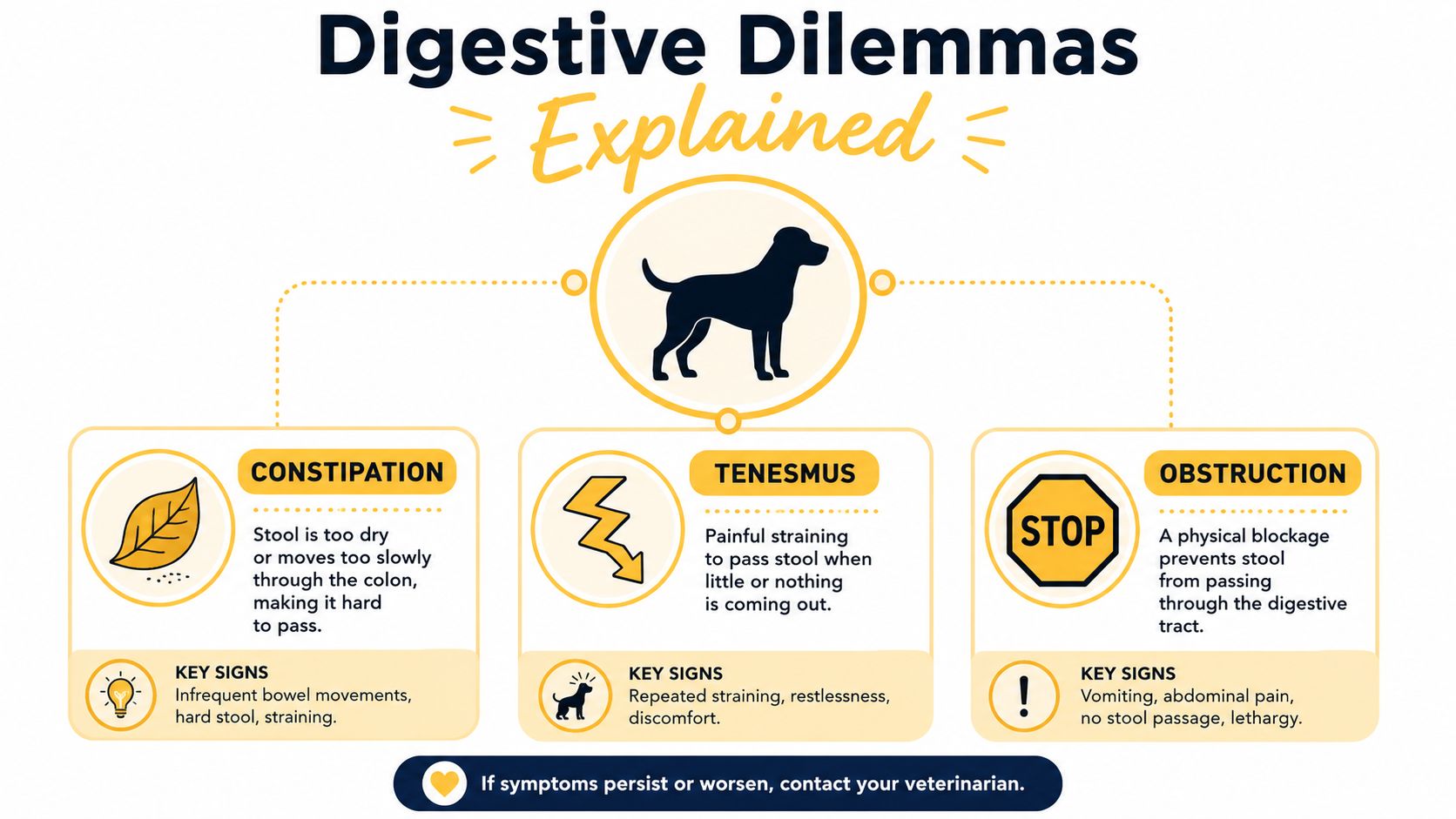
The difference shows up in the exam room. A vet may feel for stool buildup in the abdomen, check whether the rectum seems empty but irritated, and use radiography to tell fecal loading apart from a blockage. That matters because the response changes with the cause. Constipation may improve with hydration and fiber. Tenesmus needs the pain or inflammation behind it addressed. Obstruction needs imaging and sometimes surgery, not more fiber.
Common Causes Behind Unproductive Straining
The outside picture can look the same, but the reasons behind it aren't. Some causes are everyday and reversible. Others need a clinic visit fast. The trick is to notice the pattern your dog is showing, not just the fact that he's trying and failing.
The common, slower-moving causes
Dehydration is one of the first things to think about. When the body is short on water, stool gets drier and harder to move, and the dog may still seem otherwise normal. Low-fiber feeding can contribute too, especially if stool is small, firm, and infrequent. Veterinary references also note that constipation trends can shift with feeding practices, and that bones or other indigestible material are common contributors to constipation (st. Louis Animal Emergency Clinic).
Lack of exercise is another common piece. A dog who spends the day lying around may have slower gut movement than a dog getting regular walks. If he's overweight or stiff, the squat itself can be awkward, and that can make elimination harder to complete.
When pain or anatomy gets involved
Some dogs aren't constipated in the usual sense. They're avoiding a painful posture. Orthopedic pain, especially in older dogs, can make squatting miserable. That can look like repeated attempts with little stool, but the issue starts in the hips, back, or knees rather than the colon. Veterinary lists also include pelvic fractures, neurologic disease, and prostate enlargement among the causes of constipation-like straining (st. Louis Animal Emergency Clinic).
Anal and rectal problems can also change the picture. Anal gland pain, rectal inflammation, or colitis can all trigger tenesmus, so the dog keeps trying even when the bowel isn't packed with dry stool. In intact males, an enlarged prostate can press on the rectum and make defecation look like constipation from the outside, even though the underlying issue is pressure in the pelvis.
The serious, sudden causes
A swallowed foreign body, such as a toy piece, rock, sock, or bone, can create a true blockage. So can perineal hernia, rectal mass, or major pelvic injury. These usually feel more sudden, more uncomfortable, and less responsive to home care. A dog may strain, vomit, stop eating, or seem painful and withdrawn, which is why persistent unproductive straining is never something to brush off as “just a little backed up” (Vetlexicon, VCA).
If the symptom started after chewing bones, grabbing trash, or playing rough, treat that history as important. It changes the odds toward obstruction or injury, which need faster assessment.
Constipation Versus Something More Serious
A dog can squat, strain, and still leave you staring at an empty patch of floor. The outward sign looks similar either way, so the clue is in the rest of the story.
| Sign Observed | More Likely Constipation | More Likely Something Serious |
|---|---|---|
| Stool output | Small, dry, hard stools, or less frequent stool | No stool at all, or repeated unproductive squats |
| Appetite | Usually still eating | Vomiting, refusing food, or appetite dropping |
| Energy | Mostly normal | Sudden tiredness, collapse, or marked discomfort |
| Belly | Not obviously painful | Bloated, hard, or painful belly |
| Discharge | Little or none | Blood or mucus without stool |
| History | Gradual change, mild dehydration, less exercise | Bone, toy, sock, rock, trauma, or sudden onset |
Tenesmus can look like constipation from across the room, but it often comes from colitis or rectal pain, where the dog feels the urge to go even when the bowel is not full (PDSA). Fiber helps some causes of straining and can make others worse, especially when irritation or blockage is part of the problem.
What changes in appetite, energy, or vomiting tell you
A dog that is still drinking, eating, and moving around in a familiar way may still be dealing with simple constipation. Once appetite drops, vomiting starts, or the dog seems dull or painful, the problem has moved into a different category. Those changes matter because they often point to a blockage, significant discomfort, or another issue that needs veterinary attention sooner rather than later (VCA).
Safe At-Home Steps Before the Vet Visit
If your dog is bright, drinking, and not showing red flags, a careful home plan can be reasonable. The goal is to soften stool and keep the gut moving without making anything worse.
Start with moisture, then add gentle support
Begin by making water easier to take in. Add water to meals, offer ice cubes, and make sure there are multiple clean water stations around the house. If your dog eats dry food, a short-term switch to wet food can add moisture without much drama. Some families also use a mild broth topper, as long as it's dog-safe and not overly seasoned.
Next comes fiber, but slowly. Plain canned pumpkin, a small amount of plain psyllium, or green beans can help some dogs by giving the stool more structure and water-holding capacity. Fiber helps some dogs and frustrates others, especially if there's gas, pain, or a blockage hiding underneath.
Keep movement gentle
A few short, easy walks can stimulate gut movement without forcing a sore dog to work hard. That matters if the issue is mild sluggishness or a stiff body making the posture uncomfortable. You don't need a long hike. A calm leash walk around the block is often enough to nudge the bowel along.
Skip the risky shortcuts
Don't keep repeating enemas without veterinary guidance. Don't give mineral oil by mouth, and don't reach for human laxatives. Those choices can create new problems and, if the cause is obstruction or tenesmus, they can waste precious time. If your dog hasn't passed stool for 48 to 72 hours, veterinary guidance says it's time to call the clinic rather than keep experimenting at home (VCA).
The internal link Pure Paw Labs probiotic supplement guide can be useful if you're trying to understand how gut-support products fit into a broader routine, but it doesn't replace medical triage when a dog is straining without output.
Keep a simple daily log
- Water intake changes. Note whether your dog is drinking less, more, or normally.
- Stool appearance. Write down dry, hard, small, or absent stool.
- Straining pattern. Track how often he squats and whether anything comes out.
- Appetite and energy. Mark normal, reduced, or off.
- Anything swallowed. Include bones, toys, socks, rocks, or trash.
Bring that list to the phone call or appointment. Clean details help a vet decide whether this is constipation, tenesmus, or an obstruction much faster.
Diet, Fiber, and Long-Term Prevention
Prevention works best when you think in routines, not rescue fixes. Stool quality usually reflects what went in over several days, not just what happened at the last meal. The most useful goal is steady, easy-to-pass stool that doesn't swing from hard pellets to repeated straining.
Build a stool-friendly baseline
Soluble fiber helps hold water in the stool and can soften what moves through. Insoluble fiber adds bulk and can help keep things moving. Most dogs do better with balance than with loading up on one type, because too much of either direction can backfire. A dog that's already gas-prone or borderline blocked doesn't need a big sudden fiber jump.
Hydration stays important even when symptoms are gone. Water is part of stool formation every single day, not just during a constipation episode. Exercise matters too, because movement supports gut motility and makes the squat easier for many dogs.
Use supplementation as part of the bigger picture
Some families like a daily supplement that supports several systems at once, especially when a dog has stool issues plus skin, joint, or aging-related changes. DA-1™ Daily All-in-One - Senior Dog Support, Joints, Skin/Coat & More is described as a multi-system formula with 18 human-grade ingredients, designed to target cells, gut, and joints, with no fillers and a 60-day money-back guarantee. If a daily scoop fits your routine, the point is convenience, not replacing a vet workup when symptoms keep returning.
The internal guide on best sources of fiber for dogs is useful if you're trying to choose foods or add-ins that support stool consistency without overdoing it.
Watch patterns, not just one bad day
The dogs most likely to benefit from prevention tracking are the ones that repeat the same problem. Keep an eye on stool score, water intake, and food triggers each week. If a certain treat, chew, or supplement seems to line up with harder stool, that pattern is worth noting. Veterinary sources also warn that recurrent constipation should push you toward evaluation instead of endless home fixes.
When to Stop Waiting and Call the Clinic
The “wait a day or two” advice is too broad for some dogs. True obstruction can look exactly like stubborn constipation at first, and tenesmus from colitis, rectal inflammation, or prostate disease won't improve with extra fiber the way simple dry stool might. Waiting while the dog keeps straining can let the colon distend, worsen dehydration, and make medical emptying harder later (VCA, Vetlexicon).
Call sooner if you see any of these
Repeated unproductive squats over several hours, vomiting, a hard or painful belly, bloating, blood or mucus without stool, a known or suspected swallowed bone or object, sudden collapse, pale gums, or a male dog straining when urinary trouble could also be in play. These are not “watch and wait” signs.
The internal guide on signs of poor gut health in dogs can help you think through broader digestive patterns, but it doesn't replace a clinic exam when the dog can't pass stool.
Screenshot this simple rule
Red flag in the next few hours: repeated straining with no output, vomiting, pain, bloating, blood or mucus, or any suspected foreign object.
Safe to try home care for 24 to 48 hours: mild straining, still eating and drinking, normal energy, and small dry stools without pain.
If you're unsure, call the clinic. A quick phone call is usually the cheapest and fastest way to decide whether this is mild constipation or something that needs hands-on care.
Pure Paw Labs makes daily dog supplements that fit into a simple routine, including gut-focused support alongside joint and skin support. If your dog keeps having poop trouble or you want a steadier prevention plan, take a look at Pure Paw Labs and see whether a daily scoop fits the way you already feed and care for your dog.