


You're trying to sleep, but your dog keeps licking one paw. A few minutes later, the licking becomes chewing, then scratching, then another restless turn on the bed. In the morning, you notice damp fur between the toes or a red patch near the ear, and you're left wondering whether this is allergies, fleas, pain, or just a habit.
Occasional grooming is normal. Persistent dog scratching and licking isn't something to dismiss as bad behavior. It's a sign that your dog may be dealing with itch, inflammation, infection, parasites, pain, or another source of discomfort. The right response isn't to guess at a single cause. It's to observe the pattern, protect the skin from further damage, and know when veterinary testing is needed.
Table of Contents
- Why Your Dog Cannot Stop Scratching and Licking
- Decoding the Most Common Skin and Parasite Triggers
- Hidden Orthopedic Pain Disguised as Itchy Skin
- Performing a Safe and Effective Home Triage Check
- Breaking the Itch Cycle with Targeted Veterinary Care
- Simplifying Daily Wellness with All-in-One Nutrition
- When to Monitor at Home and When to Call the Vet
Why Your Dog Cannot Stop Scratching and Licking
At midnight, the sound of repeated licking can feel much louder than it is during the day. Your dog may focus on the paws, rub the face against furniture, scratch an ear, or chew the same patch of skin until the hair becomes wet and thin. That behavior is frustrating, but it's also communication. Your dog is trying to respond to an uncomfortable sensation.
A 2019 study in Scientific Reports found that approximately 10% of dogs in developed countries are affected by skin allergies. Among dogs classified as cases, 88% had itchy skin either currently or previously, while abnormal scratching appeared in 60% to 70% of case groups and paw licking or chewing in 53% to 63%. By comparison, only 2% to 7% of control dogs showed those behaviors, as reported in the Scientific Reports study of canine skin allergies.
That difference matters. A dog who licks briefly after a walk may be grooming. A dog who interrupts sleep, repeatedly chews the feet, or scratches until the skin changes is showing a clinical sign that deserves attention.
Why persistence changes the picture
Veterinary records also show that pruritus, the medical term for itching, is not a rare complaint. A UK surveillance report recorded pruritus in 3.8% of dog consultations. In those records, 45% of dogs had symptoms for less than a month, 21% had symptoms lasting more than a year, and 14% had symptoms lasting between three months and one year, according to the UK pruritus surveillance report.
This range explains why two dogs with similar scratching may need very different plans. One may have a recent irritant on the paws. Another may have a chronic inflammatory condition, a recurring infection, or discomfort that has gone unnoticed for months.
Start by recording where your dog licks, how often it happens, and what the skin looks like afterward. Photos and short videos can help your veterinarian distinguish a brief grooming pattern from an escalating problem. Basic coat and skin care can also support observation, and this guide to dog skin and coat care can help you understand what healthy skin should look like.
Fleas remain worth considering even when you don't see live insects. If you suspect an infestation, follow a coordinated home-cleaning and pet-care routine such as The Green Advantage flea control steps rather than treating only the dog and ignoring the environment.
Decoding the Most Common Skin and Parasite Triggers
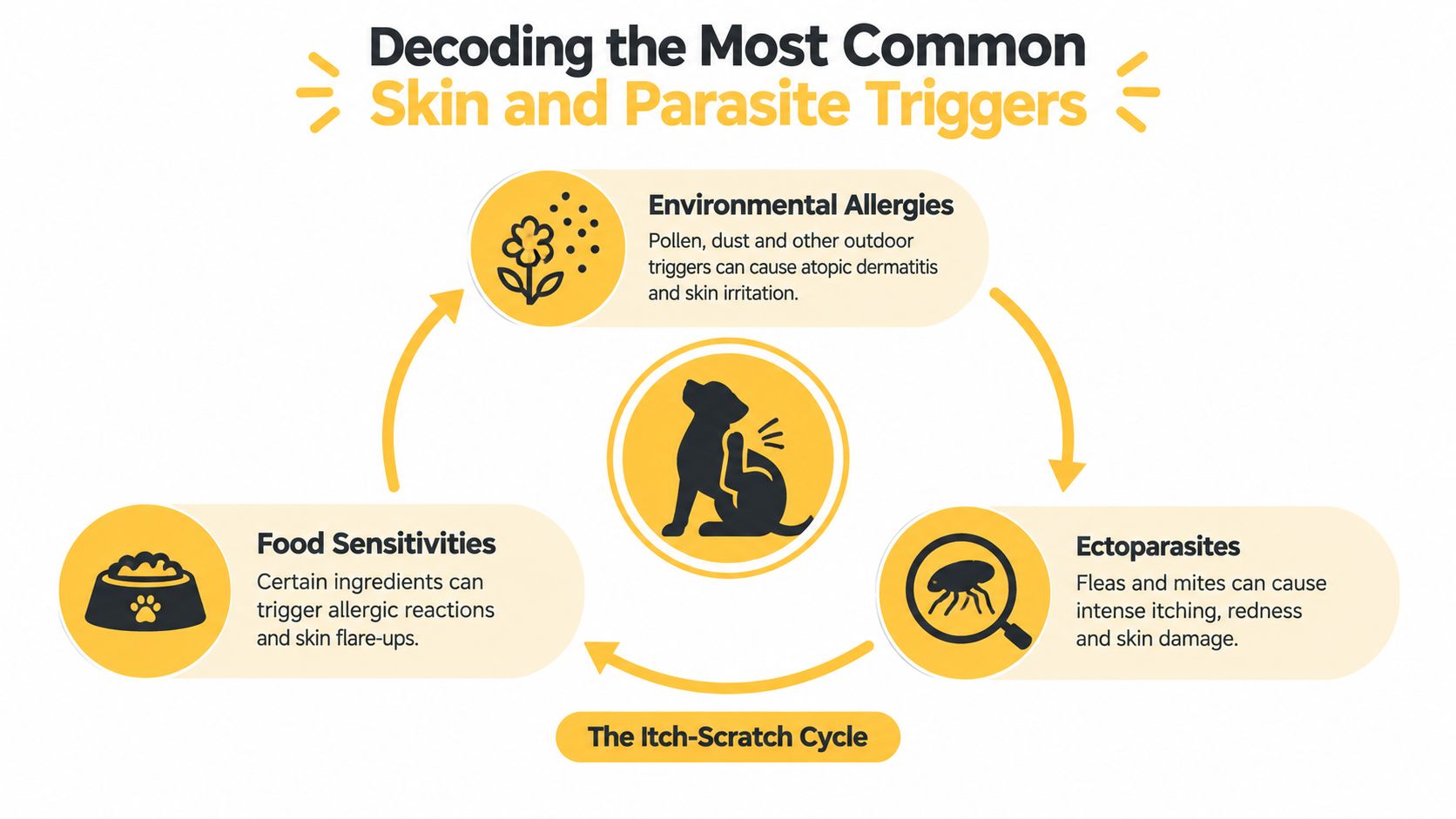
Itching is a symptom, not a diagnosis. The main dermatological categories veterinarians investigate are ectoparasites, infections, and allergies, but location and timing can help narrow the possibilities.
Environmental allergies
Atopic dermatitis is a chronic inflammatory condition associated with sensitivity to environmental allergens. Cornell's veterinary guidance estimates that it may affect as much as 10% to 15% of dogs, and describes the familiar pattern of itch followed by scratching or licking, skin-barrier damage, more inflammation, and possible secondary bacterial or yeast infection. Read the Cornell guide to canine atopic dermatitis for a fuller explanation.
Environmental triggers often show up as:
- Paw chewing: Especially after outdoor exposure or during recurring seasonal flares.
- Face rubbing: Dogs may rub the muzzle or scratch around the eyes and ears.
- Belly and armpit irritation: These thin-skinned areas can react to allergens or contact irritants.
- Recurring ear problems: Allergic inflammation can make the ears more vulnerable to secondary problems.
A pattern involving several paws, the face, ears, and underside of the body is more suggestive of a broad skin process than a single injury.
Food-related reactions
Food allergy can look similar to environmental allergy, which is why guessing based on one ingredient rarely provides a reliable answer. The veterinary guidance on pruritus in dogs notes that food allergy may affect the pinnae, feet, underside of the body, and sometimes the perianal or genital area.
For persistent signs, veterinarians commonly use a strict eight-week elimination diet followed by provocation to confirm food allergy. Every treat, flavored medication, table scrap, and supplement can interfere with the result, so the trial needs to follow the prescribed plan exactly.
Fleas, mites, and infections
Flea-related irritation may be generalized or concentrated around the back, hindquarters, and tail base. Mites can cause intense itch but can't be confirmed by visual inspection alone. A vet may need skin testing to identify them.
Scratching and licking can also create a second problem. Once the skin barrier breaks, bacteria or yeast may multiply in the warm, damp areas between the toes, inside folds, or around moist lesions. Strong odor, greasy skin, crusts, open areas, or increasing redness should move the concern beyond simple seasonal itch. For more detail on why yeast-related signs can persist, see this explanation of yeast support for dogs.
Give your veterinarian useful observations instead of only saying, “My dog is itchy.” Note the body locations, seasonality, recent diet changes, parasite prevention, ear odor, paw odor, and whether the problem affects one area or many.
Hidden Orthopedic Pain Disguised as Itchy Skin
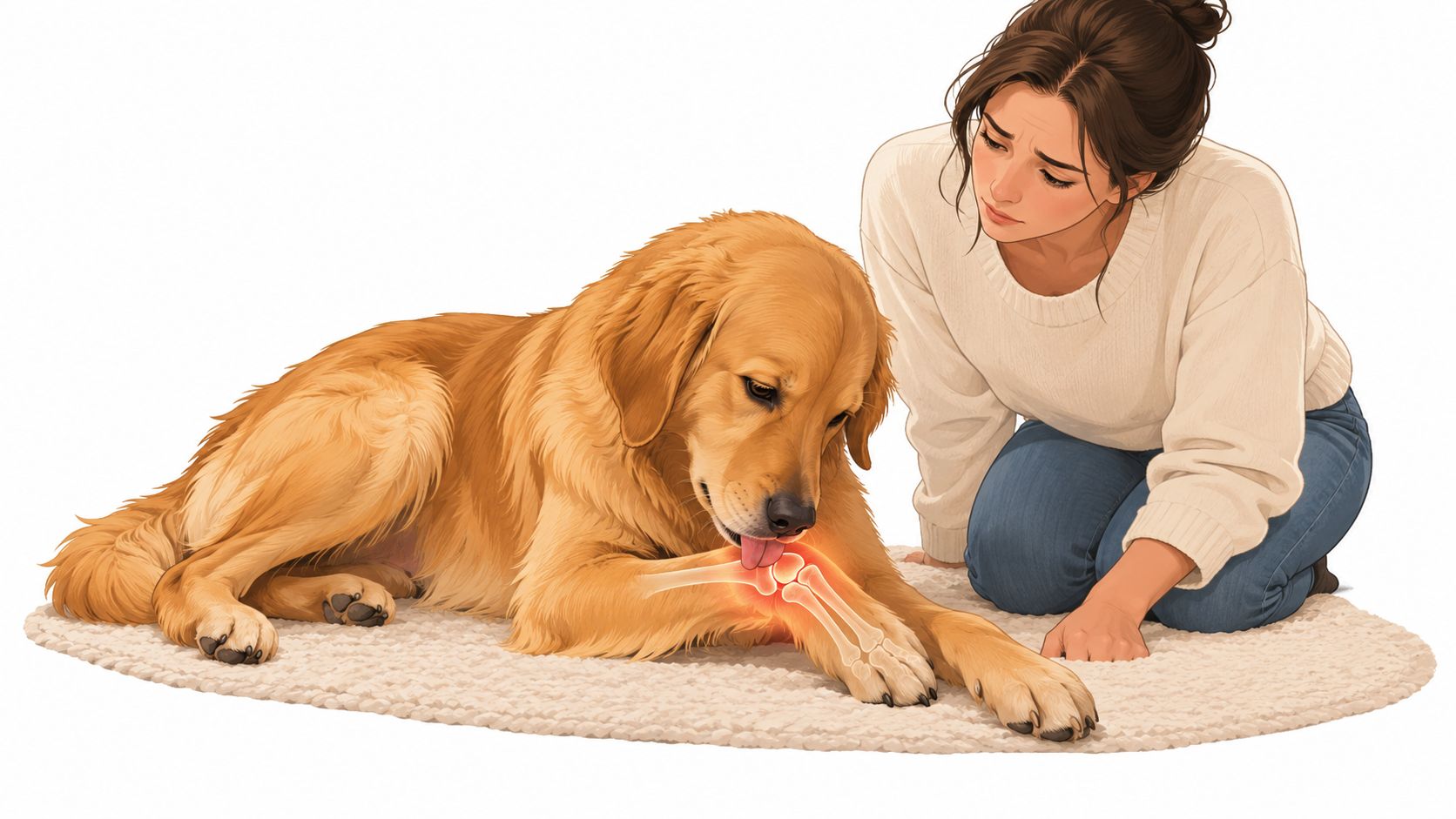
Not every dog who licks is reacting to a skin allergen. A dog may focus on one wrist, knee, hip, or lower leg because the area hurts underneath the skin. Pain, arthritis, a minor injury, or nerve discomfort can all lead a dog to lick or chew as an attempt to soothe an unpleasant sensation.
The behavior often looks different from generalized itch. A dog with widespread skin irritation may scratch with the hind legs, rub against furniture, or move between several areas. A dog with pain-related licking may return to one precise spot, lick rhythmically, guard the limb, or show stiffness when rising. These clues aren't a diagnosis, but they're important enough to share with your veterinarian.
Clues that point below the skin
Look at the relationship between licking and movement. Does your dog lick the front leg after a walk? Does your dog hesitate before climbing stairs, avoid jumping, shift weight, or take longer to stand? Does the licking continue even when the skin looks normal?
A localized lick can also begin with a surface injury and then continue after the original irritation has improved. A torn nail, small puncture, foreign material, or sore paw pad may cause focused attention. If the dog is limping, the limb is swollen, or touching the area causes a sharp reaction, don't keep applying creams and waiting.
Pain clue: A repeatedly licked joint with stiffness or altered movement deserves an orthopedic examination, even if the coat looks healthy.
Avoid forcing a dog's leg through a range of motion at home. Don't bend, stretch, or massage a painful joint, and never give human pain medication unless a veterinarian specifically directs you. Instead, record a short video of your dog walking, standing, lying down, and licking the area. A practical overview of dog mobility issues can help you recognize movement changes to discuss at the appointment.
Nutrition and daily mobility support may form part of a broader care plan, but they don't replace an examination when pain is possible. The priority is finding out whether the dog needs skin treatment, joint management, wound care, imaging, or another form of targeted help.
Performing a Safe and Effective Home Triage Check
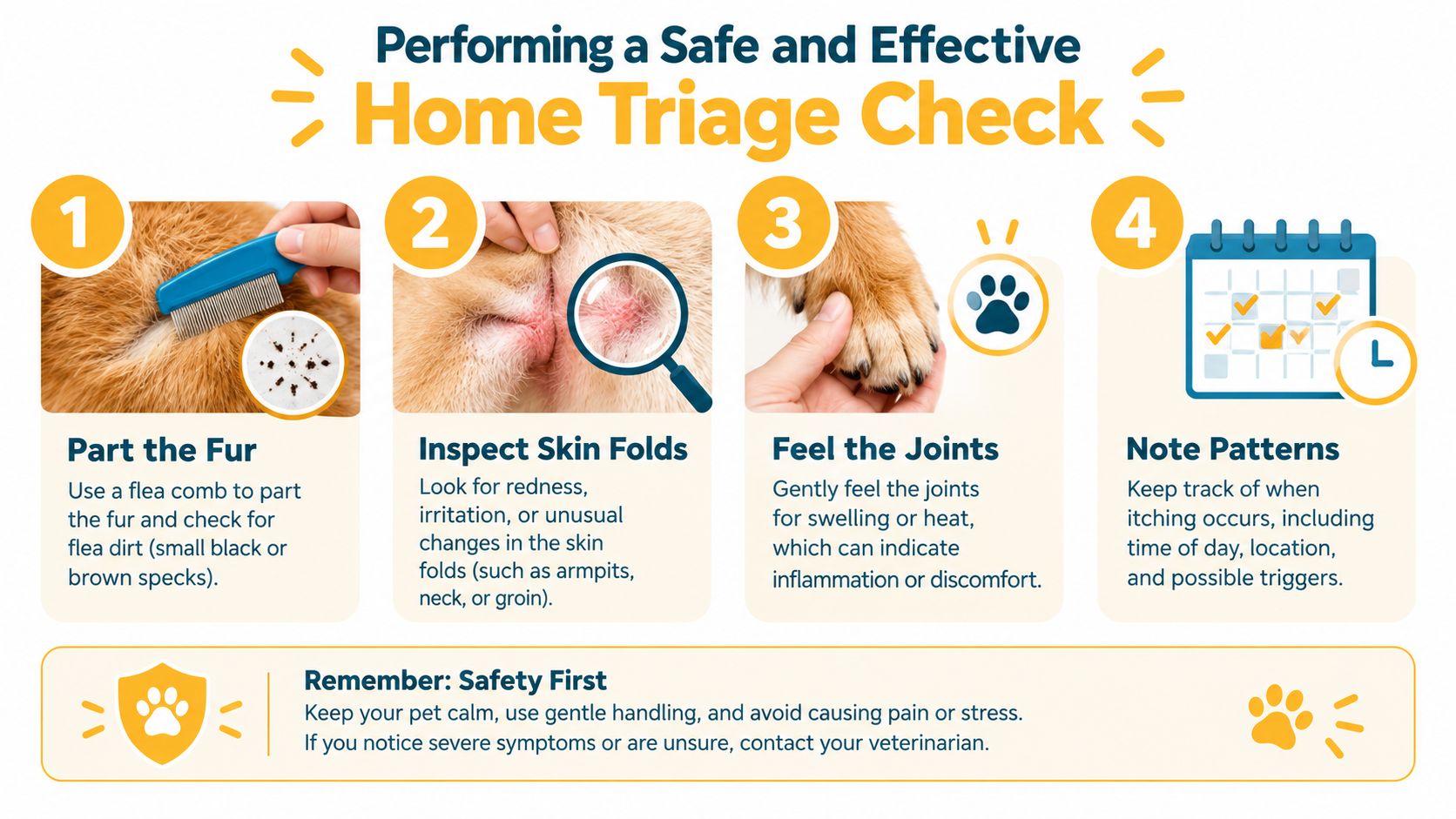
A calm home check can help you describe the problem without turning your dog into a wrestling match. Choose a well-lit space, let your dog settle, and stop if your dog becomes frightened or painful. Your goal is to observe, not to diagnose.
Start with the coat and skin
- Part the fur: Use your fingers or a flea comb around the tail base, lower back, belly, and areas your dog keeps scratching. Look for black specks, scabs, redness, dampness, hair loss, or small moving insects. Black debris can have several explanations, so don't assume it confirms fleas.
- Inspect the paws: Check between the toes, around the nails, and across the pads. Look for swelling, a torn nail, a puncture, embedded material, raw skin, or trapped moisture. Compare the affected paw with the opposite paw.
- Check the ears without probing: Look only at the visible outer ear. Redness, discharge, swelling, a strong odor, head shaking, or obvious pain warrants veterinary attention. Don't insert cotton swabs or liquids into an ear unless your veterinarian has recommended them.
- Observe the body pattern: Write down whether the problem is limited to one limb, affects several paws, or includes the ears, face, belly, and tail base. Note when it occurs, such as after walks, during sleep, after meals, or during a particular season.
Keep temporary care gentle
For a minor surface irritation, gently rinse with clean water and pat dry. Keep the area dry, prevent licking with an appropriate protective collar if necessary, and avoid human creams, essential oils, harsh disinfectants, and unapproved pain medicines. A bath may remove surface allergens, but it won't resolve a parasite, infection, food allergy, or painful joint.
End the home check and contact a clinic if you see:
- Open wounds or bleeding: Self-trauma can enlarge quickly.
- Foul odor or discharge: These signs may accompany infection.
- Rapid swelling or severe pain: This can indicate an injury, bite, foreign object, or deeper inflammation.
- Limping or refusal to move: The issue may involve the paw, joint, bone, or another painful structure.
- Lethargy or poor general condition: Skin symptoms combined with whole-body changes need professional assessment.
If you notice unusual material in your dog's stool while investigating broader health concerns, document it rather than trying to interpret it from appearance alone. This guide to white dots in dog poop explains why a veterinary opinion may be needed.
Breaking the Itch Cycle with Targeted Veterinary Care
Home care can protect irritated skin, but chronic dog scratching and licking often needs a cause-specific plan. A veterinarian may examine the ears, paws, folds, coat, and joints, then use tests that look for bacteria, yeast, mites, or other contributors. The value of testing is simple: the same outward behavior can require completely different treatment.
For allergic-looking disease, the plan may combine flare-factor control, skin hygiene, barrier support, and itch reduction. Cornell's guidance lists glucocorticoids, ciclosporin, oclacitinib, and lokivetmab among therapies veterinarians may use to reduce itch in atopic dermatitis. The appropriate option depends on the dog's age, health history, infection status, and the veterinarian's assessment.
Why barrier repair matters
The skin barrier is not just a surface covering. It helps limit moisture loss and reduces exposure to irritants. Repeated scratching and licking disrupt it, while secondary infection can add another source of inflammation. That creates a loop in which the dog feels itchier, causes more damage, and needs more targeted care.
Mild shampoos, appropriate bathing, coat care, and essential fatty acid intake may support a broader plan, but they're adjuncts rather than substitutes for treatment. If the skin is infected, a veterinarian may recommend topical or systemic therapy selected for the organisms and severity involved.
The diet trial must be strict
When food allergy is suspected, random food changes make the picture harder to interpret. The standard confirmation approach described by veterinary guidance is an eight-week elimination diet followed by provocation. The diet needs to be exclusive, and improvement should be assessed before ingredients are reintroduced in a controlled way.
The gut-skin connection is useful as a way to think about whole-dog care. Stable nutrition and healthy digestion can support general wellbeing, while skin signs still require direct examination when they persist. Nutrition may complement allergy and barrier management, but it can't identify a mite, remove a foreign object, or diagnose arthritis.
Simplifying Daily Wellness with All-in-One Nutrition
Caring for a dog with skin sensitivity and mobility concerns can become complicated. One routine may include a diet plan, a joint supplement, a digestive product, a coat-support powder, and several medications. More containers mean more opportunities to forget a dose or add an ingredient that disrupts a food trial.
An all-in-one nutritional product offers a different approach. Instead of separating routine support into several powders or pills, an owner can use one daily food topper while keeping prescribed treatments separate. This can reduce supplement fatigue, but it should be introduced carefully, especially if your veterinarian is evaluating a possible food allergy.
Compare the routine, not the promise
| Multi-product routine | All-in-one routine |
|---|---|
| Several containers and serving instructions | One combined daily serving |
| More ingredients to track separately | One ingredient list to review |
| Greater chance of overlap between products | Simpler routine documentation |
| May suit dogs needing highly individualized support | May suit owners seeking routine consolidation |
The choice depends on the dog. A veterinarian may prefer a limited diet or no new supplement during an elimination trial. Another dog may have a stable diet and benefit from a simpler daily nutritional routine that supports general skin, coat, digestive, joint, immune, or stress-related needs.
DA-1™ Daily All-in-One is described by its manufacturer as a human-grade powder used as one scoop on top of food once daily. Its product information presents it as a combined food topper for joint health, skin and coat support, digestion, immunity, and anxiety relief, with 99.8% active ingredients and no fillers according to the publisher's product materials.

Treat this kind of product as nutritional support, not as an anti-itch medication or a substitute for investigation. Introduce any supplement with your veterinarian's knowledge, keep notes on changes in licking, stool, coat, and movement, and stop adding new variables if your dog's signs suddenly worsen. More information about evaluating a consolidated routine appears in this guide to all-in-one dog supplements.
When to Monitor at Home and When to Call the Vet
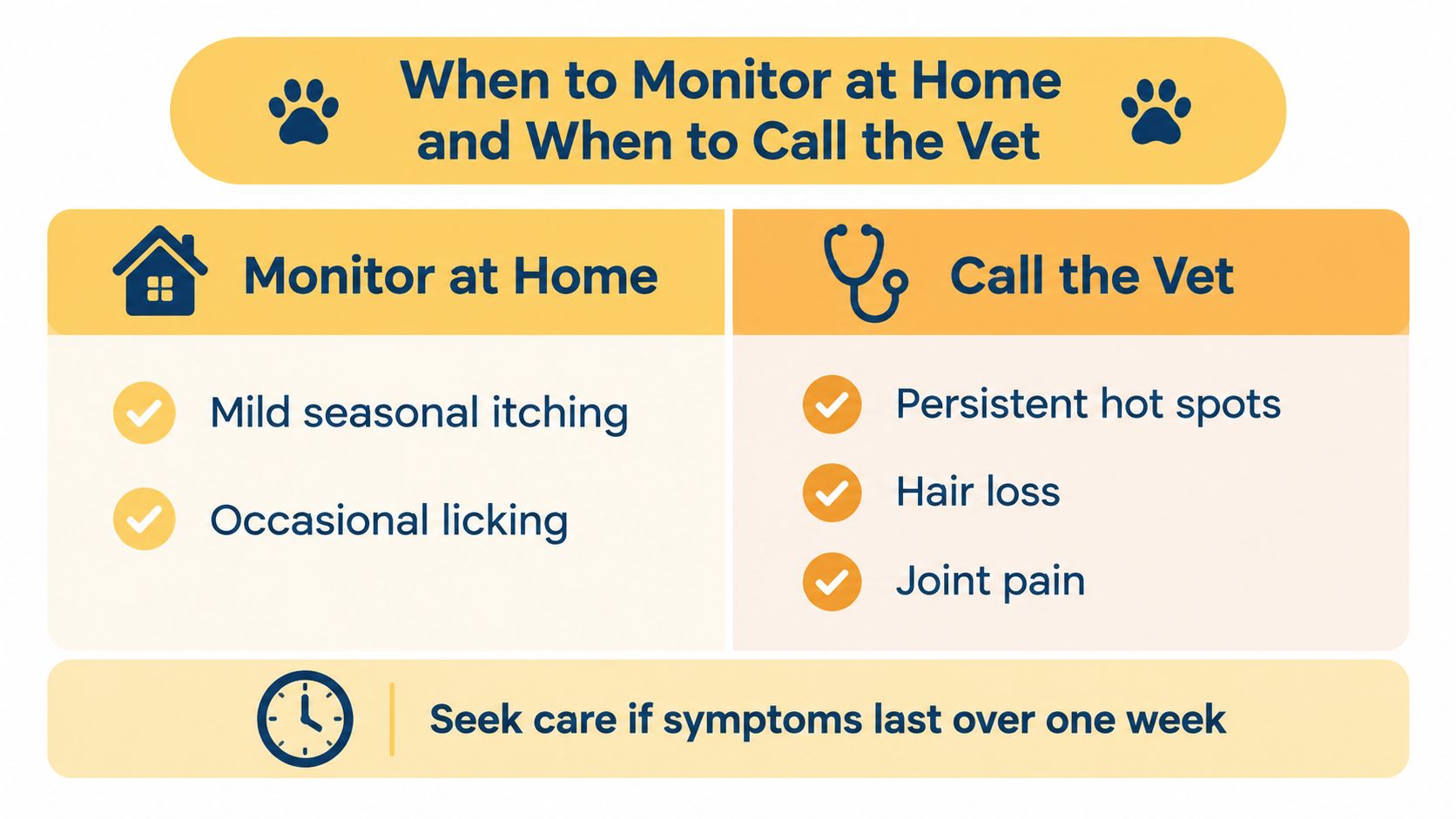
A mild, occasional lick after outdoor activity may be reasonable to observe if the skin looks normal, your dog is comfortable, and the behavior stops. Clean and dry the paws, check for visible irritation, and record when it happens. Monitoring should involve attention, not passive waiting.
Book a veterinary appointment when the behavior persists, keeps returning, or changes your dog's routine. A UK surveillance report found that pruritus can last from less than a month to more than a year, so duration helps show whether you're dealing with a passing irritation or a recurring condition. The global pruritus report also describes owner concerns involving treatment choices, quality of life, and the gap between expectations and management, which makes early communication especially important.
Use this decision guide
- Monitor briefly: Occasional grooming, mild seasonal licking, normal movement, intact skin, and no odor or discharge.
- Arrange a veterinary visit: Repeated scratching, persistent paw chewing, hair loss, hot spots, ear odor, scabs, greasy skin, or symptoms that keep returning.
- Prioritize pain evaluation: One-sided licking, swelling near a joint, limping, stiffness, reluctance to rise, or a change in activity.
- Seek urgent care: Severe pain, rapidly spreading swelling, significant bleeding, breathing difficulty, facial swelling, collapse, or marked lethargy.
Bring photos, videos, diet details, parasite-prevention records, and a timeline. Don't apply multiple new products immediately before the appointment, because changing several variables can make the findings harder to interpret.
The following video can provide a visual reminder of signs that deserve closer attention:
Dog scratching and licking is easier to manage when you treat it as information. Look beyond “allergy” when the pattern is one-sided, painful, unusually persistent, or linked with movement changes, and ask your veterinarian to investigate both skin and orthopedic causes.
If your dog needs routine support for skin and coat, digestion, joints, immunity, or stress-related needs, explore the daily nutrition approach from Pure Paw Labs and discuss any new supplement with your veterinarian before adding it to an allergy workup. A simpler routine can make it easier to track what helps your dog and what doesn't.