


A large UK VetCompass study found periodontal disease in 2,797 dogs, or 12.5%, across 22,333 dogs seen in 784 veterinary clinics in just one year, making it the most commonly diagnosed disorder in that dataset, ahead of ear infections at 7.3% and obesity at 7.1%. That is why dog dental health tips should not sit in the “nice to have” category. Healthy teeth and gums support comfort, make eating easier, and help preserve normal oral function over time.
The most effective home habit is also the simplest to explain. Daily tooth brushing is the strongest step owners can take between professional cleanings, and the American Veterinary Medical Association describes it as the single most effective home measure. Older dogs and smaller dogs face higher risk, so prevention matters even before you see obvious trouble. A practical routine works best when it is built from small steps you can repeat every day, with diet choices, chews, and supportive supplements added in a way that fits your dog's age and needs.
Table of Contents
- 1. Regular Professional Dental Cleanings
- 2. Daily Tooth Brushing Routine
- 3. Dental-Specific Diet and Chewing
- 4. Water Additives and Oral Rinses
- 5. Dental Treats and Enzymatic Chews
- 6. Omega-3 Fatty Acids and Anti-Inflammatory Nutrition
- 7. Probiotics and Gut Health for Oral Immunity
- 8. Early Detection and Regular Veterinary Oral Examinations
- 8-Point Dog Dental Health Comparison
- Bring It All Together for a Healthy Smile
1. Regular Professional Dental Cleanings
One year can be enough for tartar to build below the gumline, where brushing at home cannot reach. Professional cleanings fill that gap. A veterinarian removes hardened buildup, checks for hidden inflammation, and looks for problems that may not show up when a dog seems fine at home. As noted earlier, prevention depends on daily brushing paired with professional oral evaluation and treatment under general anesthesia. A practical starting point is to ask about cleanings at the annual wellness visit, then adjust for breed, size, age, and mouth history.
Small-breed dogs often need earlier attention than large-breed dogs because their mouths can crowd and trap debris more easily. Puppies and younger adults may have cleaner teeth on the surface, but that does not remove the need for planning ahead. A senior rescue with heavy tartar needs a different schedule than a young mixed-breed dog that gets steady home brushing. If your veterinarian recommends pre-anesthetic bloodwork, that step helps shape the procedure more safely and gives the team a better picture of your dog's overall condition.
A good shortcut is to connect dental planning with the rest of your dog's health routine. That can include discussing oral care alongside a broader feeding plan, especially if you are already working on holistic dog nutrition and want the mouth, diet, and recovery period to support one another. Nutrition does not replace a cleaning, but it can help the rest of the plan make sense, especially for dogs with sensitive gums, older dogs with changing needs, or dogs that need extra support after anesthesia.
Practical rule: If your dog already has bad breath, tartar, or red gums, do not wait for the next calendar year to ask about a dental exam.
After the cleaning, follow the discharge plan closely. Soft food for a short period, pain control if prescribed, and careful monitoring all help the mouth heal well. A clean mouth can still become a sore mouth if recovery is rushed.
2. Daily Tooth Brushing Routine
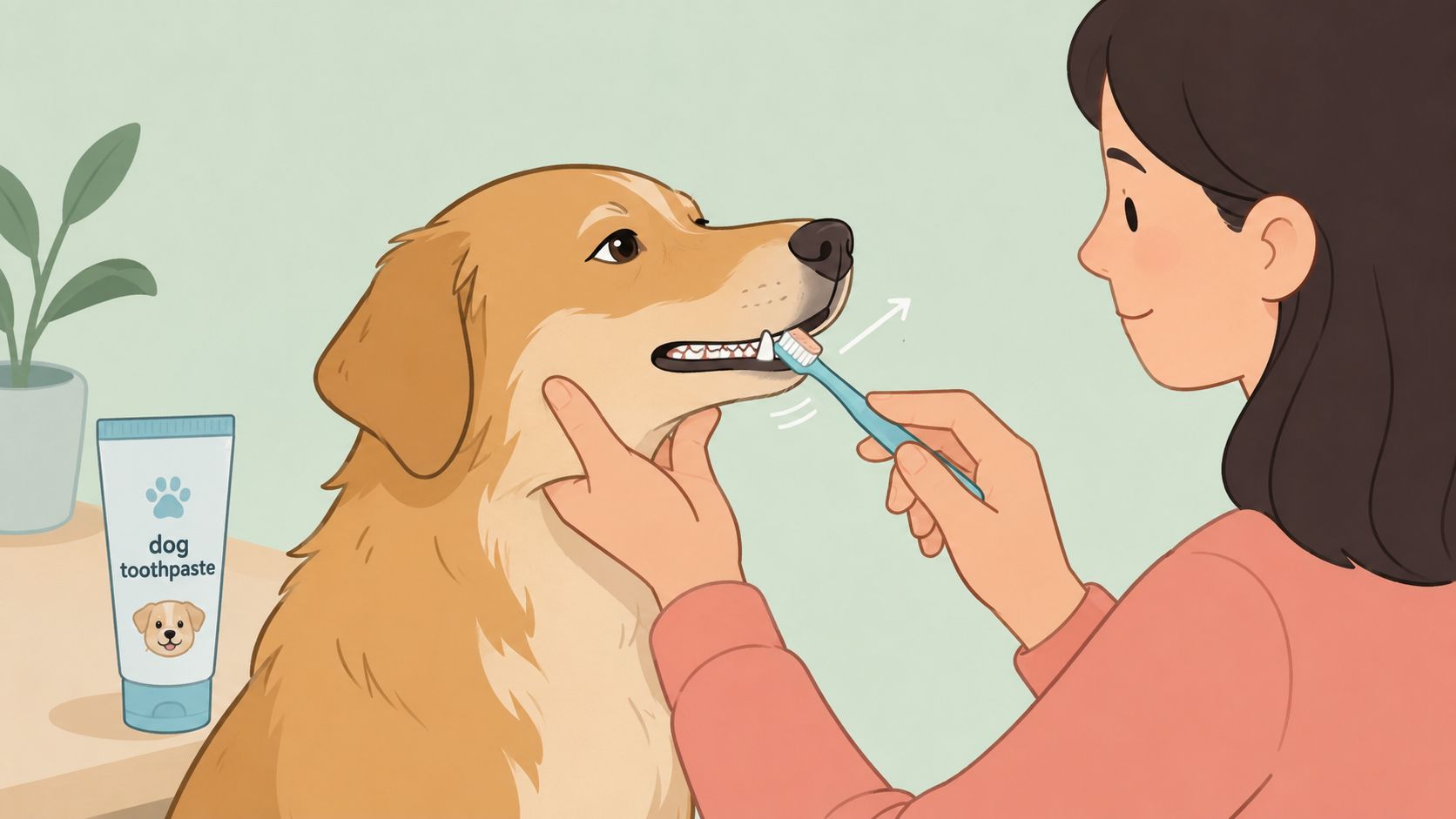
Daily brushing is the habit that keeps plaque from settling in and turning into harder buildup. Veterinarians recommend it because brushing reaches the gumline, where trouble usually starts, and that makes it one of the most useful at-home dog dental health tips. The goal is simple at first. Get your dog used to the routine before you worry about perfect technique.
Start early if you can, especially with puppies, and keep the first few sessions very short. Touch the lips, lift one side, brush the outer surfaces, then stop before your dog gets frustrated. Use enzymatic toothpaste made for dogs, not human toothpaste, because dog-safe toothpaste is made for swallowing and usually tastes better to dogs.
If you are already thinking about the rest of your dog's diet, it helps to pair brushing with a broader feeding plan. A dog nutrition plan that supports oral health can make the daily routine easier to keep consistent, especially for dogs with sensitive gums, older dogs with changing needs, or dogs recovering after anesthesia. Food does not replace brushing, but the two can work together.
A simple brushing rhythm that sticks
- Pick one anchor time: Brush in the morning or evening so it becomes part of the day, not a task you keep putting off.
- Use small circles: A gentle circular motion along the gumline focuses on the plaque-prone area without scraping.
- Start on the outside: The outer surfaces matter most at first, and that is enough to build a habit.
- Reward immediately: A treat, praise, or play session helps your dog connect brushing with something positive.
- Keep the tool easy to grab: A toothbrush stored near the leash or food bin is more likely to get used.
If your dog resists, shorten the session instead of skipping it. A 20-second brush done regularly does more than a perfect session that never happens. For owners who want a broader at-home support routine, Pure Paw Labs' guide to at-home dog teeth cleaning can be a useful companion read.
3. Dental-Specific Diet and Chewing
Some dogs get more oral support from food than others, but diet still works best as one part of a routine rather than a substitute for brushing. Dental-focused kibble is made to create friction against the tooth surface, and chewing can increase saliva flow, which helps rinse the mouth in a natural way. Chew items are also associated with better periodontal outcomes in the guidance from the AVMA pet dental care guidance, though the benefit depends on the type of chew and how your dog uses it.
That support has limits. Harder is not always better, because some objects are too tough for teeth and can cause fractures. Cooked bones and very hard materials are especially risky for dogs that bite down forcefully. Supervision still matters, since a chew that seems useful at first can turn into a choking hazard if your dog breaks off and tries to swallow large pieces.
Smarter chewing choices at home
- Transition gradually: If you switch to a dental kibble, move over several days so your dog's stomach can adjust.
- Watch chewing style: Some dogs gnaw slowly, others try to gulp. Fast gulpers need closer supervision.
- Keep the diet balanced: A dental-focused food helps with chewing, but the base diet still has to meet your dog's nutritional needs.
- Use chew time as a routine: Daily use is more helpful than random treats.
- Ask before using hard objects: If you're unsure whether a chew is safe for your dog's teeth, ask your veterinarian.
Age and life stage matter too. A growing puppy, an active adult, and a senior dog do not always need the same texture or feeding approach, so the chew plan should fit the dog in front of you, not just the label on the bag. Owners who home-cook or feed raw should also check whether the full diet is nutritionally complete, since oral care is harder to maintain if the rest of the feeding plan is off balance. For readers building that broader routine, Pure Paw Labs' guide to holistic dog nutrition is a useful companion read, and a supplement like DA-1™ Daily All-in-One may fit naturally into that plan because its single-scoop format is designed to simplify daily support with 18 human-grade ingredients and no fillers.
4. Water Additives and Oral Rinses
Water additives and oral rinses appeal to busy owners because they work in the background. They're meant to reduce plaque-forming bacteria without requiring a toothbrush in your hand, which can be useful for dogs that dislike mouth handling. As a support tool, they're easiest to keep up with when you make them part of the same refill habit you already use for fresh water.
The key is consistency. Skipping days weakens the routine, and stale water doesn't help anyone. Measure the bowl accurately, follow the product directions exactly, and refresh the water daily so the additive stays effective in a clean bowl. If your dog suddenly drinks less, stop and talk to your veterinarian.
Fresh water matters as much as the additive itself. If the bowl isn't refilled and cleaned regularly, the routine falls apart fast.
These products work best as part of a layered plan. Use them with brushing, chewing, and regular dental exams rather than treating them like a standalone solution. That layered approach is especially useful for dogs that tolerate mouth care only in small doses.
For dogs with mild gum irritation, oral rinses can also feel like a gentler entry point than full brushing sessions. They're not a cure for tartar that's already built up, but they can help reduce the amount of new debris that settles in place. If your dog's mouth is already painful, though, don't force a rinse routine before a vet visit.
5. Dental Treats and Enzymatic Chews
Dental treats work in the space between meals and brushing. Their shapes and textures are made to keep the treat in contact with the teeth longer, and many include enzymes that help support plaque control while your dog chews. That makes them a practical add-on for owners who need something manageable between toothbrush sessions.
Chews are effective only if your dog works through them. If a treat is swallowed whole, it barely touches the tooth surfaces long enough to matter. Size also matters, because a chew that is too small can disappear too fast, while one that is too hard can turn into a mouth injury instead of a benefit.
How to use chews without creating new problems
- Choose the right size: Match the chew to your dog's mouth and chewing style.
- Supervise the first few uses: Watch whether your dog chews slowly or tries to gulp it down.
- Count the calories: Treats belong inside the daily food plan, not on top of it.
- Use them regularly: Steady use helps more than an occasional bonus treat.
- Pair them with brushing: The two approaches work better together than either one alone.
A chew is like a training aid for the mouth. It can support cleaner teeth through repeated contact, but only when it is used safely and often enough to matter. The AVMA pet dental care guidance also notes that chewing items have been linked with lower odds of periodontal disease, which supports the idea that purposeful chewing has a place in a dental routine. Use that as a reminder, not a promise. A dental treat can help maintain oral health, but it does not replace brushing or professional cleanings.
For dogs that already get supplements, chews can fit into the same daily routine without adding much work. That matters for puppies learning mouth care, adult dogs that need a simple habit, and older dogs that may tire quickly or have more sensitive gums. If your dog has broken teeth, pain, or a history of swallowing treats too fast, check with your veterinarian before using enzymatic chews.
6. Omega-3 Fatty Acids and Anti-Inflammatory Nutrition
Omega-3 fatty acids matter because gum disease isn't just about debris. Inflammation plays a major role too, and nutrition can influence how the body responds. Fish oil or algae-based omega-3s are often used to support skin, joints, and broader inflammatory balance, which makes them a useful part of a dental care plan for dogs with recurring gum irritation.
The practical goal is steady intake. Supplements work best when they're given consistently with food, and storage matters because oils can degrade if they sit in heat or bright light. That's one reason owners who already use a daily supplement routine often find it easier to stick with omega-3 support.
Here's a simple way to think about it. If brushing is the mechanical part of dental care, omega-3s are the nutritional support layer. They don't clean teeth directly, but they can complement the rest of the plan by supporting a calmer inflammatory response in the gums.
Pure Paw Labs' fish oil guide is a helpful read if you're comparing how omega-3 support fits into a broader routine. If your dog already takes multiple products, a single daily powder can be easier to manage than several separate containers. That kind of simplicity matters because consistency beats complexity every time.
7. Probiotics and Gut Health for Oral Immunity
Gut health and oral health share the same immune “neighborhood.” A dog's mouth, digestive tract, and immune response all influence one another, so probiotic support can be part of a smarter dental routine. It does not replace brushing or veterinary care, but it can help support the body systems that shape how a dog handles diet changes, stress, and recovery.
Value comes from steady use. Probiotics rarely show their effect in a dramatic way after only a few days, and consistency matters more than flashy packaging or broad claims. If your dog's digestion settles, stool quality becomes more regular, or appetite looks steadier, those are useful signs that the routine may be fitting well.
Give probiotic support time. Watch digestion, comfort, and energy together before deciding whether the routine is helping.
A single daily supplement can also make the habit easier to keep. A product such as DA-1™ Daily All-in-One is positioned as a multi-system formula with one scoop, 18 human-grade ingredients, and no fillers, which can be helpful when you want gut support to sit inside one predictable daily routine. That kind of setup can work well for dogs whose care plan already includes brushing, dental chews, and regular veterinary visits.
If your dog is taking antibiotics or recovering from oral surgery, ask your veterinarian how to time probiotic support. Timing can change how practical the routine is at home, especially when medications, appetite changes, or a sensitive mouth are already part of the picture.
8. Early Detection and Regular Veterinary Oral Examinations
The mouth often gives small warnings before a dog shows clear pain. A routine oral exam can catch red gums, broken teeth, oral masses, or early infection while the signs are still easy to miss at home. That matters because older dogs and smaller dogs face higher periodontal risk, so waiting for obvious discomfort can mean the problem has already progressed.
Risk changes with age and body size. Dogs that are older, and dogs that weigh less, deserve earlier and more regular oral checks, even if they still eat, play, and act normal at home. A dog can seem fine and still have disease below the gumline.
A good exam habit is straightforward. Bring the mouth up at every wellness visit, ask what the vet sees before any symptoms become obvious, and keep track of small changes such as reluctance to chew, pawing at the mouth, drooling, or breath that does not clear up. Those signs are like a dashboard light. They may look minor, but they often point to a problem that needs closer attention.
This approach works best as part of a full daily routine. Brushing, dental chews or diet support, targeted nutritional supplements, and regular veterinary exams give you more than one way to spot trouble early and keep it from building into pain. If your dog is in a later life stage, or already has a history of dental problems, those checks should come sooner rather than later.
8-Point Dog Dental Health Comparison
| Method | 🔄 Implementation complexity | ⚡ Resource requirements | ⭐📊 Expected outcomes | 💡 Ideal use cases | ⭐ Key advantages |
|---|---|---|---|---|---|
| Regular Professional Dental Cleanings | High, requires anesthesia, clinic team and pre/post care | High cost, clinic time, recovery resources | Very high, removes deep tartar, diagnoses disease, helps prevent spread of infection | Dogs with existing tartar or dental disease, seniors, high-risk breeds | Definitive tartar removal; exam below gumline; helps prevent tooth loss |
| Daily Tooth Brushing Routine | Moderate, daily owner effort and training | Low cost, toothbrush, enzymatic paste, short daily routine | High when consistent, prevents plaque and helps delay cleanings | All dogs, start puppies early, owners willing to commit daily | Most effective at-home prevention; low cost; early problem detection |
| Dental-Specific Diet and Chewing | Low to moderate, diet transition and supervised chewing | Variable cost, dental kibble, treats, chews; daily provision | Moderate, helps reduce plaque and tartar with consistency | Dogs that enjoy chewing or need passive measures | Non-invasive; mental enrichment; supports jaw and tooth use |
| Water Additives and Oral Rinses | Low, add to water bowl or apply rinse; minimal handling | Low cost; simple dosing; monitor water intake | Low to moderate, helps reduce plaque and gingivitis | Dogs that resist brushing; adjunct between cleanings | Minimal effort; passive plaque control; inexpensive |
| Dental Treats and Enzymatic Chews | Low, give daily; select proper size and VOHC products | Moderate recurring cost; calorie management | Moderate, regular use can help reduce tartar | Owners seeking easy daily intervention; dogs that chew well | Appealing to dogs; combines enrichment with dental benefit |
| Omega-3 Fatty Acids & Anti-Inflammatory Nutrition | Low, daily supplementation; monitoring dose and storage | Low to moderate cost; quality and storage, avoid oxidation | Moderate to high, helps reduce gum inflammation over weeks | Dogs with gingivitis, seniors, or systemic inflammation | Systemic anti-inflammatory support; aids healing and gum integrity |
| Probiotics & Gut Health for Oral Immunity | Low, daily administration; choose stable strains | Low to moderate cost; some require refrigeration | Moderate, improved gum health over time; supports immunity | Dogs with digestive or immune issues; perioperative support | Addresses immune support; multi-system benefits beyond oral care |
| Early Detection & Regular Veterinary Oral Exams | Low to moderate, performed during wellness visits | Low relative cost; vet time; radiographs when indicated | High, early detection helps prevent progression and costly treatment | All dogs at routine visits, especially high-risk or aging dogs | Non-invasive screening; cost-effective prevention; year-to-year monitoring |
Bring It All Together for a Healthy Smile
Dog dental care works best as a routine, not a single fix. Professional cleanings, daily brushing, smart chewing habits, dental-friendly nutrition, water additives, and regular oral exams all support the same goal, which is to slow plaque before it hardens into a painful problem. Older dogs and smaller dogs face higher periodontal risk, so steady home care matters even more as pets age.
The easiest plans are the ones owners can repeat. Brush at the same time each day, choose chews that fit your dog's size and chewing style, keep fresh water available, and ask your vet to check the mouth during routine visits. If your dog eats a home-prepared diet or you want a simpler supplement routine, a product like DA-1™ Daily All-in-One can fit into a broader wellness plan because it is built around one daily scoop and support for more than one body system.
Small habits add up. A toothbrush by the sink, a vet appointment on the calendar, or a better chew in the treat drawer can move care from reaction to prevention. That matters most when your dog already shows early gum irritation, needs help staying consistent, or could benefit from nutrition that supports both oral health and overall recovery.
Start with one habit today, then add another next week. A short brushing session, a cleaner water bowl, or a supplement you can give without a fight is easier to keep going than a plan that feels too complicated. When the pieces fit your dog's age, diet, and tolerance, dental care becomes part of daily life instead of a separate chore.
A CTA for Pure Paw Labs.