


Your dog's breath hits you the second you lean in for a cuddle, and your brain goes straight to the same place most owners do. Is this just a messy mouth, or is it the start of a dental bill you didn't plan for? That moment is exactly where a comprehensive approach to dog teeth cleaning starts to make sense, because it isn't about choosing between home care and the vet, it's about using both in a way that protects the mouth over time.
Integrated oral care is practical. It means daily mechanical cleaning, smart food choices, and regular professional exams working together instead of competing with each other. That matters because plaque can start reforming fast after a cleaning, and the best-supported home habit, brushing, is also the one many owners skip. In one survey, approximately half of dog owners never brushed their dog's teeth, and almost one-third brushed less frequently than once a week or only on single occasions (Wiley clinical trial and homecare data).

For owners who want a broader whole-body lens, this fits naturally with the larger view of pet wellness described in holistic dog health. The mouth doesn't sit apart from the rest of the body, and good routines make dental care feel less like a crisis response and more like maintenance.
Table of Contents
- Beyond Bad Breath An Introduction to Holistic Dental Care
- The Foundation of Oral Health At-Home Brushing
- Boosting Oral Health Through Diet and Chews
- Natural Rinses and Supplements for Extra Support
- Recognizing the Warning Signs of Dental Disease
- Partnering with Your Vet for Complete Dental Care
Beyond Bad Breath An Introduction to Holistic Dental Care
A lot of owners first notice dental trouble by smell, then feel guilty for waiting too long. That reaction is common, but it misses the bigger point. Preventative dental care is not a rescue plan after disease shows up, it's a routine that lowers the odds of reaching that stage in the first place.
Think of the mouth as a working system, not a cosmetic problem. Mechanical cleaning removes plaque, food choices influence how much buildup lingers, and regular veterinary exams catch what you can't see at home. The American Veterinary Medical Association says dogs should have their teeth and gums checked at least once a year, and notes that regular brushing is the single most effective thing owners can do between cleanings (AVMA pet dental care).
Why the “natural” approach still needs structure
Many owners want an all-natural routine, and that instinct makes sense. The problem is that “natural” doesn't automatically mean effective. In the best available homecare evidence, daily tooth brushing outperformed a daily chew or dental diet, and the chew and diet groups were not significantly different from each other (Wiley clinical trial).
Practical rule: if a routine doesn't physically remove plaque, it usually won't keep pace with plaque buildup for long.
That doesn't make chews, food, or rinses useless. It just puts them in the right place. They support the mouth, but they don't replace the daily habit that does the heavy lifting.
A realistic, integrated plan also respects the economics of care. Professional dog dental cleaning generally costs $400 to $1,000, while anesthesia-free cleanings are often cited at $100 to $300 (AVMA pet dental care). That gap is part of why prevention matters so much, especially for dogs who need repeat care over a lifetime. A true integrated approach helps you do more at home so the clinic visit becomes a reset, not a crisis.
The Foundation of Oral Health At-Home Brushing
Brushing is the anchor. It's the one habit with the clearest evidence behind it, and it's the closest thing dog owners have to a universal at-home standard. The brush should sit at about a 45-degree angle to the tooth surface so the bristles can reach near the gumline, where plaque tends to accumulate most stubbornly (VCA dental cleaning guidance).
The first win is not perfect technique, it's calm repetition. Start by letting your dog sniff the brush, then touch the lips, then lift one side of the mouth for a few seconds. Many dogs do better with tiny sessions that end before they get frustrated, because the goal is trust, not force.
A simple brushing rhythm that dogs actually tolerate
A useful way to build the habit looks like this:
- Introduce the brush slowly. Let your dog investigate it without pressure.
- Use finger contact first. Rub the gums briefly with gauze or a clean finger.
- Add pet-safe toothpaste. Use veterinary toothpaste only, since human products can upset the stomach or cause toxicity if swallowed (CABI review).
- Start with a few teeth. One side, one upper row, then stop.
- Shorten the session if needed. A calm, short routine beats a long battle.
- Build toward consistency. Daily brushing is the target because it remains the strongest home method (Wiley clinical trial).
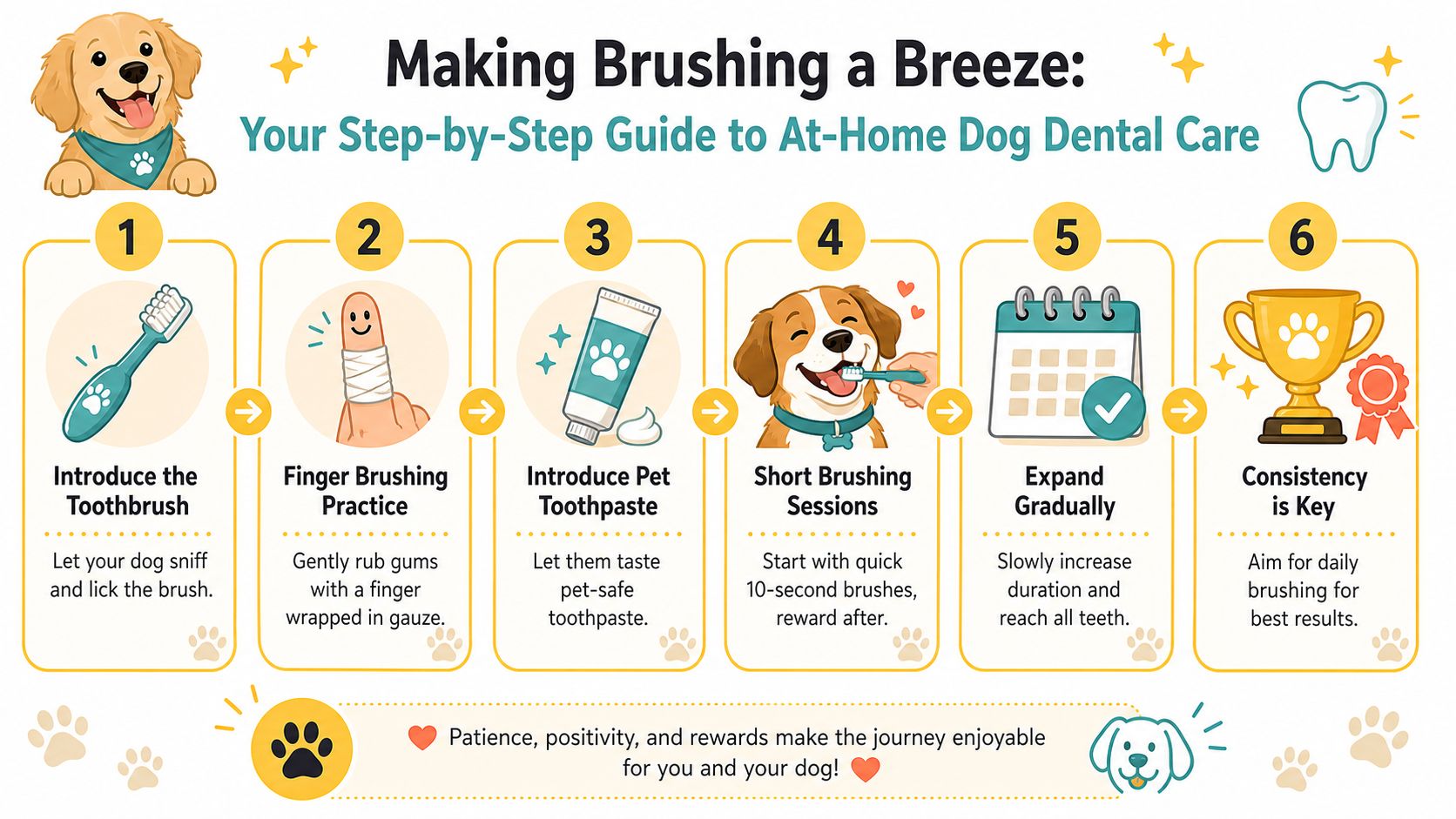
Using plain water can still help disrupt plaque biofilm, but toothpaste is often useful because it makes the routine easier to accept (CABI review). If you're already building a broader wellness routine, a single daily supplement such as DA-1™ Daily All-in-One can fit into the same “one simple habit per day” mindset, though it's a whole-body support product, not a dental treatment.
Brushing should feel boring. Boring is good. Boring is what you can repeat tomorrow.
The practical benchmark is simple. In clinical trial evidence, brushing was more than three times as effective at controlling plaque accumulation as a daily dental chew or a specialized dental diet (CABI review). That doesn't mean every dog accepts brushing on day one, but it does mean the effort pays off in a way other routines usually can't match.
Boosting Oral Health Through Diet and Chews
Food and chewing matter, just not in the way marketing often suggests. Dogs chew, and that mechanical action helps, but the mouth still needs real plaque disruption. A 2025 homecare study found that a water additive alone did not significantly improve dental deposits, which reinforces that physical plaque removal is key and the best results come from a combined protocol that includes brushing (PetMD discussion of recent homecare evidence).
Diet is part of the dental picture because different textures create different chewing patterns. Kibble can offer more abrasion than soft food, but that doesn't make it a dental treatment. Fresh and raw diets may fit some households for other reasons, yet they still don't substitute for brushing or professional evaluation when tartar is already present.
Choosing the Right Dental Chew for Your Dog
| Chew Type | Dental Benefit | Safety Considerations |
|---|---|---|
| Firm chew designed for plaque scraping | Can add mechanical cleaning during gnawing | Match the chew to your dog's size and chewing style |
| Softer chew | May be easier for older dogs or sensitive mouths | Less scraping action, so don't expect it to replace brushing |
| Long-lasting chew toy | Supports engagement and repetitive chewing | Supervise use and replace worn items before pieces break off |
| Food-based chew | Useful as a routine reward with some mechanical contact | Treat calories still matter, and the benefit is limited without brushing |
The best choice is the one your dog will use safely and consistently. A giant chewer needs a different option than a gentle nibbler, and dogs with sore mouths may need a veterinary exam before any chew routine makes sense.
For owners who want a broader nutrition conversation, the feeding side of dental care connects well with holistic dog nutrition. The key is to treat chews and diet as support tools, not as the main event.
If a chew is doing the job, your dog should still need brushing. If brushing is impossible right now, a chew can help, but it's still the backup, not the foundation.
Natural Rinses and Supplements for Extra Support
Many owners want something gentler than a full cleaning routine, especially if their dog resists handling. That's where rinses, additives, and supplements can play a supporting role. They make the most sense as adjuncts, because the strongest evidence still favors mechanical cleaning over passive ingredients.
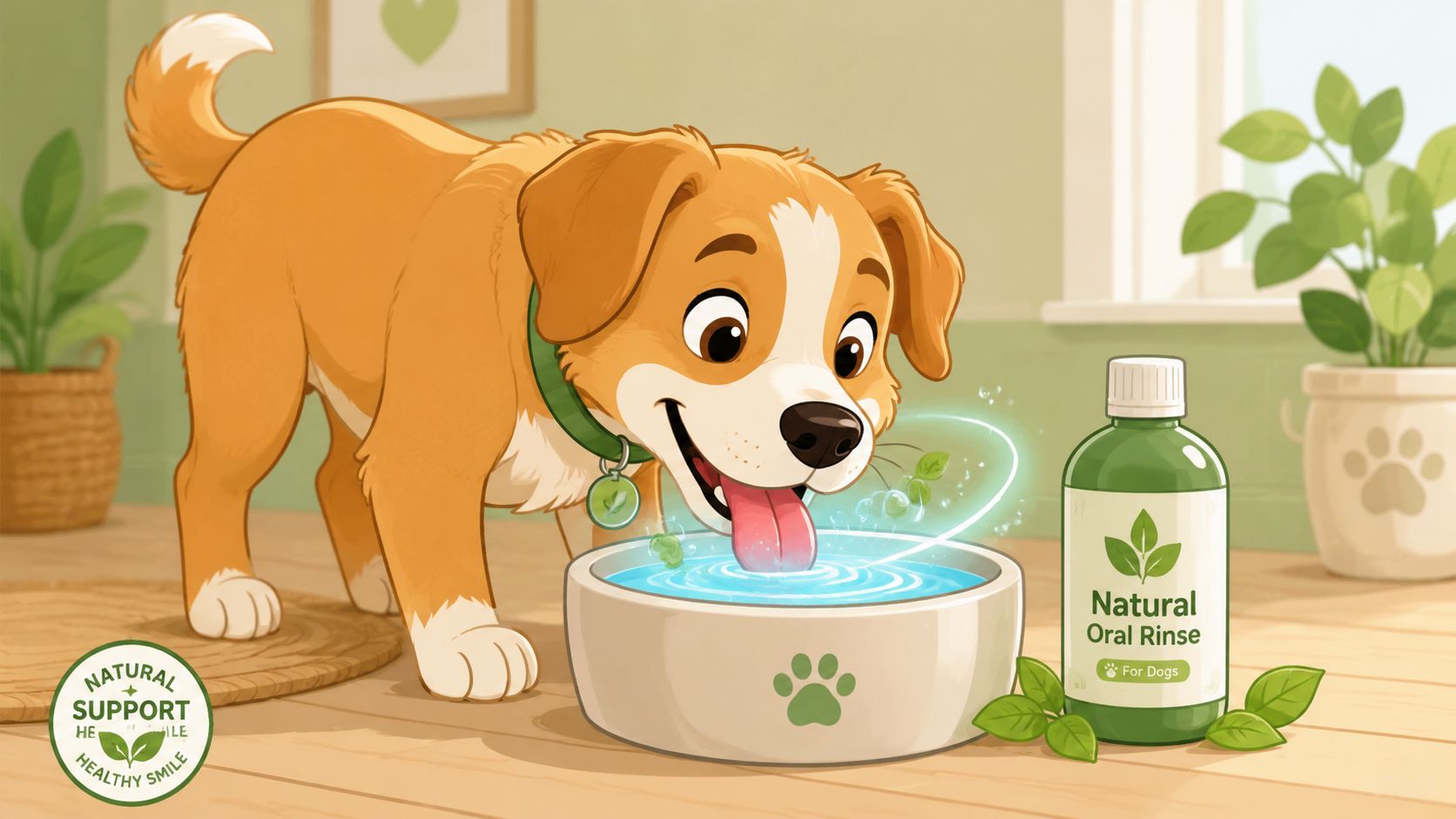
Water additives can be appealing because they feel easy. They don't require a mouthful of toothpaste, and they fit into an existing routine. But the available evidence says they're not strong enough on their own, which is why they belong in the “extra support” category rather than the “main treatment” category (PetMD discussion of recent homecare evidence).
Inside-out support still matters
The overlap between oral health and general health is often underestimated. Dogs that feel better overall usually eat better, chew more comfortably, and tolerate routines more easily. That's one reason some owners choose whole-body supplements as part of a broader wellness plan, including products like DA-1™ Daily All-in-One, which is positioned as daily support for multiple systems rather than a dental product.
The right mindset here is simple. Use supportive products if they help your dog stay comfortable and consistent, but don't expect them to clean teeth by themselves. A rinse can be a useful add-on, and a supplement can support the body, yet neither one scrubs plaque off the tooth surface. Complete care works best when every piece has a clear job.
Recognizing the Warning Signs of Dental Disease
Bad breath gets attention first, but it's only one sign. A dog can have a mouth full of trouble long before the odor becomes impossible to ignore. The earlier you spot changes, the more options you usually have, and the less likely you are to wait until the problem is painful.
The signs that deserve a closer look
- Bad breath. Strong, foul odor that doesn't fade after normal eating or drinking.
- Red or swollen gums. Gums that look puffy, irritated, or bleed when touched.
- Visible tartar. Yellow-brown crusts on teeth that look hard, not soft.
- Drooling or pawing at the mouth. These can signal discomfort rather than just messy habits.
- Changes in eating. Reluctance to chew hard food or chewing on one side.
- Loose or missing teeth. This is always a reason to get veterinary help.
- Mood changes. Irritability, withdrawal, or seeming “off” can come from mouth pain.
The American Veterinary Medical Association advises that dogs should have their teeth and gums checked by a veterinarian at least once a year so problems can be caught early (AVMA pet dental care). That matters because owners can't see below the gumline during a home check, and hidden disease often progresses unnoticed.
A dog who suddenly slows down at mealtime is telling you something. Don't wait for the next grooming appointment to ask why.
When home care is no longer enough
Home brushing and chews are for maintenance, not rescue. If you see swelling, significant tartar, loose teeth, or persistent pain, it's time for a veterinary exam. Holistic care isn't about toughing it out at home, it's about knowing when the home plan has reached its limit.
Partnering with Your Vet for Complete Dental Care
A comprehensive approach includes the clinic. That can feel counterintuitive to owners who want to avoid anesthesia or minimize intervention, but professional dental care is where hidden disease gets addressed. Without it, even a careful home routine can miss the deeper problems below the gumline.
Veterinary dental cleaning under general anesthesia is the standard because it allows a full oral exam and proper cleaning where disease originates. Anesthesia-free cleanings only remove visible debris above the gumline and are not recommended by veterinary organizations (VCA dental cleaning guidance). That's the main reason cosmetic cleaning is not the same thing as true dental treatment.
Why the clinic visit still matters
Plaque can begin to reform in as little as six hours after a professional cleaning (VCA dental cleaning guidance). That's why the appointment doesn't end the process, it resets it. After a cleaning, the home routine matters even more, because daily maintenance is what slows the next buildup.
Standard anesthetized cleaning typically includes oral exam, hand and ultrasonic scaling, then polishing to smooth the tooth surface and slow re-accumulation (VCA dental cleaning guidance). That sequence is what allows a veterinarian to deal with both visible tartar and the harder-to-see disease hiding underneath it.
The honest takeaway is this. Proactive dog teeth cleaning isn't a replacement for veterinary dentistry, it's the partnership between what you do every day and what the clinic does when the mouth needs a reset. The dogs who do best are usually the ones whose owners stay consistent at home and stop waiting when warning signs show up.
If your dog's breath, chewing habits, or gum color have changed, book a veterinary dental exam and start a gentle brushing plan tonight. Then build one realistic habit you can repeat every day, because that's what keeps a holistic mouth care routine working for the long run.