


Your dog hesitates at the stairs, licks one paw until the fur is damp, or takes longer to get comfortable after a nap. You may be wondering whether this is a minor irritation, a sign of aging, or something more serious. The word inflammation appears in all three situations, but it doesn't describe one single disease or one universal treatment.
Dog inflammation can involve the joints, gut, skin, mouth, or several systems at once. A short-lived response to an injury may help tissue heal, while a persistent inflammatory process can keep causing discomfort long after the original trigger has changed. Understanding where the inflammation is happening, what may be driving it, and how veterinarians measure it helps you make better decisions without chasing every “anti-inflammatory” claim you see online.
Table of Contents
- What Dog Inflammation Actually Means
- Acute Versus Chronic Inflammation in Dogs
- Where Inflammation Shows Up in Dogs
- How Vets Diagnose and Measure Inflammation
- Diet and Supplements That Target Inflammation
- Lifestyle Changes That Lower Inflammatory Load
- When to Call the Vet About Inflammation
- Common Questions About Dog Inflammation
What Dog Inflammation Actually Means
Milo slows down halfway up the stairs. He isn't crying, and he still eats dinner, but he places less weight on one back leg. Another dog may show the problem differently, licking between the toes every evening or scratching one ear until it becomes red. These visible changes are clues, not diagnoses.
Inflammation is the body's alarm and repair response. When tissue is injured, irritated, or challenged by an immune trigger, blood flow changes and immune cells move toward the affected area. Chemical messengers help coordinate the response. The surrounding tissue may become warmer, swollen, tender, or red while the body works to contain the problem and begin repair.
A twisted ankle offers a useful comparison. Swelling and soreness after the twist can be part of a sensible short-term response. The ankle isn't “inflamed” because inflammation is a disease. It's inflamed because the body has detected a problem and is trying to manage it.
Visible signs and hidden activity
Owners usually notice the outer effects first:
- Joints: stiffness, limping, reluctance to jump, or difficulty rising.
- Skin: redness, itching, hair loss, scabs, or repeated ear trouble.
- Digestive tract: vomiting, diarrhea, gas, appetite changes, or abdominal discomfort.
- Mouth: bad breath, tartar, drooling, or reluctance to chew.
Inflammation can also be active beneath the surface without obvious swelling. A dog may have immune activity in the intestine, a joint, or another tissue while looking almost normal at home. That's why a dog that “just seems older” deserves attention when the change is persistent or progressive.
The immune system regulation guide can help explain why immune activity needs balance rather than constant suppression. The practical point is simple: inflammation is useful when it responds to a real, temporary threat. It becomes a concern when the response is excessive, misdirected, or continues after the body no longer needs it.
Acute Versus Chronic Inflammation in Dogs
A dog who lands awkwardly after jumping from a couch may develop sudden soreness in a wrist. A senior Labrador who takes longer to stand after every nap may have a slower process affecting a joint over time. Both dogs may be described as having inflammation, but their biological timelines and management needs are different.
Acute inflammation starts quickly. An injury, infection, or irritating substance can trigger swelling, warmth, pain, and reduced function. The response may be dramatic because the body is trying to contain a problem quickly. Once the trigger is addressed and the tissue begins healing, the response should gradually settle.
Chronic inflammation persists. It may simmer for weeks, months, or years because a disease, repeated immune trigger, ongoing tissue stress, or age-related change keeps stimulating the body. Instead of switching off after repair, the inflammatory response continues to affect tissue. The signs may be subtle, such as recurring itching, intermittent digestive trouble, or stiffness that slowly becomes more noticeable.
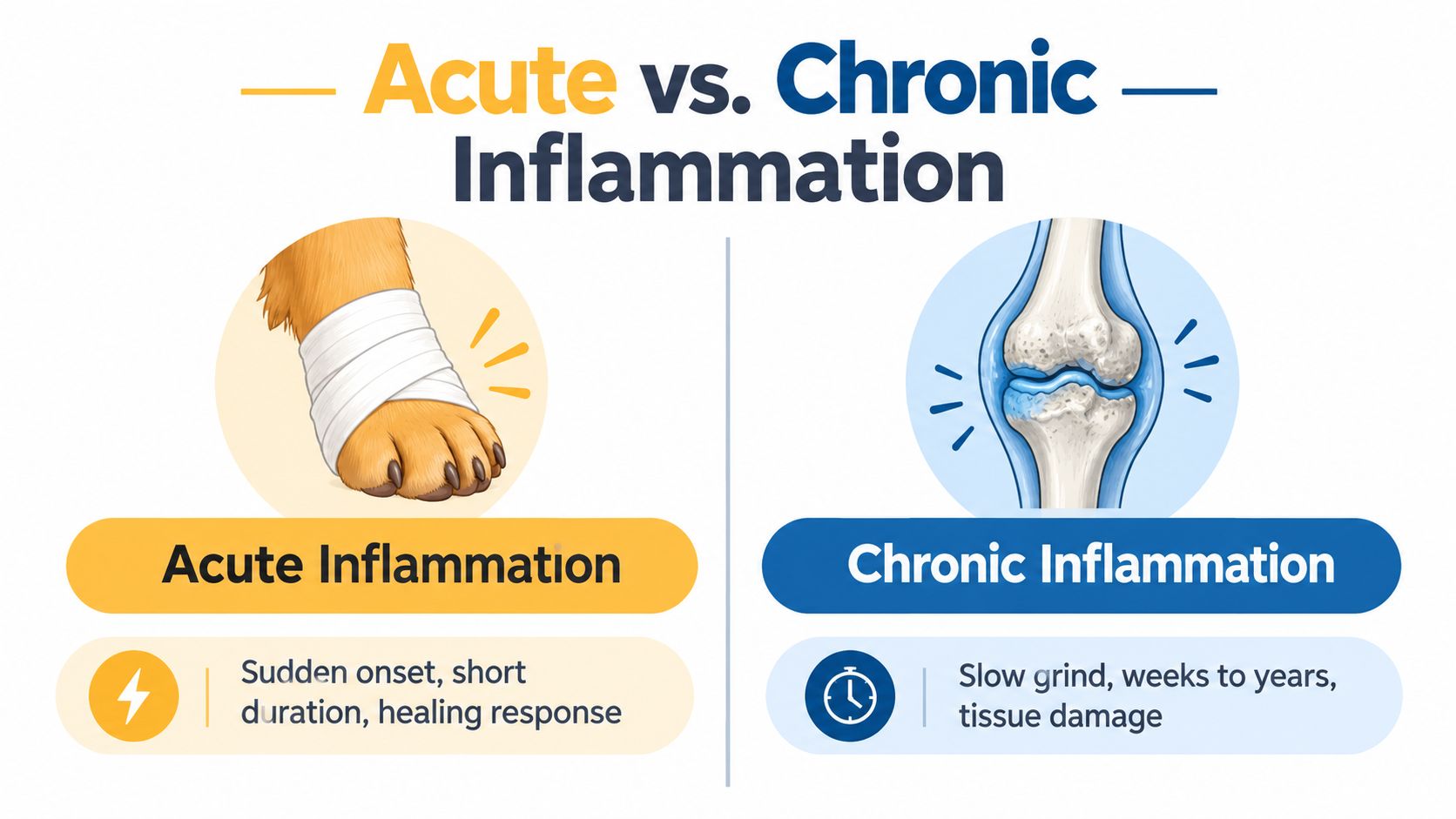
Why the distinction changes the plan
An acutely inflamed paw needs a search for the immediate cause. That could involve a foreign object, wound, bite, infection, or trauma. Rest alone may not be appropriate if the dog has a fracture, an infected wound, or severe pain.
A chronically inflamed system needs a different investigation. The veterinarian may ask about diet, weight, medications, environmental exposures, dental care, exercise, previous illnesses, and the pattern of flare-ups. The goal is to identify what keeps the response active rather than repeatedly treating the visible symptom.
A senior dog may benefit from a coordinated routine that includes veterinary assessment, controlled movement, nutrition, and carefully selected support. For example, DA-1™ Daily All-in-One - Senior Dog Support, Joints, Skin/Coat & More is described as a once-daily formula with 18 human-grade ingredients targeting cells, gut, and joints. That kind of multi-system product should be considered supportive care, not a substitute for finding the cause of persistent pain or illness.
Practical rule: Sudden and severe signs call for a search for an immediate problem. Slow, recurring, or spreading signs call for a broader look at the dog's health pattern.
The distinction also prevents a common mistake: assuming that every inflammatory problem should be managed with the same food, supplement, or exercise routine. A sprain, food-responsive digestive disorder, allergic skin disease, and age-related joint change may all involve inflammation, but they don't have identical triggers.
Where Inflammation Shows Up in Dogs
The location of the problem often provides the first useful clue. A dog with joint inflammation moves differently. A dog with skin inflammation scratches or licks. A dog with gut inflammation has digestive changes. The signs overlap sometimes, but the body system involved usually narrows the possibilities.
| Body Area | Signs Owners Notice | Common Underlying Causes |
|---|---|---|
| Joints | Limping, stiffness after rest, reluctance to jump, slower movement | Injury, degenerative joint change, immune-mediated disease, repeated mechanical stress |
| Skin and ears | Itching, redness, paw licking, hair loss, recurrent ear problems | Allergic reactions, parasites, infection, skin-barrier disruption, immune disease |
| Gut | Vomiting, soft stools, diarrhea, gas, appetite swings | Diet-responsive disease, inflammatory enteropathy, infection, parasites, medication effects |
| Mouth | Bad breath, tartar, drooling, chewing changes, reluctance to eat hard food | Plaque-related irritation, periodontal disease, damaged teeth, oral injury |
| Aging body | Lower energy, slower recovery, stiffness, changes across several systems | Age-related immune changes, joint wear, chronic dental or skin disease, multiple overlapping conditions |
Joints and movement
Joint inflammation often shows up after rest. Your dog may walk stiffly for a short time, avoid stairs, or stop initiating play. A sudden limp deserves a different response from a gradual reduction in mobility, especially if the limb is hot, swollen, or painful to touch.
Skin and ears
Persistent scratching isn't automatically an allergy. Parasites, infection, food reactions, and other diseases can create similar signs. Repeated paw licking or ear trouble should be examined rather than managed indefinitely with supplements. The dog skin and coat resource offers additional context on why skin signs need a targeted approach.
Gut and mouth
Digestive inflammation can be intermittent, which makes it easy to dismiss. In a review of chronic inflammatory enteropathy, the true prevalence was described as unknown, while an estimated 1% to 2% of referral cases involved the condition and 20% to 30% of companion-animal veterinary visits related to vomiting or diarrhea were discussed in the review (veterinary review of chronic inflammatory enteropathy). In one retrospective group of 136 dogs with chronic diarrhea, 71% had primary inflammatory enteropathy, and 91% had diarrhea among the reported clinical signs, showing why recurring digestive problems deserve proper assessment.
Mouth inflammation can be equally easy to overlook because dogs often continue eating despite oral pain. Bad breath, dropping food, chewing on one side, or avoiding hard treats can justify a dental examination.
How Vets Diagnose and Measure Inflammation
A dog can seem “off” for reasons that look similar at home but mean very different things in the clinic. A limp, soft stool, itchy skin, or bad breath may all point to inflammation, yet each one calls for a different path.
Veterinarians usually start with history and a hands-on exam. They check temperature, palpate joints, watch gait, inspect skin and ears, examine the mouth, feel lymph nodes, and assess abdominal comfort.
That exam helps answer one basic question, where does the problem seem to be located? Bloodwork can show that the body is reacting, but it usually cannot tell whether the source is a joint, the gut, the skin, dental disease, or something else.
What blood markers can and can't tell you
C-reactive protein, or CRP, is a major acute-phase protein in dogs. The liver produces it mainly in response to interleukin-1 and interleukin-6, and measurable increases can appear within 4 to 24 hours after tissue injury or immune stimulation (canine CRP guidance). That makes CRP useful for following inflammatory burden and response to treatment in conditions such as pancreatitis, immune-mediated polyarthritis, pneumonia, gastrointestinal disease, and sepsis.
CRP is sensitive, but it is nonspecific. Practice guidance describes values around 0 to 12 mg/L as normal, 12 to 20 mg/L as mild or uncertain, 20 to 39 mg/L as increased, and 40 to 100 mg/L as significantly increased, as detailed in the same CRP guidance. These ranges help a veterinarian judge the pattern and severity of inflammation. They do not identify the cause on their own.
Other tests may add pieces to the picture. A complete blood count, serum proteins, imaging, skin cytology, stool testing, ultrasound, or X-rays can support a diagnosis. If a joint is swollen, sampling joint fluid may be more useful than relying on bloodwork alone.
For digestive concerns, the dog digestive health guide can help you organize the history you bring to an appointment, including stool changes, appetite, vomiting, diet changes, and medication use.
A short visual explanation of the clinical process is available in this veterinary diagnostic video:
Diet and Supplements That Target Inflammation
Nutrition can support an inflammatory condition, but the right choice depends on the system involved. A joint-focused plan isn't automatically the right plan for a dog with chronic diarrhea, and an ingredient that suits one dog may aggravate another.
EPA and DHA, the long-chain omega-3 fatty acids found in marine oils, have some of the clearest support for nutritional modulation of inflammation in dogs. They can shift eicosanoid production toward different signaling compounds and have been associated with changes in inflammatory mediators, including leukotriene B4 and certain enzymes and cytokines (canine omega-3 research). The response depends on the dose, formulation, health condition, and outcome being measured.
That last point matters. One canine osteoarthritis study linked higher omega-3 intake with reduced inflammatory biomarkers and joint-catabolism signals. Another perioperative study found rapid increases in blood omega-3 levels without significant reduction in CRP or leukocyte cytokine production. A supplement can influence inflammatory biology without producing an immediate, measurable change in every test.
| Option | Best For | Evidence Strength | Typical Onset |
|---|---|---|---|
| EPA and DHA | Joint and skin support, when selected with veterinary guidance | Strongest nutritional evidence in this group, but condition-dependent | Gradual, not an emergency treatment |
| Prescription therapeutic diet | Dogs with a diagnosed condition requiring precise nutritional management | Depends on the disease and diet formulation | Assessed during a structured veterinary trial |
| Novel or hydrolyzed protein diet | Suspected food-responsive digestive or skin disease | Useful only when used as a controlled diagnostic trial | Judged over a planned trial period |
| Green-lipped mussel, curcumin, glucosamine, or chondroitin | Mainly joint-support discussions | Variable by ingredient, product, dose, and condition | Usually gradual and difficult to judge without tracking |
| Butyrate or microbiome-focused approaches | Research into gut barrier and intestinal inflammation | Emerging and condition-specific | Not established for general home use |
A 2025 canine intestinal cell-model study found that butyrate reduced LPS-induced inflammatory markers and barrier hyperpermeability, but cell-model findings don't establish the same outcome in a whole dog. Research into microbiome-targeted approaches and a 2026 randomized controlled study of a supplement containing fish oil, ASU, and phytotherapeutic extracts point toward more condition-specific investigation, not a universal anti-inflammatory formula (research on canine intestinal inflammation).
Read the label for the actual EPA and DHA content rather than assuming that “fish oil” describes a meaningful amount. Don't stack several products without veterinary input, particularly if your dog has digestive disease, takes medication, or needs a controlled diet. The omega-3 guide for dogs provides a useful starting point for evaluating this category.
Lifestyle Changes That Lower Inflammatory Load
Daily habits cannot replace a diagnosis, but they can reduce strain while your veterinarian identifies the cause. The right adjustment depends on the mechanism involved: joint pain calls for joint-friendly movement and weight control, while skin irritation may require trigger reduction. Small changes that fit your routine are easier to maintain.
Match movement to the problem
For a stiff dog, replace occasional bursts of intense activity with shorter, more frequent walks. Start slowly, choose level ground when possible, and observe your dog later that day and the following morning. Swimming or another low-impact activity may suit some dogs, but a painful or recently injured dog needs veterinary guidance before exercise.
A gentle warm-up helps. A few minutes of calm walking before faster movement is easier on sore joints than an immediate sprint. Avoid repeated jumping from furniture, slippery floors, and games involving abrupt twisting while your dog is limping.
Reduce avoidable physical stress
Measure meals instead of estimating portions, and include treats in the daily amount. If your dog's body condition is above the ideal range, ask your veterinarian for a realistic feeding plan rather than imposing a sudden, severe restriction. Lowering excess weight reduces the mechanical demand on painful joints, much like carrying a lighter load up stairs.
At home, consider:
- Stable footing: Place rugs or runners on slippery floors.
- Resting support: Provide a comfortable bed in a quiet, accessible location.
- Safer transitions: Use steps or ramps when repeated jumping causes strain.
- Trigger control: Review allergens, irritants, detergents, bedding, and outdoor exposures if skin signs are present.
- Predictable rest: Protect uninterrupted sleep and keep the daily routine steady.
Chronic discomfort and poor sleep can affect behavior and recovery, although stress does not explain every inflammatory illness. A calm routine, gentle mental enrichment, and suitable social contact can support veterinary treatment.
The dog health guide covering diet, activity, environment, and professional care provides a wider framework for putting these daily choices together.
When to Call the Vet About Inflammation
“Let's see if it settles” is reasonable only when the sign is mild, the dog is comfortable, and the situation is clearly improving. It isn't a safe default for sudden pain, breathing trouble, collapse, or rapidly increasing swelling.
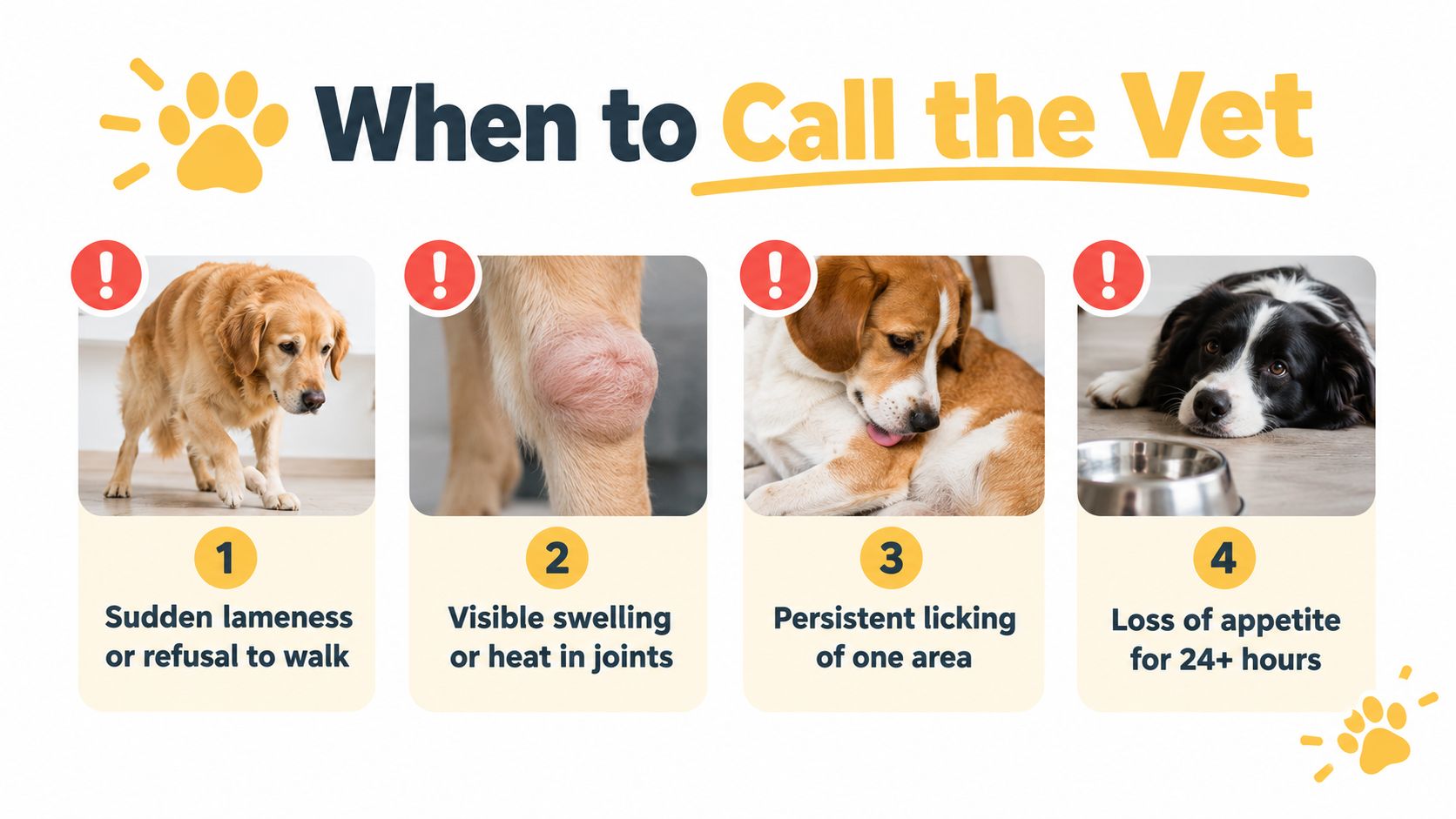
Seek urgent care
Contact an emergency veterinary service promptly for:
- Breathing difficulty: Especially with facial swelling, hives, or sudden weakness.
- Collapse or extreme weakness: These signs can indicate a serious systemic problem.
- Sudden severe lameness: Refusal to walk, intense pain, or a limb that looks abnormally positioned needs immediate assessment.
- Rapid abdominal changes: A swollen abdomen, repeated unproductive retching, or severe distress can become life-threatening.
- Severe vomiting or diarrhea: Especially when combined with weakness, blood, pain, or inability to keep water down.
Anaphylaxis, bloat, septic joints, and some immune-mediated diseases can worsen quickly. A supplement or a period of rest isn't an appropriate first response when the dog is deteriorating.
Arrange a prompt appointment
Call your regular veterinarian when the dog has persistent licking of one area, visible joint heat or swelling, recurring vomiting or diarrhea, unexplained weight loss, ongoing appetite changes, or a low-grade limp that keeps returning. A dog that stops eating for 24 hours should also be discussed with a veterinary professional, particularly if the dog is young, elderly, diabetic, or has another medical condition.
Use three questions to decide how quickly to act:
- How painful does the dog appear?
- How long has the sign lasted?
- Is it improving, stable, or getting worse?
Pain that is severe, a symptom that persists, or a problem that progresses should move the decision toward veterinary care. Don't give human pain medicines without veterinary direction. Medications intended for people can be unsafe for dogs, and a veterinarian needs to choose treatment based on the dog's condition and other medications.
Common Questions About Dog Inflammation
How can I tell aging from chronic inflammation?
A slower walk, reluctance on stairs, less interest in play, itching, digestive problems, or a change in mood may look like ordinary aging. These signs can also point to pain or disease. Arrange a veterinary examination when several changes appear together, persist, or stop your dog from enjoying familiar activities.
Age-related inflammation differs from an acute flare. A 2025 review describes age-related increases in pro-inflammatory mediators and declines in anti-inflammatory signals in dogs and cats, while emphasizing that the biology is more complex than one general “inflammation” label (review of age-related inflammation). An older dog therefore needs a plan based on the affected system, whether that is joints, gut, skin, dental tissue, or broader age-related change, rather than the same product for every sign.
Can a CRP test identify my dog's specific disease?
No. CRP can indicate inflammatory activity and help track whether it changes over time, but it does not identify the source. Your veterinarian combines the result with your dog's history, physical examination, other blood work, and targeted tests.
Do over-the-counter supplements work?
Some ingredients have plausible mechanisms and research for particular conditions. Results depend on the formulation, dose, quality, and the dog's diagnosis. Omega-3 fatty acids have the clearest support among the nutritional options discussed here, although their effects vary by disease and by the measurement used.
Why can young dogs develop inflammation?
Inflammation does not require old age. Infection, parasites, injury, immune-mediated disease, food-responsive illness, and skin-barrier problems can affect young dogs. Repeated symptoms deserve investigation because one outward sign can have several different causes.
Can I use a human anti-inflammatory medicine?
Do not give ibuprofen, acetaminophen, or another human pain medicine unless a veterinarian specifically instructs you. Veterinary-prescribed nonsteroidal anti-inflammatory drugs are selected and monitored for dogs. Unsupervised human medicines can cause serious harm.
Inflammation is a normal biological process that becomes concerning when it persists, targets the wrong tissue, or signals disease. Good management matches the suspected mechanism to the response: diagnosis and veterinary care for disease, targeted nutrition when justified, and consistent daily habits. There is no single ingredient for joint, gut, skin, dental, and age-related inflammation.
Pure Paw Labs offers daily dietary supplements for dogs, including a multi-system powder intended to support joints, skin and coat, digestion, immunity, and stress-related needs. If you are considering nutritional support alongside a veterinary plan, visit Pure Paw Labs to review the available options.