


If you're caring for a dog with itchy skin, recurring ear trouble, loose stools, or flare-ups that never seem fully gone, it's easy to conclude that your dog just needs a stronger immune system. Many owners try exactly that. They add a new chew, then a powder, then a probiotic, then something labeled “immune support,” and still the pattern keeps coming back.
In practice, many dogs don't need a louder immune response. They need a better-regulated one. That's the heart of immune system regulation. It means the body can respond firmly to a real threat, then stand down, protect healthy tissue, and tolerate harmless everyday exposures like food ingredients, pollen, and normal gut bacteria.
That balancing act matters even more in dogs because gut health, environment, age, and genetics all shape how their immune system behaves. A supplement may help one dog and do very little for another. The useful question isn't “How do I boost immunity?” It's “What is pushing my dog's immune system out of balance, and how do I support better regulation?”
Table of Contents
- Why Immune Balance Matters More Than Immune Strength
- How the Canine Immune System Actually Works
- The Gut Immune Connection in Dogs
- Signs Your Dogs Immune System May Be Out of Balance
- Why Genetics and Breed Change the Immune Equation
- Nutrition, Probiotics, and Lifestyle for Immune Homeostasis
- Common Misconceptions About Boosting Dog Immunity
- A Daily Plan for Supporting Immune Regulation
Why Immune Balance Matters More Than Immune Strength
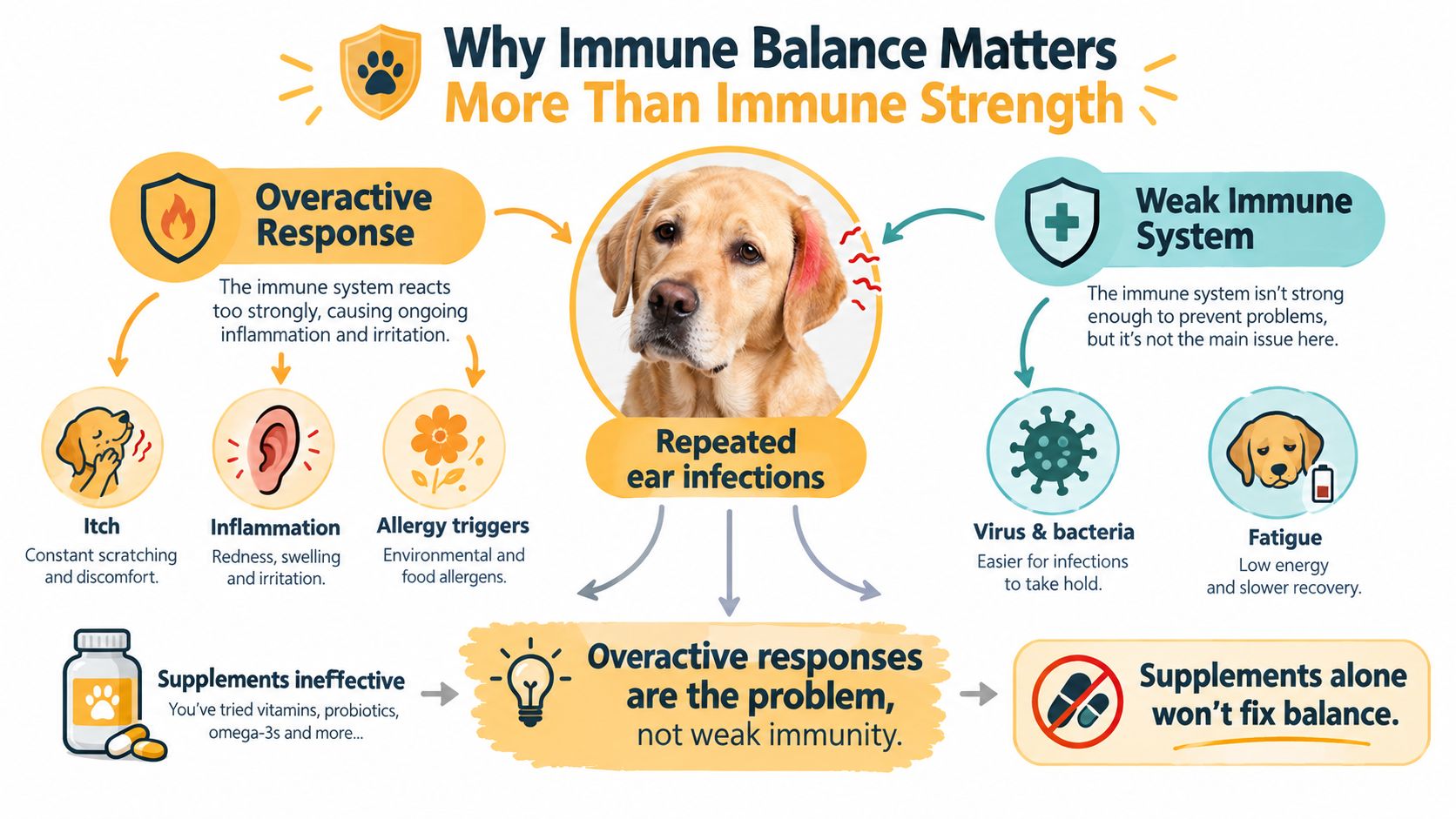
A common example is the Labrador who keeps getting ear infections. The owner has tried fish oil, skin supplements, a probiotic, and a rotation of “immune boosters.” The dog isn't frail. He's active, hungry, and otherwise bright. But his ears flare, his paws get yeasty, and he scratches after being outside or after diet changes.
That pattern often points less to weakness and more to misfiring regulation. In other words, the immune system may be reacting too intensely, too often, or to the wrong things.
Think thermostat, not light switch
Many people picture immunity as a switch. Off means vulnerable. On means protected. Dogs don't work that way.
A better picture is a thermostat. If the setting is too low, a dog may struggle to contain ordinary infections. If it's too high, the body may overreact to harmless triggers and create chronic inflammation. If the sensing system is faulty, the immune response may turn on at the wrong time or fail to switch off after the job is done.
That internal balance is called immune homeostasis. It means the body keeps defense and tolerance in working proportion.
What healthy regulation looks like
A regulated immune system should do several things well:
- Fight real threats: A puncture wound, kennel exposure, or intestinal pathogen should trigger a protective response.
- Ignore harmless inputs: Pollen, routine food proteins, and normal environmental exposures shouldn't provoke constant drama.
- Limit collateral damage: Inflammation should help, not keep injuring skin, ears, or gut lining after the original trigger is gone.
- Return to baseline: After the immune system responds, it should calm down.
Practical rule: If your dog has chronic itching, recurrent ear issues, or food reactivity, “more immune stimulation” isn't automatically helpful. Sometimes the body needs calming and better control, not more activation.
Owners often get more traction when they stop asking how to make the immune system stronger and start asking what may be keeping it irritated. If allergies are part of the picture, a plain-language 2026 guide to pet allergy treatment can help you sort skin and ear symptoms from broader immune questions.
A strong immune system that can't tolerate normal life isn't healthy. Balance is.
How the Canine Immune System Actually Works
The canine immune system works like a security team with different job descriptions. Some members respond immediately to anything suspicious. Others take longer but become highly specific and remember what they've seen before.
The fast team at the gate
The innate immune system is the first layer. It includes physical barriers like skin and the gut lining, plus cells that react quickly when tissue is damaged or microbes cross a boundary.
If your dog gets a small skin puncture while running through brush, the first things you may notice are redness, warmth, and swelling. That's not random. It's the body increasing blood flow and sending in cells to contain the problem. Cells such as neutrophils and macrophages act like first responders. They don't need a detailed file on the invader before they move.
This arm of immunity is quick, broad, and protective. It's also blunt. It can create a lot of inflammation fast.
The specialist team
The adaptive immune system is slower at first, but more precise. This includes B cells, which make antibodies, and T cells, which help direct and refine the response.
Vaccination is a practical example. A vaccine trains adaptive immunity to recognize a threat before real exposure. The first response takes time because the body is learning. Later responses are faster because immune memory has formed.
Puppies depend heavily on maternal antibodies early on. Their own immune system is still maturing, so timing of exposures, nutrition, and veterinary guidance matter.
The built-in brakes
Immune defense would be dangerous without restraint. Modern immunology has shown that immune regulation depends on measurable “brakes,” including regulatory T cells, anti-inflammatory cytokines such as IL-10 and transforming growth factor beta, and checkpoint molecules like CTLA-4 and PD-1. These mechanisms help prevent the immune system from damaging healthy tissue while still allowing defense against infection, as described in the NCBI overview of immune tolerance and regulation.
That same source notes that immune regulation is dynamic across life. A 2025 meta-analysis in healthy subjects found T-lymphocyte counts change markedly early in life, with a substantial decrease in the first 10 years, followed by slower decline afterward, which reinforces that regulation changes with age rather than staying fixed.
The immune system isn't just built to attack. It's built to decide when not to attack.
Why this matters to dog owners
When owners hear “immune support,” they often think only about killing germs. But your dog's immune health also depends on supervision. The body needs defenders, memory, communication, and restraint.
A useful way to picture it is this:
| Immune role | What it does in daily dog life |
|---|---|
| Barrier defense | Protects skin, ears, and gut from intrusion |
| Rapid response | Creates early inflammation after injury or exposure |
| Targeted response | Builds specific protection after infection or vaccination |
| Regulation | Prevents overreaction and limits tissue damage |
A dog with poor regulation can look “sick all the time” even when the deeper issue is not lack of immune activity, but poor control of it.
The Gut Immune Connection in Dogs
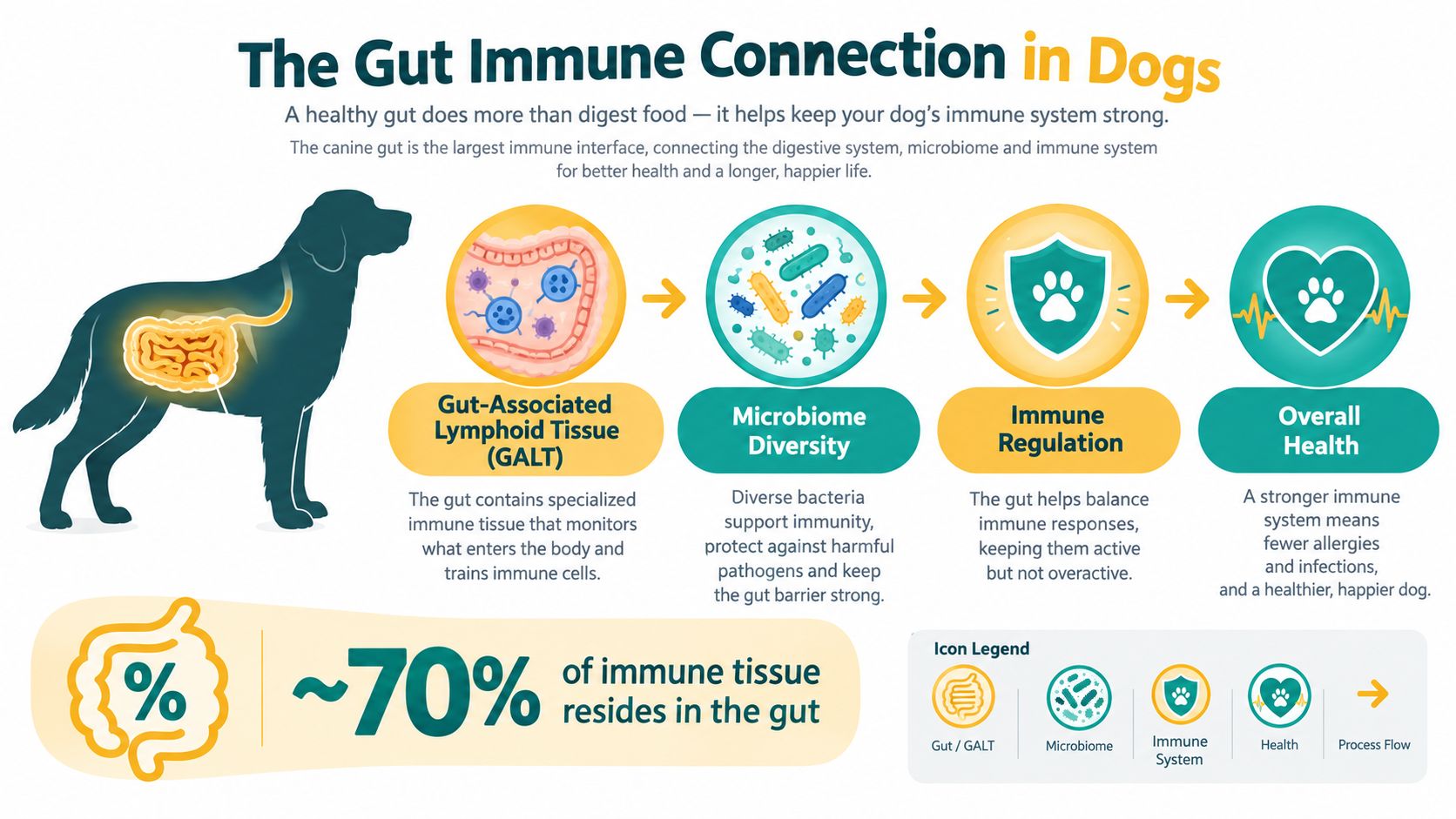
For many dogs, the gut is where immune balance becomes visible. You may notice soft stools, gassiness, appetite swings, licking of paws, or skin flare-ups long before anyone uses the word “immunology.” That's because the intestine isn't just a food tube. It's a major immune interface.
Why the gut has such a big role
A large share of immune tissue sits in the gut-associated lymphoid tissue, often shortened to GALT. That's one reason stool quality and skin symptoms can overlap. The body is constantly deciding what in the gut is dangerous, what is food, and what is part of the normal microbial community.
The microbiome helps shape that decision-making. In dogs and cats, probiotic organisms are reported to regulate immune activity through the gut mucosa by improving epithelial barrier integrity, increasing secretory IgA, and modulating cytokine balance. Reviews also note effects on T-cell differentiation and broader immune homeostasis. In one canine study summarized in the review, multistrain probiotics increased serum IgG and fecal sIgA, showing measurable changes in humoral immunity rather than only digestive effects, according to this review on probiotics and immune regulation in dogs and cats.
What that looks like in everyday life
When the gut barrier is irritated or the microbiome is out of balance, owners often see patterns such as:
- Unsteady stools: Not always severe diarrhea. Sometimes just frequent softness, mucus, or inconsistency.
- Food reactivity: A dog seems fine for weeks, then flares after diet changes or treats.
- Skin and ear spillover: The problem shows up on the outside, but the gut may still be part of the story.
- Recovery swings: Stress, boarding, antibiotics, or abrupt food changes trigger setbacks.
If you want a practical owner-level overview, Pure Paw Labs has a readable guide on dog gut health that connects digestion, skin, and daily observations.
Gut support isn't only about probiotics
Probiotics get the attention, but they're only one tool. The bigger goal is a steadier gut environment: digestible nutrition, enough fiber for microbial fermentation, fewer abrupt diet changes, and less unnecessary stress on the intestinal lining.
For owners who prefer fewer separate products, one option in that category is DA-1™ Daily All-in-One - Skin/Coat, Joints, Gut Health & More, which Pure Paw Labs describes as an all-in-one human grade powder used as a once-daily food topper instead of juggling multiple supplements. The practical value in a product like that is routine simplicity, not the idea that one scoop can override every cause of immune imbalance.
The gut is often the most accessible place to support immune system regulation, but it isn't a magic shortcut. Context still matters.
Signs Your Dogs Immune System May Be Out of Balance
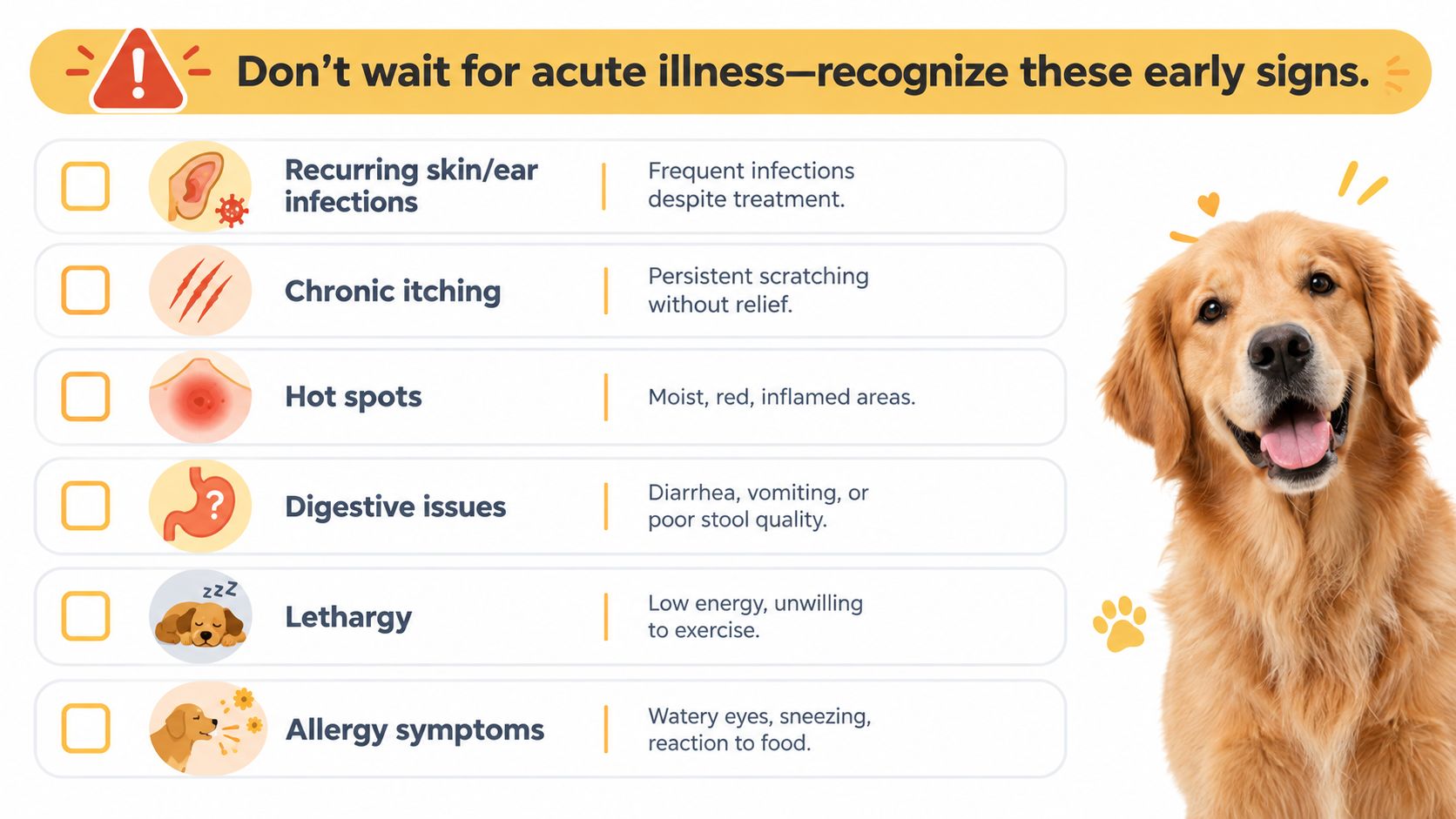
Dogs rarely announce immune dysregulation in a neat, obvious way. More often, owners see a pattern that keeps repeating. The symptoms may seem unrelated at first until you step back and notice that the skin, ears, gut, or recovery patterns all look a bit unstable.
Common patterns owners can spot
Some dogs lean toward excessive inflammation. Others look more vulnerable to routine challenges. A smaller group shows signs that raise concern about loss of self-tolerance.
- Recurring skin or ear infections: These can suggest the immune system is overreacting to allergens, allowing the skin barrier to stay inflamed and vulnerable.
- Chronic itching or paw licking: That often reflects ongoing inflammatory signaling, not just “dry skin.”
- Hot spots and yeasty paws: These usually indicate a skin environment that's staying too irritated.
- Slow wound healing: Minor scrapes that linger may suggest poor tissue repair or weak immune coordination.
- Repeated digestive upset: Intermittent vomiting, soft stool, or poor stool quality can reflect a gut-immune imbalance.
- Low energy during flares: Lethargy can happen when the body is spending too much effort managing ongoing inflammation.
A few signs deserve quicker veterinary attention
Some findings are less common but more concerning. Symmetrical crusting, changes in nose pigment, or a dog acting unusually flat after a medical event can raise a different level of suspicion. Those situations need a veterinarian's judgment, not supplement trial and error.
Keep a short symptom log for a few weeks. Note stool quality, ear debris, itch timing, paw licking, diet changes, and whether symptoms spike after boarding, grooming, seasonal shifts, or new treats.
What to do first
Start with observation, not product stacking.
- Track patterns: Write down what happens, when it happens, and what changed beforehand.
- Check the basics: Parasites, infections, diet history, and environmental exposures still need to be ruled out.
- Avoid adding five things at once: If you change everything together, you won't know what helped or irritated your dog.
- Book a vet visit early: Recurrent problems are easier to sort out before they become entrenched.
A dog doesn't need to be acutely ill for immune system regulation to be off. Early clues often show up in the boring, repetitive problems owners learn to normalize.
Why Genetics and Breed Change the Immune Equation
One of the biggest mistakes in dog wellness is assuming that every dog should respond the same way to the same “immune support” plan. They won't. Genetics and breed context shape immune regulation, including how strongly a dog reacts, what kinds of inflammatory patterns they're prone to, and how much help gut-focused strategies are likely to provide.
A recent 2026 systematic review and meta-analysis pooling 14 studies with more than 10,000 people found consistent evidence that host genetics and gut microbiota jointly shape immune regulation. A 2025 canine review also notes that breed-specific susceptibility is influenced by genetic polymorphisms plus epigenetic mechanisms such as DNA methylation and non-coding RNAs, as summarized in this review on genetics, microbiota, and immune regulation.
That doesn't mean lifestyle doesn't matter. It means lifestyle works through a host body that already has certain tendencies.
Why this changes expectations
Two dogs can eat similar diets and live in similar homes but still show very different immune behavior. One may thrive with modest gut support. Another may still struggle because inherited traits are setting a lower threshold for skin inflammation, poor tolerance, or odd vaccine responses.
This is why one-size-fits-all messaging falls short. A strategy that helps an allergy-prone dog maintain steadier mucosal defense may not do much for a dog whose bigger issue is inherited autoimmune susceptibility.
Breed-Specific Immune Tendencies and Priority Levers
| Breed Group | Common Immune Pattern | Priority Lever |
|---|---|---|
| Allergy-prone breeds | More reactive skin and ear inflammation | Gut support, skin barrier care, environmental control |
| Breeds with autoimmune tendencies | Greater concern about loss of self-tolerance | Early veterinary workup, cautious monitoring, individualized plans |
| Reactive or sensitive lines | More variable responses to change | Slower diet transitions, symptom tracking, conservative supplement changes |
| Mixed or low-history rescues | Unclear inherited baseline | Start with observation, stool and skin monitoring, simple routines |
A breed tendency isn't a destiny. It's a clue about where to pay closer attention.
Owners do best when they treat breed background as part of the case, not the whole case. The goal is still regulation. The path just isn't identical for every dog.
Nutrition, Probiotics, and Lifestyle for Immune Homeostasis
A common pattern in practice goes like this. A dog has itchy skin, soft stool, or recurrent ear trouble, so the family adds supplements one by one and changes foods every few weeks. The immune system then has to react to a constantly shifting routine. Steadier inputs usually help more.
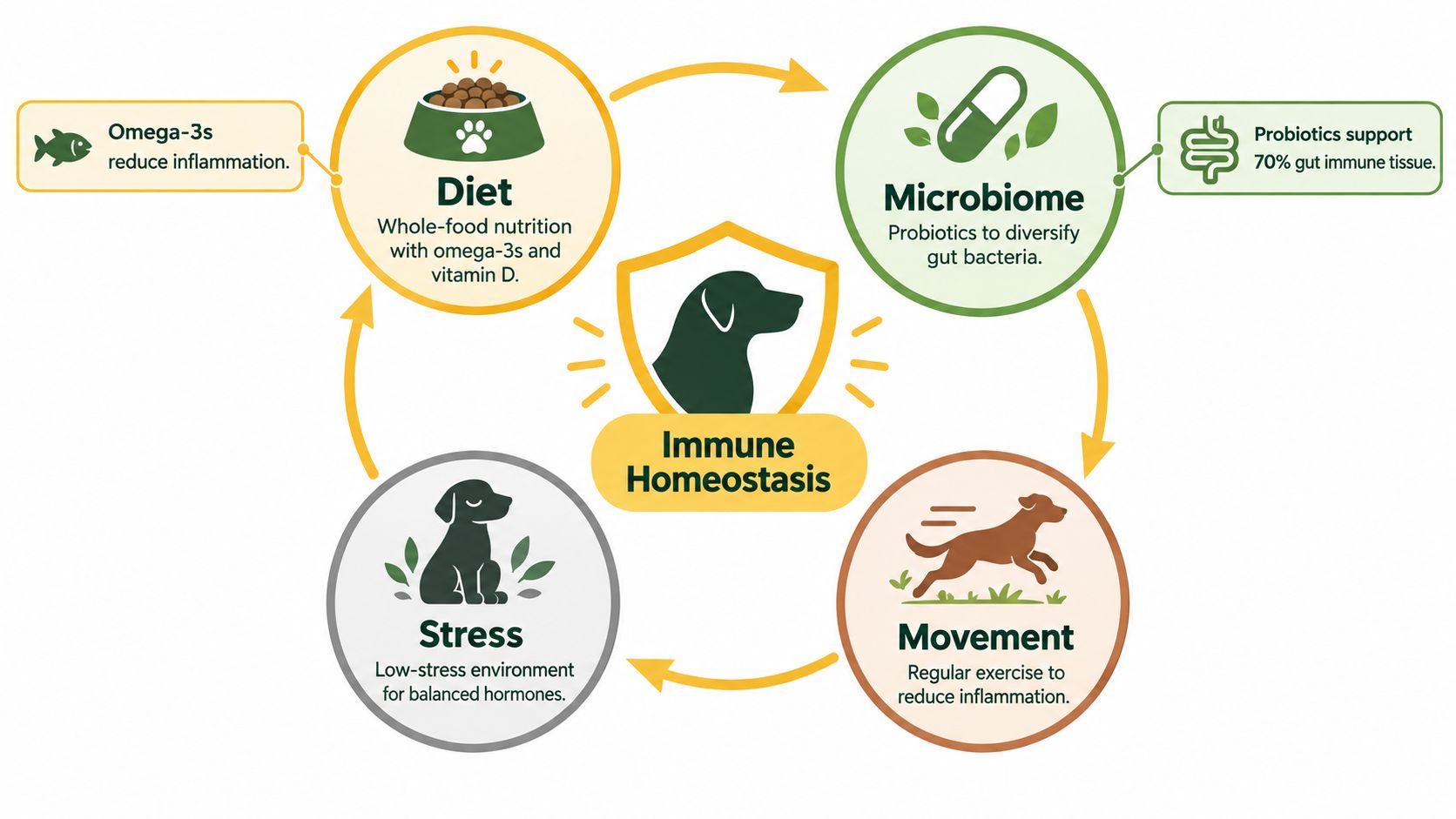
Food, gut microbes, sleep, activity, and stress all send signals to immune cells every day. The goal is immune homeostasis. That means helping the system respond appropriately, then settle down again, rather than pushing it to react harder.
Start with the bowl
For many dogs, the first job is reducing noise. A stable, well-tolerated diet gives the gut lining a more predictable workload, much like keeping a healing paw clean and protected instead of irritating it with constant licking and friction. Digestible protein, consistent feeding times, and fiber that supports normal stools can all make that internal environment calmer.
Diet quality matters, but consistency matters too. Frequent switches in kibble, treats, chews, toppers, and table scraps can make it harder to tell whether a dog is improving or reacting to the latest change.
Some dogs also benefit from targeted nutrition that supports barrier tissues and inflammatory balance, such as omega-3 fatty acids, zinc, and antioxidant-rich ingredients. Those tools work best when they fit the individual dog, especially if breed background or past digestive sensitivity already suggests a lower margin for error.
Use probiotics with a purpose
Probiotics are not a universal fix. They are one way to influence the gut-immune axis, and the result depends on the dog in front of you. A dog with stress-sensitive stools, recent antibiotic exposure, or mild digestive instability may respond very differently than a dog whose main issue is inherited skin reactivity.
That distinction matters because much of the immune system is tied to the gut. If the intestinal lining is irritated, or the microbial community is unsettled, immune cells can receive mixed signals. In plain terms, the body starts reading everyday inputs as bigger problems than they are.
A practical place to sort out those differences is Pure Paw Labs' guide to probiotic supplements for dogs and everyday gut support.
Movement and stress are immune inputs too
This short overview is useful if you want a visual summary before fine-tuning routine:
Exercise helps regulate the whole dog, not just muscles and weight. Regular walks, play, sniffing time, and recovery-friendly activity can lower stress load and support better sleep. Very intense or poorly matched exercise can do the opposite, especially in seniors or dogs already dealing with inflammation.
Stress deserves the same attention as food. Poor sleep, chaotic schedules, social tension, repeated boarding, and sudden household changes can all make immune regulation harder. Some dogs handle that well. Others, often because of temperament, history, or breed tendency, show it quickly through stool changes, itch flares, or licking and chewing.
Keep the plan simple enough to repeat
Life stage still matters, but daily repeatability matters just as much.
- Puppies: Keep nutrition steady, make diet changes slowly, and support the gut while immune tolerance is still developing.
- Adults: Watch for early drift in skin, ears, stool quality, and body condition before those patterns become routine.
- Seniors: Favor plans that are easy to follow and that consider gut comfort, mobility, skin barrier support, and recovery together.
For households that want one daily product instead of several separate add-ons, DA-1™ Daily All-in-One - Skin/Coat, Joints, Gut Health & More is a simple option to discuss with your veterinarian as part of a broader routine.
More items in the bowl do not always create better immune balance. A clear plan, followed consistently, usually does more.
Common Misconceptions About Boosting Dog Immunity
The phrase “boost the immune system” sounds helpful, but it's often too blunt to be useful. A stronger reaction isn't always a better reaction.
Dogs with allergies, recurrent itching, inflamed ears, or suspected autoimmune issues may already have plenty of immune activity. Their problem may be that the response is misdirected, excessive, or hard to switch off. In those cases, more stimulation can be the wrong goal.
Three ideas worth retiring
The first misconception is that all immune support should increase activity. It shouldn't. Sometimes support means reinforcing barriers, calming inflammation, or improving tolerance.
The second is that any probiotic will do the same job. It won't. As covered earlier, microbiome effects depend on the dog, the context, and likely the host's inherited tendencies too.
The third is that one “immune” product can solve skin, ears, digestion, and recurrent flares by itself. It usually can't. Those problems may overlap, but they don't always share the same root cause.
A better frame for owners
Recent immune research points toward modulation, not simple amplification. A 2025 review on regulatory immune cells emphasizes that immune homeostasis depends on specialized cells that suppress excessive responses, limit inflammation, and support tissue repair. Other 2025 reviews highlight epigenetic reprogramming, immunometabolism, and RNA-based control as emerging levers of regulation. One 2025 finding describes dynamic super-enhancer control of cytokine expression during inflammation. The consumer takeaway from this Frontiers review on regulatory immune cells and immune homeostasis is simple: healthy immune support is about guiding balance.
If you want a plain-language companion piece on that exact distinction, Pure Paw Labs also explains it in their article on what immune support means for dogs.
Marketing often rewards the word “boost.” Biology usually rewards control.
A Daily Plan for Supporting Immune Regulation
The best immune plan for most dogs is calm, repeatable, and boring in the best way. You don't need a dozen interventions. You need a routine that lowers unnecessary immune friction and helps the body regulate itself.
Start with food. Keep the diet stable, use complete protein sources, and include fiber-rich ingredients that your dog handles well. If you change foods or add supplements, do it one step at a time so you can watch the response clearly.
Build the rest of the day around recovery. Give your dog enough movement for their breed, age, and body condition, but don't confuse exhaustion with health. Protect sleep, keep routines predictable, and use enrichment to reduce chronic stress.
Then watch the signals that matter most:
- Stool quality: Is it consistent or always drifting?
- Skin and ears: Are redness, odor, licking, or wax building back up?
- Recovery: Does your dog bounce back well from minor stressors?
- Energy and comfort: Is the dog bright, steady, and comfortable between flare-ups?
A final habit matters just as much as any supplement. Partner with your veterinarian before stacking immune-focused products, especially if your dog has recurring infections, strong allergy signs, unusual vaccine reactions, or suspected autoimmune disease. The smartest support plan is the one matched to the dog in front of you.
Pure Paw Labs makes human-grade daily supplements for dogs designed to support multiple systems, including gut, skin, joint, immune, and stress-related needs, with a single scoop routine. If you're trying to simplify your dog's wellness plan while keeping immune balance in mind, visit Pure Paw Labs to explore their approach.