


Yorkshire Terriers are very low shedders because they lack an undercoat and have continuously growing hair, which grows about 1 to 1.5 cm per month. Daily grooming is still essential because loose hairs remain in the coat, where they can form tangles and mats instead of falling freely around your home.
You may have noticed this after bringing home a Yorkie: the sofa stays surprisingly clean, your dark clothes don't collect much fur, and yet the coat seems to demand constant attention. That combination can feel confusing. If a dog sheds so little, why does brushing matter every day?
The answer lies in the structure of the Yorkshire Terrier coat. A Yorkie doesn't release large seasonal clouds of undercoat like many double-coated breeds. Instead, individual hairs grow for longer periods and cycle out gradually. The hairs that do loosen often stay caught among the surrounding coat until you remove them with a brush or comb.
That means low shedding isn't the same as low maintenance. A Yorkie may leave little hair on your furniture while developing painful knots behind the ears, beneath the legs, or around the tail. Understanding the coat's biology helps you choose the right grooming routine and recognize when a change in shedding may point to a skin or health problem.
Table of Contents
- Why Yorkshire Terriers Shed So Little
- The Science Behind Single-Coat Shedding
- Essential Grooming Routines for Yorkie Owners
- Allergen Management and the Hypoallergenic Myth
- Health Conditions That Affect Shedding Patterns
- Building Your Complete Yorkie Care Philosophy
Why Yorkshire Terriers Shed So Little
A Yorkie can spend an afternoon on a blanket, curl up on your lap, and cross the carpet while leaving almost no fur behind. Then the same dog may need careful brushing to prevent a small knot from becoming a tight mat. That combination makes sense once you separate visible shedding from what happens to each individual hair after it loosens.
Yorkshire Terriers emerged in northern England during the 19th century, when Scottish workers brought terrier types into Yorkshire to control rats in mills and mines. Breed histories describe influences from terriers such as the Skye and Clydesdale, followed by selective breeding for a long, silky blue-and-tan coat. This development reflects a gradual change from practical working traits toward the coat associated with the modern breed. You can review that background in this historical overview of the Yorkshire Terrier.

A working history shaped the modern coat
Many outdoor working dogs developed dense coats with a soft insulating layer beneath a tougher outer layer. That arrangement helped retain warmth and handle wet, cold conditions. The Yorkshire Terrier developed in a different setting, and selective breeding favored fine, silky hair rather than a thick insulating underlayer.
As the breed became more popular as a companion, its coat became part of its identity. Its growth pattern also shaped the way owners experience shedding. Individual hairs remain attached for a relatively long time, continue growing, and gradually loosen rather than arriving in large seasonal handfuls.
The result is easy to misread. A Yorkie may leave very little hair on furniture while still collecting loose strands inside the coat. Those strands can twist around neighboring hairs, especially behind the ears, under the legs, around the tail, and between the toes. A mat is not only a cosmetic problem. It can pull on the skin, trap moisture, and hide redness, scaling, or tenderness.
Practical rule: Treat a Yorkie's coat like long hair, not like carpeting that periodically needs vacuuming.
That rule explains why grooming is also a basic health check. Brushing separates loose hairs before they tighten into knots, while regular handling helps you notice changes in skin texture, odor, sensitivity, or coat quality. A sudden difference in shedding deserves attention, particularly if it appears with itching, bald areas, scabs, or inflamed skin.
A trimmed Yorkie usually takes less time to brush because shorter hair gives knots less room to develop. The underlying needs remain. Check the coat, skin, ears, paws, and areas where friction or moisture can build up, even when the haircut looks simple.
What owners should expect
Yorkies are very low shedders, but they are not completely non-shedding dogs. Loose hairs may show up mainly on a brush, in the bath, or on your hands after you handle the coat. A longer coat can hold those hairs in place, so brushing removes hair as well as separating tangles.
The Yorkie shedding question therefore has two clear answers:
- Visible hair around the home: Usually minimal.
- Grooming responsibility: High, especially with a long coat.
A Yorkie can suit a home that wants less loose hair, provided the owner accepts regular coat care. The benefit is reduced visible shedding. The responsibility is keeping each strand clean, separated, and comfortable while watching the skin beneath it.
The Science Behind Single-Coat Shedding
The simplest way to understand a Yorkie's coat is to compare it with human hair. Your hair grows continuously, and a loose strand may remain caught among neighboring strands until brushing or washing removes it. A Yorkie's coat follows a similar pattern, although the follicles, growth cycles, and texture are canine rather than human.
One layer changes the shedding pattern
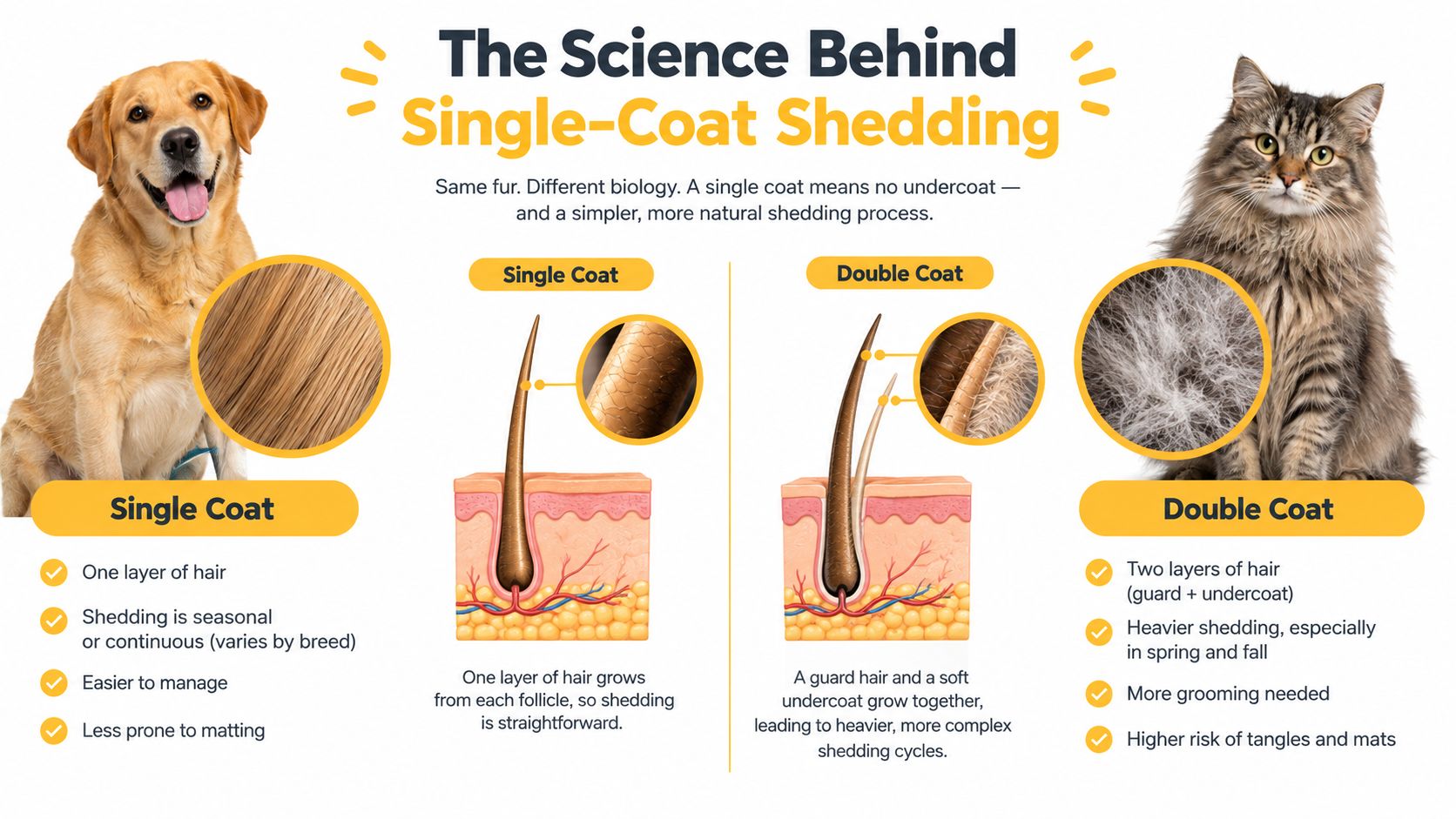
A Yorkshire Terrier has a single-layer, hair-like coat with no undercoat. Many other dogs have an outer layer of guard hairs plus a softer undercoat beneath it. When that undercoat cycles out, owners may see tufts, clumps, or seasonal waves of fur. A Yorkie doesn't have that same reservoir of dense undercoat.
The follicle pattern also matters. In Yorkies, each follicle typically produces one strand rather than the multiple hairs common in many other breeds. That reduces the amount of loose material released at any one time. The coat still sheds individual hairs, but it doesn't usually produce the dramatic handfuls associated with a thick double coat.
Yorkie hair grows continuously at about 1 to 1.5 cm per month, so shedding isn't primarily a seasonal event. The hair gradually reaches the end of its cycle, loosens, and may remain caught in the surrounding coat. This is why a Yorkie can shed little onto a chair while accumulating a dense knot under one ear.
The tradeoff is visible on the brush
A brush may collect more hair than you ever find on the floor. That doesn't mean brushing is causing abnormal shedding. It means grooming is catching strands that would otherwise remain trapped until they tangled with neighboring hairs.
This creates a clear maintenance tradeoff:
| Coat characteristic | What you notice |
|---|---|
| No undercoat | Less loose fur released in large seasonal amounts |
| Continuous growth | Hair keeps lengthening and needs regular trimming |
| Individual loose strands | Shedding is easier to miss around the home |
| Long, fine texture | Knots can form quickly without brushing |
Daily brushing separates strands before friction turns them into a mat. It also lets you inspect the skin for redness, flakes, moisture, odor, or areas where the dog reacts to touch. For a broader explanation of how skin condition and coat quality interact, see this guide to dog skin and coat care.
The hair you don't see on the floor hasn't necessarily disappeared. It may still be sitting in the coat.
A healthy coat should feel smooth and flexible rather than brittle or greasy. If an older dog needs broader nutritional support, owners may also consider the DA-1™ Daily All-in-One - Senior Dog Support, Joints, Skin/Coat & More, which the product information describes as a once-daily formula with 18 human-grade ingredients targeting cells, gut, and joints. It shouldn't replace veterinary diagnosis or a balanced diet, particularly when a coat change is sudden.
Essential Grooming Routines for Yorkie Owners
A Yorkie that stays comfortable during a short grooming session is easier to maintain than one handled only after tangles become painful. The goal is a predictable routine that supports the coat's growth cycle, protects the skin, and reveals health changes early.
Match grooming to the changing coat
At about 4 to 6 months, the soft puppy coat may give way to the adult silky coat, as explained in this vet-reviewed Yorkie shedding guidance. The texture can become finer, longer, or more prone to tangling during this transition. A puppy who once needed only light brushing may later require slower, more thorough combing.
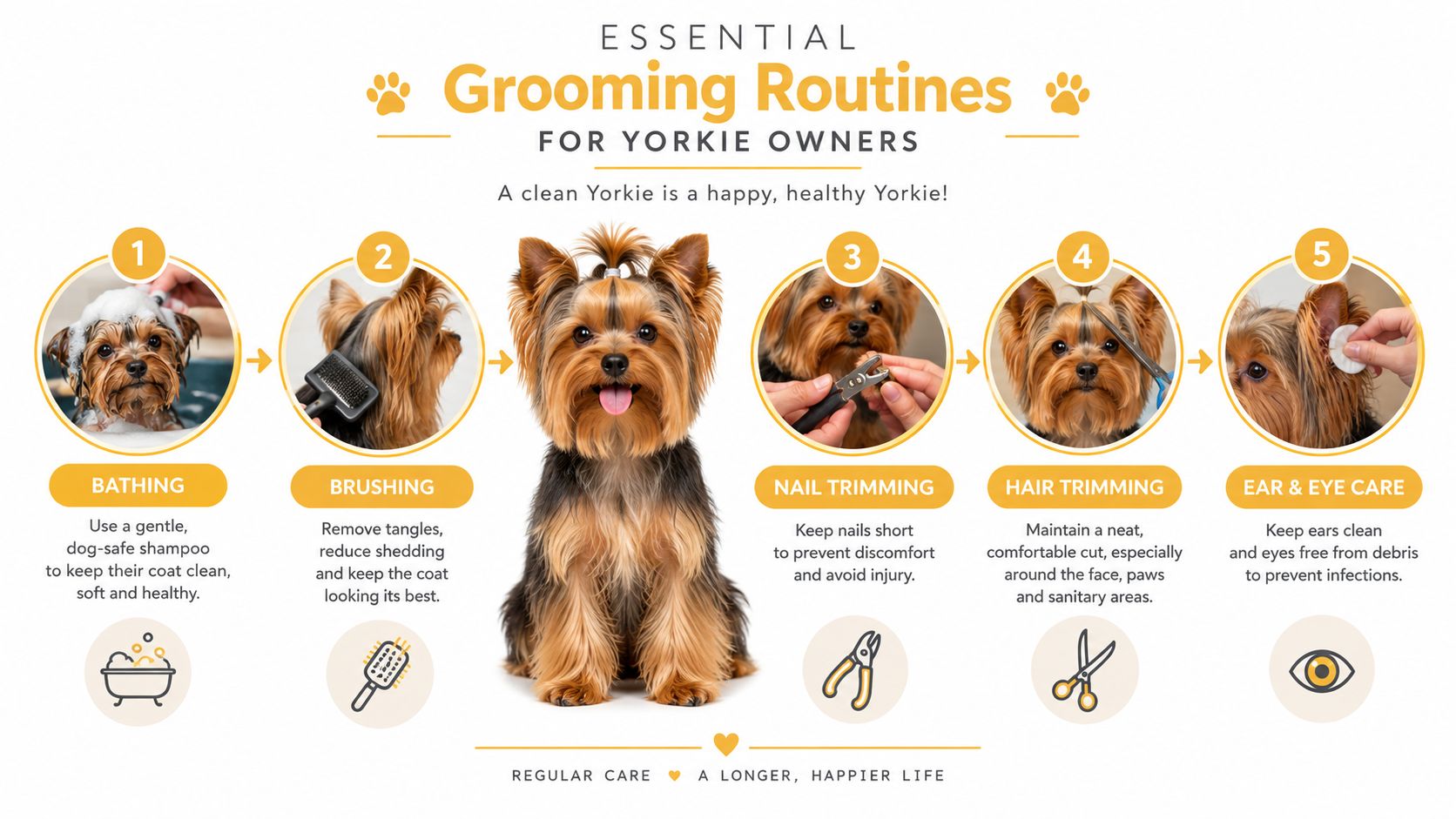
Use a soft slicker brush on small sections, followed by a metal comb. The brush separates surface tangles. The comb tests whether the hair is clear from the outer layer down to the skin. Detangling spray can reduce friction, but it cannot make severe matting safe to ignore.
Follow the same sequence each time:
- Start with the legs and body. Hold the hair close to the skin so the roots do not receive the pulling force.
- Check behind both ears. Ear movement and collar contact can twist fine hair into tight knots.
- Inspect the armpits and inner legs. Movement creates repeated friction in these areas.
- Clean the tail and sanitary area. Keep hair there clean, dry, and short enough to inspect.
- Comb through the complete coat. A comb that stops signals a tangle to investigate, not a place to pull harder.
Set a schedule that protects skin and coat
A long-coated Yorkie generally needs daily brushing. Professional trims are commonly scheduled every 1 to 1.5 months, as outlined in this Yorkshire Terrier coat-care resource. A shorter pet trim reduces the amount of hair to manage, but it does not remove the need for combing or skin inspection.
Home grooming can work when the dog accepts handling, the coat is short, and the owner can see the skin clearly. Professional help is safer when mats return, the coat remains long, or scissors and clippers cause distress. Cutting into a tight mat risks cutting skin hidden inside it.
Bathing should have a clear purpose. Brush out manageable tangles first, because water tightens mats. Rinse products fully and dry the coat, since trapped moisture can irritate skin. A steady routine can also support broader dog shedding reduction through routine care. Sudden changes in shedding, odor, oiliness, flaking, or sensitivity deserve veterinary attention rather than more aggressive brushing.
Allergen Management and the Hypoallergenic Myth
A family may welcome a Yorkie because rooms stay relatively free of loose hair, yet someone in the household can still develop sneezing, itching, or wheezing. The key distinction is simple: no dog is non-allergenic. Loose hair acts like a vehicle, carrying dander and other particles around the home, while the allergic response usually involves proteins from skin flakes, saliva, and other secretions.
A single, low-shedding coat can reduce the amount of hair drifting across floors and furniture. It cannot remove the proteins that trigger sensitivity. For an allergy-sensitive household, the useful question is therefore not only, “Does a Yorkie shed?” It is, “Can we consistently limit contact with the dog's total allergen load?”
Use grooming to control accumulation
Brushing works like removing dust from a reusable fabric before it reaches the room. Daily brushing can lift loose hairs, dander, and trapped debris from the coat before they collect on bedding, clothing, or furniture. Use a washable area or an outdoor space when practical. If brushing causes symptoms, another household member should handle it.
For many Yorkshire Terriers kept in longer coats, daily brushing and weekly baths help keep the hair clean and reduce tangles, as described in this Yorkshire Terrier care overview. Bathing still needs to match the individual dog's skin. Overwashing, harsh products, or poor rinsing can weaken the skin barrier, leading to dryness, flakes, and scratching that add more material to the home.
A practical allergen routine can include:
- Defined sleeping areas: Wash the dog's bedding regularly, and keep the dog away from pillows if those surfaces worsen symptoms.
- Air management: Use suitable filtration in rooms where the dog spends much of its time.
- Surface cleaning: Clean floors and soft furnishings on a schedule, before visible hair becomes the signal to act.
- Hand hygiene: Wash hands after handling saliva-covered toys or grooming debris.
- Exposure testing: Spend time with the specific Yorkie before adoption. People can react differently to individual dogs, even within one breed.
Low shedding can make cleanup easier. It does not provide a medical guarantee. If contact causes wheezing, facial swelling, severe hives, or breathing difficulty, seek medical advice promptly. Grooming can reduce coat debris, but only a healthcare professional can help assess allergy symptoms and safety.
Health Conditions That Affect Shedding Patterns
Normal Yorkie shedding is usually subtle and spread across the coat. A sudden change deserves more attention, especially when the coat becomes thin in defined areas or the dog shows discomfort.
A useful distinction is diffuse change versus focal change. Diffuse thinning across much of the body may suggest a broader skin, hormonal, nutritional, or systemic problem. Focal loss, such as a bald patch, may point toward local inflammation, self-trauma, infection, parasites, or repeated friction.
Read the pattern, not just the brush
Look for changes that occur alongside the shedding:
- Itching or chewing can indicate irritation, allergy, parasites, or infection.
- Redness, odor, or greasy skin can accompany inflammation or microbial overgrowth.
- Flaking and brittle hair may reflect a disturbed skin barrier or another dermatologic issue.
- Symmetrical thinning without much itching can make a veterinarian consider hormonal causes.
- Lethargy, appetite changes, or weight changes raise concern beyond a simple coat-cycle variation.
- Stress-related licking or chewing can create broken hairs and bald areas even when the follicles are initially healthy.
A Yorkie puppy in the normal coat transition may look different from one month to the next, but the skin should remain comfortable and the dog should not be persistently scratching. Keep a simple record of where thinning appears, when it started, whether the dog is itchy, and what products or foods changed beforehand.
Know when examination is needed
Arrange a veterinary appointment for patchy baldness, persistent scratching, recurrent odor, crusting, bleeding, pain, or a rapid change in coat texture. The veterinarian may examine the hairs and skin, look for parasites, collect samples from affected areas, or recommend blood testing when the pattern suggests a hormonal or systemic disorder.
Don't treat every shedding change with a supplement or a stronger shampoo. The correct treatment depends on the cause. Infection, allergy, parasites, hormonal disease, and nutritional problems require different decisions, and delaying diagnosis can allow self-trauma and inflammation to worsen.
This guide to flaky skin and hair loss in dogs can help you organize observations before an appointment. It shouldn't replace an examination, particularly if the dog seems painful or unwell.
A mat is a grooming problem. A bald, inflamed, or painful area is a health problem until a veterinarian shows otherwise.
Building Your Complete Yorkie Care Philosophy
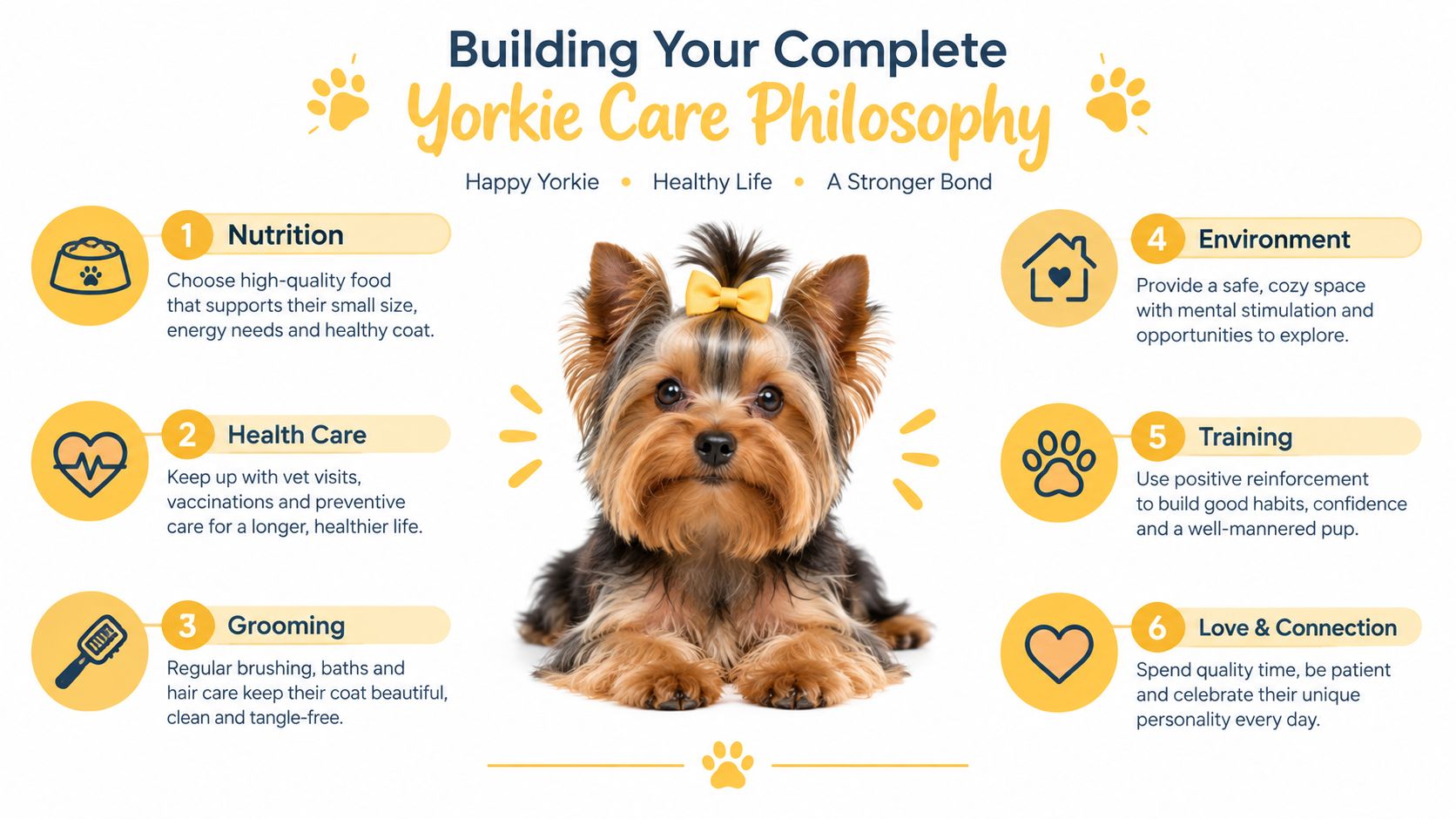
A Yorkie's coat gives you an unusually useful window into daily health. Grooming isn't only about appearance. It creates regular opportunities to notice changes in the skin, feel new lumps, check sensitive areas, and observe whether your dog tolerates touch normally.
Think of care as a connected system. Brushing prevents mechanical damage from tangles. Appropriate bathing supports cleanliness without provoking irritation. A balanced diet supports the body's normal functions, while veterinary care addresses problems that grooming alone can't solve.
A practical care cycle
Use a recurring checklist rather than waiting for a visible crisis:
- At each brushing: Check the skin, ears, armpits, paws, and tail area for tangles, moisture, odor, or redness.
- At bath time: Remove manageable knots beforehand, rinse thoroughly, and dry the coat completely.
- During routine handling: Notice changes in comfort, scratching, chewing, coat texture, or sensitivity.
- At veterinary visits: Mention shedding changes even if the dog otherwise appears well.
- When choosing food or supplements: Treat them as part of a complete wellness plan, not as a substitute for diagnosis or balanced nutrition.
The home environment matters too. A Yorkie with a clean, easy-to-sanitize outdoor area may bring less debris into the coat after toileting or play. If you're evaluating surfaces for a dog-friendly yard, this guide to clean artificial turf for dogs may help you compare maintenance considerations before making a change.
Prevent problems before they become coat problems
The most effective approach is quiet consistency. Keep the coat at a length you can realistically maintain, teach your Yorkie that brushing is safe, and ask for veterinary help when the pattern changes rather than trying to hide symptoms with grooming.
Remember the central tradeoff: Yorkies shed very little, but their hair needs active management. Once you accept that their coat retains loose strands instead of dropping them freely, daily brushing stops feeling excessive. It becomes the routine that protects comfort, skin visibility, and the silky coat that makes the breed distinctive.
Pure Paw Labs offers science-backed, human-grade dietary supplements for dogs, including a daily formula designed to support joint, skin and coat, digestive, immune, and stress-related needs. Visit Pure Paw Labs to review the available support options and decide whether one fits into your Yorkie's broader care routine.