


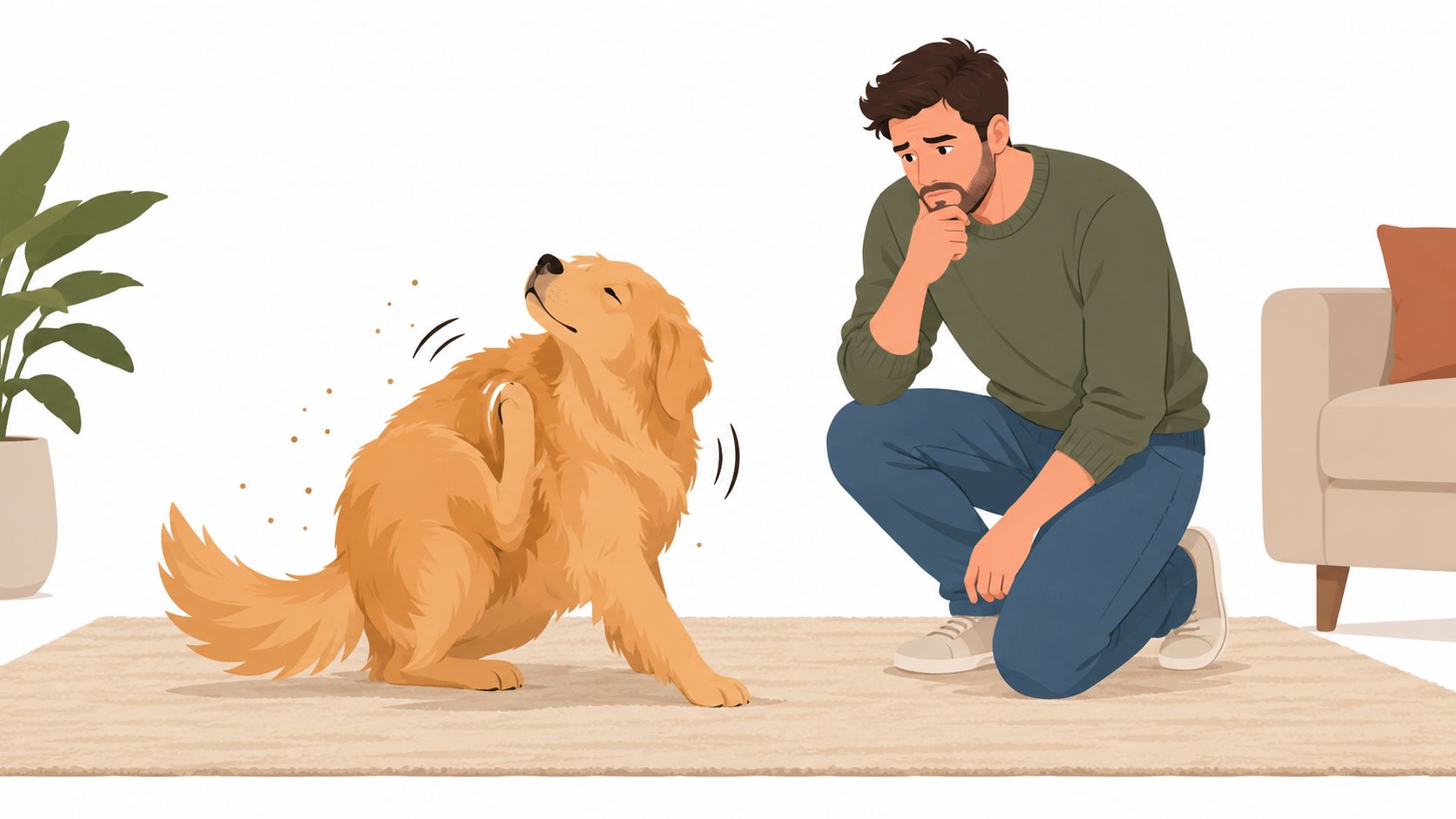
Your dog is scratching against the rug, stopping only long enough to look back at you. You part the fur and find white flakes along the back, so you reach for the oatmeal shampoo in the cupboard and wonder whether this is worth a veterinary appointment.
Sometimes it is simple environmental dryness. Sometimes it is an allergy, parasites, infection, or an early sign of disease wearing a flaky disguise. The practical question isn't “What is the strongest moisturizer?” It's whether your dog is safe to manage at home, what gentle care to try, and when to stop guessing.
Table of Contents
- Why Your Dog's Dry Skin Deserves a Closer Look
- Everyday Causes of Dry Skin in Dogs
- When Dry Skin Is Really a Medical Problem
- Topical Products That Actually Help Dry Dog Skin
- What to Feed a Dog With Dry Skin
- How an All-in-One Supplement Simplifies the Routine
- A Simple Weekly Home Care Plan
- Red Flags, FAQs, and When to See the Vet
Why Your Dog's Dry Skin Deserves a Closer Look
I've seen plenty of dogs improve after their owners switched from a harsh shampoo to a mild, moisturizing formula and stopped bathing too often. I've also seen dogs arrive after weeks of “dry skin treatment” with flea allergy, yeast overgrowth, infected sores, or a medical condition that no conditioner could fix.
That's why dry skin deserves triage rather than an automatic trip to the grooming aisle. Look at the whole pattern:
- Simple dryness usually means mild flaking with little or no redness, odor, soreness, or intense itching.
- A grooming trigger often follows a recent bath, clip, detergent change, cold spell, or dry indoor air.
- A medical mimic tends to bring stronger itching, hair loss, recurrent flare-ups, odor, ear problems, sores, or changes in energy and appetite.
The three decisions that matter
First, check whether the skin is dry or visibly inflamed. Dry flakes without inflammation can respond to barrier-friendly bathing and improved nutrition. Redness, pustules, a strong smell, and open areas move the problem into veterinary territory.
Second, review recent changes. Did you introduce a new shampoo, laundry detergent, food, grooming routine, or flea product? Did the scratching begin after heating season started? Those details can be more useful than guessing from the flakes alone.
Third, choose a modest home-care trial only when the dog otherwise seems well. A practical guide to dog skin and coat care can help you organize daily observations, but it shouldn't replace an examination when the pattern looks abnormal.
Practical rule: If the dog is uncomfortable enough to scratch repeatedly, don't judge the problem by flakes alone. Judge it by itch, inflammation, odor, hair loss, and recurrence.
Everyday Causes of Dry Skin in Dogs
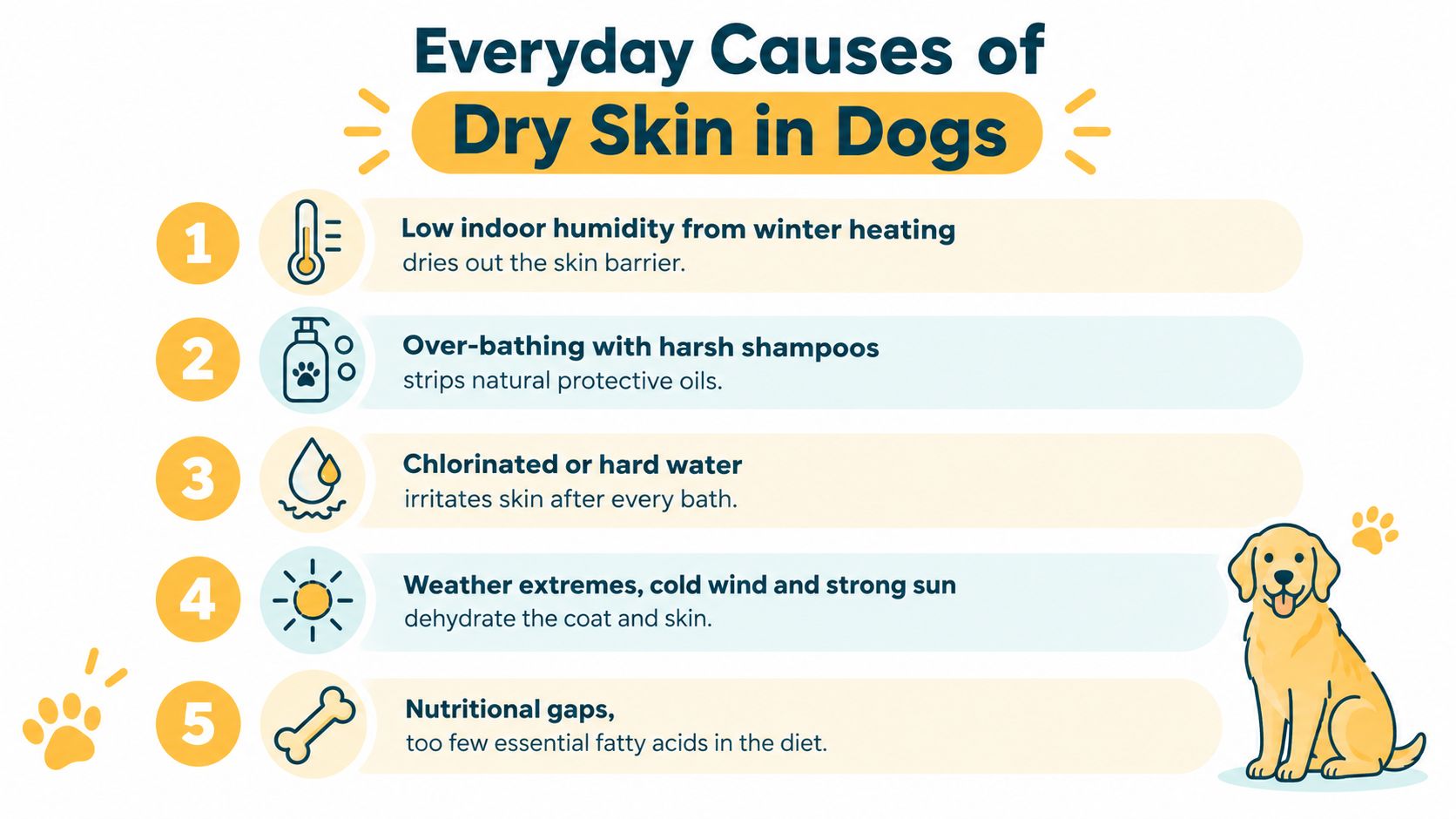
Start with the environment, because the simplest causes are often hiding in plain sight. Check these triggers in order rather than changing five things at once.
1. Dry indoor air
Winter heating and constant air conditioning can leave the skin barrier less comfortable. Flakes may appear along the back or shoulders, while the skin remains only mildly itchy and free of odor. If the problem started after the heating came on and improves outdoors or after humidity changes, the environment may be contributing.
2. Too much bathing
Frequent bathing, especially with a strongly degreasing or heavily fragranced shampoo, can remove protective surface oils. Watch for flaking that appears after grooming, tight-looking skin, or a coat that feels rough instead of soft.
A dog-formulated, mild shampoo is a better choice than human shampoo. Rinse carefully, because leftover product can irritate the skin just as readily as the wrong cleanser.
3. Water and grooming irritation
Chlorinated or hard water may leave some dogs uncomfortable after bathing. Clipper irritation can also create small, itchy areas on the belly, groin, or sides, particularly when the coat was cut close. The timing matters. Irritation that follows grooming is a useful clue, not proof of allergy.
4. Contact with household irritants
Dust, recently washed bedding, floor cleaners, and laundry detergent can irritate sensitive skin. If dander or scratching began within days of a household product change, return to the previous routine and wash bedding with a fragrance-free approach.
5. Nutritional gaps
Essential fatty acids support normal skin barrier function, but a supplement can't compensate for an unbalanced diet or diagnose a skin disorder. Check that the main food is complete and balanced before adding oils.
For a quick self-check, take photos of the affected areas, record bathing dates, note new products or foods, and inspect the skin daily. Mild flaking with no inflammation may justify careful home care. Any escalating itch, redness, smell, sores, or hair loss deserves a closer look, which is also covered in this guide to why dogs scratch.
When Dry Skin Is Really a Medical Problem
Flaking is not a diagnosis. Flea allergy can cause severe itching and hair loss around the tail base, even when you never see a flea. Environmental or food allergies may affect the feet, ears, belly, face, or armpits, and dogs often lick or chew those areas instead of just producing visible flakes.
Bacterial and yeast infections usually bring clues that plain dryness doesn't. Look for a sour or yeasty smell, greasy scale, redness, pustules, crusting, or skin that feels hot and sore. Mites can cause intense itch, crusts, and patchy hair loss. Sarcoptes may spread itching across the body, while Demodex can produce distinct, uneven patches, especially when the dog's immune system isn't handling the mites normally.
Medical clues owners should recognize
Endocrine disease can change the coat and skin without causing dramatic early itching. Hypothyroidism may be associated with a dull coat, thinning hair, and recurrent skin problems. Cushing disease can come with a pot-bellied appearance, increased panting, and broader changes in thirst, appetite, or energy.
Breed-related conditions, including sebaceous adenitis, can produce scaling, coat changes, and hair loss that keep returning despite gentle grooming. The point isn't to diagnose these conditions at home. It's to recognize when a moisturizer is treating the surface while the cause continues underneath.
| Sign You See | Likely Simple Dryness | Likely Medical Issue |
|---|---|---|
| Flakes | Mild, dry flakes with little redness | Heavy scale with redness, crusting, or greasy skin |
| Itching | Occasional scratching | Persistent scratching, licking, or chewing |
| Hair | Coat remains mostly intact | Patchy or expanding hair loss |
| Smell | No unusual odor | Yeasty, sour, or foul odor |
| Pattern | Appears after dry weather or bathing changes | Recurrent, spreading, or strongly localized patches |
| Other symptoms | Dog acts normal | Ear disease, sores, lethargy, appetite changes, or increased panting |
If itching wakes the dog at night, hair is falling out, the skin smells yeasty, or careful home care hasn't helped within two to three weeks, book the appointment instead of buying a stronger shampoo. The veterinary dry-skin guidance supports a cause-led approach because allergies, parasites, infection, and systemic disease can all resemble ordinary dryness.
Topical Products That Actually Help Dry Dog Skin
A dog with mild flakes, an intact coat, and no sores can usually start with gentle topical care. Choose a moisturizing dog shampoo containing colloidal oatmeal, aloe, or barrier-supporting ingredients such as ceramides. The formula should clean away dirt without leaving the skin tight or the coat brittle. If the skin is red, greasy, crusted, painful, or intensely itchy, stop treating it as simple dryness and arrange a veterinary examination.
Use lukewarm water and wet the coat thoroughly. Massage the shampoo down to the skin, where the problem is, rather than washing only the hair. Leave a therapeutic or moisturizing product on for about 10 minutes when possible, then rinse until the water runs clear. The veterinary bathing guidance explains why contact time matters for medicated products. Immediate rinsing reduces the product's exposure.
Match the product to the problem
- Moisturizing shampoo suits mild flaking, dry seasonal skin, and a brittle-feeling coat. Select a canine-formulated, fragrance-light or fragrance-free option.
- Conditioning rinse helps when washing leaves the coat rough. Apply it to areas that need it, such as the flanks and belly, and follow the label for rinsing.
- Leave-on spray or mousse supports the skin barrier between baths, especially on areas that dry quickly. Keep it off broken skin unless your veterinarian recommends it.
- Paw and snout balm belongs on dry pads or a dry nose. Do not spread it over a red, infected, or broadly itchy body.
- Medicated shampoo is appropriate for diagnosed infection or inflammatory disease, with the active ingredient selected by a veterinarian.
Skip harsh sulfate-heavy cleansers, alcohol-heavy sprays, strongly perfumed formulas, and human lotions. Dogs lick their skin, so a product that feels soothing to people may irritate a dog or become unsafe when swallowed.
| Product Type | Best For | Key Ingredients to Look For | Ingredients to Avoid |
|---|---|---|---|
| Moisturizing shampoo | Mild flakes and dry coat | Oatmeal, aloe, ceramides | Harsh cleansers, heavy fragrance |
| Conditioning rinse | Rough coat after bathing | Canine emollients and conditioners | Strong perfumes, drying alcohols |
| Leave-on spray | Between-bath barrier support | Dog-safe moisturizers | Alcohol-heavy formulas |
| Paw or snout balm | Localized pad or nose dryness | Dog-formulated protective emollients | Human medicated lotions |
| Medicated shampoo | Diagnosed infection or inflammatory disease | Active ingredient selected by a veterinarian | Random use without a diagnosis |
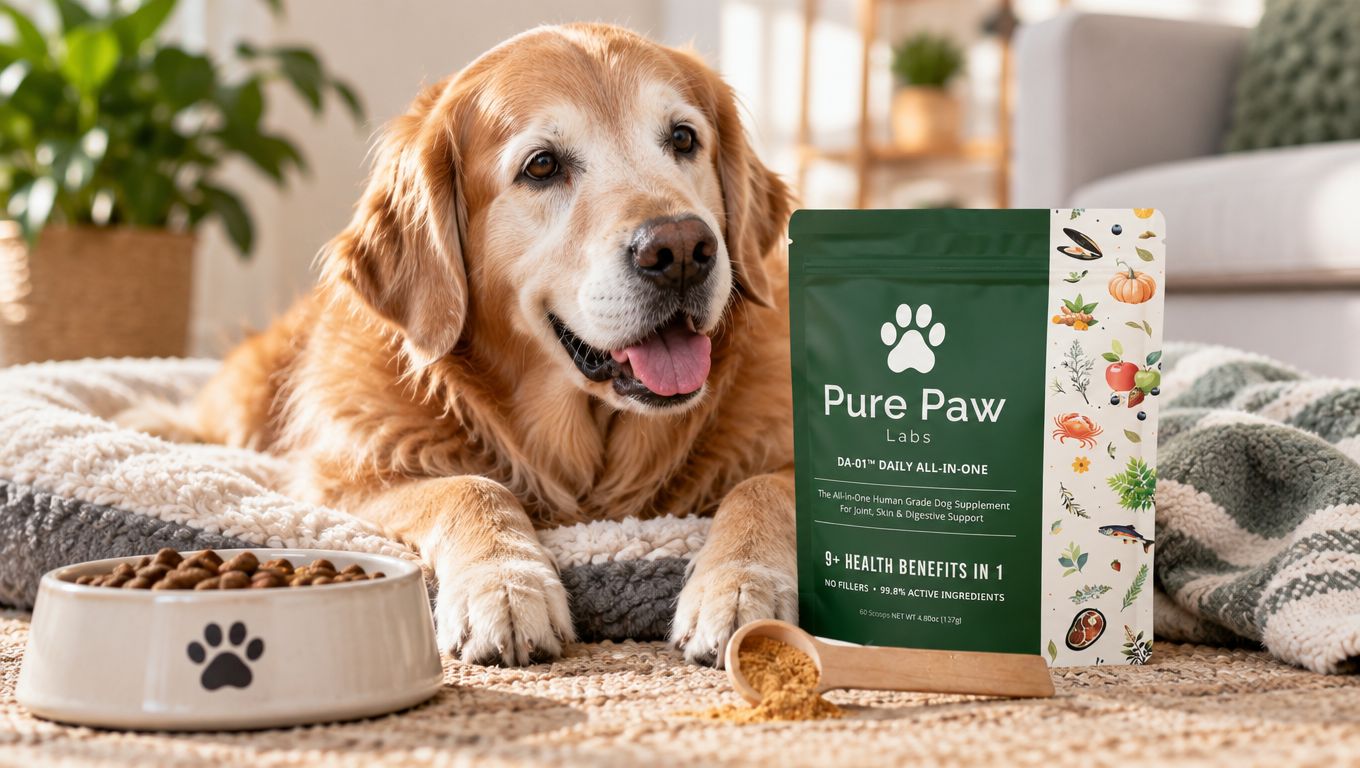
For general ingredient context, this guide to a natural moisturizer for dry skin can help you understand moisturizing agents, though your dog needs a canine-formulated product. For broader nutritional support, DA-1™ Daily All-in-One - Senior Dog Support, Joints, Skin/Coat & More is described as a once-daily formula with 99.8% active ingredients and no fillers. It works alongside topical care as nutritional support, and it does not replace diagnosis or veterinary treatment.
Use this dog moisturizer guide to compare leave-on options and apply them correctly. If careful home care fails to improve the skin, book the appointment instead of escalating to stronger products.
What to Feed a Dog With Dry Skin
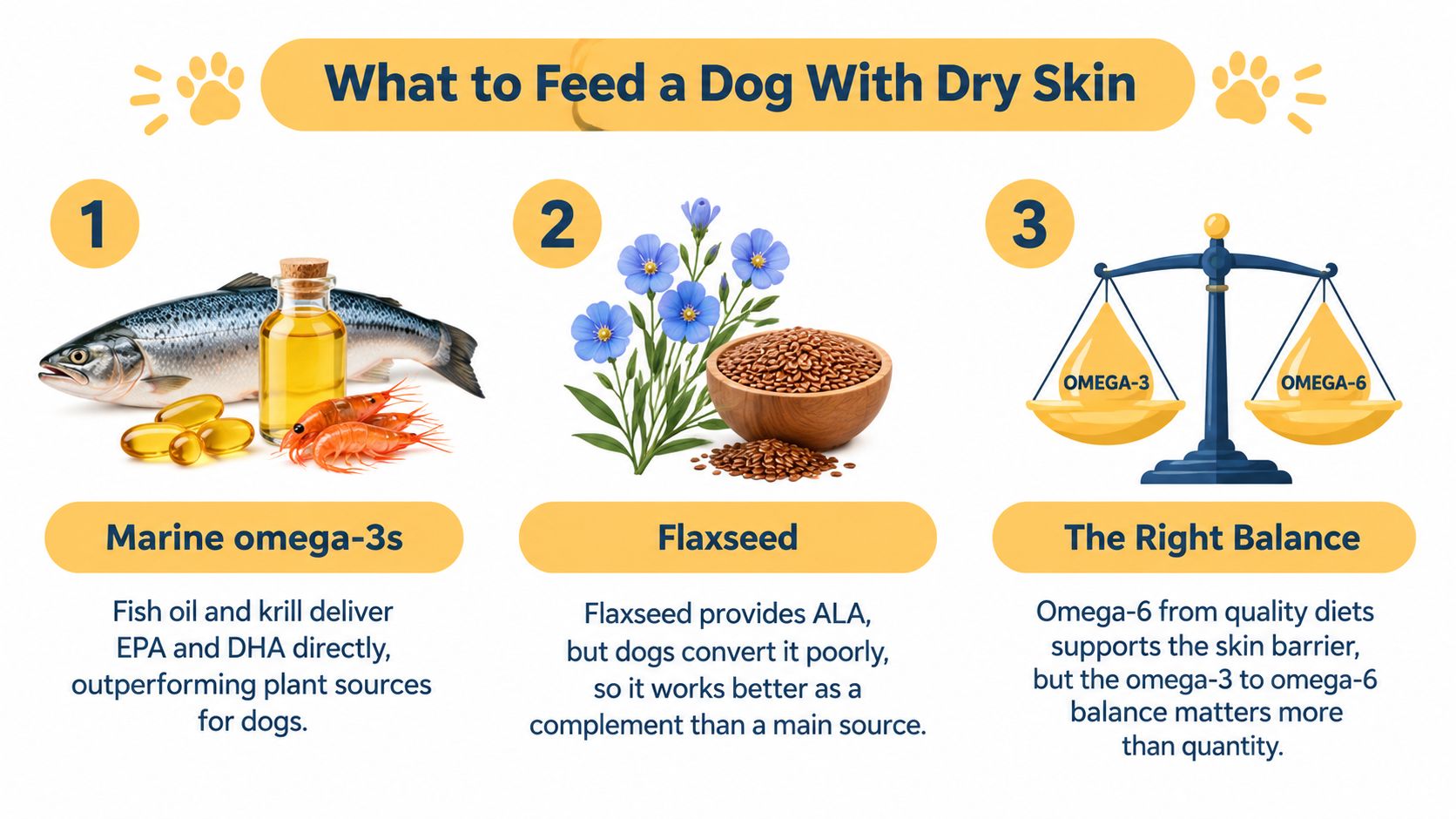
Nutrition matters, but the answer isn't “add as much oil as possible.” For a dog with dry, flaky skin and no obvious inflammation, adequate essential fatty acids are foundational. The evidence supports balanced omega-6 and omega-3 nutrition rather than chasing one perfect ratio.
An American Veterinary Medical Association review found that linoleic acid, an omega-6 fatty acid, may help dogs with dry, flaky skin when inflammation is absent. It also concluded that including both omega-6 and omega-3 fatty acids generally appears beneficial for canine skin health. However, a double-blinded study involving 48 healthy dogs found no significant skin or coat differences among balanced diets with omega-6 to omega-3 ratios of 24:1, below 1:1, 5:1, and 11:1, so one “ideal” ratio shouldn't be treated as a universal cure. See the AVMA review and diet-ratio study for the underlying evidence.
Choose the foundation before the add-on
Start with a complete, balanced diet that supplies adequate protein and essential nutrients. Don't try to repair a questionable diet by layering several supplements on top of it.
Fish oil provides EPA and DHA directly. Flax oil has also been studied in dogs, but the clinical evidence doesn't show that more total oil or a particular overall ratio automatically produces better skin. Product purity, calorie load, dose, and concurrent medical conditions matter, so ask your veterinarian before adding an oil.
Clinical evidence is measurable but mixed. In one randomized, double-blinded trial involving 29 dogs with canine atopic dermatitis, supplementation over 10 weeks with flax oil or a preparation supplying EPA and DHA improved clinical scores, while the mineral-oil placebo did not. A later 16-week placebo-controlled trial involving 25 dogs reported a day-112 pruritus score of 2.8 ± 1.5 with polyunsaturated fatty acids compared with 4.2 ± 1.6 with placebo, with p = 0.0375. Those findings support veterinarian-guided EPA and DHA supplementation for some itchy or allergic dogs, not indiscriminate oil use. The details come from the published canine supplementation trials.
Add any supplement gradually, monitor stool quality, and track the coat with weekly photos. If your dog has active inflammation, recurrent ears, or intense itch, nutritional support belongs beside veterinary care, not instead of it. For broader food-selection principles, use this guide to dog food for skin and coat support.
How an All-in-One Supplement Simplifies the Routine
A supplement stack can turn a simple daily task into a dosing puzzle. One bottle provides fish oil, another adds vitamin E, a third targets gut support, and a fourth promises coat benefits. Each product brings another label to read, serving to remember, and chance of duplicating an ingredient.
An all-in-one formula reduces that workload by combining several support categories in one daily addition. That can suit a household managing an older dog, a sensitive stomach, or several everyday concerns. It does not make skin disease a supplement problem, though. If dryness comes with intense itching, redness, odor, sores, or recurring ears, stop adjusting the bowl and book the veterinary appointment.
Convenience versus precision
| Approach | Practical advantage | Main limitation |
|---|---|---|
| All-in-one formula | One routine and fewer separate containers | Individual ingredients may not be provided at the precise dose your veterinarian wants |
| Separate supplements | More control over each ingredient and dose | More measuring, more labels, and more opportunities for overlap |
| No supplement | Simplest routine when the diet is already adequate | Doesn't add targeted nutritional support when a veterinarian recommends it |
The DA-1 formula introduced earlier is described as a daily scoop containing 99.8% active ingredients with no fillers. That label detail supports its role as a routine-simplicity option, not as a promise to cure itching or replace a balanced diet.
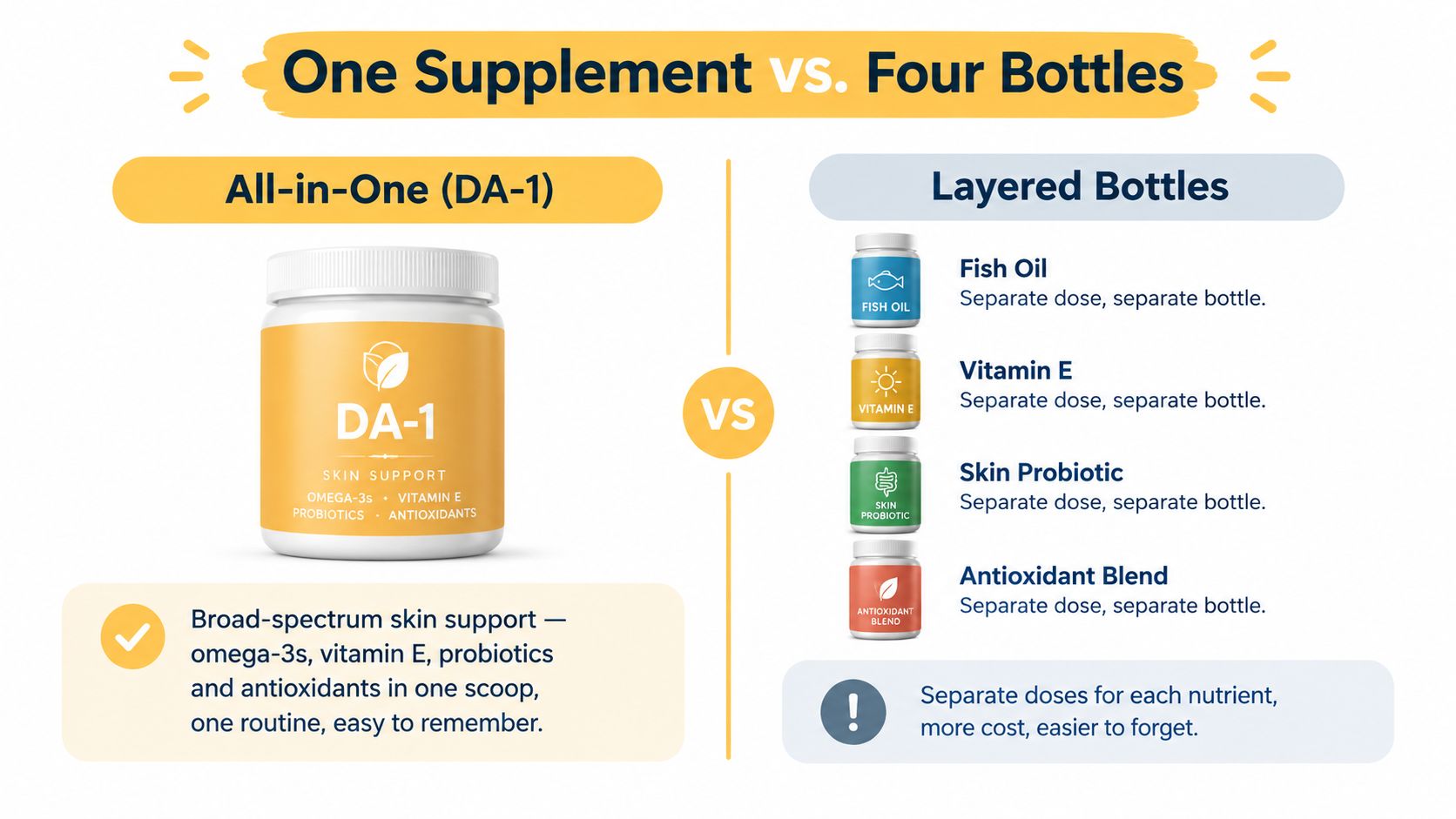
Choose a targeted fish-oil plan when your veterinarian has selected a specific EPA and DHA amount. Choose an all-in-one when remembering one daily addition matters more than adjusting each ingredient separately. Do not combine formulas blindly, especially when fat-soluble vitamins or concentrated oils are involved.
Owners comparing combination formulas with separate products can use this overview of all-in-one supplements to frame the choice. Keep the decision practical: use gentle shampoo for surface dryness, appropriate nutrition for skin-barrier support, and veterinary assessment when the pattern points to disease.
A Simple Weekly Home Care Plan
A good routine should be boring enough to repeat. Adjust the schedule if your veterinarian has prescribed a different bathing plan, because dogs with diagnosed skin disease may need a specific cleanser or treatment interval.
Your weekly checklist
- Monday, bath: Use lukewarm water and a mild moisturizing dog shampoo. Leave it on for about 10 minutes when possible, then rinse thoroughly. Apply a compatible conditioner if the coat feels dry.
- Tuesday, brush: Brush gently to remove loose scale and distribute the coat's natural oils. Stop if brushing makes the dog itch or the skin looks sore.
- Wednesday, nutrition: Give the veterinarian-approved supplement with food. Keep fresh water available and watch for digestive changes.
- Thursday, inspect: Check between the toes, under the armpits, around the belly, and at the tail base. Look for redness, odor, crusts, or new hair loss.
- Friday, reassess bathing: Use a second bath only if the dog's diagnosis and care plan call for it. Otherwise, brush and use a suitable leave-on product if recommended.
- Saturday, environment: Wash bedding using the same gentle household routine, check the air in heated rooms, and refresh the water bowl.
- Sunday, observe: Skip active treatment. Look over the coat, note scratching, and compare the skin with your earlier photos.
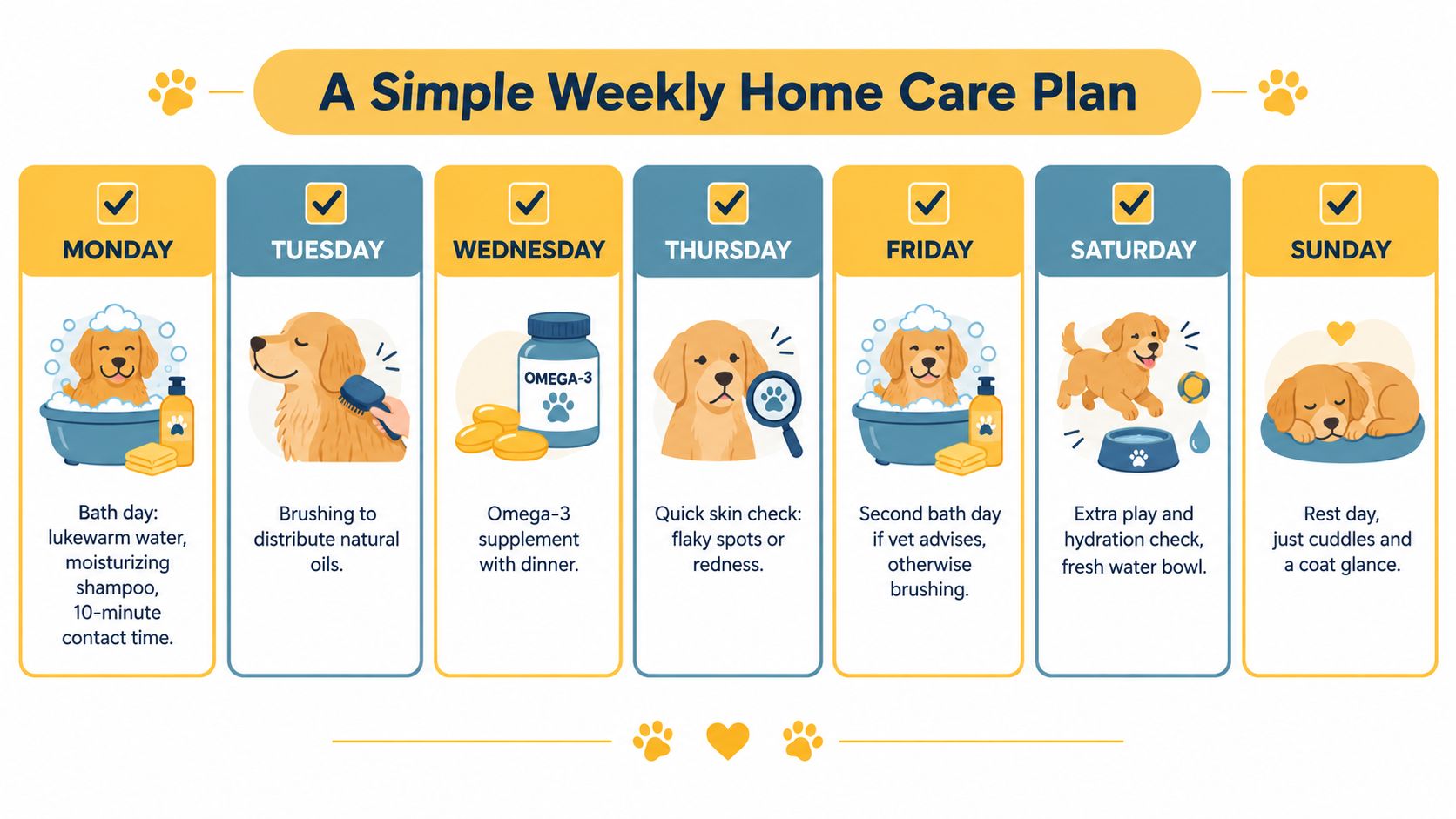
Don't force a bath because the calendar says so. If the skin is more irritated after washing, change the process or stop and ask your veterinarian. If a home-care step takes more than five minutes and your dog is still scratching by morning, skip the next bath and call the clinic.
Red Flags, FAQs, and When to See the Vet
Use this quick checklist before trying another product:
- Open sores: Scratching may have broken the skin and allowed infection in.
- Hot spots: A rapidly enlarging, moist, painful area needs prompt attention.
- Patchy hair loss: Hair loss points beyond ordinary surface dryness.
- Strong smell: Yeasty or foul odor often indicates more than a dry barrier.
- Sleep-interrupting itch: A dog that can't settle is uncomfortable, even if the flakes look minor.
- Skin changes with lethargy or appetite loss: Whole-body symptoms require a veterinary assessment.
Common questions
How fast should the skin improve? Mild environmental dryness should show a clear trend in the right direction with consistent care. If there is no measurable improvement after two to three weeks, stop changing products and book an examination.
Can I use coconut oil? Don't treat “natural” as automatically suitable. A dog may lick it off, it can make the coat greasy, and it won't address mites, allergies, infection, or endocrine disease. A canine-formulated product is easier to control.
Is weekly bathing too much? Not automatically. Veterinary guidance considers weekly bathing a useful adjunct for some atopic skin cases, while the appropriate interval still depends on the coat, diagnosis, and topical treatment. Use lukewarm water, rinse thoroughly, and avoid harsh cleansers.
Do some breeds need different care? Yes. Coat density, skin folds, oil production, grooming style, and breed-associated conditions can change the plan. Recurrent flaking in one dog shouldn't be managed by copying another dog's routine.
The decision is straightforward: mild flakes, normal behavior, and no inflammation justify careful home care; any red flag or persistent problem justifies a veterinary visit. A stronger shampoo is not the next step when the pattern keeps returning.
Pure Paw Labs offers a daily, human-grade powdered supplement designed to combine support for areas such as skin and coat, gut, joints, and general wellness in one scoop. If your dog needs a simpler nutritional routine alongside sensible topical care, visit Pure Paw Labs and review the formula with your veterinarian.