


It's 8 p.m., the bowl hasn't moved, and your dog is looking at you as if dinner is a negotiation. You're probably wondering what to feed a dog that won't eat, but food is not the first question. The first question is whether your dog is safe to monitor at home.
A healthy adult dog who skips one meal but stays bright, drinks water, and has no vomiting, diarrhea, pain, or unusual behavior can usually be watched through the next meal. A puppy, small dog, senior, diabetic dog, or dog taking medication has a shorter safety window. Start the clock, check for warning signs, and only then try a food adjustment.
Table of Contents
- When a Dog Not Eating Becomes an Emergency
- Why Dogs Stop Eating in the First Place
- What to Try at Home Before Changing the Food
- Choosing the Right Food When Your Dog Refuses the Bowl
- Appetite Stimulants and Assisted Feeding Options
- Real-World Scenarios That Change the Playbook
- Your Quick-Reference Feeding Plan
When a Dog Not Eating Becomes an Emergency
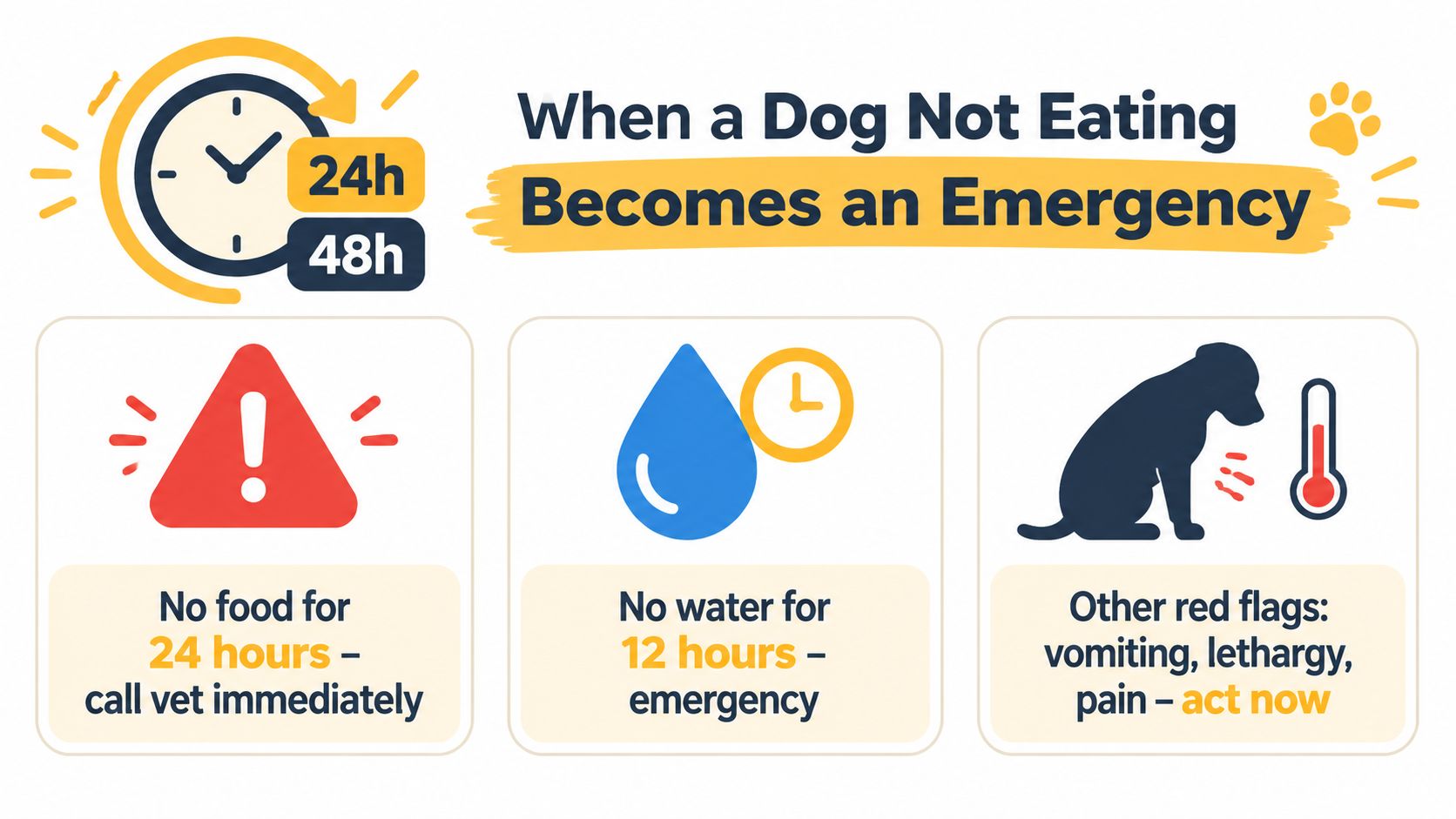
A generally healthy adult dog who misses one meal isn't automatically having an emergency. Veterinary guidance commonly treats 24 hours without food as a reason to contact a veterinarian, with 48 hours as a clear call threshold even if the dog otherwise seems normal. You can review the broader warning signs associated with appetite loss in this guide to black runny poop in dogs, but don't wait for stool changes before taking action.
Puppies, toy breeds, diabetic dogs, dogs with chronic disease, and dogs taking medication shouldn't be managed by the adult-dog rule. A puppy or small-breed dog that hasn't eaten for about 12 hours deserves veterinary attention sooner, especially if energy is falling. A dog with a known illness or medication history also needs a faster call because missed food can affect blood sugar, medication tolerance, hydration, or the underlying disease.
Red flags that override the clock
Call a veterinarian promptly, or seek urgent care, if appetite loss appears with:
- Repeated vomiting or bloody stool, especially when your dog can't keep water down.
- Marked lethargy, collapse, weakness, or obvious pain.
- A bloated, hard, or uncomfortable abdomen.
- Pale, white, gray, or bluish gums.
- Known toxin or foreign-object exposure.
- Refusal to drink for more than 12 hours, or signs of dehydration.
Don't force a meal into a dog who is nauseated, painful, bloated, or repeatedly vomiting. Force-feeding can worsen distress and may create an aspiration risk.
Practical rule: Monitor a healthy adult for up to 24 hours after a missed meal, contact a veterinarian if food refusal reaches 24 hours, and treat 48 hours without eating as a firm veterinary-call threshold. Puppies and at-risk dogs need help sooner.
Why Dogs Stop Eating in the First Place
Food refusal doesn't equal pickiness. Appetite loss is often a symptom, and veterinary references connect it with gastritis, dental pain, digestive upset, stress, and systemic illness such as kidney or liver disease. The veterinary overview of decreased appetite with listlessness also highlights serious possibilities including obstruction, toxins, medication effects, and pain.
The three useful cause groups
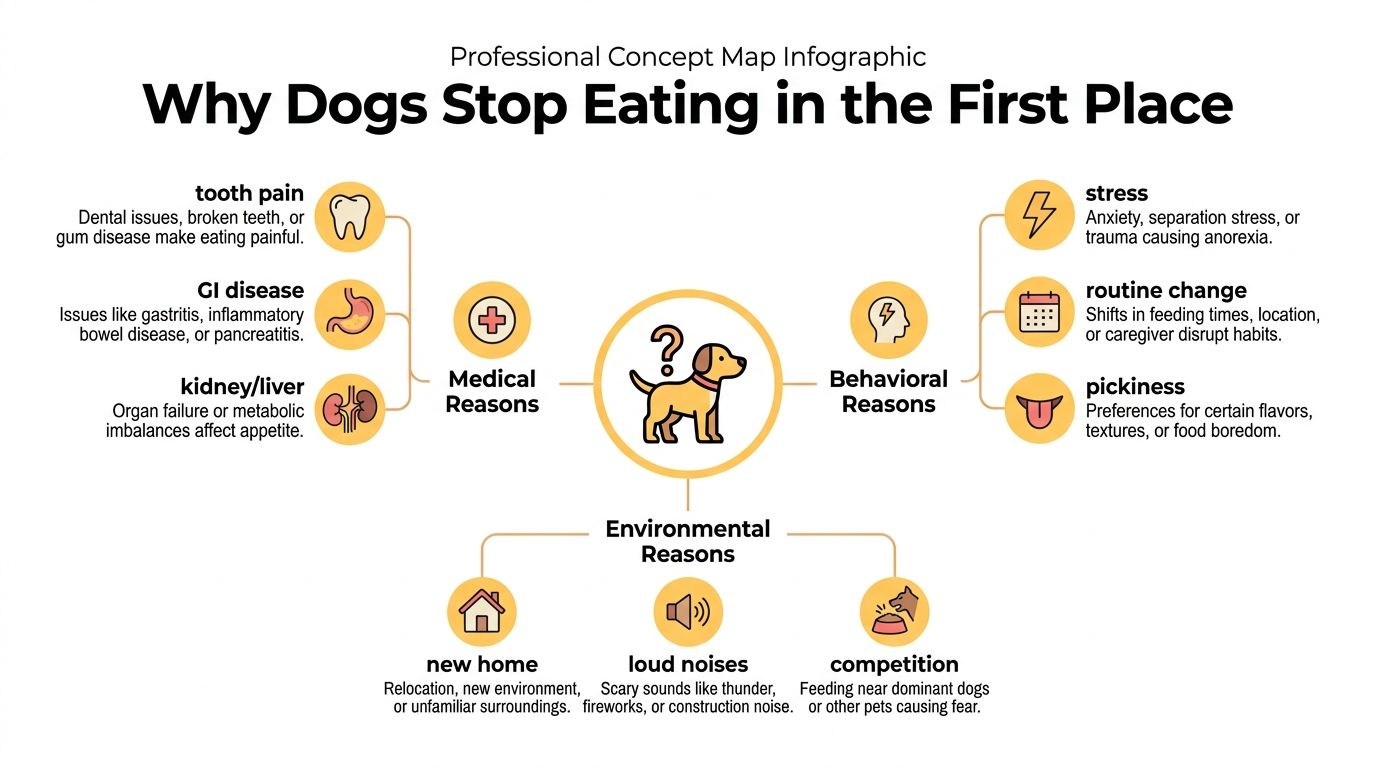
Medical causes deserve priority. A cracked tooth, inflamed gums, nausea, infection, abdominal pain, kidney disease, liver disease, or a swallowed object can all make food unappealing. Drooling, dropping kibble, chewing on one side, vomiting, hiding, a tense abdomen, or a sudden change in energy makes a medical explanation more likely.
Environmental causes can be temporary. Moving house, travel, boarding, thunderstorms, visitors, a new baby, a changed feeding location, or the loss of a companion can unsettle an otherwise healthy dog. Some dogs eat less when the bowl is placed near traffic, noise, competition, or another pet.
Behavioral causes usually involve a pattern. Free-feeding, frequent treats, table scraps, and adding a better topper every time the dog walks away can teach a dog to wait for an upgrade. That's different from true anorexia, where even a normally exciting food gets refused.
The quick mental check is simple. Is your dog lethargic, vomiting, drooling, painful, or hiding? Think medical first. Did something in the home or routine change? Consider stress. Has your dog been treated like a short-order customer? Reset the feeding structure, but keep watching closely.
If an older dog is also showing gradual changes in mobility, coat, digestion, or general behavior, DA-1™ Daily All-in-One - Senior Dog Support, Joints, Skin/Coat & More is a daily powdered formula described as providing 18 human-grade ingredients for cells, gut, and joints. It's a routine wellness supplement, not a treatment for sudden appetite loss.
What to Try at Home Before Changing the Food
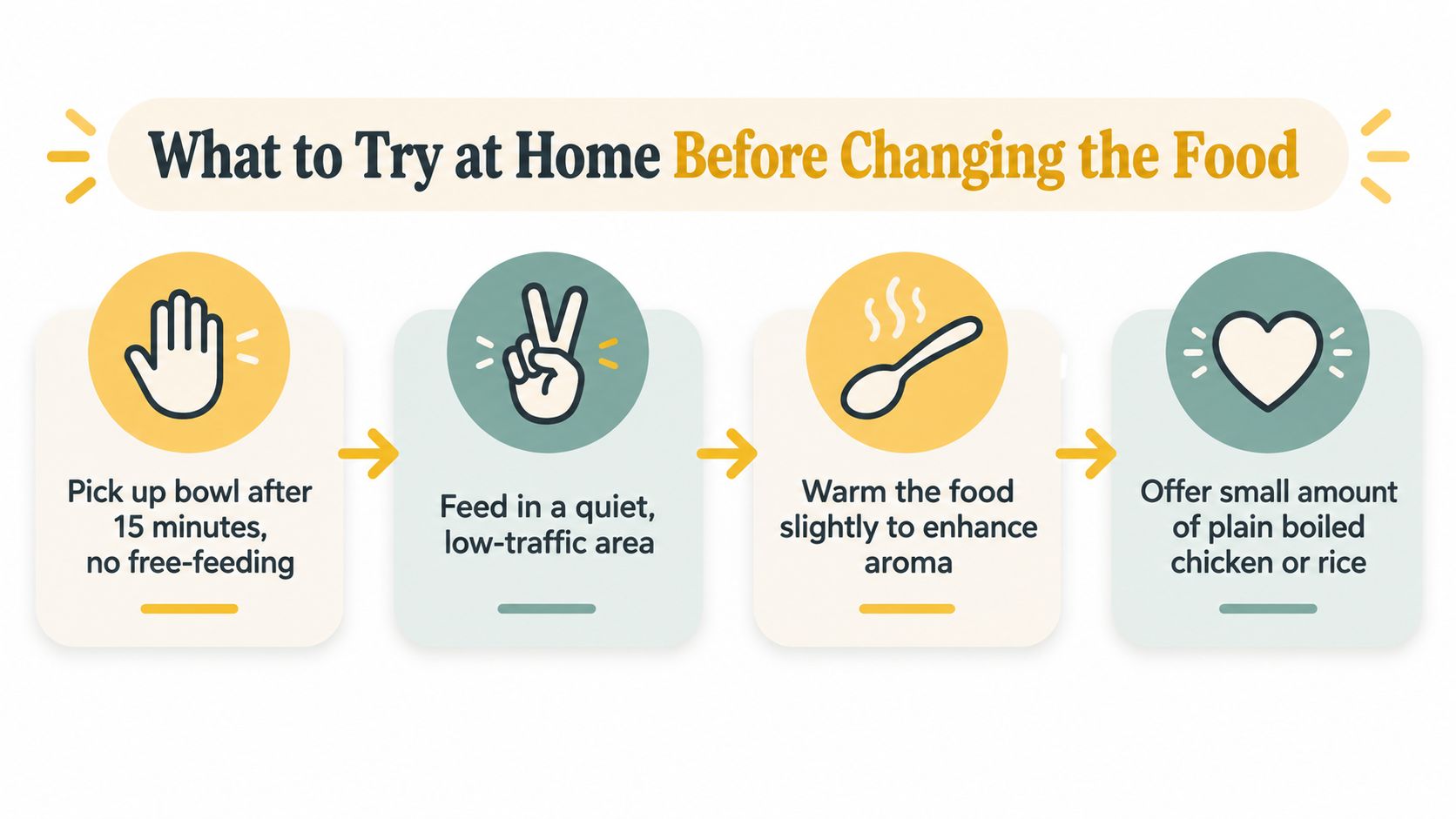
If your dog is an otherwise normal adult, is drinking, and has no red flags, start with the lowest-stress changes. Feed in a quiet place away from other pets, children, foot traffic, and sudden noise. A nervous dog may be refusing the setting, not the recipe.
Stop leaving food down all day. Offer the usual meal, give your dog a short, calm opportunity to eat, then pick up the bowl after roughly 15 to 20 minutes. Offer food again at the next planned mealtime instead of immediately producing a tastier replacement. This removes the guessing game and prevents grazing, treat overload, and learned bargaining.
Change aroma and texture before ingredients
Warm wet food slightly, or add a splash of warm water to kibble. The goal is to release aroma and soften the texture, not to serve hot food. You can also crush kibble, mix a small amount with the dog's usual food, or hand-feed a few bites if your dog is interested but hesitant.
Keep the experiment controlled. Don't cycle through several new foods in one evening, pour on rich leftovers, or use large amounts of fatty meat. Sudden changes and excessive treats can trigger digestive upset, while richer food can teach a healthy picky eater to hold out.
A small amount of plain, easily digested food may be reasonable for a mildly off dog, but it isn't a substitute for an examination. Veterinary guidance favors small, frequent meals and bland, palatable foods rather than forcing a full portion. You can also read about bone broth benefits for dogs, but use any broth only when it's plain and appropriate for your dog.
If your dog walks away from warmed food, refuses a normally irresistible option, hides, seems painful, vomits, or stops drinking, stop troubleshooting. The next decision is veterinary care, not another topping.
Choosing the Right Food When Your Dog Refuses the Bowl
The right food depends on the problem you're trying to solve. Bland food is not a universal appetite cure. It may suit a short-lived digestive upset, while wet food helps aroma and moisture, and a therapeutic recovery diet is better suited to a dog whose medical condition demands concentrated nutrition.
Boiled chicken and white rice, plain pumpkin, or a carefully selected bland meal can be useful after mild vomiting or diarrhea when a veterinarian has advised home care. These foods aren't nutritionally complete for long-term feeding, and they're a poor answer to dental pain, obstruction, organ disease, or ongoing nausea.
Wet food often works because it smells stronger and contains more moisture. Warm water can soften kibble and make it easier to chew. A small topper may help a fussy but healthy dog, but repeatedly adding shredded meat, cheese, or table food can create a dog who refuses the original meal and waits for richer food. The practical guidance on dog food toppers for picky eaters is most useful when you treat a topper as a controlled tool, not a permanent escalation.
| Food type | Best for | Prep time | Calorie density | Main limitation |
|---|---|---|---|---|
| Bland home-cooked food | Mild digestive upset when home care is appropriate | Low | Usually moderate | Not complete for prolonged feeding |
| Canned wet food | Dogs attracted to aroma, moisture, or softer texture | Low | Varies | May not address pain or nausea |
| Commercial recovery diet | Sick, post-surgical, or medically supervised dogs needing concentrated nutrition | Low | High | Should match veterinary guidance |
| Fresh-cooked meal | Dogs needing a planned diet change | Moderate | Varies | Recipe balance matters |
| Simple topper | Healthy dogs with mild pickiness | Low | Adds calories | Can reinforce holding out |
Don't reach for rotisserie chicken as the default answer. Match the texture and calorie density to the suspected cause, keep portions small, and call your veterinarian if the dog refuses every option.
Appetite Stimulants and Assisted Feeding Options
Appetite stimulants can help, but they're a bridge, not a diagnosis. The prescription oral stimulant with the clearest controlled canine evidence in the supplied data is capromorelin. In a randomized, masked, placebo-controlled study of dogs with reduced appetite, treatment success was 68.6% with capromorelin compared with 44.6% with placebo in the published clinical trial.
That result doesn't mean the medication fixes the reason a dog stopped eating. A stimulant may increase interest in food while the dog still has dental pain, nausea, obstruction, kidney disease, or another condition requiring treatment. Veterinary references generally consider stimulants for short-term reduced intake after medical causes have been assessed, especially when reduced eating is expected to be temporary or tube feeding isn't wanted.
A veterinarian may choose capromorelin, mirtazapine, or another option based on the dog's illness, current medications, kidney and liver status, and ability to swallow. Don't use human medication, leftover prescriptions, or over-the-counter “appetite boosters” without direction. Supplements such as probiotics, cannabidiol products, or brewer's yeast shouldn't replace an examination when appetite loss is persistent or accompanied by symptoms.
Assisted feeding needs restraint
Syringe feeding can be dangerous if a dog is nauseated, weak, resisting, unable to swallow normally, or at risk of inhaling food. It can also create food aversion. A veterinary team may recommend spoon-feeding soft food, assisted feeding, or a feeding tube when intake is inadequate, particularly if anorexia continues or weight loss is significant.
Small, frequent meals and warmed, easily digestible food are often more sensible than forcing a large portion. If your dog can't eat enough despite these measures, ask the veterinarian about a prescription recovery diet or assisted-feeding plan. Stimulants buy time. They don't explain the appetite loss.
Real-World Scenarios That Change the Playbook
The same empty bowl means different things in different dogs.
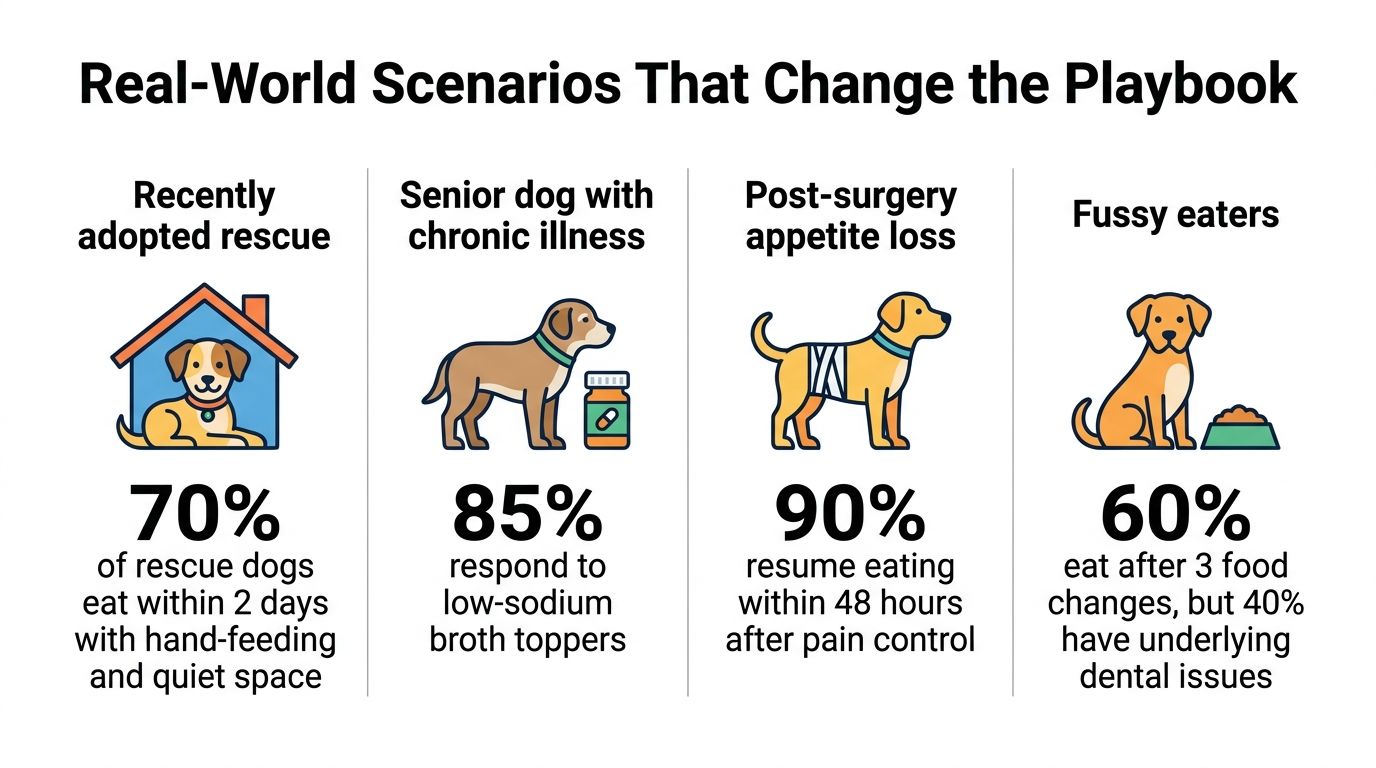
A recently adopted rescue may hide when the family approaches the feeding area. Start with a quiet room, a consistent routine, and a bowl placed away from other animals. Hand-feeding a few bites can build confidence, but transport-related illness, diarrhea, vomiting, or continued refusal still warrants a veterinary call.
A senior dog taking an anti-inflammatory medication for arthritis needs a faster response. Don't give another dose until you've spoken with the prescribing veterinarian if the dog suddenly stops eating, vomits, develops diarrhea, seems painful, or becomes lethargic. Medication-related stomach or intestinal injury can become serious, and adding chicken to the bowl won't make that risk disappear.
An unvaccinated puppy that refuses food and becomes tired is not a bland-diet experiment. Infectious disease, parasites, low blood sugar, and dehydration can progress quickly in young dogs. Call a veterinarian immediately and avoid exposing other dogs until you've received professional guidance.
A healthy adult beagle skips two meals after boarding, a thunderstorm, or a major household change but remains bright, hydrated, and symptom-free. That dog may fit the short-term stress or routine-disruption pattern. Offer the usual food calmly, warm it slightly, remove between-meal snacks, and monitor the clock. If appetite doesn't return or any physical sign appears, the plan changes.
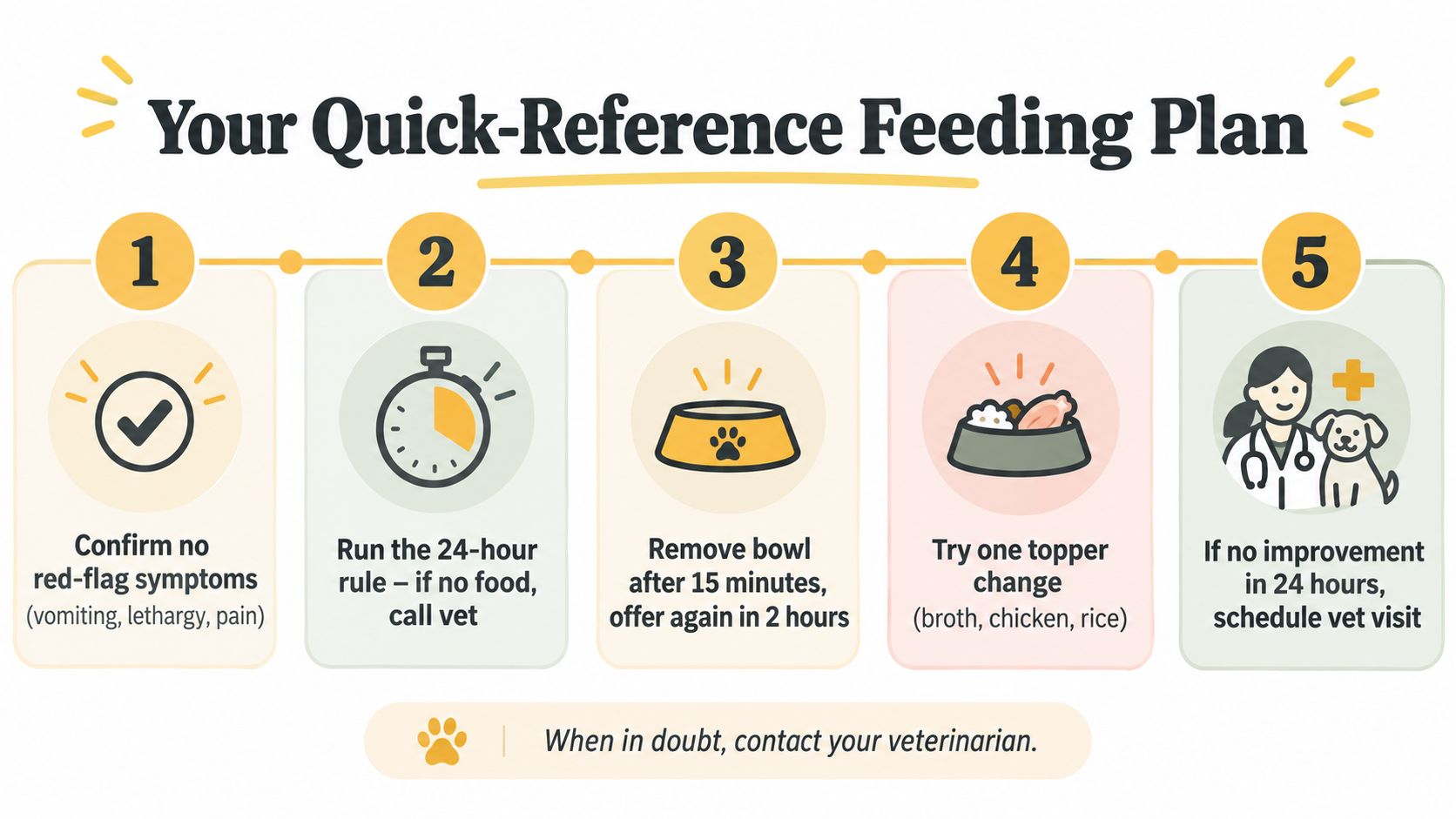
Your Quick-Reference Feeding Plan
Save this checklist for the next time your dog refuses dinner. It separates a safe food trial from a situation that needs professional care.
Check the dog before checking the bowl
Look at behavior, hydration, gums, breathing, abdomen, stool, and vomiting. If your dog is collapsed, painful, bloated, repeatedly vomiting, passing blood, showing pale gums, known to have swallowed something dangerous, or refusing water for more than 12 hours, seek veterinary help rather than trying another recipe.
Run the right clock
- Puppy or toy breed: Treat about 12 hours without food as a reason for prompt veterinary contact, sooner if the puppy is weak or unwell.
- Adult dog in normal health: Monitor a single missed meal if the dog remains bright, hydrated, and symptom-free. Contact a veterinarian if the dog hasn't eaten for 24 hours, and don't let refusal reach 48 hours without a veterinary call.
- Senior, diabetic, medicated, or chronically ill dog: Use a shorter window. Call the veterinarian the same day if appetite loss is unexpected or medication is due.
Try the least disruptive food changes
Offer the usual food in a quiet place. Remove the bowl after roughly 15 to 20 minutes, stop free-feeding and excess treats, then try again at the next planned meal. Warm wet food slightly, add warm water to kibble, soften the texture, or hand-feed a small amount if the dog is alert and interested.
Use one food change at a time. A bland option can fit mild digestive upset, wet food can help with aroma and moisture, a recovery diet belongs under veterinary direction, and a topper is for a healthy dog with mild pickiness.
| Food swap | Appropriate situation | Don't use it to hide |
|---|---|---|
| Bland food | Mild, short-lived digestive upset with veterinary-approved home care | Persistent vomiting, pain, or suspected obstruction |
| Wet food | Soft texture, stronger aroma, added moisture | Dental disease or ongoing nausea |
| Recovery diet | Illness, surgery, or inadequate intake under veterinary supervision | A dog who needs diagnosis first |
| Small topper | Healthy dog with behavioral fussiness | A dog refusing every appealing food |
If the dog still won't eat, don't keep escalating the menu. A veterinarian may assess the mouth, abdomen, hydration, body condition, bloodwork, or imaging needs. Nutritional intervention becomes more important when anorexia persists, weight loss is present, or the dog can't maintain intake.
For dogs with prolonged refusal, puppies, and dogs taking medication, a veterinary call within hours is safer than waiting several days. Food tricks are useful only when the dog's overall condition supports home monitoring.
Pure Paw Labs offers daily dog nutrition support through products such as its powdered DA-1™ Daily All-in-One, formulated with human-grade ingredients for routine support across the gut, joints, skin and coat, immune, and stress-related needs. Visit Pure Paw Labs to explore the available options, but contact your veterinarian first when appetite loss is sudden, prolonged, or paired with illness.