


You wake up, put on a clean dark sweater, and find Australian Shepherd fur on it before breakfast. Later, you spot the same fine layer on the sofa, the floor, and possibly your coffee cup. If you're asking, how much does an Australian Shepherd shed, the honest answer is simple: this is a moderate to heavy shedder with hair loss throughout the year and heavier seasonal bursts.
That doesn't mean your home has to become unmanageable. Once you understand the breed's double coat, recognize when shedding naturally intensifies, and match your grooming routine to the season, the loose hair becomes a maintenance task rather than a daily surprise. It also helps to separate visible fur from allergens, because those aren't the same problem.
Table of Contents
- Living With an Australian Shepherd
- The Science of the Double Coat
- Navigating Seasonal Shedding Spikes
- Effective Grooming and Maintenance Strategies
- Shedding vs Allergen Management
- Identifying Health Issues and Abnormal Loss
Living With an Australian Shepherd
An Australian Shepherd owner often learns the coat's habits before learning the dog's favorite tricks. You brush the dog in the morning, walk through the kitchen, and notice a soft trail behind you. A black shirt collects pale strands, while a light couch reveals darker ones. The fur doesn't arrive as one dramatic event. It appears on bedding, rugs, car seats, and clothing, then becomes much more noticeable during a coat blow.
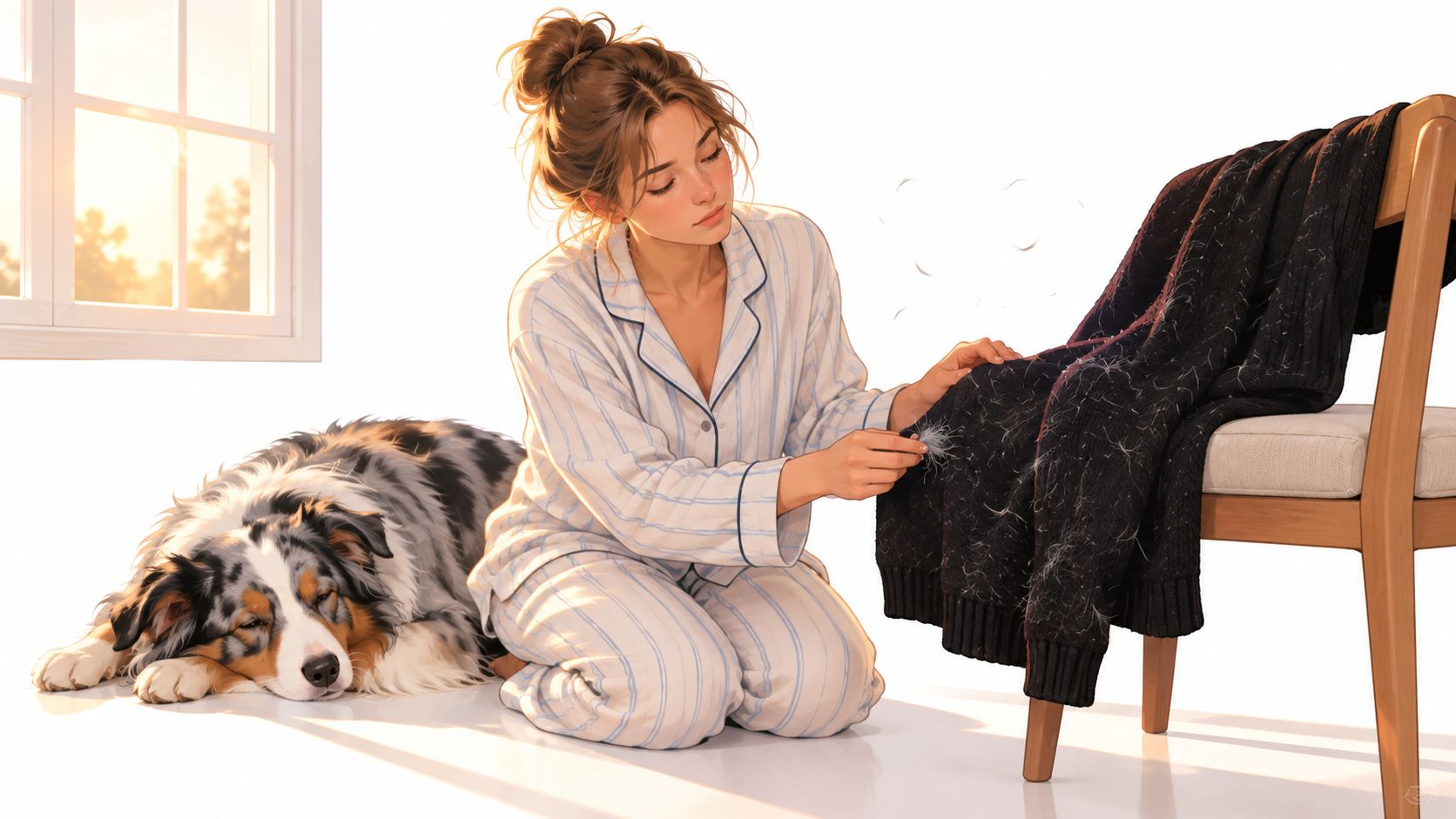
That can feel surprising if you first fell in love with the breed's expressive face, athletic build, or clever working-dog personality. An Aussie isn't just an energetic companion with a beautiful coat. The coat is part of a practical working design, built to help the dog handle changing outdoor conditions while moving through brush, fields, and weather.
The Australian Shepherd Club of America describes Aussies as moderate to heavy shedders. Its grooming guidance for Australian Shepherds explains that they shed year-round because they have a double coat, including a dead undercoat that needs removal to support healthy skin and maintain the coat's protective function.
What daily life really looks like
Expect a baseline level of loose hair even when the coat isn't changing seasonally. Some dogs leave more visible fur than others, and your flooring, furniture, clothing colors, grooming habits, and the dog's time outdoors will affect how much you notice. The breed's activity also matters in practical terms, because an active Aussie brings coat debris into the same places where it plays and rests.
A useful mindset is to treat loose hair as part of ownership, not evidence that something is wrong. You aren't trying to stop the coat from shedding. You're collecting hair before it spreads, keeping the skin clear, and helping the dog stay comfortable.
Practical rule: If you want a dog with little visible hair in the home, an Australian Shepherd probably isn't the easiest match. If you can accept regular brushing and routine cleaning, the coat is manageable.
Coat care is only one part of living well with this intelligent herding breed. Temperament, exercise, training, and socialization matter just as much, which is why prospective owners may also want to read about whether Australian Shepherds are aggressive. The shedding itself is predictable once you understand the structure underneath the color and pattern.
The Science of the Double Coat
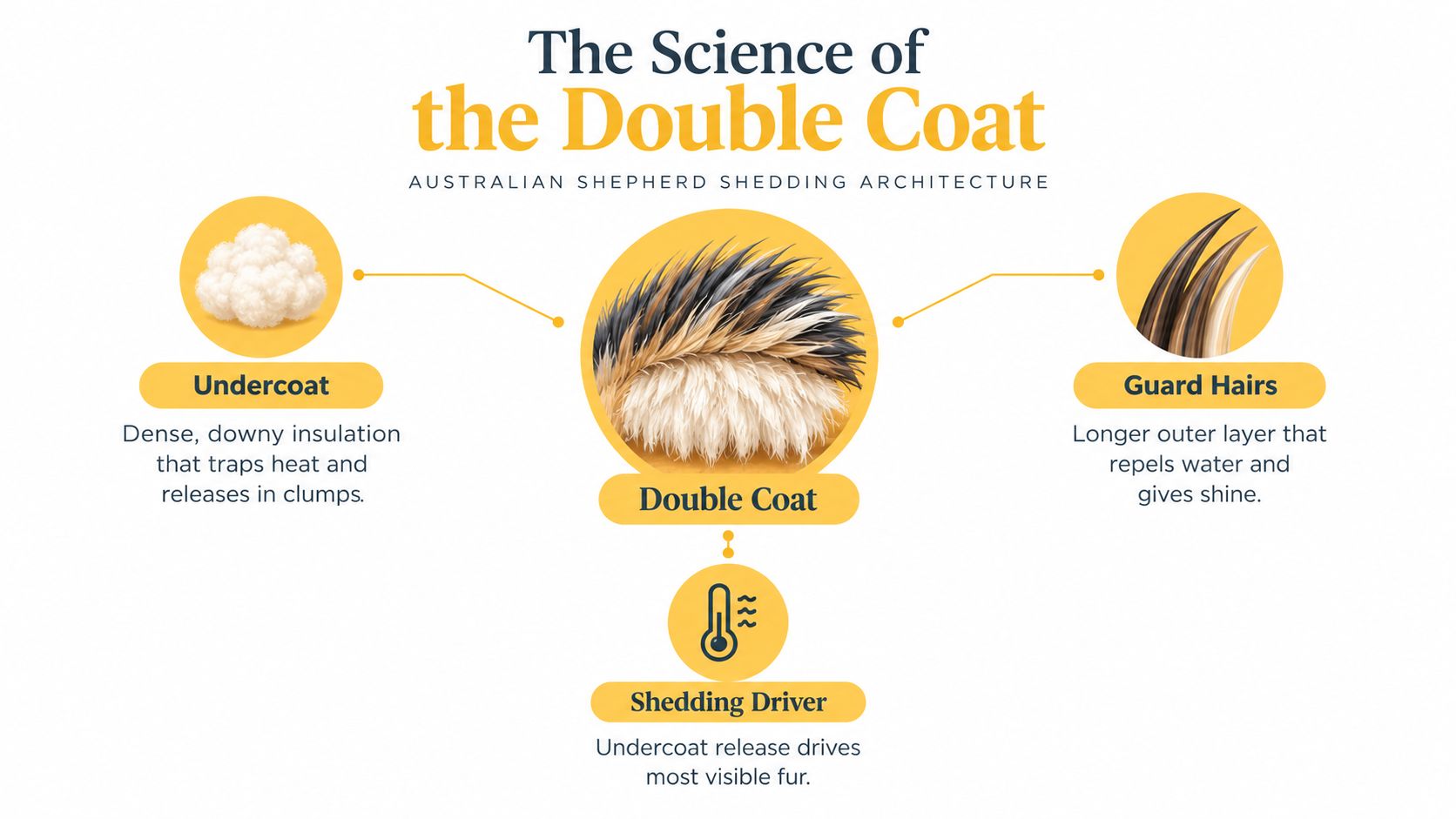
An Australian Shepherd's coat has two working layers. The outer coat, sometimes called the guard coat, contains longer hairs that help protect the dog from weather and physical contact. Beneath it sits a softer, denser undercoat that provides insulation.
Think of the coat as a built-in climate-control system rather than a decorative layer. The undercoat helps hold warmth close to the body in colder conditions, while the outer layer helps shield the skin from moisture, sun, dirt, and abrasion. That design is useful for a dog bred for active outdoor work, but it also creates more grooming responsibility than a simple single-layer coat.
Why the undercoat creates most of the mess
The visible tumbleweeds around your home usually come from released undercoat. As hairs complete their growth cycle, dead fibers loosen and need to leave the coat. Because an Aussie has a dense underlayer, that release can appear as soft fluff, clumps, or a steady dusting of individual hairs.
The Australian Shepherd Club of America specifically notes that removing the dead undercoat helps keep the skin healthy and the coat weather-protective. It also warns that shaving a double-coated breed doesn't stop shedding. Shaved hair still falls out, only in smaller pieces, while removing the protective structure can create new coat-management problems.
The result is a year-round shedding baseline, not a single annual molt. Seasonal changes then increase the amount of undercoat released, which is why many owners experience an ordinary level of fur for part of the year and a much more intense cleanup period during spring and fall.
Why coat care should respect the structure
A brush that only skims the surface may make the dog look tidy without reaching the loose undercoat. Effective grooming needs to separate the layers gently, remove dead fibers, and avoid scraping or breaking healthy guard hairs.
If you're considering broader support for an aging dog's overall wellness, DA-1™ Daily All-in-One - Senior Dog Support, Joints, Skin/Coat & More is described by its manufacturer as a once-daily formula with 18 human-grade ingredients aimed at cells, gut, and joints. It shouldn't replace veterinary care or a balanced diet, and it won't change the biological need to groom a double coat.
Here's a visual explanation of how loose hair moves through the coat:
Navigating Seasonal Shedding Spikes
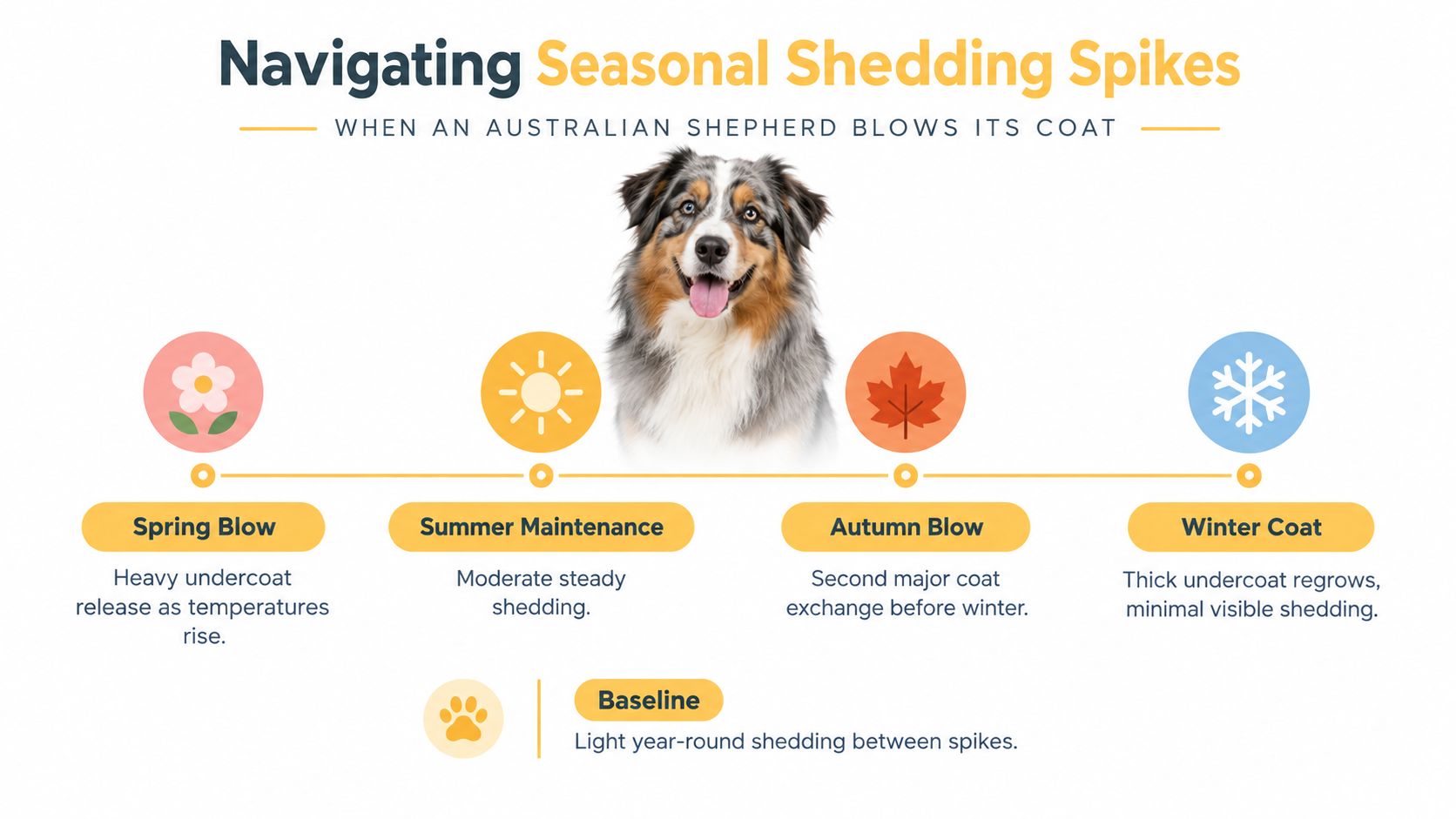
The year-round baseline is usually easier to live with than the seasonal coat blow. Independent breed-care guidance describes heavier shedding in spring and fall, with coat-blow windows that can last roughly three to eight weeks (Pupvine's Australian Shepherd shedding guide). During those windows, the dog may release large amounts of undercoat in a short time.
Spring shedding helps the dog transition away from heavier winter insulation as temperatures rise. In autumn, the coat begins another exchange as the dog prepares for colder conditions. Indoor lighting, temperature, climate, and the individual dog's life stage can influence how sharply you notice these changes, so the calendar is a useful guide rather than a guarantee.
Build the routine before the fur arrives
Don't wait until loose clumps cover the floor. Increase your grooming effort as the coat begins to loosen, especially around the neck, hindquarters, tail, and behind the ears, where dense hair can hide.
A practical seasonal schedule looks like this:
- Normal periods: Brush at least twice a week to remove loose hair before it travels through the house. Guidance varies, with some sources recommending weekly grooming and others advising twice-weekly brushing. The Dog Clinic's Australian Shepherd shedding guidance recommends increasing frequency during spring and fall coat blows.
- Early coat-blow signs: Move toward more frequent sessions when you see tufts lifting from the undercoat, extra hair on bedding, or a brush filling faster than usual. Short, calm sessions are easier for many dogs than one exhausting grooming attempt.
- Peak shedding: Daily brushing can help keep pace with the release during the heaviest part of the cycle. Work in sections, stop when the dog becomes uncomfortable, and return later if necessary.
- After the spike: Reduce the schedule gradually rather than abandoning it immediately. Loose hairs can continue working out of the coat after the most intense period appears to be over.
Plan the house around the dog
The mess becomes easier when you assign grooming and cleanup to predictable places. Brush outdoors when weather allows, or use a washable surface that keeps the removed undercoat contained. Keep a dedicated garment brush near the door, and focus vacuuming on the dog's preferred sleeping and resting areas instead of treating every room as an emergency.
Seasonal shedding is easier to manage proactively. The first loose tufts are your signal to increase brushing, not a reason to panic.
Effective Grooming and Maintenance Strategies
A good routine has two targets: remove loose hair from the dog and protect the coat that should remain. Those goals aren't identical. Aggressive scraping may collect a dramatic amount of fur while irritating the skin or damaging the outer coat, while a gentle surface brush may leave the dead undercoat behind.
Start with tools suited to a double coat. A slicker-style brush can help separate and lift hair, while an undercoat rake can reach deeper into the dense layer when used carefully. A de-shedding tool may help during a coat blow, but it should be used with controlled pressure and stopped if the skin becomes pink, sore, or irritated.
Match the tool to the job
| Grooming need | Useful approach | What to watch for |
|---|---|---|
| Everyday loose hair | Gentle brushing through small sections | Don't rush through knots |
| Dense undercoat | Undercoat rake used carefully | Avoid repeated scraping over one area |
| Seasonal release | More frequent, shorter sessions | Stop before the dog becomes stressed |
| Mats or tight tangles | Separate with fingers or seek professional help | Pulling can hurt the skin |
| Bathing | Use a dog-safe product and rinse thoroughly | Damp undercoat can hide tangles |
A bath may loosen dead hair, but it doesn't replace brushing. Drying also matters because a wet double coat can conceal tangles and make it harder to inspect the skin. If you aren't confident handling a dense coat, a qualified groomer can help remove undercoat without treating the dog as though it has a single layer.
For a practical discussion of reducing loose hair through routine care, see how to reduce dog shedding. The key is realistic consistency. Twice-weekly maintenance during ordinary periods and daily attention during a heavy coat blow are more useful than an occasional marathon session.
Why shaving doesn't solve the problem
Shaving removes the visible length, not the biological reason the dog sheds. The Australian Shepherd Club of America explains that a shaved double-coated dog still loses hair, but the pieces may be smaller. Shaving can also remove the outer layer that helps protect the skin from weather and sun.
Leave the coat intact unless a veterinarian or experienced professional identifies a medical reason for clipping. Trimming hygiene areas or carefully managing severe mats is different from removing the entire coat. In most healthy Aussies, the better solution is regular separation, brushing, and inspection.
Visible hair is also only one part of household maintenance. The next question many owners really mean is whether all that fur makes allergies worse, and the answer requires looking beyond the hair itself.
Shedding vs Allergen Management
Hair and allergens travel together, but they aren't interchangeable. Dog allergy symptoms are linked primarily to proteins in dander, saliva, and skin material, not just to the number of hairs you see on the floor. A shedding dog can spread allergen-containing material through the home, but visible fur isn't a direct measurement of allergen exposure.
Research summarized in clinical and independent guidance found no major difference in the primary dog allergen Can f 1 between homes with dogs marketed as hypoallergenic and homes with dogs that weren't marketed that way (the cited study and research record). That doesn't make an Australian Shepherd a suitable choice for every allergy sufferer. It does mean that a coat label alone can't predict how a person will react.
What grooming can change
Grooming may influence allergen management even though it won't turn an Aussie into a low-shed dog. The same research found that grooming reduced Can f 1 in hair clippings and dander over an 8-day period (the research record on grooming and Can f 1). The practical lesson is to remove loose material before it accumulates indoors and to handle brushing in a controlled location.
Sensitive households can combine several simple measures:
- Brush deliberately: Groom outside when possible, or use an easy-to-clean area away from bedrooms.
- Wash soft surfaces: Clean bedding, throws, and removable covers regularly so dander doesn't remain undisturbed.
- Improve air handling: For guidance on choosing an air purifier for a pet household, review Castus Canada air purifiers as one resource.
- Create boundaries: Keep the dog away from the most sensitive person's sleeping area if symptoms are difficult to control.
- Ask a clinician: Persistent breathing problems or severe reactions deserve medical advice rather than a grooming experiment.
Nutrition can support general skin and coat health, but it won't erase normal shedding or guarantee allergy relief. For foundational care questions, dog skin and coat support should be considered alongside veterinary guidance, especially if the coat looks dull or the skin seems uncomfortable.
Identifying Health Issues and Abnormal Loss
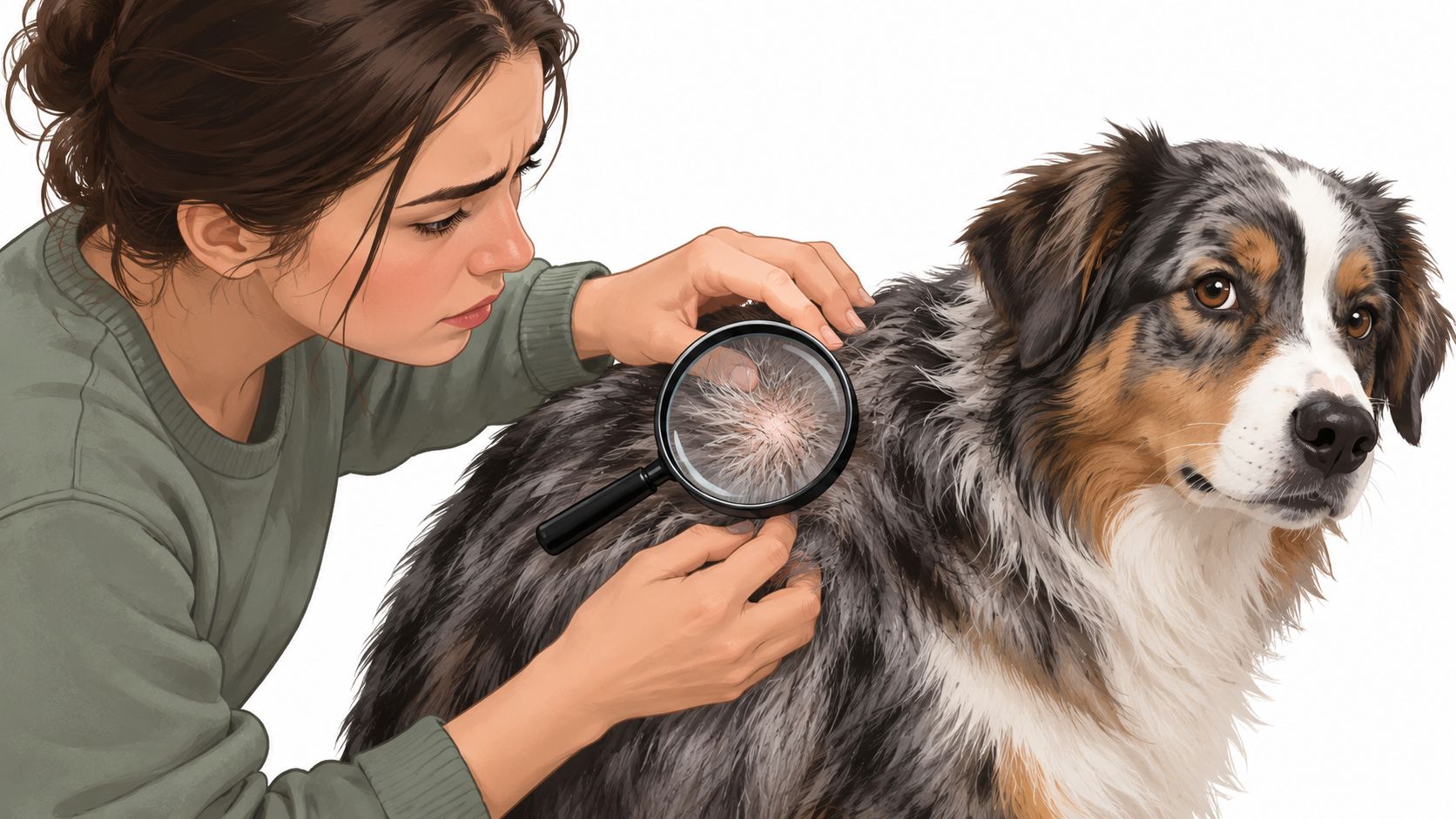
Normal shedding usually reveals healthy skin underneath. Abnormal hair loss often looks different. Watch for patchy bald spots, redness, scabs, strong irritation, persistent scratching, or a sudden change that doesn't match the dog's usual seasonal pattern.
A coat blow can produce loose clumps, but it shouldn't explain every skin problem. Fleas, allergies, infections, hormonal disorders, parasites, nutritional problems, and other medical conditions can affect coat quality. A dog that licks constantly, develops inflamed skin, or loses hair symmetrically needs more than an extra brushing session.
Use a simple monthly check
Once a month, part the coat in several places and look at the skin rather than judging only the amount of hair on your brush. Check behind the ears, under the collar, around the tail, across the belly, and along the legs. Note whether the skin looks calm and intact, whether the coat has new thin areas, and whether your dog resists being touched.
Keep a short record of grooming frequency, coat-blow timing, itching, and any visible changes. That information can help your veterinarian distinguish a familiar seasonal pattern from a new problem. Don't increase supplements or change the diet to treat unexplained hair loss without professional advice.
The best routine is modest but consistent: brush according to the season, inspect the skin regularly, clean the dog's main resting areas, and seek veterinary care when the pattern changes. An Australian Shepherd will always shed, but unexplained irritation or patchy loss isn't something you should accept as normal.
Pure Paw Labs offers dog supplements formulated for routine support across areas such as skin and coat, gut health, joints, immunity, and stress, including its DA-1™ Daily All-in-One powdered formula. If you're reviewing your Australian Shepherd's broader wellness routine alongside regular grooming, visit Pure Paw Labs to explore the available information and products.