


A dog lick on the face can trigger an instant question: how dirty is a dog's mouth? The popular answer usually falls into one of two extremes. Some people say dog saliva is practically clean, while others treat every lick as a serious germ threat. Neither view describes what microbiology shows.
A dog's mouth isn't clean or dirty in the way a kitchen counter might be. It's a living ecosystem filled with many microbial groups. Some are ordinary residents, some arrive temporarily through food or water, and others become more concerning when the gums are inflamed or periodontal disease develops.
The most useful question, then, isn't whether a dog's mouth is universally dirty. It's what organisms are present, how the mouth is being measured, and whether the dog's gums and supporting tissues are healthy. That shift makes everyday decisions easier without turning normal affection into a source of panic.
The evidence also challenges the claim that dogs have cleaner mouths than humans. Direct studies show that dogs and people have different oral ecosystems, with limited overlap and varying species counts depending on the testing method. We'll look at what lives in a dog's mouth, why human comparisons can mislead, how disease changes the microbial balance, when licks or bites deserve caution, and which dental habits help.
Table of Contents
- Introduction Why We Ask How Dirty a Dogs Mouth Really Is
- What Lives Inside a Dogs Mouth and Why It Is Not Just Dirty
- How a Dogs Mouth Compares to a Human Mouth
- Why Health Status Matters More Than a Cleanliness Score
- Real Risks From Licks Bites and Close Contact
- Practical Hygiene Tips to Keep Your Dogs Mouth Healthier
- Key Takeaways and When to Talk to Your Vet
Introduction Why We Ask How Dirty a Dogs Mouth Really Is
A face lick is a familiar dog-owner moment. Your dog may have just finished eating, drinking from a bowl, sniffing the ground, or grooming another part of the body, and then happily presses a wet nose against your cheek. The immediate reaction is often, “Is that dangerous?” The equally common response is, “Dog mouths are cleaner than human mouths anyway.”
Both statements simplify the issue too much.
A dog's mouth naturally contains bacteria. So does a human mouth. The presence of bacteria alone doesn't tell you whether a mouth is healthy, unhealthy, or dangerous. What matters is the microbial community, the condition of the gums, whether saliva contacts vulnerable tissue, and whether a bite has broken the skin.
This is why the phrase “dirty mouth” can send owners in the wrong direction. It suggests a single cleanliness score, as though scientists could place every dog on a scale from spotless to contaminated. In reality, researchers identify different microbial groups, compare their relative presence, and examine how those communities change with oral health.
The practical answer: A dog's mouth is biologically busy, not automatically hazardous.
The popular “cleaner than a human mouth” claim also fails as a general rule. A foundational canine oral microbiome study found a distinct community with many taxa not shared with humans, while later work identified different patterns depending on the dogs sampled and the laboratory method used. Those findings don't support ranking one species' mouth as cleaner overall.
The most important distinction is between a healthy canine mouth and one affected by gingivitis or periodontitis. Disease can change which microbial groups are more prominent and can create inflammation, bleeding, discomfort, and a different exposure context.
By the end, you'll have a clearer way to judge everyday situations. A casual lick on intact skin is different from saliva entering an open wound, and a dog with persistent bad breath or red gums needs a dental assessment rather than a cleanliness label.
What Lives Inside a Dogs Mouth and Why It Is Not Just Dirty
A dog's mouth is a living ecosystem, not a sterile room and not a simple container of “dirt.” Different microorganisms occupy different areas, interact with one another, and respond to food, saliva, plaque, gum inflammation, and disease. Some stay as long-term residents. Others pass through after a dog eats, drinks, or investigates its surroundings.
Researchers use taxa for groups of organisms identified through laboratory testing. Even a bacterial “count” can describe different things. It may refer to organisms grown in a laboratory, genetic sequences detected in a sample, or broader groups that combine closely related species. These methods can produce different pictures of the same mouth.
A 2012 sequencing study mapped 353 canine bacterial taxa across 14 phyla, 23 classes, 37 orders, 66 families, and 148 genera. At a 98.5% 16S rRNA similarity cutoff, 16.4% of oral taxa were shared between dogs and humans (PLOS One's canine oral microbiome study). The result describes a distinct canine environment with substantial microbial diversity. It does not place a dog's mouth on a universal clean-to-dirty scale.
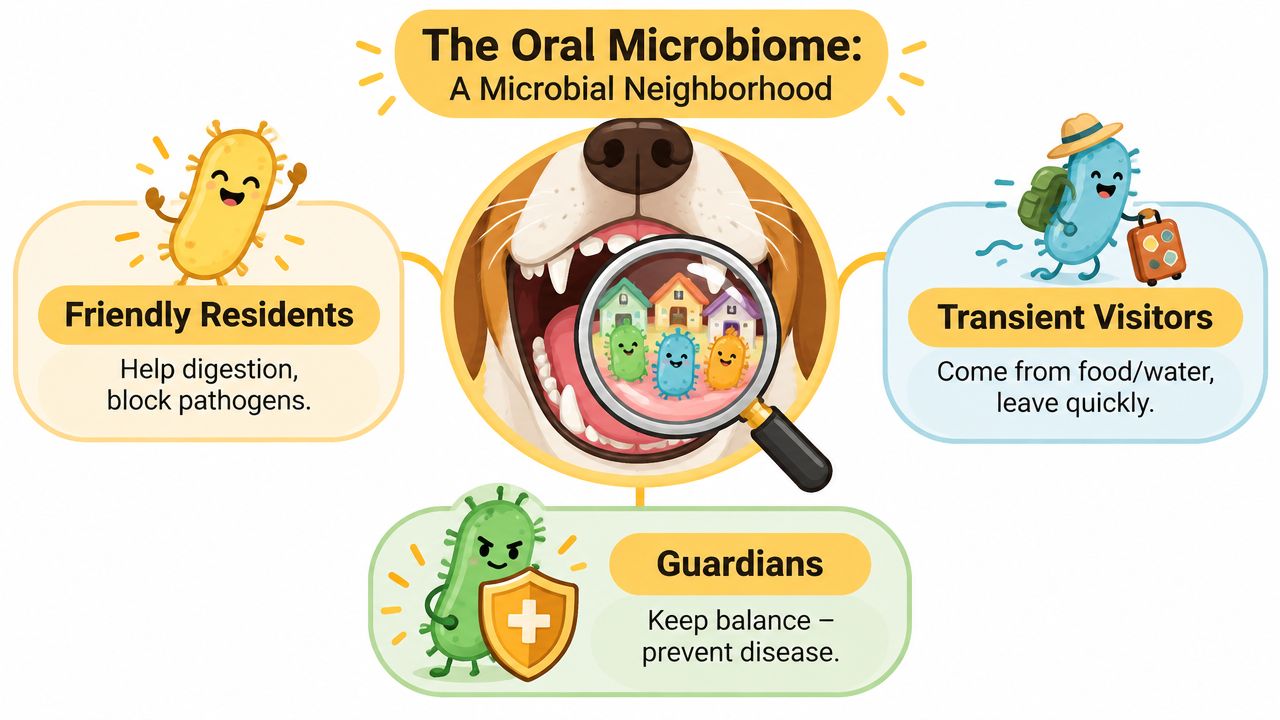
Why diversity changes the question
The same study reported that 80% of canine taxa were still unnamed at the time (the original research findings). That finding limits any simple list of “good” and “bad” bacteria. Scientists had detected a broad community, but much of it was not characterized well enough to receive a formal name.
A mouth can therefore contain many microorganisms and still function as a healthy mouth. Microbes are part of normal oral biology. Risk changes when plaque, tartar, inflammation, bleeding, or periodontal damage alters the conditions around the gums. The disease stage matters more than a generic bacteria total, because a healthy oral community and a periodontal one do not create the same environment.
Everyday objects raise the same measurement problem. The science behind toothbrush germs explains how microorganisms can settle on oral-care items. Finding microbes does not, by itself, show that an object or a dog's mouth is dangerous.
Measurement creates different headlines
One study may report species, another genera, and another only organisms that grow under selected laboratory conditions. Samples can come from saliva, tooth surfaces, the gumline, or deeper periodontal pockets. Each choice captures a different part of the microbial neighborhood.
For that reason, one bacteria number cannot serve as a universal cleanliness score. Oral health also fits into broader care, including this guide to optimizing dog gut health. Mouth and digestive care are connected parts of wellness, but neither is explained by a single microbe count.
How a Dogs Mouth Compares to a Human Mouth
“Dogs' mouths are cleaner than people's” treats cleanliness like a shared scoreboard. Biology does not work that way. Dogs and humans host different oral communities, and the result changes with the sampling method, the part of the mouth tested, and the health of the gums.
A sequencing study found limited overlap between canine and human oral taxa, with 16.4% shared at the stated similarity cutoff. That figure describes one method and one definition of similarity, not a permanent inventory of everything found in every dog's or person's mouth.
Research on healthy dogs also shows why a bacteria count is a poor cleanliness score. A 2023 study isolated 213 bacteria and 20 fungi from oral samples. It found Staphylococcus pseudintermedius in 40% of dogs, alpha-hemolytic Streptococcus in 37%, and Pasteurella stomatis in 22%. In a sequencing subset, Porphyromonas represented 32.5% of detected genera, followed by Moraxella at 16.3% and Fusobacterium at 12.8%.
Those organisms are not arranged on a simple clean-to-dirty scale. A mouth is more like a neighborhood than a glass of sterilized water. Its residents differ between species, and their effect depends on the surrounding conditions, including plaque, saliva, gum tissue, and inflammation.
Dog versus human mouth bacteria at a glance
| Feature | Dogs | Humans |
|---|---|---|
| Overall ecosystem | Distinct canine oral community with many unique taxa | Distinct human oral community with its own microbial profile |
| Shared taxa | 16.4% shared with humans at the 98.5% 16S rRNA similarity cutoff in one sequencing study | Shares that comparison baseline with dogs |
| Species comparison | One 2023 pet-owner comparison detected 70 bacterial species carried by dogs | The same comparison detected 229 bacterial species carried by humans |
| Another reported comparison | 714 bacterial types in dog mouths in a separate study | Around 700 bacterial types in the human mouth in that comparison |
| Main conclusion | Not reliably described as cleaner or dirtier | Not reliably described as cleaner or dirtier |
The different species totals reflect different study designs, not necessarily a disagreement. One comparison detected 299 bacterial species total, with 70 carried by dogs and 229 by humans. Another reported 714 bacterial types in dog mouths and around 700 in human mouths. Sample sources, laboratory methods, and definitions all shape the result.
The verdict on the cleaner-mouth myth
A dog's mouth is not universally cleaner than a human mouth, and a human mouth is not universally cleaner than a dog's. Each has a distinct microbial ecosystem. The useful question is whether the mouth is healthy, whether periodontal disease is present, and whether saliva reaches broken skin, eyes, or other vulnerable areas.
Why Health Status Matters More Than a Cleanliness Score
A healthy dog and a dog with periodontal disease can both have bacteria in their mouths. The difference is the community pattern and the condition of the tissues supporting the teeth. In disease, plaque and inflammation can create a more favorable environment for microbial groups associated with periodontal problems.
Recent research comparing dog oral microbiomes found healthier profiles with genera such as Neisseria, Corynebacterium, Capnocytophaga, Actinomyces, Lautropia, Bergeyella, and Moraxella. Dogs with periodontal disease showed higher levels of Porphyromonas, Fusobacterium, Treponema, and other periodontal biomarkers (the comparative periodontal microbiome study).
That doesn't mean every organism in the first group is harmless or every organism in the second group acts alone. Microbiology is a community story. Disease-associated patterns matter because they occur alongside changes in gum tissue, plaque accumulation, inflammation, and damage around the teeth.
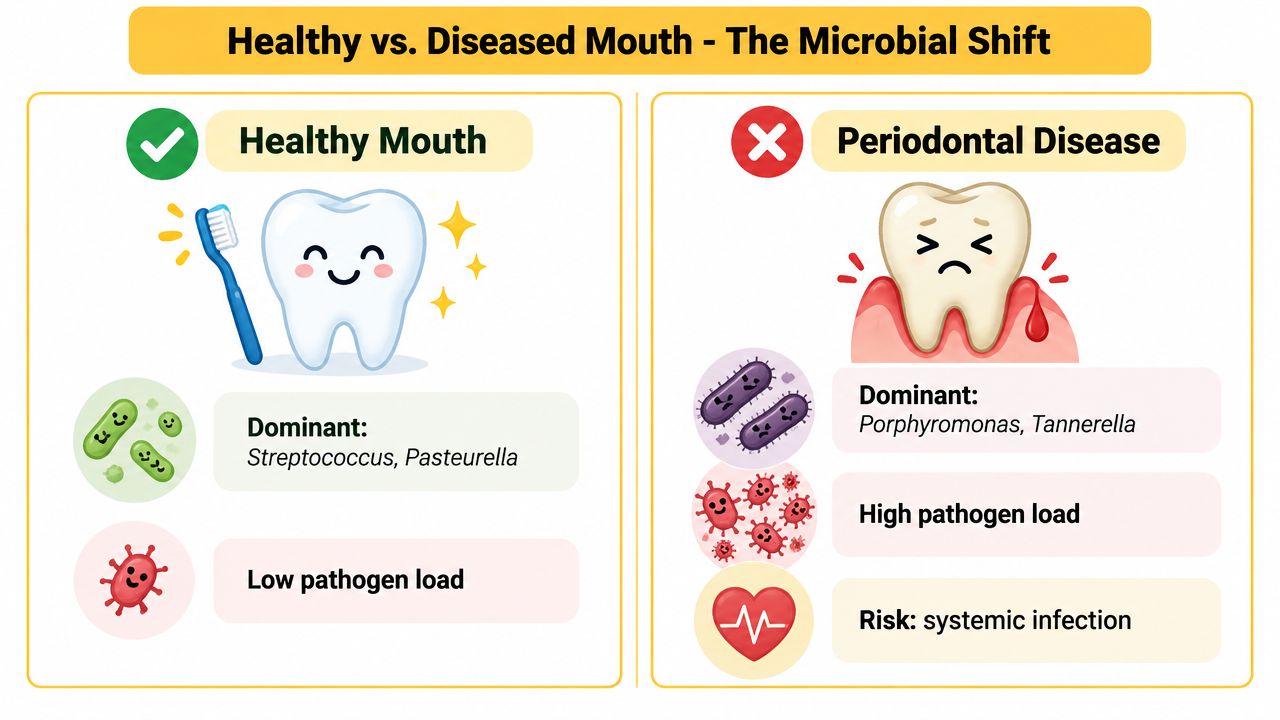
What periodontal disease changes
Periodontal disease affects the structures around the teeth. As the gums become inflamed, the mouth no longer provides the same stable environment as a healthy mouth. A dog may develop stronger breath odor, visible tartar, red or bleeding gums, reluctance to chew, or sensitivity around the face.
These signs are more useful to an owner than trying to identify bacteria at home. You can't determine a dog's oral microbiome by smell alone, and you shouldn't wait for an obvious crisis before arranging an examination.
Watch the tissues, not just the saliva. Redness, bleeding, swelling, tartar, pain, or persistent odor tell you more about dental health than the idea that a mouth is simply “dirty.”
Oral disease can also affect comfort and daily behavior. A dog may chew differently, drop food, paw at the mouth, or hide discomfort while continuing to eat. Some dogs show subtle changes rather than dramatic symptoms, which is why routine veterinary checks remain useful.
The whole-body connection needs careful wording
The mouth, gut, immune system, and other body systems don't operate in isolation. Supporting good nutrition and routine care can contribute to general wellness, but supplements don't replace dental cleaning or treatment for periodontal disease.
If you're considering supportive nutrition alongside brushing and veterinary care, this overview of dog dental health supplements can help you think about supplements as an addition, not a substitute. The central lever for oral health remains plaque control and professional attention when disease is present.
For a visual explanation of how oral health changes, use the infographic above as a reminder: disease stage is more clinically meaningful than a generic cleanliness label.
Real Risks From Licks Bites and Close Contact
A lick on intact skin usually creates a different situation from saliva entering damaged tissue. Healthy skin forms a physical barrier, while an open wound, irritated eye, or mucous membrane gives microorganisms a more direct route into vulnerable tissue. The same dog can therefore present different levels of concern depending on where contact occurs.
A quick lick on an arm isn't the same as a dog licking a fresh cut. A face lick near the lips or eyes deserves more care than contact with unbroken skin, especially if you have a condition or treatment that affects immune defenses. People who are medically vulnerable should ask their healthcare professional for advice for their circumstances.
Bites require a separate response because they can push oral organisms into tissue and cause mechanical damage at the same time. Wash the area promptly, seek medical guidance when the skin is broken, and don't ignore increasing pain, swelling, redness, drainage, fever, or reduced movement.
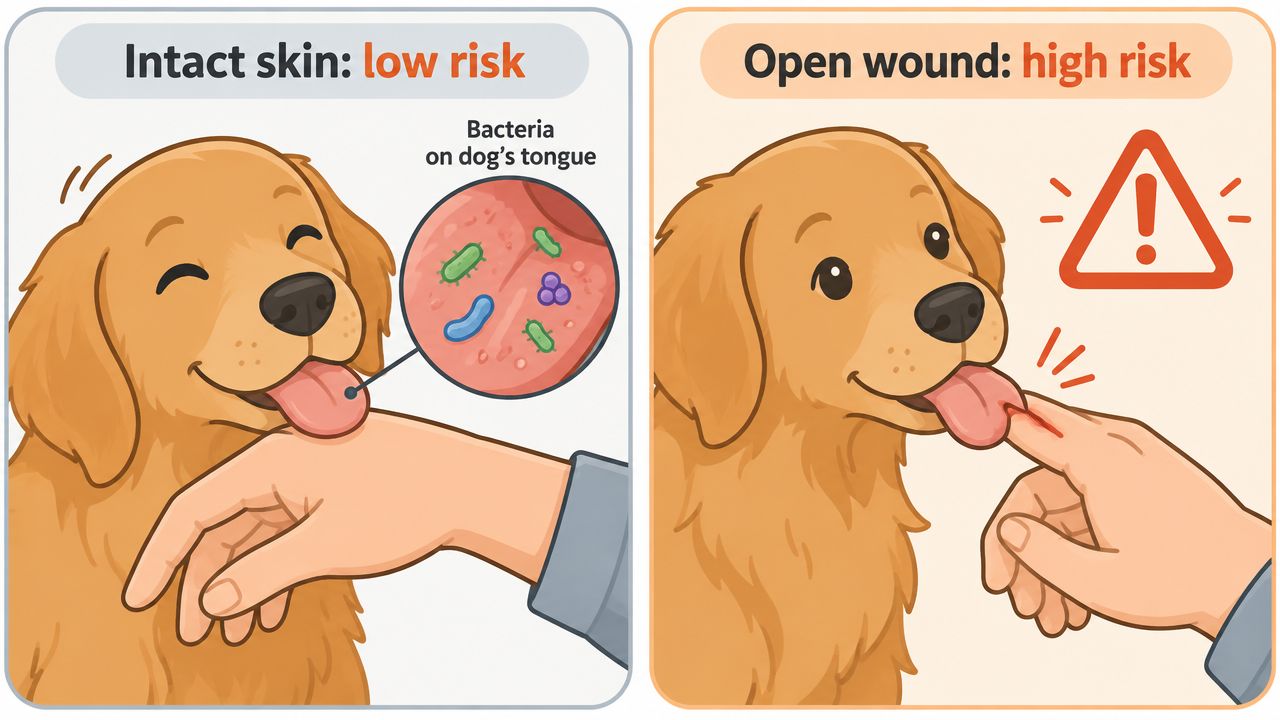
Everyday examples
- Face licking: Wash your face if saliva reaches your mouth or eyes, and redirect the behavior if you'd rather avoid that contact.
- Open cuts: Cover healing wounds and prevent licking. Saliva isn't a wound-cleaning treatment.
- Shared food: Avoid sharing food directly from your mouth, particularly if either person has oral sores or reduced immune defenses.
- Other pets: Stop licking between animals when one has a wound, eye irritation, or a known dental problem.
- Broken skin after a bite: Clean the injury and contact a healthcare professional for appropriate advice.
Risk is manageable when you focus on exposure route and tissue condition instead of assuming every lick has the same significance. If a bite breaks the skin, dog bite injury legal help can provide information about complications, symptoms, treatment, and next steps.
A calm rule: Keep saliva away from wounds, eyes, and mouths, and treat every skin-breaking bite as a medical-care question.
Practical Hygiene Tips to Keep Your Dogs Mouth Healthier
You don't need to sterilize your dog's mouth. The aim is to reduce plaque, protect the gums, and identify dental disease early. A manageable routine usually works better than a complicated plan that disappears after a few days.
Start slowly if your dog isn't comfortable with handling. Let them sniff a dog-specific toothbrush and toothpaste, touch the lips, and reward calm behavior before trying to brush. Human toothpaste isn't appropriate for dogs, so use a product made for canine use.
Build a routine your dog can tolerate
- Brush gently. Lift the lip, place the bristles near the gumline, and use small circular motions. Begin with a few teeth or a short session, then gradually increase what your dog accepts.
- Add an appropriate chew. Dental chews can complement brushing by encouraging chewing and mechanical contact with tooth surfaces. Choose the correct size and supervise, because any chew can create choking or tooth-injury concerns if it isn't suitable.
- Keep water fresh. Change drinking water regularly and wash the bowl. A water additive may fit some routines, but ask your veterinary team before introducing one and don't treat it as a replacement for brushing.
- Choose food with your dog's needs in mind. Diet can influence chewing and residue, but a dental-friendly choice must still meet your dog's nutritional and medical needs. Ask your veterinarian before making a major change.
- Schedule dental checks. A professional examination can identify problems below the visible tooth surface and guide cleaning or treatment when home care isn't enough.
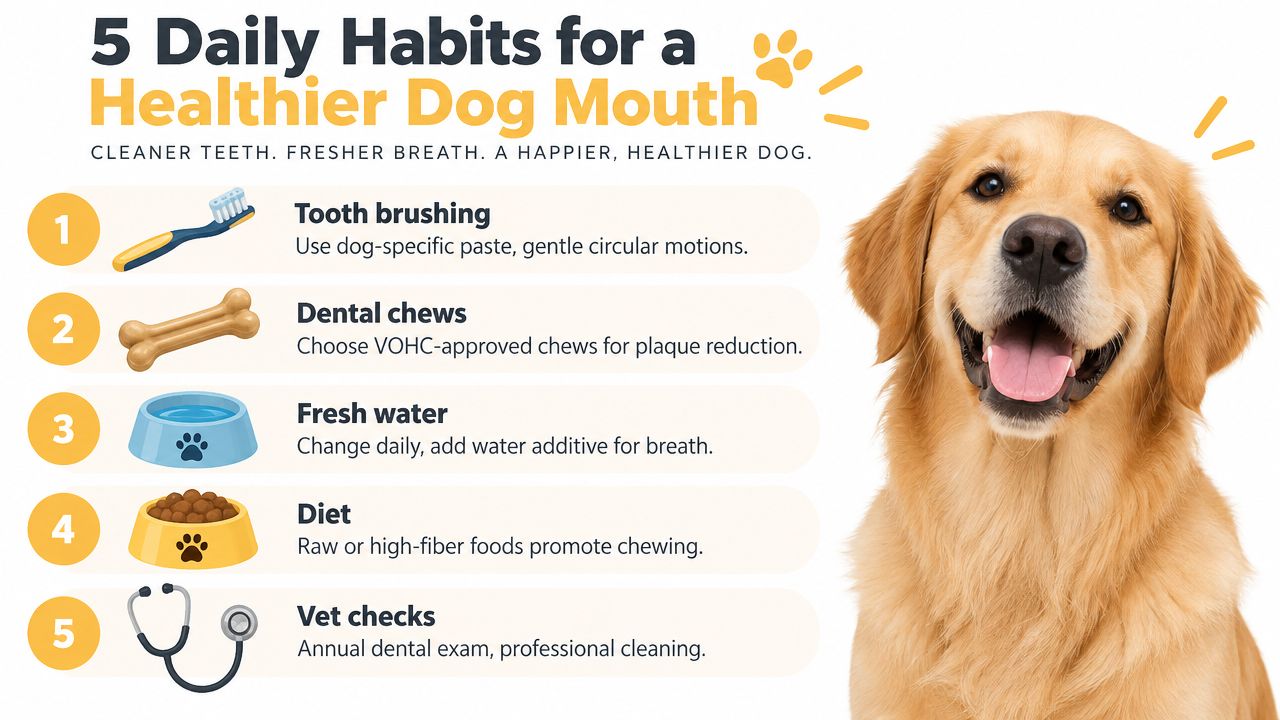
For more ideas that keep the routine simple, read this guide to natural dog dental care. Natural doesn't automatically mean suitable, so review ingredients, texture, and feeding choices with your veterinary team when your dog has dental disease or other health needs.
Where whole-body support fits
Oral care should remain the priority for a mouth-health question. A daily nutritional supplement may support broader wellness, but it won't scrub plaque from teeth or treat infected gums. If a single scoop suits your dog's broader routine, DA-1™ Daily All-in-One - Senior Dog Support, Joints, Skin/Coat & More provides 18 human-grade ingredients targeting cells, gut, and joints, with no fillers or pills according to the product snapshot.
Use it as part of an overall care plan, not as a dental replacement. Brushing, suitable chewing, fresh water, and veterinary dental assessment do the mouth-specific work.
Key Takeaways and When to Talk to Your Vet
The answer to how dirty is a dog's mouth isn't a number. Dogs have complex oral ecosystems that differ from human mouths, and testing methods can produce different species or taxa totals. The cleaner-than-human claim doesn't hold up as a universal scientific conclusion.
Health status gives you a more useful guide. A dog with healthy gums and a dog with periodontal disease may both carry many microorganisms, but disease can shift the oral community toward groups associated with periodontal problems. Look for the physical clues that owners can observe.
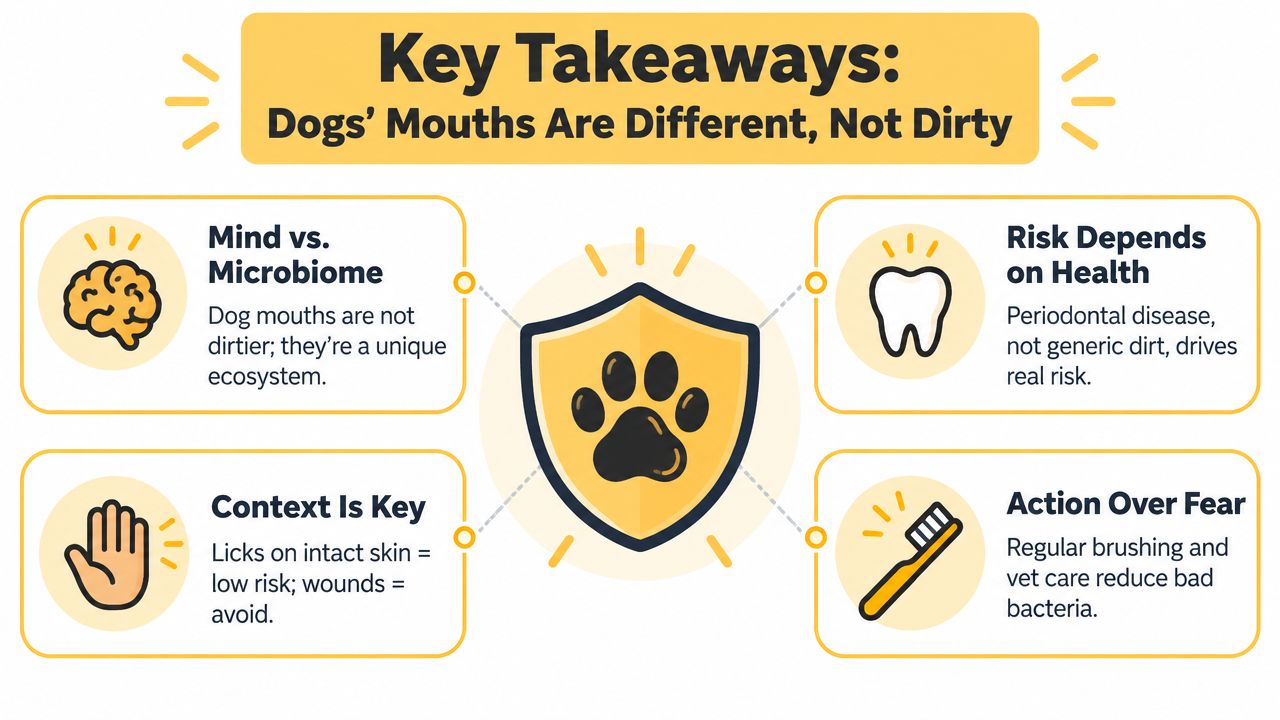
A simple decision checklist
- Affection: A lick on intact skin is usually a lower-concern situation than contact with an open wound, eye, or mouth.
- Wounds: Wash exposed skin and prevent further licking. Get medical advice if the area becomes painful, swollen, red, or otherwise concerning.
- Bites: If the skin is broken, clean the injury and contact a healthcare professional.
- Dental signs: Arrange a veterinary examination for persistent bad breath, red or bleeding gums, visible tartar, chewing difficulty, pawing at the mouth, or changes in eating.
- Prevention: Keep brushing gradual and consistent, use suitable dental products, and maintain professional dental care when recommended.
You don't need to fear your dog's normal microbial world. You do need to respect it, especially when periodontal disease or broken skin changes the situation. Practical hygiene lets you enjoy close contact while giving your dog a more comfortable, healthier mouth.
Pure Paw Labs offers science-backed, human-grade daily supplements for broader dog wellness, including support for joints, skin and coat, gut health, immunity, and stress. Visit Pure Paw Labs to explore its daily nutrition options and choose support that complements, rather than replaces, regular dental care.