


Your dog's stomach is unsettled again. Breakfast came back up, the next bowel movement was loose, and you're standing in the kitchen wondering whether chicken, rice, kibble, pumpkin, or a supplement will finally help. The difficult part isn't finding a long list of foods. It's identifying what your dog tolerates, then changing one variable at a time so you can tell what worked.
The most reliable answer to what to feed a dog with a sensitive stomach is a feeding system built around digestibility, appropriate fat levels, controlled ingredients, and careful observation. A food that works beautifully for one dog may fail another, especially when treats, chews, table scraps, or flavored medications are still part of the routine. Persistent vomiting, blood, weight loss, dehydration, pain, or lethargy also need veterinary attention rather than another food experiment.
Table of Contents
- Why Sensitive Stomachs React and What Calm Digestion Looks Like
- How to Spot Triggers and Track Your Dog's Baseline
- Bland Diet Recipes and Gentle Feeding Routines That Soothe
- Choosing Low Irritant Commercial Diets Without the Guesswork
- Running an Elimination Trial and Transitioning Foods Safely
- Long Term Habits for Steady Digestion and When to Call the Vet
Why Sensitive Stomachs React and What Calm Digestion Looks Like
Consider a common morning. Your dog wakes eager for breakfast, eats normally, then develops loud stomach noises and loose stool later in the day. You may assume the problem is one ingredient, but the bigger issue can be how much of the meal remains undigested. Undigested food reaching the colon can drive gas, loose stool, and abdominal discomfort, which makes digestibility a more useful starting point than a fashionable ingredient list. This overview of sensitive-stomach nutrition explains the digestive mechanism and why readily available nutrients matter.
In a crossover comparison involving 10 dogs and five food formats, protein digestibility was 82.0% for extruded kibble and 94.2% for freeze-dried raw, while daily stool output was 90.2 g on extruded kibble and 39.8 g on the freeze-dried raw diet. Those figures don't mean every dog should eat raw or freeze-dried food. They show why a highly digestible diet can materially affect digestive tolerance, particularly when the colon is receiving less undigested residue.
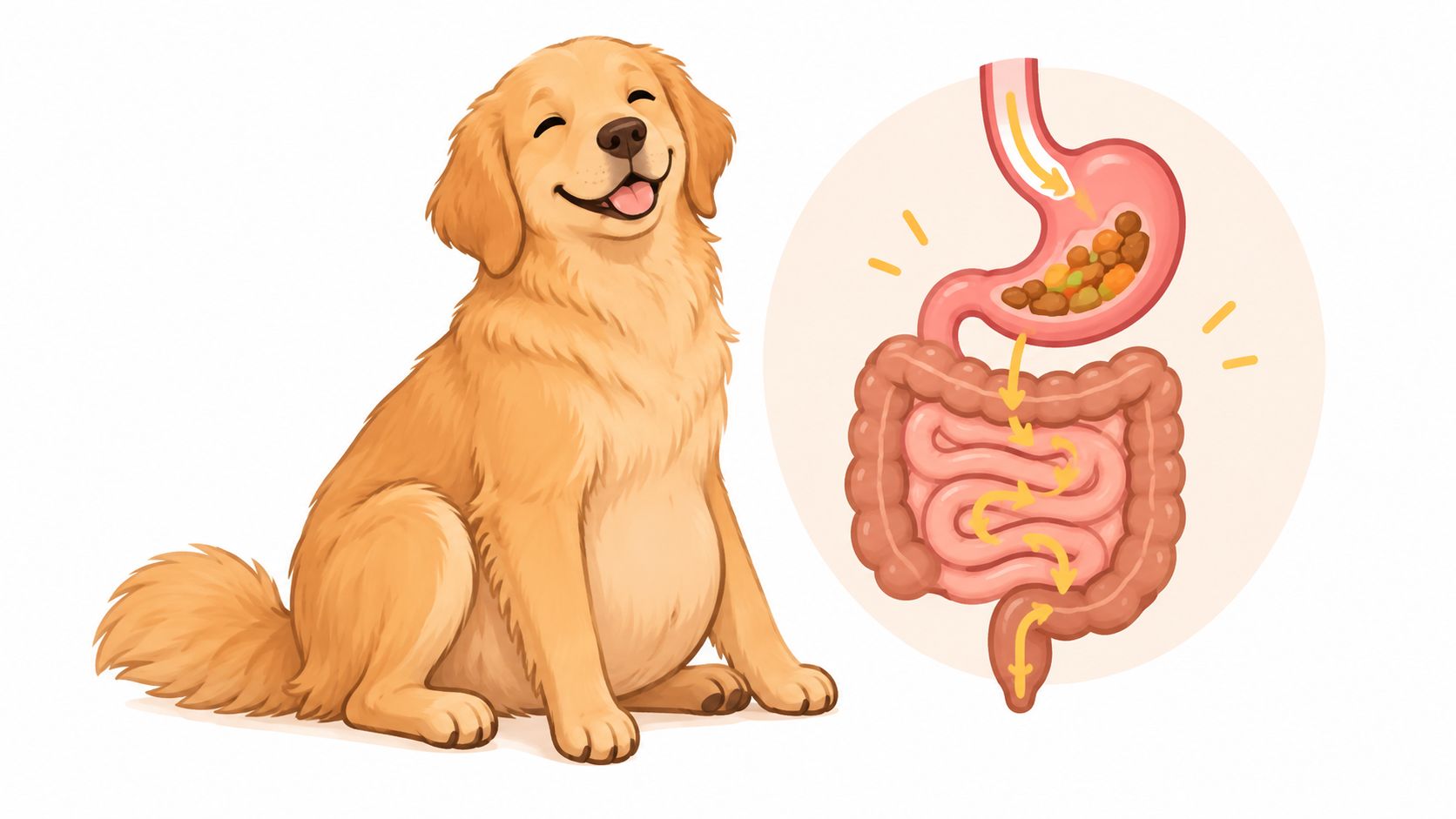
What comfortable digestion usually looks like
A dog with a settled digestive system generally eats with normal interest, passes formed stool, maintains usual energy, and doesn't repeatedly vomit or strain. One soft bowel movement after an unusual event isn't the same as a recurring pattern. The concern rises when loose stool, gas, vomiting, appetite changes, itching, or post-meal discomfort keeps returning.
Fat deserves particular attention. Veterinary gastrointestinal diets have long used lower fat than regular maintenance diets, readily available protein and carbohydrates, and carefully selected fiber because fat and poorly tolerated ingredients can make digestive management harder. A 2024 veterinary study evaluated a diet formulated at 9.75% fat on a dry-matter basis and reported higher apparent nutrient and energy digestibility, lower fecal pH, and higher short-chain fatty acids including butyrate than the control diet. Read the full veterinary study on gastrointestinal diet formulation.
Practical mindset: Don't chase a miracle food. Build a controlled diet routine that lets your dog's stool, appetite, and energy tell you what they tolerate.
If symptoms are recurring, use your observations alongside a veterinary assessment. A useful guide to signs of poor gut health in dogs can help you organize what you're seeing, but it can't rule out parasites, pancreatitis, inflammatory disease, or another medical cause.
How to Spot Triggers and Track Your Dog's Baseline
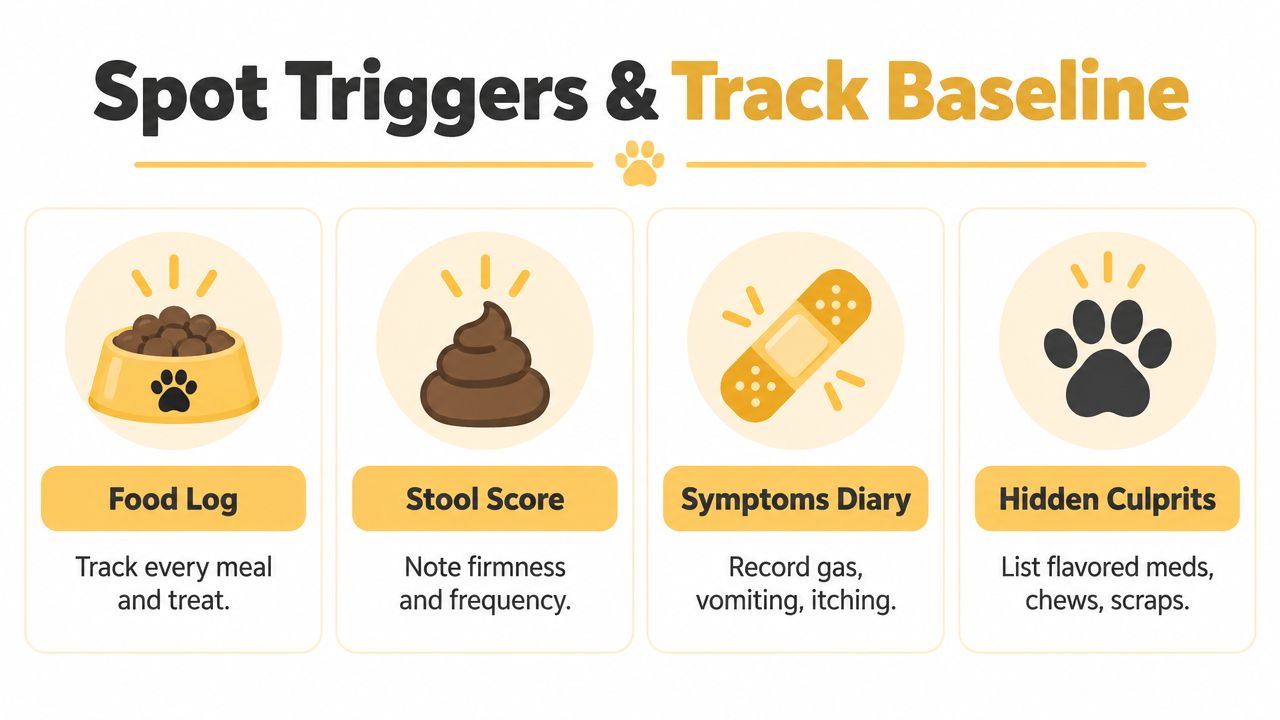
Before changing the bowl, document the current pattern. A clean baseline prevents the most common mistake in sensitive-stomach cases, changing the food, treats, supplements, and feeding schedule simultaneously. If the stool improves, you won't know why. If it worsens, you won't know which variable caused the setback.
Record the following for three to five days before making a major change:
- Every food item: Write down the current diet, meal size, toppers, treats, chews, table scraps, and anything picked up outdoors.
- Stool details: Note firmness, urgency, frequency, mucus, unusual color, and whether your dog strains.
- Whole-dog symptoms: Log gas, vomiting, appetite, energy, abdominal sounds, itching, paw licking, and ear irritation.
- Medication and supplement details: Include flavored tablets, dental products, powders, oils, and anything shared from another pet's bowl.
- Context: Record stress, travel, visitors, unusually fast eating, exercise changes, and access to garbage.
Some ingredients commonly cause trouble because they're rich, poorly tolerated by an individual dog, or introduced alongside several other changes. Dairy, gluten-containing ingredients, fatty foods, mixed-protein toppers, and abrupt diet switches are worth flagging in the diary, but don't assume any one category is automatically harmful for every dog. The useful question is whether symptoms repeatedly follow exposure and settle when that exposure is removed under a controlled plan.
Separate sensitivity from an urgent problem
Mild, short-lived digestive upset may be monitored when your dog remains bright, hydrated, and interested in food. That approach isn't appropriate when symptoms are severe, persistent, or accompanied by systemic changes.
Contact a veterinarian promptly if you see:
- Repeated vomiting or diarrhea: Ongoing loss of fluid can become dangerous, especially when your dog can't keep water down.
- Blood or black stool: This needs professional assessment rather than a home diet trial.
- Lethargy, pain, or weakness: These signs may indicate more than food intolerance.
- Weight loss or refusal to eat: Chronic digestive problems can impair nutrition and require diagnostics.
- Dehydration: Dry gums, marked weakness, or reduced drinking warrant veterinary guidance.
If you're already considering a multi-system supplement for an aging dog, DA-1™ Daily All-in-One, Senior Dog Support, Joints, Skin/Coat & More is described as a formula with 18 human-grade ingredients supporting cells, gut, and joints. During baseline tracking, don't add it alongside several other new products. One change at a time keeps the diary interpretable.
Bland Diet Recipes and Gentle Feeding Routines That Soothe
A bland diet can provide a short-term reset for a dog with mild, uncomplicated stomach upset, but it isn't automatically a complete long-term diet. The practical aim is simple food that is easy to digest, relatively low in fat, and served in a way that doesn't stretch or overwhelm the stomach.
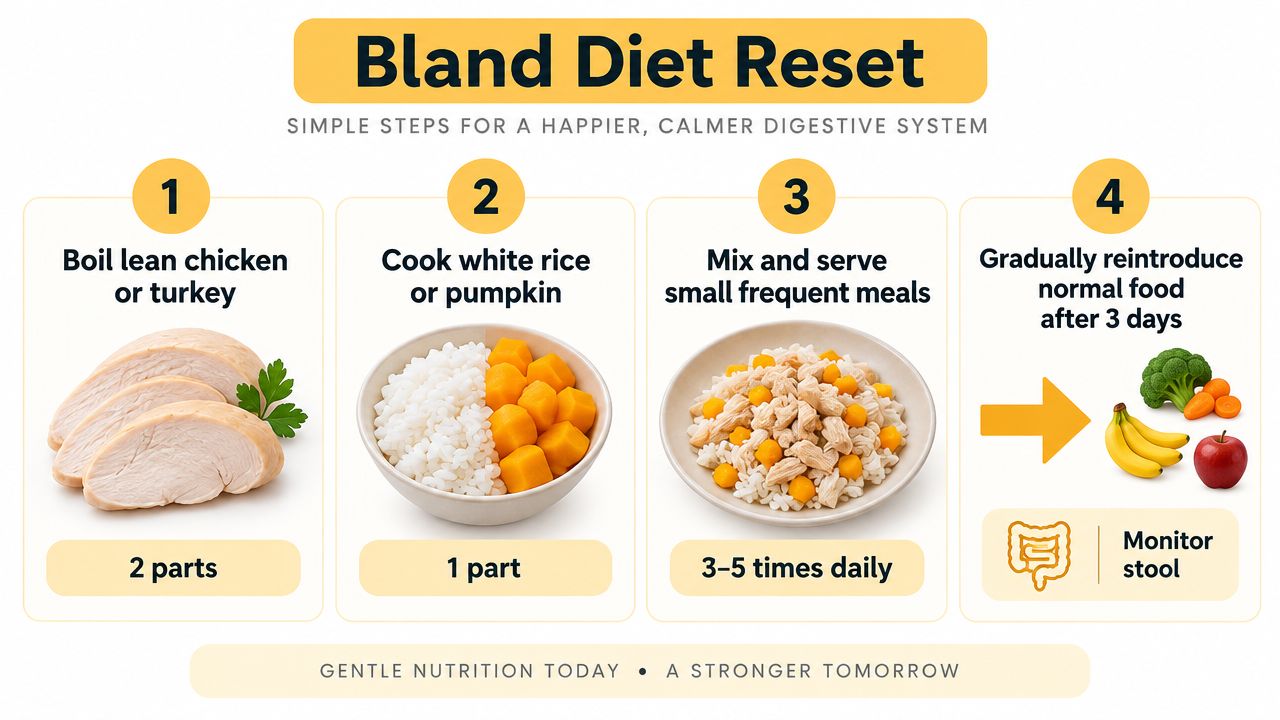
A commonly used starting combination is:
- Lean protein: Boiled, skinless chicken or turkey, with visible fat removed.
- Gentle carbohydrate: Well-cooked white rice or plain pumpkin without seasoning, butter, sugar, or added fat.
- Simple mixture: Use approximately two parts cooked lean meat to one part cooked rice or pumpkin as a starting blend, then adjust with veterinary guidance based on your dog's condition and nutritional needs.
Don't add onion, garlic, sauces, seasoning, gravy, rich broth, or cooking oils. Even a lean protein can become harder to tolerate when prepared with extra fat. If chicken has previously caused itching or digestive symptoms, choose another veterinarian-approved protein rather than assuming it's a neutral ingredient.
Portion and meal mechanics matter
Start with small portions, not a full replacement for the missed meal. A practical approach is to divide the day's food into three to five meals, with the exact total amount based on your dog's normal calorie needs, size, age, activity, and veterinary advice. Since homemade meat-and-rice mixtures vary in water content and calories, measuring by volume alone isn't a dependable long-term feeding method.
Offer water regularly, but avoid encouraging your dog to gulp a large amount immediately alongside a large meal. The combination can increase stomach load and trigger more discomfort. If vomiting continues or your dog can't retain water, stop home management and contact your veterinarian.
Feed several smaller meals rather than one large portion. The goal is to reduce gastrointestinal stress, not to make the stomach process more food at once.
Watch stool, appetite, energy, and vomiting over the next several days. If the stool is becoming more formed and your dog remains comfortable, begin moving back toward a complete diet instead of extending a homemade bland diet indefinitely. A plain-language guide to bone broth for dogs can help you evaluate hydration additions, but broth must remain plain and shouldn't replace a nutritionally complete meal.
Don't stack probiotics, digestive enzymes, oils, herbal products, and new treats during the reset. Multiple supplements may aggravate symptoms or hide the effect of the food itself. Add support only after the base diet is tolerated, and introduce each product separately.
A bland diet is a bridge, not a diagnosis. If symptoms return as soon as normal food comes back, that pattern is useful information for an elimination trial or veterinary workup.
Choosing Low Irritant Commercial Diets Without the Guesswork
Commercial food is often the most practical everyday choice because it can provide consistent nutrition without requiring you to formulate a complete homemade diet. For a sensitive dog, start with the formulation rather than the front-of-bag promise. Look for high digestibility, a fat level lower than ordinary maintenance food when appropriate, a clear protein source, limited extras, and a fiber approach that suits the stool pattern.
The word “hypoallergenic” alone doesn't identify the reason a diet may work. A limited-ingredient food can help you control exposures, while a highly digestible food may be better suited to a dog whose main problem is poor tolerance of meal residue. A therapeutic gastrointestinal formula may be more appropriate when symptoms are chronic, recurrent, or medically complicated.
Compare the main diet categories
| Diet Type | Best For | Key Formulation Cues | Watch Out For |
|---|---|---|---|
| Limited-ingredient diet | Dogs needing a cleaner exposure pattern | Few ingredients, clearly identified protein, restrained extras | A short ingredient list doesn't guarantee adequate digestibility or complete nutrition |
| Highly digestible diet | Dogs with loose stool or post-meal discomfort linked to poor tolerance | Readily available protein and carbohydrate sources, appropriate fat level, useful fiber blend | “Easy to digest” marketing needs to be checked against the actual formulation |
| Therapeutic gastrointestinal diet | Dogs with persistent or medically significant digestive disease | Veterinary-directed fat control, digestibility, targeted fiber, and disease-specific design | It should be selected with veterinary input, especially when vomiting, weight loss, or pain is present |
Read the label like a troubleshooter
Check the guaranteed analysis for fat, then ask whether the number is reported as-fed or on a dry-matter basis. Those values aren't interchangeable, so compare products using the same basis. Ingredient lists can help you identify mixed proteins, dairy ingredients, or unnecessary flavor coatings, but they don't tell the entire digestibility story.
Choose one main protein and avoid rotating several toppers while you're assessing tolerance. Also check treats and chews, since a carefully selected food can be undermined by a fatty reward or a flavored dental product.
Targeted fiber may help stool quality, but more fiber isn't automatically better. The right amount and type depend on whether your dog has loose stool, constipation, small-bowel signs, or a diagnosed condition. Veterinary gastrointestinal diets are designed around these trade-offs, including lower fat and targeted fiber and fat blends. The 2024 study linked earlier reported nutrient and energy digestibility differences alongside fecal fermentation changes, but those findings don't turn one formulation into a universal prescription.
For readers who create nutrition guidance professionally, a structured playbook for nutrition professionals can offer a useful framework for documenting decisions and communicating dietary trade-offs. Dog owners should still use their veterinarian for diagnosis and therapeutic diet selection.
Once the base food is stable, optional gut support can be considered. Don't use a supplement to compensate for a diet your dog is actively failing to tolerate. Further reading on dog food for gut health and allergies can help you think through food selection, but it shouldn't replace a controlled trial.
Running an Elimination Trial and Transitioning Foods Safely
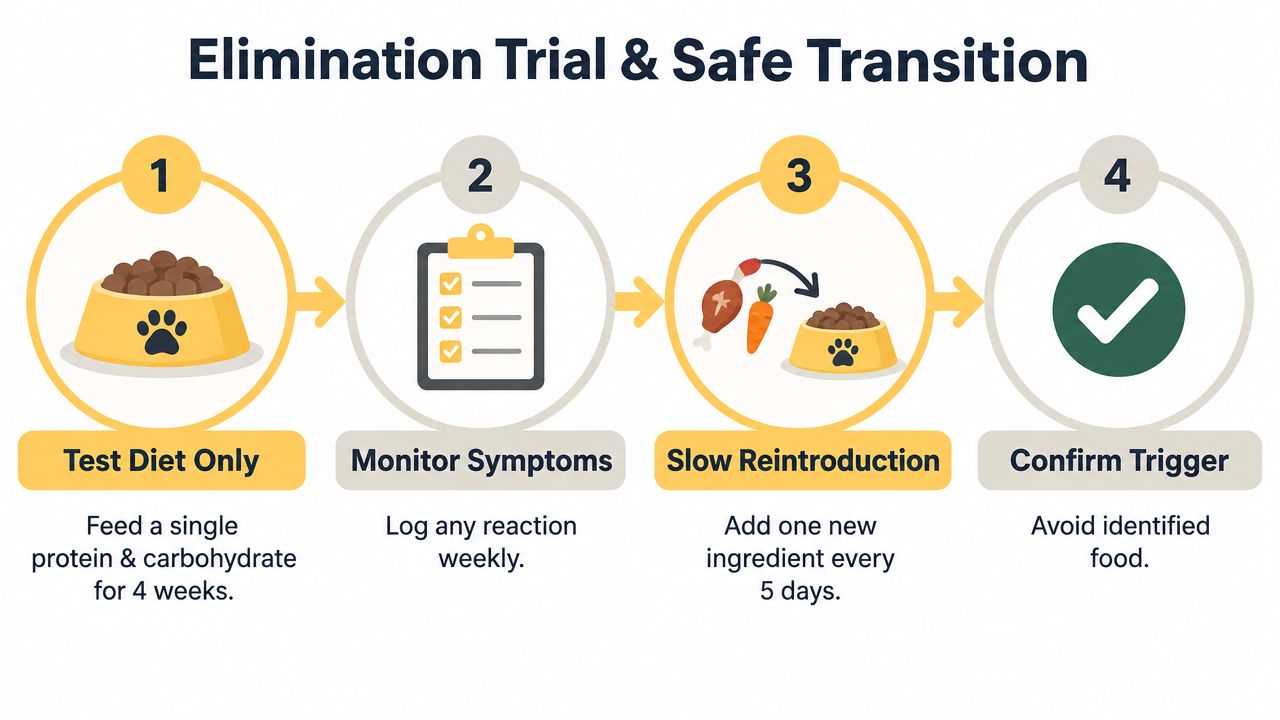
An elimination trial is a controlled feeding experiment, not a casual switch to a bag labeled “sensitive.” Select a limited-ingredient diet with a single main protein and feed it consistently. Remove treats, table scraps, chews, mixed-protein toppers, flavored medications where a safe alternative exists, and every other edible variable that could confuse the result.
The Cornell randomized study of dogs with chronic enteropathy found that restricting ingredient count improved gastrointestinal signs, and its practical lesson is important: fewer ingredients may matter as much as claims about protein processing. A label doesn't prove tolerance. Your dog's response to a tightly controlled diet is more informative.
Make the transition gradual
Switching too quickly can create loose stool even when the destination food is suitable. Use a gradual transition over about 10 days, beginning with approximately 80 to 90% old food and 10 to 20% new food, then increase the new food only when stools remain stable. The randomized chronic-enteropathy study and feeding-trial guidance provide the relevant clinical context for ingredient restriction and gradual change.
A workable schedule is:
- Early transition: Keep most of the old food and add a small portion of the test diet.
- Middle transition: Increase the test diet cautiously while reducing the old food.
- Final transition: Move fully to the test food only if appetite and stool remain acceptable.
- Setback response: If stool worsens, pause at the last tolerated mixture rather than adding another new product.
Once the test diet is established, keep the routine clean long enough to judge the response. Record stool quality, vomiting, appetite, gas, itching, ear signs, and energy. Ask your veterinarian how long the trial should continue for your dog's symptoms, especially if chronic enteropathy or food allergy is suspected.
Reintroduce with one-variable discipline
If your dog improves, don't celebrate by restoring the entire old treat drawer. Reintroduce one ingredient or product at a time, then observe before adding another. A reaction after a mixed-protein chew and a new topper doesn't tell you which exposure caused the problem.
If symptoms return, document the timing, stop the newest variable, and speak with your veterinarian. An elimination trial can identify a dietary pattern, but recurring vomiting, blood, weight loss, or weakness still requires medical investigation.
Long Term Habits for Steady Digestion and When to Call the Vet
Long-term success usually comes from boring consistency. Feed a complete diet your dog tolerates, keep meal timing predictable, and measure portions according to calorie needs rather than relying on an identical scoop for every food. Different formulas can contain different amounts of water and energy, so the scoop itself isn't a nutritional standard.
Keep fresh water available and watch drinking, urination, gum moisture, appetite, stool, and energy. Don't make a sudden change because your dog had one soft stool. Return to the last tolerated routine, review the diary, and decide whether the event followed a treat, chew, stressor, rapid meal, or genuine food change.
Use supplements with the same discipline as food
A probiotic, postbiotic, fiber product, or multi-system powder may be useful for some dogs, but introduce only one new support at a time. The 2025 randomized, double-blind canine diarrhea trial found that a highly digestible diet supplemented with probiotic, prebiotic, and adsorbent components achieved clinical resolution about 2.3 days faster on average than the control and produced better fecal consistency and odor with lower dysbiosis incidence. Veterinary guidance on nutritional management of gastrointestinal disease discusses the broader feeding approach.
That result supports targeted support in appropriate cases, not indiscriminate supplement stacking. A single-scoop routine such as DA-1 can simplify administration after the base diet is stable, but it doesn't replace diagnostic testing or a veterinary treatment plan.
Use this weekly checklist:
- Diet consistency: Confirm the main food and portion haven't changed unexpectedly.
- Hidden exposure review: Check treats, chews, scraps, medications, and access to other food.
- Stool and appetite: Note whether both remain near your dog's established baseline.
- Whole-body check: Look for normal energy, hydration, comfort, and body condition.
- Escalation decision: Call your veterinarian for persistent vomiting, blood, weight loss, lethargy, dehydration, pain, or recurring symptoms despite controlled feeding.
Pure Paw Labs offers dog supplements designed around a simple daily routine, including gut-focused support alongside joint, skin and coat, immune, and stress-related support. If your dog's base diet is already tolerated and you want to review an all-in-one option, visit Pure Paw Labs and choose changes you can track clearly with your veterinarian.