


You meet a dog at the park with a Golden Retriever's sunny expression, a Corgi's short legs, and enough charm to make you start searching before you've even got home. Then the practical questions arrive. Will that puppy become a sturdy medium-sized dog or a much heavier Golden-shaped one? How much exercise will those legs safely handle? Will the coat shed lightly or fill the house with tumbleweeds?
A Golden Retriever Corgi mix, often called a Golden Corgi, can be affectionate, clever, funny, and wonderfully involved in family life. It can also be unusually difficult to predict. Size, back length, leg height, coat density, energy, and even the tendency to herd people may vary according to which parent the dog resembles. That variability affects everything from stair access and feeding to joint care, skin monitoring, and training.
This guide will help you make those decisions without relying on a tidy breed stereotype. A steady routine, supported where appropriate by veterinary care and a carefully chosen joint, skin, gut, immune, and stress support supplement, can make life with this variable mix much easier to manage.
Table of Contents
- Meeting the Golden Retriever Corgi Mix
- Where the Golden Corgi Came From
- What a Golden Corgi Looks Like
- Temperament and Family Fit
- Health, Grooming, and Everyday Care
- Exercise, Training, and Daily Nutrition
- Adoption, Breeders, and Your First Week Home
Meeting the Golden Retriever Corgi Mix
The first time many people notice a Golden Corgi, the dog is doing something memorable. Perhaps it's trotting across a park with a Golden Retriever's feathered tail, then stopping to give a Corgi-style stare when its person changes direction. Perhaps it's a puppy with oversized paws, a long back, and an expression that seems to ask whether everyone nearby has come specifically to meet it.
That appeal is real, but the adult dog may not follow one predictable blueprint. Some Golden Retriever Corgi mixes grow into a compact, long-backed dog with short legs. Others take after the Golden Retriever in height and mass while keeping a lower, broader outline. Many land somewhere between those extremes. The same litter can produce puppies that need noticeably different exercise, feeding, grooming, and home arrangements.
Practical rule: Choose routines for the dog in front of you, not for the label on the adoption listing.
Adult guides commonly place this mix in a broad range of 25–65 pounds, with many first-generation dogs near 35–55 pounds, and roughly 10–20 inches at the shoulder. Lifespan estimates generally fall around 10–14 years, although summaries often converge around 11–13 years or 11–14 years. These ranges come from the very different parent builds, with Golden Retrievers commonly described at 55–75 pounds and Pembroke Welsh Corgis at 25–30 pounds in the cited breed profile. Read the published Golden Retriever Corgi mix size and lifespan profile.
That spread changes daily life. A short-legged dog with a heavier torso may need careful limits on jumping, stairs, and sharp turns. A leggier dog may tolerate more conventional retrieving and walking, but it still needs sensible conditioning and weight control. Coat type also matters, since a dense double coat can shed throughout the year and more heavily during seasonal coat changes.
This guide answers the questions new owners usually ask: how big a Golden Corgi may become, what its temperament can be like, how to approach health and grooming, how to exercise and train it, what feeding decisions matter, and how to choose a responsible route into ownership.
Where the Golden Corgi Came From
A Golden Corgi is generally described as a designer hybrid, not a formally recognized breed with one fixed standard. One independent account places deliberate development of the mix in North America in the late 1990s, during the wider designer-dog boom. The cross became more visible as a novelty mix that combined traits from two very different working backgrounds. Explore the reported history of the Golden Retriever Corgi mix.

The parent histories explain the mixed result
The Golden Retriever was developed in Scotland in 1868 as a gundog associated with retrieving waterfowl. That background helps explain the breed's familiar combination of cooperation, trainability, enthusiasm for carrying objects, and willingness to work closely with a handler.
Corgis bring a different set of instincts. Pembroke and Cardigan Welsh Corgis are distinct Welsh breeds, and Corgis had been established as working dogs in Wales for centuries before this hybrid appeared. Their traditional cattle-herding work required alertness, persistence, quick movement, and the ability to avoid kicks while controlling livestock.
Those histories don't create a guaranteed personality, but they give owners useful expectations. A Golden Corgi may want to retrieve, follow, supervise, alert, and direct movement all in the same afternoon. That can produce a devoted companion, but it can also produce barking, heel-nipping, or persistent attempts to manage children and other pets.
F1 and later-generation labels
An F1 Golden Corgi is the direct offspring of a Golden Retriever and a Corgi. Because each puppy receives a different combination of parental traits, F1 litters can show especially wide variation in body shape, coat, and behavior.
Multigenerational dogs or backcrosses may be more consistent in some breeding programs, but the label alone doesn't guarantee uniformity. Ask which parent breeds were used, whether the Corgi parent was a Pembroke or Cardigan, and what the adult relatives are like.
People also use “Golden Retriever Corgi mix,” “Golden Corgi,” and “Corgi Golden Retriever” interchangeably. Breeder descriptions aren't always consistent, so look past the name. Parent health information, adult size, body proportions, and observed temperament tell you far more than the marketing label. For another example of why mixed-breed names can hide meaningful differences, compare the discussion of a Shepherd Corgi mix.
What a Golden Corgi Looks Like
There isn't one reliable Golden Corgi silhouette. Published guides commonly place adults around 35–55 pounds and approximately 13–19 inches at the shoulder, while broader profiles describe a possible range of roughly 25–65 pounds and 10–20 inches. Review the broader reported size range and the profile focused on proportions and coat care.
The most useful way to understand the appearance is to think in body-type outcomes rather than promised breed traits.

Three body shapes to plan for
A Corgi-leaning dog may have a long back, short legs, a broad chest, and a lower center of gravity. A Golden-leaning dog may stand taller, carry more leg, and show a narrower, more athletic outline. A balanced mix can combine moderate leg length with a substantial torso.
The practical difference is important. A heavier dog supported by short limbs places more demand on the back and joints during jumping, stairs, hard stops, and high-impact games. Even if the dog looks athletic, don't assume it should repeat a tall retriever's exercise pattern without adjustment.
| Golden Corgi physical traits at a glance | Golden-Leaning | Balanced Mix | Corgi-Leaning |
|---|---|---|---|
| Overall frame | Taller and more retriever-shaped | Moderate height and substance | Lower, broader, and longer-backed |
| Leg proportions | Longer legs | Intermediate proportions | Shorter legs |
| Main home consideration | More room for active movement | Flexible routine with observation | Limit jumping, stairs, and hard turns |
| Coat tendency | Often lighter or more feathered | Variable | Often dense and double-coated |
| Weight management | Monitor portions as the frame fills out | Use body condition rather than appearance | Be especially careful because a heavy coat can hide gain |
Coat texture can range from straighter, Golden-like fur to a dense double coat. Commonly described colors include red, fawn, sable, black and tan, and occasional cream. The ears may be upright, folded, or partly carried to the side, while the tail can vary in length and feathering. A natural bobtail influence may appear when the Pembroke side contributes that trait.
A thick coat can make a dog look leaner or heavier than it really is, so run your hands over the ribs and check the waist rather than judging by the outline alone. Because this mix can grow quickly while its final proportions are still emerging, discuss an age-appropriate joint-support plan with your veterinarian rather than waiting for stiffness to appear.
If you're considering a product such as DA-1™ Daily All-in-One - Senior Dog Support, Joints, Skin/Coat & More, treat it as routine support, not a substitute for weight management, suitable exercise, or veterinary assessment. Its catalog description identifies a once-daily formula with 18 human-grade ingredients intended to support cells, gut, and joints.
Temperament and Family Fit
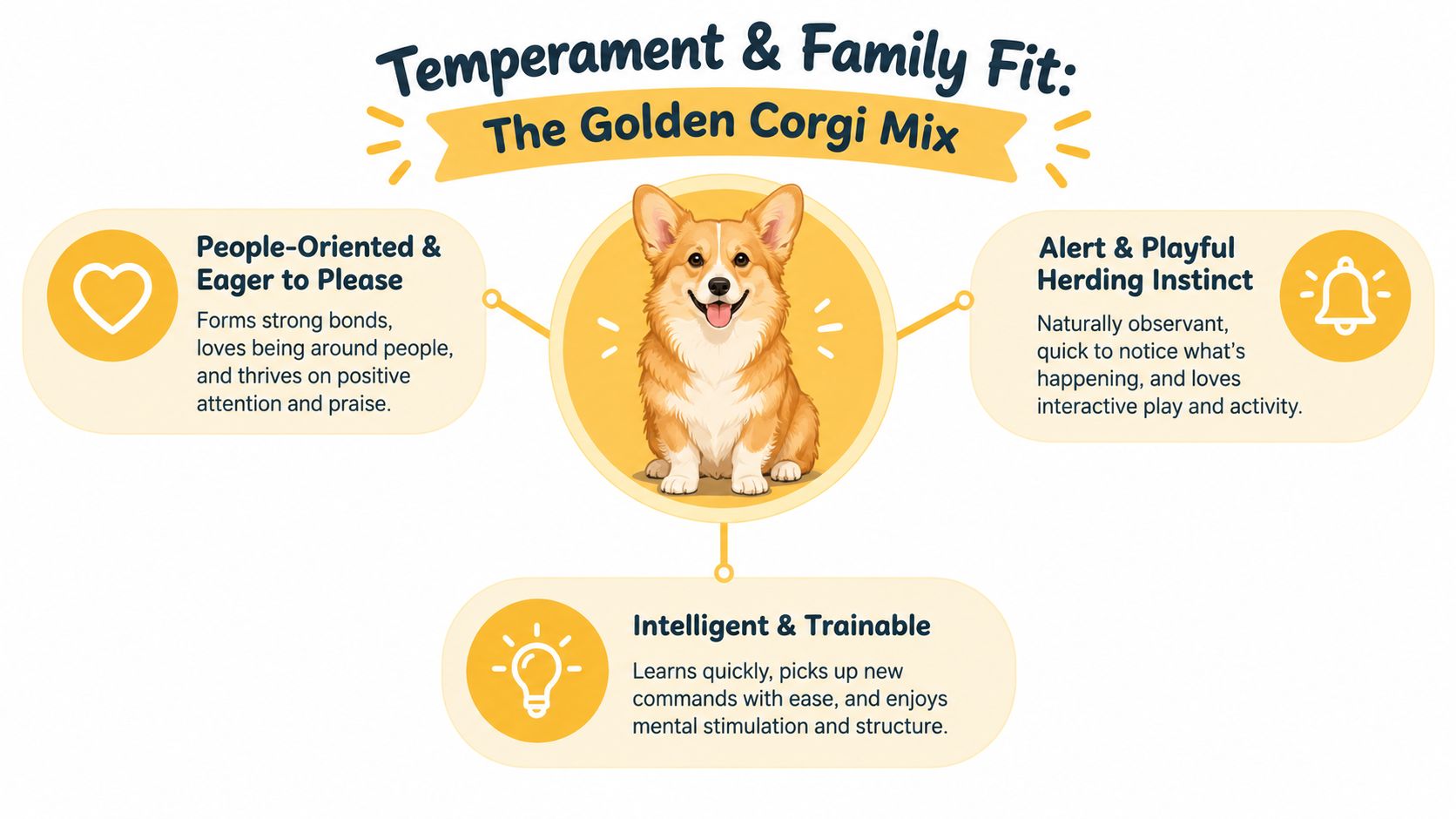
A Golden Corgi often feels like a friendly helper who has also appointed itself household supervisor. The Golden Retriever influence may contribute affection, social confidence, and a strong desire to participate. The Corgi influence can add alertness, persistence, vocal opinions, and an instinct to control movement.
That combination works beautifully for families who enjoy an interactive dog. It can be harder for people who want a quiet companion that rarely initiates contact. A Golden Corgi left without enough physical activity or mental work may invent a job by barking at passing sounds, nudging people toward a preferred activity, carrying household objects, or rearranging whatever is within reach.
Social skills need deliberate practice
The mix can suit children, but supervision and teaching must go both ways. Herding behavior may appear as ankle-nipping, circling, staring, or barking when children run. Don't punish the warning signs after they appear. Interrupt calmly, move the dog away, reward a quiet alternative, and teach children to stop running and call an adult when the dog becomes too intense.
With other pets, early introductions and controlled movement matter. A Golden Corgi may enjoy canine company, yet still chase, direct, or pester a quieter animal. Use gates, separate feeding areas, and short supervised interactions while you learn the dog's style.
First-time owners can succeed with this mix if they enjoy training and will establish routines early. The dog's intelligence often makes learning rewarding, but intelligence doesn't guarantee cooperation. A stubborn streak responds better to short, upbeat sessions and clear rewards than to repeated drilling or physical corrections.
The embedded video offers another visual reference for thinking about the mix's likely energy and interaction patterns.
Match the individual, not the prediction
Behavior varies just as body shape does. Meet the actual dog, observe recovery after a surprise, notice whether it seeks contact or hangs back, and ask how it behaves around handling, food, toys, and other animals.
A dog that already fits your household is a safer choice than a hoped-for personality attached to a charming label.
Health, Grooming, and Everyday Care
The most important health question is not whether a Golden Corgi is “healthy” as a category. It's which structural traits the individual inherited and how carefully the household manages them.
A Corgi-like body can place extra demand on the back and joints, particularly when the dog carries more mass through a shorter frame. Breed guides specifically connect heavier Golden-like bodies with Corgi limb proportions to increased joint torque and spinal shear during jumping, stairs, and high-impact play. That makes ramps, controlled access, non-slip flooring, and lean body condition practical safeguards rather than cosmetic choices.
The mix may also inherit concerns associated with either parent line. Depending on family history, owners may need to discuss intervertebral disc disease, hip dysplasia, stifle strain, Golden Retriever-associated cancer risk, hypothyroidism, and heart conditions with a veterinarian. A mixed-breed label doesn't remove inherited risk.
What to monitor at home
Watch for reluctance to climb, hesitation before jumping, a changed gait, a tucked posture, sensitivity when the back is touched, difficulty rising, or a sudden change in play. Pain can show up as irritability or withdrawal before obvious limping appears.
| Common Health Concerns in a Golden Corgi Mix | Condition | Inherited From | Watch For |
|---|---|---|---|
| Back and spinal stress | Intervertebral disc disease | Corgi body structure | Reluctance to move, back sensitivity, altered posture |
| Hip and joint loading | Hip dysplasia or other joint stress | Both lines may contribute through structure and family history | Stiffness, uneven gait, difficulty rising |
| Weight-related strain | Excess load on short limbs or a heavier frame | Variable inherited build plus feeding routine | Reduced waist, tiring easily, reluctance to exercise |
| Endocrine concerns | Hypothyroidism | Golden Retriever family line may contribute | Coat changes, low energy, unexplained body changes |
| Cardiac concerns | Heart conditions | Golden Retriever family line may contribute | Reduced tolerance, fainting, breathing changes |
| Skin and coat problems | Dermatitis or irritation | Dense coat and individual sensitivity | Scratching, odor, redness, thinning fur |
Ask a breeder for documented health screening for both parent lines, not a verbal assurance that the puppy “looks fine.” A veterinarian can also help set a growth, exercise, and weight plan that matches the dog's proportions.
Grooming is a health check
Brush according to coat density, with extra attention during heavy shedding periods. Check the skin under the ruff, behind the ears, around the tail, and between the legs, where mats and irritation can hide. Bathe when the dog is dirty or your veterinarian recommends it, then dry the coat thoroughly.
Keep nails short enough that the dog walks comfortably, inspect ears regularly, and introduce tooth brushing gradually. Feeding in a defined area can also reduce cleanup problems, especially with an enthusiastic dog. For practical household advice, see Stopping kibble mess at home.
A dense coat can mask weight gain and dermatitis, so hands-on checks matter more than visual inspection. The guide to dog skin and coat care can help you build a consistent monitoring habit, but persistent itching, odor, hair loss, pain, or movement changes belong with a veterinarian.
Exercise, Training, and Daily Nutrition
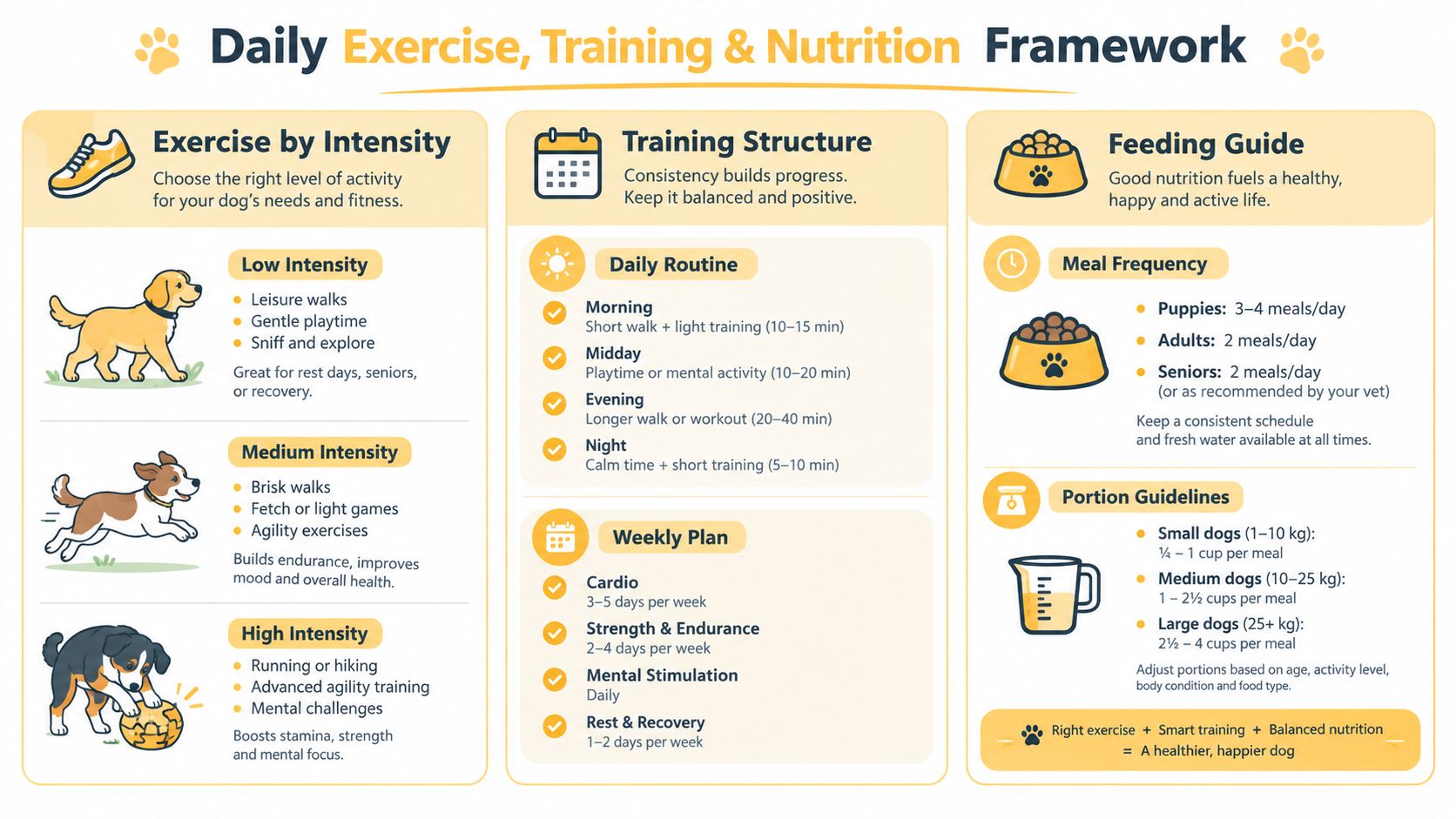
Exercise should follow the dog's build and recovery, not a generic schedule copied from a taller retriever. A low-slung Golden Corgi may do best with steady, low-impact walks, gentle sniffing, and play on forgiving surfaces. A leggier dog may enjoy more sustained movement, but intensity should still increase gradually.
Use three activity lanes:
- Low impact: Calm walks, scent trails, food puzzles, and controlled play for shorter-legged or heavier dogs.
- Moderate work: Longer walks and structured retrieving for dogs with more leg and an easy, balanced gait.
- Mental work: Short training sessions, puzzle feeders, scent games, and simple household tasks for every body type.
Avoid making repeated jumping, sharp turns, or frantic fetch the foundation of the routine. Stop while the dog is still moving comfortably, and watch for delayed stiffness later in the day.
Train the habits that protect daily life
Start with leash manners, recall, impulse control around food and children, and polite greetings. The Corgi side may bring persistence, so keep sessions brief, rewarding, and varied. If the dog ignores a cue, make the task easier rather than repeating the command until everyone becomes frustrated.
Practice an emergency turn, a settle on a mat, and a hand target. These skills help you move the dog away from stairs, interrupt herding behavior, and create calm in a busy home.
Feed the body you have
Use the food label as a starting point, then adjust with your veterinarian according to adult weight, age, activity, and body condition. Portion decisions should reflect the dog's actual frame, not the larger parent's reputation or the coat's visual bulk. Treats belong in the daily food budget, especially for a mix that may gain weight beneath a dense coat.
A complete diet may be enough for many dogs. Some owners prefer one all-in-one supplement rather than several separate products for joints, skin and coat, digestion, immunity, and stress support. That can simplify the routine, but supplements aren't cures and may not suit every dog. Ask your veterinarian before adding one, particularly if the dog has a medical condition, takes medication, is pregnant, or shows pain.
Introduce any new food or supplement gradually and stop if digestive upset or another concerning change appears. The safest plan remains simple: measured meals, regular body checks, proportion-appropriate activity, and veterinary guidance when the dog's needs change.
Adoption, Breeders, and Your First Week Home
Rescue adoption and breeder purchase can both lead to a good match. The better route is the one that gives you honest information about the individual dog, its health history, and its behavior.
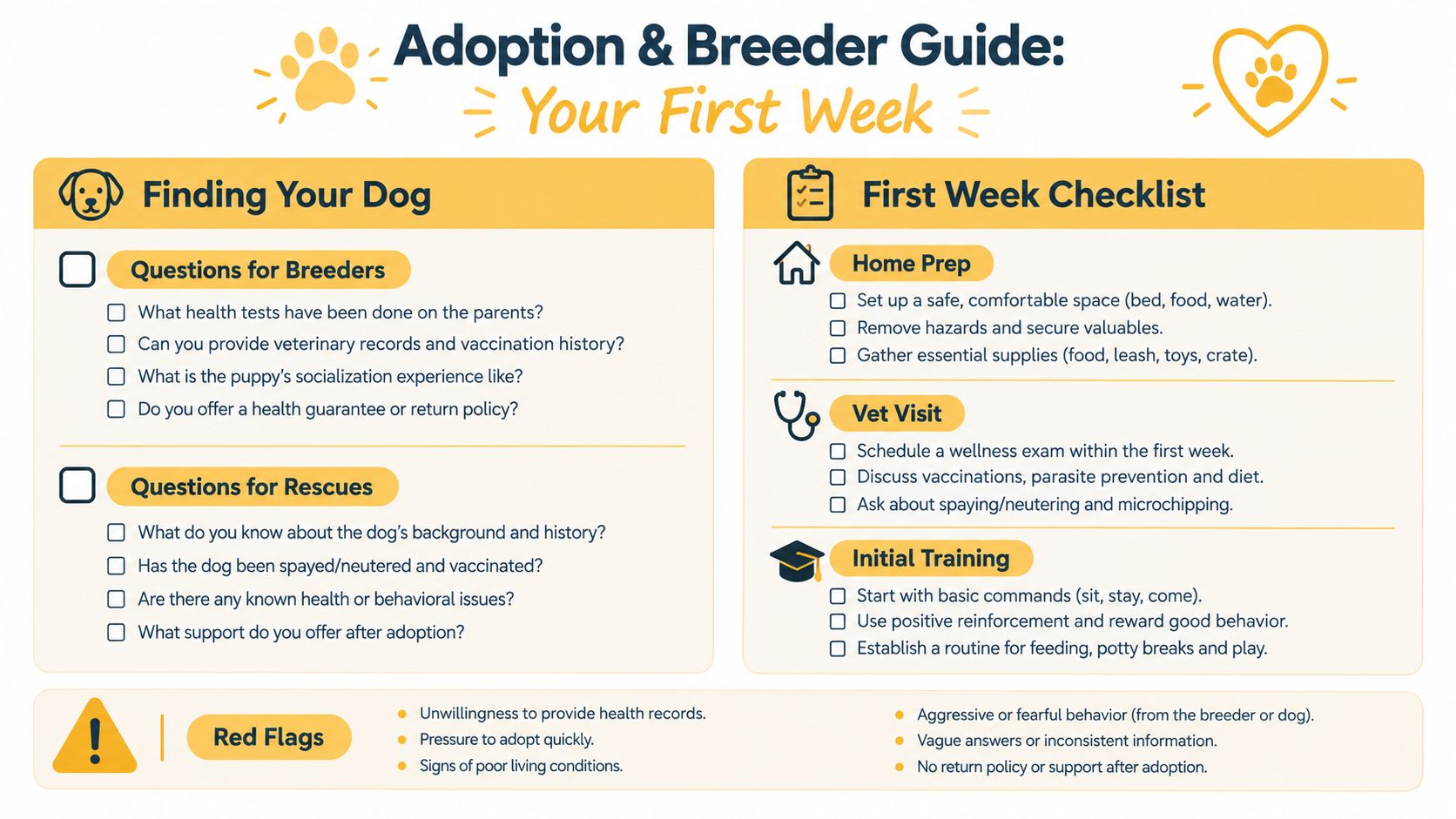
With a rescue, ask how the dog behaves around children, dogs, cats, handling, food, stairs, car rides, and being left alone. Ask what the rescue has observed rather than accepting a broad description such as “great with everyone.” If the dog has a long back and short legs, ask whether staff have noticed reluctance, pain, or difficulty with movement.
With a breeder, ask to meet the dam, see where the puppies are raised, and review health screening for both parent lines. Ask about adult relatives, expected size, coat density, and the Corgi variety involved. Be cautious when a seller promises a precise adult appearance or treats extreme proportions as a novelty without discussing orthopedic care.
Your first seven days
- Prepare the home: Block unsafe stairs, cover slippery areas, set up a quiet rest space, and use gates when supervision isn't possible.
- Arrange veterinary care: Bring all records, ask for a weight and body-condition baseline, and discuss vaccines, parasite prevention, joints, skin, and diet.
- Start house training: Use a consistent toilet area, predictable outings, and calm praise for success.
- Introduce the household slowly: Let the dog explore one area at a time and keep greetings low-key.
- Begin safe socialization: Pair new sounds, surfaces, people, and handling with food while keeping the dog below its fear threshold.
- Contact a trainer: Choose reward-based guidance early, especially if nipping, barking, guarding, or leash frustration appears.
- Track changes: Note appetite, stool, scratching, gait, sleep, and reactions to activity so you can give your veterinarian useful details.
For owners considering preventive support during puppyhood, this overview of a puppy supplement powder can help frame the questions to ask before adding anything to a complete diet.
Pure Paw Labs offers daily dog supplements designed to combine support for joints, skin and coat, digestive health, immunity, and stress-related needs in one routine. If your Golden Corgi's variable build has you planning carefully for long-term care, visit Pure Paw Labs and review the formula details with your veterinarian before choosing a product.