


Dry, flaky skin isn't always solved by adding fish oil to your dog's bowl. That popular advice can be useful, but it skips the questions that determine whether a supplement will help at all: What is causing the dryness? Is the current diet already rich in fatty acids? Is inflammation involved? And does your dog need one nutrient or broader support?
The most useful approach to dog supplements for dry skin starts with the skin barrier, then considers the diet, digestive system, immune response, and the practical reality of consistent daily use. A supplement may support a damaged barrier, but it won't replace a diagnosis for allergies, parasites, infection, hormonal disease, or another condition causing persistent irritation.
Table of Contents
- Why Your Dog's Dry Skin Is More Than a Surface Problem
- The Science of the Canine Skin Barrier
- Evaluating Evidence-Backed Supplement Ingredients
- How to Choose a Safe and Effective Formula
- The Gut-Skin Connection and Multi-System Support
- Dosing Timelines and When to See a Veterinarian
- Building a Sustainable Daily Wellness Routine
Why Your Dog's Dry Skin Is More Than a Surface Problem
A dull coat or a few flakes can look like a grooming issue. Yet itching, dandruff, redness, excessive licking, and changes in coat quality can reflect trouble beneath the visible surface. The skin is an active organ. It protects against water loss, irritants, microbes, and physical damage, while also participating in immune responses.
That doesn't mean every dry patch signals a serious disease. Indoor air, wet or cold weather, excessive bathing, unsuitable grooming products, stress, poor nutrition, allergies, parasites, and inflammatory skin disorders can all affect the coat and skin. If the underlying trigger continues, topical moisturizers may soothe the surface without restoring the conditions that allow the barrier to function normally.
The scratching cycle
Dryness and itching can reinforce each other. A dog scratches or licks an irritated area, which creates more mechanical damage. The damaged surface then loses some of its protective capacity, making exposure to allergens and microbes more problematic. The result can be a cycle of irritation, self-trauma, and worsening coat condition.
A dog with persistent scratching shouldn't automatically be treated as though it has a fatty-acid deficiency. It may have atopic dermatitis, flea allergy, a food reaction, parasites, or a secondary infection. A veterinary examination matters when the problem is intense, widespread, recurrent, or accompanied by sores, odor, or significant hair loss.
Practical rule: Treat the visible dryness, but investigate the reason it appeared.
Why internal nutrition matters
The skin continually builds and replaces cells, produces structural lipids, and maintains a surface barrier. Those processes depend on adequate energy, protein, essential fatty acids, vitamins, minerals, and normal digestion. A complete diet may already provide these nutrients, so adding a supplement isn't automatically an upgrade.
That distinction is often missing from advice about dog moisturizers for dry skin. A topical product can reduce the feeling of tightness or protect a small area, while nutritional support addresses supplies used throughout the body. Neither approach is universally sufficient, and neither should distract from diagnosing a persistent skin disorder.
The right question isn't merely, “Which oil is best?” It's whether your dog needs additional support beyond the existing diet and veterinary care. That shift prevents unnecessary stacking and makes it easier to choose a formula based on the dog's actual needs rather than a single appealing ingredient.
The Science of the Canine Skin Barrier
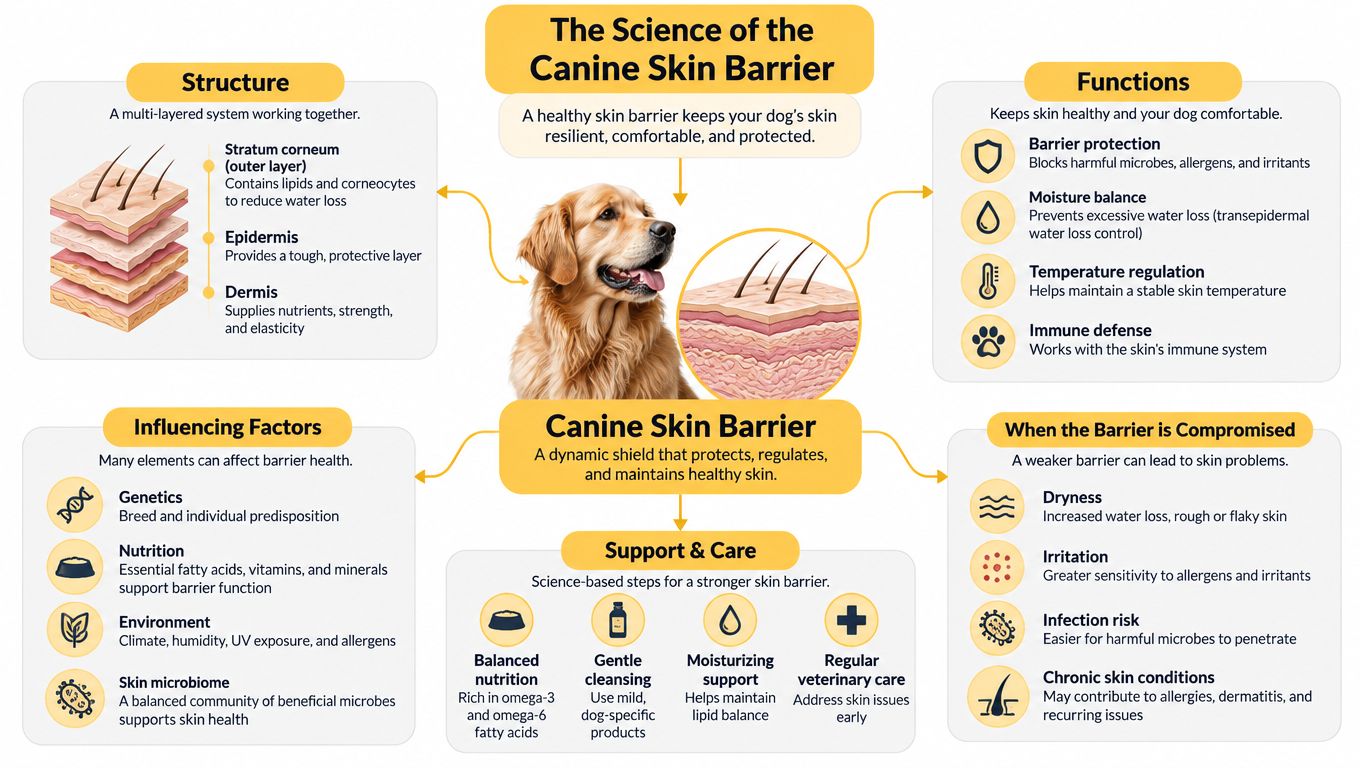
The outer epidermis works like a carefully organized wall. Skin cells provide the structural units, while lipids between those cells help regulate movement of water and substances across the surface. Membrane fluidity, epidermal ceramides, and essential fatty acids all contribute to the barrier's ability to remain flexible and protective.
Linoleic acid, an omega-6 fatty acid, has a particularly direct role in canine skin biology. It helps maintain membrane fluidity, supports cutaneous water-permeability barrier integrity, and contributes to ceramide formation in the epidermis. When the barrier doesn't hold water effectively, the skin can become flaky, rough, and more vulnerable to irritation.
What transepidermal water loss means
Transepidermal water loss, or TEWL, describes water moving from the body through the skin and evaporating. Healthy barrier lipids help limit that movement. When the lipid arrangement is disrupted, more water escapes, and the surface may feel dry even when the dog has access to fresh drinking water.
Controlled feeding research has linked higher linoleic acid intake, when paired with zinc, with a reduction in TEWL of about 8 g/m²/h over 6 to 12 weeks in dogs with dry, flaky skin. The veterinary study on essential fatty acids and canine skin barrier function supports an important distinction: some nutrients can influence barrier mechanics, not merely make the coat look shinier.
A supplement that only coats the hair shaft may improve feel or appearance temporarily. A formula supplying relevant nutrients aims at the biological processes beneath that appearance. That doesn't guarantee a visible response, because the result still depends on the cause of dryness, baseline diet, absorption, and daily intake.
Structural support is broader than fatty acids
Collagen is often discussed alongside skin and connective tissue support, but different collagen types have different structural roles. Owners comparing formulas may find this collagen types breakdown useful for understanding why the word “collagen” alone doesn't tell you much about a product's purpose.
Minerals and vitamins also matter, but more isn't always better. Zinc, for example, appears in barrier-related nutrition research alongside linoleic acid, while excessive supplementation can create its own nutritional problems. If you're trying to understand the role of a vitamin for dog skin, start with the full diet and the dog's clinical signs rather than assuming one isolated nutrient is missing.
For owners seeking a broader format, DA-1™ Daily All-in-One, Senior Dog Support, Joints, Skin/Coat & More is described as a multi-system formula with 18 human-grade ingredients targeting cells, gut, and joints. That type of formulation may be easier to manage than several separate products, but its suitability still depends on the individual dog's diet and health status.
Evaluating Evidence-Backed Supplement Ingredients
The strongest clinical evidence in the supplied research concerns marine omega-3 fatty acids, especially EPA and DHA, rather than every ingredient commonly placed on a skin-and-coat label. A review of 23 studies found therapeutic benefit in canine allergic dermatitis, haircoat disorder, and keratoconjunctivitis sicca. Six of eight studies in dogs reported significant clinical improvement after EPA and DHA supplementation or feeding. The veterinary review of omega-3 fatty acids in dogs also describes a crossover study in 16 dogs in which fish oil improved pruritus, self-trauma, and coat character.
That evidence is encouraging, but it doesn't make fish oil a universal answer. A dog's diagnosis, dose, existing food, tolerance, and overall treatment plan all influence the result. One controlled study found clinical improvement with EPA and DHA, while another found no meaningful correlation between total fatty-acid intake or the omega-6 to omega-3 ratio and clinical response. Dogs already eating diets high in omega-3s may be unlikely to benefit from adding more.
| Ingredient | Primary biological role | Clinical evidence level |
|---|---|---|
| EPA and DHA | Support inflammatory-pathway modulation and may improve itch and coat outcomes | Moderate clinical support in selected canine skin conditions |
| Linoleic acid | Supports membrane fluidity, water-barrier integrity, and ceramide formation | Mechanistic and controlled feeding support for barrier function |
| Zinc | Participates in skin maintenance and works with other nutrients in barrier-related nutrition | Context-dependent support, especially when a dietary gap exists |
| Biotin | Supports normal nutrient metabolism and skin and coat maintenance | Limited condition-specific evidence in the supplied clinical data |
| Collagen | Supplies structural protein components for connective tissues | Ingredient rationale varies by collagen type |
| Ceramides | Form part of the lipid architecture that helps limit water loss | Strong biological rationale, but product-specific outcomes require scrutiny |
Fish oil versus a comprehensive formula
Fish oil is a targeted choice when the main objective is increasing EPA and DHA exposure. A multi-nutrient formula takes a different approach. It may combine fatty acids with nutrients intended to support the gut, joints, immune system, or connective tissues. That can be sensible when a dog has several overlapping needs, but it also makes label transparency more important because the owner must know what is present and in what amount.
A practical guide to fish oil for dogs should lead to a diet review, not an automatic purchase. Check whether the food already supplies marine omega-3s, whether the product lists EPA and DHA separately, and whether your veterinarian has identified a reason for additional intake.
The redundancy question
The phrase “more omega-3” sounds straightforward, yet it can be redundant for a dog whose complete diet already contains substantial fatty-acid support. The more useful decision tree is:
- If deficiency is plausible, review the diet and consider targeted correction with veterinary guidance.
- If inflammatory skin disease is present, view EPA and DHA as adjunctive support, not a replacement for diagnosis and treatment.
- If the diet is already fatty-acid rich, ask whether adding the same nutrient is likely to change the biological picture.
- If several systems need attention, compare a transparent combination formula with a stack of separate products.
The aim is not to find the longest ingredient list. It is to match the formula to the gap that exists.
How to Choose a Safe and Effective Formula
A supplement label should let you answer three questions quickly: What is in it, how much is provided, and how was quality checked? If the label hides meaningful quantities inside a proprietary blend, you can't compare the product with another formula or assess whether it duplicates the main diet.
Begin with the active ingredients. For an omega-3 product, look for EPA and DHA amounts rather than judging the formula by the total amount of fish oil alone. For a multi-nutrient powder, look for named ingredients, serving guidance, intended dog size, storage instructions, and warnings relevant to medical conditions or medications.

A label-reading sequence
- Start with the purpose. Decide whether you're supporting barrier nutrition, inflammatory itch, digestion, general wellness, or several needs at once. A product can't be judged fairly until its intended role is clear.
- Find the amounts. Separate active nutrients from carriers, flavoring agents, and processing aids. A long ingredient list doesn't prove a meaningful dose.
- Check for duplication. Compare the supplement with the complete food, treats, oils, and any existing chews. Stacking several products can make the total intake difficult to assess.
- Look for quality information. Prefer manufacturers that explain ingredient sourcing, production standards, batch testing, contaminant controls, and how they verify identity and purity. For marine oils, heavy-metal and oxidation testing are especially relevant questions.
- Assess daily practicality. A formula that the dog refuses, spoils quickly, or requires a complicated schedule won't deliver consistent exposure. Choose a format you can use correctly every day.
The guide to reading supplement labels can help owners distinguish a transparent declaration from a label that relies on broad marketing language.
Safety belongs in the selection process
“Human-grade” is a quality description, not proof that a product is appropriate for every dog. A product formulated for dogs should provide canine-specific directions, and veterinary input is particularly important for dogs with pancreatitis history, bleeding disorders, kidney or liver disease, food sensitivities, pregnancy, or prescribed medication.
Don't choose solely on the promise of a shiny coat. Look for a formula that fits the dog's age, body size, diet, diagnosis, and tolerance. If the label doesn't give enough information to make that comparison, the lack of information is itself a reason to keep looking.
The Gut-Skin Connection and Multi-System Support
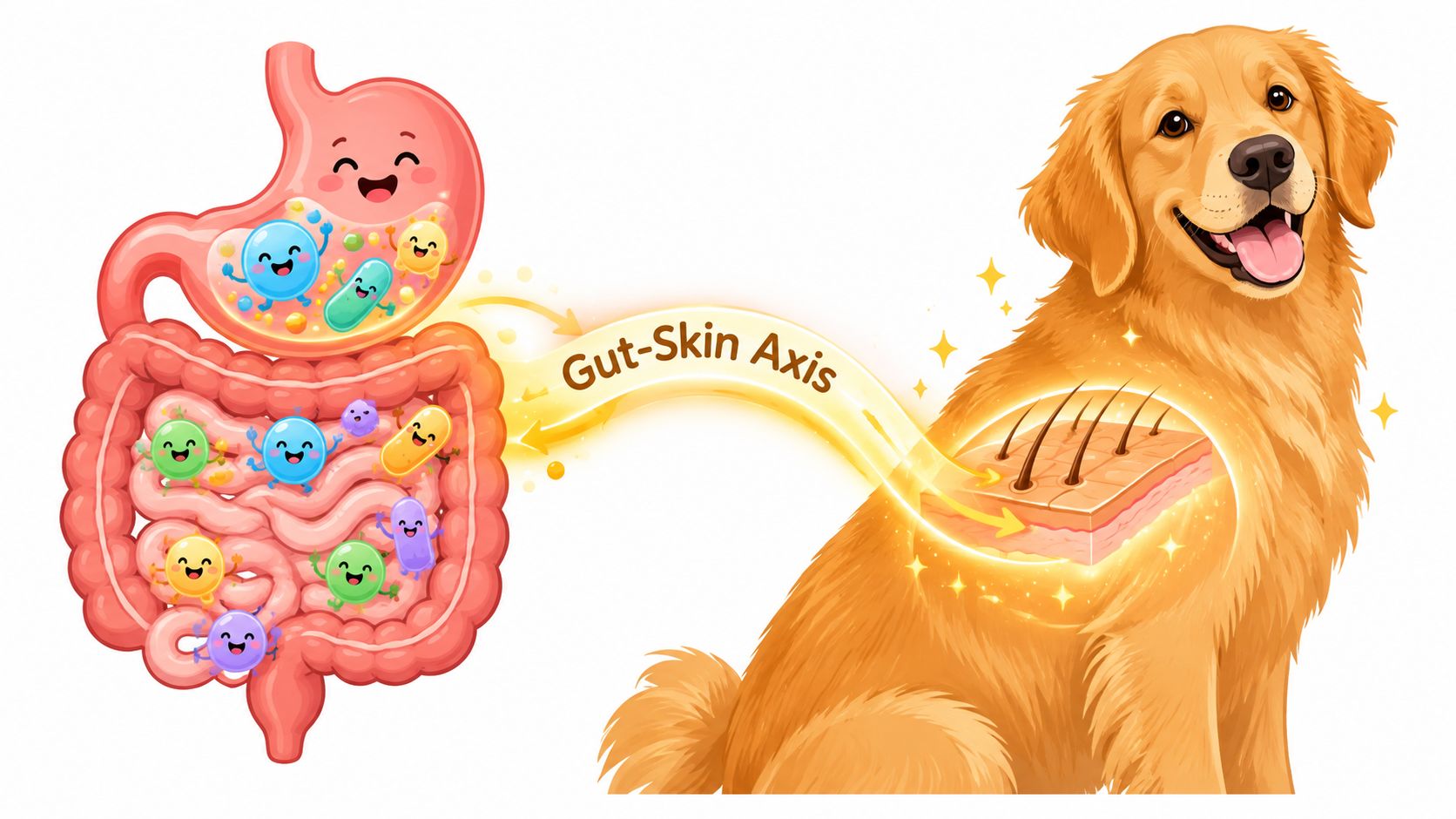
The skin and digestive tract communicate through nutrition, immune activity, and the movement of metabolites through the body. That doesn't mean a probiotic automatically cures itching. It means digestive health can influence how well a dog tolerates food, absorbs nutrients, and manages immune challenges, all of which may matter when the skin is already irritated.
A dog with loose stools, poor appetite, or digestive sensitivity may not make full use of a diet that looks adequate on paper. Conversely, a dog with a stable digestive system and a complete food may gain little from adding a broad digestive blend. The correct question is whether the gut component addresses an observed need or just makes the label look more complete.
Why combination therapy can make sense
Inflammatory skin disease rarely involves one isolated pathway. A dog may scratch because inflammation increases itch, then damage the barrier through self-trauma, while digestive upset, stress, reduced mobility, or poor sleep makes the daily situation harder to manage. A formulation that supports more than one system may fit that reality better than a single-ingredient product, particularly when the dog has several age-related or health-related needs.
Evidence also supports an adjunctive mindset. A recent study described oral supplementation improving pruritus, skin lesions, and quality of life in nearly 80% of dogs with moderate atopic dermatitis within a month. A separate placebo-controlled trial found that polyunsaturated fatty-acid supplementation helped reduce oclacitinib dose and improved pruritus-related outcomes. The clinical review of oral supplements and canine atopic dermatitis therefore supports combination care more than a supplement-only promise.
The purpose of an all-in-one product isn't to replace targeted veterinary treatment. It is to reduce the number of separate decisions an owner has to make while providing coordinated nutritional support. That convenience matters only if the formula is transparent and appropriate for the dog.
For owners considering digestive support alongside skin care, this resource on probiotics for dogs with itching offers a starting point for thinking about the gut component without treating it as a guaranteed explanation for every dermatological sign.
A useful routine might pair a veterinarian-approved treatment for active dermatitis with a complete diet, consistent parasite prevention, gentle grooming, and a supplement selected for a documented nutritional objective. That is more realistic than expecting a powder to reverse every cause of scratching.
Dosing Timelines and When to See a Veterinarian
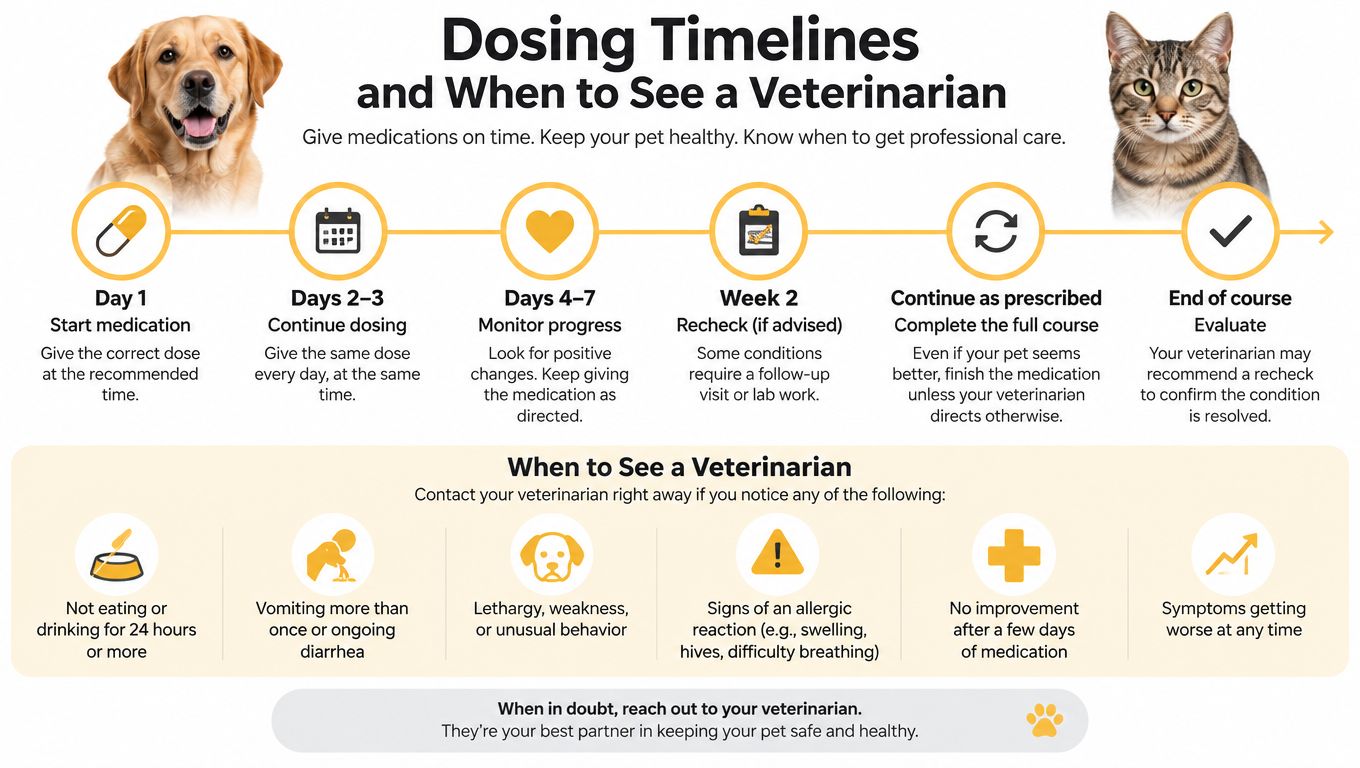
Supplements don't produce instant barrier repair. Nutrients must be digested, absorbed, incorporated into cells, and used during normal skin and hair growth. In a randomized, double-blind, placebo-controlled trial of 24 dogs with poor haircoat, daily n-3 oil capsules containing 110 mg EPA and 68 mg DHA were given for 90 days. The treated group showed a significant clinical-score reduction from day 60, while red-blood-cell EPA and DHA rose significantly from day 30. The controlled canine haircoat trial illustrates why owners should judge progress over sustained use rather than after a few meals.
A separate crossover study found improvements in pruritus, self-trauma, and coat character with marine oil. Taken together, the findings suggest that visible changes may emerge over 30 to 60 days, not immediately. The exact experience will vary with diagnosis, diet, formula, dose, and whether the underlying trigger is still active.
Make the routine measurable
Use the product's canine serving directions and don't increase the amount because the coat hasn't changed quickly. Introduce a new powder or chew gradually if your dog has a sensitive stomach, mix it with a familiar meal, and record the starting appearance of the coat, scratching frequency, stool quality, and any new symptoms.
Take occasional photos in similar lighting and keep a short diary. That won't diagnose the cause, but it can show whether the trend is improving, unchanged, or worsening. If the dog takes medication, ask your veterinarian or veterinary pharmacist about compatibility before starting a supplement.
Know when supplementation isn't enough
Arrange veterinary care for sudden or extensive hair loss, open sores, bleeding, severe redness, strong odor, repeated ear problems, marked lethargy, appetite changes, or intense scratching that interferes with sleep. A dog that repeatedly licks one area may have pain, allergy, infection, or a foreign-body problem rather than simple dryness.
Veterinary assessment is also appropriate when symptoms persist despite a consistent diet and care routine. The clinician may need to investigate parasites, allergy, infection, endocrine disease, nutritional imbalance, or another cause before recommending a supplement. Nutritional support works best when it complements the right diagnosis.
Building a Sustainable Daily Wellness Routine
The most useful routine is simple enough to follow and specific enough to evaluate. Start with a complete diet suited to your dog's life stage, maintain fresh water and gentle grooming, and avoid changing several products at once. If the dog has dry skin, record the symptoms before adding support so you can tell whether the change made a difference.
For a dog with one clear nutritional gap, a targeted supplement may be the logical choice. For an older dog with skin and coat changes alongside digestive sensitivity or reduced mobility, a carefully reviewed multi-system formula may reduce the burden of managing several separate products. The important distinction is that convenience should organize care, not replace clinical reasoning.
A practical daily checklist looks like this:
- Review the baseline diet: Identify existing sources of EPA, DHA, linoleic acid, zinc, and other relevant nutrients.
- Choose one clear objective: Support the barrier, address inflammatory itch as an adjunct, or simplify broader wellness support.
- Use the product consistently: Follow canine directions and monitor tolerance.
- Reassess rather than endlessly add: If the coat or itching doesn't improve, investigate the cause instead of stacking more ingredients.
- Keep veterinary care involved: Supplements belong alongside diagnosis and treatment when disease is present.
Your dog doesn't need the most complicated supplement cabinet. They need a coherent plan that matches their diet, symptoms, and stage of life.
Pure Paw Labs offers dog supplements designed around a single daily scoop, including support for skin and coat, gut health, joints, immunity, and stress-related needs. Visit Pure Paw Labs to review the available formulation and decide whether its multi-system approach fits your dog's diet and care plan.