


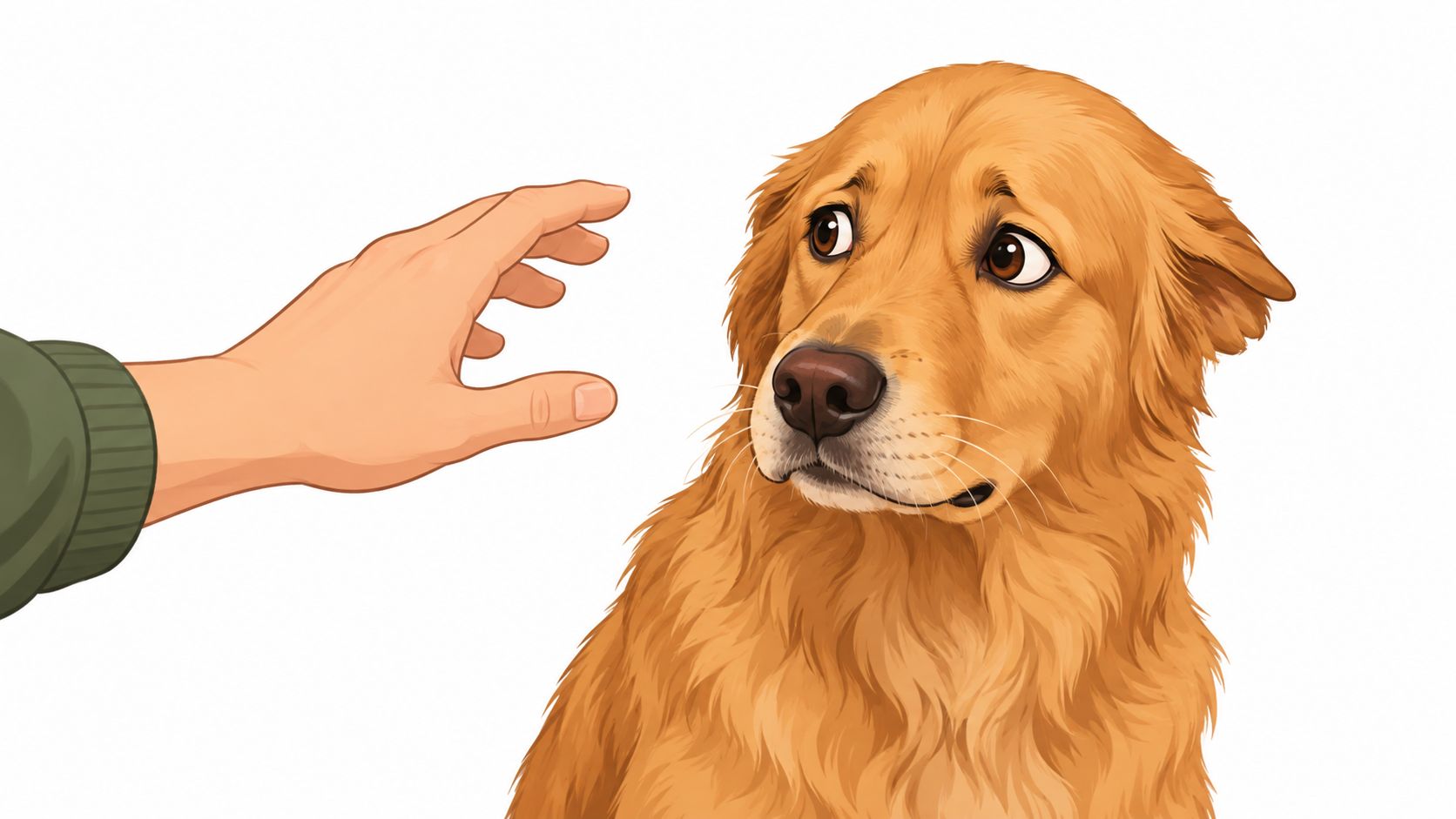
You reach toward your dog for a gentle pat, and their ears suddenly flatten against their head. Their eyes shift away, their body lowers, and you pause because you're not sure whether they're being submissive, nervous, or preparing to react. Dog ears pinned back can communicate several different things, so the safest interpretation comes from the whole dog, the situation, and any sudden change from their normal behavior.
Pinned ears are often a request for space rather than a sign that a dog wants to attack. They can also appear when a dog feels unwell or has pain around the ears or elsewhere in the body. Learning to separate an emotional signal from a medical warning helps you respond calmly instead of forcing contact, correcting the dog, or overlooking a problem that needs veterinary attention.
Table of Contents
- Decoding the Pinned Back Ear Posture
- Reading the Degree of Ear Flattening
- Context Clues and Accompanying Stress Signals
- When Pinned Ears Signal Pain or Illness
- Immediate Steps to De-escalate Canine Stress
- Building Long-Term Confidence and Physical Comfort
Decoding the Pinned Back Ear Posture
A dog approaches a visitor with a loose body and a softly wagging tail. As the visitor bends over and reaches toward the dog's head, the ears move backward. The dog lowers their head, turns slightly away, and licks their lips. In that moment, the ears aren't saying one simple thing. They're part of a polite but clear message: “This feels like too much. Please slow down.”
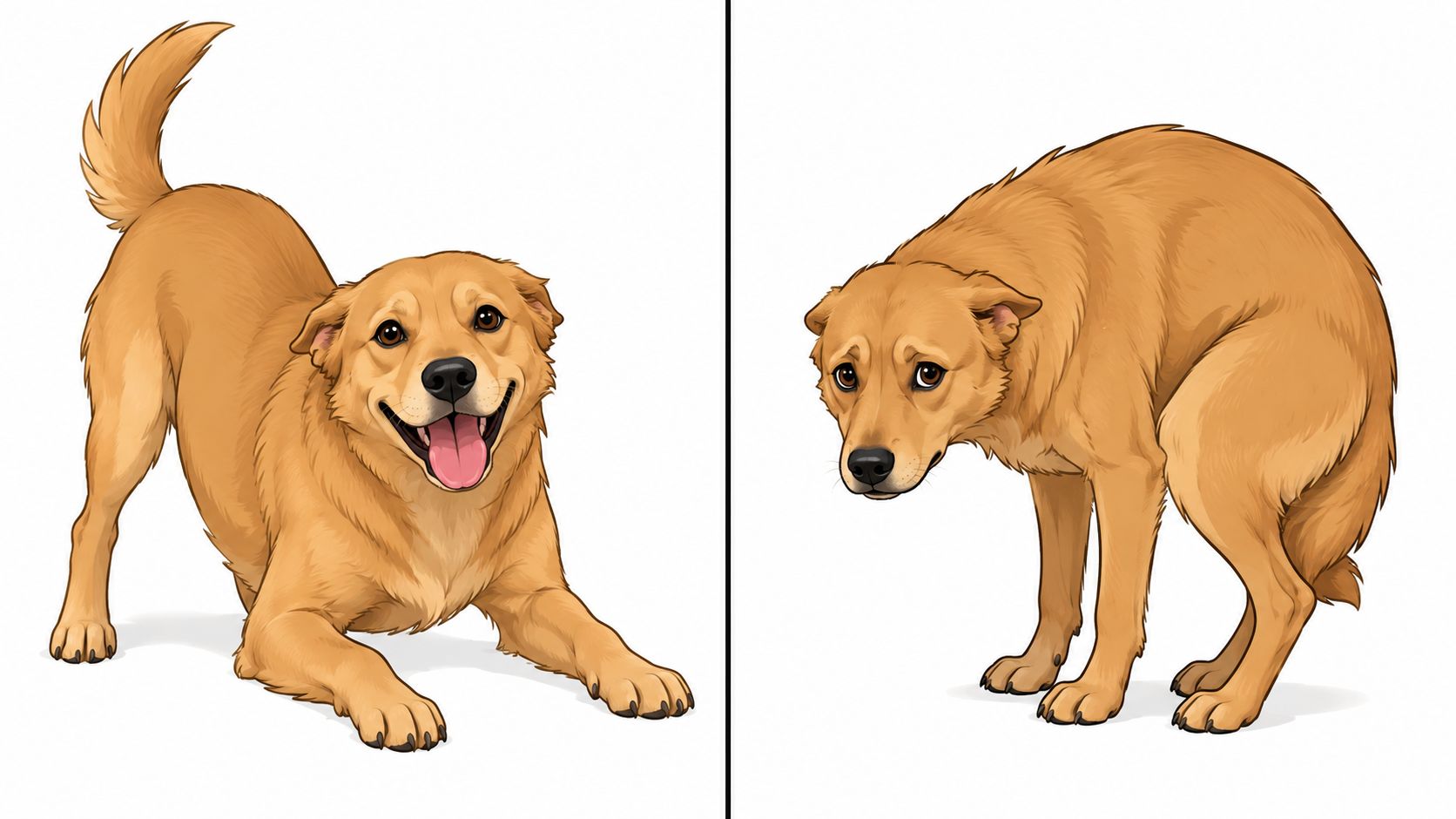
Another dog may pull their ears back during a greeting while keeping their body soft, moving toward the person, and offering a relaxed face. That can reflect appeasement or uncertainty without intense fear. A third dog may clamp the ears tightly against the skull, crouch, show the whites of the eyes, and hold the tail low. That combination signals a much higher level of distress.
A spectrum rather than a verdict
Ears pulled back loosely may accompany submission, appeasement, or a friendly interaction. The dog might still approach, keep their muscles relaxed, and look for contact. Ears held low with increasing tension suggest uncertainty or discomfort. Ears pressed tightly against the head are more consistent with fear, overwhelm, or defensive bracing, particularly when the dog also tries to make their body smaller.
This is why ear position shouldn't be used as a standalone aggression label. Veterinary and animal-welfare guidance describes tightly pinned ears, especially alongside body tension, a tucked tail, lip licking, yawning, averted eyes, or whale-eye, as a stress signal. The ASPCApro canine body-language guidance emphasizes the importance of reading these cues together.
What your dog may be communicating
A dog that pins their ears is often trying to reduce conflict, appear less threatening, or create distance. They may be responding to a person leaning over them, an unfamiliar dog, a loud sound, handling, a correction, or an environment that feels unpredictable.
Some dogs also pin their ears during intense concentration or when listening to a sound behind them. Context matters. If your dog's body remains loose and their attention moves naturally between you and the environment, the posture may not indicate serious distress. If they freeze, retreat, crouch, or repeatedly avoid your hand, respect the communication.
For more examples of subtle signals during interactions, see this guide to signs your dog doesn't like you. The important point isn't to decide whether your dog is “good” or “bad.” It's to notice whether they feel safe enough to remain engaged.
Reading the Degree of Ear Flattening
The physical shape of the ears gives you useful information, but the surrounding posture determines how strongly to interpret it. Compare the ear muscles, the dog's head height, facial tension, movement, and willingness to approach. A dog with ears slightly back and a soft mouth is in a different emotional state from a dog whose ears are clamped flat while their body is rigid.
Animal-welfare guidance distinguishes between loosely pinned ears, which may accompany submission, and ears pressed tightly against the back of the head, which may indicate terror. The difference isn't a medical threshold. It's a practical behavior spectrum that helps you decide whether to continue calmly, reduce pressure, or stop the interaction.
Ear Posture and Emotional State Matrix
| Ear Position | Likely Emotion | Recommended Action |
|---|---|---|
| Slightly back, loose, and mobile | Mild uncertainty, appeasement, or relaxed social behavior | Keep your body turned slightly sideways and let the dog choose whether to approach |
| Pulled back with a lowered head | Submission, nervousness, or discomfort | Pause direct handling and reduce the intensity of the interaction |
| Flat against the head with a crouched body | Fear, overwhelm, or a strong request for distance | Stop reaching, create space, and remove or reduce the stressor |
| Flat ears with stiffness, hard staring, growling, or bared teeth | Defensive escalation risk | Don't approach or restrain the dog. Separate people and animals safely |
| One ear held back while the other appears normal | Possible pain or irritation | Arrange veterinary evaluation, especially if the change persists or other ear symptoms appear |
A relaxed ear usually retains some natural movement. A worried ear may look lower and less flexible. A severely frightened dog can pull the ears so tightly back that the head appears narrower, while the neck and facial muscles become tense.

Use the head and body as a visual gauge
Look at head height first. A lowered head, turned face, or chin pulled toward the chest generally suggests the dog doesn't want direct social pressure. Then assess the muscles. A soft neck and loose shoulders point toward lower concern, while a frozen posture suggests the dog may be bracing.
If your dog is aging and you're also noticing reduced mobility or changes in everyday comfort, DA-1™ Daily All-in-One - Senior Dog Support, Joints, Skin/Coat & More is a complete multi-system formula described as supporting cells, gut, and joints. Its catalog snapshot states that one scoop provides 18 human-grade ingredients, with no fillers and no pills, and includes a 60-day money-back guarantee. A supplement shouldn't replace an examination when pain is possible, but physical comfort belongs in the same conversation as behavior.
Context Clues and Accompanying Stress Signals
Ears can change position for many reasons. Your dog may pull them back while tracking a sound, greeting someone carefully, or responding to pressure. To understand what's happening, scan from the eyes to the tail before deciding how to act.
Start with the dog's overall movement. A calm dog can shift weight, sniff, walk away, or approach with fluid motions. A stressed dog may become still, crouch, lean their weight backward, or keep their body ready to retreat. That difference tells you whether the ear posture is part of attention or part of a distance-increasing stress response.
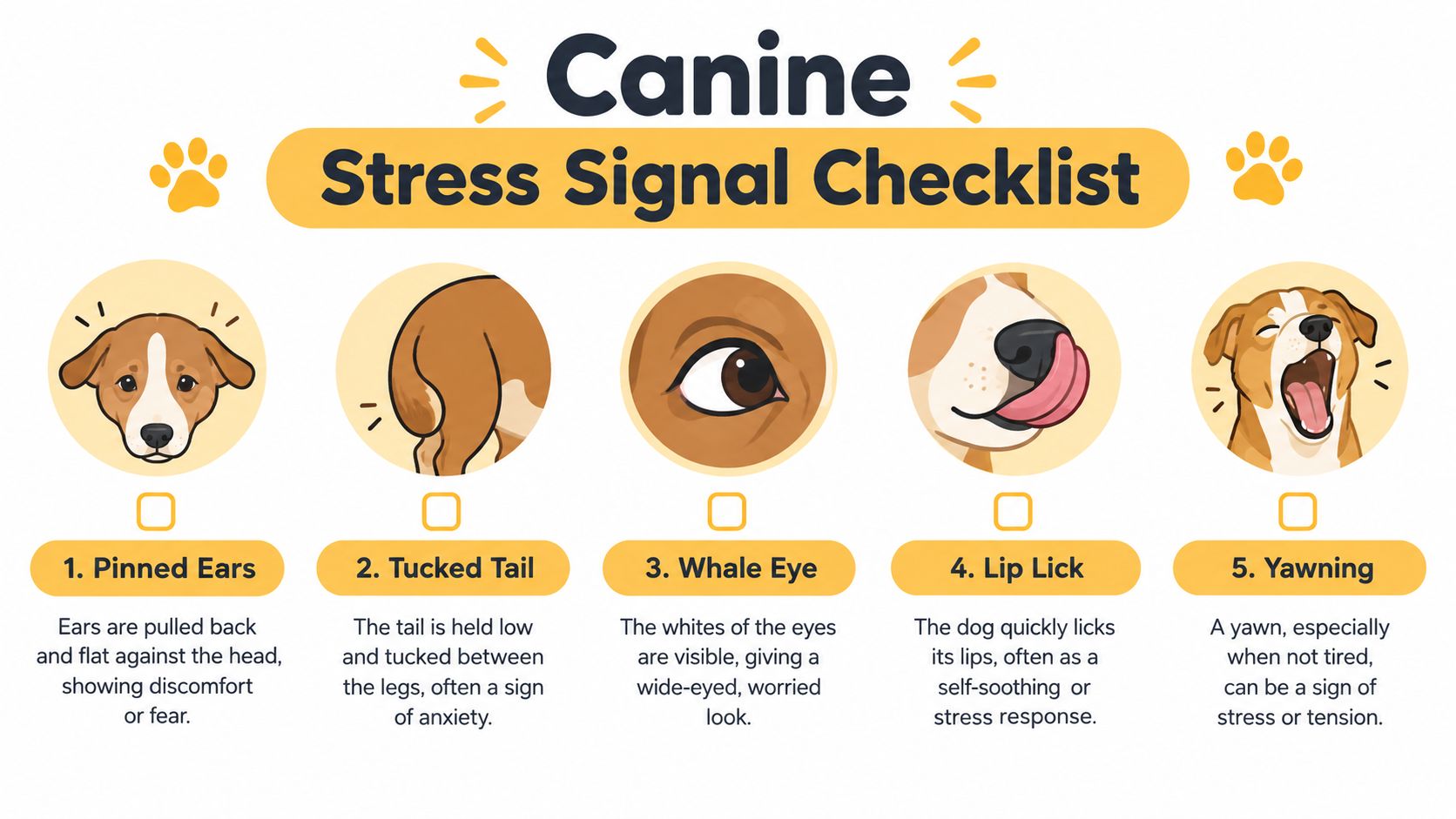
Scan the stress cluster
Use this quick sequence when you notice pinned ears:
- Check the eyes. Whale-eye, where you can see a noticeable crescent of white, often means the dog is watching something they find uncomfortable while trying not to face it directly. Avoiding eye contact can also be appeasement.
- Check the mouth. Lip licking, a tightly closed mouth, or repeated yawning can appear when a dog is trying to manage anxiety. A single yawn doesn't prove distress, so consider whether it occurs with other changes.
- Check the tail. A tucked or lowered tail strengthens the interpretation that the dog feels worried, submissive, or unsafe. Tail movement alone isn't enough to establish emotional state.
- Check muscle tension. A rigid neck, frozen body, raised weight over the rear legs, or a crouched stance suggests the dog may want to escape.
- Check the direction of movement. Turning away, backing up, hiding, or increasing distance is meaningful. Your dog is showing you what would help right now.
Practical rule: The more stress signals appear together, the less you should rely on the ears alone.
Separate listening from discomfort
Suppose your dog hears a noise outside. Their ears move back briefly, but their body stays loose, their eyes remain soft, and they return to resting. That's different from a dog who pins their ears when a person approaches, keeps the eyes wide, licks the lips, tucks the tail, and freezes.
Don't test a worried dog by reaching again to “see what happens.” Repeatedly crossing their boundary can push them from avoidance into defensive behavior. A dog that growls, stiffens, shows teeth, or snaps needs more space immediately, not punishment or closer inspection.
Read the dog's behavior in the setting where it occurs. If the signal appears only during nail care, visitors, car travel, or contact around the head, note that trigger. If it appears across ordinary situations, record the pattern and discuss it with a qualified behavior professional or veterinarian.
When Pinned Ears Signal Pain or Illness
Pinned ears aren't always an emotional reaction. A dog may flatten an ear because moving it hurts, because the ear canal feels irritated, or because another part of the body is uncomfortable. Assuming fear without checking health can lead owners to train around a problem that requires treatment.
The strongest ear-specific warning is persistent or asymmetric ear carriage. If one ear stays back while the other looks normal, pay attention. Head shaking, scratching, redness, odor, discharge, or sensitivity around the ear can point to conditions such as outer or middle ear inflammation, ear mites, a foreign object including a grass seed, or an aural hematoma. Veterinary guidance also recognizes that dogs may hold an ear back to protect a painful canal.
Ear-specific red flags
Arrange prompt veterinary care when the behavior is new, persistent, or accompanied by physical symptoms. Don't insert objects into the canal or use leftover treatments without professional guidance, because the cause and condition of the eardrum may not be clear.
Useful observations include:
- One-sided change: One ear remains pulled back or your dog tilts the head.
- Repeated irritation: Your dog shakes the head, scratches, rubs the ear, or resists touch.
- Visible changes: You notice redness, swelling, discharge, crusting, or an unusual smell.
- Behavioral pain signs: Your dog withdraws, becomes unusually quiet, guards the head, or reacts sharply to routine handling.
For a focused checklist of signs of ear discomfort in dogs, look for patterns rather than a single brief ear movement. A veterinary examination is especially important when the discomfort seems localized.
Look beyond the ears
General pain can also produce a guarded, tense posture. Joint stiffness may make a dog reluctant to rise, climb, turn, or tolerate handling. Digestive upset may show up as restlessness, a changed appetite, a hunched stance, or an unusual desire to withdraw. These signs don't prove a specific condition, but they do tell you not to reduce every posture change to temperament.
If pinned ears occur alongside a broader change in energy, movement, digestion, appetite, or touch tolerance, stop behavior exercises and seek veterinary advice. You can also review information about a dog yeast ear infection, but online guidance can't diagnose your dog.
Immediate Steps to De-escalate Canine Stress
Once you identify fear or overwhelm, your first job isn't to make the dog accept the trigger. It's to lower pressure. A dog that feels trapped may escalate because avoidance no longer works, so give them a clear path to safety before asking for any behavior.
Start with distance
Stop reaching toward the dog and turn your body slightly sideways. Avoid prolonged direct eye contact, looming over the dog, cornering them, or grabbing the collar unless immediate safety requires it. Move the person, object, or animal creating the pressure farther away, and use a barrier if you need to keep everyone separated.
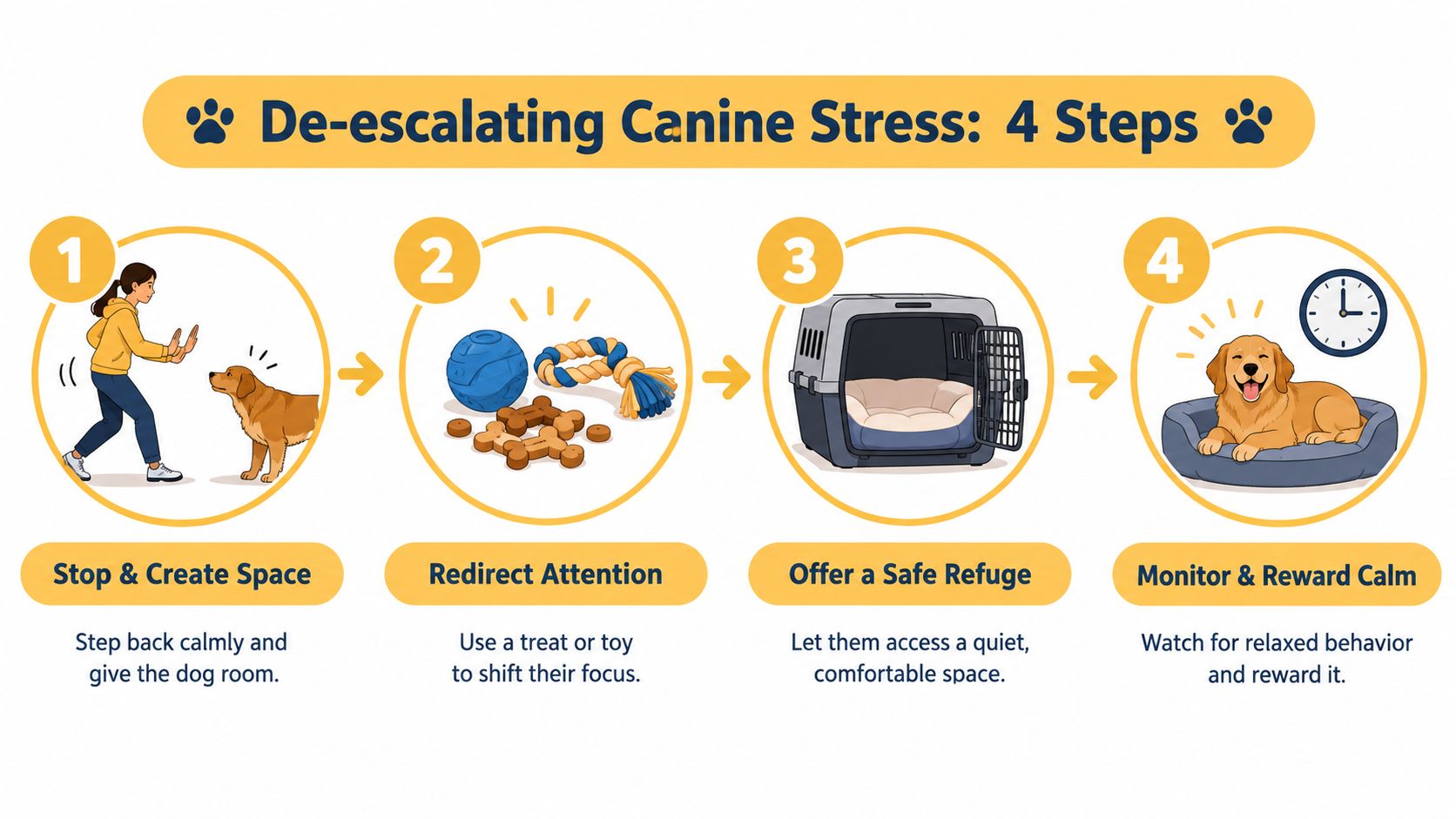
Your movements should be slow and predictable. Speak in a soft tone if your voice helps, but don't repeatedly call the dog, coax them forward, or insist that they greet someone. A dog that chooses to retreat is communicating effectively.
Offer an exit, not a demand
Create a refuge your dog can enter without being followed. This might be a bed in a quiet room, a crate with the door open, or a low-traffic corner separated from visitors. Keep water available and let the dog decide when to come out.
If your dog can still eat and engage, place a treat on the floor away from the trigger rather than holding it near your hand. You can also offer a familiar toy or a simple sniffing activity. If the dog won't take food, don't interpret that as stubbornness. Their stress may be too high for learning.
Reinforce recovery
Watch for softening rather than demanding a performance. A lowered head that rises naturally, normal breathing, relaxed muscles, sniffing, or choosing to settle are signs that the dog may be coming back toward comfort. Reward calm choices, then keep the environment low-pressure.
Give the dog a safe way to leave before you ask them to stay.
Avoid punishment for growling or other warnings. A warning gives you valuable information about rising discomfort. Punishing it can suppress the signal without resolving the fear, leaving you with less notice before a defensive reaction.
If the same trigger repeatedly causes distress, make a written note of what happened, how close the trigger was, and what your dog did next. A veterinarian can rule out pain, and a qualified force-free behavior professional can help you change the emotional response gradually.
Building Long-Term Confidence and Physical Comfort
A dog's behavior becomes easier to interpret when you know their normal baseline. Track how your dog moves, rests, eats, plays, handles grooming, and responds to familiar people. Changes in those areas can reveal physical discomfort before the dog shows an obvious limp or vocalizes.
Long-term support should address both the environment and the body. Predictable routines, choice-based handling, gradual exposure to triggers, adequate rest, and reward-based training can reduce unnecessary pressure. Physical comfort matters too. Joint discomfort, skin irritation, digestive upset, or other health concerns can make ordinary interactions feel harder and can contribute to a tense, guarded demeanor.
Make care easier to maintain
Complex routines often fail when caregivers can't follow them consistently. Ask your veterinarian which preventive care, diet adjustments, exercise changes, or supplements make sense for your dog's age and health history. A daily product can support a wellness plan, but it shouldn't replace diagnosis or treatment for pain, infection, or illness.
For dogs that become tense during brushing, bathing, nail care, or ear handling, use short sessions and stop before the dog feels trapped. This practical pet grooming guide for nervous pets can help you think through calm tools, pacing, and handling choices.
Pure Paw Labs describes its DA-1™ Daily All-in-One as a once-daily powdered supplement intended to support joints, skin and coat, gut health, immunity, and stress-related needs. It's one possible part of a broader wellness routine, alongside veterinary care and behavior support. For more practical ideas, review this guide to stress relief for dogs.
The next time you see your dog's ears pinned back, pause before reaching closer. Read the full body, identify the context, check for pain, and give your dog a safe choice. That response builds trust because it treats communication as information, not misbehavior.
If pinned ears are becoming frequent or your dog also shows changes in comfort, movement, appetite, digestion, or ear health, visit Pure Paw Labs to explore its daily wellness support options and learn how DA-1™ Daily All-in-One may fit into a veterinarian-guided care routine. Use the product information to ask focused questions about joint, gut, skin, coat, immune, and stress support for your individual dog.