


Your dog comes when the leash appears, but not when you say their name. They shift away when you reach down, stare at the wall instead of making eye contact, or leave the room the second you sit nearby. That kind of distance feels personal, but in dogs it usually points to stress, fear, pain, overstimulation, or an unmet need, not a character judgment. The fastest way to read it correctly is to treat the behavior as a clue, then look at context, consistency, and comfort before you decide your dog is rejecting you.
The signs below cover the most common patterns people search for when they wonder about signs your dog doesn't like you. Some are really about avoidance, some are about pain or illness, and some are about trust problems that show up during handling, feeding, or training. In each case, the next step is different, because a dog that feels unsafe needs a different response than a dog that's itchy, nauseated, sore, or overloaded by too much interaction. When the pattern is persistent across settings, behavior experts treat it as a real signal that the dog is uncomfortable with the interaction, not just being moody.
Table of Contents
- 1. Avoidance and Distance-Seeking Behavior
- 2. Lack of Tail Wagging or Greeting Responses
- 3. Ignoring Commands and Training Resistance
- 4. Aggressive or Reactive Behavior Toward You
- 5. No Interest in Play or Shared Activities
- 6. Showing No Affection or Physical Contact Avoidance
- 7. Resource Guarding Only Around You
- 8. Excessive Barking, Whining, or Vocalization at You
- 8-Point Comparison: Signs Your Dog Dislikes You
- Rebuilding the Bond 30-Day Trust Reset Plan
1. Avoidance and Distance-Seeking Behavior
A dog that keeps leaving when you enter the room, slips behind furniture, or drifts away every time you move toward them is giving a clear comfort cue. The behavior can point to fear, pain, illness, overstimulation, or unmet needs, and it does not automatically mean your dog has decided they dislike you. That is why the first question is always what changed, not what the dog is “trying to say” about your relationship.
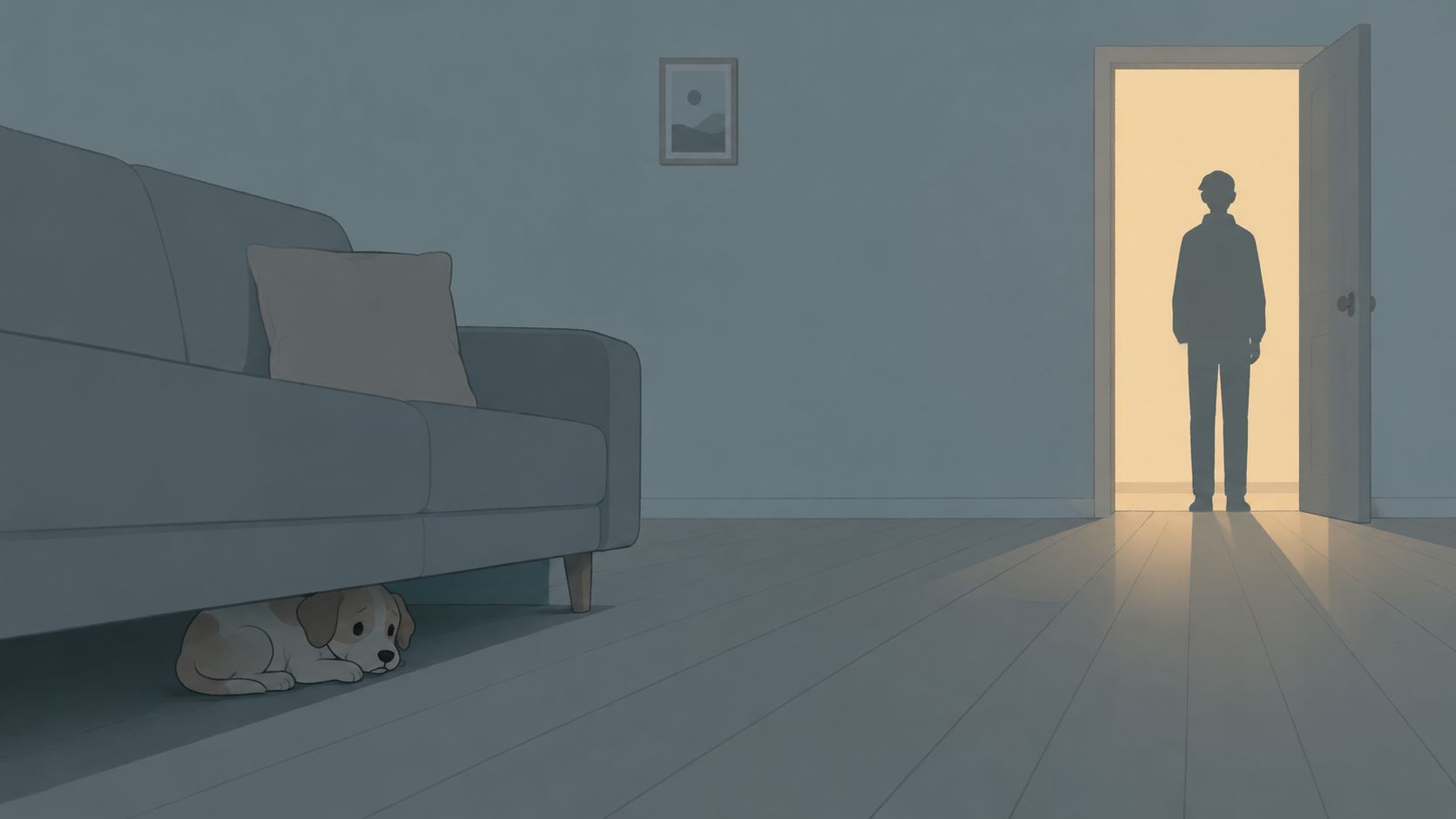
Read the pattern before you read the meaning
One retreat does not tell you much. A rescue dog may need time to settle, and a puppy may avoid people when they are tired, startled, or done with contact for the moment. Repeated avoidance around the same person is more informative, especially if it shows up across rooms, routines, and different types of interaction.
A practical read starts with what your dog does before, during, and after you approach. If they leave when you sit near them, return only for food, or stay close until touch begins and then pull away, the issue may be discomfort rather than preference. Behavior guidance on avoidance and discomfort cues often points to backing away, refusing touch, averted gaze, and growling as signs a dog is not at ease, which is why the pattern deserves a calm check for stress or pain before you treat it as a personal rejection (Paw.com guidance on discomfort cues).
Practical rule: if your dog approaches for food but leaves when the interaction turns physical, start with comfort and health, not discipline.
A low-pressure reset helps you sort out the cause. Sit nearby without reaching, toss treats away from you so your dog can choose whether to come closer, and keep an open path so they never feel cornered. If the distancing lines up with stiffness, limping, digestive upset, itching, or low energy, look at wellness first. Joint discomfort, gut trouble, skin irritation, and stress can all change how much contact a dog will tolerate, and those issues often show up as avoidance before they show up as obvious illness. If you want a simple daily support step during that kind of reset, DA-1™ Daily All-in-One is a one-scoop supplement for joint, skin and coat, gut, immunity, and stress support.
If the distance stays in place after gentler handling and a more comfortable routine, the next place to look is pain, daily stress, and formal behavior support.
2. Lack of Tail Wagging or Greeting Responses
Some dogs explode with joy when their person walks in. Others barely look up. If your dog doesn't greet you, doesn't wag when you come home, or seems flat during moments that usually predict excitement, that can signal they don't associate you with comfort or reward. It can also mean the dog is tired, unwell, or too stressed to engage, which is why the missing greeting matters most when it's part of a larger pattern.
The useful comparison is the one happening in your own home. A dog that greets one family member with a loose, happy body and greets you with indifference is giving you a contrast worth noticing. Business Insider's owner-facing guidance highlights that worried dogs may visually track a person from a distance instead of relaxing into social contact, which separates distance-monitoring from genuine social ease (Business Insider's article on dogs that don't seem to like you).
Look for the whole greeting stack
Tail wagging alone doesn't tell the whole story, but the combination does.
- Loose tail and soft body: usually points to comfort.
- No greeting plus stiff posture: often suggests tension.
- Watching you from afar but not approaching: can mean your dog wants information, not interaction.
- Running to others but not to you: makes the relationship difference harder to ignore.
A change in greeting behavior after an absence, a schedule shift, or a new household routine often points to stress or confusion, not permanent dislike. Feeding your dog yourself, pairing your arrival with a treat, and keeping greetings calm and predictable can rebuild positive expectation. If your dog seems less interested in everything, not just you, consider discomfort, low appetite, or low mood from a health issue rather than a social problem.
The goal isn't to force excitement. It's to make your presence predictably good so your dog has a reason to look up when you walk in.
3. Ignoring Commands and Training Resistance
A dog that listens to one person but shuts down with another usually isn't showing “disrespect.” They're showing that training history, reward history, and comfort with the handler aren't the same across people. In modern behavior work, persistent nonresponse is often better read as stress, confusion, or low trust than stubbornness, especially if the dog responds well to other people in the same house. The Merck Veterinary Manual also lists inability to settle, pacing, restlessness, and anorexia among signs of separation distress, which is a reminder that training resistance can sit inside a bigger anxiety picture rather than a simple obedience issue (Merck Veterinary Manual on behavior problems of dogs).
A dog that ignores you during sits, recalls, or “leave it” may be telling you one of three things. They don't understand the cue yet, they don't think the reward is worth it, or they feel too tense to process the request. If the same dog lights up for another person's voice, the answer is usually not “they hate me.” It's “the current setup isn't working.”
Reset the conditions, not the relationship
Short sessions work better than long ones. Use the best reward available, keep the environment quiet, and end before frustration builds.
- Use better rewards: upgrade from routine kibble to something your dog wants.
- Reduce pressure: keep sessions to a few minutes and stop while they're still successful.
- Check the body first: joint pain, stomach discomfort, or itching can make dogs look uncooperative when they're really uncomfortable.
- Stay consistent: reward quickly, every time the behavior happens.
If your puppy is still in a rough learning phase, this 3-month-old Labrador guide can help you think about age-appropriate expectations without turning every missed cue into a relationship verdict. The important question is whether your dog is resisting you specifically or resisting the whole training setup.
When a dog's focus drops because they feel unwell, stress support and broader wellness care can matter as much as training mechanics. If movement or digestion seems off, a vet check should come before more repetitions.
4. Aggressive or Reactive Behavior Toward You
Growling at you, snapping when you reach for a collar, or showing teeth during feeding or grooming is not a small communication issue. It is a safety signal. Growling is the dog's way of saying the situation feels wrong, and early response matters because dogs often move from warning signs to barking, snapping, or biting when the warning is ignored. The right response is to read the discomfort early, not punish it.
If the reaction only happens with you, the pattern matters. A dog who accepts grooming from one person but snaps at another is showing that the interaction feels unsafe in your hands. Fear, prior rough handling, poor socialization, pain, or another medical issue can sit behind that reaction. A veterinary exam should come first, because joint pain, skin irritation, gut discomfort, or general stress can all make a dog react as if the problem is the person.
Safety comes before bonding
Don't keep testing the boundary. Don't punish the warning. Don't ask children to stay near a dog that is already saying no.
A dog that growls has already done the polite thing.
Start by separating the dog from vulnerable people, pausing the trigger activity, and booking a veterinary exam to rule out pain or illness. Only after that should a certified professional guide the reintroduction plan. If the reaction centers on food, toys, or handling, treat that as a higher-risk pattern and slow everything down. Guarding often gets stronger when a dog feels cornered.
Aggression aimed at one person does not always mean the dog dislikes that person. It often means the dog has learned that this person predicts discomfort. The practical response is medical evaluation, distance, and structured behavior work, not more pressure. For more on breed-specific behavior tendencies that can shape how reactivity shows up, see our guide on dog breeds similar to Rottweilers.
5. No Interest in Play or Shared Activities
A dog that loves the dog park but doesn't want to engage with you at home is sending a specific message. They're not necessarily lacking play drive. They may not find your version of play rewarding, or they may be too sore, tired, or stressed to join in. Play is a major bonding mechanism, so a flat response during games is worth noticing, especially when the dog is otherwise healthy and energetic.
A dog's refusal of play is more informative when it comes with other signs, like slow movement, reluctance to jump, or a sudden drop in energy. That's where wellness matters. Joint pain, low energy from poor digestion, and stress can all suppress play, which makes the dog look uninterested in you when the issue is physical comfort. If movement is part of the problem, Pure Paw Labs' mobility supplement guide is a relevant read for thinking about support alongside training and enrichment.
Match the play to the dog, not the other way around
A dog that ignores fetch might still love sniffing games. A dog that won't wrestle might prefer brief tug or treat searches. Use what your dog already likes.
- Choose the right energy level: start with calm, low-pressure play before trying intense games.
- Let your dog pick the toy: some dogs care more about texture than motion.
- Reward engagement fast: treat or praise right after a successful play moment.
- Watch the body: if they slow down, stop, or hesitate, don't push through it.
If a young dog stops playing altogether, especially after being previously enthusiastic, think medical first. If the loss of play only happens with you but not with others, then the issue is probably preference, tone, timing, or training history, not rejection in a deeper sense.
The best play partner is the one who makes the game easy to join. A dog who feels physically comfortable and mentally safe will usually show you that quickly.
6. Showing No Affection or Physical Contact Avoidance
Some dogs are naturally private and never seek much petting. That alone does not mean they dislike you. The concern starts when your dog consistently pulls away from your hand, stiffens the moment you reach in, or accepts touch from other people but resists it from you. That pattern points to a comfort problem that needs checking, and common discomfort cues include turning away, leaving the room, and avoiding touch.
Treat the behavior like a clue, not a verdict. Skin irritation, sore joints, digestive upset, and general stress can all make contact feel unpleasant, so a dog may reject handling because something physical feels off long before the relationship itself is the issue.
Touch should feel optional
Start with brief, predictable contact in places most dogs usually tolerate well, then stop before your dog has to pull away. If they shift off your hand or move out of range, respect that choice right away.
Let the dog decide how close the interaction gets. That is how touch starts to feel safe again.
A practical reset looks like this.
- Pet less, not more: short, calm contact usually works better than lingering hands.
- Pair touch with something good: a small treat can help change the association.
- Watch for skin clues: scratching, flinching, licking, or head turning can point to a physical cause.
- Check the bigger picture: if appetite, energy, stool quality, itching, or stiffness look off, wellness may be part of the problem.
- Accept personality differences: some dogs are not lap dogs, and low affection by itself does not prove dislike.
If your dog is comfortable with other people but resists you, look closely at your handling style. Reaching too fast, holding them in place, or using rough play can make a dog brace before your hand even lands. If the dog also seems itchy, tense, or less settled overall, do not treat it like a simple bonding problem. Skin, gut comfort, joint pain, and stress often sit under the behavior and should be checked alongside training and trust work.
Affection is not a test to win. It grows when your dog feels physically comfortable enough to seek contact on their own.
7. Resource Guarding Only Around You
A dog that guards food, bones, toys, or a bed only when you approach is giving a direct trust signal. They don't feel safe enough to assume you'll leave their valued item alone, so they defend it first. That's not a dominance game. It's a fear-based strategy that often works for the dog because it makes the scary person back off.
The strongest clue is contrast. If your dog lets someone else walk by the bowl, but stiffens, freezes, or growls when you come near, the issue isn't just guarding in general. It's guarding toward you. Digestive discomfort can also make mealtime feel more loaded, so food anxiety can sit beside the relationship issue instead of separate from it. If mealtime tension is part of the picture, gut support matters as much as training.
Don't prove their fear right
Taking the item away is the mistake that cements the pattern. Trading works better because it teaches your dog that your approach predicts something better, not loss.
- Feed separately if needed: reduce pressure around meals.
- Offer trades, not takedowns: bring something better before asking for release.
- Hand-feed high-value treats: build a history of you bringing good things.
- Use positive drop-and-leave work: don't reach for the object first.
If guarding escalates, get professional help early. The more rehearsed the guarding becomes, the faster it can turn into bites. A dog that guards only around one person is not “being difficult.” They're telling you exactly where the trust break lives.
This is one of the clearest places where handling style matters. Calm trades, predictable routines, and zero grabbing can change the emotional math over time.
8. Excessive Barking, Whining, or Vocalization at You
Constant barking, whining, or sharp vocalizing in response to your presence can mean frustration, anxiety, or overstimulation. It's not the same thing as normal alert barking. The signal gets more meaningful when the vocalizing happens mostly around you, or when the dog settles quickly for everyone else but stays keyed up with you. That's the kind of pattern that suggests your dog finds the interaction stressful, not just noisy.
One useful clue from mainstream guidance is that a dog may leave the room, avoid eye contact, or show other stress signs because they're tired, not feeling well, or overstimulated, not because they're rejecting a person on purpose (Rover's guidance on misread dog behavior). That same logic applies to barking. The sound is often the tip of a bigger discomfort stack.
Don't feed the loop
Even negative attention can keep the barking going. If your dog learns that barking makes you talk, move, or react, the pattern gets stronger.
Quiet has to pay better than noise.
Try these changes first.
- Create distance: step back and reduce pressure instead of crowding the dog.
- Reward silence: wait for a break in the vocalizing, then reinforce it.
- Find the trigger: leash pickup, hand movement, or body direction often matters.
- Check energy and health: excess vocalizing can go with pent-up energy, pain, or illness.
If the barking appears with other discomfort cues like stiffness, refusal of food, or pacing, stop treating it as a behavior-only problem. The most useful question is what your dog is reacting to, not how to get them to stop making noise. When you solve the trigger, the sound usually drops with it.
8-Point Comparison: Signs Your Dog Dislikes You
| Sign / Behavior | 🔄 Implementation Complexity | ⚡ Speed to See Improvement | 📊 Expected Outcomes | 💡 Ideal Use Cases & Tips | ⭐ Key Advantages |
|---|---|---|---|---|---|
| Avoidance and Distance-Seeking Behavior | Medium, consistent low‑pressure trust work; vet check if needed | Slow, weeks to months | Increased voluntary proximity and comfort | Start with passive presence, use high‑value treats, never corner; check health (consider stress/gut support) | ⭐⭐ Early warning; clear target for trust rebuilding |
| Lack of Tail Wagging or Greeting Responses | Low–Medium, establish routine positive reinforcement | Medium, days to weeks | More frequent greeting responses and positive associations | Create consistent greeting ritual, let dog initiate contact, feed yourself, reward calm greetings | ⭐⭐⭐ Observable, measurable, often quick to improve |
| Ignoring Commands and Training Resistance | Medium, structured reward‑based training; may need pro | Medium, weeks to months | Improved responsiveness, better check‑ins on walks | Use higher‑value rewards, short sessions, be consistent, rule out pain or low energy | ⭐⭐ Builds mutual respect and reliable behavior |
| Aggressive or Reactive Behavior Toward You | Very High, requires certified behaviorist + veterinary exam | Slow, months; safety prioritized | Reduced aggression and safer household interactions | Seek professional immediately, rule out medical causes, prioritize safety and management | ⭐⭐⭐ Urgent, clear signal for expert intervention |
| No Interest in Play or Shared Activities | Low–Medium, adapt to dog's play style, gradual reintroduction | Fast–Medium, quick wins possible | Restored play engagement and stronger bond | Observe preferred play, start low‑pressure/short sessions, reward participation, check joint health | ⭐⭐ Fun, fast improvements that boost relationship |
| Showing No Affection / Physical Contact Avoidance | Medium, touch‑positive desensitization; patience required | Medium, weeks | Greater tolerance for touch and increased closeness | Start with minimal favored touches, pair with treats, avoid forcing; check skin/comfort issues | ⭐⭐ Strengthens emotional bond with consistent, gentle work |
| Resource Guarding Only Around You | High, targeted counter‑conditioning; possible pro guidance | Medium–Slow, weeks to months | Safer interactions around food/toys and reduced guarding | Never forcibly take items, hand‑feed high‑value treats, trade up, drop treats near bowl; vet check for gut issues | ⭐⭐ Identifies specific trust deficit; targeted interventions effective |
| Excessive Barking, Whining, or Vocalization at You | Medium, desensitization and reinforcement strategies | Medium, noticeable improvement with consistency | Quieter, calmer responses to your presence | Ignore to avoid reinforcement, reward quiet, desensitize triggers, ensure exercise and stress support | ⭐⭐ Responsive to behavior modification and routine changes |
Rebuilding the Bond 30-Day Trust Reset Plan
A dog that looks distant, reactive, or indifferent usually isn't writing off the relationship. More often, they're asking for safety, comfort, and predictability in the only language they have. The most useful response is a reset, not a verdict.
Start with a full veterinary exam if the behavior is new, escalating, or tied to handling, food, movement, or touch. Pain, digestive upset, skin irritation, and other health issues can sit underneath almost every sign in this list, and no amount of training will stick if your dog feels unwell. After that, audit your own routines. Watch for the moments that predict avoidance, stiffness, guarding, or vocalizing, then remove the pressure points before you add more training.
For the next 30 days, pick the two or three biggest signs and work only those. Use short, predictable sessions, hand-feed part of the daily ration, build in calm play that your dog chooses, and protect the dog's ability to opt out. If the pattern is serious or safety-related, bring in a certified behaviorist early. That's the fastest way to stop rehearsing the problem and start changing it.
Support from the inside out matters too. A daily supplement can be useful when you're trying to steady joint comfort, gut function, skin health, and stress response at the same time. If that fits your dog's needs, DA-1™ Daily All-in-One is one option designed around that multi-system approach, and Pure Paw Labs builds its line around a single daily scoop for dogs that need broader wellness support. Keep the goal simple, reduce friction, and give your dog enough safety to choose closeness again.
If you're trying to make sense of distance, avoidance, or touch sensitivity, Pure Paw Labs offers dog wellness support built around joint, skin and coat, digestive, immune, and stress needs in one daily scoop. Visit Pure Paw Labs to see whether DA-1™ Daily All-in-One fits your dog's comfort reset and daily routine.