


Your 3 month old Labrador is probably doing all of it at once. Racing through the house, falling over oversized paws, grabbing a shoelace, chewing the table leg, then collapsing asleep in the middle of the kitchen as if nothing happened.
That combination of sweetness and chaos is normal for this age. A young Lab at this stage isn't being difficult for the sake of it. He's growing fast, teething, learning how to use his body, and trying to make sense of a very busy world with a baby brain and a working breed's enthusiasm.
What catches many new owners off guard is that these things aren't separate problems. The biting, the wild energy, the clumsy movement, the sensitive stomach days, the hunger, and the sudden leaps in size are all part of the same developmental jump. If you treat only the behavior and ignore the body underneath it, you usually end up frustrated. If you support the body well, the behavior becomes much easier to guide.
Table of Contents
- Welcome to the Labrador Puppy Tornado Phase
- Your Puppy's Explosive Growth Spurt
- Fueling the Furnace How to Feed Your Lab Puppy
- Essential Training and Socialization Milestones
- Managing Teething Troubles and Puppy Biting
- A Healthy Start Vet Visits and Wellness Care
- Your Month Three Labrador Checklist
Welcome to the Labrador Puppy Tornado Phase
One minute your puppy is following you like a shadow. The next, he's sprinting off with a sock in his mouth, skidding into a chair leg, then trying to chew your hand while wagging his whole back end. That is a very recognizable 3 month old Labrador.
This age feels messy because everything is happening at once. Your puppy is no longer the tiny, sleepy baby you first brought home, but he's not coordinated, sensible, or durable yet either. He looks sturdier each week, but his body is still immature. He acts bold one hour and overwhelmed the next. Owners often assume the answer is stricter discipline, when the better answer is usually structure, timing, and support.
A Lab puppy at this age usually isn't testing your authority. He's showing you that his body and brain are developing faster than his self-control.
In the breeding and puppy-raising world, this is one of the most important months to handle well. Good routines now tend to make everything easier later. Poor routines tend to echo. Overfeeding or underfeeding shows up in body condition. Inconsistent toilet habits become house-training battles. Too little social exposure can harden into fear. Too much exercise on a growing frame can create its own problems.
A calm owner does best here. Not a passive one. Calm, observant, and consistent. If you can read what's driving the behavior instead of reacting to the behavior alone, this month becomes much more manageable.
Your Puppy's Explosive Growth Spurt
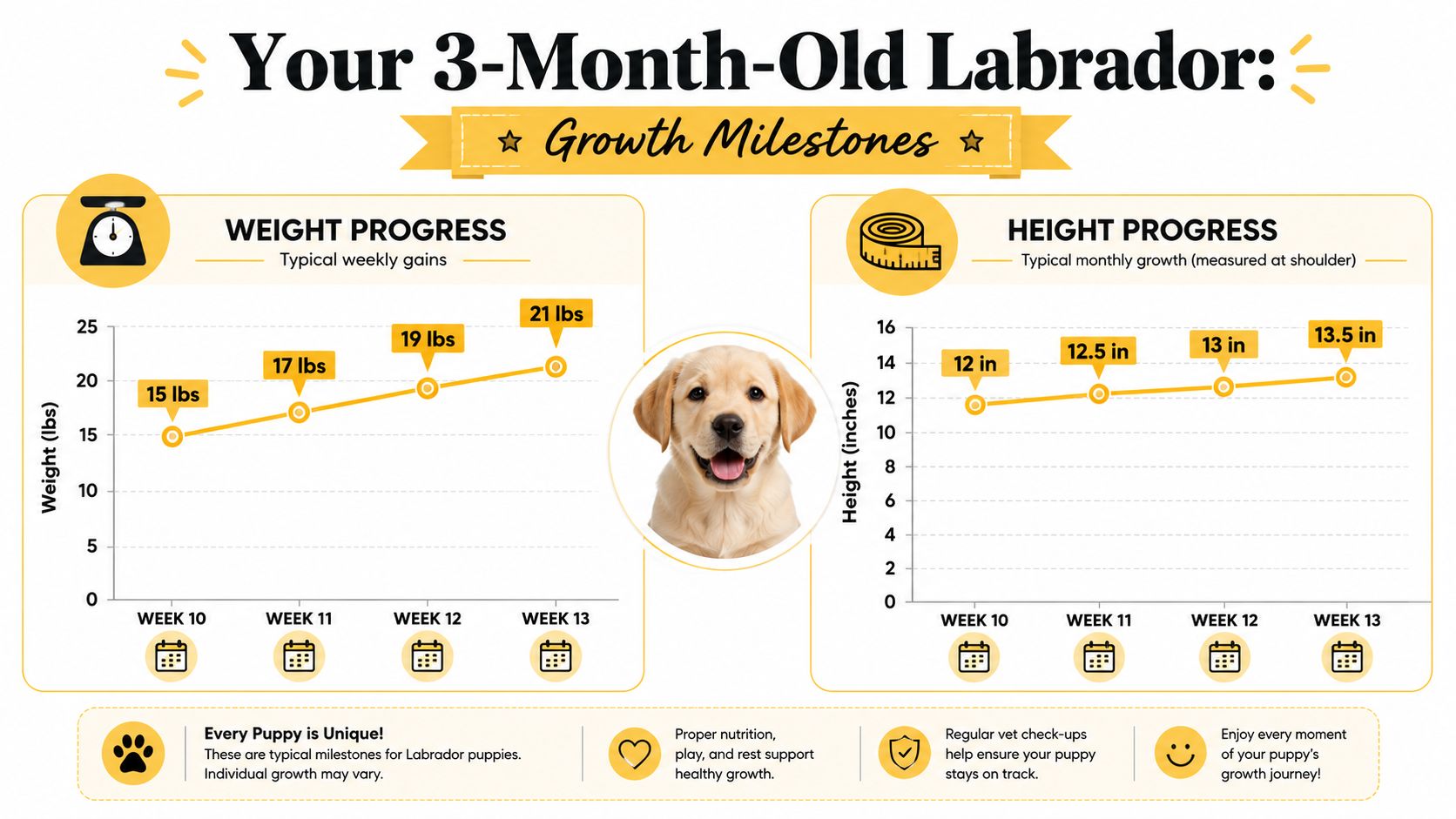
At three months, Labrador puppies often seem to outgrow themselves. Paws look too big, legs get longer almost week by week, and the same puppy who looked compact ten days ago can suddenly look loose, rangy, and clumsy. A three-month-old male Labrador typically weighs 18 to 30 pounds, while a female usually weighs 15 to 25 pounds, and puppies at this stage gain about 2 pounds per week and stand around 12 to 14 inches at the shoulder according to Pawlicy's Labrador growth and weight chart.
What normal looks like
Those ranges are useful, but they are not a target to force. Some puppies shoot up in leg first and fill out later. Others carry more substance early. What matters most is a steady trend in the right direction, along with comfortable movement, a good appetite, and a body condition that stays lean enough for you to feel the ribs under a light covering.
Growth at this age is not just about size. Bone is lengthening, muscle is starting to catch up, baby teeth are loosening, and coordination is still behind enthusiasm. That combination explains a lot of what owners struggle with in daily life. The puppy chews more because his mouth is changing. He gets nippy and restless because discomfort, hunger, poor timing, and overstimulation often stack together. He charges around the room like a small tank, then lands awkwardly because his body is changing faster than his judgment.
That is why I tell new owners to stop separating growth, chewing, and digestion into unrelated problems. In a 3 month old Labrador, they usually belong to the same developmental leap.
| Development area | What you'll notice |
|---|---|
| Body weight | Steady weekly gain, with appetite rising and falling less than owners expect |
| Height | A leggier outline, oversized paws, and a body that can look different from one week to the next |
| Movement | More speed and confidence, but still sloppy turns, stumbles, and awkward landings |
What these changes mean day to day
Rapid growth often shows up as behavior before owners recognize it as body change. A puppy who is building fast is commonly more mouthy, more distractible, and more likely to chew with determination. That does not excuse bad habits, but it does tell you what kind of support works best. Better meal structure, planned naps, safe chew outlets, and controlled exercise usually help more than trying to correct every symptom in isolation.
This stage also makes the trade-offs real. Plenty of owners try to tire out a young Lab with long walks, repeated ball throwing, or rough play on hard floors. The puppy may love it in the moment. His joints and soft tissues are not always as ready as his enthusiasm. Short training sessions, sniffing games, gentle exploration, and rest do a better job of supporting development without adding unnecessary strain.
Practical rule: Judge your 3 month old Labrador by steady growth, comfortable movement, appetite, stool quality, and how well he settles after activity.
Gut health belongs in this conversation too. A puppy dealing with teething stress, changing meal volume, and a fast growth rate can have a more sensitive digestive system than owners expect. Loose stools, inconsistent appetite, and frantic chewing often show up in the same week. That is one reason some owners look into broad daily support such as DA-1™ Daily All-in-One - Skin/Coat, Joints, Gut Health & More, especially during periods when growth, teething, and activity all climb at once. If you are also weighing whether omega-3 support fits your puppy's routine, this guide on whether dogs can have fish oil gives useful context.
The bigger point is simple. A fast-growing Lab puppy does best when you read the whole dog. Weight, chewing, movement, and digestion are connected, and your routine should reflect that.
Fueling the Furnace How to Feed Your Lab Puppy
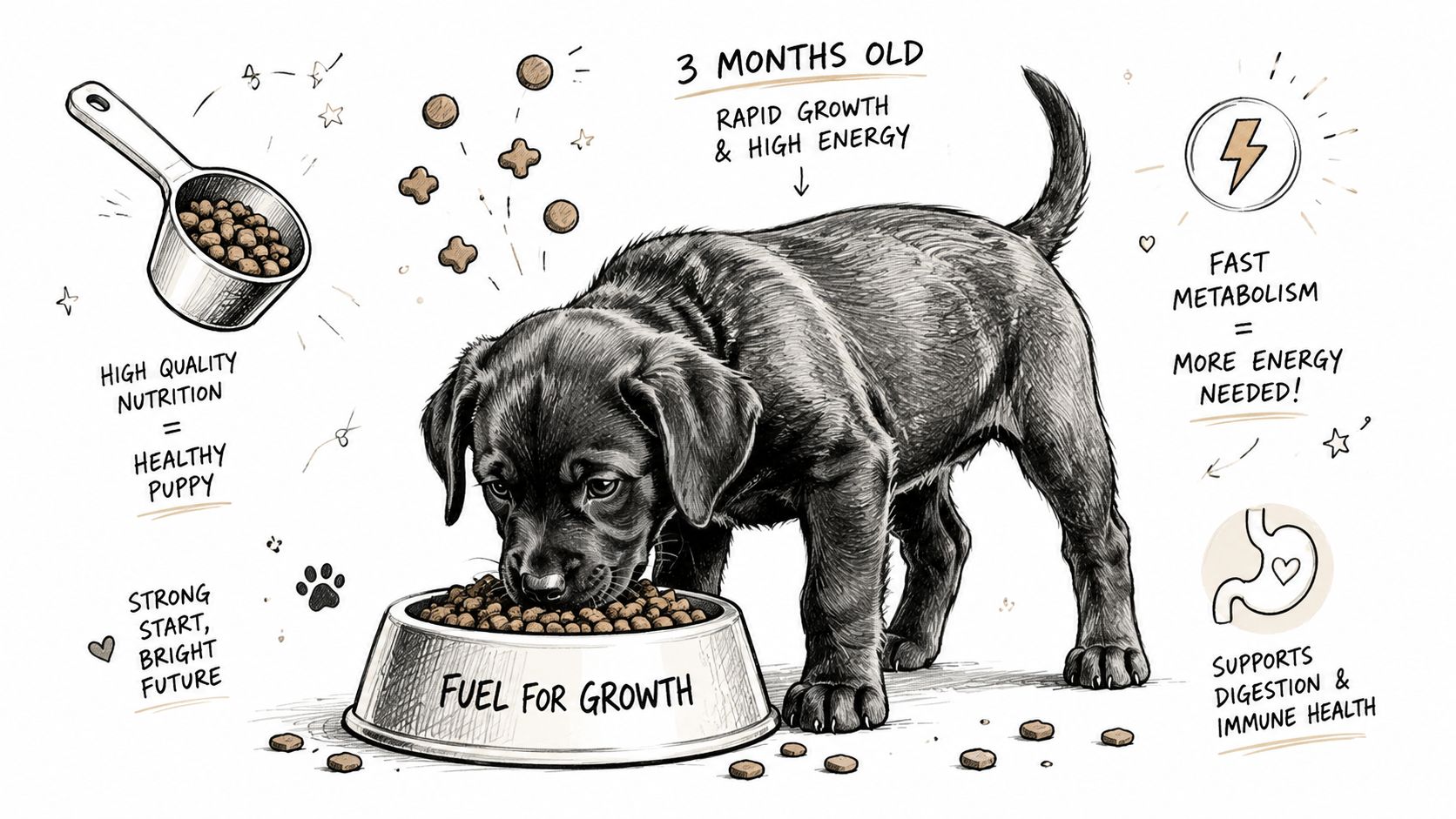
A 3-month-old Labrador has a high metabolic demand and needs 2 to 3 times the caloric intake per pound of body weight compared to adult dogs, and inadequate nutrition during this period can cause irreversible deficits in bone density and joint integrity, increasing the risk of conditions such as hip dysplasia according to Atlas Breed's Labrador growth chart.
That one fact should shape how you feed this month. Your puppy is not a miniature adult dog. He needs food that supports growth, and he needs it delivered in a way his still-maturing digestive system can handle.
The feeding routine that works
At this age, I prefer simplicity and consistency over constant tinkering. Use a high-quality puppy food appropriate for growth, measure meals, and watch the puppy in front of you instead of feeding by guesswork.
Three habits help most:
- Feed on a schedule: Regular meal times make appetite, digestion, and toilet timing more predictable.
- Use the bowl as information: If your puppy suddenly goes off food, bolts meals unusually fast, or seems uncomfortable after eating, pay attention.
- Keep extras modest: Treats are useful for training, but they shouldn't crowd out the main diet.
If you're interested in adding supportive fats, read a practical overview of whether dogs can have fish oil and then discuss specifics with your veterinarian before adding anything to a growing puppy's routine.
What does not work well
Free-feeding rarely works well for a young Labrador. Most Labs are enthusiastic eaters, and constant access to food tends to muddy appetite patterns and toilet timing. Large one-off meals are also harder on a young digestive system than evenly spaced feeding.
Another common mistake is treating growth like a race. Owners see a puppy growing and assume more food must be better. That's not how strong development works. You want adequate, balanced nutrition, not a puppy carrying excess weight on developing joints.
A simple comparison makes the point:
| Feeding approach | Likely result |
|---|---|
| Measured meals | Easier monitoring of appetite, stools, body condition, and house-training timing |
| Unstructured feeding | Harder to spot digestive issues and easier to overfeed |
| Balanced puppy diet | Better support for growth demands |
| Frequent random extras | More stomach upset and less reliable meal habits |
Owners also separate digestion and behavior too much. In practice, they overlap. A puppy with a touchy stomach often looks more restless, more mouthy, and harder to settle. That's one reason I don't like chaotic feeding routines for this stage. Good nutrition doesn't fix every training issue, but poor nutrition absolutely makes training harder.
Essential Training and Socialization Milestones
The socialization window is still open at this age, and it matters. The 3-month mark falls within the critical socialization window of 3 to 16 weeks, when controlled exposure to different stimuli shapes neural pathways, and lack of exposure before roughly 14 to 16 weeks significantly increases the likelihood of lifelong anxiety or aggression according to Dogsane's guide to the 3-month-old Lab.
That sounds technical, but the day-to-day meaning is simple. What your puppy safely experiences now affects the dog you live with later.
House training without drama
A lot of owners make house training harder by waiting too long between outings, then reacting emotionally when the puppy fails. At this age, prevention still does most of the work.
Take your puppy out:
- After waking
- After meals
- After play
- Before settling for sleep
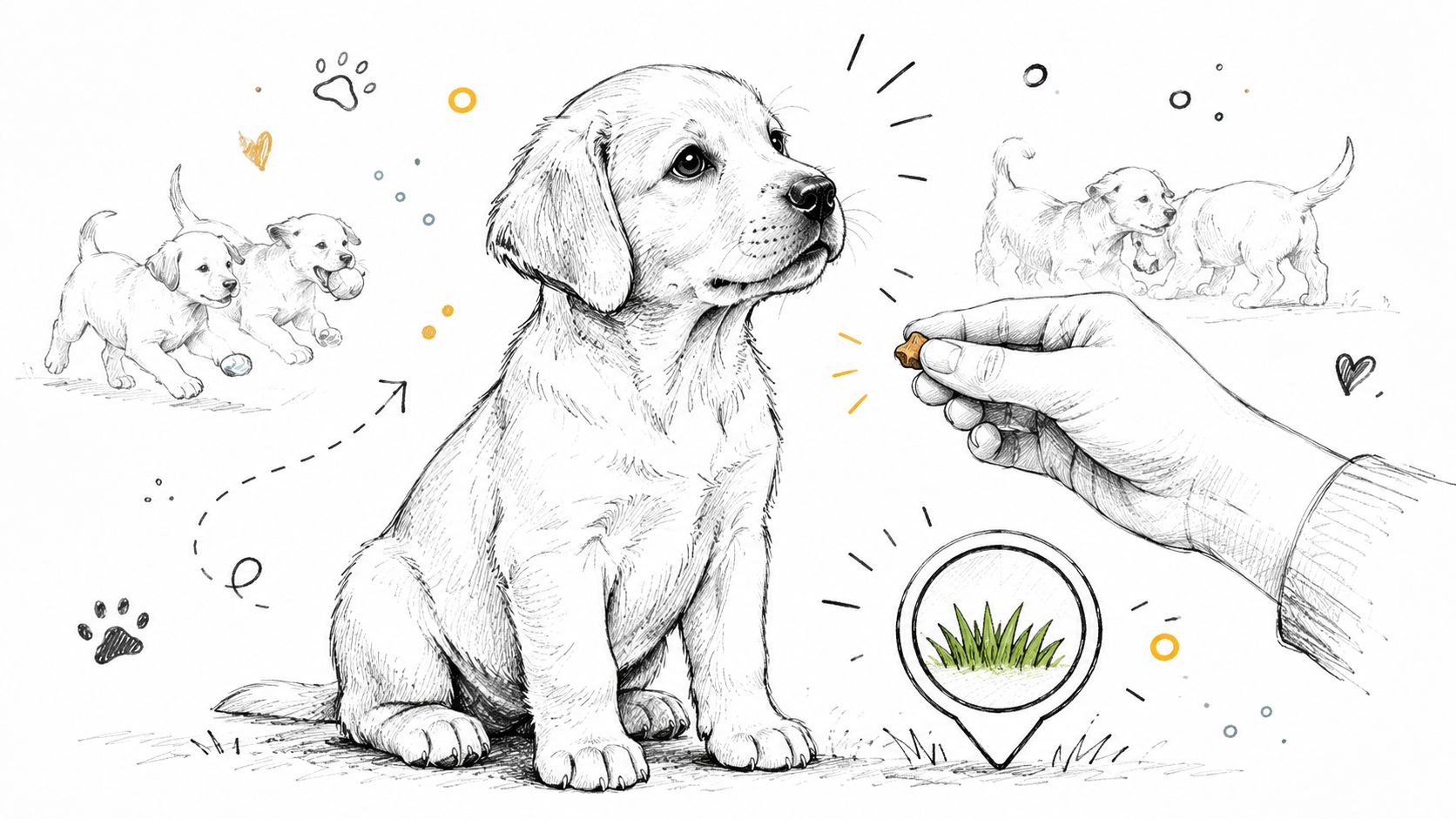
When your puppy gets it right, reward immediately. Not ten steps later. Not after coming back inside. Right there, so he connects the act with the outcome.
What doesn't work well is freedom too early. A 3 month old Labrador who roams the house unsupervised will often make poor choices because no one was there to interrupt and guide.
Safe exposure matters right now
Socialization does not mean throwing your puppy into every busy place possible. It means controlled, positive exposure. New surfaces. Calm visitors. Everyday sounds. Car rides. Friendly people. Well-managed contact with healthy, appropriate dogs if your veterinarian says your puppy's vaccination status makes that safe.
Take your puppy to the edge of new experiences, not over it. Curiosity builds confidence. Flooding builds fear.
Watch your puppy's body. A pup who leans in, sniffs, recovers, and re-engages is learning. A pup who freezes, hides, or spirals upward in arousal needs more distance and a gentler approach.
A few skills worth teaching this month
Don't chase perfection. Chase clarity. I like to focus on a small group of useful behaviors:
-
Name response
Your puppy hears his name, looks at you, and gets rewarded. This is the start of attention. -
Sit for things he wants
Food bowl down. Door opens. Lead goes on. Sitting becomes a practical habit, not a party trick. -
Comfort with the leash
Short, cheerful sessions are enough. The goal is not polished walking. The goal is that the leash predicts calm movement with you.
Here's a helpful visual for keeping early sessions short and clear.
Owners often ask when formal training should begin. The honest answer is that training is already happening. Every repeated routine teaches something. Your job is to make sure it teaches what you want.
Managing Teething Troubles and Puppy Biting
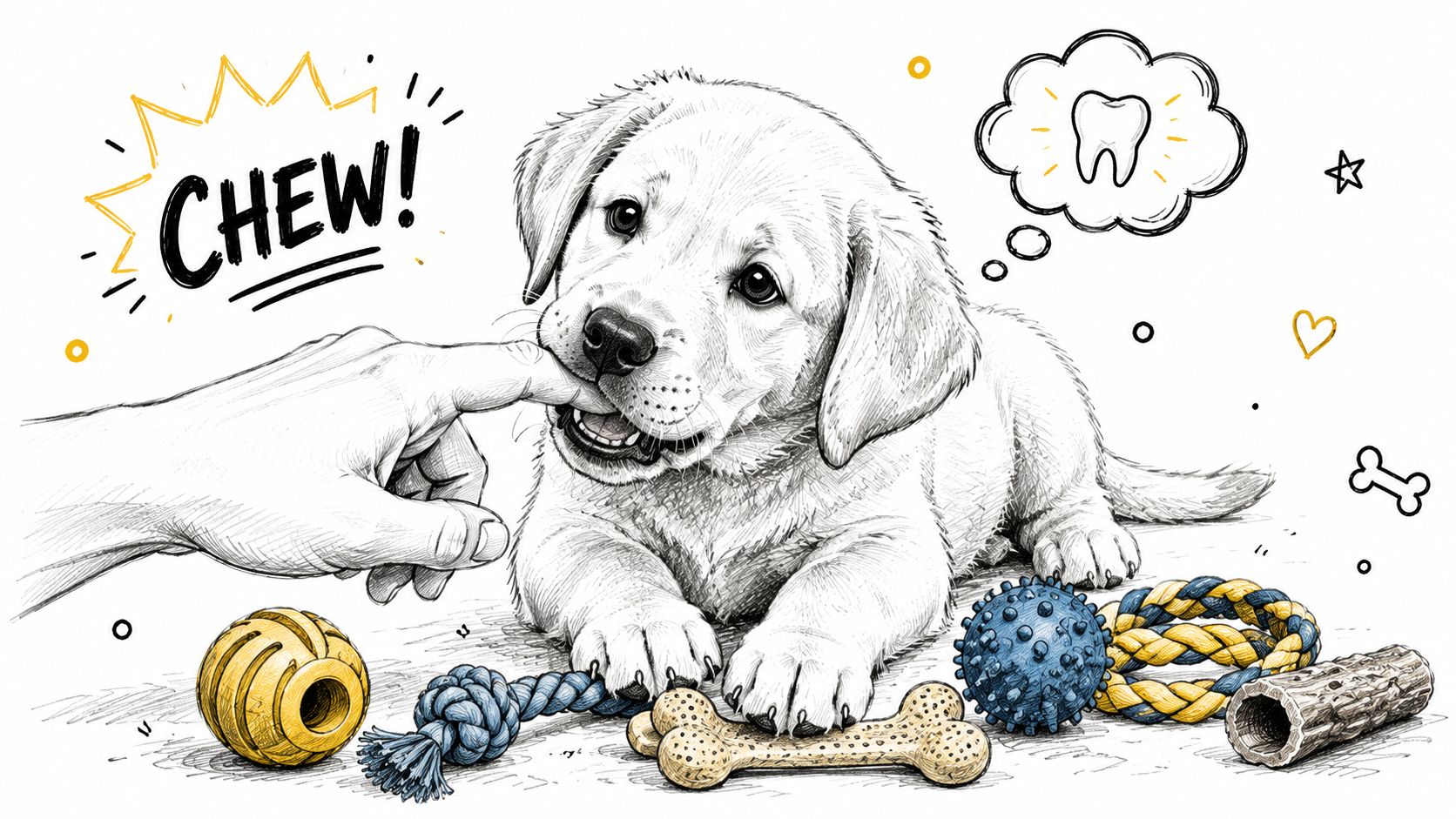
One day your 3 month old Labrador is happily carrying a toy. The next he is chewing the table leg, grabbing sleeves, and acting as if your hands belong in his mouth. That shift is common at this age. Adult teeth are starting to push through, the jaw is getting stronger, and a puppy who is growing fast often feels mouthy, restless, and harder to settle.
The eruption of adult teeth often causes biting to flare up just when owners think things were improving. Your puppy is not being stubborn or dominant. He is moving through a demanding stage where physical growth, gum discomfort, hunger, fatigue, and rising excitement all collide.
Biting is communication at this age
A 3 month old Labrador bites for different reasons, and the reason matters. Play biting looks different from teething discomfort. Overtired biting has a different feel again. Owners run into trouble when every bite gets treated like a training failure instead of a clue.
If your puppy grabs hands during excited play, that usually points to poor impulse control and too much arousal. If he prowls for chair legs, shoes, and hard edges, sore gums are often part of the picture. If the biting gets frantic in the evening, I would look hard at sleep first. Many Labradors this age tip from lively to wild very quickly.
This stage also connects back to the body as a whole. A puppy who is building bone, muscle, and adult teeth needs food that supports steady growth, and stress in the mouth often shows up elsewhere. Some pups get fussier around meals. Some have looser stools during disruptive days. That does not mean teething causes every digestive problem, but it often contributes to an unsettled puppy who has less patience and more bite.
Puppy biting usually improves faster when you lower arousal, redirect the mouth, and protect rest. Punishment tends to add stress and push the puppy higher.
What helps and what backfires
Start with management. Training matters, but management is what gets most families through this month with their skin and furniture intact.
- Keep legal chew options within reach: Offer a mix of textures so your puppy can choose what feels good on sore gums.
- Step in early: Redirect at the first signs of scanning, pouncing, or grabbing, before the puppy is fully wound up.
- Use short, calm resets: End the interaction for a moment when teeth hit skin, then restart once the puppy is settled.
- Protect sleep and routine: Many mouthy Labradors are overstimulated, under-rested, or both.
- Watch the whole puppy: If chewing, appetite, stool quality, and energy all seem off together, review food tolerance and check in with your veterinarian if needed.
What backfires is usually predictable. Rough hand games teach the puppy that human skin is part of play. Loud corrections can create more excitement instead of less. Constant activity can make an already tired puppy even mouthier. At this age, many Labs need calmer days, better chew outlets, and more recovery time.
If you want to build good oral care habits while adult teeth are coming in, read the practical questions in Pure Paw Labs' dental defense help and FAQs. The page is product-focused, but it gives owners a useful frame for daily dental support during teething.
A Healthy Start Vet Visits and Wellness Care
One day your Labrador pup is racing through the house, chewing the chair leg, and acting starving an hour after dinner. The next day he seems loose in the stool, overtired, and awkward on his feet. At 3 months old, those changes often belong to the same picture. Rapid growth, teething stress, immature digestion, and developing joints all put extra demands on the body at once.
The health basics to stay on top of
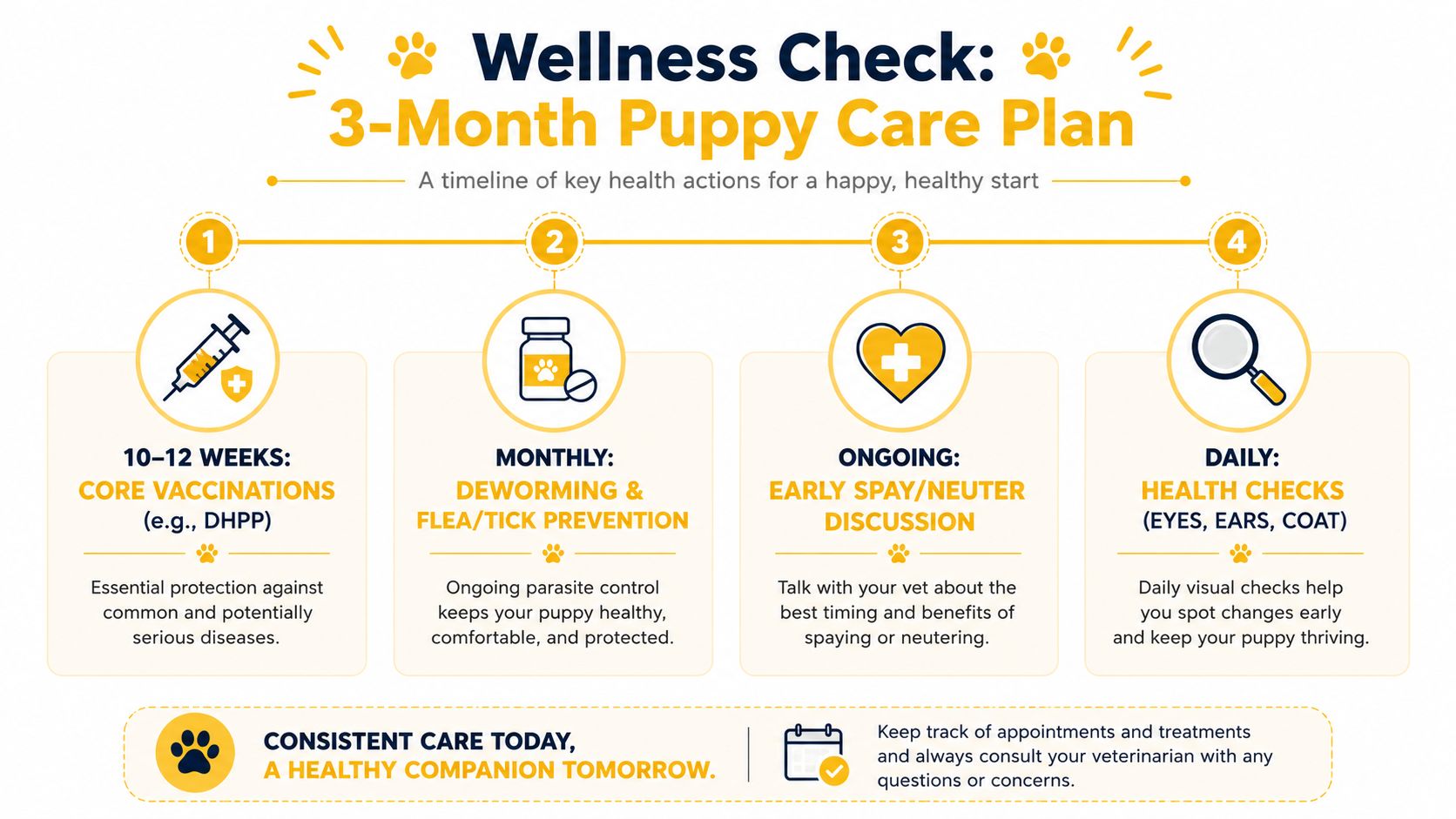
Your veterinarian should still be seeing this puppy regularly. At this age, many Labs are still working through the latter part of their early vaccine schedule, and this is also the period when parasite prevention, weight checks, and routine exams catch problems before they grow into bigger ones.
Home monitoring matters just as much because young puppies can change quickly. Keep it simple and consistent:
- Eyes and ears: Look for discharge, redness, odor, or anything newly uneven.
- Coat and skin: Notice scratching, flakes, bumps, or a coat that suddenly looks poor.
- Feet and movement: Watch for stiffness, limping, toe splaying, or reluctance to get up after play.
- Stool and appetite: Loose stool, skipped meals, straining, or unusual hunger all deserve attention.
I tell new owners to stop looking at each symptom in isolation. A puppy who is chewing hard, eating fast, growing quickly, and passing poor stools may not just be “teething” or “having a day.” He may need his food plan, feeding routine, or digestive support reviewed with his vet.
Exercise limits and joint support
At 3 months, Labradors often look sturdier than they really are. The body is adding size fast, but coordination, joint stability, and muscular control are still catching up. That is why exercise should stay controlled even if your puppy seems energetic enough to keep going.
The common walking guideline can be helpful, but the principle matters more than the formula. Aim for short outings, steady footing, and play that does not involve repeated jumping, sharp turns, stair marathons, or constant chasing on slippery floors. Kodali Hart Labradors' guide to puppy exercise gives a sensible overview of that pacing.
The trade-off is real. Too much impact can overload a growing frame. Too little structure can leave you with an over-aroused puppy who makes worse choices, rests poorly, and turns more mouthy. Good care at this age means managing activity, then supporting recovery with sleep, appropriate food intake, and a conversation with your vet about whether joint and digestive support make sense for your individual puppy.
| Focus area | Better approach |
|---|---|
| Walks | Short, controlled outings on forgiving surfaces |
| Play | Brief sessions with breaks, low impact movement, no repeated hard landings |
| Recovery | Protected naps, quiet time, and less chaos after busy periods |
| Nutrition support | Ask your vet how growth, stool quality, and joint comfort should guide feeding decisions |
Gut health belongs in this same discussion. Teething, stress, diet changes, and rapid growth often show up in the digestive tract before they show up anywhere else. If you want a practical primer before your next appointment, Pure Paw Labs has a useful overview of how dog gut health affects digestion, stress response, and daily wellness.
Your Month Three Labrador Checklist
A good month with a 3 month old Labrador doesn't mean a perfect month. It means the basics happened consistently enough that your puppy could grow, learn, and settle well.
Keep this list close:
- Feed predictably: Use measured meals and avoid chaotic extras.
- Watch the body, not just the scale: Look for steady growth, comfortable movement, and good recovery.
- Prioritize sleep: Many bitey, frantic puppies are overtired puppies.
- Take house training seriously: Frequent trips out and immediate rewards still matter.
- Use socialization wisely: Short, positive exposure beats overwhelming outings.
- Manage the mouth: Redirect chewing, lower arousal, and don't punish teething.
- Protect developing joints: Keep exercise controlled and discuss support with your vet.
- Pay attention to digestion: Appetite, stool quality, and meal comfort tell you a lot.
This age feels long while you're living it, but it passes quickly. The puppy in front of you is not a finished dog. He's a fast-growing, impressionable youngster who needs structure, patience, and a body-care plan that matches the behavior you're seeing.
If you want a simpler way to think about daily wellness support for dogs, take a look at Pure Paw Labs. The company focuses on human-grade dog supplements built around joint, gut, skin, immune, and stress-related support, which is exactly the kind of connected whole-dog thinking that helps owners make better care decisions over time.