


You're standing in the supplement aisle, or scrolling through a product page, trying to decide whether a colostrum supplement for dogs is useful or just another wellness trend. The label promises immune and digestive support, but your dog may be a healthy adult, a young puppy with loose stools, or a senior already taking several products. Those situations don't call for the same answer.
Colostrum has a real biological basis, and canine studies have reported changes in immune markers and digestive stability. But those findings don't prove that every dog will become healthier, recover faster, or avoid illness. The sensible approach is to match the supplement to a specific goal, understand what the research measured, and choose a product whose source and processing are clear.
Table of Contents
- Why Colostrum Is Showing Up in Dog Supplements
- What Colostrum Actually Is
- What the Evidence Actually Shows for Dogs
- Puppies Versus Adult Dogs as Different Use Cases
- How Colostrum Fits With Other Supplements Your Dog May Take
- Dosing, Safety, and When to Involve Your Vet
- How to Evaluate a Colostrum Product Before You Buy
- Common Questions Owners Ask About Colostrum
Why Colostrum Is Showing Up in Dog Supplements
Colostrum has moved from a niche ingredient to a familiar name in canine nutrition because it offers a simple story: a natural mammalian substance containing antibodies, growth factors, and other bioactive proteins. That sounds appealing to owners looking for support during travel, boarding, dietary changes, or ordinary seasonal stress.
The important distinction is that colostrum isn't a generic “immune booster.” It's a concentrated biological input. Its potential value depends on the proteins that remain active, the species source, the amount provided, and the dog's life stage. A product made from poorly identified milk solids isn't equivalent to a standardized colostrum product.
Practical rule: Decide what you want to support before you shop. Digestive stability in a stressed puppy is a narrower, better-defined goal than “better health” in an already healthy adult.
The canine evidence falls into separate categories. A controlled adult-dog study found higher vaccine-specific IgG, higher fecal IgA, and greater gut microbiota diversity in dogs receiving bovine colostrum, while a Japanese puppy study focused on fecal quality during dietary and environmental stress. Those are meaningful findings, but they're not the same as proving prevention of disease or treatment of an active medical problem. The evidence on canine immune support is therefore best read as promising but limited.
By the end of your evaluation, you should be able to answer three practical questions. Is colostrum a reasonable fit for your dog's current situation? What result could you fairly expect? And does the product disclose enough information to judge its biological quality?
What Colostrum Actually Is
Colostrum is the first milk produced by a mammal after giving birth. Think of it as a starter culture for the immune system, passed from mother to newborn before the young animal's own defenses are fully developed. It contains immunoglobulins, growth factors, and other bioactive proteins that help support early-life protection and development.
The word immunoglobulin means an antibody, a protein that recognizes particular biological targets. IgG is commonly associated with system-wide antibody responses, while IgA is especially important at mucosal surfaces such as the digestive tract. You can think of IgG as information carried through the body and IgA as part of the security system stationed along an entry route.
Growth factors are signaling proteins. They don't act like calories or ordinary structural protein. Instead, they help communicate with cells involved in development and tissue maintenance. Colostrum also contains other bioactive compounds, but the practical point is simple: it's biologically different from mature milk because it delivers a concentrated mixture rather than serving mainly as routine nutrition.
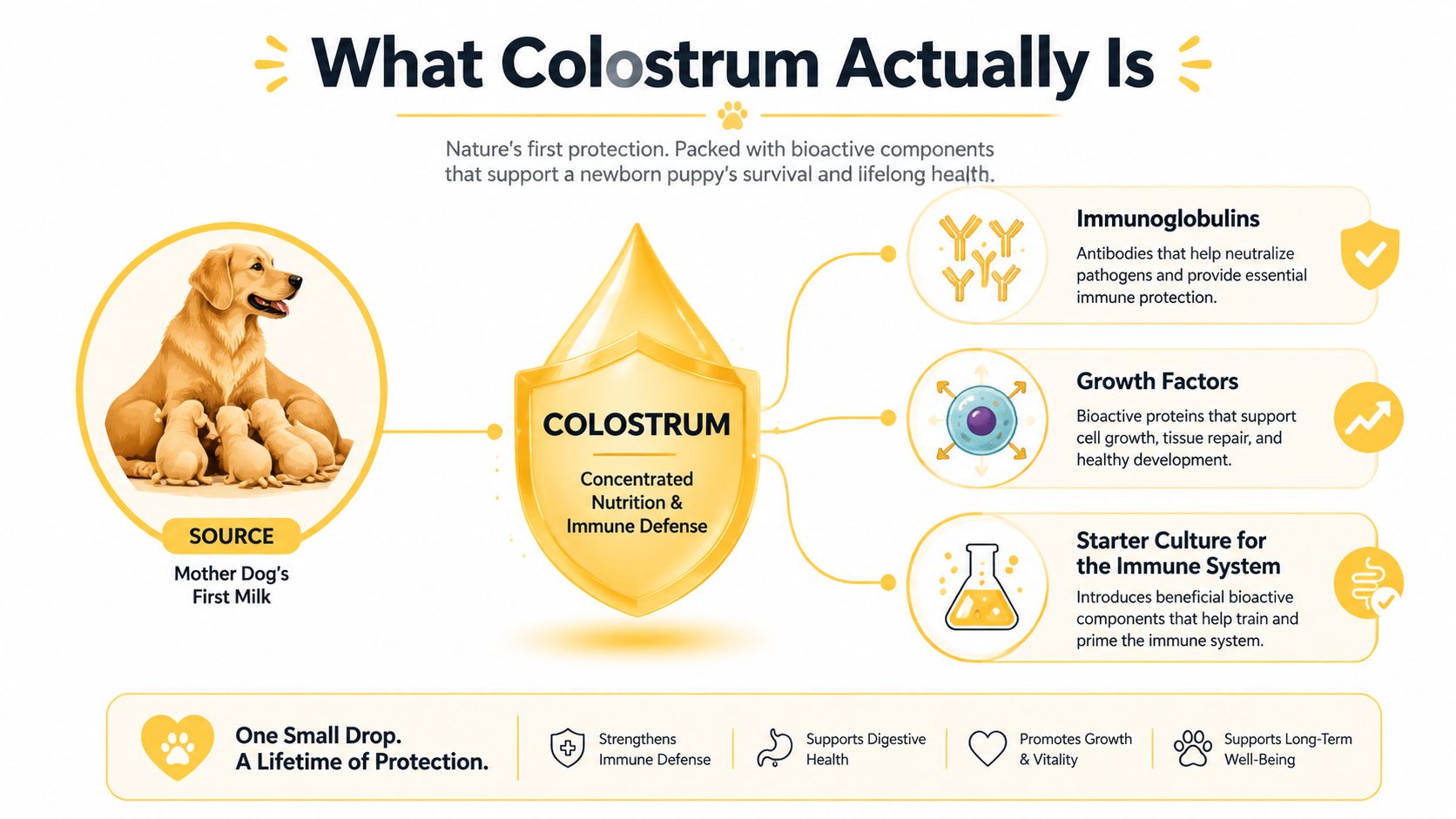
Canine and bovine colostrum are not identical
Puppies naturally receive canine colostrum from their mother. Most commercial supplements use bovine colostrum, collected from cows, because it's available as a concentrated ingredient and has been studied in dogs. That doesn't mean the two sources are interchangeable in every biological detail. It means owners should pay attention to species source and product characterization instead of treating the word “colostrum” as a complete quality description.
The concentration of immune proteins can vary substantially even within canine colostrum. One study reported a mean canine colostrum IgG concentration of 20.8 ± 8.1 g/L, with measurements ranging from 8.0 to 41.7 g/L. A review described typical dog colostrum IgG at about 20 to 30 g/L, compared with less than 1 g/L in mature milk. The canine colostrum IgG research explains why timing and source matter.
That difference is the reason regular milk powder shouldn't be assumed to provide the same value. Total protein isn't the same as immune-protein density. Harvest timing, heat exposure, drying, and storage can all affect whether delicate proteins remain biologically useful. A credible label should therefore identify the species source, disclose colostrum content, and explain how the ingredient was processed.
What the Evidence Actually Shows for Dogs
The canine research is easier to understand when separated into immune response, gut stability, and microbiome outcomes. Each category answers a different question, and none should be stretched into a universal promise.
A controlled study published in 2013 followed 24 dogs with a mean age of 2.5 years. The design included an 8-week pre-test period and a 40-week test period. Dogs receiving a diet containing 0.1% spray-dried bovine colostrum showed significantly higher vaccine-specific IgG responses, higher fecal IgA, and greater gut microbiota diversity and stability than controls. The researchers reported no detectable side effects involving food intake, body weight, or blood composition. Read the controlled canine colostrum study
Those results support an effect on measurable immune and gut-associated markers. They don't establish that adult dogs will have fewer infections, fewer allergies, or better overall clinical health. A marker is like a dashboard reading. It can tell you that a biological system changed, but it doesn't automatically tell you how much that change matters in daily life.

Puppies show a different kind of signal
A randomized placebo-controlled trial in Japan studied 70 puppies aged 40 to 50 days over 10 days. The colostrum group received 0.5 g of bovine colostrum powder daily, while the comparison group received 0.5 g of skim milk powder. The colostrum group had significantly lower average fecal scores on days 6 to 9 and better fecal quality during dietary and environmental stress. Review the Japanese puppy trial
That finding supports digestive stability in a specific setting. It doesn't make bovine colostrum a treatment for every cause of diarrhea, and it doesn't replace veterinary assessment when a puppy is ill.
The broader evidence remains incomplete. A 2025 review said evidence is strong for neonatal immunity but that support for systemic effects in adult dogs is minimal, with controlled adult-dog studies still sparse. A 2026 evidence review concluded that clinical benefit isn't established and described the dog evidence base as resting on a single small, manufacturer-funded study using surrogate endpoints rather than clinical outcomes. Read the evidence review on canine colostrum
For digestion and microbiome support, results are mixed. One study involving bovine colostrum plus probiotics increased crude protein digestibility from 83.7% to 85.2% and raised plasma IgA, but it didn't change fecal characteristics or the microbiome. Review the dog digestibility and probiotic study The fair conclusion is that colostrum may influence selected markers, yet broad clinical benefits remain uncertain.
Puppies Versus Adult Dogs as Different Use Cases
A puppy changing food, leaving its litter, or adjusting to a new home faces several digestive challenges at once. An adult dog usually has a more stable routine, so the same colostrum product represents a different question. Fecal quality during stress is the more practical puppy use case, provided the puppy is still eating, drinking, and behaving normally.
The Japanese trial illustrates that narrow application. Young puppies received bovine colostrum for a short period and had better fecal scores than puppies receiving skim milk powder. This finding makes colostrum more relevant to digestive resilience during transitions than to broad claims about preventing illness.
Puppies
Discuss colostrum with your veterinarian if the goal is to support a routine change such as:
- Weaning support: Food changes can challenge digestion. Introduce a supplement gradually and avoid changing several variables at once.
- Travel or boarding: Stress may affect stool quality, but persistent diarrhea still requires medical evaluation.
- Sensitive digestion: Colostrum may be considered as an adjunct while checking for parasites, infection, diet intolerance, or other causes.
Adult dogs need a separate evidence standard. A controlled adult study found changes in vaccine-specific IgG, fecal IgA, and microbiota measures, but the broader clinical value of those markers remains uncertain. For a healthy adult, the practical expectation is immune-marker support or a gentle digestive adjunct, not guaranteed protection from illness.
A stable gut routine also depends on food, stress, stool changes, and veterinary assessment, as explained in this guide to dog gut health. Colostrum may fit alongside that broader approach, but it does not replace it.
Probiotics introduce live microorganisms, while colostrum supplies immune proteins and other bioactive compounds. A broad multinutrient formula such as DA-1 may suit an owner seeking general multi-system coverage, whereas colostrum is more targeted. Neither choice replaces complete nutrition, vaccination, parasite control, or veterinary care.
How Colostrum Fits With Other Supplements Your Dog May Take
Owners often ask whether colostrum can be added to probiotics, joint support, or an all-in-one powder. Mechanistically, the categories differ. Colostrum provides immunoglobulins and bioactive proteins, probiotics provide live microorganisms, and postbiotics provide compounds produced by microorganisms. Different mechanisms can coexist, but “different” doesn't mean “automatically additive.”
One dog study combined bovine colostrum with probiotics. Crude protein digestibility rose from 83.7% to 85.2%, and plasma IgA increased, but fecal characteristics and the microbiome didn't change. The combined colostrum and probiotic findings are useful because they show both a measurable change and a meaningful limitation.
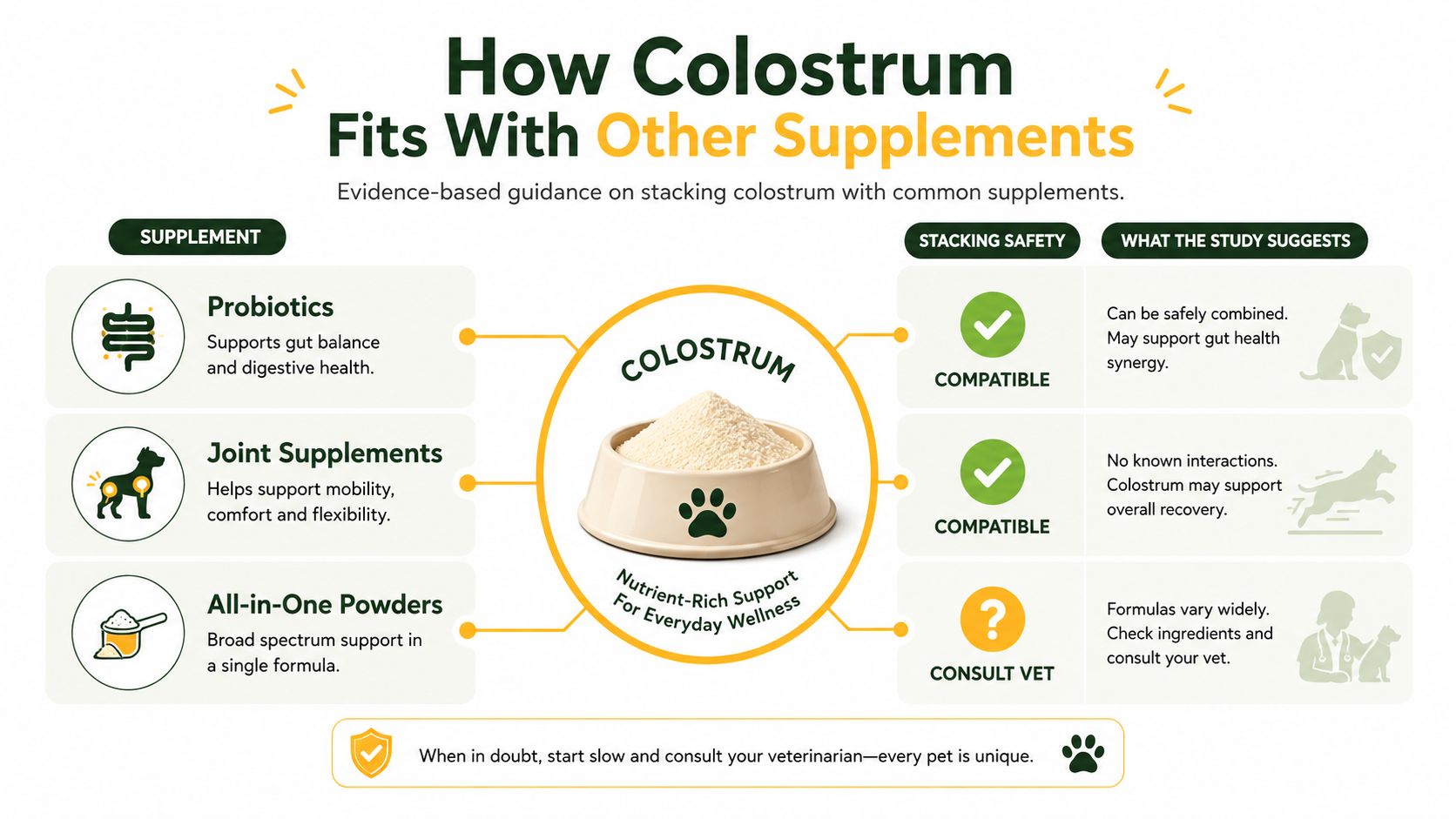
A practical stacking check
- Start with one change: If you add colostrum and a probiotic at the same time, you won't know which ingredient caused a benefit or an upset stomach.
- Review active ingredients: An all-in-one powder may already contain digestive or immune-support ingredients, making a separate product redundant.
- Ask about medical overlap: Dogs taking immunosuppressants or other long-term medications need individualized veterinary advice before adding an immune-active supplement.
- Watch the whole dog: Appetite, stool, energy, and vomiting matter more than a marketing claim on the package.
For owners considering a broader routine, DA-1™ Daily All-in-One - Senior Dog Support, Joints, Skin/Coat & More is described as a complete multi-system formula with 18 human-grade ingredients targeting cells, gut, and joints. It's a different type of product from a single-ingredient colostrum supplement, so compare the label rather than assuming the two are interchangeable.
Dosing, Safety, and When to Involve Your Vet
A research dose is a reference point, not a universal instruction for every dog. The adult study used 0.1% of the diet as spray-dried bovine colostrum, while the puppy trial used 0.5 g daily. The adult study protocol and the puppy study protocol provide study context, but the right amount still depends on the product, the dog's age, health, and diet.
Follow the product label and start conservatively. Mixing the powder with food may improve tolerance, while a gradual introduction makes stool changes easier to associate with the supplement. A study result cannot predict how every dog will respond.
In the adult trial, researchers found no detectable effects on food intake, body weight, or blood composition. That finding is reassuring for the conditions tested, not a guarantee of universal safety.
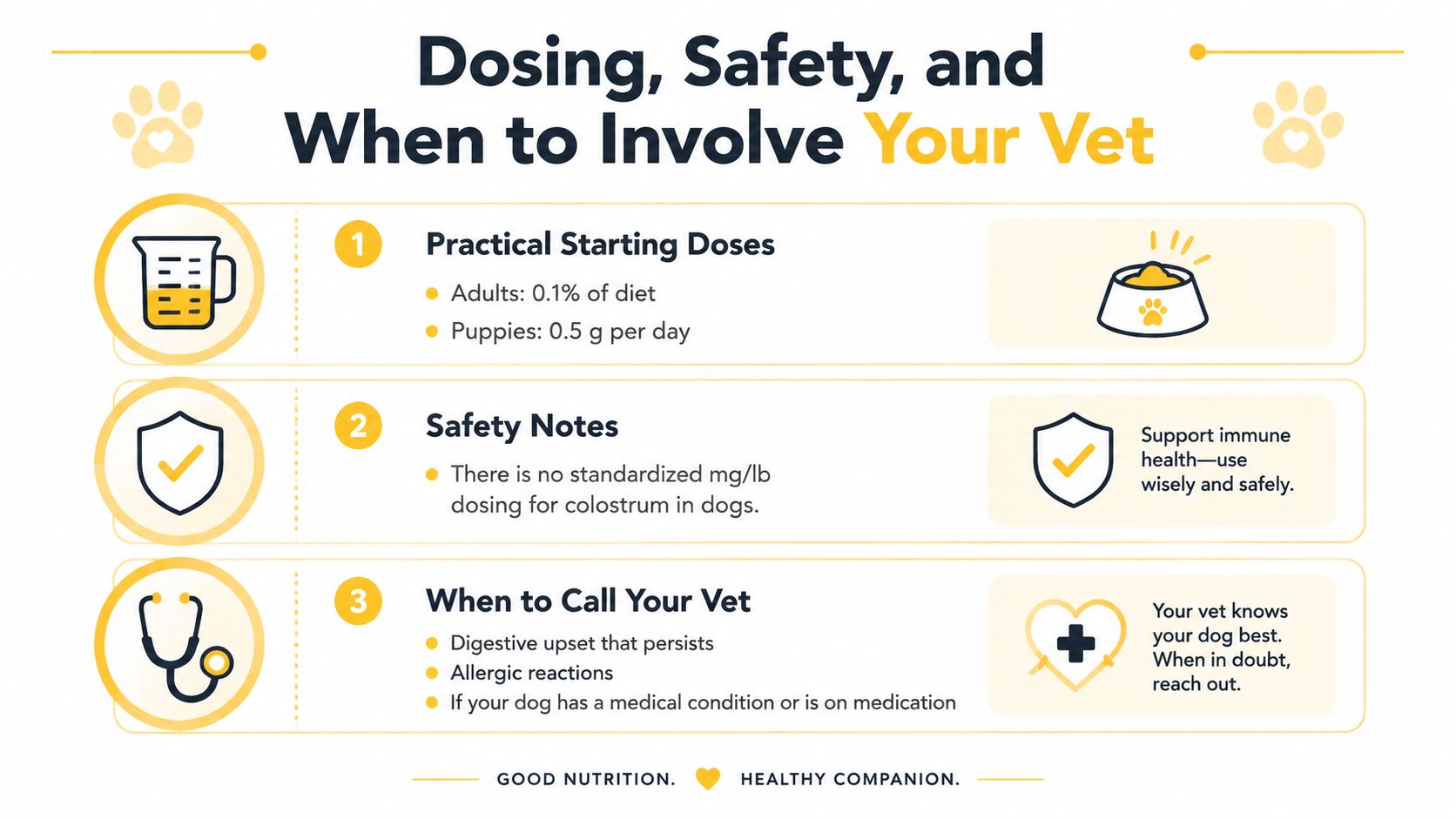
Use this safety checklist
- Check medical context: Ask your veterinarian before use in ill puppies, pregnant or nursing dogs, dogs taking immunosuppressants, or dogs with chronic disease.
- Avoid a known severe dairy-protein allergy: Bovine colostrum comes from milk, so it is not a suitable casual trial for a dog with a confirmed severe dairy-protein allergy.
- Pause for warning signs: Stop the supplement and contact your veterinarian if vomiting, diarrhea, lethargy, or appetite loss develops.
- Keep treatment separate: Colostrum should not delay care for blood in the stool, repeated vomiting, dehydration, marked weakness, or rapidly worsening symptoms.
Use veterinary guidance when risk factors are present, then assess tolerance before adding another supplement. This approach treats colostrum as a targeted dietary addition, not a replacement for diagnosis or treatment.
How to Evaluate a Colostrum Product Before You Buy
A promising label cannot tell you whether the powder contains meaningful colostrum proteins. Product quality depends on the animal source, collection timing, processing, storage, and testing. A label that says only “milk powder” gives you too little information to judge what you are buying.
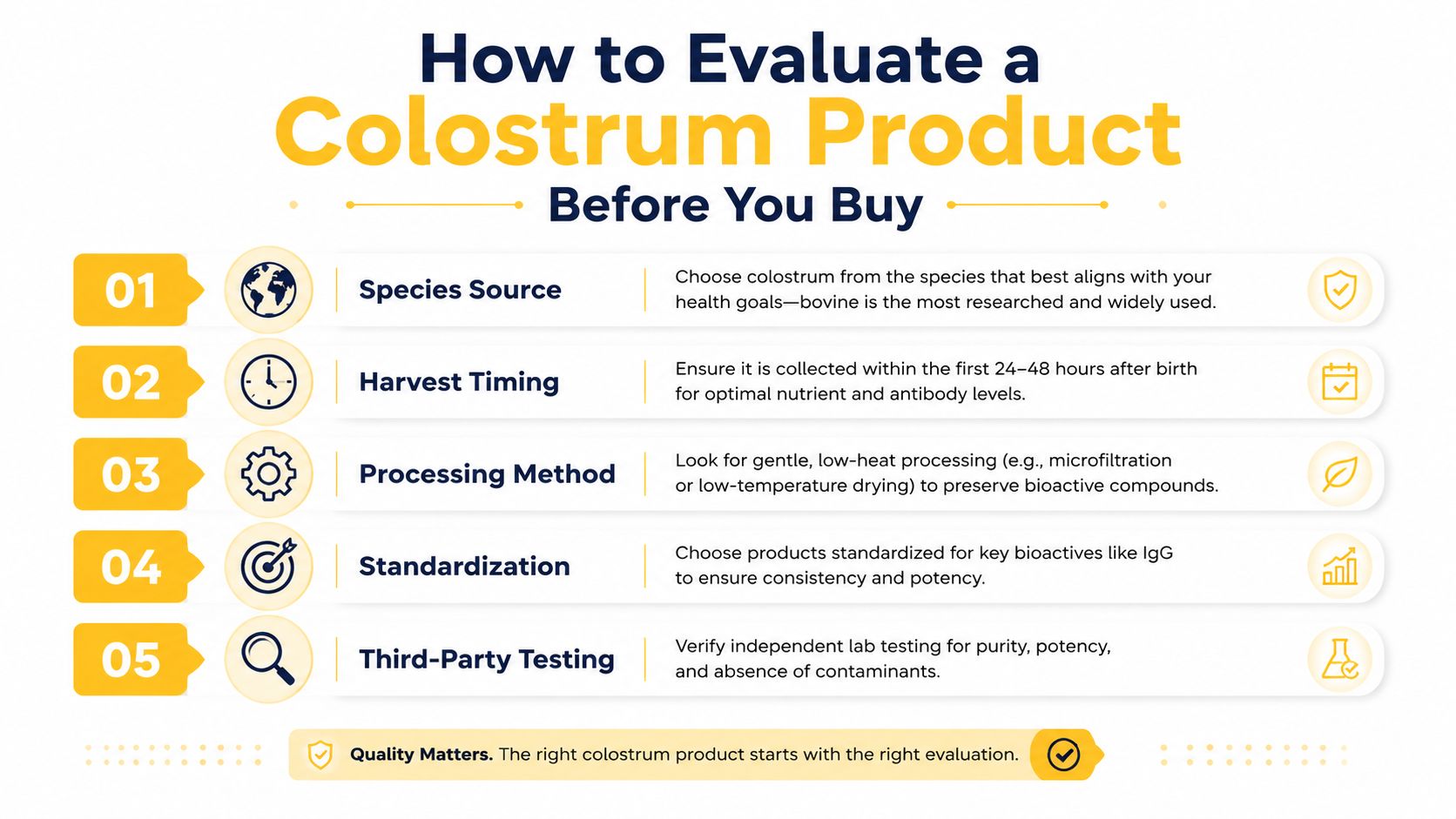
Five questions for the label
- What species is the source? Bovine colostrum is common in dog supplements and has been studied in dogs. The label should identify the source plainly.
- When was it collected? Early-lactation material is the relevant starting point because colostrum is more concentrated than mature milk.
- How was it processed? Look for a clear description of gentle, low-temperature processing. Excessive heat may damage delicate proteins.
- Is immune content standardized? The product should disclose its colostrum content and, ideally, explain how immunoglobulins are measured or characterized.
- Can the batch be tested? Ask whether each batch is tested for identity, purity, and contaminants, rather than relying only on a general quality statement.
Read transparency, not just packaging
A clean package, long ingredient list, or polished claim does not establish potency. Look for specific sourcing information, a readable supplement facts panel, manufacturing details, and accessible testing records. Batch-testing guidance explains why testing each production batch can provide more useful information than a broad statement about quality.
As covered in the evidence section above, research findings support cautious, targeted expectations rather than a cure-all claim. Choose a product that fits that evidence. Avoid labels that hide the species source, use “proprietary” wording to withhold relevant amounts, or promise to cure allergies, prevent infections, or transform an adult dog's health. A transparent product cannot remove uncertainty, but it makes that uncertainty easier to judge.
Common Questions Owners Ask About Colostrum
How long does it take to work?
There isn't a dependable timetable for visible effects in dogs. The puppy study measured fecal scores during a short stress period, while the adult study assessed immune and gut-associated outcomes over a much longer research period. Neither supports a universal promise that owners will see a particular result by a particular day.
Can I give it with food?
Usually, adding powder to a normal meal is a practical way to introduce it. Follow the label, avoid changing the diet at the same time, and stop if digestive symptoms appear.
Does it interact with medications or vaccines?
The available findings include vaccine-specific immune responses, but that doesn't answer every medication question. Ask your veterinarian before using colostrum with immunosuppressants, allergy medication, long-term treatment, or around a vaccine appointment.
Is it more useful for senior dogs?
Senior dogs aren't automatically more likely to benefit. Their needs may be broader, involving mobility, digestion, skin, or general nutrition, while the adult colostrum evidence remains focused mainly on measurable immune and gut markers. A senior dog with a new symptom needs an examination, not a supplement trial alone.
Colostrum is most defensible as a targeted adjunct, particularly when digestive stability during puppy stress is the goal. For healthy adults, keep expectations modest, choose transparent products, and track one outcome at a time.
Pure Paw Labs offers daily dog supplements designed around broader nutritional support, including the multi-system DA-1™ formula described as containing 18 human-grade ingredients for cells, gut, and joints. Visit Pure Paw Labs to review the available information and decide whether a focused colostrum product or a wider daily routine better fits your dog.