


You're probably here because your dog seems a little off. Maybe they're getting every little sniffle at daycare, dealing with recurring skin irritation, healing more slowly than you expect, or just not bouncing back the way they used to. That's often the moment people start searching for the best immune support for dogs and get flooded with powders, chews, mushrooms, probiotics, and promises.
As a veterinary technician, I want to give you the version I'd give in an exam room. Immune support isn't about finding the strongest “booster.” It's about figuring out whether your dog needs help, where that help should start, and how to support the immune system without throwing off the rest of the body. That matters because up to 95% of immune function is gut-dependent, and many dogs eating a complete and balanced diet may already be meeting core immune nutrition needs, as discussed by Cornell's canine diet and immunity guidance.
Table of Contents
- Why Your Dog's Immune Health Matters
- How Your Dog's Immune System Works
- Key Ingredients That Support Canine Immunity
- Lifestyle Habits for a Resilient Immune System
- Choosing a Safe and Effective Immune Supplement
- Red Flags When to See a Veterinarian
- Your Immune Support Questions Answered
Why Your Dog's Immune Health Matters
A healthy immune system does more than fight infection. It helps your dog handle daily wear and tear, respond appropriately to vaccines, manage inflammation, and recover from stress. When it's working well, you usually don't notice it. When it's struggling, the signs can be subtle at first.
You might see a dog who gets frequent minor stomach upset, seems slower to recover after boarding, or develops recurring skin flare-ups. Those signs don't always mean “weak immunity,” but they do tell you the body is having a harder time maintaining balance.
Immune support is not the same as immune boosting
One of the biggest points of confusion is the word boosting. Owners often assume more is better. In practice, the immune system works more like a thermostat than a gas pedal. It needs balance.
A dog with allergies may already have an immune system that reacts too strongly to harmless triggers. A senior dog may have an aging immune response that needs targeted support. A healthy adult dog on a good diet may not need any add-on at all.
Practical rule: If your dog eats a complete and balanced food, start by asking whether there's a specific reason to supplement, not which “immune booster” has the loudest label.
The gut changes the whole conversation
Many articles oversimplify things. A large share of immune activity is tied to the digestive tract, not just to white blood cells floating around in the bloodstream. That means a dog with poor stool quality, diet inconsistency, chronic stress, or repeated antibiotic exposure may need gut support more than a generic immune chew.
That also explains why some dogs improve when owners stop stacking random products and instead focus on basics like food quality, digestive stability, sleep, exercise, and veterinary evaluation when symptoms persist.
A good immune plan should answer three questions:
- Does my dog need support
- If so, is the need short-term or ongoing
- Am I supporting balance, or just adding more products
Those questions will steer you toward safer choices and away from the very common trap of over-supplementing.
How Your Dog's Immune System Works
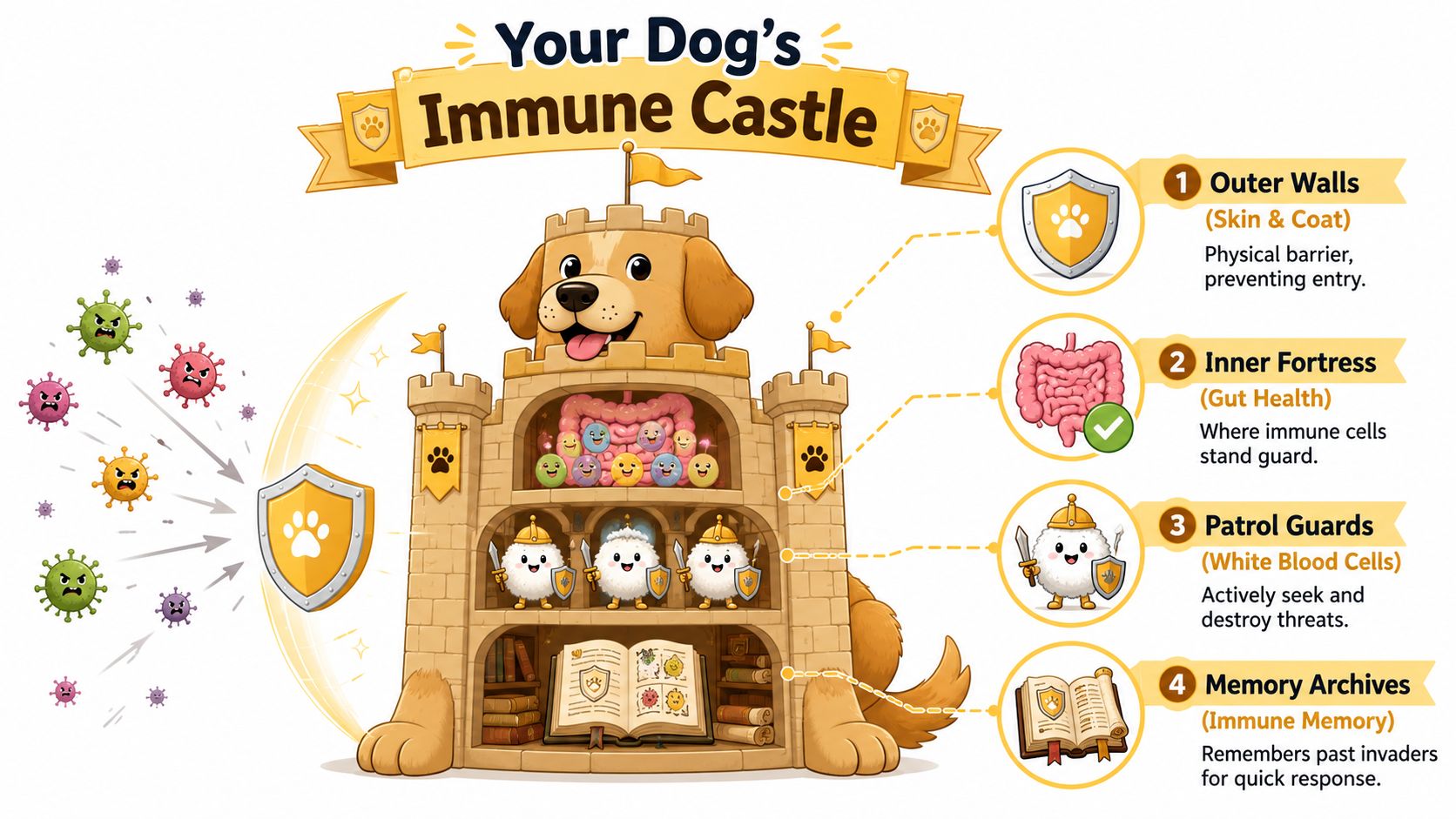
Your dog's immune system is easier to understand if you think of it as a castle with layered defenses. The body doesn't rely on one magic shield. It relies on barriers, patrol teams, signal systems, and memory.
The castle walls and first responders
The outer walls are the skin, coat, mouth, airways, and gut lining. If those barriers stay healthy, many threats never get inside in the first place. That's one reason digestive health matters so much. If you want a deeper look at that connection, this guide on dog gut health is a helpful companion.
Inside those walls, the patrol guards are the innate immune system. These cells react fast. They don't need to study the invader first. They identify danger, create inflammation, and try to contain the problem right away.
That quick response is useful, but it can also become messy. Too little response and the body misses real threats. Too much response and you may see excess inflammation, itchy skin, or tissue irritation.
A simple example helps. If your dog steps on a dirty splinter, the skin barrier is broken. The innate immune system is the team that rushes in first, causing redness and swelling while trying to clean up the damage.
The memory team and aging changes
The specialized knights are the adaptive immune system. This is the slower, smarter part that learns from exposure. It builds targeted responses and immune memory. Vaccines rely on this system. So do the antibody responses your dog makes after exposure to a specific pathogen.
This is also why certain nutrients matter. Some ingredients influence how immune cells communicate and mature, not just whether they “work harder.”
Senior dogs often face immunosenescence, which means the immune system changes with age. It may respond less precisely, recover more slowly, or show weaker cell-mediated responses. That's one reason older dogs sometimes benefit from more targeted support than younger, healthy adults.
Some owners also ask where a multi-system supplement fits. For aging dogs with several overlapping issues, a product like DA-1™ Daily All-in-One - Senior Dog Support, Joints, Skin/Coat & More is designed as a single formula for cells, gut, and joints. That kind of approach can be practical when immune concerns are part of a broader senior wellness picture rather than a stand-alone problem.
A dog's immune system isn't one organ. It's a coordinated network. When you improve the barriers, calm unnecessary inflammation, and support gut function, you're often helping immunity at the same time.
Key Ingredients That Support Canine Immunity
Ingredients can help, but only when they match the job in front of them. A dog with frequent loose stools, a stressed senior, and a healthy young adult do not need the same kind of support. It helps to sort ingredients by function first, then decide whether your dog has a reason to use them.
One easy way to picture it is by asking where the support acts. Some ingredients work at the gut lining, which is one of the immune system's busiest checkpoints. Others help immune cells communicate normally or help the body keep inflammation from spilling over into unnecessary wear and tear.
Gut-centered support
Probiotics are often the first place owners look, and for good reason. The gut is home to a large share of immune activity, so changes in the microbiome can affect how the body responds to everyday challenges. In dogs, selected probiotic strains have been associated with changes in fecal microbiota and immune-related markers in research such as this study on a canine synbiotic supplement.
Probiotics work like good neighborhood management in the intestine. They help keep the environment orderly, which gives the immune system fewer unnecessary problems to solve. That does not mean every probiotic is interchangeable. Strain, dose, and product quality matter.
Bovine colostrum is another ingredient with a different role than many owners expect. It is less about “boosting” the immune system and more about supporting the gut lining and mucosal defenses, which can be useful during stress or recovery. Research in dogs reported changes in immune function and gut microbial stability with dietary colostrum in this British Journal of Nutrition article on bovine colostrum in dogs.
That distinction matters. If your dog is thriving on a balanced diet with a steady stool pattern and no clear stressor, colostrum may not be necessary as a daily forever supplement.
Micronutrients and antioxidants
Micronutrients are where “more” can stop being helpful. The immune system uses vitamins and minerals like tools in a toolbox. Too little creates gaps. Too much of one tool can throw off the whole repair job.
Research on canine nutrition has linked Vitamin E and Vitamin C with changes in immune cell activity and inflammatory responses, but the effects depend on dose and combination rather than simple megadosing, as summarized in this review of functional ingredients and canine immunity.
That is why random antioxidant stacking is not a smart plan. A dog already eating a complete and balanced diet may not need extra vitamin products unless there is a specific reason to add them.
Beta-carotene is also worth knowing about, especially in older dogs. It has been studied for its role in supporting T-cell function, which can change with age. The practical takeaway is modest. Beta-carotene is a nutrient to consider in a broader senior wellness plan, not a stand-alone fix.
Zinc and selenium also deserve careful attention because form and dosing affect how well they are used. Rather than guessing with separate mineral products, it is safer to look for these nutrients in well-formulated diets or veterinary-guided supplements designed for dogs.
Immune modulators with meaningful evidence
Some ingredients are discussed as if they make immunity “stronger.” The immune system does not work like a volume knob. A better goal is balance. You want a response that is alert, measured, and able to stand down when the job is done.
Turkey tail mushroom is one of the more studied mushroom ingredients in dogs, especially in veterinary oncology settings. That does not make it a routine supplement for every dog. It means it has a more defined evidence base than many trendy mushroom blends and is best viewed as a targeted option to discuss with a veterinarian when there is a clear clinical reason.
Omega-3 fatty acids fit this same balancing idea. EPA and DHA from fish oil help regulate inflammatory signaling, which supports healthier immune function over time. For owners comparing products or trying to understand dose and safety, this guide on whether dogs can have fish oil explains how fish oil fits into a larger health plan.
Here is a practical way to compare ingredient categories before you buy anything:
| Ingredient Category | Examples | Primary Function | Best For |
|---|---|---|---|
| Gut support | Probiotics, bovine colostrum | Supports the gut lining, mucosal defenses, and microbiome balance | Dogs with digestive disruption, stress, or age-related changes |
| Antioxidant support | Vitamin E, Vitamin C, beta-carotene | Helps immune cells function normally and manage oxidative stress | Dogs with a specific nutritional gap or veterinary-directed plan |
| Trace minerals | Zinc, selenium | Supports normal immune cell signaling and response | Dogs with confirmed dietary need or guided supplementation |
| Immune modulation | Turkey tail mushroom, beta-glucans | Helps regulate innate and adaptive immune activity | Dogs needing targeted support under veterinary supervision |
| Inflammation regulation | EPA and DHA from fish oil | Helps keep inflammatory signaling in a healthier range | Dogs with inflammatory tendencies or broader multi-system needs |
A good label should answer one simple question. What problem is this ingredient meant to solve for this dog? If that answer is unclear, the supplement probably is too.
Lifestyle Habits for a Resilient Immune System
Your dog skips breakfast, seems a little itchy, and sleeps poorly after a stressful week of boarding. It is tempting to look for one immune chew to fix all of it. In real life, the immune system responds more like a house built on daily routines. If the walls, roof, and wiring all need attention, a new lamp will not solve the problem.
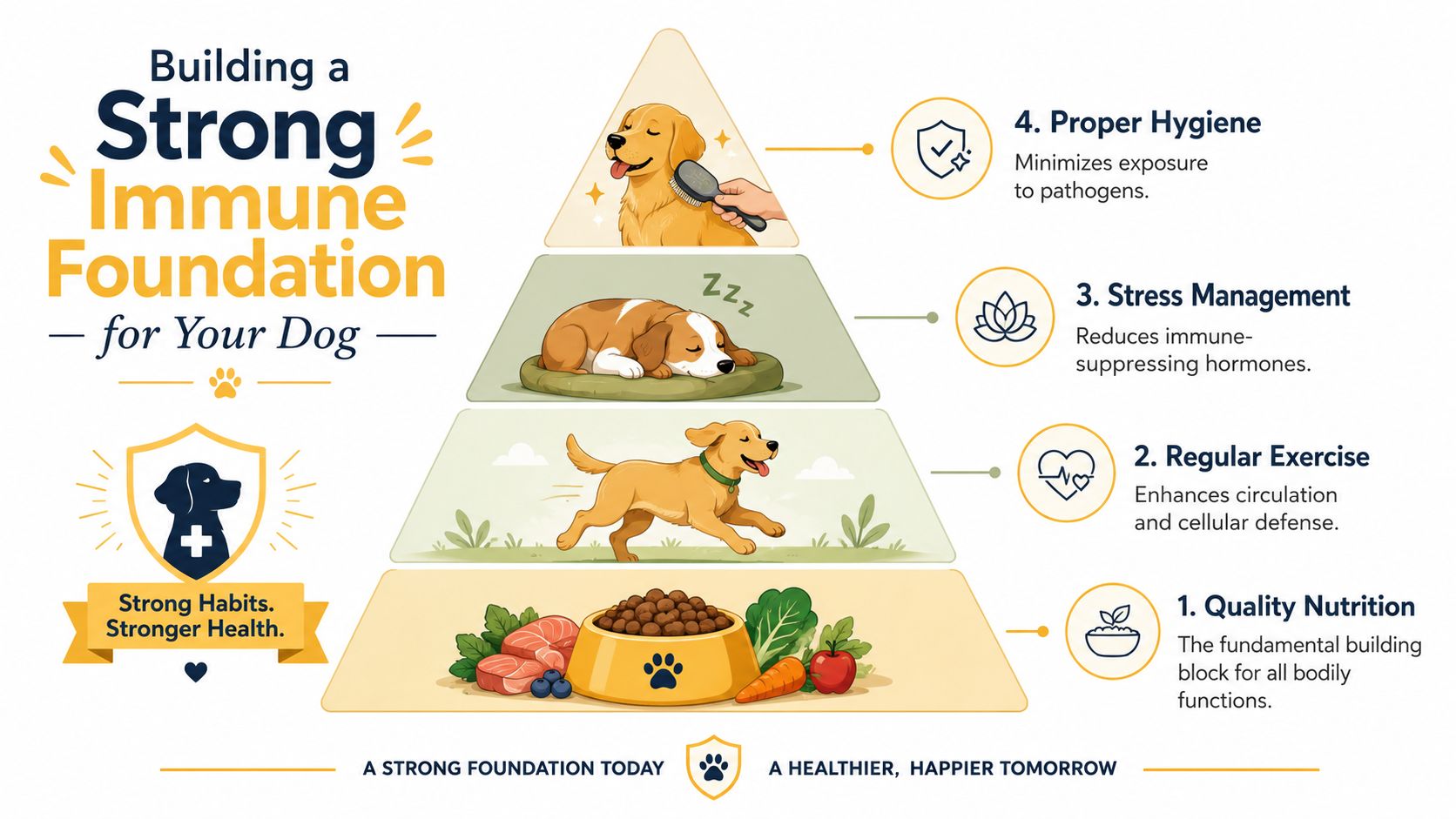
Before you add any supplement, ask a simpler question. Does my dog need extra immune support, or does the foundation need work first? That shift in thinking helps you choose support that is safer and more useful.
Food comes first
A complete and balanced diet gives immune cells the raw materials they need to do their job. Protein helps build and repair tissue. Fats support cell membranes. Vitamins and minerals help immune signaling work normally. Without that base, it becomes hard to tell whether a supplement is helping or just covering up a bigger gap.
Fresh foods can still have a place. Treat them like side dishes, not the whole meal. Small amounts of dog-safe foods such as carrots or blueberries can add variety, but extras should stay limited so the main diet remains balanced. If you want a clearer framework for using food-based products wisely, this guide to natural dog supplements and everyday wellness support can help.
Raw feeding deserves extra caution here. Dogs with weakened immunity, chronic illness, cancer, or advanced age have less margin for error with bacterial exposure. In those cases, a home-prepared raw diet can create more risk than benefit.
Daily habits that shape immune resilience
The immune system works like a security team that also handles repair work. It needs training, communication, and recovery time. Daily habits influence all three.
- Regular movement: Walks, play, and sniffing sessions support circulation, muscle tone, and stress control. The goal is steady activity that fits your dog's age, breed, and health status.
- Sleep and recovery: Rest is when the body carries out a lot of maintenance. A dog that is constantly interrupted, overstimulated, or uncomfortable may have a harder time staying balanced.
- Stress control: Changes in routine, conflict with other pets, loud environments, travel, and separation distress can affect appetite, digestion, skin health, and behavior. Those systems are closely tied to immune function.
- Skin, ears, and dental care: The immune system does not work only on the inside. Skin, ear canals, and the mouth are barrier surfaces. Keeping them clean and treating irritation early helps reduce the workload on the body.
- Parasite prevention and vaccines: Fleas, ticks, worms, and preventable infections place avoidable strain on the immune system. A veterinarian-guided prevention plan helps your dog respond to real threats instead of fighting preventable ones.
Sometimes the best immune support looks ordinary. Consistent meals. Clean water. Predictable routines. Enough sleep. Daily movement. Fewer inflammatory triggers. Those habits are not exciting, but they often tell you whether your dog needs more support or steadier care.
A supplement works best as the top layer of a healthy routine, not as a substitute for one.
Choosing a Safe and Effective Immune Supplement
Your dog may have a dull coat for a week, a soft stool after boarding, or an itchy stretch during allergy season. Those changes can make any owner wonder if an “immune booster” is the next step. In clinic, this is usually the moment I slow people down and reach for the label.
A good immune supplement should match a real need. It should also fit the dog, the diet, and the daily routine already in place. The immune system works like a security team with many jobs, so a product that claims to “support immunity” without explaining how is hard to judge and easy to overuse.
What to check on the label and website
I read supplement labels the same way I read a feeding plan. First I ask, “What problem is this trying to solve?” Then I ask, “Do the ingredients and dose make sense for that job?”
Use this checklist:
- Named ingredients, not vague blends: You should be able to see what is in the product and how much of each active ingredient your dog gets per serving.
- Ingredient form: Minerals such as zinc or selenium can come in different forms. Earlier in this article, we covered why form can affect how well the body uses them.
- Manufacturing transparency: Look for products made in an FDA-registered facility with third-party testing or a certificate of analysis available on request.
- Purpose you can follow: A useful label explains whether the formula is aimed at gut support, skin barrier support, antioxidant support, or another clear goal tied to immune health.
- Reasonable inactive ingredients: Flavoring, binders, and sweeteners should not crowd out the active ingredients.
- Claims that stay grounded: Be cautious with labels that sound like they can treat infections, cancer, autoimmune disease, or every symptom at once.
If you want a practical framework for sorting through labels, this guide to natural dog supplements walks through the quality points that matter most.
When an all-in-one makes sense
Some dogs have several mild issues that overlap. A senior dog might have a sensitive stomach, dry skin, and stiffness at the same time. In that case, using four separate products can create a different problem. More scoops, more chances for duplicate ingredients, and more confusion about what is helping.
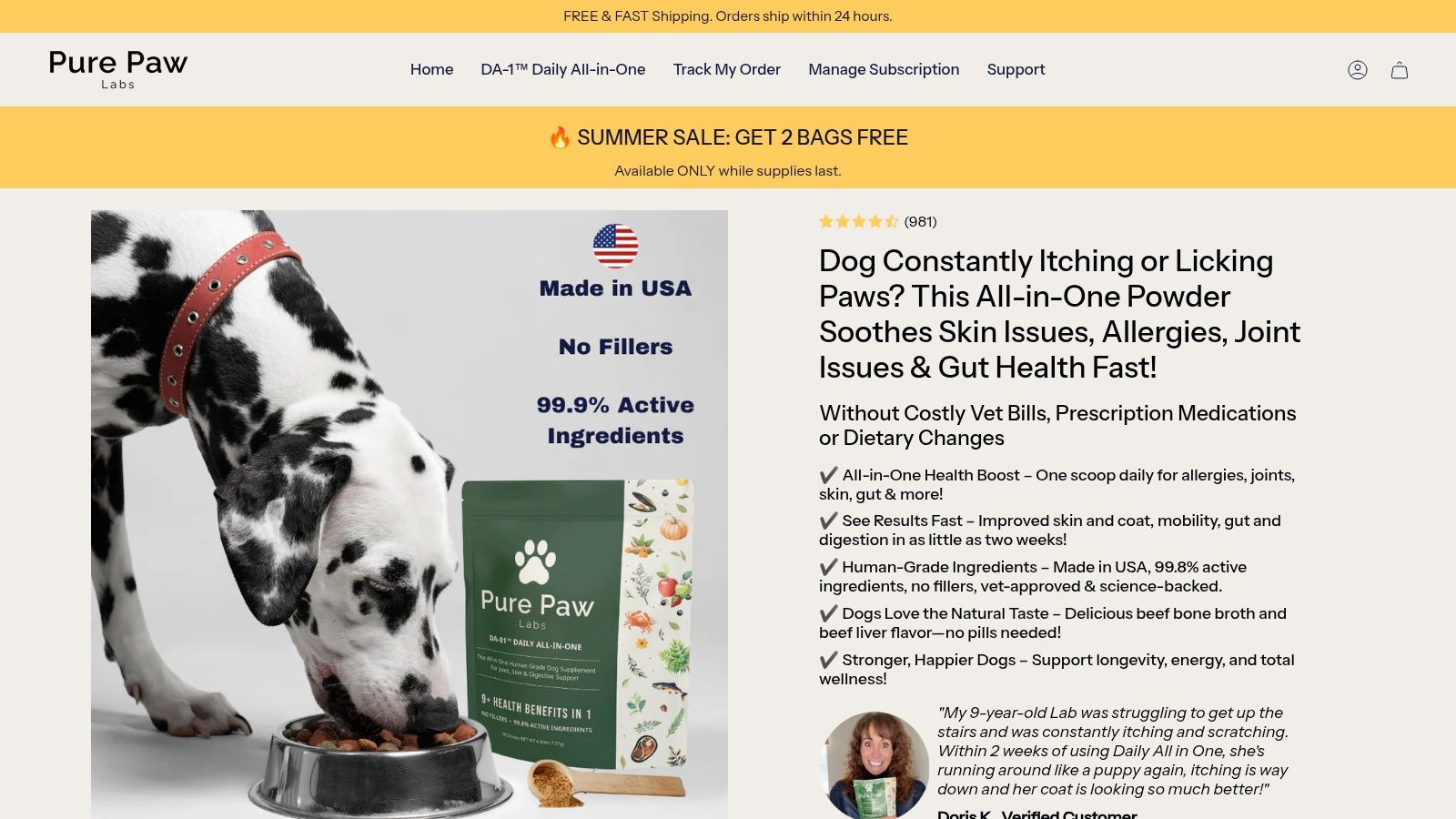
An all-in-one formula can be useful if the ingredient list is clear and the doses are sensible. Pure Paw Labs offers DA-1™ Daily All-in-One - Skin/Coat, Joints, Gut Health & More, a once-daily human-grade powder designed to combine support for joints, skin and coat, digestion, immunity, and stress. The company states that it uses third-party lab testing, manufactures in an FDA-registered facility, and avoids filler-heavy formulation. That does not mean every dog needs it. It means the format may suit owners who want one measured routine instead of several separate products.
A short product walkthrough can help you see what that kind of format looks like in practice.
One final check matters. Ask whether your dog is showing a pattern that suggests support is needed, or whether you are trying to solve a temporary blip. If your dog has normal energy, healthy skin, steady stool, and no unusual pattern of illness, adding a supplement may do very little. In some cases, it can make it harder to spot what actually changes later.
Red Flags When to See a Veterinarian
Immune support products are for wellness support. They are not a substitute for diagnosis or treatment when a dog is sick.

Call your veterinarian promptly if your dog has any of the following:
- Sudden lethargy: A dog who is unusually weak, withdrawn, or unwilling to get up needs more than a supplement discussion.
- Not eating: Refusing food for more than a day, especially with vomiting, diarrhea, or fever, deserves medical attention.
- Persistent digestive signs: Ongoing vomiting, diarrhea, or marked stool changes can point to infection, parasites, inflammation, endocrine disease, or other causes.
- Unexplained weight loss: If your dog is eating but losing weight, don't assume it's “poor immunity.”
- Breathing changes: Coughing, labored breathing, or noisy breathing should never be managed at home with supplements alone.
- Recurring infections or non-healing wounds: These can signal deeper immune, hormonal, dental, or skin problems.
- New lumps, pale gums, collapse, or fever: These are medical issues first.
If your dog looks unwell, uncomfortable, or rapidly different from normal, use supplements as a later conversation, not the first response.
Your Immune Support Questions Answered
Can I give my puppy an immune supplement
Sometimes, but puppies usually need fewer extras than owners think. Their primary job is to grow on a complete and balanced diet, follow a veterinary vaccine schedule, and avoid unnecessary digestive upset. If a puppy has special circumstances such as stress, diarrhea, or a medical issue, your veterinarian may recommend targeted support. Otherwise, adding multiple “immune” products often creates more confusion than benefit.
How long until I see results
That depends on what you're trying to change. Gut-related support may show up first through stool quality, appetite consistency, or overall resilience. Skin, coat, and broader wellness changes usually take longer because the body needs time to respond. Think in terms of steady trends, not overnight transformation.
Is it possible to over-stimulate my dog's immune system
Yes, which is why the field is moving toward immune modulation rather than simple boosting. Emerging trends have emphasized that some ingredients may be helpful during acute stress or short-term need, while chronic daily use may be unnecessary or even counterproductive in some dogs, as discussed in this review of immune modulation trends in pet supplements.
That's especially important in dogs with allergies, inflammatory disease, cancer, or autoimmune concerns. In those cases, more stimulation isn't automatically better. The safer question is, “What kind of support does this dog need right now?”
If you want a simpler daily routine for a dog who needs support across gut health, skin, joints, and immune wellness, Pure Paw Labs offers science-focused, human-grade options built around an all-in-one approach. It's a practical place to start if you'd rather avoid juggling multiple supplements and want to compare formulas with a quality-first lens.