


You're standing over your dog's bowl with a new pouch of bone broth powder for dogs in one hand and a measuring spoon in the other. The label promises joint support, gut health, hydration, and a more enthusiastic eater. Your dog is watching closely, probably more interested in the smell than the ingredient panel.
That enthusiasm is useful, but it isn't proof that the powder belongs in the diet. Bone broth powder can be a practical topper, especially when it improves palatability or adds moisture, yet it's also a concentrated bone-based supplement that may contribute sodium, calcium, and phosphorus. The right question isn't whether bone broth is “natural.” It's whether the finished product's mineral load, ingredients, serving size, and evidence fit your individual dog.
Table of Contents
- Why Bone Broth Powder Is on Every Dog Owner's Radar
- What Bone Broth Powder Actually Is
- Benefits Owners Hope For and What the Evidence Says
- Quality Markers and Safety Limits Worth Checking
- How to Serve Bone Broth Powder Safely
- Powder Versus Liquid Versus All-in-One Supplements
- Putting It All Together and Talking to Your Vet
Why Bone Broth Powder Is on Every Dog Owner's Radar
A spoonful of tan powder feels like an easy upgrade. It stores neatly, mixes into kibble, and gives an ordinary meal a stronger savoury aroma. For a dog that has started ignoring dry food, that convenience can seem more valuable than a complicated change in diet.
The appeal has grown alongside the broader pet wellness market. The global pet food market was valued at about USD 126.66 billion in 2024 and is projected to reach roughly USD 191.01 billion by 2032, while the pet dietary supplements market was estimated at USD 2.57 billion in 2024 and is forecast to grow to about USD 4.17 billion by 2030, according to the market context described by the product-use guidance from bone broth powder for dogs. Bone broth powder benefits from that environment because it sits neatly between a food topper and a supplement.
Why popularity can distort judgment
Owners encounter the same signals repeatedly: polished packaging, enthusiastic social posts, before-and-after stories, and broad promises about joints, digestion, immunity, and coat quality. Those signals may help a product get noticed, but they don't tell you how much sodium is present, whether the powder contains meaningful collagen, or whether the product has been tested for contaminants.
A dog may also love a product because it smells strongly of meat. That demonstrates palatability, not a therapeutic effect. A tasty topper can encourage eating, but it shouldn't be treated as evidence that it repairs joints or resolves digestive disease.
A useful starting rule: treat the marketing panel as an invitation to inspect the label, not as a substitute for the label.
The decision is more individual than the trend
A healthy dog eating a complete diet may need nothing beyond an occasional flavour boost. A dog with a sodium restriction, kidney disease, heart disease, or a carefully managed mineral intake may need a different approach altogether. The same powder can be reasonable for one dog and inappropriate for another.
This guide doesn't dismiss bone broth powder. It puts the product in its proper category: a concentrated supplement with possible practical uses, meaningful safety checks, and evidence that's still developing.
What Bone Broth Powder Actually Is
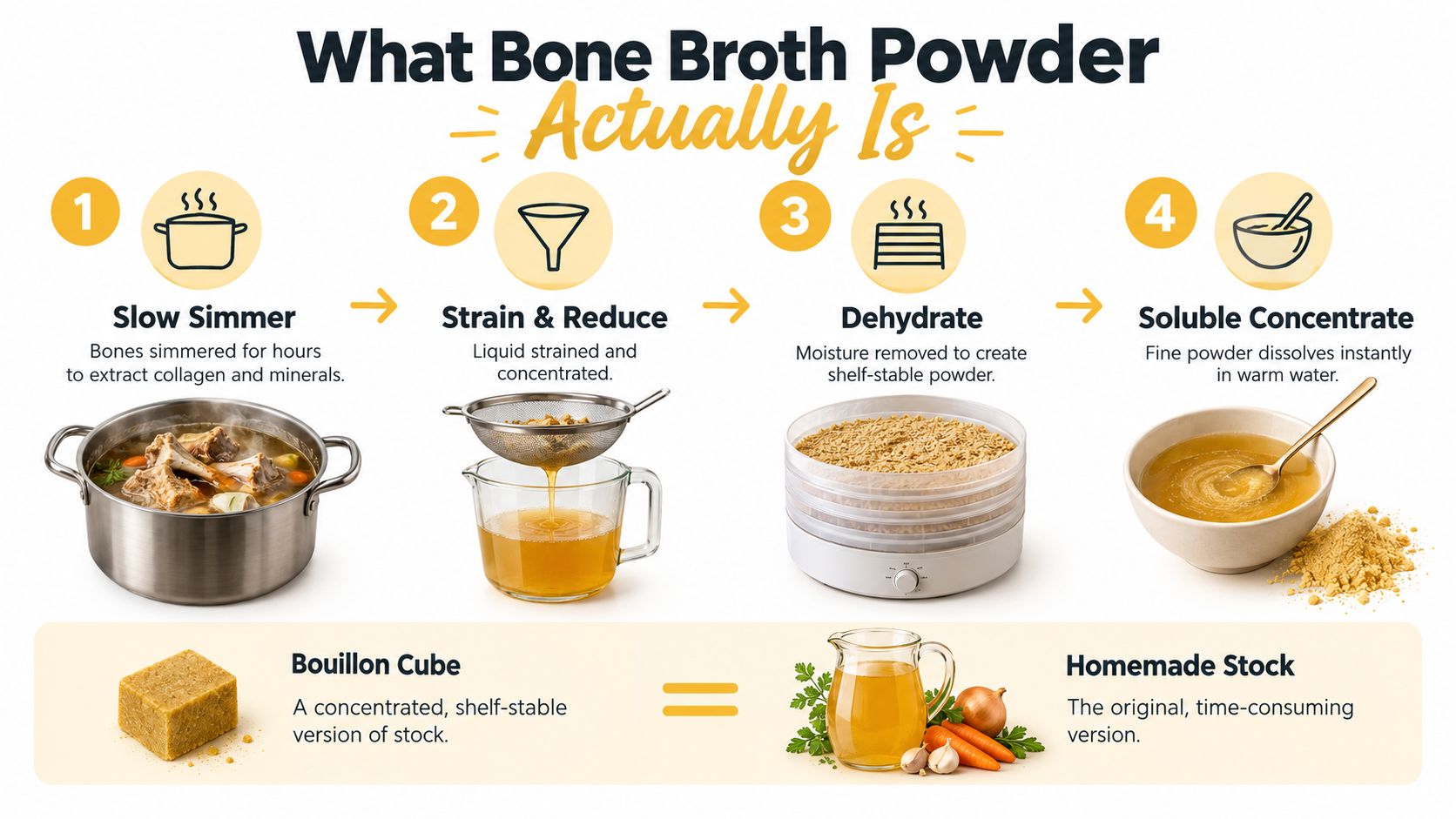
Bone broth powder is dehydrated broth. Manufacturers extract compounds from bones and connective tissue during prolonged low-heat cooking, strain the liquid, and remove water until the remaining material becomes a shelf-stable powder. In simple terms, it's closer to a concentrated stock than to a complete food.
A useful analogy is the difference between homemade stock and a bouillon cube. Homemade stock contains water and whatever compounds moved out of the ingredients during cooking. A bouillon cube is a compact, convenient form that may also contain added ingredients. Bone broth powder can follow either model. Some products are mostly reduced broth, while others include collagen, flavourings, vegetable ingredients, or additional supplement compounds.
From connective tissue to powder
The manufacturing sequence usually follows four broad stages:
- Slow simmering extracts gelatin, peptides, amino acids, and minerals from collagen-rich connective tissue. Dog-safe preparation windows commonly cited for these broths range from 12 to 48 hours at 82 to 93°C. Processing guidance for low-sodium bone broth explains why cooking time and temperature influence the finished composition.
- Straining and reduction removes solids and concentrates the liquid. Some manufacturers also remove fat, although the label should tell you what remains.
- Dehydration removes water through a drying process, creating a lighter product that can be stored without the handling demands of liquid broth.
- Reconstitution lets the owner dissolve the powder in water or mix it into food.
Why product categories matter
A single-ingredient powder should be judged mainly on sourcing, mineral analysis, contamination controls, and serving size. A formulated supplement requires a wider review because added glucosamine, vitamins, minerals, herbs, or flavourings can change both the intended use and the safety profile.
Look for the actual ingredient list rather than relying on phrases such as “joint blend” or “natural broth.” A product made from named animal ingredients is easier to evaluate than one that hides its composition behind a proprietary mixture. Owners who want a broader overview of possible uses can also review this guide to the benefits of bone broth powder, then return to the product label for the details that determine suitability.
Benefits Owners Hope For and What the Evidence Says
A dog that ignores dinner may eat once a savoury broth powder is mixed through it. Another dog may receive extra moisture with the same topper, yet neither response proves that the product treats a medical problem. Bone broth powder can be useful, but its strongest case is often practical rather than therapeutic.
Claim by claim
Joint support is commonly associated with collagen-derived amino acids, gelatin, or added compounds such as glucosamine. That biological reasoning is plausible, though it does not demonstrate a meaningful joint outcome from a particular broth powder in dogs. Treat joint claims as limited support, not a substitute for diagnosis, weight management, exercise planning, or prescribed treatment.
Gut health attracts attention because gelatin and amino acids change the food mixture, while interest in the microbiome has made digestive support a popular selling point. One manufacturer-led, internal project followed 33 dogs for 4 weeks and reported that over 96% showed increased gut bacterial diversity after supplementation. The report discussed shifts involving Helicobacter, Clostridium, and Bifidobacterium, but it was explicitly not peer reviewed. The project's published results therefore describe an exploratory finding, not reliable proof that every dog will respond similarly.
Skin and coat claims are harder to separate from the rest of a dog's care. Amino acids and minerals can contribute to normal nutrition, but coat quality also reflects the complete diet, parasite control, allergies, grooming, and underlying disease. Persistent itching or hair loss needs investigation rather than an assumption that broth is the answer.
Hydration and palatability have the clearest everyday rationale. Reconstituted powder adds water to a meal, and its savoury aroma may interest a reluctant eater. These are useful feeding effects, not treatment for dehydration, appetite loss, or illness. A dog that will not drink or eat still needs attention to the cause.
Immune support is a broad label rather than a specific clinical outcome. A supplement may contribute nutrients, but that wording does not show whether it prevents infection or changes disease risk. Repeated illness warrants veterinary assessment.
| Claimed Benefits vs. Evidence Level for Dogs | Mechanism Suggested | Confidence Level | Practical Takeaway |
|---|---|---|---|
| Joint support | Collagen peptides or added joint compounds | Limited direct evidence for broth powders | Consider it supportive, never curative |
| Gut health | Gelatin, amino acids, and microbiome changes | Exploratory evidence, including an unreviewed internal project | Avoid promising predictable microbiome outcomes |
| Skin and coat | Amino acids and naturally occurring minerals | Indirect and highly dependent on the complete diet | Investigate allergies, parasites, and diet first |
| Hydration | Added water when powder is reconstituted | Strong practical rationale, not clinical evidence | Useful as a meal-moistening strategy |
| Palatability | Savoury aroma and flavour | Strong practical rationale, not clinical evidence | Often the clearest reason to use it |
| Immune support | General nutrient contribution | Limited direct evidence for disease prevention | Keep the claim modest |
The label determines whether a powder fits the intended job. A plain broth topper is mainly a moisture and flavour aid, while a multi-ingredient supplement makes broader claims that require closer review of its formula and directions. General information about dog bone broth benefits can explain the possible uses, but it cannot replace checking the product's actual ingredients, serving instructions, and mineral information.
Quality Markers and Safety Limits Worth Checking
The biggest mistake owners make is assuming that a bone-based product is automatically gentle because it sounds like food. Bone broth powder is concentrated, and concentration makes the label more important.
Start with sodium
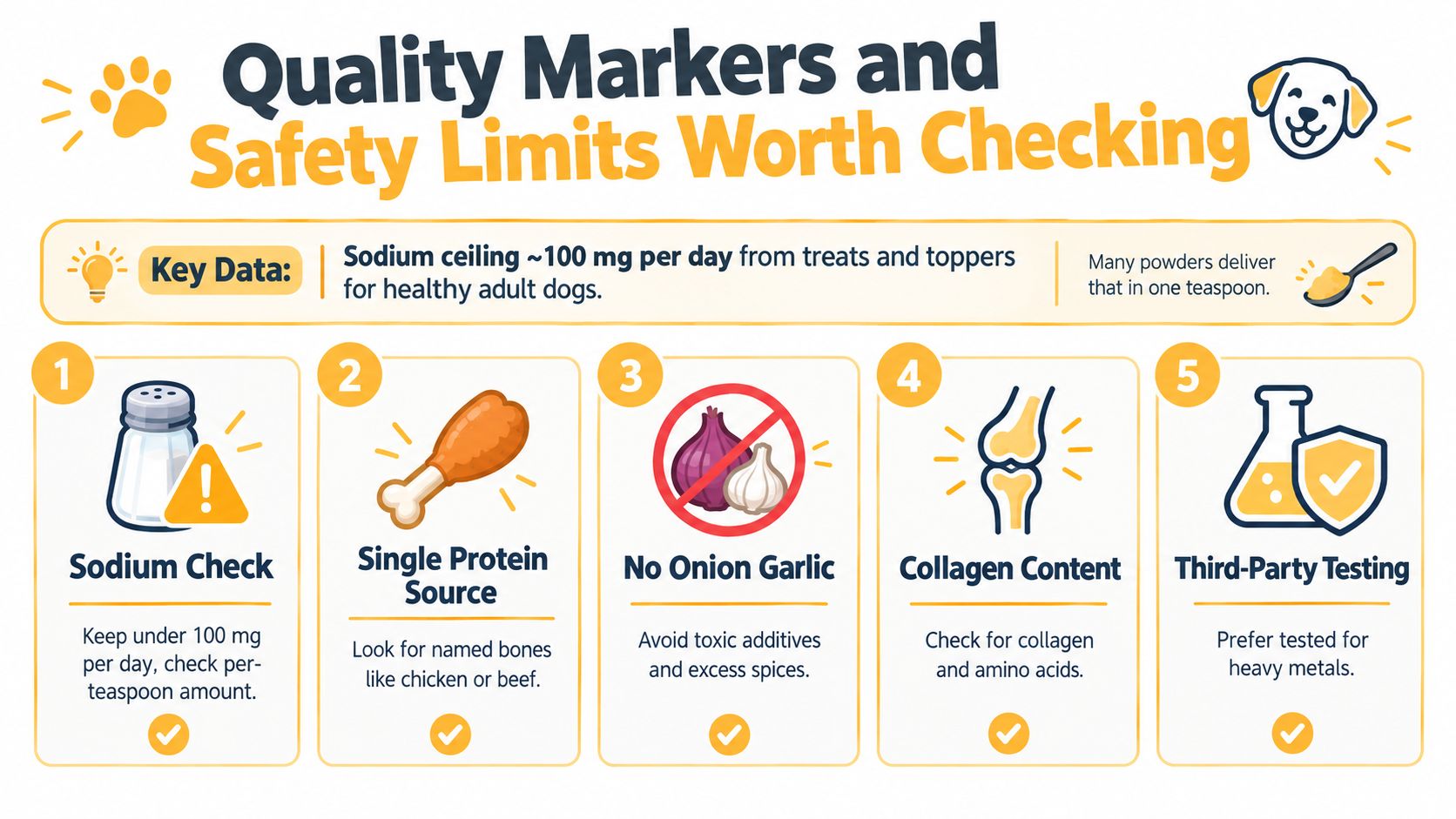
A practical low-sodium target for a finished product is below roughly 100 mg of sodium per serving, according to the canine nutrition guidance cited in this explanation of bone broth safety for dogs. That source also contrasts canine maintenance needs of about 5 to 10 mg sodium per kilogram of body weight with human broths that may contain 400 to 900 mg per cup. These figures show why a human product can be a poor substitute.
Don't judge sodium by the scoop alone. Check the serving size, then calculate how much your dog receives from the actual amount you plan to use. A dog with heart disease, kidney disease, or a prescribed sodium restriction needs veterinary guidance before you add a concentrated topper.
Check the mineral picture
Calcium and phosphorus deserve attention because bone-derived products can contribute both. The issue isn't that calcium or phosphorus are harmful. The issue is cumulative intake from the complete diet, treats, chews, and supplements.
Ask whether the label provides measurable mineral values per serving. If it doesn't, you can't confidently assess the product for a puppy, a senior dog, or a dog whose kidney diet is carefully controlled. The relevant question is not “Does this contain bones?” It's “What mineral load does this particular serving add?”
Independent analysis has found trace heavy-metal residues in animal bone broths, including lead and cadmium at only a few micrograms per serving in one peer-reviewed analysis. That finding doesn't make broth intrinsically unsafe, but it does make ingredient control and finished-product testing important. Guidance on low-sodium bone broth and testing describes why documented heavy-metal testing is a more useful quality marker than vague wellness language.
A label-reading checklist
- Named ingredients: Look for clearly identified animal sources rather than an unexplained blend.
- Sodium disclosure: Confirm the amount per serving and whether salt has been added.
- Calcium and phosphorus: Prefer products that provide mineral information when those values matter to your dog.
- Toxic seasoning exclusions: Avoid onion, garlic, leek, chive, and xylitol.
- Testing documentation: Prefer a manufacturer that can provide batch testing for heavy metals and contamination.
- Manufacturing details: Check the country of manufacture, storage instructions, moisture information, and preservative type.
Batch testing is worth understanding because it concerns the finished product, not only the raw ingredients. This explanation of batch testing offers useful context for what manufacturers mean when they describe testing practices.
Practical rule: if the label won't tell you how much sodium and mineral content the serving adds, treat that uncertainty as part of the product's risk.
How to Serve Bone Broth Powder Safely
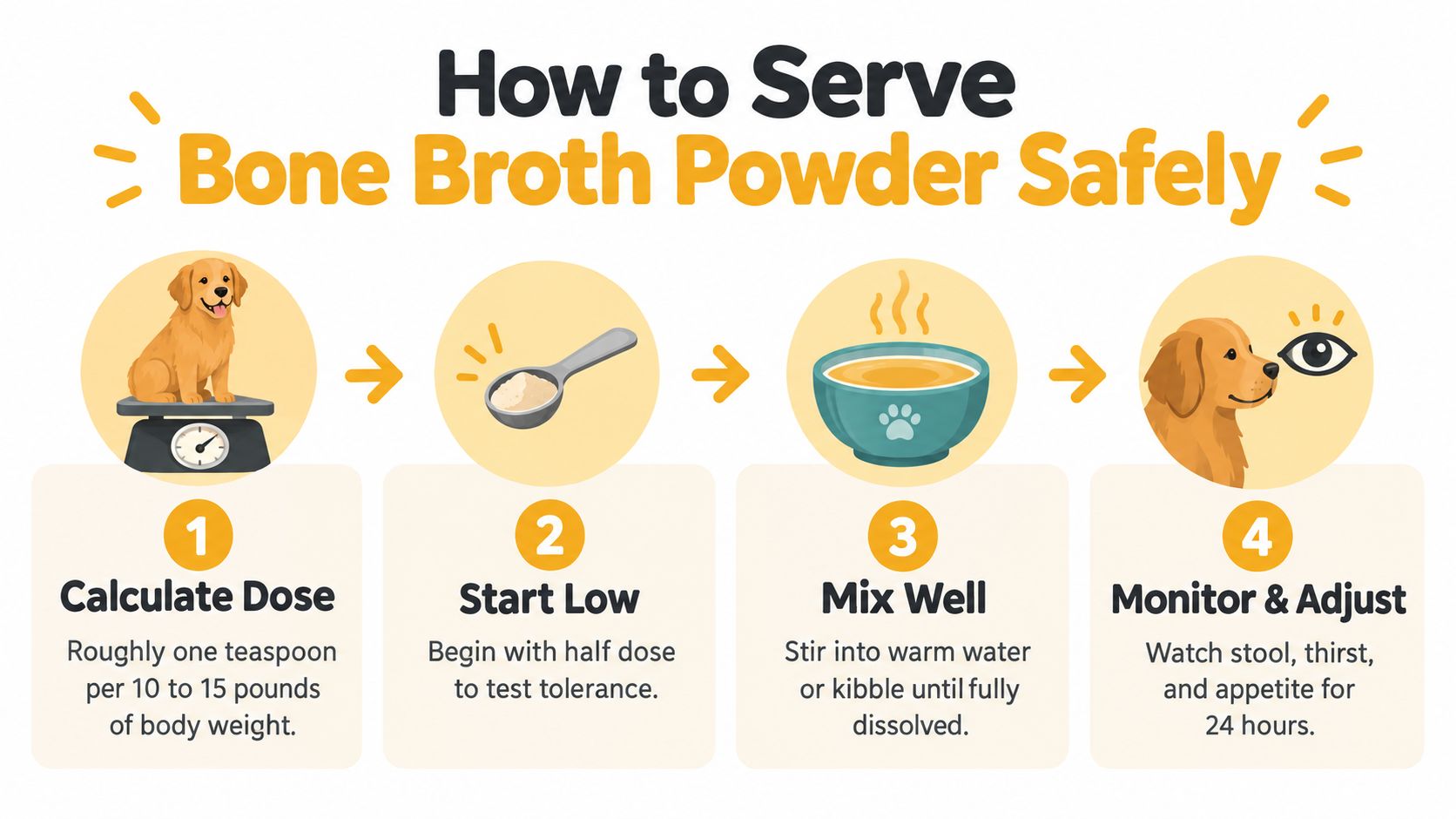
Serving instructions on the package should take priority over generic internet formulas because powders vary in concentration. One commonly suggested starting point is roughly one teaspoon per 10 to 15 pounds of body weight, with a large-breed ceiling of one tablespoon, but the product's own directions remain the final authority.
Start below the full label serving. A half portion lets you assess taste, stool quality, thirst, and appetite before you commit to a routine. This matters even more for dogs with sensitive digestion or diets that are already tightly controlled.
A simple introduction routine
- Weigh the dog accurately. Use current body weight, not an old estimate.
- Read the product serving guide. Check whether the amount refers to dry powder or reconstituted broth.
- Begin with a partial serving. Give it with a normal meal rather than introducing several new foods at once.
- Observe for a day. Watch stool, appetite, drinking, and general comfort before increasing.
- Increase only if needed. If a small amount improves palatability, more isn't automatically better.
Dry powder sprinkled over dry kibble may cling poorly and can leave some dogs unimpressed. Dissolve it in a small amount of warm water, then stir the mixture through the food. The result should be a thin coating or gravy, not a salty soup.
A hesitant dog may accept a pourable mixture more readily than a dry sprinkle. For a dog with a sensitive stomach, divide the daily amount between meals instead of giving it all at once. Don't use onion- or garlic-containing stock as a mixing liquid, and don't assume “warm” means hot. Excessive heat can make food uncomfortably hot and may affect texture.
You may see softer stool or increased drinking after a new topper. Those signs don't automatically mean danger, but they're reasons to pause or reduce the amount. Stop the product and contact your veterinary clinic if your dog develops persistent loose stool, vomiting, marked thirst, restlessness, or refuses normal food.
For a visual demonstration of mixing and serving, watch the embedded guide below.
Powder Versus Liquid Versus All-in-One Supplements
The format determines more than storage. It changes how precisely you can measure the dose, how much moisture you add, how many extra ingredients enter the diet, and how easily you can identify the source of a problem if your dog reacts.
Powder usually offers the cleanest control over portion size and storage. Liquid broth may be easier for a dog that refuses powder or needs more moisture in a meal. An all-in-one supplement can make sense when the owner has a clearly defined need for several ingredients, but the longer the ingredient list, the more carefully it should be reviewed.
| Bone Broth Formats Compared for Dogs | Bone Broth Powder | Liquid Bone Broth | All-in-One Supplement |
|---|---|---|---|
| Portion control | Usually straightforward with a scoop or spoon | Depends on the pour and serving guide | Often measured by a defined scoop |
| Sodium management | Can be assessed per dry serving | Can vary with dilution and recipe | Depends on the complete formula |
| Storage | Convenient and shelf-stable when kept dry | Requires more attention after opening | Usually simple if kept dry |
| Palatability | Strong aroma when mixed into food | Often immediately appealing because it is already liquid | Depends on the blend and flavour |
| Ingredient complexity | May be simple or may include additives | May contain stock ingredients or seasoning | Usually contains multiple functional ingredients |
| Best fit | Healthy dogs needing a measured topper | Dogs that prefer liquid or need extra moisture | Dogs with a broader, clearly defined supplement goal |
Match the format to the dog
A young, healthy dog eating a complete diet may only need a simple powder if the owner wants occasional palatability support. A senior dog with joint concerns might justify a targeted multi-ingredient formula, but only after checking that it doesn't duplicate other supplements.
A dog that is sick, recovering, or refusing food needs a more cautious plan. Liquid food may be easier to offer, but appetite loss can signal an underlying problem. Fresh broth made under veterinary guidance may be more appropriate than adding a concentrated commercial powder without assessing the dog's condition.
Cost should be judged per serving and per useful ingredient, not by container size. A multi-ingredient formula isn't automatically better value if your dog only needs moisture and flavour. Conversely, a basic powder may not replace a targeted supplement when a veterinarian has identified a specific nutritional need.
Owners interested in preparing a homemade option can review this guide to making bone broth for dogs, but homemade broth still requires careful attention to fat, sodium, and prohibited ingredients.
Putting It All Together and Talking to Your Vet
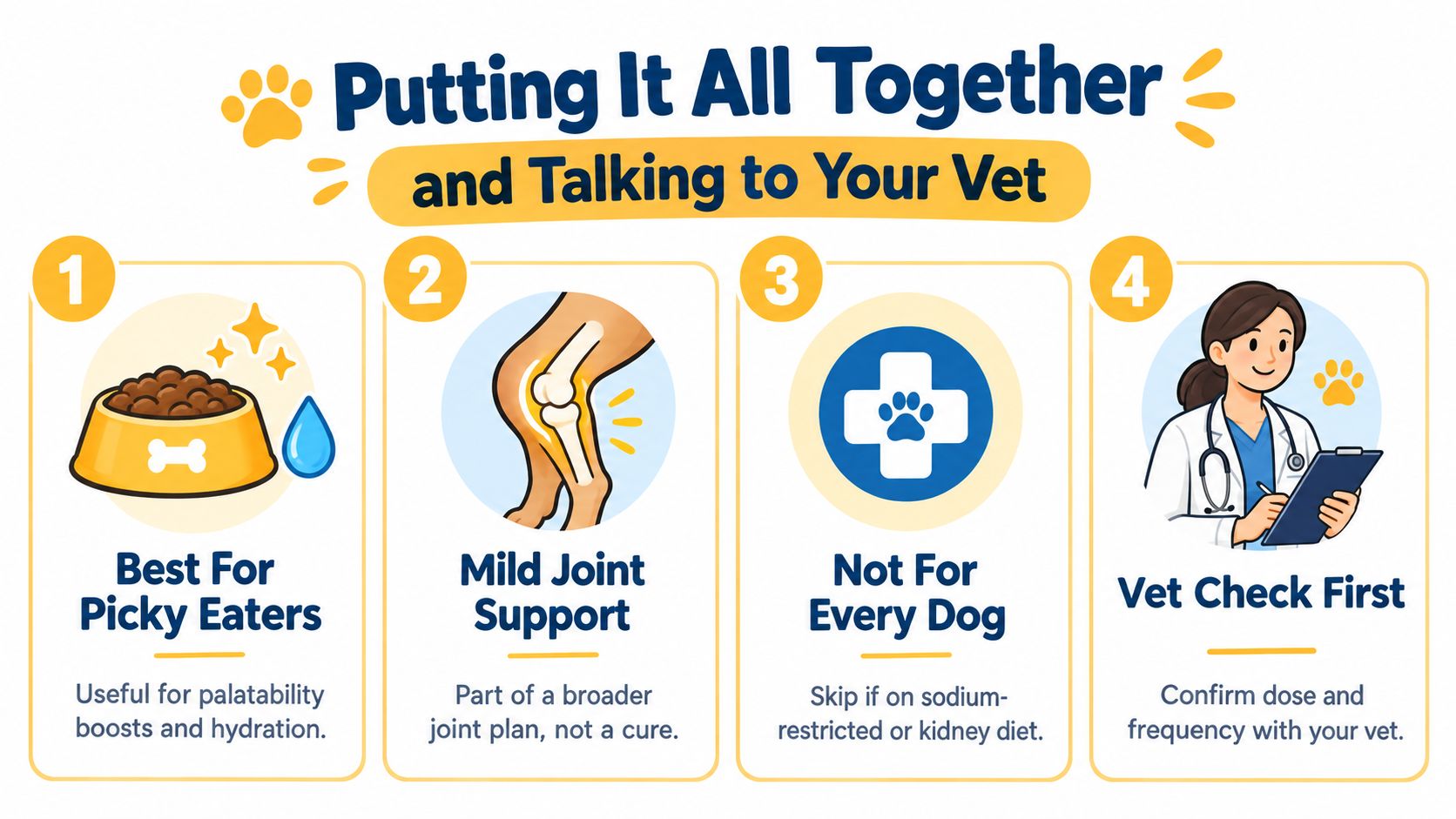
Bone broth powder can earn a place in a dog's routine when the purpose is specific. It may help make food more appealing, add moisture, or provide a modest supportive ingredient alongside a complete diet. Those are practical uses. They're different from treating arthritis, kidney disease, digestive disorders, or immune conditions.
A dog is a reasonable candidate for discussion when:
- The goal is palatability: The dog eats more reliably when food has a savoury aroma.
- The goal is moisture: Reconstituted powder helps turn dry food into a softer meal.
- The goal is modest support: The owner understands that a topper is only one part of a broader joint or digestive plan.
- The label is transparent: Sodium, ingredients, serving size, and testing information are available.
A dog may be a poor candidate when kidney disease, heart disease, pancreatitis history, or sodium restriction is involved. Puppies, seniors, and dogs on therapeutic diets also deserve more careful mineral review because a supplement can alter the balance of an otherwise controlled feeding plan.
Three questions for the veterinary appointment
- Could sodium, calcium, or phosphorus interact with my dog's condition or medication?
- Does the main food already provide the appropriate mineral balance for this dog?
- Is another joint, gut, skin, or general supplement already covering the same goal?
Bring the product pouch or a clear photograph of the entire label. Ask the clinic to review the exact serving rather than discussing bone broth as a general category. If vomiting, diarrhoea, increased thirst, restlessness, or refusal of normal food appears after serving, stop the powder and call the clinic.
Bone broth powder is a supplement, not a treatment. Choose it for a defined reason, verify its mineral load, introduce it slowly, and keep therapeutic expectations with your veterinarian.
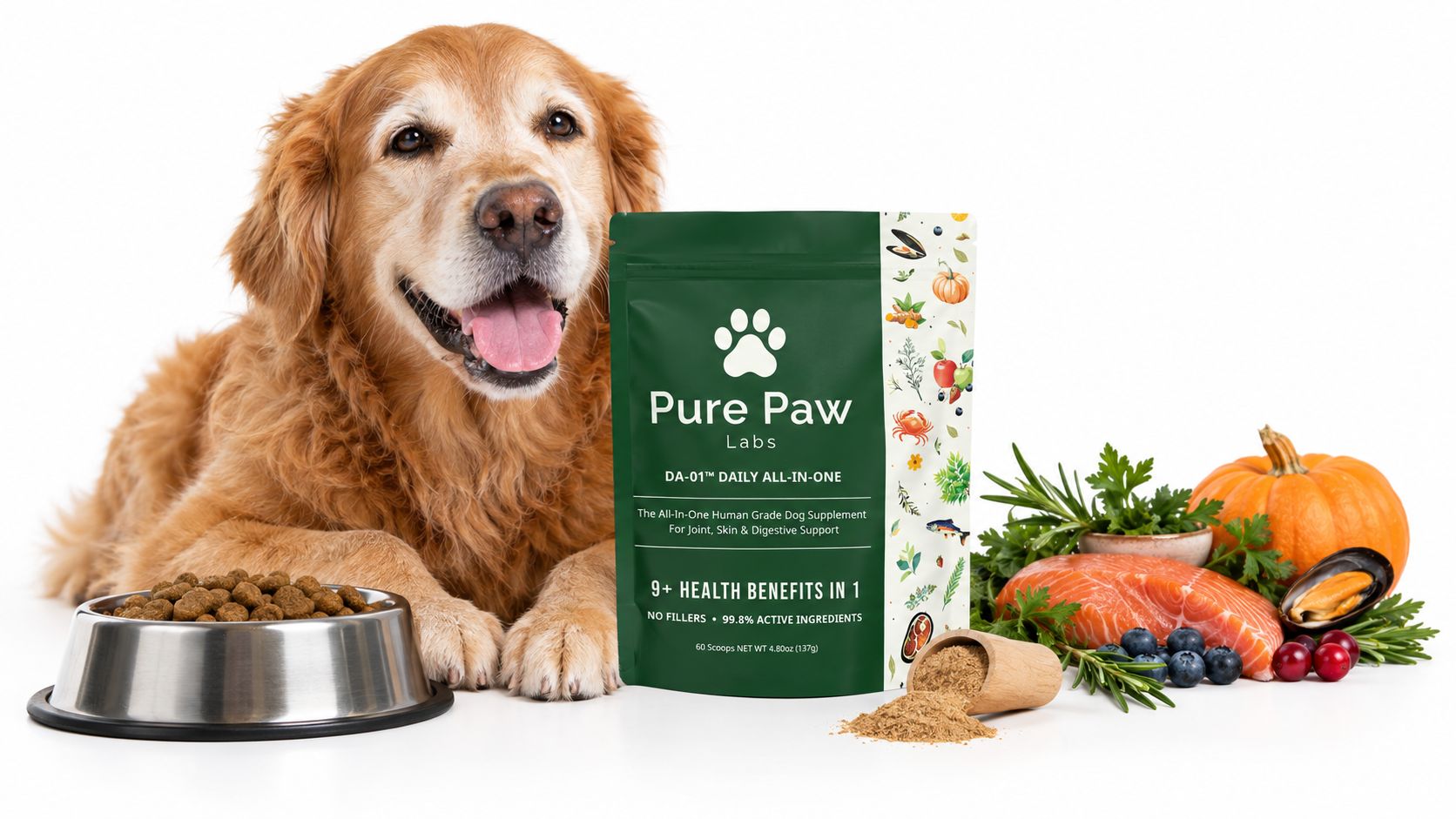
Pure Paw Labs offers human-grade powdered supplements designed to combine several daily support categories, including joints, skin and coat, gut, immune, and stress-related needs, into a single routine. If you're deciding between a simple bone broth topper and a broader formula, visit Pure Paw Labs to review the available approach and compare it with your dog's actual nutritional needs.