


You're probably here because your dog turns away from plain kibble, or you want a warm topper that feels more thoughtful than another store-bought treat. Bone broth can do that job well, but only if you make it like a kitchen pro, not like a casual soup recipe. The difference is in the details, especially what goes in, how long it cooks, and how fast it cools.
Used correctly, bone broth for dogs is a small-portion supplement, not a meal replacement. That matters because the value is usually palatability, hydration support, and a bit of extra comfort at mealtime, while the science specific to dogs is still limited and the safety rules are strict. The practical goal is simple, make a broth your dog can tolerate and you can store safely without guessing.
Table of Contents
- What Bone Broth Actually Does for Your Dog
- Choosing Safe Bones and Ingredients
- Three Cooking Methods Compared
- Straining, Cooling, and Storing Safely
- Serving Sizes and Dogs Who Should Skip Broth
- Pairing Broth with Daily Supplements
What Bone Broth Actually Does for Your Dog
A lot of dog owners start here for the same reason I did the first time I made a batch. The dog is picky, the bowl comes back half full, and you want something warm and nourishing that doesn't turn dinner into a fight. Bone broth can absolutely help with that, but the honest value is narrower than social media makes it sound.
Real-world benefits, realistic expectations
The strongest practical uses are palatability and hydration support. A little broth over kibble can make a meal more appealing, and that matters for seniors, recovering dogs, or dogs that get bored with the same dry food every day. It can also help turn a reluctant eater into a willing one without forcing a bigger dietary change than necessary.
That said, the evidence base specific to dogs is still thin. A 2023 industry review said there's no conclusive research data specifically for pets such as dogs and cats, and it warned against treating broth like a cure-all or a substitute for medication or veterinary supplements, while a separate observation reported a positive shift in gut microbiome markers after feeding bone broth for 4 weeks (Global Pet Industry). The broader lab picture is also modest, with calcium and magnesium levels expected to land in the low tenths of μg/ml under normal cooking conditions in one peer-reviewed analysis cited in that review.
Practical rule: if a broth claim sounds like it replaces a real treatment, it's too big. Think topping, not therapy.
Why the supplement mindset matters
The best way to use broth is as part of a bigger feeding routine, not as the thing that carries the whole diet. That's where a useful comparison appears. A well-made broth can improve mealtime acceptance, but it doesn't provide the balanced, multi-system support you'd expect from a complete daily supplement or from a properly formulated food plan. For broader nutrition context, see Pure Paw Labs' guide to dog bone broth benefits.
The home-cook lesson is straightforward. Make broth for the reason it serves, a warm, dog-safe topper that your dog enjoys, then keep your expectations grounded in what the evidence can support.
Choosing Safe Bones and Ingredients
A good batch starts before the pot goes on the stove. The ingredient list should be short enough to check at a glance, because safe broth begins with raw bones, water, and, if you use it, a small amount of acid for extraction. Once the recipe starts drifting toward generic soup, the safety risk goes up and the purpose gets fuzzy.
What belongs in the pot
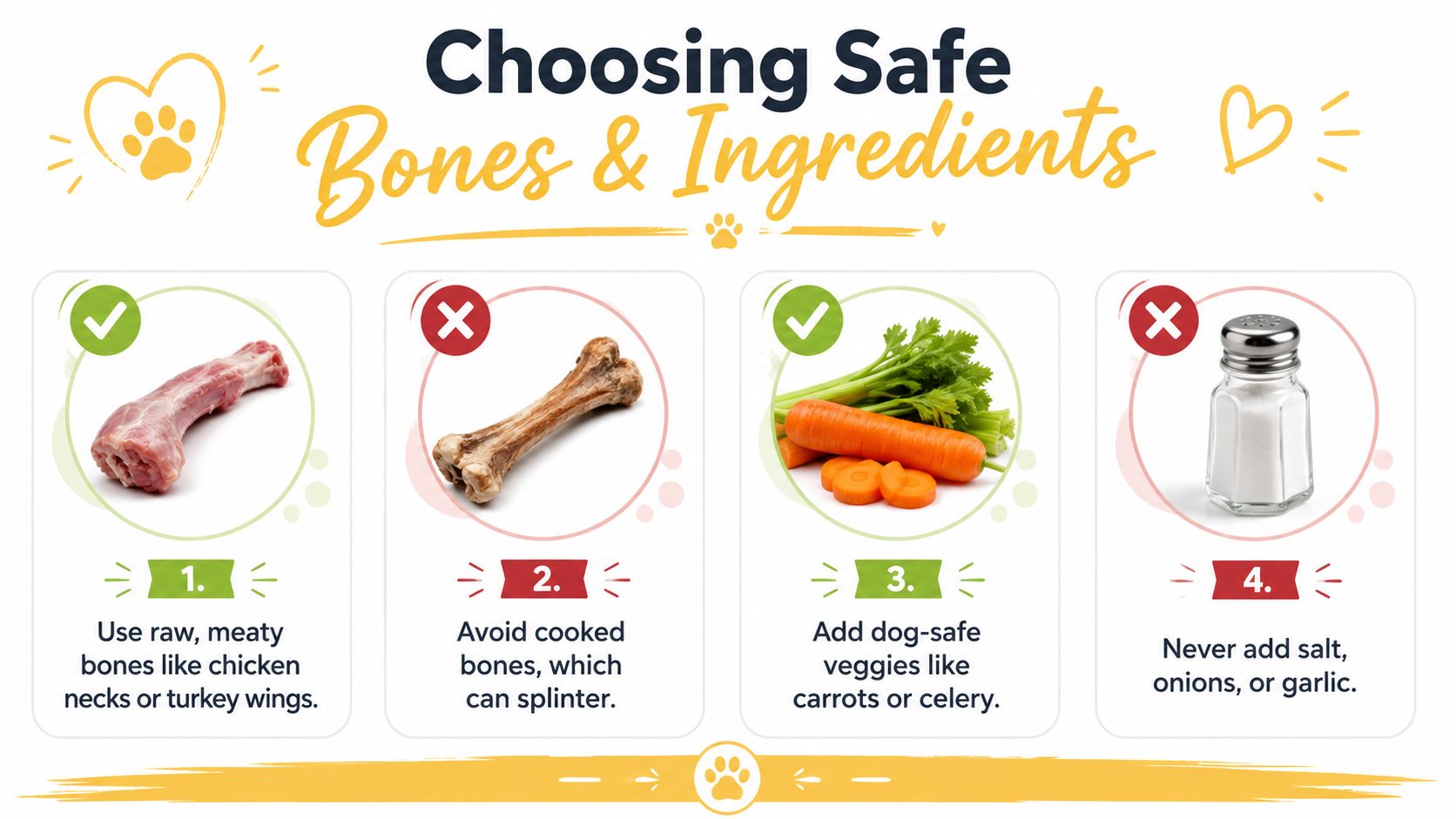
The safest base is raw, meaty bones from a reputable source, covered with water and simmered with a small amount of apple cider vinegar. That vinegar step shows up in many home recipes because it helps pull gelatin and some minerals from the bones during a long cook. If you want vegetables, keep them plain and dog-safe, with carrots or celery used for mild flavor rather than as the center of the broth.
A stripped-down batch is often the easiest to manage. Fewer ingredients make it simpler to see whether your dog tolerates the broth well, especially the first time you serve it. I usually start there, because “healthy” additions are not automatically useful, and a simple pot is easier to monitor for smell, texture, and storage problems.
What should stay out
Never use cooked bones in the broth or as a leftover chew. Cooked bones can splinter, so the bones need to be removed completely and the broth strained well enough that no fragments remain. Skip salt, onion, and garlic, which are specifically called out in pet-safe guidance as ingredients to avoid.
Safety note: if the broth tastes like a human soup, it is probably too seasoned for a dog.
That same safety-first approach applies to the rest of the bowl. Dogs with sensitive stomachs, high-fat diet restrictions, or conditions that require tighter feeding control do better with the plainest version, served sparingly. If you are building a broader daily nutrition routine, keep broth simple and use other support tools for the rest. For a nutrition-focused overview, see Pure Paw Labs' dog gut health guide.
If you want a separate daily routine option, Pure Paw Labs' DA-1™ Daily All-in-One - Senior Dog Support, Joints, Skin/Coat & More is positioned as a multi-system formula that fits alongside broth rather than replacing it. Use broth as a food topper and keep supplement choices tied to the bigger feeding plan, not to the broth pot itself.
Three Cooking Methods Compared
The method matters less than many recipe posts suggest. What changes the result is steady low heat and enough time for the bones to release gelatin and flavor. In a home kitchen, the choice is how much attention you want to give the pot.
Stovetop, slow cooker, or pressure cooker
A stovetop pot gives the most control. Cover the bones with water, add a little acid, and keep the liquid at a low simmer for an extended stretch. One recipe source points to 24 to 36 hours for a longer simmer, while the same guidance also notes a 2 to 3 hour pressure-cooker path, which shows that the equipment changes convenience more than the basic extraction process (Dogs Naturally Magazine).
| Bone Broth Cooking Methods at a Glance | |||
|---|---|---|---|
| Method | Cook Time | Effort Level | Gelatin Yield |
| Stovetop | Long, low simmer | Higher, because you need to watch it | Strong when kept at a steady low heat |
| Slow cooker | About a day in many recipes | Low, mostly hands-off | Strong, especially with extended cooking |
| Pressure cooker | Much shorter than the other methods | Low to moderate | Good, but the texture is often less visually obvious until chilled |
The stovetop gives you the most control, which helps if your pot runs hot. The slow cooker is the least fussy, and that is why I use it when I am making a batch around other kitchen tasks. The pressure cooker wins on speed, but you lose some of the easy visual cues that show the broth is extracting well.
How to tell it's done
Done broth usually smells rich, looks deeper in color than plain water, and feels slightly tacky once it cools. A properly set batch will turn jelly-like in the fridge, which is a good sign that gelatin extraction happened well. That chilled texture is more useful than chasing a rigid minute count, because bones, pot size, and burner strength all change the timing.
The equipment is the convenience choice. The low heat and the chill test are the quality control.
For practical feeding, broth also needs a place in the larger routine. I keep it as a small topper, not a replacement for balanced meals, and I use other support tools for the rest of the day. If you want a separate daily routine option, Pure Paw Labs' DA-1™ Daily All-in-One - Senior Dog Support, Joints, Skin/Coat & More is positioned as a multi-system formula that fits alongside broth rather than replacing it.
Straining, Cooling, and Storing Safely
This is the section most recipes rush through, and it's the one that matters most. A broth can be perfectly cooked and still be a bad batch if it cools too slowly, keeps too much fat, or leaves bone fragments behind. Safety starts after the simmer, not before it.
The steps that keep the batch safe
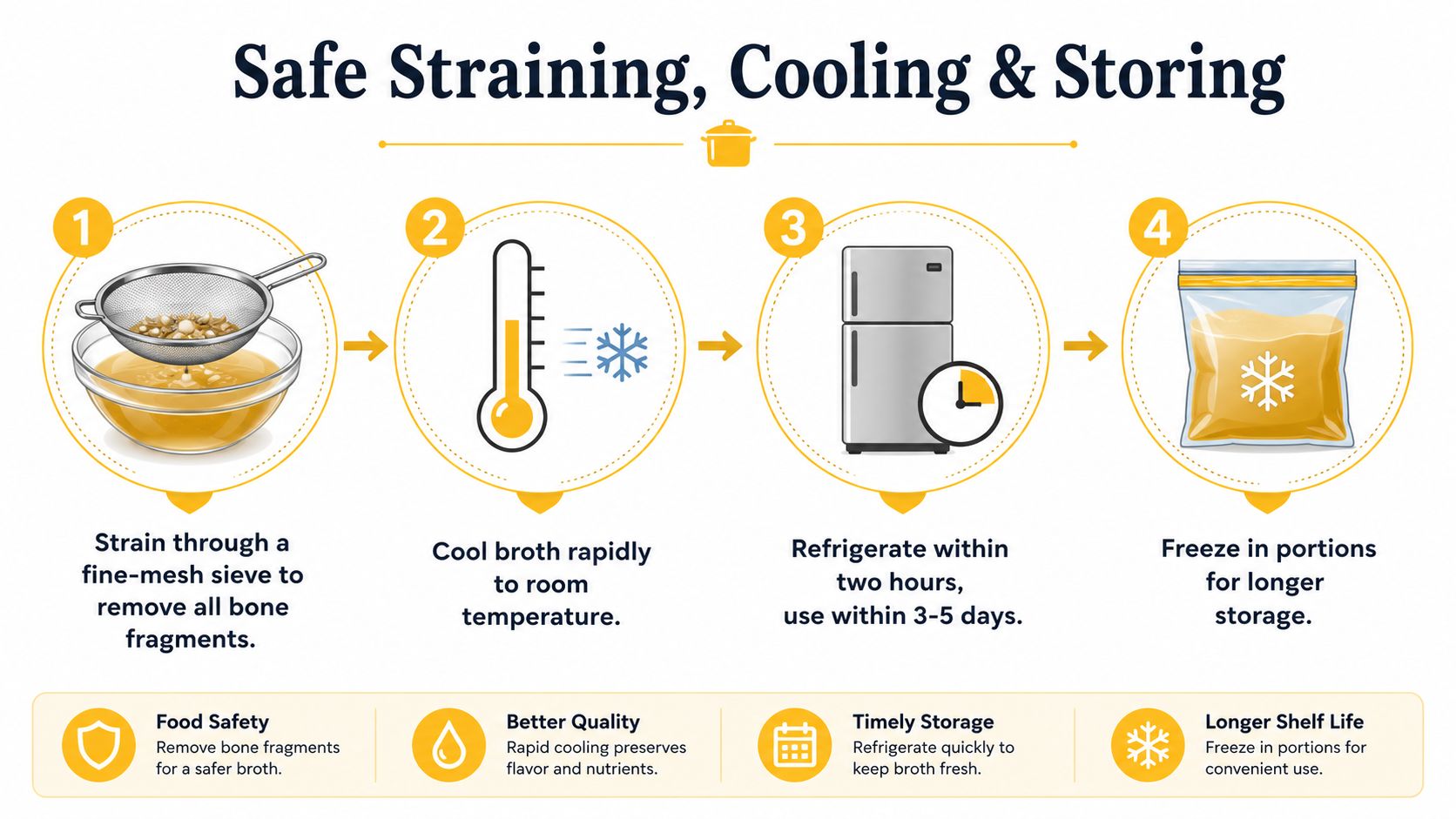
First, strain the broth through a fine-mesh sieve and make sure no splinters or fragments survive the process. Then cool it promptly, because long waits on the counter create avoidable risk in a broth that's been sitting warm for hours. One recipe specifically warns to cool broth quickly to avoid bacterial growth, then refrigerate it overnight so the fat can separate cleanly (Proper Natural).
Once the broth chills, the fat should solidify on top. Remove that layer before serving, especially if your dog has any pancreatitis risk or does poorly with rich foods. Several guides also describe the final cold broth as jelly-like, which is a reassuring sign that gelatin made it into the pot.
How long to keep it
A practical storage window in the cited guidance is about one week refrigerated, or frozen in portions for longer keeping (YouTube video guide). That's the safest way to work with a long-simmer product, because the smaller the portion, the less often you need to open and rewarm the whole batch. I like freezing broth in shallow containers or silicone portions so I can thaw only what I need.
Kitchen habit that pays off: chill first, portion second. It's cleaner, safer, and easier to reuse.
A cooling workflow that respects temperature and time is the whole game here. The moment you stop treating broth like “just soup,” the storage process gets much easier to manage and a lot less guessy.
Serving Sizes and Dogs Who Should Skip Broth
Broth should stay in the category of a measured add-on, not something you pour freely into every bowl. A practical serving for routine use is a small amount that scales with the dog's size, with about 1 ounce per 10 pounds of body weight per day used as a conservative upper guideline in general pet-feeding advice. That number is a ceiling, not a goal, and for many dogs the right amount is lower, especially if the broth is rich or the dog is already getting plenty of extras in the rest of the diet.
Start small and watch the dog
The first time I serve broth, I start with a small splash and wait to see what the stomach does. Loose stool, vomiting, lip-smacking, or obvious discomfort after the meal are the signs that matter most. If any of those show up, stop the broth and reassess instead of trying to push through because the batch turned out well.
Body size matters, but tolerance matters more. A larger dog can handle a larger volume, yet a bigger pour is not automatically better, especially if the dog is overweight or tends to react to rich food. Broth still works best as a topper, or as a small hydration support, not as a major part of the ration. For a broader look at how I fit it into feeding routines, see Pure Paw Labs' holistic dog nutrition guide.
Who should get vet approval first
Dogs with pancreatitis risk, obesity, or sodium-sensitive conditions need extra caution, and some should skip broth unless a veterinarian says it fits their diet. Dogs on restricted diets need the same scrutiny, because even a plain broth can change the fat load or nudge a carefully balanced meal out of alignment. Puppies should also get a vet check before broth becomes a regular part of feeding.
| Weight or Situation | Practical Approach |
|---|---|
| Small adult dog | Start with a small splash, then stay conservative if the stomach stays calm |
| Large adult dog | Keep portions modest, even if the dog wants more |
| Pancreatitis-prone dog | Avoid rich broth and remove every bit of fat |
| Puppy | Ask the vet before regular use |
The common mistake is assuming homemade broth is automatically safe for every dog. It isn't. Use broth where it helps, skip it where it adds risk, and let the dog's medical history decide where the line is.
Pairing Broth with Daily Supplements
Broth works best when it has a narrow job, making the meal more appealing or adding a little hydration support. A daily supplement should handle the heavier routine support if your goal is broader coverage for joints, skin, gut comfort, or stress. That split keeps the bowl simple and makes it easier to tell what is helping.
How to make the routines complement each other
If your dog takes a daily powder, broth can be the mixer that helps the bowl get finished without adding a long ingredient list to the day. Warm, not hot, broth can help a supplement blend more evenly, but I still prefer to keep the broth separate when I am trying a new batch or a new formula. If the dog reacts poorly, you want a clear read on whether the broth or the supplement caused it.
Some owners want the convenience of one daily scoop and nothing else to manage, and that is a fair goal. A product like DA-1™ Daily All-in-One is set up as a single-scoop routine, so it fits naturally when you want daily support without building a long supplement stack. Broth can sit beside that kind of routine as a topper, not compete with it.
A practical feeding rhythm
I like the simplest version. Serve the supplement in the dog's regular food, add a modest amount of cooled broth if the dog needs encouragement, and keep the rest of the diet steady for a few days before making any changes. That makes tolerance easier to judge and keeps the kitchen routine from turning into guesswork.
The bigger principle is consistency. If you are already cooking for your dog, broth can be one part of a more deliberate daily plan rather than a random extra. For a closer look at how that kind of routine fits into a wider feeding strategy, see Pure Paw Labs' guide to daily dog nutrition.
If you want to build a safer daily routine for a picky eater or a senior dog, start with one small batch of broth, keep the ingredients clean, and pair it with a steady supplement plan that does not overcomplicate the bowl. Visit Pure Paw Labs to review the current DA-1™ routine and decide whether a single-scoop supplement plus homemade broth makes sense for your dog's feeding plan.