


Your dog's ears smell sour, the skin looks red, and paw licking has become part of the evening routine. You remove a treat, switch foods, and hope the next change will finally stop the cycle. A week later, the odor returns, and you're left wondering whether carbohydrates, allergies, moisture, or something else is driving the flare.
An anti fungal diet for dogs can be useful, but it shouldn't be treated as a cure for an active infection. The practical approach is to use food as supportive care for the gut, skin barrier, and immune system, while your veterinarian identifies and treats yeast overgrowth directly when needed.
Table of Contents
- Why Your Dog Keeps Getting Yeasty and What Diet Can Do
- Understanding Yeast Overgrowth Beyond Carbs
- Foods to Avoid and Foods to Include for Yeast Prone Dogs
- Your Structured 2 to 8 Week Anti Yeast Feeding Plan
- Supplements and Supportive Care That Actually Help
- Monitoring Progress Troubleshooting Setbacks and Next Steps
Why Your Dog Keeps Getting Yeasty and What Diet Can Do
Recurring “yeasty” signs usually follow a pattern. The ears become waxy, the paws stay damp from licking, the coat develops a musty odor, and the skin between the toes turns pink or brown. Record these changes before changing the bowl. Diet is easier to assess when you can compare symptoms with meals, treats, and flare-ups.
Malassezia pachydermatis normally lives on canine skin, so finding yeast does not by itself confirm disease. The more useful question is whether detection occurs with inflammation, odor, discharge, itching, or damaged skin. A dog may carry yeast without symptoms, while another develops repeated problems when the skin is already irritated.

What nutrition can realistically change
Food may help when a sensitivity contributes to inflammation, when the current diet is poorly tolerated, or when consistent feeding improves stool and gut function. It can also expose a pattern involving treats, chews, toppers, or supplements. Remove unnecessary add-ons during a trial so the result is interpretable.
Track itching, ear cleanliness, odor, stool quality, and licking episodes. A simple daily log can use a consistent rating for each sign, plus notes on appetite, new foods, medication, bathing, and environmental changes. Judge progress across two to eight weeks, not from one quiet day or one scratching episode.
The useful outcome is fewer and milder flares, not proof that yeast has disappeared from normal skin. If signs remain active, diet changes should not delay examination or treatment. Ear discomfort, discharge, marked redness, spreading lesions, or persistent odor warrant veterinary attention because yeast can resemble bacterial, parasitic, or allergy-related disease.
Start a feeding trial only when your dog can eat consistently and urgent infection has been addressed. Keep the recipe, treats, portions, and supplements stable during the elimination phase. If symptoms improve, reintroduce one removed item at a time and record whether itching, ear debris, odor, or paw licking returns. That rechallenge provides stronger practical evidence than switching foods repeatedly.
For recurring ear odor or discharge, bring the log to your veterinarian and review this guide to dog yeast ear infections when preparing questions. Food can support a clearer two-step process, elimination followed by controlled rechallenge, while veterinary checkpoints determine whether the pattern reflects diet or needs direct medical care.
Understanding Yeast Overgrowth Beyond Carbs
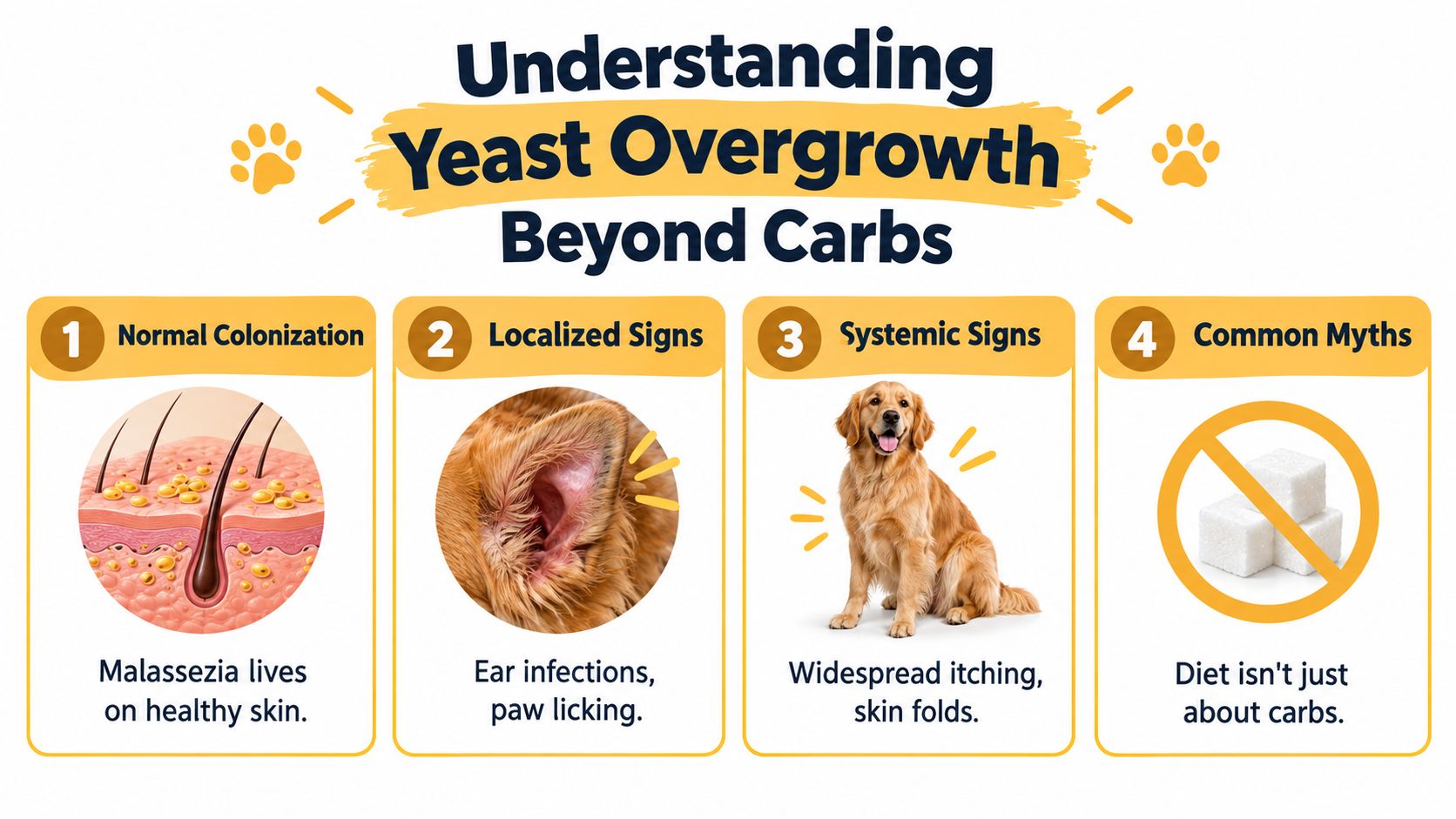
A dog with one inflamed ear needs a different plan from a dog with widespread lesions, persistent skin-fold inflammation, or signs of systemic illness. The familiar idea that “yeast feeds on carbohydrates” is too narrow. Malassezia normally lives on canine skin, while troublesome overgrowth can involve skin-barrier disruption, immune changes, allergies, moisture, or altered local microbiota. Food may support these systems, but it does not act as a direct antifungal drug.
Use the distribution of lesions to set the next checkpoint. For a localized ear or paw problem, arrange an examination, check for moisture and discharge, and keep diet changes limited so treatment response remains clear. For widespread, painful, rapidly worsening, or recurrent lesions, prioritize veterinary assessment before attempting a restrictive feeding trial. The Malassezia review explains why localized and systemic patterns require different decisions, regardless of whether yeast is detected.
Why ears deserve special attention
A retrospective study from a Bulgarian veterinary hospital examined 896 swab samples from dogs with clinical inflammation between 2019 and 2023. It recorded 201 unique Malassezia pachydermatis identifications. Yeast prevalence was 60.19% in dogs with ear infections, with a 95% confidence interval of 51.92% to 69.41%, compared with 4.11% in dogs with skin infections, with a 95% confidence interval of 2.12% to 7.18%. One clinical dataset cannot represent every dog, but the findings support a practical rule: recurrent ear disease needs direct veterinary investigation, not a food-only response. The figures appear in the retrospective veterinary study.
Moisture control also matters. Dry the outer ear and skin folds after bathing, keep paw hair from staying wet, and avoid inserting cotton swabs or home remedies into an inflamed ear. Ask your veterinarian whether cytology, cleaning, or prescription treatment is appropriate.
Restricting several food groups at once can reduce calories, worsen palatability, or create nutritional gaps. It also destroys useful information. An improvement will not show which change helped, while worsening could reflect a missing nutrient, stress, seasonal exposure, infection, or an accidental treat.
The gut-skin-immune connection
Use a two-step process rather than a permanent blacklist. During elimination, keep the recipe, portions, treats, and supplements stable while tracking appetite, stool consistency, lesion location, moisture, and flare frequency. During rechallenge, return one removed item at a time and record any repeat response. That pattern provides more useful evidence than changing foods repeatedly.
- Gut function: Consistent digestion and stool quality help identify tolerance.
- Skin barrier: Adequate protein, essential nutrients, and appropriate fats support normal skin maintenance.
- Immune balance: Nutrition supports normal immune function, but it cannot replace treatment for infection or allergy.
Read more about supporting canine gut health, while keeping expectations grounded. Yeast-derived ingredients may affect selected gut markers without proving that they cure Malassezia dermatitis. Diet is supportive care, not a substitute for examination or antifungal treatment.
Foods to Avoid and Foods to Include for Yeast Prone Dogs
The most useful food plan is not a permanent blacklist. It's a temporary, controlled simplification that removes likely confounders while preserving complete nutrition. “Low sugar” by itself isn't a sufficient rule because commercial foods, treats, toppers, supplements, and table scraps can all change the overall diet.
During the trial, pause foods that make tracking difficult or that add substantial starch, sweetness, or unnecessary ingredients. Don't automatically remove every grain, vegetable, or carbohydrate source forever. The purpose is to learn what your individual dog tolerates, not to create a nutritionally fragile menu.
Anti Yeast Food Swaps at a Glance
| Category | Pause During Trial | Supportive Alternative |
|---|---|---|
| Main diet | High-starch kibble when it dominates the food pattern | A complete diet with a simpler ingredient profile and an appropriate protein source |
| Treats | Sugary biscuits, mixed-ingredient chews, and frequent food rewards | Small portions of the trial diet or a single, clearly identified treat |
| Add-ons | Fruit and vegetable mixtures that introduce several variables | One low-starch vegetable only if your dog tolerates it |
| Protein | A protein your dog has repeatedly reacted to | A suitable familiar or novel protein selected with veterinary guidance |
| Fats | Rich table scraps and unmeasured oils | Measured dietary fat from the complete food, or a vet-approved omega-3 source |
| Dairy | Sweetened or flavored dairy products | Skip dairy unless your veterinarian specifically recommends a plain, tolerated option |
| Supplements | Several new powders, oils, chews, and probiotics at once | One purposeful addition, introduced separately |
Build the bowl without breaking the diet
For a dog eating commercial food, start by selecting a nutritionally complete product rather than assembling a homemade bowl from meat and vegetables alone. Meat can supply protein, but an improvised recipe may not supply the full balance of vitamins, minerals, fatty acids, and calories a dog needs.
If you cook for your dog, use a recipe formulated for canine nutritional completeness and ask your veterinarian or a qualified veterinary nutrition professional to review it. Keep extras modest and consistent. A “healthy” topper can still undermine the trial if it changes too much at once or replaces a meaningful part of the balanced food.
A simple example might be the dog's regular complete food, one measured protein source, fresh water, and a single approved treat used consistently. For a sensitive dog, even that may be too much variety. For another dog, a modest amount of a tolerated low-starch vegetable may be reasonable. The correct choice depends on the dog's medical history, body condition, stool response, and current diet.
Read labels with a purpose
Look beyond front-of-pack language. Record the first ingredients, named protein sources, major starch sources, added sweeteners, and every treat or chew. You're not searching for a magical “anti-yeast” label. You're looking for a diet you can feed consistently while monitoring symptoms.
Avoid sudden restriction in an underweight, growing, pregnant, nursing, or medically complex dog without professional input. A narrower diet isn't automatically a better diet, and refusal to eat can create a more immediate health problem than the original food question.
Your Structured 2 to 8 Week Anti Yeast Feeding Plan
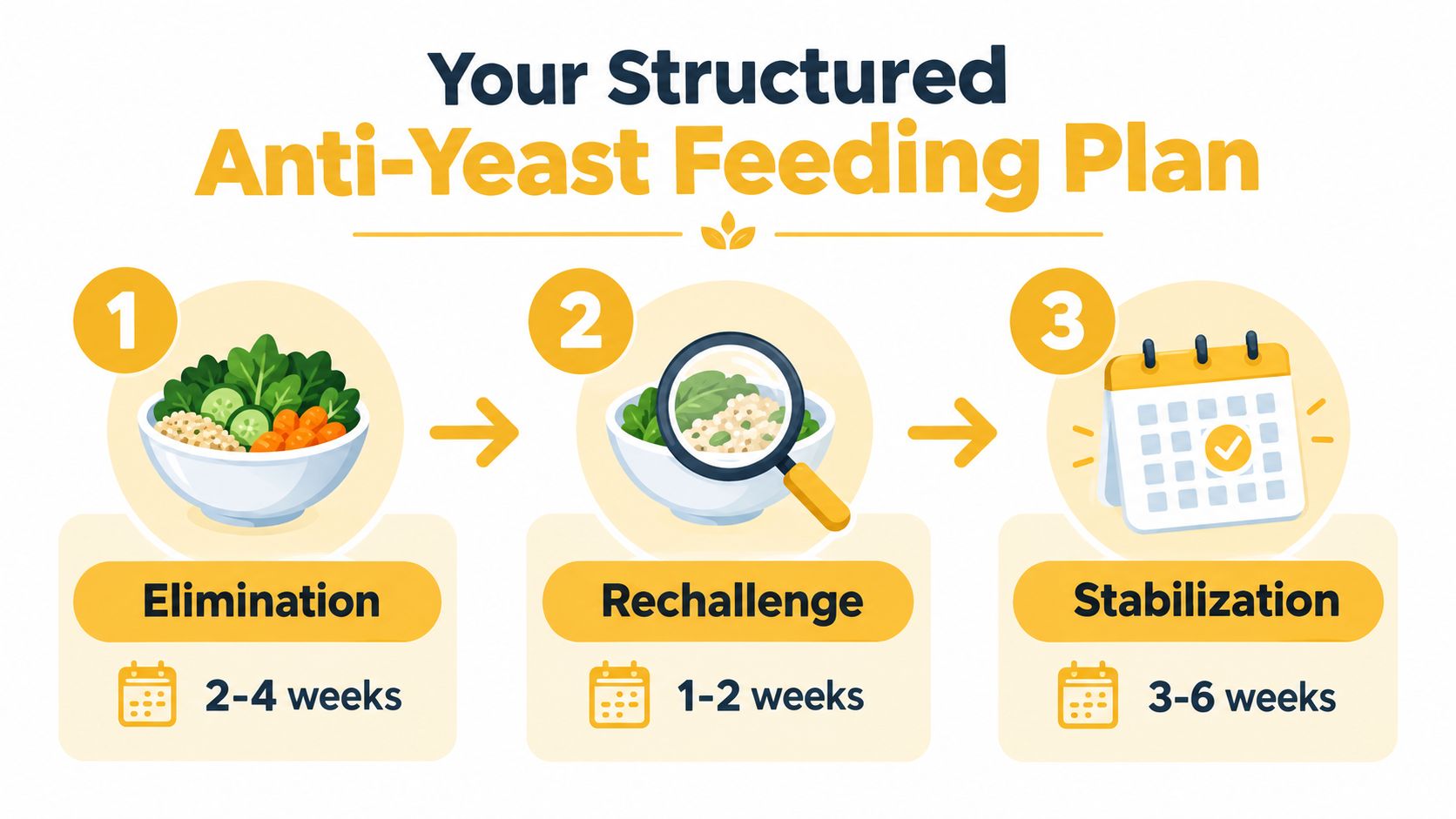
A reliable anti fungal diet for dogs needs a sequence. The protocol below uses two core stages, stabilization and rechallenge, within an overall monitoring window that can extend from two to eight weeks. The point is to change one meaningful variable at a time and record what happens.
Step one stabilization
Begin by removing high-starch kibble, treats, and fruit or vegetable add-ons that aren't needed for nutritional completeness. The stabilization window should last three to six weeks, provided your veterinarian agrees that the plan is appropriate and your dog continues to eat, drink, and maintain normal energy.
Keep the rest of the routine boring. Feed at consistent times, use the same bowls, avoid flavored medications when alternatives exist, and don't introduce a new shampoo, supplement, chew, or training treat during the same period unless your veterinarian directs you to do so.
Create a daily log with five measures:
- Pruritus: Record the general level of scratching or rubbing.
- Ear debris: Note whether wax, discharge, or visible debris is increasing or decreasing.
- Odor: Track the intensity from ears, paws, folds, or coat.
- Stool quality: Record whether stools remain formed and comfortable to pass.
- Licking frequency: Note paw licking, chewing, and focused grooming episodes.
A simple morning and evening note is enough. You're looking for a pattern, not laboratory precision.
Step two rechallenge
After stabilization, reintroduce one ingredient class at a time every five to seven days. Choose one change, keep the serving controlled, and continue the log. If itching, ear debris, odor, stool changes, or licking clearly worsen, stop that reintroduction and return to the stable diet until your dog settles.
Don't reintroduce several ingredients because you want to finish quickly. A slow rechallenge produces useful information. It can also show that a suspected ingredient wasn't the problem, which prevents unnecessary lifelong restriction.
A workable daily rhythm
A practical day might look like this:
- Breakfast: Measured complete food from the stabilization plan, with fresh water.
- Training rewards: Pieces of the same food, rather than a mixed treat bag.
- Dinner: The same core diet, with no unrecorded toppers.
- Optional add-on: Only one approved supplement or ingredient, documented in the log.
For dogs with sensitive stomachs, change foods gradually under veterinary guidance rather than forcing a rapid switch. If loose stools, vomiting, appetite loss, or lethargy develops, pause the experiment and contact your veterinarian. Those signs shouldn't be dismissed as a cleansing response or “die-off.”
Keep the trial honest: A food trial fails when the family feeds one diet at meals, several different treats during the day, and unmeasured table scraps at night.
Adherence matters more than novelty. Tell everyone in the household what counts as an approved reward, measure portions, and keep the written ingredient list on the refrigerator. If the dog attends daycare, training, or boarding, ask what food is being offered there.
A diet study involving yeast-derived ingredients found no loss in digestibility or energy utilization compared with controls, while reporting improved palatability and changes in fecal short-chain fatty acids. The reported functional signals included improved fecal butyrate and propionate, lower fecal odor compounds, and microbiota shifts associated with gut function. That evidence supports a measured gut-support strategy, not a claim that dietary yeast cures skin infection. The findings are detailed in the canine nutrition trial.
Supplements and Supportive Care That Actually Help
Supplements should answer a specific question. Are you trying to support skin-barrier nutrition, improve diet consistency, help stool quality, or reduce the number of separate products in the routine? If you can't name the purpose, adding the supplement probably makes the trial harder to interpret.
Yeast-derived ingredients are a good example of why careful language matters. Research indicates they can be well tolerated and may influence palatability, fecal short-chain fatty acids, and selected gut markers. That doesn't make them topical or oral antifungal medication. Their role is supportive and functional, not curative.
Choose one purpose at a time
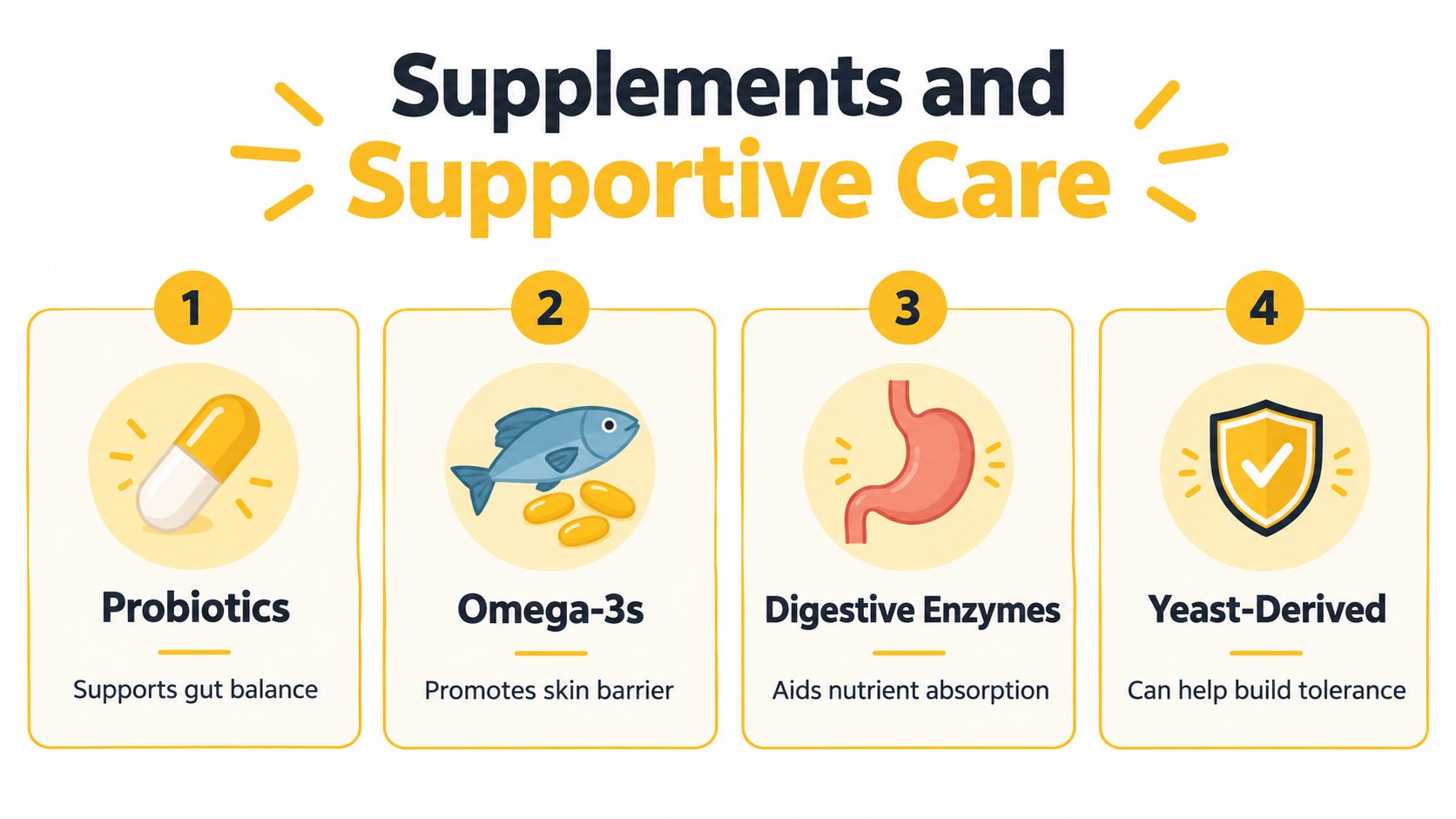
Probiotics may be reasonable when your veterinarian wants to support gut microbial balance, particularly after digestive disruption. Product quality, strain selection, storage, and serving guidance matter, so use a canine product with clear instructions rather than assuming every probiotic behaves the same way. This probiotics guide for dogs with yeast concerns can help you prepare questions for your veterinarian.
Omega-3 fatty acids may support normal skin and inflammatory balance, but the correct product and amount depend on the dog's diet, body size, health history, and other medications. Don't pour multiple oils into the bowl without counting their calories or checking whether your dog has a condition that makes added fat inappropriate.
Digestive enzymes shouldn't be treated as a universal answer for yeast. They may have a role in selected digestive situations, but they aren't a substitute for a complete diet, a diagnostic workup, or infection treatment.
Yeast-derived functional ingredients can be considered for gut and immune support when their purpose, formulation, and serving instructions are clear. Emerging work increasingly discusses these ingredients as microbiome- or immune-supportive rather than directly antifungal, and the review of yeast-derived functional nutrition emphasizes that more work is needed to optimize mixtures and doses.
Simplify the daily routine
If you want one measured topper instead of several separate products, DA-1™ Daily All-in-One - Skin/Coat, Joints, Gut Health & More is described by the manufacturer as a human-grade powder used as one scoop once daily on top of food, combining support categories including skin and coat, digestion, immunity, joints, and stress-related needs. Introduce it as a single variable and record it in the same symptom log.
Stop a new supplement if your dog develops vomiting, diarrhea, appetite loss, facial swelling, hives, or a sudden worsening of itching. Dogs with pancreatitis history, liver or kidney disease, medication sensitivities, pregnancy, or other complex conditions need individualized veterinary advice before supplementation.
A nutraceutical diet study in dogs with otitis externa reported improved symptom scores over 90 days and a modest fall in Malassezia counts when diet was used alongside medication. The study supports the role of diet as an adjunct, not a replacement for direct treatment. Its findings are available in the study of dietary support during canine otitis externa management.
Monitoring Progress Troubleshooting Setbacks and Next Steps
Good monitoring separates a genuine improvement from a temporary quiet period. Continue recording the same five measures throughout stabilization and rechallenge: pruritus, ear debris, odor, stool quality, and licking frequency. A dog may scratch less while still having an active ear problem, or have better stools without any meaningful skin improvement.
Review the record at the end of each week. Look for direction across several measures rather than one isolated change. If odor fades but discharge increases, that isn't a successful outcome. If stools improve but the dog remains intensely itchy, the skin problem still needs attention.
Know when the food trial isn't enough
Contact your veterinarian promptly for head shaking, ear pain, thick discharge, bleeding, rapidly spreading redness, open sores, marked lethargy, fever, appetite loss, or repeated flare-ups despite consistent care. Ear disease can be painful and may require examination, cytology, cleaning, and targeted medication.
A setback doesn't automatically mean the diet failed. Check for hidden treats, flavored chews, a new supplement, damp skin after bathing, seasonal exposure, fleas, or an incomplete transition. If several variables changed together, return to the last well-tolerated routine and rebuild the plan more slowly.
Maintain what works
Once your dog is comfortable and stable, keep the diet as broad as your dog can safely tolerate. Reintroduce accepted ingredients rather than maintaining unnecessary restrictions. Continue routine ear and paw checks, dry the coat and skin folds thoroughly, and follow the veterinary plan for allergies or recurring ear disease.
The strongest long-term routine is usually simple: complete food, controlled treats, measured support, regular records, and veterinary checkpoints. Nutrition can help create better conditions for the skin and gut, but it can't remove every cause of recurrent Malassezia overgrowth.
If your dog is dealing with recurring odor, paw licking, digestive sensitivity, or coat concerns, Pure Paw Labs offers a human-grade daily powder designed to simplify supportive skin, coat, gut, joint, immune, and stress-related nutrition. Visit Pure Paw Labs to review the available daily-support option and decide whether it fits your veterinarian-guided feeding plan.