


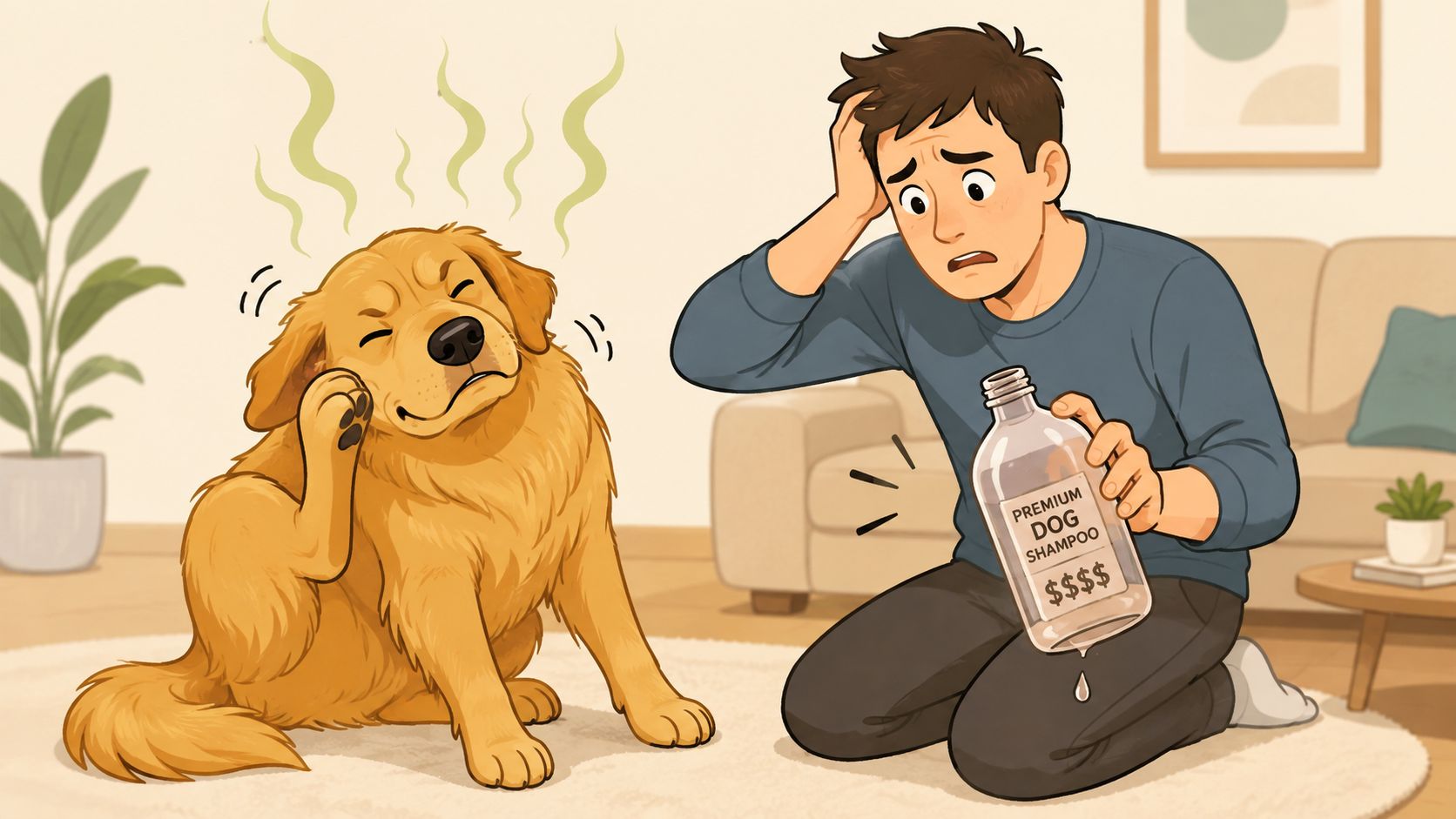
Your dog's paws smell musty again. The licking has started, the scratching is back, and the shampoo that helped last month isn't helping now. That cycle feels exhausting because it keeps pointing you toward the skin, while the problem often sits deeper in the body.
For many dogs, yeast on the skin is a sign of a larger imbalance, not a stand-alone problem. That's why probiotics for dogs with yeast can be useful, but only when you think about them the right way. They're not yeast killers. They're more like internal stabilizers that help the gut, immune system, and skin work together again.
Table of Contents
- Why Your Dog Keeps Getting Yeast Infections
- Understanding the Gut-Skin Connection
- The Timeline for Real Results
- Probiotics Versus Antifungal Treatments
- Diet and Fiber as Probiotic Fuel
- How to Choose the Right Supplement
- Building a Long-Term Wellness Routine
Why Your Dog Keeps Getting Yeast Infections
A dog with recurrent yeast problems can make any pet parent feel like they're fighting the same fire over and over. The ears clear, the paws look better, the smell fades for a while, then the itching comes back and the whole pattern starts again. That's especially frustrating when you've already tried medicated shampoos, wipes, and careful grooming.
Yeast is often a symptom, not the starting point
Yeast such as Malassezia normally lives on dog skin. It becomes a problem when the local environment changes enough for it to multiply out of control. That shift often follows allergies, moisture, skin barrier damage, or internal imbalance, so the skin problem is usually the visible end of a deeper chain.
Practical rule: if the same itchy spot keeps returning, treat that as a clue that something in the body's terrain needs attention, not just the surface.
The important mindset change is simple. You're not looking for a magic spray that makes yeast disappear forever. You're looking for a way to reduce the conditions that let yeast keep coming back in the first place.
Why surface treatment alone often falls short
Topical care still matters. A medicated wash can calm a flare, and a vet may need to handle an active infection on the ears or skin folds. But if the gut, immune system, and skin barrier stay out of balance, the yeast has room to return.
That's why repeated flare-ups feel so stubborn. The skin is where you see the problem, but it isn't always where the problem starts. Once you see yeast as a sign of internal imbalance, you stop chasing single fixes and start asking what's keeping the cycle alive.
Understanding the Gut-Skin Connection
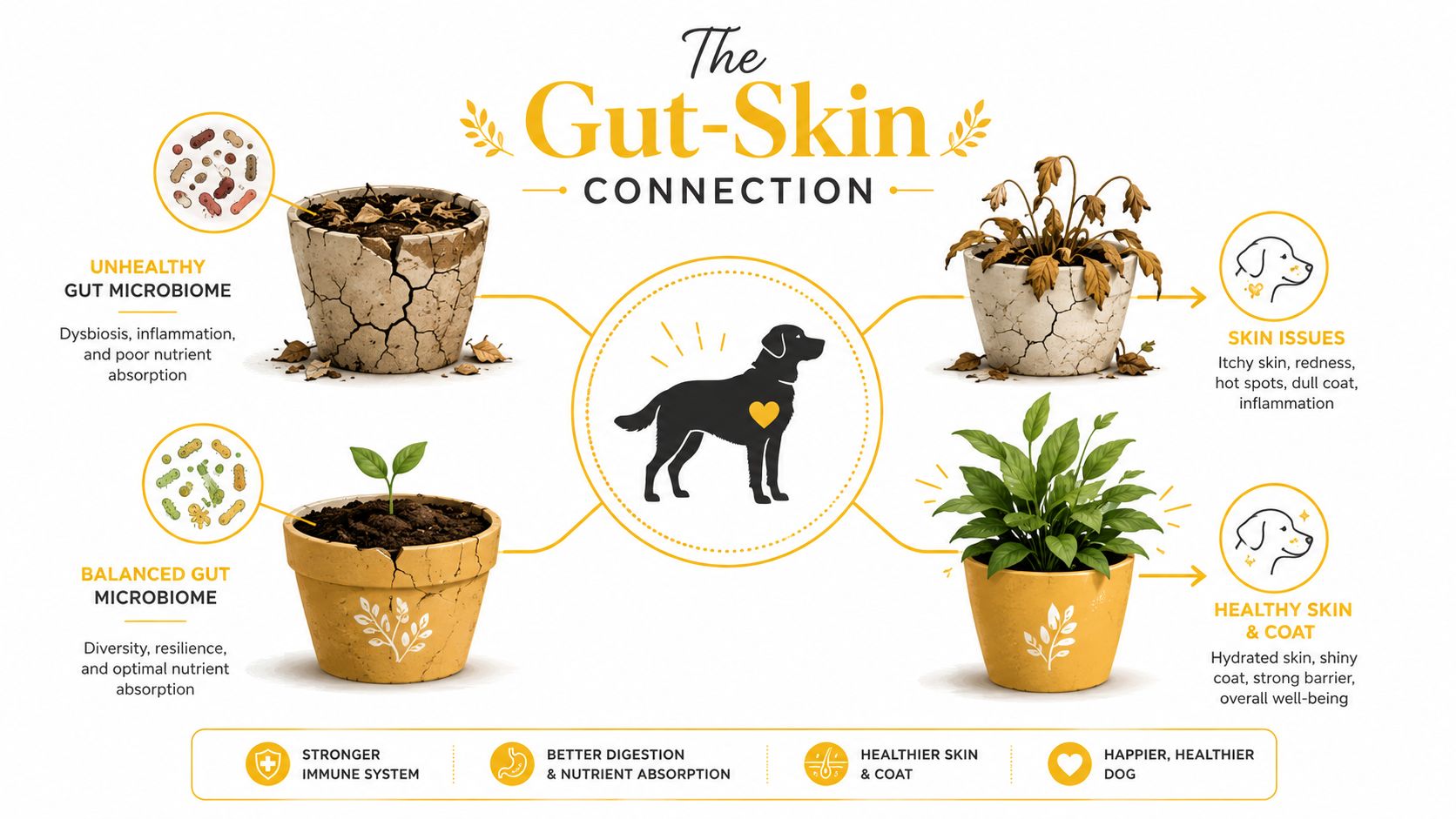
When a dog keeps battling yeast flares, the gut often plays a hidden role. The gut and skin communicate through immune signaling and the microbiome, so the connection runs in both directions. A steadier digestive system can help the body stay calmer overall, while imbalance can make the skin more likely to react.
Why the gut changes what happens on the skin
The skin is the visible surface, but it reflects what is happening inside. When the digestive tract has a healthier microbial mix, immune activity tends to stay more even. When that balance slips, inflammation can rise, and the skin becomes a more welcoming place for yeast to overgrow.
A veterinary review and canine study note that live yeast and yeast-derived products can alter gut microbiota, increase helpful bacterial groups such as Firmicutes and Actinobacteria, and reduce potentially pathogenic microbes, while a canine study of yeast supplementation reported an improved dysbiosis index, higher Bifidobacterium and Turicibacter abundance, and lower fecal Escherichia coli (review and canine study). The point is not that a probiotic kills skin yeast directly. It helps shift the internal terrain so recurrent flares have less support.
The specific strains with clinical backing
Two yeast-based strains have canine support. In a 2018 prospective, double-blinded, placebo-controlled dog study, Saccharomyces boulardii was used safely in dogs with chronic enteropathies, with no short-term side effects reported, and dogs receiving it improved in clinical activity, stool frequency, stool consistency, and body condition score compared with placebo (study). Digestive steadiness and skin steadiness often travel together.
A 2023 canine study divided 16 dogs into two equal groups of 8, giving the treatment group 0.12 g/day of live Saccharomyces cerevisiae during an abrupt dietary change. The yeast group showed beneficial shifts in fecal microbiota and fermentative metabolism, and later work reported fecal biomarker changes such as increased IgA (study). That is why probiotic yeast is better understood as an immune balancer than as a direct antifungal.
If you already use a daily supplement for broader support, a formula like DA-1™ Daily All-in-One - Senior Dog Support, Joints, Skin/Coat & More is one example of a multi-system powder that supports cells, gut, and joints in one scoop. It follows the same idea, support the internal terrain instead of chasing one visible symptom.
The Timeline for Real Results
A common mistake is judging probiotics after only a few days. That's like planting grass seed and checking for a lawn the next morning. Probiotics don't work like antibiotics or antifungal drugs. They work by nudging an ecosystem back toward balance, and ecosystems change slowly.
What early changes can look like
The earliest shifts can show up in digestion before they show up on the skin. You might notice stool quality becoming steadier, less gastrointestinal upset, or a calmer appetite. Skin and coat changes usually lag behind because the body needs time to rebuild a different pattern of immune signaling and microbial balance.
Canine clinical guidance summarized in an evidence-based review notes that early changes may appear at 2 to 4 weeks, with more reliable rebalancing at 8 to 16 weeks. That timeline is the right expectation for probiotics for dogs with yeast when the goal is long-term stability.
Practical rule: consistency matters more than intensity. One missed day isn't a disaster, but frequent stop-start dosing can keep the gut from settling into a steadier pattern.
Why the long view matters
A short burst of use rarely gives the microbiome enough time to change in a durable way. The gut has to keep seeing the same strain, the same daily rhythm, and, ideally, the same supportive fiber source. That repeated exposure is what helps the body stop reacting as if yeast flares are the norm.
Think of it less like a rescue med and more like a training plan. You're teaching the internal environment to stay calmer, and that lesson takes time to stick.
Probiotics Versus Antifungal Treatments
A dog can need both kinds of support, but they do different work. Antifungal treatments lower the yeast already active on the skin or in the ears. Probiotics change the internal conditions that make yeast more likely to come back.
Different tools for different stages
Antifungals are for the flare in front of you. They help bring down the immediate yeast load when the ears are red, smelly, or uncomfortable. Probiotics work more slowly, because they are aimed at the gut-skin axis, the internal signaling network that can keep yeast problems returning.
That is why the two approaches fit together instead of competing. A dog with a painful ear infection may need prescription treatment first, then daily gut support to help the body stay steadier afterward.
The main distinction is simple.
- Antifungals: useful for active infections, especially when yeast is already visible, smelly, or causing discomfort.
- Probiotics: useful for the internal environment, especially when yeast keeps returning and the dog has digestive or immune imbalance.
- Together: useful when you need both immediate relief and a better long-term terrain.
Why prevention and cure aren't the same thing
Clearing yeast on the skin does not automatically change the gut-skin signals that helped the flare happen. That is why an infection can fade, then return later without an obvious new trigger. The internal pattern is still in place if the gut and immune system have not settled into a different rhythm.
For a clearer look at how yeast-focused support is discussed in relation to skin and digestive care, the internal guide on yeast pills for dogs can help organize the pieces into a simpler mental model. The point is still the same. Active infections and prevention belong to different parts of the plan.
Diet and Fiber as Probiotic Fuel
Fiber is the fuel that lets probiotic microbes settle in and make useful byproducts. Without it, probiotics can pass through without leaving much behind. For dogs with recurring yeast issues, that matters because the gut needs more than a capsule, it needs a food source that helps friendly microbes stay active.
Why fermentable fiber changes the picture
The review on yeast-based products in dogs notes that short-chain fatty acid production is part of the mechanism, and that probiotics work better when fermentable fiber is part of the plan (review). In plain language, fiber gives beneficial bacteria material to ferment, and that process helps keep the gut environment steadier.
That steadier gut can also support the skin side of the problem. Yeast flare-ups often look like a skin issue, but the signal can start deeper in the body. The goal is not to strip the diet down. The goal is to feed the microbes that help the whole system stay calmer.
A supplement works better when the rest of the routine gives it something to work with.
For a practical look at ingredients that can do that job, the guide on best sources of fiber for dogs is a helpful companion. The main idea is straightforward. Choose meals and supplements that give the gut microbes steady fuel, so they can keep doing their work instead of fading out.
How to think about the daily routine
A good routine points in the same direction from several angles. Clean dry paws after walks. Follow your vet's advice on ear care. Give the probiotic regularly. Add fermentable fiber so the gut bacteria have something to use.
That mix matters more than any single step. Probiotics are not yeast killers. They are part of a longer process that helps the body respond in a more balanced way, and fiber is one of the main reasons that process can hold.
How to Choose the Right Supplement
The supplement aisle can make any pet parent feel like they need a decoder ring. Labels throw around buzzwords, but the details that matter are often buried in tiny print. For a yeast-prone dog, the right product should look precise, not vague.
What to check on the label
Start with the strain name. Generic “probiotic blend” language doesn't tell you much, because benefits are strain-specific. You want to know exactly what microbes are in the product, not just that it contains “good bacteria.”
Next, look at the CFU information and ask the right question, whether the count is guaranteed at the time of use or only at manufacturing. The number only matters if the microbes are still alive when your dog eats them. That's one reason third-party testing matters, it helps support that the label matches what's in the container.
A simple checklist helps.
- Specific strain naming: look for clear organism names instead of vague blends.
- Expiration-date potency: confirm the CFU count is meaningful at the end of shelf life.
- Ingredient transparency: avoid fillers that add bulk without helping the gut.
- Testing and manufacturing clarity: prefer products that explain how quality is checked.
Why fillers and “proprietary” language can be a problem
Some fillers don't just add nothing, they can complicate a dog with skin or digestive sensitivity. When a label hides behind broad categories, you can't tell whether the product is built for gut support or just built to sound healthy. That's especially important for dogs that already show recurring yeast patterns, because you don't want to add extra noise to an already sensitive system.
For a practical checklist you can use while comparing labels, the internal guide on probiotic supplement for dogs lays out the kind of details to look for before you buy. A good label should answer your questions quickly. If it doesn't, keep looking.
Building a Long-Term Wellness Routine
The long-term routine is where most owners either win or drift back into the cycle. Once the skin is calmer, the goal isn't to stop thinking about gut support. It's to make support easy enough that you can keep it going without stress.
What a steady routine looks like
A practical morning routine usually starts with food, then the supplement, then a quick check of the problem areas. Look at the paws, ears, and skin folds while your dog is already part of the normal household rhythm. You don't need a complicated health log. You need consistency and attention.
An evening routine can be even simpler. Dry the dog well after wet weather or baths, notice whether the scratching has spiked, and pay attention to odor changes. If the smell is returning, that's useful information. It tells you the terrain may be shifting before the skin fully flares.
Keep notes on what you can actually observe, not on what you hope is happening.
What progress is worth tracking
Scratch frequency, odor, and the look of the coat are usually easier to monitor than abstract health goals. You're looking for fewer flare signals, not perfection. The point is to notice trends so you and your vet can tell whether the plan is helping.
If you're using probiotics for dogs with yeast as part of a broader routine, the question isn't “Is it a miracle?” It's “Is my dog having fewer bad days, and are the bad days less intense?” That's the kind of result that matters for a recurring problem.
Pure Paw Labs makes a daily, human-grade powder that fits this kind of whole-body routine, with support aimed at gut, skin, and joint health in one scoop. If you're trying to build a steadier plan for a dog who keeps battling yeast-related flare-ups, visit Pure Paw Labs and look for a simple daily support option that matches your vet's guidance and your dog's needs.