


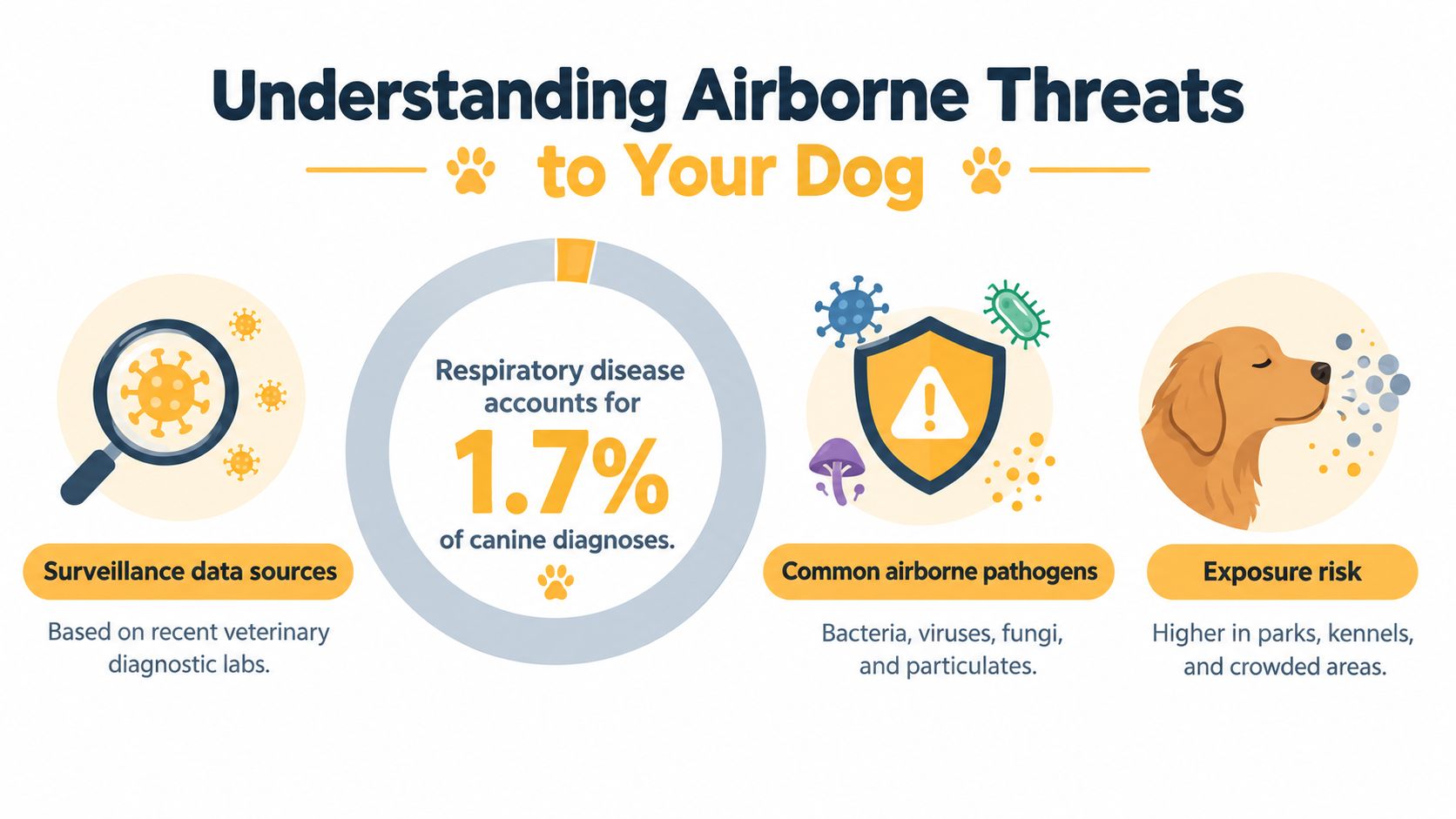
Respiratory disease accounted for 1.7% of canine consultations in a UK surveillance study, with coughing present in 71.1% of respiratory cases. Airborne immune system support can help maintain normal defenses, but it can't replace veterinary care, vaccination, balanced nutrition, or sensible environmental controls.
That finding reframes the subject. Respiratory illness isn't an abstract risk reserved for shelters or dogs with obvious health problems. Dogs encounter shared air in homes, boarding facilities, grooming spaces, training classes, shelters, daycare settings, and parks. The right response isn't a single “immune-boosting” product. It's a layered plan that reduces exposure where possible and supports the barriers, cells, and nutritional systems that protect the respiratory tract.
Table of Contents
- Understanding Airborne Threats to Your Dog
- How Your Dog's Immune System Defends Against Airborne Pathogens
- Environmental Controls to Reduce Airborne Exposure
- Nutritional Foundations for Respiratory Immunity
- Supplement Options Probiotics Postbiotics and Beyond
- Vaccination Strategies for Airborne Disease Prevention
- Building Your Daily Immune Support Routine
Understanding Airborne Threats to Your Dog
Respiratory disease represented 1.7% of canine consultations in a UK small-animal surveillance report covering January 2014 to December 2015. Coughing appeared in 71.1% of respiratory cases, making it the most frequent respiratory sign (UK canine surveillance report). A later UK update, covering January 2018 to February 2019, recorded respiratory disease in 1.2% of dog consultations, with coughing present in 68.0% of cases.
These findings do not mean every cough signals a serious infection. They show why respiratory problems remain a regular part of veterinary care, even for dogs that spend most of their time at home. A visitor can carry particles indoors on clothing, a recently boarded dog may share pathogens before showing signs, and dogs can exchange respiratory droplets while playing or resting together.
Why shared air matters
Exposure becomes more likely when dogs mix closely or spend time in crowded, poorly ventilated spaces. In a tested population of dogs with respiratory disease, surveillance found seroprevalence signals for several pathogens, including 47% for canine respiratory coronavirus, 41.7% for canine pneumovirus, 45% for Mycoplasma species, and 2.7% for influenza A (European respiratory pathogen surveillance study).
These figures describe detection within that tested population. They do not predict the chance that any individual dog will become ill. They do show that canine infectious respiratory disease complex and related pathogens are established veterinary concerns, particularly in group settings where shared air and close contact increase opportunities for transmission. The earlier UK surveillance findings also identified canine infectious respiratory disease complex among dogs seen in practice.
Exposure isn't the same as disease
A pathogen's presence is only one part of the picture. Age, vaccination status, stress, existing illness, airway structure, nutrition, crowding, and exposure duration can all influence the outcome. Some dogs inhale infectious particles without developing obvious illness because airway barriers and immune responses remove or contain them.
That is the gap between environmental exposure and immune support. Airborne immune system support is prevention-oriented wellness care, not a promise to block every infection. Layered protection works more sensibly: reduce contaminated air where possible, support normal respiratory defenses, maintain broader health, and seek veterinary advice promptly if coughing, nasal discharge, breathing changes, fever, lethargy, or appetite loss appears.
How Your Dog's Immune System Defends Against Airborne Pathogens
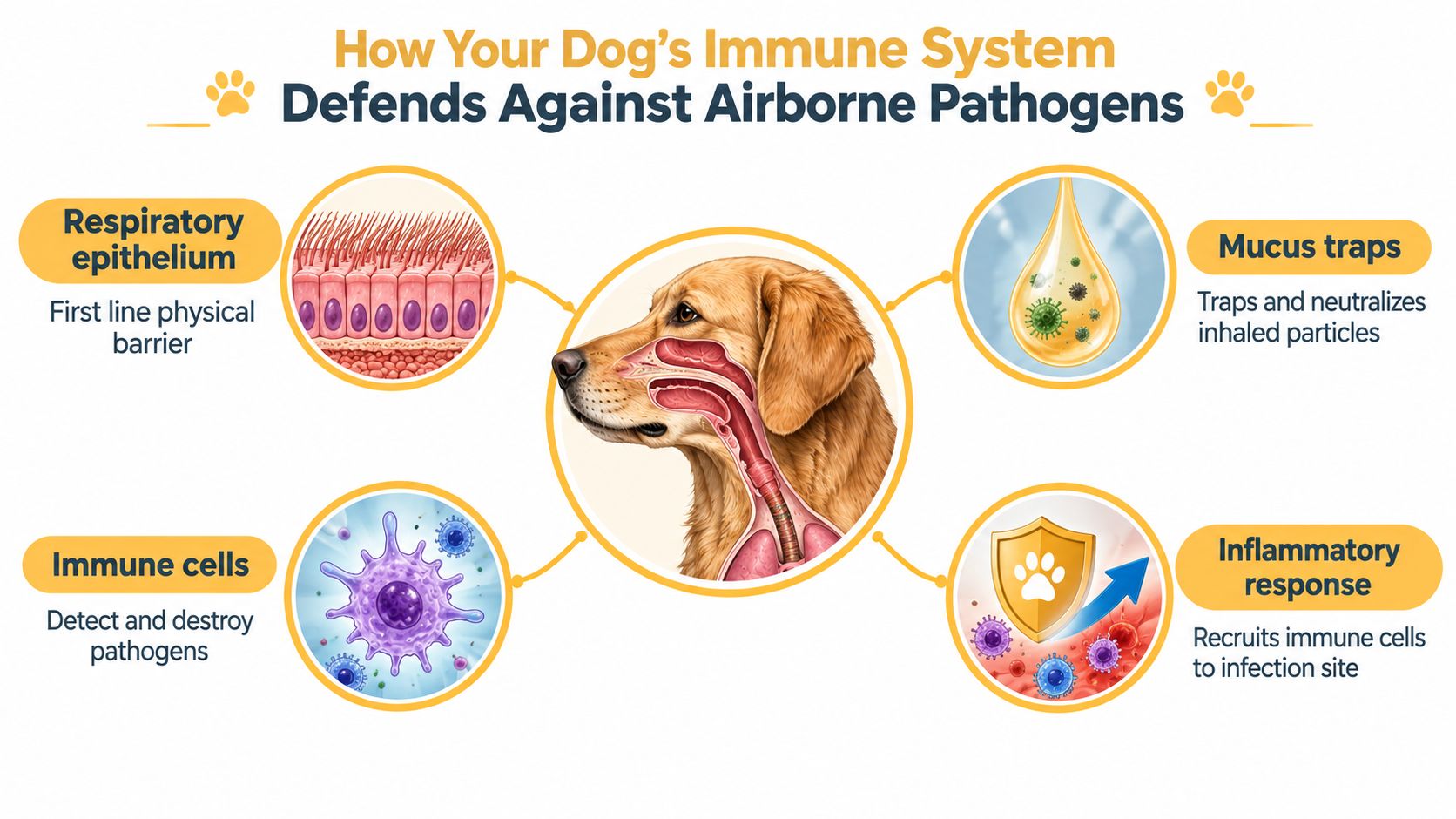
A dog's respiratory tract uses several defenses in sequence, not one all-purpose shield. Like security in a guarded building, each layer checks, traps, removes, or responds to threats that get past the earlier barriers. Veterinary reviews describe the respiratory epithelium, mucus, mucociliary clearance, alveolar macrophages, and local immune factors as parts of this connected system (canine infectious respiratory disease review).
The outer defenses
The respiratory epithelium forms the airway's physical lining. Its cells create a surface that makes it harder for inhaled organisms to attach and move into deeper tissue. Mucus traps particles, while coordinated ciliary movement carries that material toward the throat, where it can be swallowed or expelled.
This process, called mucociliary clearance, works continuously without conscious effort. It depends on suitable airway moisture, healthy epithelial cells, and normal ciliary movement. Dryness, irritation, or inflammation can reduce how effectively the airways handle inhaled material. No supplement should be expected to correct an underlying respiratory disorder.
The cellular response
Material that passes the surface barriers encounters innate immune defenses. Alveolar macrophages patrol the deeper lung spaces, engulfing unwanted particles and organisms. Other local immune factors help identify danger and coordinate inflammation, bringing further immune activity to the affected area.
Inflammation serves a purpose, yet a stronger response is not automatically a better one. The respiratory tract needs a controlled reaction that addresses threats without causing unnecessary tissue irritation. This explains why responsible discussions of dog immune support should emphasize normal immune function rather than promises to “supercharge” immunity.
Mucosal immunity and vaccination
The respiratory tract also uses adaptive immunity. Secretory immunoglobulin A, or IgA, in airway surface fluid can limit colonization at the mucosal surface. This local protection works with systemic immune responses and does not replace them.
Vaccination contributes another layer. It can help reduce disease severity and shedding, but it does not provide sterilizing immunity in every exposure scenario. Airborne immune system support therefore works best as a layered plan: protect the airway environment, maintain general health, follow veterinary vaccination guidance, and address illness promptly.
For aging dogs whose owners prefer one routine instead of several separate products, DA-1™ Daily All-in-One - Senior Dog Support, Joints, Skin/Coat & More is described as a multi-system formula containing 18 human-grade ingredients for cells, gut, and joints. That description does not establish a respiratory disease treatment effect, so its role remains general wellness support within a veterinarian-guided plan.
Environmental Controls to Reduce Airborne Exposure
The most direct way to support respiratory immunity is to reduce the challenge placed on it. You can't make a dog's environment sterile, and trying to do so can create unnecessary anxiety. You can, however, improve airflow, limit avoidable crowding, and respond quickly when illness enters a shared space.
Improve the air your dog breathes
Start with ventilation. Open windows when outdoor conditions allow, use exhaust fans in damp areas, and avoid keeping a dog in a closed room where air becomes stale. If your household uses filtration or air-cleaning equipment, choose a system appropriate for the room and maintain it according to its instructions. Owners looking for broader guidance on home airflow can review these indoor air quality solutions in Phoenix, then discuss suitability with a qualified indoor-air professional.
Humidity deserves attention because excessive moisture can make indoor spaces less comfortable and can contribute to damp conditions. Repair leaks, dry wet bedding promptly, and investigate persistent musty odors or visible moisture rather than covering them with fragrance.
Manage shared spaces
Cleaning should focus on high-contact surfaces, bowls, crates, floors, and bedding. Wash items that become contaminated, allow them to dry fully, and avoid sharing bowls or toys among dogs when one dog is coughing or has nasal discharge. Ask boarding, daycare, and grooming facilities how they separate symptomatic dogs and clean shared areas.
Outdoor activity still matters for normal exercise and socialization. During a local respiratory illness concern, choose less crowded times and open spaces, reduce close nose-to-nose contact, and postpone group activities if your dog is unwell. For dogs with itchy or irritated airways, environmental allergens may also matter, and owners can review ways to help dogs with allergies without assuming every cough is an allergy.
Practical rule: Lower exposure without eliminating normal life. Good ventilation, dry bedding, clean shared equipment, and sensible social choices provide more useful protection than fear-based isolation.
Nutritional Foundations for Respiratory Immunity
A dog's respiratory defenses rely on more than the airways alone. Nutrition supplies materials for airway tissue, immune cells, mucus production, and recovery from everyday stress. Diet cannot replace treatment for respiratory disease, yet an inadequate or unbalanced diet can reduce overall resilience. For most healthy dogs, use this order: complete diet first, targeted nutrition second, supplements only when they have a clear purpose.
Cornell veterinary guidance recommends an appropriate, balanced, complete diet and keeping extras below 10% of intake (Cornell canine nutrition guidance). Treats and immune-focused add-ons both count. A supplement may be carefully formulated, but it can still displace balanced food or push nutrient intake too high. Airborne exposure is one part of the problem, so nutrition works best as one layer of protection rather than a single solution.

Vitamin D deserves careful attention
Vitamin D has canine evidence connecting it with respiratory immune performance. In shelter-dog studies, dogs with infectious respiratory disease had lower serum 25-hydroxyvitamin D concentrations than control dogs. In laboratory work using blood from apparently healthy shelter dogs, calcitriol exposure reduced pro-inflammatory cytokine production without reducing oxidative burst or phagocytic function (canine vitamin D respiratory immunity study).
These findings suggest immune modulation, not a simple “more is better” effect. They also do not support giving vitamin D without veterinary advice. The appropriate intake depends on blood status, diet, age, health conditions, and existing supplements, and excessive intake can create its own risks.
Build a practical nutrition check
Before buying a product, review the basics:
- Diet completeness: Confirm that the main food suits your dog's life stage and nutritional needs.
- Body condition: Keep portions and treats aligned with healthy weight maintenance.
- Ingredient purpose: Identify what each added nutrient is meant to support and whether its dose is disclosed.
- Veterinary context: Discuss supplements if your dog has chronic disease, takes medication, is pregnant, or eats a home-prepared diet.
A balanced diet often provides stronger foundational support than an unselected collection of immune-themed products. Targeted supplementation fits best when it addresses a defined nutritional or wellness goal. This layered approach helps close the gap between airborne exposure and the support your dog receives inside the body.
Supplement Options Probiotics Postbiotics and Beyond
Gut-health supplements and immune-support supplements address related systems, but they are not interchangeable. Gut microbes and their metabolites can influence immune signaling. Better stool quality or altered microbiome activity, however, does not by itself show protection against airborne infection. That gap matters because exposure occurs through the respiratory tract, while many supplements act elsewhere in the body.
A probiotic contains live microorganisms. A prebiotic supplies material that selected microbes can use. A postbiotic contains non-living microbial components or metabolites, so its proposed effects do not depend on the organism surviving storage and digestion. These categories work through different routes, and evidence must be matched to the specific strain, blend, dose, and dog population studied.
| Category | Evidence level | Best for |
|---|---|---|
| Probiotics | Formulation-specific and variable | Targeted digestive support when the product has relevant evidence |
| Prebiotics | Supports selected microbial activity | Dogs needing a fiber-based approach that fits their diet |
| Postbiotics | Emerging canine evidence, still formulation-specific | Products designed around microbial metabolites or components |
| Vitamins and phytonutrients | Limited in vivo evidence for broad immune claims | A defined nutritional purpose under professional guidance |
A 2024 review found that in vivo research on canine immune-support vitamins, minerals, and phytonutrients remains limited. Results vary with breed, age, and physiological state (review of canine immune-support supplements). The review also describes growing interest in postbiotics, including a 2026 randomized trial in healthy adult Beagles. In that study, a postbiotic improved gut microbiota activity and was associated with stronger humoral and cellular immune responses.
The result is encouraging, yet it does not show that every postbiotic prevents respiratory disease. It also does not replace vaccination or measures that reduce airborne exposure. A supplement is one layer in the plan, much like adding another filter to a house already being ventilated and cleaned.
Compare the research with the actual product. Check whether the label identifies meaningful amounts, whether the studied formulation matches the product, and whether the claims remain within normal wellness language. For a plain-language explanation, this guide to prebiotics, probiotics, and postbiotics explains the distinctions.
Keep the total supplement contribution within the broader dietary plan. Ask your veterinarian before adding products if your dog has a medical condition or takes other supplements or medications.
Vaccination Strategies for Airborne Disease Prevention
Vaccination is one layer of airborne disease prevention. It prepares the immune system to recognize selected pathogens, which can reduce illness severity or transmission for the diseases covered. It cannot prevent every respiratory infection, because canine infectious respiratory disease complex includes multiple organisms and changing exposure conditions.
A European surveillance study found several respiratory pathogens among dogs with respiratory disease, including canine respiratory coronavirus, canine pneumovirus, Mycoplasma species, and influenza A (European respiratory pathogen surveillance study). These findings show why exposure risk matters, but they do not determine an individual dog's vaccine schedule. A vaccine is more like a targeted training lesson for the immune system than an all-purpose shield.
Match prevention to lifestyle
Ask your veterinarian to review:
- Group contact: Does your dog attend daycare, boarding, training, grooming, or dog parks?
- Local conditions: Are respiratory illnesses affecting facilities or dog groups in your area?
- Medical history: Has your dog had respiratory disease, chronic airway problems, or medication that affects immune function?
- Timing: Will your dog enter a kennel, travel, or join a group activity soon?
Core vaccines and risk-based vaccines address different exposures. Your veterinarian can explain which options fit your dog's age, location, health status, and likely contacts. Bring vaccination records to the appointment. Ask how long protection takes to develop, whether boosters are needed, and which symptoms should prompt a call.
Understand the limitation
A vaccinated dog can still inhale a pathogen and develop a cough. Vaccination improves the odds of a more controlled outcome and may reduce transmission potential for relevant diseases, rather than creating an invisible barrier around the dog.
That gap between exposure and protection is why prevention needs layers. Keep vaccines current while also choosing facilities with responsible illness policies, supporting good airflow, and separating dogs temporarily when respiratory signs appear.
Building Your Daily Immune Support Routine
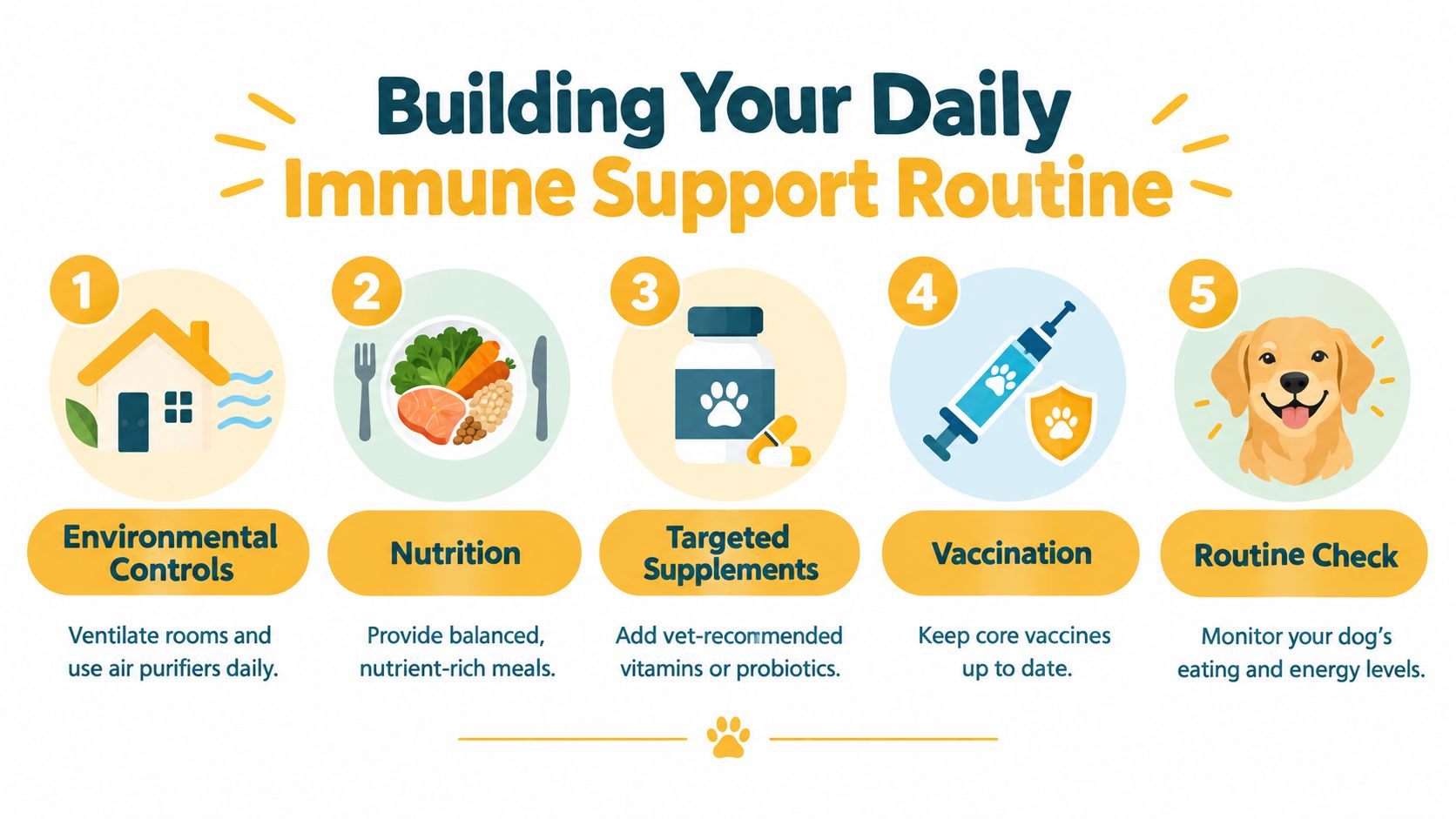
A workable routine doesn't need to be complicated. It should reduce avoidable exposure, provide consistent nutrition, keep preventive care current, and give you a way to notice change early. Layered protection works because each measure addresses a different part of the risk.
A routine that fits ordinary life
In a private home, keep sleeping areas dry, ventilate rooms, wash bedding, and avoid using strongly fragranced products around your dog. In a multi-dog household, provide clean bowls, separate a coughing dog from close contact where practical, and call your veterinarian if more than one dog develops signs.
Before a group activity, check whether the facility has reported respiratory illness and ask about its cleaning and isolation procedures. After the activity, monitor your dog's cough, nasal discharge, energy, appetite, and breathing rather than assuming every symptom is harmless.
A simple weekly review can include:
- Environment: Check ventilation, moisture, bedding, and shared surfaces.
- Food: Confirm that the main diet remains complete and balanced.
- Supplements: Give only products with a clear purpose, disclosed ingredients, and a plan that fits the dog's total intake.
- Prevention: Review vaccine records and upcoming exposure events.
- Observation: Note changes in cough, breathing, appetite, energy, or exercise tolerance.
The routine should change with the dog. A healthy adult with limited social contact may need fewer interventions than a senior dog attending daycare or living in a crowded household. A supplement can simplify daily support, but it shouldn't distract from the basics or encourage owners to delay an examination.
Watch closely: Labored breathing, blue or pale gums, collapse, marked lethargy, or rapidly worsening respiratory signs require prompt veterinary attention.
Airborne immune system support is best viewed as maintenance of a connected system. Clean air and sensible exposure choices reduce the challenge, balanced food supplies foundational nutrients, targeted products may address defined goals, vaccines prepare specific immune responses, and observation helps you act early. No single scoop, air cleaner, or vaccine can perform every job.
Pure Paw Labs offers science-focused, human-grade dietary supplements for dogs, including a single-scoop Daily All-in-One intended to support several wellness areas such as gut and immune health. Visit Pure Paw Labs to review the formulation and decide, with your veterinarian, whether it fits your dog's daily care plan.