


Your dog's been scratching more, getting the occasional upset stomach, or just seems a little less resilient than usual, and it's tempting to reach for the loudest supplement on the shelf. The problem is that “immune support” is one of the most overused phrases in pet care, and it often hides products that don't match how a dog's immune system works. The smartest approach is less about boosting everything and more about matching the right ingredient to the right situation, while keeping the foundation solid.
Table of Contents
- What Most Dog Owners Get Wrong About Immune Support
- How the Canine Immune System Actually Works
- Foundations That Matter More Than Any Supplement
- Evidence-Backed Ingredients and What They Actually Do
- Matching the Right Ingredient to the Right Dog
- How to Read a Dog Supplement Label Like a Pro
- Building a Daily Routine and Knowing When to Call the Vet
- A Short Pre-Buy Checklist for Confident Decisions
What Most Dog Owners Get Wrong About Immune Support
A dog owner walks into the supplement aisle looking for help with “immunity,” and every bottle sounds convincing. One promises broad wellness, another leans on herbs, another stacks half a dozen ingredients into a single scoop. The trouble is that vague immune-boosting language rarely tells you what the product is doing, or whether your dog needs that effect at all.
The canine immune system doesn't respond to marketing copy. It responds to inputs that change the body's day-to-day environment, especially the gut, inflammation status, nutrient adequacy, and overall health condition. A 2024 review found that dog-specific evidence for vitamins and phytonutrients is limited, with only two studies showing modest benefits from vitamins C and E, while mineral data suggest organic forms may support immune responses better than inorganic forms (PMC review).
The real question isn't “How do I boost immunity?”
It's more useful to ask, what part of the system needs support. A dog with soft stools and frequent tummy trouble may need gut-active support. A senior dog with chronic inflammation may need a different ingredient strategy than a healthy adult who just eats a complete diet and needs nothing extra.
Veterinary nutrition sources also frame immune support as a foundation-first topic, not a supplement-first one. That means a balanced diet, healthy body condition, exercise, and vaccination matter before powders or chews ever enter the picture. If a dog owner cooks at home, layers multiple products, or assumes more ingredients always mean better results, the routine can get noisy fast.
Practical rule: if a product can't clearly explain which immune pathway it's trying to influence, it's probably selling reassurance more than support.
How the Canine Immune System Actually Works
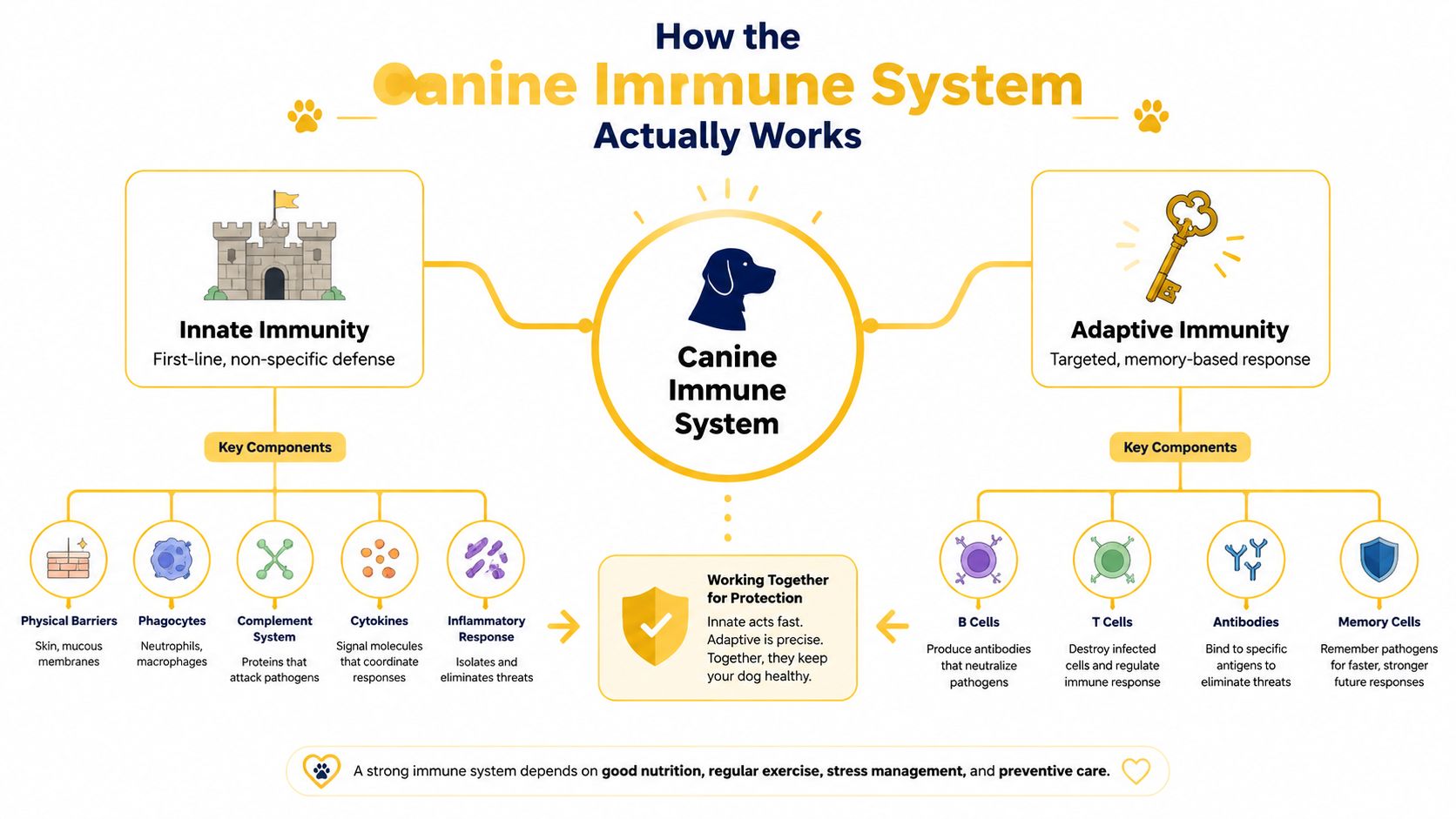
A dog can look healthy on the outside and still be running a constant immune job on the inside. Some defenses are always scanning for trouble, while others wait to learn what a threat looks like before they respond. That split helps explain why immune support is rarely about one magic ingredient.
Innate immunity is the body's first response system. Skin, mucus, and fast-moving white blood cells act like the front gate and the first security team, reacting quickly when something does not belong. Adaptive immunity works more like a trained investigator, slower to activate at first, but able to recognize a specific threat and remember it later. That memory is part of why vaccination matters, because it gives the immune system a safe way to practice.
Why the gut keeps coming up in immune conversations
The gut does much more than digest food. It is one of the body's busiest immune checkpoints, with gut-associated lymphoid tissue and mucosal defenses that constantly sample what enters the system. A key mucosal antibody is IgA, which helps protect surfaces without setting off an unnecessary alarm. Canine probiotic research has reported changes in fecal IgA and in plasma or serum IgG, along with shifts tied to inflammation and the balance of intestinal microbes, as shown in the canine probiotic review and trials.
That is why gut-active ingredients get so much attention in the best dog immune support conversation. They are not meant to “supercharge” the whole body. They are meant to help the body communicate more clearly at the main interface between the inside and outside world. The microbiome matters here too, because it helps shape how immune cells learn, react, and settle over time.
For pet parents who prefer a simpler daily routine, a single topper can be easier to use than several separate products. DA-1™ Daily All-in-One - Skin/Coat, Joints, Gut Health & More is one example of that format, a once-daily powder designed to bring several care categories into one scoop.
If you want a broader explanation of how diet, nutrients, and immune function fit together, this guide to holistic dog nutrition gives useful context.
A simple way to remember the system
- Innate immunity reacts first and broadly.
- Adaptive immunity responds with specificity and memory.
- The gut helps train and shape both.
That model makes supplement choices easier to evaluate. The ingredients with the clearest support usually connect to gut signaling, inflammation balance, or nutrient status, not vague “boosting.”
Foundations That Matter More Than Any Supplement
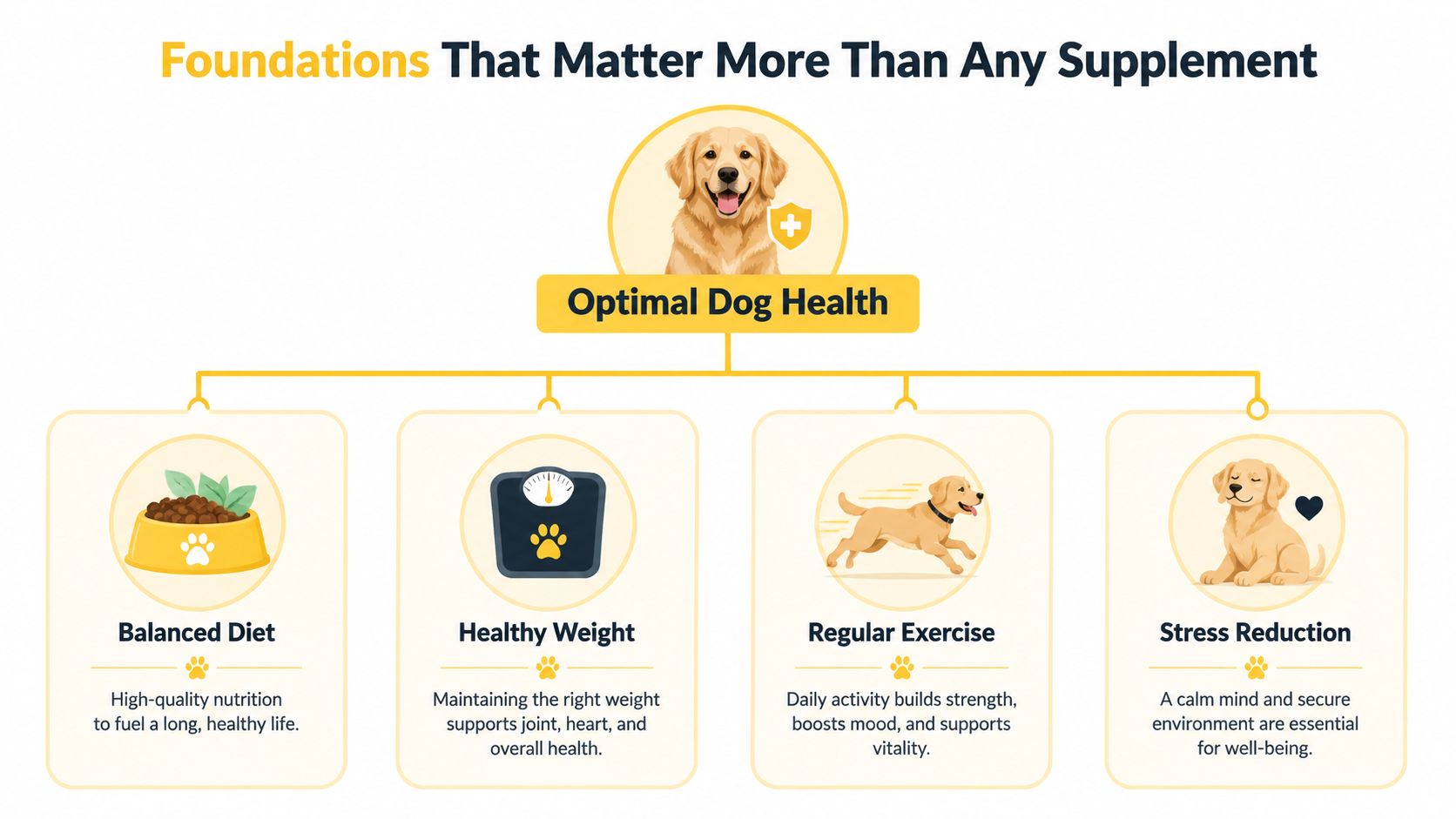
The strongest immune routine starts with what's already in the bowl and how the dog lives. Cornell's canine health guidance and Hill's both frame immune support around complete, balanced nutrition, healthy body condition, exercise, and routine vaccination, not around powders or herbs as a first move (Cornell canine health center). That matters because many supplement problems are really nutrition problems in disguise.
A dog who's underweight, overweight, or eating a poorly formulated home-prepared diet may need correction of the base diet before anything else. If the foundation is shaky, extra ingredients just pile on top of a gap. That's especially relevant for owners who cook for their dogs, because even well-intentioned meals can miss important balance without careful formulation.
Four checks before you buy anything
- Balanced diet: Is the current food complete and appropriate for your dog's life stage?
- Body condition: Does your dog look and move like a dog at a healthy weight?
- Movement: Is exercise part of the daily routine, even if it's just steady walks and play?
- Vaccination: Is your dog current on core preventive care?
Short self-check: if your dog's diet is inconsistent, body condition is off, or routine care has slipped, fix that first. Supplements make more sense after the basics are steady.
That's why the phrase best dog immune support can be misleading when it makes supplements sound like the main event. A product can only support what the dog is already getting from food, lifestyle, and preventive care. A well-made powder may help, but it can't replace a balanced plate.
For readers trying to tighten up the bigger picture, the internal guide on holistic dog nutrition fits naturally here, because immune resilience starts with the daily diet pattern, not a label claim.
Evidence-Backed Ingredients and What They Actually Do
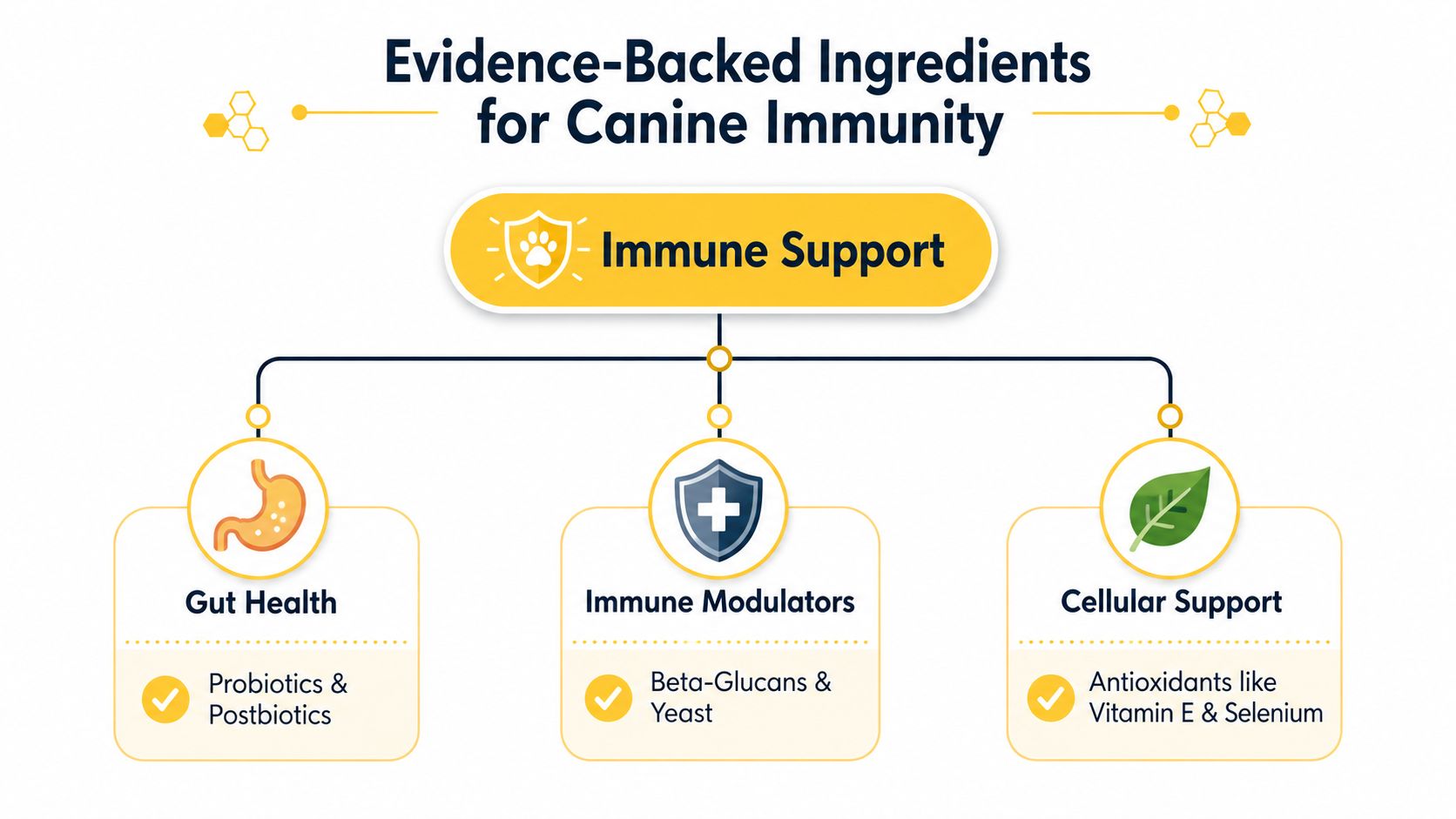
The most useful ingredient categories are the ones with a clear job. Probiotics and postbiotics work closest to the gut-immune interface. Omega-3 fatty acids are used when inflammation is part of the picture. Antioxidants and trace minerals come into play when oxidative stress, aging, or nutrient gaps are part of the concern.
Gut-active support is the most technically grounded starting point
The clearest canine evidence sits where digestion and immunity overlap. A review on canine probiotics reports that these ingredients can support fecal IgA and plasma or serum IgG, and may help reduce inflammation while improving the balance of intestinal microbes. The same review also discusses a controlled dog study in which 0.2% Spirulina increased fecal IgA after 9 weeks, plus a senior-dog trial in which 1.1% scFOS+ increased the CD4+:CD8+ T-cell ratio during and after Lyme vaccination. Those are immune markers, not vague “seems healthier” claims.
That is why dogs with sensitive digestion often make the clearest candidates for probiotics or postbiotics. These ingredients are meant to steady the gut environment, and the gut is one of the main places immune signals are shaped. For readers who want a broader explanation of that category, the internal guide on probiotic supplement for dogs is a useful companion.
Where the other categories fit
- Omega-3 fatty acids: Best when inflammation is part of the story, such as in dogs with skin reactivity, stiffness, or chronic irritation.
- Antioxidants like vitamin E and vitamin C: More relevant when the dog has chronic stressors, is aging, or may not be getting enough dietary support.
- Trace minerals such as zinc and selenium: More interesting when diet quality is uneven, because minerals are part of immune cell function and cellular defense.
- Colostrum and immunoglobulin-rich ingredients: Usually discussed for mucosal support, especially where gut or surface defenses are the concern.
A senior dog formula can make sense when age-related wear is part of the picture. DA-1 Daily All-in-One is one example of a multi-system powder format that combines several categories into one daily scoop.
What the evidence does and doesn't say
The 2024 review on vitamins, minerals, and phytonutrients is a reminder to stay honest. Evidence is mixed and depends on the ingredient and the dog, especially for isolated vitamins (PMC review). That does not make these ingredients useless. It means the ingredient has to fit the dog, the goal, and the form.
Matching the Right Ingredient to the Right Dog
A dog with loose stools, a senior with stiffness, and a healthy adult with no clear concerns are starting from different places. That is why the first question should not be which bottle looks strongest. It should be what the dog needs support for.
| Dog State | Best-Fit Ingredient Categories | Likely Lower Priority |
|---|---|---|
| Gut-fragile, loose stools, sensitive stomach | Probiotics, postbiotics, prebiotic fibers | Broad vitamin blends, extra herbs |
| Senior dog with chronic inflammation | Omega-3s, antioxidants, trace minerals | High-ingredient “everything” formulas |
| Itchy or reactive skin | Omega-3s, probiotics, zinc, vitamin E | Isolated megadose vitamins |
| Performance or working dog | Balanced nutrition first, then targeted recovery support | Generic immune powders |
| Generally healthy adult | Usually no extra immune supplement unless a specific need appears | Stacking multiple products |
The fit is clearer once you separate the ingredients by job. Gut-active support belongs with dogs that have digestive fragility, because the gut is a major part of immune activity and the microbiome is part of that local environment. Omega-3s make more sense when inflammation is showing up in the skin, joints, or general comfort. Antioxidants and trace minerals fit better when you are thinking about aging, oxidative stress, or uneven diet quality. If the dog has no obvious need, adding more powder usually just adds overlap.
That is also why a strong foundation matters more than a long ingredient list. A dog eating an unbalanced diet will rarely benefit from a random immune blend as much as one eating a complete, well-matched meal. If you want a broader background on ingredient types, the internal guide on natural dog supplements explains how these categories are usually used.
A lot of owners want one product that seems to cover every possible concern. Convenience can help, but only if the formula still matches the dog in front of you. Otherwise, the label may look busy while the ingredients miss the actual problem. That is the difference between broad marketing and useful support.
Bottom line: match the ingredient category to the dog's real issue, and keep the foundation diet in the foreground.
How to Read a Dog Supplement Label Like a Pro
A polished label can still hide a weak formula. Start with the active ingredient form, because form affects whether the body can use it well. As noted earlier in the 2024 review, some organic mineral forms may support immune responses better than inorganic forms. The larger point is simple. If the label stays vague, the formulation may be vague too.
What a good label makes obvious
- Active ingredient amounts: You should be able to see what is in each serving, not just a cloud of “proprietary blend.”
- Ingredient form: Chelated or organic minerals give more useful information than generic mineral names.
- Quality checks: Third-party testing and batch-level transparency help show the company is measuring what it sells.
- Filler content: Artificial colors, unnecessary sugars, and empty binders should make you pause.
The phrase human-grade can matter when it comes with real transparency, but it should not be treated like a magic stamp. The same applies to “made in an FDA-registered facility.” Those details help you judge manufacturing context, but they do not replace a clear formula or a visible dose.
Watch for interaction risks
Some ingredients deserve extra caution. Omega-3s may matter if a dog is on anticoagulants. Fat-soluble vitamins can build up over time if you stack multiple products. Probiotics can also be a concern when a dog is on immunosuppressive therapy, so that is a conversation for the veterinarian, not a guess from the bag.
For a plain-language overview of ingredient style and format, the internal guide on natural dog supplements is a practical next read. The goal is not to memorize a jargon list. It is to learn enough to tell a transparent formula from a glossy one.
Building a Daily Routine and Knowing When to Call the Vet
Consistency matters more than novelty. A supplement only helps if it gets used regularly, and the easiest way to stick with it is to tie it to the meal your dog already gets every day. Many owners do better with one daily feeding routine than with separate morning, midday, and evening products.
If your vet agrees, some households simplify by combining several support categories into one product instead of running a full stack. That's where a multi-system powder can be practical, especially if the dog is already eating from a bowl and tolerates toppers well. A simple routine also makes it easier to notice whether anything is changing.
When to stop troubleshooting at home
Some signs need a veterinary visit before any supplement plan. Watch for recurrent infections, persistent lethargy, sudden appetite change, chronic diarrhea, or autoimmune-type symptoms. Those signs deserve an exam because they can point to illness, not just a need for nutritional support.
A reasonable trial window for routine changes is a few weeks of consistent use, with notes on stool quality, energy, itching, coat, and appetite. If nothing shifts or the dog worsens, the plan needs reassessment. Supplements are support tools, not substitutes for diagnosis.
A Short Pre-Buy Checklist for Confident Decisions
Before you add anything to the bowl, ask five questions. Is the dog already on a balanced, appropriate diet? Is there a real issue to address, or is this just preventive curiosity? Does the ingredient list match that goal, with gut-active, anti-inflammatory, or antioxidant support where it belongs?
Next, ask whether the brand is transparent about sourcing and testing. Finally, is a veterinarian involved if the problem is chronic, recurring, or medically complicated? If the answer to those questions feels fuzzy, the product probably isn't the right fit.
Pure Paw Labs offers a simple way to think about daily support, a human-grade powder format designed to consolidate multiple care categories into one routine. If you're sorting through best dog immune support options and want a product that fits the larger conversation around gut health, immune balance, and daily consistency, visit Pure Paw Labs and compare its approach with the checklist above.