


You're curled up on the sofa with your dog when a warm, toasted scent rises from the paws resting beside you. It smells oddly familiar, a little like corn chips. You check the rug, glance toward the kitchen, and wonder whether your dog stepped in something.
If you've asked, “Why do my dog's paws smell like Fritos?”, you're not dealing with an imaginary problem or an unusual canine quirk. A mild corn-chip odor usually comes from the normal microorganisms living on paw skin, especially where warmth and moisture collect. The important question isn't whether you can smell the paws. It's whether the odor is your dog's usual baseline or a new change accompanied by irritation.
The explanation is straightforward once you know what's happening between the pads and toes. You can also reduce the scent with gentle cleaning, careful drying, and attention to skin health, while learning to recognize the signs that need veterinary care.
Table of Contents
- The Moment You Notice That Corn-Chip Smell
- What Frito Feet Actually Means
- Why the Smell Gets Stronger Some Days
- A Simple At-Home Paw Care Routine
- How Diet and Skin Health Fit Together
- When the Smell Means It's Time to See a Vet
- Quick Takeaways and Your Next Steps
The Moment You Notice That Corn-Chip Smell
At first, the smell may seem almost charming. Your dog is relaxed, you're giving them a scratch, and suddenly the familiar scent of a snack seems to be coming from their feet. You might inspect the paws for spilled food or sticky residue, especially if the odor appeared after time outside.
In most cases, there's no hidden bag of chips involved. The scent comes from a combination of natural skin bacteria, yeast, sweat, saliva, and moisture. Veterinary explanations describe the normal paw odor as a mixture of bacteria and yeast on the skin, sometimes including sweat and saliva, rather than automatic evidence of illness. The American Chemical Society's explanation of Frito feet connects the odor with specific bacteria and the volatile compounds they produce.
A faint smell by itself usually isn't a reason to panic. Dogs naturally carry a skin microbiome, meaning a community of microscopic organisms that live on the surface of the body. Paw pads and the spaces between toes can hold more warmth and dampness than exposed skin, so the odor may be more noticeable there.
Start with your dog's normal baseline
Before reaching for strong products, look at the whole dog. Are the paw pads their usual color? Is your dog walking normally? Are they leaving the paws alone instead of licking, chewing, or scratching them?
A mild, familiar smell on otherwise comfortable paws is often manageable at home. A sudden change, especially with visible skin changes or discomfort, deserves more attention. Odor is useful as a clue, but it isn't a diagnosis.
What this guide can help you decide
You'll learn what creates the corn-chip scent, why it gets stronger after wet walks or licking, and how to build a simple paw-care routine. You'll also see where nutrition and gut health may support the skin barrier, without treating a supplement as a cure for paw disease.
Keep reading with one practical goal in mind: turn the smell from a mystery into an observation you can manage calmly.
What Frito Feet Actually Means
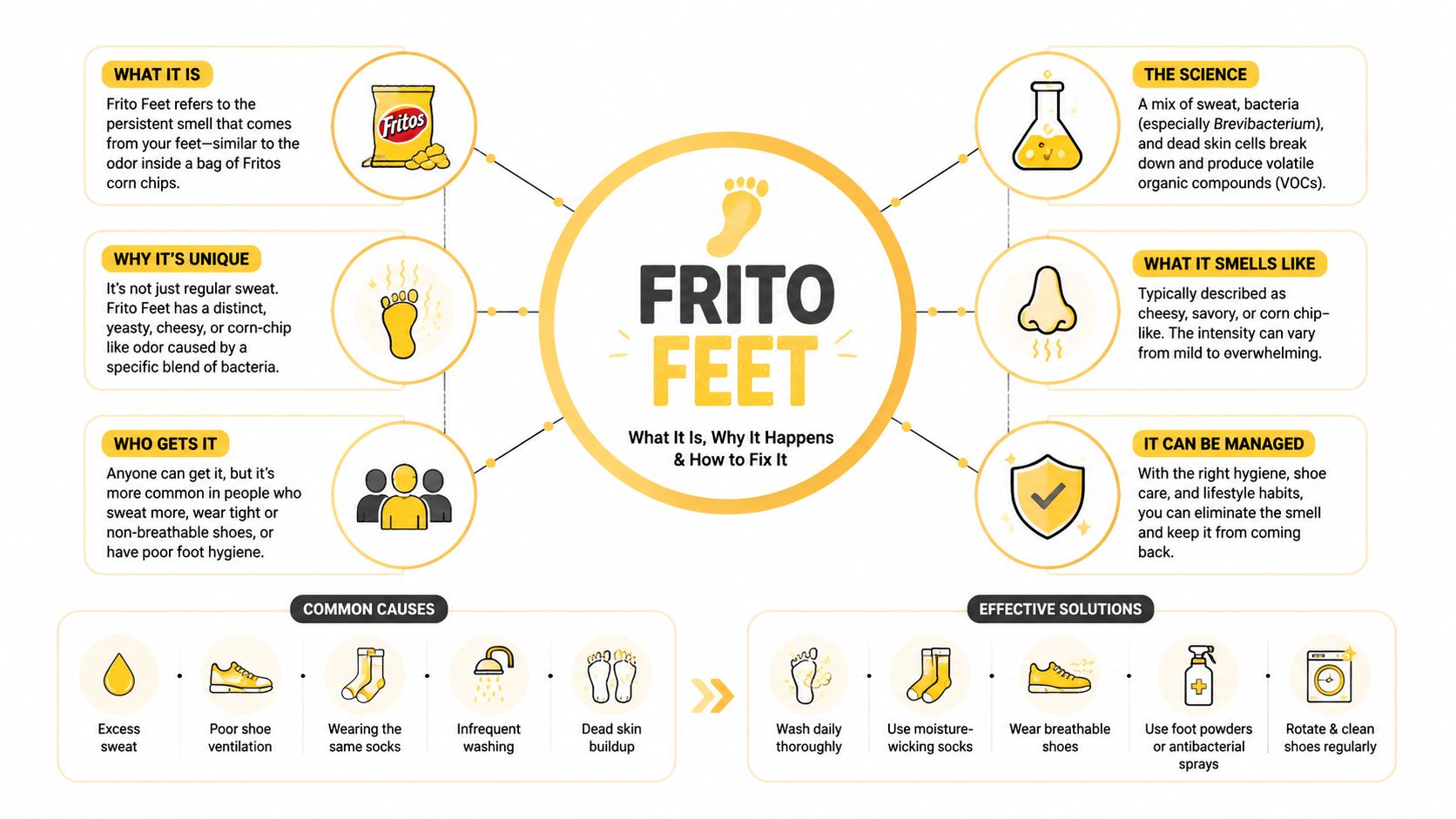
Frito feet is a casual name for a mild corn-chip or toasted scent coming from a dog's paw pads and the skin between the toes. The smell develops when tiny skin residents break down sweat, natural oils, and dead skin. That process creates volatile compounds, substances that move into the air and reach your nose.
Dogs have sweat glands in their paw pads, so paws can become slightly damp even when the rest of the coat feels dry. Add toe hair, skin folds, limited airflow, outdoor moisture, and a dog's habit of licking their feet, and the paws become a warm, enclosed environment. Those conditions can make a normal odor more noticeable.
The main microscopic contributors
The bacteria most commonly associated with Frito feet include Pseudomonas and Proteus. A 2018 study of smelly but otherwise healthy bloodhounds published in Scientific Reports identified Psychrobacter and Pseudomonas among the odor-associated bacteria found on canine skin. The research helped shift the explanation away from folklore and toward the normal biology of a dog's skin microbiome, as summarized by the American Chemical Society.
Yeast can contribute too. It may add a musty or sweet note, particularly when the paw stays warm and damp. That doesn't mean every dog with a corn-chip smell has a yeast problem. Normal skin can contain bacteria and yeast without disease.
Why moisture matters more than the smell itself
Think of the odor as a sign of the environment on the paw, not a test result. Warmth, wet fur, trapped debris, and repeated licking can let the same organisms become relatively more abundant and release more odor-producing compounds. Dry, healthy skin may host many of the same organisms with little noticeable scent.
That's why a dog's paws may smell stronger after wet grass, a swim, a bath, or a humid day. The veterinary overview of probiotics and yeast in dogs can provide broader context about the relationship between microbial balance and skin concerns, but probiotics aren't a substitute for diagnosing an inflamed or infected paw.
For owners considering general wellness support, DA-1™ Daily All-in-One - Senior Dog Support, Joints, Skin/Coat & More is described as a multi-system formula with 18 human-grade ingredients targeting cells, gut, and joints. It should be viewed as part of overall care, not as a direct treatment for Frito feet.
Why the Smell Gets Stronger Some Days
The corn-chip odor can be faint one day and obvious the next because conditions on the paw keep changing. After a long walk in warm weather, the pads may stay damp from sweat and outdoor exposure. Wet grass, puddles, or swimming can soak the fur between the toes, where moisture remains against the skin even after the paw looks dry.
Licking can keep that cycle going. Saliva repeatedly wets the fur, while the licking itself may signal itchiness, irritation, or discomfort. A stronger smell can therefore reflect both added moisture and a paw that deserves closer inspection.
Common environmental triggers
Your home can affect drying, too. Humid rooms, warm winter floors, and bedding that holds moisture limit airflow around the paws. A bandage placed after a veterinary procedure may also retain heat and dampness. Do not remove or change a bandage unless the clinic gives you those instructions.
Bathing may worsen odor in two ways. Frequent washing or harsh products can strip protective oils and irritate the skin. Even a suitable wash can leave the smell returning if moisture remains between the toes.
| Trigger | What You Notice | Why It Boosts the Smell |
|---|---|---|
| Wet grass, puddles, or swimming | Damp toe fur and pads | Moisture stays close to the skin |
| Warm weather or exercise | A stronger scent after activity | Heat and sweat increase dampness |
| Paw licking | Wet fur, stained hair, or saliva residue | Licking repeatedly re-wets the area |
| Over-washing | Dryness, flaking, or sensitivity | Irritated skin may lose its normal barrier |
| Incomplete drying | Odor returning soon after a bath | Hidden moisture remains between toes |
| Indoor heat or humidity | Paws smell stronger indoors | Warm, poorly ventilated conditions slow drying |
Microbes break down sweat, oils, and dead skin, producing volatile compounds that create the familiar scent. Odor intensity reflects paw-surface conditions rather than serving as a diagnostic test result. It can rise and fall without a sudden disease process.
A simple example is a dog whose paws smell stronger after rainy walks but look comfortable once cleaned and dried. That pattern differs from odor that comes with persistent licking, redness, swelling, discharge, cracked skin, or pain.
Practical rule: Track changes in the paws, not just changes in the smell. Odor with normal skin and normal behavior is a different situation from odor with licking, redness, or pain.
A Simple At-Home Paw Care Routine
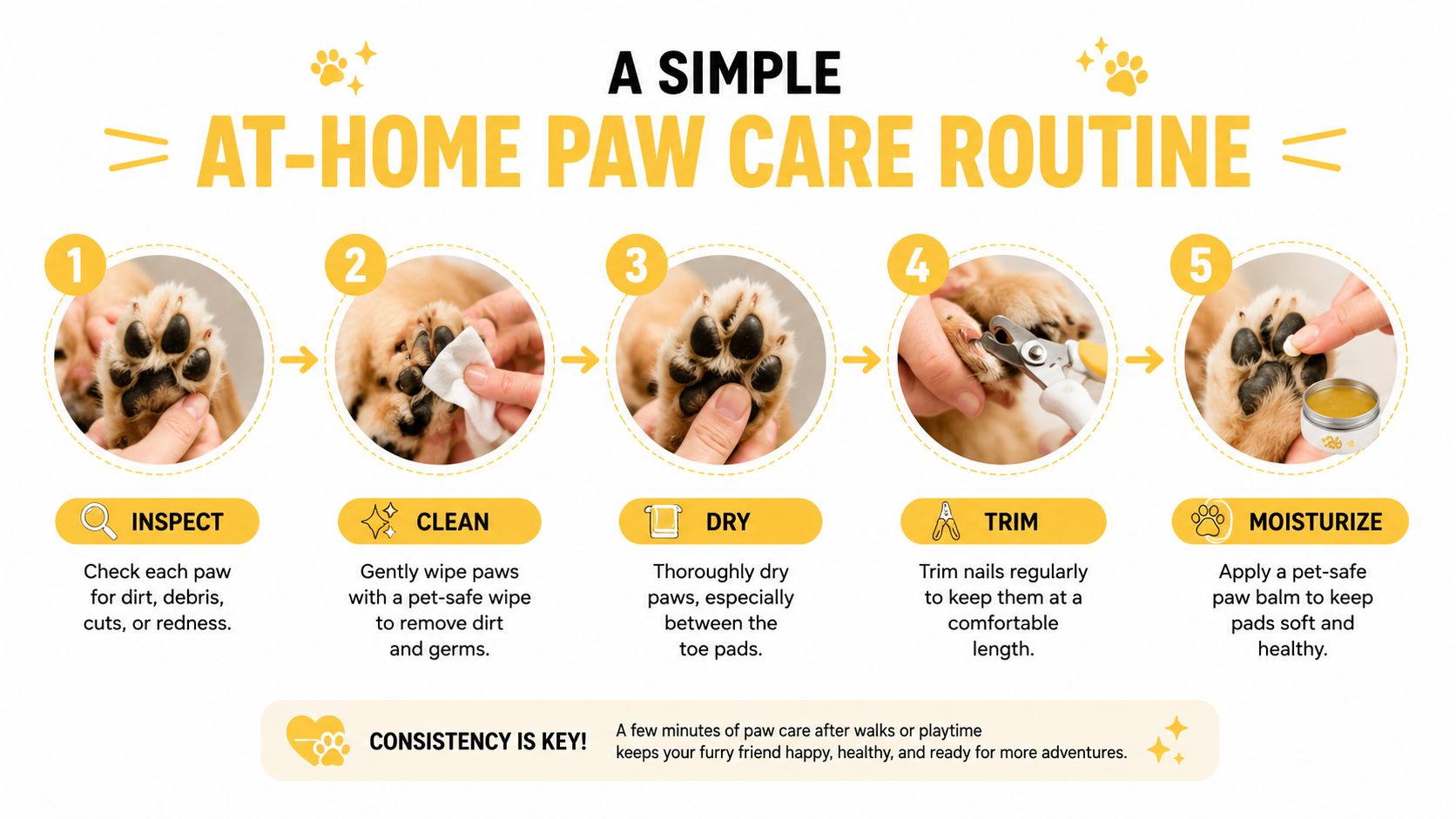
You don't need an aggressive cleaning campaign to manage ordinary Frito feet. Consistency works better than intensity. A short check after outdoor activity can remove moisture and debris before they remain trapped between the toes.
A practical daily check
Start when your dog is calm. Lift one paw at a time and look at the pads, toe spaces, nail folds, and the skin around the edges. Compare what you see with the dog's usual appearance.
- Inspect first. Look for stuck grass, small stones, cuts, cracked pads, redness, swelling, discharge, or a sudden change in odor.
- Wipe after ordinary walks. For dry conditions, a clean damp cloth or a dog-safe, unscented wipe may be enough. Wipe the pads and gently pass between the toes without scrubbing.
- Wash when the paws are visibly dirty. Use lukewarm water and a mild cleanser made for dogs. Don't use harsh household soap or human shampoo, which may irritate canine skin.
- Dry completely. Press the towel around each paw, then gently dry between the toes. This is the step owners most often rush, and it's the step that directly addresses moisture retention.
- Manage excess hair carefully. If fur extends heavily between the pads or stays wet after walks, ask a groomer or veterinary professional to show you a safe trimming approach. Avoid cutting close to the skin if your dog moves suddenly.
Match the routine to the day
A quick wipe and careful drying may be all your dog needs after a normal dry walk. Choose a fuller wash after muddy ground, wet grass, or swimming, but still dry thoroughly afterward. Dogs with dense paw fur, skin folds, or frequent outdoor exposure may need more frequent checks, while healthy, dry paws don't benefit from repeated washing just to remove a faint scent.
Full baths should be occasional and appropriate for your dog's coat and skin. Over-bathing can cause dryness, so don't respond to every odor increase with another shampoo session.
For broader paw-related skin education, see this guide on dog calluses on the paw. A callus, a pad injury, and ordinary microbial odor can look different, so visual inspection matters.
How Diet and Skin Health Fit Together
Paw odor begins on the skin, but skin condition doesn't exist in isolation. A dog needs adequate nutrition to maintain the outer barrier that helps protect against moisture, friction, allergens, and environmental irritants. When that barrier becomes dry, flaky, or persistently inflamed, microbes may find a more favorable environment.
Useful nutritional building blocks include quality protein, omega-3 fatty acids, zinc, and gut-friendly fiber. These nutrients support normal skin maintenance, coat quality, and digestion when they're included in a complete feeding plan. They won't erase a corn-chip smell by themselves, and a mild odor isn't proof that your dog has a dietary deficiency.
Understanding the gut-skin connection
The gut-skin axis is a simple way to describe the relationship between digestion, immune activity, and the skin. If a dog has ongoing digestive upset or an unbalanced diet, skin changes may appear alongside those concerns. The pattern can include itchiness, dryness, coat changes, or repeated irritation, but the same signs can also come from allergies, parasites, environmental exposure, or infection.
That's why diet changes should be thoughtful rather than reactive. Switching foods repeatedly can make it harder to identify what helps, and supplements should complement a nutritionally complete diet rather than replace it.
A practical starting point is to look for a pattern:
- Paw odor alone: Focus first on moisture control, drying, and gentle hygiene.
- Odor with flaky or dry skin: Review the overall diet and discuss skin support with your veterinarian.
- Odor with digestive changes: Consider both gut and skin signs together rather than treating the paws in isolation.
- Recurring irritation: Ask whether allergies or another underlying problem needs investigation.
The dog skin and coat care guide offers a broader framework for thinking about coat condition and skin support. An all-in-one product such as DA-1 can fit into a wellness plan when an owner wants combined digestive, skin and coat, joint, immune, and stress-related support, but it isn't a treatment for bacterial or yeast dermatitis.
Nutrition perspective: Food can support a resilient skin barrier, but it can't explain every paw problem. Persistent inflammation needs a proper assessment rather than a supplement-only approach.
If you're considering omega-3s, zinc, probiotics, or a broader formula, check the ingredients with your veterinary team, especially if your dog has a medical condition, takes medication, or eats a therapeutic diet.
When the Smell Means It's Time to See a Vet
A noticeable odor doesn't automatically equal infection. Some healthy dogs naturally have a stronger paw scent than others, and smell can increase after moisture exposure without causing tissue damage.
The concern rises when the odor comes with visible inflammation, discomfort, or a clear change from normal. A dog that constantly licks, chews, or scratches the paws may be reacting to itchiness. Redness, swelling, heat, raw skin, bleeding, discharge, or painful walking requires more than routine wiping.
Signs that change the decision
Arrange a veterinary visit if you notice:
- Swelling or heat: One paw or several paws look enlarged or feel warmer than usual.
- Redness or raw skin: The skin between the toes appears inflamed, shiny, cracked, or bleeding.
- Discharge: Pus, fluid, crusting, or unusual wetness is present.
- Persistent licking: Your dog repeatedly returns to the paws instead of occasionally grooming them.
- Pain or behavior change: Your dog pulls away, limps, seems restless, or doesn't want the paw touched.
- Odor with itching: A sweet, yeasty, or unusually strong smell appears alongside scratching or irritation.
| Likely Normal | See a Vet |
|---|---|
| Mild, familiar corn-chip odor | Sudden or persistent odor that differs from baseline |
| Normal-colored skin and pads | Redness, swelling, heat, raw areas, or bleeding |
| Normal walking and activity | Limping, pain, or reluctance to bear weight |
| Occasional grooming | Constant licking, chewing, or scratching |
| No fluid or crusting | Discharge, pus, scabs, or wet lesions |
What the clinic may investigate
A veterinarian may look for yeast overgrowth, bacterial dermatitis, allergies, or a foreign object lodged between the toes. Depending on the examination, the clinic may recommend skin cytology, a medicated wash, or allergy testing. Treatment should target the cause, not just cover the odor.
Use this decision rule: if the smell is mild and the paws look and feel normal, begin gentle home care; if the smell is paired with pain, inflammation, discharge, or persistent licking, call the veterinary clinic.
Quick Takeaways and Your Next Steps

Over the next week, track which conditions line up with odor changes. Note wet grass, swimming, bathing, humid weather, or increased licking, along with whether the smell fades after your usual care. This simple record can show whether moisture, grooming habits, or another recurring trigger deserves attention.
Use the record to guide one new habit: schedule a weekly paw-pad check under the same lighting. Compare each paw with its normal appearance, including the pads, spaces between the toes, nail folds, and the amount of fur holding moisture. A consistent baseline makes subtle changes easier to spot.
Nutrition belongs in the broader picture, not as a quick fix for odor. A complete diet with adequate protein, omega-3 fatty acids, zinc, and gut-friendly fiber can support normal skin maintenance. Probiotics may also be considered as part of digestive support, especially when discussing your dog's overall diet with a veterinarian.
Keep the decision rule simple. A familiar smell with comfortable walking, normal-looking skin, and no discharge can usually be monitored with the routine already described. A sudden change from your dog's normal odor, or a smell that persists despite sensible care, deserves closer attention.
Call your veterinary clinic if odor appears with raw skin, pus, swelling, pain, limping, or constant licking. Allergies, bacterial dermatitis, yeast overgrowth, and foreign objects can look similar at home but require different treatment. The goal is to identify the cause rather than mask the scent.
A familiar corn-chip scent alone is usually a monitoring issue, not a reason to panic. Record patterns, keep the weekly inspection consistent, and seek veterinary advice when discomfort or inflammation appears.
Pure Paw Labs offers daily dietary supplements for digestive health, skin and coat, joints, immunity, and stress as part of a broader wellness routine. For nutritional support alongside sensible paw care, visit Pure Paw Labs and review the available options with your dog's needs in mind.