


Your dog has loose stool after a food change, a stressful boarding stay, or a bout of illness, and you're wondering whether a probiotic could help. The answer is sometimes, but it's more specific than “probiotics are good for gut health.” These supplements don't work like an instant stop button for diarrhea. They're live microorganisms intended to support the community of organisms already living in your dog's digestive tract.
The most useful way to understand them is as ecosystem support. Probiotics may help influence digestion, stool quality, intestinal barrier function, and immune signaling, especially when the gut is under stress. But the result depends on the strain, formulation, viability, dose, and the problem your dog has.
Table of Contents
- What Probiotics Do for Dogs at a Glance
- Understanding How Probiotics Work Inside Your Dog Gut
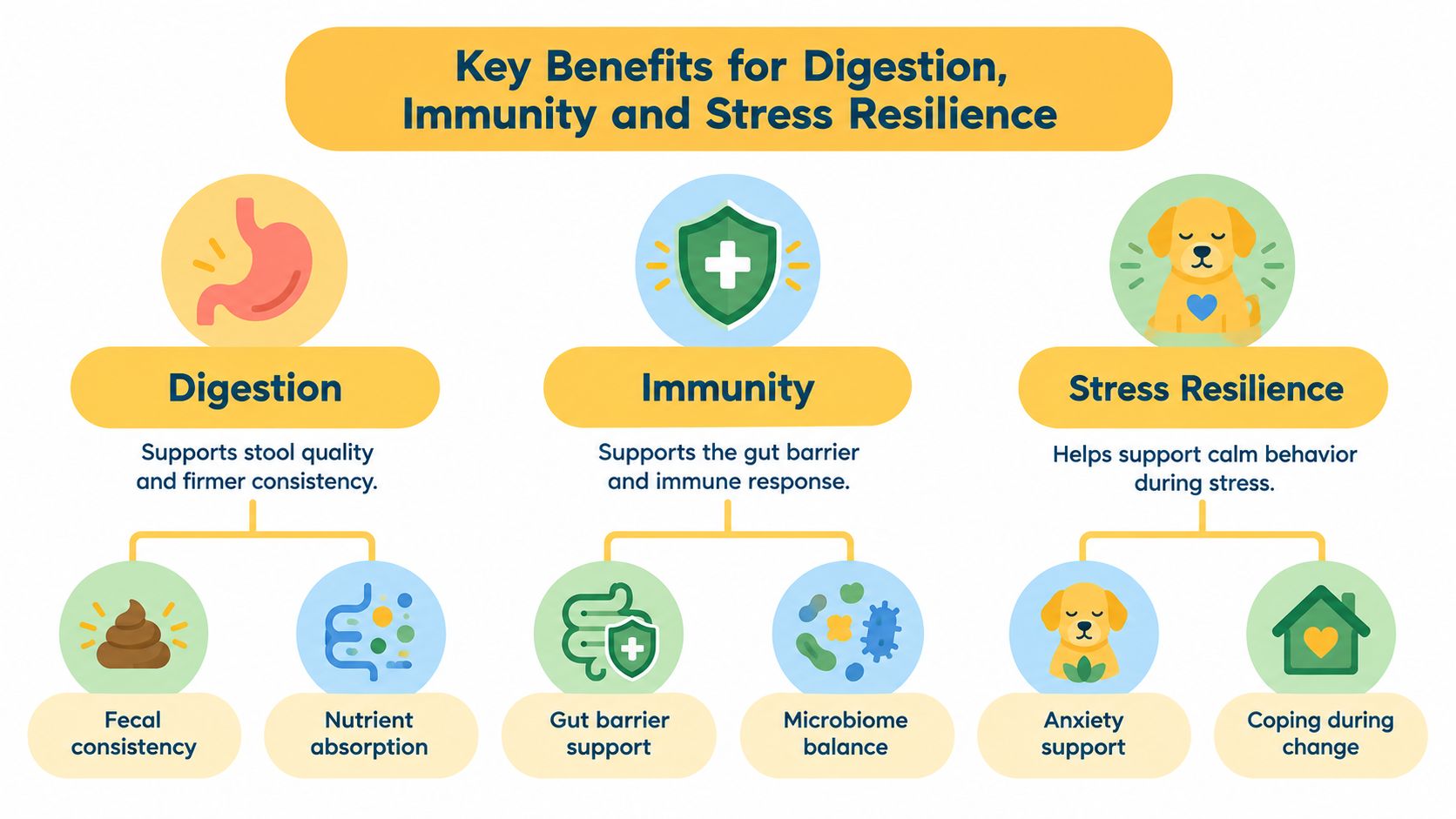
- Key Benefits for Digestion Immunity and Stress Resilience
- Common Probiotic Strains for Dogs and What Makes Them Different
- What Studies Show About Results and Real World Expectations
- How to Choose a Safe Probiotic and Use It Correctly
- Choosing Gut Support That Fits Your Dog Long Term
What Probiotics Do for Dogs at a Glance
Suppose your normally comfortable dog develops occasional loose stool after switching food or returning from boarding. If your dog is otherwise bright, eating, drinking, and free from serious warning signs, a veterinarian might consider a probiotic as part of digestive support. The purpose isn't to mask the symptom. It's to help the intestinal ecosystem regain balance while the underlying trigger settles.
Probiotics are live microorganisms supplied in a food or supplement. In dogs, their main proposed jobs are:
- Supporting digestion: They may influence the bacterial community involved in breaking down food and producing useful metabolites.
- Supporting stool quality: Some canine studies have found changes in fecal consistency and gut bacteria, although improvements aren't guaranteed or equally strong for every product.
- Interacting with immunity: The gut lining and its resident microbes communicate with immune cells, so changes in the microbiome may affect inflammatory and barrier-related signaling.
- Helping during digestive stress: Diet transitions, illness, medication exposure, and environmental stress can disturb gut balance. A suitable probiotic may provide additional support during recovery.
The distinction between support and treatment matters. A probiotic shouldn't replace an examination when diarrhea persists or appears with vomiting, blood, dehydration, abdominal pain, unusual tiredness, or appetite loss. Those signs can have causes that require diagnosis and specific care.
Evidence also doesn't justify giving every healthy dog a probiotic automatically. A 2026 evidence review found routine supplementation in healthy dogs remains unproven, with mixed findings across 17 peer-reviewed studies and limited effects that may not be clinically important, as summarized in the review of probiotics for gastrointestinal maintenance.
The practical question isn't, “Are probiotics good for dogs?” It's, “What problem might this product solve for this dog, and how will I know whether it's helping?” The answers depend on how the canine gut works, which strains are included, what studies have measured, and how carefully the product is selected.
Understanding How Probiotics Work Inside Your Dog Gut
Think of your dog's gut as a busy neighborhood. It contains many kinds of residents, each competing, cooperating, producing substances, and communicating with the body. A healthy neighborhood isn't defined by having one resident dominate. It depends on balance, activity, and the condition of the surrounding buildings.
Probiotics are temporary participants in that neighborhood. They may interact with existing microbes, intestinal cells, and the gut's immune defenses. Their influence can include:
- Changing microbial balance. Certain strains may help create conditions that favor beneficial organisms or make it harder for opportunistic bacteria to thrive.
- Supporting useful metabolites. Gut bacteria can produce short-chain fatty acids, compounds associated with intestinal nourishment and signaling.
- Interacting with the gut barrier. The intestinal lining acts like a selective wall. It allows nutrients through while helping limit unwanted movement between the gut and the body.
- Communicating with immunity. Gut microbes and immune cells constantly exchange signals. Probiotics may influence that conversation, but the direction and importance of the effect depend on the strain and condition.
Core idea: A probiotic isn't a missing vitamin. It's a biological tool intended to influence an ecosystem.
That influence starts with survival. If organisms are destroyed during manufacturing, storage, or digestion, they can't meaningfully participate after your dog consumes them. A controlled dog-food study reported in 2004 found that Lactobacillus acidophilus survived manufacturing and storage at 71% at the start and 63% at the end, demonstrating that probiotic organisms could remain viable through real-world pet-food processing. The findings are described in the American Journal of Veterinary Research study.
Survival doesn't mean permanent colonization. Many probiotics may pass through rather than establish a lasting population. They can still affect the local environment while present, but their usefulness depends on whether the exact organism survives transit, reaches the appropriate intestinal area, and interacts with the host in a meaningful way.
This is why strain identity, delivery format, storage, and shelf-life viability matter. “Probiotics” is a category, not a single ingredient with one predictable effect. For a plain-language explanation of how probiotics differ from related ingredients, see prebiotic versus probiotic versus postbiotic support. A multi-system product such as DA-1™ Daily All-in-One, Senior Dog Support, Joints, Skin/Coat & More may include gut support alongside other nutritional goals, but that doesn't make it equivalent to a strain-specific probiotic studied for a particular digestive condition.
Key Benefits for Digestion Immunity and Stress Resilience
When a dog develops loose stool after a food change, travel, or another routine disruption, probiotics can seem like an obvious answer. Their role is more specific: they support the gut ecosystem while it is under pressure, rather than acting as a quick fix for every digestive or behavioral problem.
What owners notice is often stool consistency and comfort. Researchers may instead measure microbial diversity, inflammatory signals, or barrier proteins. These findings are connected, but they are not interchangeable. A laboratory marker can change without proving that a dog feels better or will avoid future digestive trouble.
Digestion and stool quality
Some canine studies associate probiotic use with firmer feces or changes in bacterial communities. In a trial involving dogs with diarrhea, probiotic administration was associated with greater microbial diversity and increased levels of selected beneficial bacteria. That finding suggests a possible path toward digestive stability, not immediate normalization for every dog.
A sensible use case is support during a mild, defined stressor, such as a diet transition or temporary digestive disruption. Daily use is harder to justify when a dog has no clear digestive concern, because a measurable microbiome change does not automatically create a noticeable health benefit. Severe, persistent, or system-wide symptoms need veterinary assessment rather than delayed care.
The intestinal barrier and immune interaction
The intestinal lining absorbs nutrients and helps keep gut contents separate from the rest of the body. Immune cells monitor what crosses that boundary. In dogs with inflammatory bowel disease, a randomized controlled trial found that a multi-strain probiotic changed mucosal bacteria and increased intestinal cells expressing selected tight-junction proteins. The result is consistent with stronger epithelial barrier integrity and a lower risk of unwanted movement across the lining, as described in this canine probiotic review and clinical evidence summary.
Reviews of companion-animal research associate probiotics with microbiota modulation, inflammation control, immune signaling, and intestinal support. They also stress that effects depend on the strain, dose, product, and dog. A broad label can include organisms with very different behavior in the gut, as discussed in the companion-animal probiotic evidence review.
Stress resilience requires careful wording
Boarding, travel, illness, and sudden routine changes can occur alongside digestive upset. Gut support may help some dogs maintain or regain digestive balance during these periods. It is not a direct treatment for fear, separation distress, or anxiety.
If stress changes your dog's appetite, stool, or behavior, address the emotional trigger and physical signs together. Probiotics do not guarantee calm behavior, prevent every episode of diarrhea, or replace treatment for an underlying disease.

Common Probiotic Strains for Dogs and What Makes Them Different
When your dog's stool changes, a long list of bacterial names can look reassuring. Yet a “multi-strain probiotic” label reveals little by itself. What matters is whether the manufacturer identifies the organisms, keeps them viable through storage, and connects the formula with evidence in dogs.
A 2019 randomized study of 40 dogs with diarrhea gave probiotics to 20 dogs for 60 days. The treated dogs developed higher microbial diversity, more Lactobacillus johnsonii, Lactobacillus reuteri, and Lactobacillus acidophilus, and fewer opportunistic bacteria, including Clostridium perfringens and Stenotrophomonas maltophilia, according to the published canine diarrhea study. These were measurable ecosystem changes. They do not show that every dog will recover quickly, or that daily probiotics are justified for every healthy dog.
| Strain or Blend | Reported Role in Dogs | Evidence Context |
|---|---|---|
| Lactobacillus acidophilus | May support microbial balance and digestion | Studied in canine food-processing and diarrhea research |
| Lactobacillus johnsonii | Associated with changes in beneficial bacterial populations | Increased in the probiotic group in a canine diarrhea study |
| Lactobacillus reuteri | May help modulate the gut ecosystem | Increased in the same canine diarrhea study |
| Multi-strain blends | Combine organisms with potentially complementary roles | Effects on mucosal bacteria and barrier-related markers depend on the formulation |
Why the exact label matters
Species names may not identify a product precisely enough. Look for the full strain identity, viable count, and information about how viability is protected during storage. A label that only says “proprietary probiotic blend” makes it difficult to compare the contents with research or know what your dog is receiving.
Dose matters too. A larger amount is not automatically better, because the suitable dose depends on the organism, formulation, intended use, and supporting evidence. Canine reviews continue to describe gaps in strain standardization and dosage selection. Clear labeling therefore helps you judge whether a product has a defined purpose and whether its claimed benefits match your dog's situation.
Probiotics can support an existing gut ecosystem. They are not a quick fix, and a laboratory change does not automatically mean better stool, comfort, or quality of life at home. Daily use makes more sense when a veterinarian identifies a specific, ongoing need than when a label promises broad wellness.
What Studies Show About Results and Real World Expectations
A dog may have softer stools today while its gut bacteria are still changing in less visible ways. Research on canine probiotics is easier to interpret when you separate three kinds of outcomes: microbiome changes, biological markers, and improvements owners can observe at home.
Microbiome outcomes include shifts in bacterial diversity or in selected bacterial groups. Biomarker outcomes include changes in immune signals and proteins linked with the intestinal barrier. Real-world outcomes include stool consistency, appetite, comfort, symptom recurrence, and quality of life. The first two may change without producing a noticeable improvement in the third. A healthier-looking laboratory marker is not the same as a dog that feels better.
One canine diarrhea trial reported acceptable fecal consistency after 3.5 ± 2.2 days in dogs receiving probiotics, compared with 4.6 ± 2.4 days for metronidazole and 4.8 ± 2.9 days for placebo. The differences were not statistically significant, so this result does not show that probiotics reliably work faster than either comparison. It does show why probiotics are better viewed as possible support than as a guaranteed rapid cure, as reported in the canine randomized probiotic research.
A separate randomized, placebo-controlled trial examined a synbiotic, which combines probiotics with inulin. During the intervention, diarrhea occurred in 0% of supplemented dogs versus 16% of placebo dogs, while vomiting occurred in 4% versus 21%, respectively. These findings came from one formulation and study setting, so they should not be applied automatically to every probiotic product, as summarized in the review of companion-animal probiotic findings.
Inflammatory bowel disease research has also found changes in mucosal bacteria and tight-junction proteins. Those observations help explain how gut support might influence barrier function. They do not show that a supplement can manage IBD on its own.
Interpretation rule: Ask whether a study measured a healthier-looking gut marker, a visible symptom, or both.
The practical conclusion remains measured. Probiotics may help selected dogs experiencing digestive stress, while benefits during acute diarrhea can be modest and dependent on the condition and formulation. Daily use is easier to justify when a veterinarian identifies an ongoing need, rather than when a label promises broad wellness. For product considerations in diarrhea cases, see this guidance on choosing a probiotic for dog diarrhea.
The video below offers another visual introduction to how canine probiotic support is commonly discussed.
How to Choose a Safe Probiotic and Use It Correctly
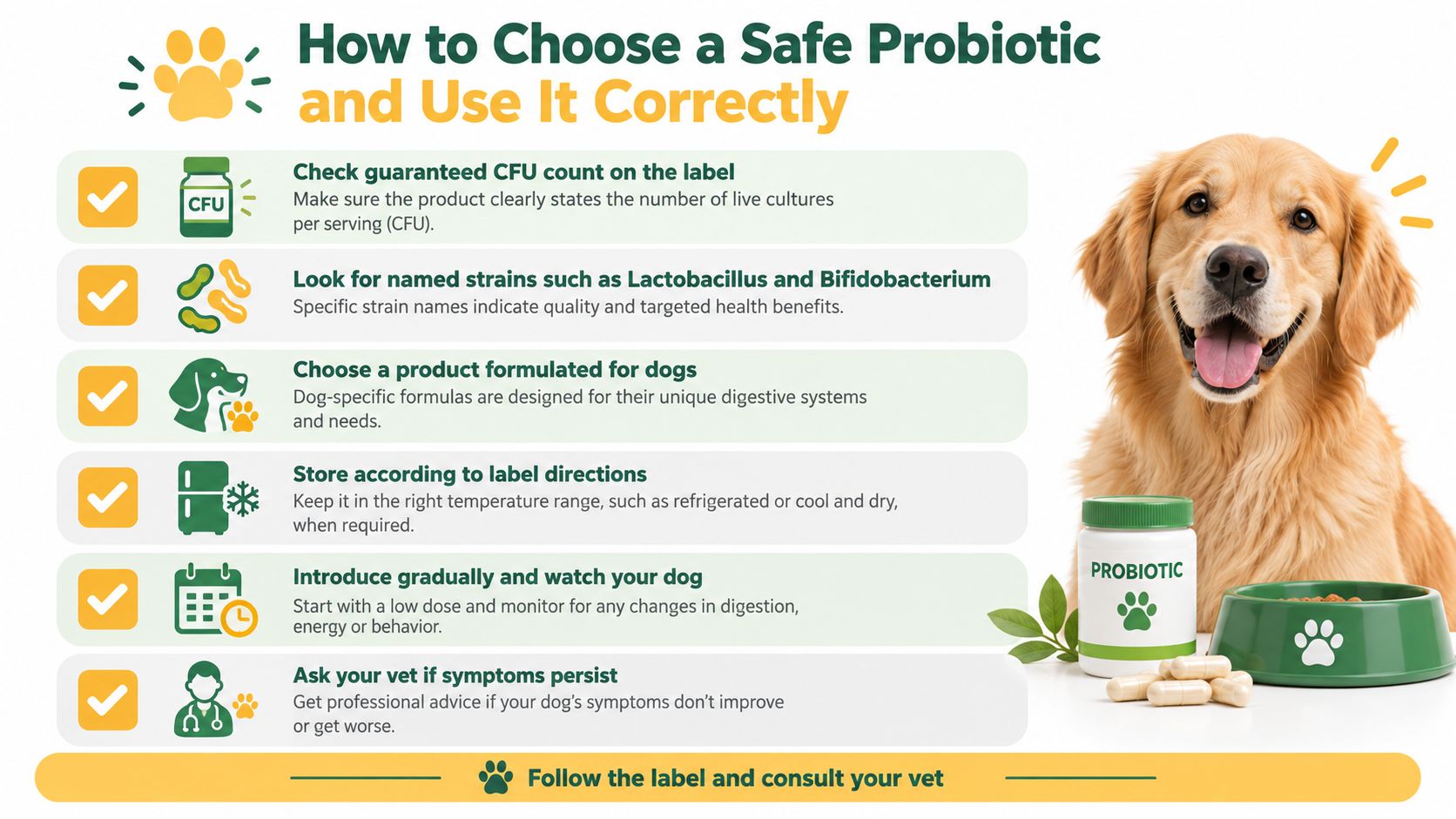
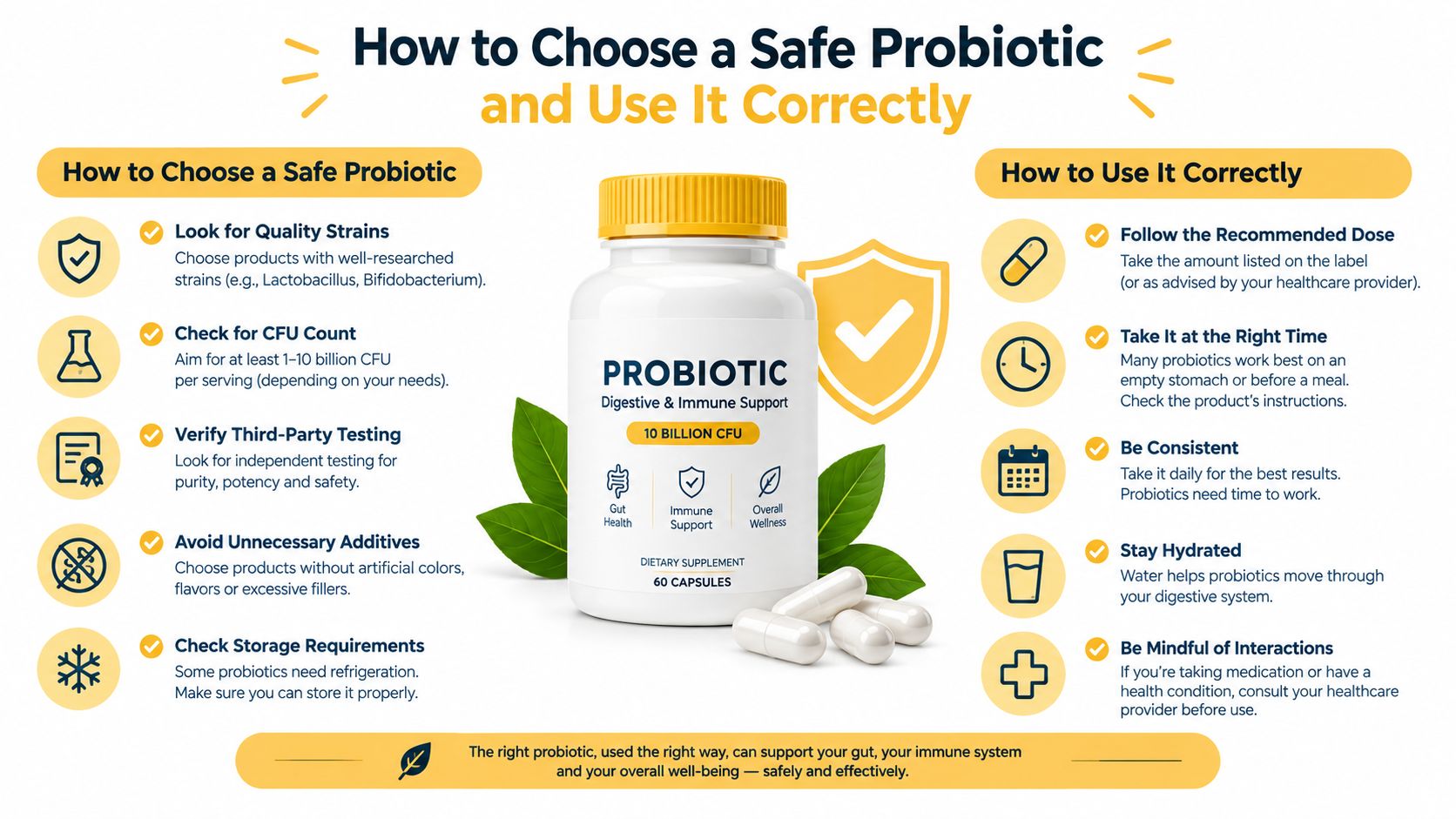
A good product decision starts with the label, not the marketing promise. Look for named strains, a clear viable count, directions intended for dogs, storage instructions, and a shelf-life statement that explains whether the count is guaranteed through the expiration date. A large CFU number means little if the organisms aren't viable or if the strain has no relevant canine evidence.
A practical label check
- Identify the strains: Prefer a product that names the organisms clearly rather than hiding them inside an unnamed blend.
- Check viable counts: Look for a guaranteed CFU count and determine whether it applies at manufacture or at the end of shelf life.
- Review the format: Powders, chews, and capsules can all work in principle. Choose the form your dog will reliably consume and that matches storage requirements.
- Follow storage directions: Heat, moisture, and time can reduce viability. Don't assume a shelf-stable product can be stored anywhere.
- Introduce it thoughtfully: Follow the product directions and observe stool, appetite, gas, vomiting, and overall comfort after starting.
- Discuss medical conditions: Ask your veterinarian before using a probiotic for a dog with chronic disease, significant symptoms, immune concerns, or multiple medications.
The current evidence doesn't provide one universal canine dose. A 2025 review found potential benefits for intestinal function and immune modulation while highlighting persistent gaps in strain standardization and dosage selection, as described in the review of canine prebiotics and probiotics. That uncertainty makes transparent labeling and veterinary context more important.
Don't use a probiotic as a substitute for diagnosis. Seek veterinary help promptly if your dog has blood in the stool, repeated vomiting, dehydration, marked lethargy, abdominal pain, or symptoms that don't settle. A supplement can support a care plan, but it can't identify parasites, dietary disease, inflammation, obstruction, or other causes of gastrointestinal signs.
Some owners prefer a single daily formula that combines gut support with other nutritional goals, while others choose a probiotic-only product so they can evaluate one variable at a time. If you're considering a broader routine, information about probiotic supplements for dogs can help you think through that distinction.
Choosing Gut Support That Fits Your Dog Long Term
A long-term choice should begin with your dog's actual pattern, not a supplement schedule. A dog with occasional digestive sensitivity during a known stressor may have a clearer reason to try support than a healthy dog without gastrointestinal concerns. As noted earlier, evidence does not establish routine probiotic use as necessary for every healthy dog.
If you and your veterinarian decide to test a probiotic, set one practical goal first. Track stool consistency, appetite, gas, comfort, and digestive episodes for a defined trial. Consider the result in daily life, not only a change in a laboratory marker or product claim. If there is no meaningful improvement, or your dog worsens, reassess the diagnosis and product rather than automatically increasing the dose.
A sensible trial has a question attached to it: What symptom are we trying to support, and what change would justify continuing?
Choose named strains, transparent viability information, dog-specific directions, and storage guidance. For chronic disease, use probiotics within a veterinary care plan. Daily use is easier to justify when a clear problem shows consistent improvement. Without that benefit, stopping is a reasonable decision.
Pure Paw Labs offers the DA-1™ Daily All-in-One powdered formula, combining gut support with joint, skin and coat, immune, and stress-related nutritional goals. Visit Pure Paw Labs to review whether that type of routine fits your dog's needs.